
In Spain, you must carry a valid driver’s license, ID, and proof of insurance, and know your rental terms. Obey urban speed limits of 50 km/h, and slower rural roads; motorways usually cap at 120 km/h, adjusting for weather. Always wear seat belts, use headlights responsibly, and avoid mobile use. Yield at roundabouts, check pedestrians, and follow signs for exits and tolls. Keep documents handy, plan routes, and stay aware—more practical tips await.
Key Takeaways
- Know Spain’s standard speed limits: urban 50 km/h, rural roads typically 90–100 km/h, and highways up to 120 km/h; adjust for weather and signs.
- Drive and park with seat belts on for all occupants; use child seats as required and follow toll and priority signs.
- Prioritize pedestrians at crossings; yield at roundabouts and intersections, and follow right-of-way rules at four-way junctions.
- Observe signage: heed exits, tolls, roundabouts, and variable speed limits; use headlights from dusk and in tunnels, with DRLs as applicable.
- Carry valid driving license, ID, insurance, and vehicle documents; ensure vehicle is roadworthy and rental matches your itinerary.
Spain Driving Essentials: What Every Visitor Must Know
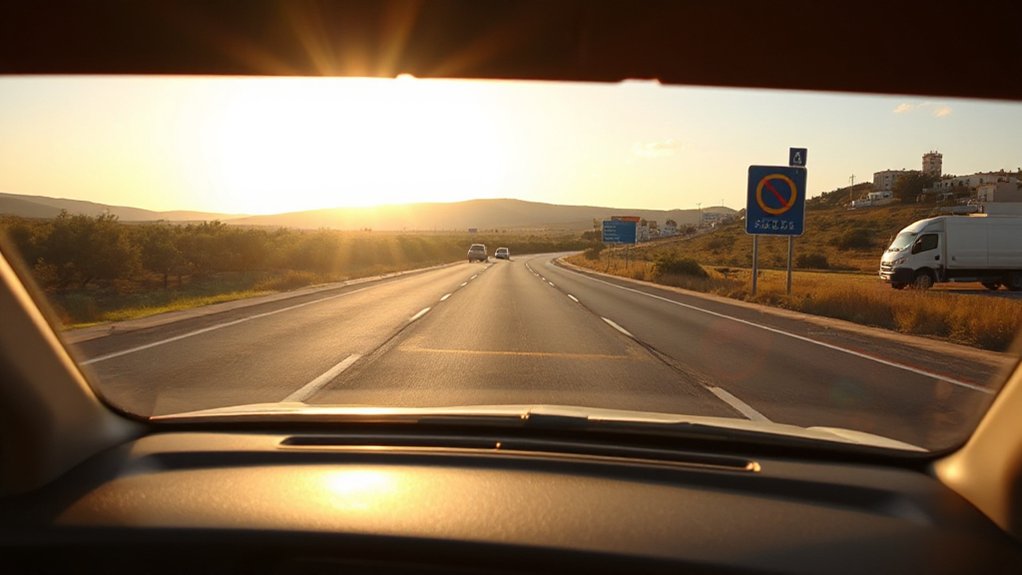
Finding your way through Spain’s roads requires basic preparation and vigilance: know the licensing rules, understand local speed limits, and keep your documents accessible.
In this section, you’ll learn essential realities for visitors. You’ll typically drive with your valid driver’s license and passport or ID, and you’ll need an International Driving Permit only if required by your home country.
When you rent, make sure you secure Car rental arrangements that match your itinerary and insurance needs. Carry the vehicle’s insurance documentation and a copy of the rental agreement at all times.
Respect regional speed limits, use seat belts, and avoid using a mobile device while driving.
If you’re pulled over, stay calm and present requested documents promptly.
Basic Road Rules in Spain: The Foundations
In Spain, you’ll notice that speed limits vary by road type and conditions, so paying attention to signage is essential.
You’ll also rely on clear right-of-way rules at intersections and roundabouts to keep traffic moving safely.
As you read, keep the focus on Speed Limits Essentials and Right-Of-Way Basics to build a solid foundation for your driving decisions.
Speed Limits Essentials
Speed limits in Spain are straightforward: they’re posted on signs and apply as you drive, with specific rules for different road types. You’ll typically see 120 km/h on highways, 100 km/h on main rural roads, 90 km/h on non-urban two-lane roads, and 50 km/h in cities, unless local signs say otherwise.
Adapt your speed to weather, visibility, and traffic. Use mobile devices only with hands-free setups, as penalties apply for distractions.
Always observe school zones and construction zones, where limits may drop temporarily. In tourist areas, watch for transient speed signage near attractions and pedestrian zones.
Respect local customs about speed in historic districts and narrow streets. Keeping to limits protects you, others, and keeps your ride smooth.
Right-Of-Way Basics
Right-of-way in Spain follows clear, rules-based priorities that keep traffic flowing safely. You’ll learn to yield at roundabouts, intersections, and pedestrian crossings, using predictable decisions that reduce surprises. By applying these basics, you protect yourself and others on the road, aligning with driving etiquette and practical courtesy.
Make certain your vehicle is ready for safe decisions with proper maintenance, including brakes, lights, and tires, so you can act decisively when priorities shift.
- At four-way intersections, yield to the vehicle on your right unless signs or signals indicate otherwise.
- Roundabouts require entering traffic to yield to those already circulating; exit with clear signaling.
- Pedestrians always have priority at crossings; stop as needed and maintain a safe distance.
Spain Speed Limits by Road Type You’ll Encounter
In Spain, you’ll encounter distinct speed caps for urban and rural/highway roads. You’ll want to know how urban zones differ from rural and highway limits to plan overtakes and safety moves.
We’ll start with the basics of Urban Speed Limits and Rural & Highway Caps to frame the rest of your drive.
Urban Speed Limits
In urban areas in Spain, speed limits are lower and strictly enforced to protect pedestrians and cyclists. You’ll follow city regulations that prioritize safety over speed, so adjust your driving to the posted limits and traffic conditions.
Remember, fines are common for violations, especially in busy districts and near schools. Keep pace with pedestrians, and anticipate sudden stops at crosswalks.
Use caution in residential zones where cameras monitor compliance. Adhering to these limits helps you avoid distractions and fines while contributing to smoother city traffic.
- Respect posted urban speed limits and adapt to conditions.
- Expect enforcement near schools, markets, and dense pedestrian zones.
- Prioritize pedestrian safety and maintain steady, moderate acceleration.
Rural & Highway Caps
On rural roads and highways in Spain, speed limits vary by road type and conditions, so stay alert for posted signs and adapt quickly.
In this section, you’ll learn how rural caps and highway caps shape your driving. Rural caps apply to standard two-lane rural routes, typically lower than urban limits, with reductions for curves, settlements, and adverse weather.
You’ll encounter reduced speeds near farms, towns, and construction zones, so slow preemptively and check signs frequently.
Highway caps govern motorways and major expressways, generally higher but subject to weather, traffic, and incidents. Maintain steady, smooth control, avoid abrupt braking, and respect variable limits shown on overhead gantries.
When conditions deteriorate, even lower speeds protect you and others on these roads.
Blood Alcohol Limits and Driving Safely in Spain
Driving after drinking is illegal and dangerous in Spain. You must know the blood alcohol limits and how they affect your ability to drive. In practice, authorities enforce strict thresholds to keep roads safe, so plan ahead and avoid driving after any amount of drinking. Your safest option is to designate a sober driver or use public transport.
- blood alcohol thresholds are lower for new or professional drivers, with penalties for exceeding limits.
- You’ll face fines, license suspension, or vehicle seizure if you’re over the drinking limits.
- Always assess impairment rather than guessing; even small amounts can reduce judgment and reaction time.
Seat Belts, Child Seats, and Safety Requirements
Seat belts and child safety seats are mandatory for all occupants in Spain, and enforcement is strict. You must wear a seat belt at all times, including in the back seats. If you’re a driver, confirm every passenger is belted before moving.
Seat belt compliance is monitored by police, with penalties for noncompliance including fines and potential court appearances.
Children must use appropriate seating based on age, weight, and height, with rear seating preferred for younger passengers.
Child safety seats are mandatory for those under 12 or under 135 cm, unless there’s a designated front airbag exemption. Check that seats are properly installed and secured.
Follow these rules to protect everyone and avoid avoidable fines.
Right-Of-Way at Intersections: The Spanish Rules
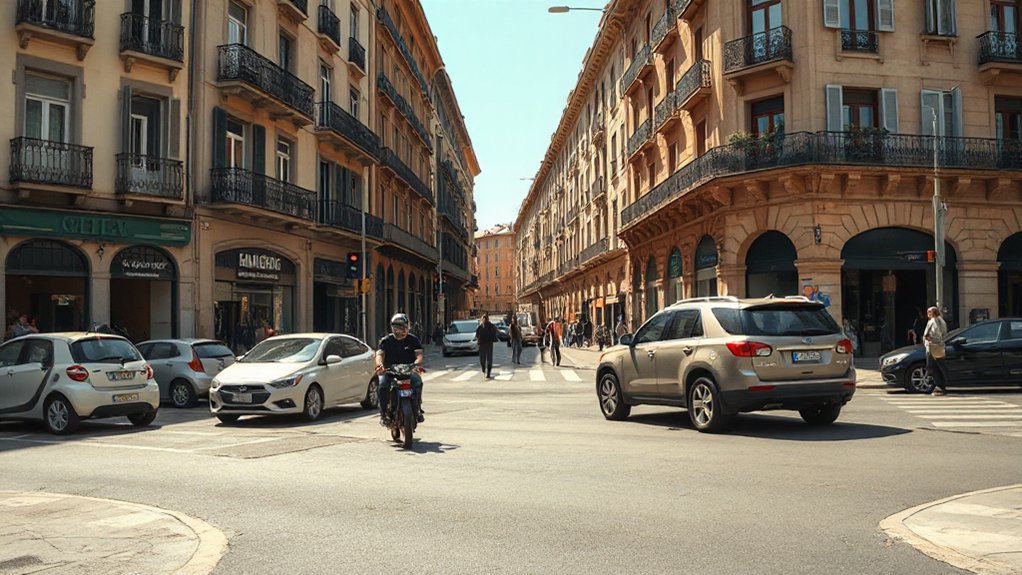
Right-of-way at intersections in Spain hinges on clear rules that prioritise safety and predictability. You determine priority by traffic signals, signs, and the position of vehicles.
Pedestrian crossings demand caution; yield to pedestrians at crosswalks, even when you have a green light elsewhere.
At junctions without signals, the vehicle on the right generally has priority, and you must proceed only when the way is clear.
Remember, roundabouts are treated as yield situations: slow, check, then enter when safe.
- Follow traffic signals and road signs precisely to decide who goes first.
- Yield to pedestrians at pedestrian crossings and be prepared to stop.
- Approach intersections with reduced speed and scan all approaches for hazards.
Navigating Roundabouts Like a Local
As you approach a roundabout, yield to vehicles already circulating and to pedestrians at crossings.
Use entry priority tactics by signaling early and choosing your gap carefully, so you merge smoothly without forcing others to brake.
This sets the pace for roundabouts nationwide and keeps traffic flowing safely.
Yield Rules At Roundabouts
At roundabouts in Spain, yield to traffic already circulating and to vehicles coming from your left when you’re not yet inside the circulating lane. You follow the standard yielding procedures, letting enterprising drivers merge smoothly without abrupt moves. Maintain a steady approach, watch pedestrians, and use indicators to signal your intent clearly for other road users.
This is central to roundabout etiquette and predictable driving, ensuring safety and flow. Stay in your lane, don’t overtake within the circle, and merge when there’s a safe gap. Remember, yielding isn’t hesitation—it’s cooperation that keeps traffic moving efficiently and reduces surprises for everyone.
- Approach with caution, assess gaps, and yield to circulating traffic
- Use signals to communicate entry and exit intentions
- Stay in your lane and avoid unnecessary lane changes within the circle
Entry Priority Tactics
When maneuvering through roundabouts like a local, you prioritize entry based on timing and position. In practice, you assess gaps quickly, yielding to vehicles already circulating and to those signaling to enter.
Your entry priority tactics hinge on maintaining a steady speed, using your mirrors, and selecting the best lane well before you reach the roundabout.
Observe right of way strategies: give way to traffic on your right when you reach the yield line, but don’t stall if you can enter safely. If another car is already in the roundabout, let it pass before you enter.
Keep to the right unless overtaking, and signal your exit in good time to guide others. Clarity and anticipation prevent hesitation and conflicts.
Priority Signs and Road Markings You’ll See
In Spain, the rules about priority are clear: follow priority signs and road markings to determine who goes first and when to yield.
You’ll notice priority signs indicating who’s priority at intersections, roundabouts, and pedestrian crossings. Road markings reinforce these rules, showing lanes, yield lines, and entry priorities.
Look for yield triangles, stop lines, and zebra crossings as you approach junctions; these cues tell you when to slow, stop, or proceed.
Adhere to signs even if visibility is limited, and use signals to confirm your intended movement.
- Priority signs dictate who goes first at intersections.
- Road markings guide yielding, stopping, and lane usage.
- In doubt, reduce speed and give way to the vehicle with priority.
Headlights, Daytime Running Lights, and Visibility Rules
Using headlights correctly is essential for safety in Spain, and there are clear rules to follow: you must use them from dusk to dawn, in poor visibility, or whenever weather requires it, and daytime running lights (DRLs) are mandatory on many new vehicles.
In practice, you’ll use dipped headlights in tunnels, at dawn or dusk, and during rain, fog, or snow. High beams are for rural, dark roads only, and you must dip them when another vehicle approaches or when you’re following another car closely.
DRLs help others see you, but they don’t replace headlights in low light. Stay aware of headlights regulations and adapt to fog, rain, or glare conditions.
Visibility requirements demand consistent use of lighting to reduce risk and meet the law.
Parking in Spain: Zones, Payments, and Fines
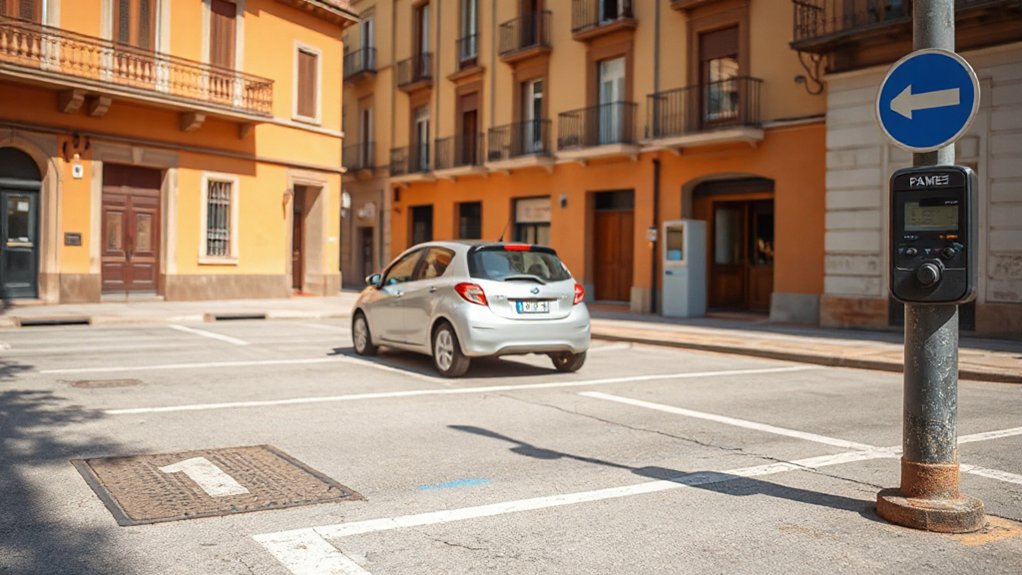
Parking in Spain can be straightforward if you know the zones, payment methods, and potential fines. You’ll see varied rules by city, but common basics stay the same: observe parking zones, pay quickly, and avoid overstaying to dodge payment fines.
1) Identify the zone—blue for residents or metered, green for longer stays, and white for free but time-limited spots.
2) Pay at meters or via apps, noting the exact start and end times, and always display the ticket if required.
3) Respect restrictions; street signs and painted curbs warn you where fines apply, and authorities enforce violations promptly.
In short, learn the local parking zones, use trusted payment methods, and monitor time limits to prevent costly fines.
What to Do If You Break Down or Have an Emergency
If you break down or have an emergency, prioritize safety first: pull over to a safe spot away from traffic, turn on hazard lights, and assess the situation before taking any further action. You should remain calm and avoid sudden movements.
Next, activate emergency roadside assistance if you have coverage, or call local emergency services for help on major hazards.
Use reflective triangles or portable warning devices if you’re on a shoulder or roadway, and stay with the vehicle when possible.
Notify your insurer and document details for claims.
Follow breakdown procedures provided by your rental or car owner, and never attempt risky repairs on busy roads.
Review emergency preparedness guidelines to improve readiness for future incidents.
Sharing the Road: Cars, Motorcycles, and Cyclists
You’ll share the road with cars, motorcycles, and cyclists, so stay aware of each vehicle’s lane position and right-of-way.
Keep a safe distance, anticipate sudden moves, and use proper signals to communicate your intentions.
Sharing Road Etiquette
In Spain, sharing the road means everyone—cars, motorcycles, and cyclists—must anticipate each other’s movements and stay visible. You show respect through clear signals, predictable actions, and steady speeds, so everyone can react safely. Follow these courtesy protocols to reduce risks and confusion on busy streets.
- Share the lane politely: allow room for cyclists, use your indicators, and signal early when turning or merging.
- Maintain visibility: keep headlights on in low light, avoid sudden braking, and give pedestrians and cyclists space at crossings.
- Communicate intention: eye contact, hand signals, and predictable positioning help others guess what you’ll do next.
Practice ongoing patience, anticipate closures, and avoid aggressive moves that escalate tension.
Lane Positioning Safety
Lane positioning is how you position your vehicle within your lane to maximize visibility and safety for everyone sharing the road. In Spain, you maintain steady, predictable positioning to support lane discipline.
Keep a safe distance from vehicles in front and avoid weaving between gaps, which confuses others and invites risky maneuvers.
When approaching cyclists or motorcycles, give ample space and plan your lane placement early, signaling intentions well in advance.
In urban areas, use the left lane for overtaking only and return promptly to your original lane to maintain smooth traffic flow.
At intersections and roundabouts, hold a consistent line to reduce abrupt moves.
Respect safety zones around pedestrians, buses, and entry ramps, and adjust speed to preserve clarity and control.
Tolls, Free Routes, and How to Budget Your Trip
When planning a road trip in Spain, it’s essential to understand tolls, free routes, and budgeting so you can optimize convenience and cost. You’ll balance toll pros and cons, select free routes when time allows, and manage expenses with a practical plan.
Focus on Toll payment processes, keep a spare card, and note fee differences by region. Budget planning should anticipate fuel, tolls, and occasional sympathies for detours, ensuring you aren’t surprised at the booth.
- Compare toll costs versus time savings to decide between paid and free routes.
- Track toll receipts for your Budget planning and potential reimbursements.
- Map alternate routes ahead of trips to prevent unnecessary charges.
This approach keeps your trip efficient and financially predictable.
Using GPS and Signage When You Don’t Speak Spanish
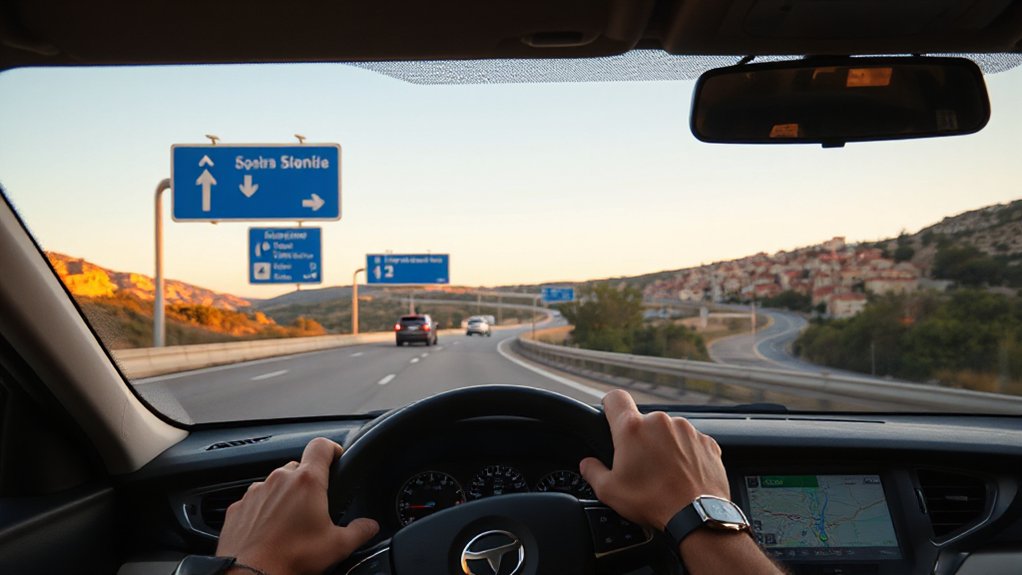
When you’re steering in Spain, familiarize yourself with GPS symbols and signage so you can react quickly and safely.
Look for common GPS icons and road signs, and use the map’s language toggle or concise landmarks to confirm your route.
If you’re unsure, compare the sign’s pictograms to the GPS display and proceed with caution.
GPS Symbols Decoded
GPS symbols can be confusing when you don’t speak Spanish, but you can rely on standard icons and signage to stay on track. You’ll quickly learn the basics by recognizing common symbols used for routes, exits, and destinations, which helps with decoding navigation even in unfamiliar areas.
Trust the iconography for intended actions, and always cross-check with the map view to confirm street names.
- Identify core icons (exit, toll, roundabout) to anticipate upcoming maneuvers.
- Note color cues and arrows that indicate direction, priority, and lane changes.
- Use intuitive symbols in combination with your GPS to validate routes before turning.
Signage Language Clues
Even if you don’t speak Spanish, you can rely on signage and GPS cues to keep you on track. Signage language is designed for quick recognition, so learn the basics before you drive. Look for universal elements: arrows, lane lines, and color coding that align with traffic symbols you’ve seen at home.
Use your GPS as a backup, but don’t rely on it exclusively; road signs provide the official instructions, especially at exits, roundabouts, or pedestrian zones. Pay attention to the shape and color of signs, which convey priority and warnings even when text isn’t clear.
When in doubt, slow down and assess the surrounding traffic symbols, then follow the largest, most prominent indication you can verify with your map or GPS.
Carrying Passengers and Luggage: Legal Limits
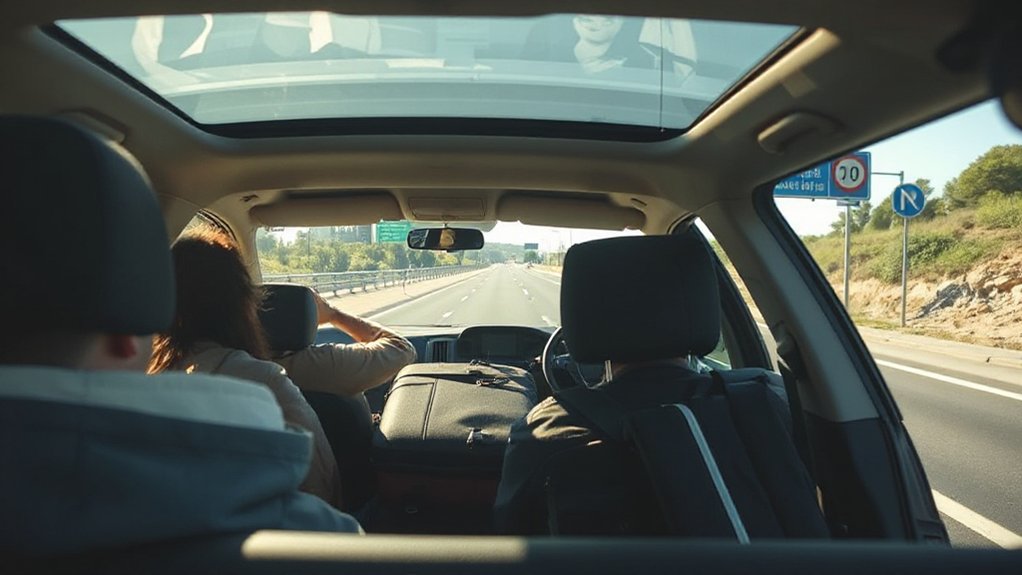
In Spain, carrying passengers and luggage safely is as important as obeying speed limits; you must guarantee everyone buckles up and loads are secure before you start moving.
- Follow passenger safety rules: use seat belts for all occupants, child restraints where required, and avoid distracting behaviors.
- Secure luggage properly: distribute weight evenly, use appropriate racks or nets, and ensure items won’t shift during braking.
- Know the limits: don’t exceed vehicle weight ratings, and respect load height and width to maintain handling and visibility.
Passenger safety and luggage regulations demand you plan before departure, check the vehicle’s capacity, and adjust as passengers enter or exit.
If unsure, consult the owner’s manual or local authorities for guidance.
Seasonal and Weather Considerations for Driving
Seasonal changes and weather conditions affect how you drive in Spain just as much as road rules do. You should plan for shifts in visibility, traction, and daylight hours, especially in autumn and winter.
Be aware of Seasonal hazards like frost on rural roads, fog on inland valleys, and sudden rain that can create slick surfaces. In spring, beware of washed-out edges after heavy storms and frequent rain showers.
Summer heat can affect tire pressure and engine cooling, so check fluids and hoses before long trips.
Practice weather preparedness by carrying a high-visibility jacket, a warning triangle, and a charged phone.
Adjust speeds to conditions, increase following distances, and respect reduced daylight driving if clocks change.
Driving in Cities vs. Rural Roads in Spain
Driving in Spain’s cities and on its rural roads requires different approaches. In urban areas, expect tighter streets, higher pedestrian activity, and tighter parking constraints. You’ll navigate one-way systems, bus lanes, and frequent traffic controls.
In rural zones, roads widen, speeds rise, and wildlife or cyclists may appear unexpectedly. Stay alert for changing surface conditions and limited services.
Parking regulations vary by municipality; always check signs, meters, and loading zones before stopping.
On highways, maintain steady speeds and observe reduced visibility around curves. Traffic camera enforcement is active in both settings, especially near intersections and known congestion points.
Stay patient, plan your route, and adapt to environment shifts as you switch from city blocks to open countryside.
- Parking regulations and signage
- Traffic camera enforcement points
- City vs. rural driving adjustments
Quick Day-One Checklist to Stay Compliant
To start your day on the right foot, use this quick checklist to stay compliant from the moment you hit the road: confirm your license and driving documents are valid and carried at all times, verify vehicle insurance details, and make sure your vehicle registration is current.
Then perform a rapid vehicle check: tires, lights, mirrors, brakes, and fluid levels.
Verify you know local traffic rules, including speed limits and zones requiring extra caution.
Keep a copy of important contacts, emergency numbers, and roadside assistance.
Review your insurance policies for coverage gaps and required documentation.
Make certain you’re carrying proof of insurance and registration.
Schedule timely car maintenance, address any alerts, and log maintenance dates.
Stay proactive, organized, and compliant to reduce risk on day one and beyond.
Frequently Asked Questions
Do I Need an International Driving Permit in Spain?
No, you don’t need an international driving permit if you hold a valid EU or EEA license; otherwise you’ll need an official translation or IDP. Confirm Driving license validity and Road signage regulations are always current for Spain.
Are There Tolls on All Major Highways?
Yes, not all major highways have tolls, but many do. You’ll encounter Spanish tolls on certain routes, so plan for highway fees; carry cash or card, and check routes before traveling to estimate costs.
Can I Use UK GB Driving License After Brexit in Spain?
Yes, you can, but check Brexit regulations; your UK GB license remains valid for driving in Spain for now, though I’d recommend exchanging it soon for a Spanish permit to avoid future complications with license validity.
Do Motorcyclists Have to Wear Helmets at All Times?
Yes, you must wear a helmet at all times while riding a motorcycle. Following Motorcycle safety and Helmet regulations, you protect yourself, comply with law, and reduce injury risk; always secure a certified helmet and proper protective gear.
Are There Strict Speed Limits in Rain or Fog?
Yes, there are stricter limits in rain or fog. In bad weather, you must slow down well below posted limits to maintain control and distance. Weather conditions demand cautious driving for road safety and reduced stopping distances.
Conclusion
Quick wrap: obey the rules or pay the price, right? Think of Spain’s roads as a grand theater where speed limits, seat belts, and sober driving are the starring cast—ignore them and you’ll bomb the performance. Follow the signs, use belts, respect blood alcohol limits, and buckle kids in. Keep luggage light, doors shut, and music low enough to hear the bike messenger. Drive prepared, drive calm, drive home. The lesson? Compliance is your safest, cheapest souvenir.