
To navigate roundabouts and junctions in Spain, yield to traffic already circulating, not to entering vehicles, and use signals early when approaching, changing lanes, or exiting. Choose your entry and exit lanes in advance, and keep steady speeds while merging. Cyclists and pedestrians may have priority at crossings, so slow and scan. In bad weather or work zones, follow reduced speeds and temporary signs. If you keep these rules in mind, you’ll manage most situations with confidence as you progress.
Key Takeaways
- In Spain, treat roundabouts like standard European ones: yield to circulating traffic, enter when safe, and signal both entering and exiting.
- Use early indicators and keep them on until you pass the exit; cancel after leaving the roundabout.
- Priority: vehicles inside the circle have right of way; yield to pedestrians and cyclists at crossings.
- Choose your exit lane early based on your destination; follow road markings and signs to guide lane changes.
- In heavy traffic or poor conditions, slow down, plan gaps early, and maintain steady speed while watching pedestrians and cyclists.
Key Facts About Spanish Roundabouts You Need to Know
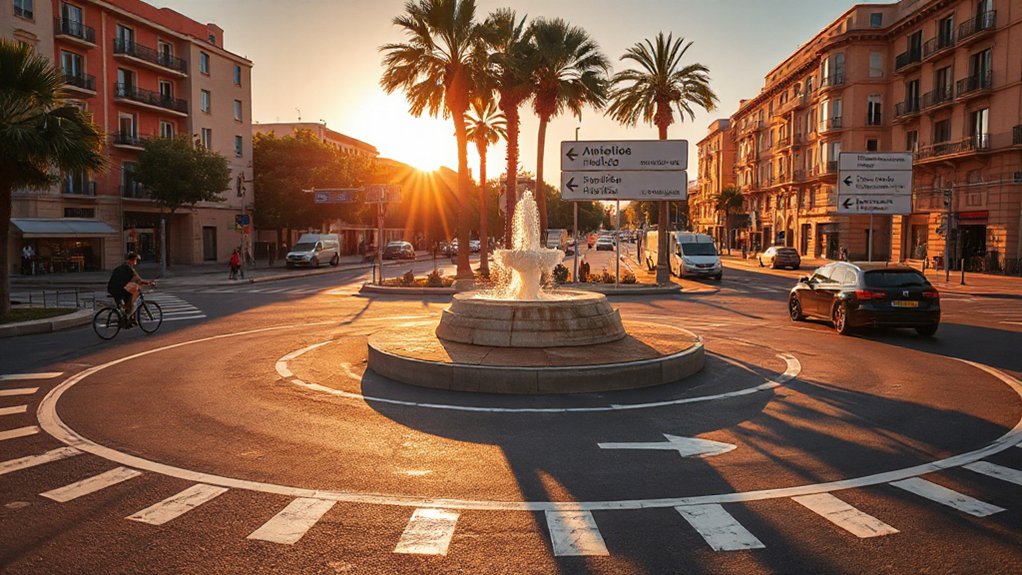
Roundabouts in Spain operate similarly to many European systems, but it’s essential to know a few key specifics. You’ll encounter clear traffic regulations that govern entry, speed, and yielding. Observe posted signs and circular arrows indicating direction and priority.
In practice, you merge with the circulating traffic when there’s a safe gap, then exit at your chosen road. Pay attention to yield lines at entry points and avoid stopping inside the circle unless necessary.
Road markings play a vital role: lane demarcations guide you through multi-lane rounds, and pedestrian crossings near exits demand caution. Respect variable speed limits near urban centers and school zones.
Maintain steady steering, minimize abrupt lane changes, and use indicators when changing lanes or preparing to exit. Consistency, awareness, and measured actions keep you aligned with traffic regulations and road markings.
Who Has Priority at Spanish Roundabouts
In Spain, the vehicles already circulating inside a roundabout have priority over those entering. You yield to traffic on the roundabout, not to vehicles attempting to enter from the outside. Observe priority rules at all junctions, and don’t rely on signals alone.
Look left before merging, and maintain a steady pace to keep traffic flow smooth. If you’re approaching from a minor road, slow and give way unless signs indicate otherwise.
Pedestrians and cyclists may have dedicated crossings; respect their priority where shown. Use indicators to show your exit intent, then depart with a steady arc, signaling off as you leave.
In unfamiliar areas, follow local signage and lane markings to preserve consistent traffic flow and safety.
How to Safely Merge Onto a Roundabout
To merge safely onto a roundabout, slow down in advance and assess the gap. You control your speed and position, signaling early to indicate your intent. Choose a gap that lets you enter without forcing other drivers to brake or swerve. Maintain a steady, smooth approach; abrupt steering invites collisions.
Align your vehicle with the circulating lane you expect to join, and check blind spots before merging. Be mindful of pedestrians at Pedestrian crossings near access points, yielding when necessary and waiting for a safe break in traffic.
If traffic slows, let gaps develop rather than forcing entry. Use traffic calming cues provided by road design to gauge vehicle speeds and spacing, ensuring safe entry without disrupting the flow.
Two-Lane Roundabouts: How to Navigate Smoothly
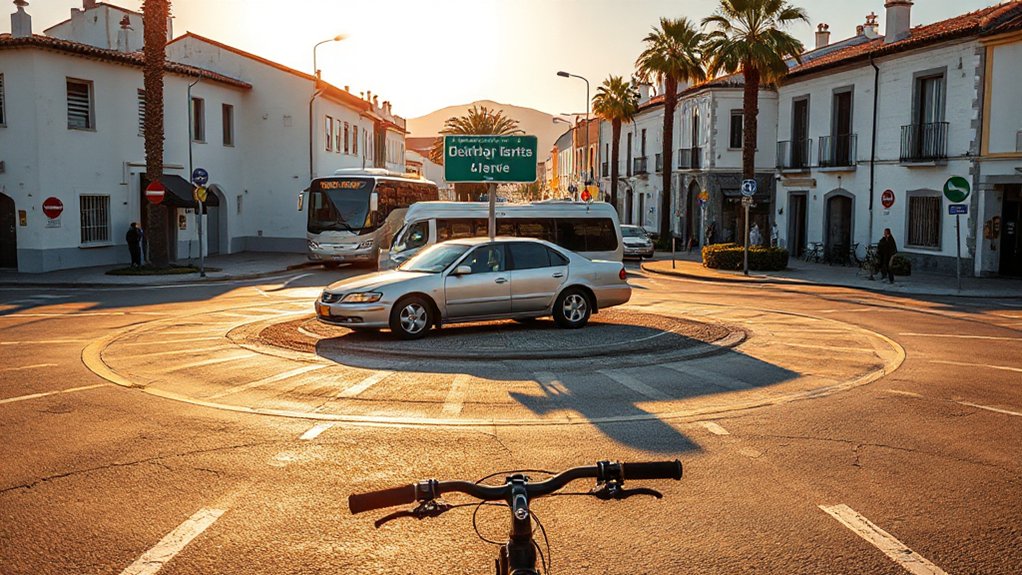
When you approach a two-lane roundabout, position yourself in the correct lane early and signal your intent to keep your ride predictable.
Keep a steady speed, observe traffic in both lanes, and use clear lane positioning techniques to stay visible to other drivers.
At entry, yield according to the rules, and be prepared to adjust if vehicles in the inside lane indicate they’re turning early.
Lane Positioning Techniques
Two-lane roundabouts demand careful lane positioning to maintain flow and safety: stay in the appropriate lane before entering the circle, signal early, and choose your lane based on your exit. You should position yourself well in advance, aligning with the circulating traffic and avoiding sudden lane changes.
If you miss your exit, go around once more rather than cutting across lanes. Maintain steady speeds to reduce weaving and give others time to react. Use clear, early signaling to communicate your intent to turn off.
This technique supports traffic calming goals and reflects urban planning principles that prioritize predictable movements, reduced conflict points, and safer pedestrian interactions. Practice disciplined lane discipline to sustain efficiency and minimize disruption within the roundabout.
Signal and Observe Early
Signal early and scan ahead to keep two-lane roundabout traffic smooth. You approach with steady speed, selecting a lane based on your exit. Check mirrors and signal your intent promptly, then move decisively into the correct flow.
Observe road markings and lane arrows to maintain alignment as you circulate. Early observation helps you anticipate other vehicles’ moves, reducing sudden braking or last-minute lane changes.
Maintain a safe following distance, especially near entry points where drivers merge. Practice smooth steering and steady throttle to prevent wobble across lanes.
Respect traffic etiquette by yielding to pedestrians and bicyclists where indicated, and avoid cutting across lanes to your exit.
Clear signaling and deliberate positioning support predictable, safe navigation through the roundabout.
Yield Rules At Entry
Entering two-lane roundabouts requires yielding to traffic already on the circle. When you approach, slow down and assess the situation. If traffic is circulating, wait; if not, enter with care. Follow road markings to align your lane for the exit you’ll need. Respect traffic signals at the approach and inside the junction, and be prepared to stop if a light changes.
Entering smoothly minimizes disruption for others and reduces the risk of collisions.
- Check for pedestrians and cyclists before merging
- Use turn signals to indicate your exit intention
- Maintain a steady speed and steady lane position
- Don’t overtake inside the roundabout
- Yield to vehicles already in the circle, not just at the entry
Traffic signals and road markings guide your timing and lane choices for two-lane roundabouts.
Choosing the Right Lane on Multi-Lane Rounds
When you approach a multi-lane roundabout, choose your lane early based on your exit. You should position yourself in the lane that aligns with your intended exit, then maintain that lane until you pass the exit before your target.
Signal early but only when you reach the correct lane and your exit becomes clear. If you miss your exit, don’t panic—continue around and re-enter when appropriate in the next circuit.
Stay in your lane, avoid weaving, and keep a steady speed to preserve traffic flow. Observe Traffic etiquette and respect other drivers’ space.
Road markings guide anticipation: dashed lines indicate permissible changes, solid lines prohibit switching mid-loop.
Plan ahead, verify lane changes with mirrors, and exit smoothly.
When to Signal Entering and Exiting a Roundabout
As you approach a roundabout, activate your signal at the right moment to communicate your intended path. Do so before entering to clarify whether you’ll continue straight, turn right, or exit soon.
Inside the circle, avoid signaling unless exiting; otherwise, you may confuse other drivers and disrupt traffic flow.
Upon approaching your exit, use your indicator to show intent, then leave smoothly. Make certain your actions align with road markings and posted signs to maintain predictability.
- Signal entering only if you intend to turn immediately.
- Keep speed steady to preserve Traffic flow and space.
- Use your right indicator when exiting to warn others.
- Don’t signal for a straight-through unless required by local rules.
- Check mirrors and blind spots before changing position.
Road markings guide behavior; follow them precisely.
Choosing the Right Lane at Major City Junctions
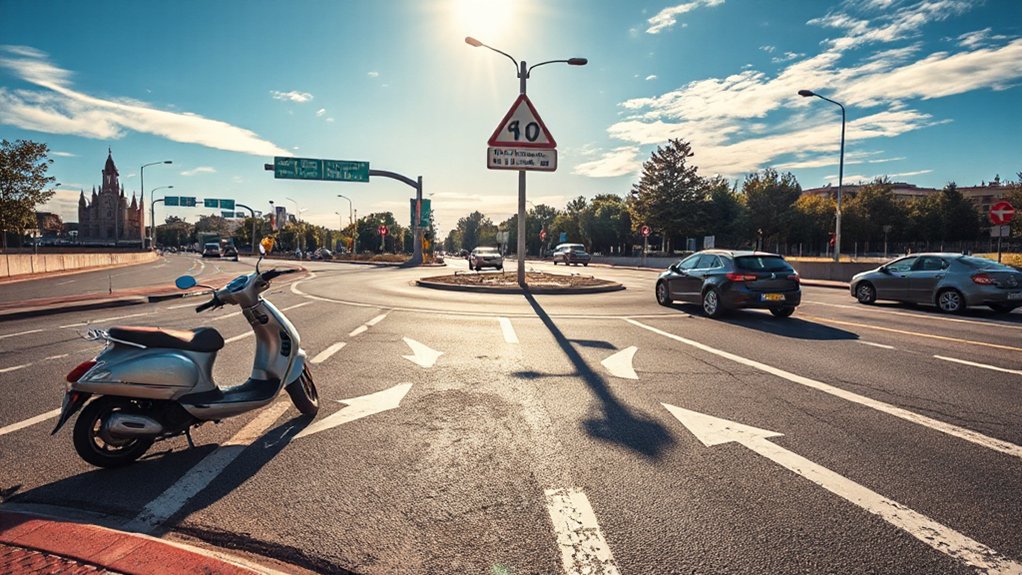
Maintain steady speed to allow safe positioning without blocking others. Use clear vehicle positioning: align with the lane center, mirror checks, and signal your intentions well in advance.
In Spain’s heavier urban streets, turn lanes may diverge suddenly; stay in your lane unless instructed otherwise by traffic signs or road markings. If you’re in doubt, reduce speed and reassess your exit, rather than forcing a risky move.
Consistency in lane choice enhances predictability for everyone.
Who Yields at T-Junctions and Crossroads
At T-junctions and crossroads, you generally yield to traffic on your right if you’re entering from a minor road, unless signs, signals, or road markings indicate otherwise. You should approach calmly, assess priorities, and proceed when safe.
Expect delays during peak hours and weather-related traffic congestion. Respect signage indicating priority or stop, and be mindful of road maintenance work that may alter right-of-way.
- Yield to vehicles on your right unless marked otherwise
- Stop if required by signs or signals
- Watch for vehicles emerging from side roads
- Adapt speed to traffic conditions and congestion
- Observe road maintenance crews and follow temporary rules
Cyclists and Pedestrians at Junctions: What to Expect
When approaching junctions in Spain, cyclists and pedestrians have distinct rights and responsibilities that you must respect to stay safe. You’ll encounter marked crossings, signals, and shared spaces.
Look for pedestrian priority at zebra crossings and be prepared to stop for people crossing. For cyclists, stay in your lane or designated cycle path, use arm signals, and yield to pedestrians when required.
Traffic calming in urban design aims to slow speeds and separate vulnerable users, yet you still must anticipate vehicle moves. At complex junctions, reduce speed, scan both directions, and avoid sudden maneuvers.
Keep eyes on pedestrian flow, especially near schools or markets. Follow posted signs, obey signals, and remember that visibility and courtesy prevent conflicts.
What Happens When Priority Comes From the Left
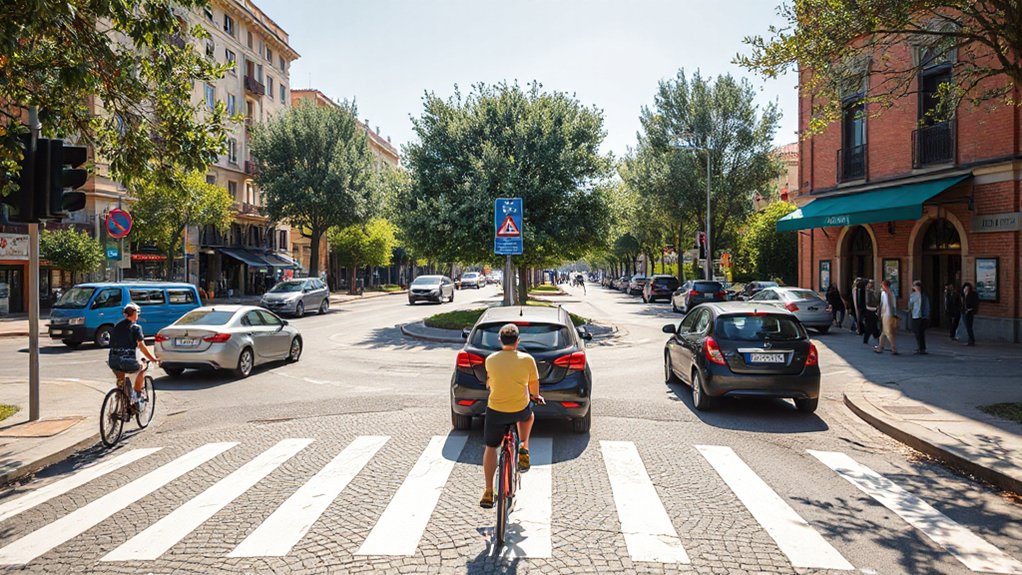
If priority comes from the left, you must yield to the traffic on your left before proceeding.
On approaches, assess who’s priority and whether you’re entering or exiting the roundabout.
You’ll stop if needed, then merge carefully when the path is clear.
Remember, right-of-way rules apply to all users, including cyclists and pedestrians, improving Traffic etiquette for everyone.
- Yield to vehicles already on the roundabout from your left
- Enter only when you can do so safely without forcing others
- Use indicators to signal your intention
- Watch for pedestrians and cyclists crossing exits
- If in doubt, pause and re-evaluate before continuing, following Emergency procedures if an incident occurs
Common Mistakes to Avoid on Spanish Roundabouts
Be mindful to yield to the traffic flow already in the roundabout, not just to the car in front of you.
Choose the correct entry lane and avoid switching lanes inside the circle, which causes confusion for others.
Read roundabout signage carefully, as misreading signals can lead to wrong exits or missed priorities.
Yield To Traffic Flow
In Spain’s roundabouts, you must yield to the traffic already circulating inside the circle, not to vehicles approaching from the outside. Yielding properly keeps flow smooth and reduces surprises at entry. Watch for pedestrians and cyclists, then merge when safe, using appropriate signals and speed.
- Observe road markings and signs before entering
- Check mirrors, blind spots, and the circulating traffic
- Enter with a steady speed, not abrupt gaps or decelerations
- Avoid three-point turns or stopping in the circle
- Use lane discipline and clear exits to prevent confusion
Traffic etiquette guides interaction, while road markings provide the framework for entry and exit. Maintain awareness of others’ intentions, adjust speed as needed, and prioritize safe, predictable movements.
Wrong Lane Entering
Entering a wrong lane on a Spanish roundabout is a common mistake with serious consequences. You must maintain lane discipline from approach to exit, and never assume lane choice is obvious.
As you approach the circulatory road, check mirrors, signal early, and observe signs and road markings.
If you drift into the wrong lane, don’t panic; safely adjust by signaling, reducing speed, and moving to a correct lane only when it’s safe.
Incorrect lane changes disrupt traffic flow, cause abrupt stops, and can trigger collisions with vehicles already circulating.
Stay vigilant for exits and keep a steady pace to avoid squeezing into gaps.
Practise deliberate, measured movements, plan your exit in advance, and prioritize smooth, predictable behavior for safer, more efficient roundabout travel.
Roundabout Signage Misread
Misreading roundabout signs can undermine your lane choice and exit timing. When you encounter multiple exits, you must interpret roundabout signage quickly to stay in the correct lane and avoid abrupt moves.
Misinterpretation risks misalignment with Spanish traffic flow and confusing post-exit maneuvers. Stay alert for exit arrows, lane drums, and road markings that differ from your home country. If unsure, reduce speed and position for a cautious retake at the next signal or exit.
- Read signs early and confirm exit numbers
- Distinguish between straight-through and exit-only lanes
- Watch for supplementary arrows on the pavement
- Prioritize signaling before leaving the roundabout
- Recheck exits if lanes converge
Merging Safely at Rural Junctions
Observe road condition clues, such as narrow lanes, loose gravel, or abrupt bends, and adjust your position accordingly. Maintain steady throttle and use mirrors to track vehicles at your rear.
When visibility is limited, reduce speed sooner, increasing your stopping margin. Traffic calming measures, like raised humps or narrowed lanes, may influence your entry, so slow and proceed with caution.
Adhere to rural signage and comply with posted limits. Communicate intention early, then merge smoothly, keeping a predictable path for others.
Entering and Exiting Roundabouts in Heavy Traffic
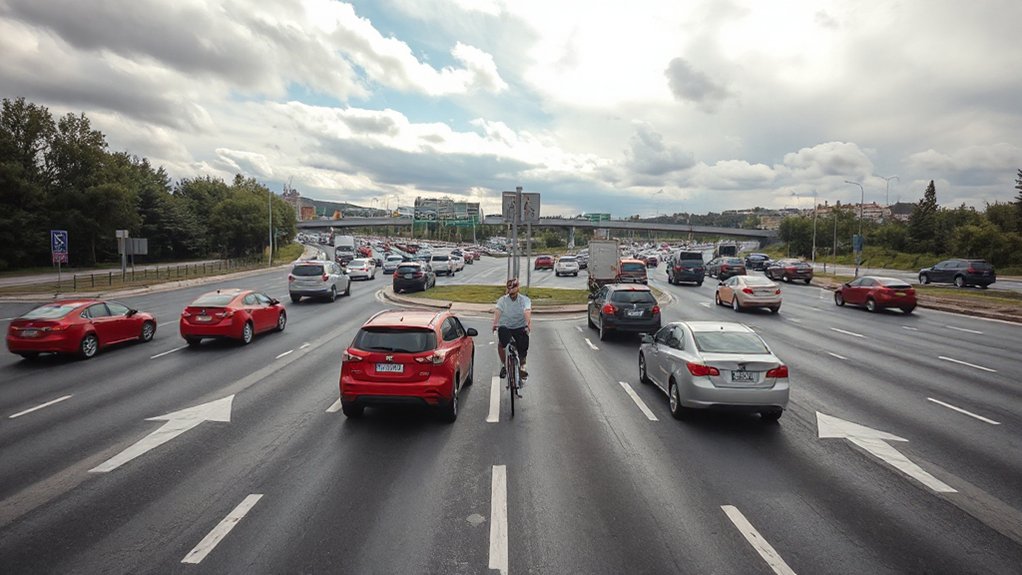
When traffic slows to a crawl at a roundabout, plan your entry carefully: yield to vehicles already inside the circle, signal your intention, and enter only when there’s a safe gap.
In heavy conditions, keep steady speed, anticipate gaps, and avoid stopping inside the circulating lane. You’ll reduce congestion and improve safety for everyone, including pedestrians at crossings around the approach.
- Yield early, then merge smoothly with the flow
- Maintain lane discipline; don’t change lanes in the circle
- Use indicators to show exits well in advance
- Watch for pedestrians at nearby crossings and crossings visibility
- Don’t block the entry; let a safe gap form before entering
Traffic congestion requires patience; stay calm, scan exits, and exit decisively.
Verifying Exits: GPS Tips and Road Signs in Spain
Verifying exits in Spain’s roundabouts starts with clear GPS guidance and attentive road signs. You should trust your navigation to lead you to the correct exit before entry, but confirm visually as you approach. Check lane markings, arrow positions, and exit numbers shown on screen, and compare them with the road signs posted along the dual carriageway.
If the GPS conflicts with signage, follow the signs, not the device. Maintain steady speed, signal early, and anticipate abrupt lane changes near commercial zones. Be aware of Parking regulations and emergency routes posted near exits; they can redirect traffic during incidents.
When in doubt, reduce speed and watch for pedestrians, cyclists, and local traffic patterns to ensure a safe, compliant exit.
Rules to Know Near Schools and Hospitals
In or near schools and hospitals, you must respect proximity speed limits to protect pedestrians and patients entering or leaving facilities.
Watch for school zone signals and obey them, especially during start and end times when children are present.
For hospital access, follow marked lanes and any temporary restrictions to keep ambulance routes clear.
Proximity Speed Limits
- Look for downsize signs as you approach
- Reduce speed before entering the zone
- Watch for pedestrians and crossing sections
- Expect intermittent enforcement during school hours
- Resume normal speed only after clear signaling
School Zone Signals
In practice, you’ll encounter reduced speeds, flashing lights, and signage that designates a school zone. Look for traffic signals indicating pedestrian crossings and turn restrictions near school entrances.
Adhere to temporary limits during school hours and follow pavement markings that guide safe stopping distances.
Approaching roundabouts near campuses, yield to students, crossing guards, and buses when indicated.
Maintain vigilance for unexpected pedestrian movement and erratic vehicle behavior in busy mornings and afternoons.
Always prioritize safety, comply with the posted signs, and proceed with deliberate, predictable actions.
Hospital Access Rules
What’re the access rules you must follow near hospitals and schools to guarantee safety and smooth traffic flow? You’ll keep clear routes and minimize disruption by obeying restricted zones, no-stopping areas, and access lanes dedicated for emergency and staff vehicles.
Always yield to ambulances with sirens and use gradual braking at entrances. Respect loading zones outside hospitals and avoid blocking driveways or ambulance bays. Follow posted hours for school or hospital zones and adapt to temporary signs during emergencies or events.
- Don’t block entrances, exits, or emergency bays
- Yield to medical emergencies and respond promptly
- Observe no-stopping and restricted access markers
- Use designated lanes and turn-only sections
- Adjust speed, signaling, and distances near facilities
Weather and Road Conditions: Roundabout Safety
Weather and road conditions can dramatically affect roundabout safety in Spain. You should monitor weather updates before travel and during drives, as rain or fog can reduce visibility and traction.
Approach with cautious speed, especially at entry and exit points, and give pedestrians and cyclists ample space. If surface water or ice forms, avoid sudden braking or sharp steering; instead, brake smoothly and steer gently to maintain control.
Road construction nearby can alter lane patterns, signage, and milepost cues, so follow temporary signals and reduced speed limits without assumptions.
Use appropriate headlights in low visibility, and remember that drainage issues may create slick patches after showers.
Stay informed about Weather updates and road construction to plan safer routes and decision points.
Quick Recap: Step-by-Step to a Roundabout
As you approach a roundabout, follow the entry rules: yield to circulating traffic and pedestrians, choose your lane early, and align with the intended exit.
Signal appropriately at intersections: indicate when you enter, and use turn signals to show your exit intentions.
Keep your actions precise and predictable to cooperate with other drivers and guarantee safe navigation.
Roundabout Entry Rules
Entering a roundabout in Spain starts with noticing the yield signs and lane position; you must give way to traffic already circulating and to pedestrians at pedestrian crossings. You approach with caution, align to the correct lane, and enter when safe.
- Observe Traffic signs and follow lane rules to maintain a steady flow
- Choose the appropriate entry lane based on your exit
- Yield to vehicles inside the circle and pedestrians at crossings
- Don’t cut across lanes; signal your intended exit
- Adjust speed to match circulating traffic and exit smoothly
Remember: Road markings guide your path, and traffic signs reinforce entry priority. Maintain situational awareness, anticipate others’ moves, and keep a calm pace to reduce confusion.
Signaling At Intersections
When approaching intersections en route to a roundabout, you signal clearly to communicate your intended exit. You should use the correct indicators for turns and lane changes, keeping signals active until you pass the intended point.
At junctions, mirror checks precede any signaling to confirm your position relative to other traffic. In Spain, Traffic etiquette requires early, deliberate signaling to minimize surprises for other road users.
Road markings indicate where turns must begin and where lane changes are appropriate, so follow them precisely.
When exiting, cancel your indicators after you’ve cleared the junction to avoid misleading others.
Maintain steady, predictable movements, avoid abrupt shifts, and prioritise safety over speed.
Consistent signaling improves flow and reduces confusion at intersections.
Practice Tips and Resources to Build Confidence
To build confidence steering through roundabouts and junctions in Spain, start with practical practice that mirrors real-world scenarios, gradually increasing complexity as you improve. You’ll reinforce procedures, timing, and lane discipline while observing Historical context and Cultural differences that shape local driving norms.
Use focused drills, mirror checks, and deliberate signaling to sharpen anticipation and safety.
- Practice at low-speed roundsabouts with a clear exit plan
- Rehearse entry timing based on indicators and vehicle gaps
- Vary routes to expose differing signage and road markings
- Simulate pedestrian and cyclist interactions for awareness
- Review local rules and historical trends to align with expectations
Frequently Asked Questions
Can I Use My Mobile Phone While Driving Through Roundabouts in Spain?
You shouldn’t use your mobile phone while driving through roundabouts in Spain. Focus on Road signage, and follow Emergency procedures if needed; keep hands on the wheel, and stay attentive to traffic, pedestrians, and cyclists at all times.
Are There Penalties for Incorrect Lane Choices on Multi-Lane Roundabouts?
You’ll face penalties for incorrect lane choices on multi-lane roundabouts. Lane discipline matters; signage clarity guides you. As you drive, the symbol of painted arrows warns you to maintain correct lanes, obeying rules, avoiding fines and collisions.
Do Cyclists Have Priority Over Drivers at Spanish Roundabouts?
You should understand that cyclists do not have automatic priority over drivers at Spanish roundabouts. Practice Cyclist safety, follow Roundabout signage, yield when necessary, and proceed confidently only after ensuring the way is clear.
How Do I Handle Roundabouts With Tram Tracks in Spain?
Yes, watch for Tram track hazards and slow before crossing them; follow Roundabout signage clarity, stay in your lane, yield to trams when indicated, and reduce speed on entries and exits for smooth, standards-compliant navigation.
What Is the Correct Priority When Two Exits Are on My Right?
When two exits are on your right, you yield to the rightmost traffic and take the nearer exit safely. You’ll notice Roundabout signage and lane markings guiding you, ensuring precision, clarity, and standard driving behavior throughout the maneuver.
Conclusion
Mastering Spanish roundabouts comes down to awareness, patience, and following the rules. As you practice, you’ll notice most incidents stem from misjudged gaps or choosing the wrong lane. Some say roundabouts reduce crashes because of built-in yield rules, while others argue visibility and speed control matter most. The truth lies in consistent, deliberate execution: signal, yield to traffic already in the circle, select the correct lane, and exit smoothly. With that approach, you’ll navigate confidently every time.