
Exploring Madrid’s historic neighborhoods like a local puts you in the rhythm of the city. You’ll wander La Latina’s sun-warmed streets, follow tavern doors to hidden markets, and let street art tell Madrid’s living story. Malasaña pulses with vintage finds and cozy cafés, while Lavapiés blends scents, languages, and crafts into daily life. Taverns cradle century-old charm, and plazas become social hubs where conversations drift with the breeze. Stay curious—the next steps unfold deeper character and secrets.
Key Takeaways
- Wander through Malasaña, Barrio de Las Letras, Chueca, and Lavapiés to feel distinct vibes: vintage shops, literary echoes, hidden courtyards, and multicultural street life.
- Follow human-scale routes: narrow pavements, courtyards, and intimate cafés that reveal Madrid’s history beyond grand boulevards.
- Start at La Latina, stroll to El Rastro, and let tavern doors, market stalls, and sun-bleached tiles guide authentic moments.
- Explore riverside paths along Manzanares for green spaces, jogging lanes, and parks that reflect seasonal Madrid.
- Seek taverns and markets off the main routes to hear local conversations, rumors, and stories that anchor neighborhoods’ living rhythm.
Why Madrid’s Historic Neighborhoods Feel Like Home
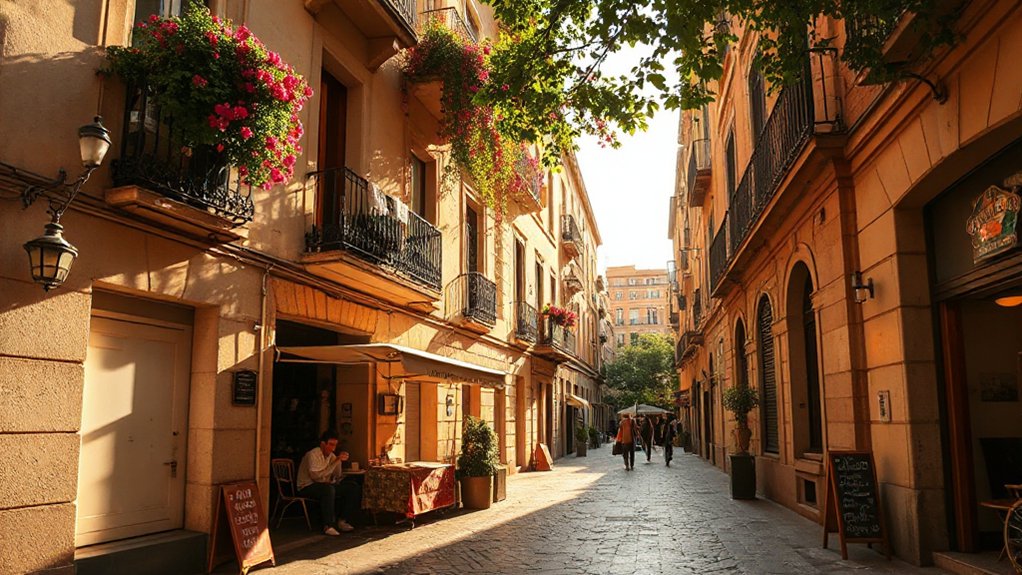
Madrid’s historic neighborhoods feel like home not by grand gestures, but through small, familiar details: a bakery’s warm oven, a plaza where neighbors linger after sunset, and streets that remember your footsteps.
You notice how Modern architecture nods to old façades, balancing glass with brick, as new tiles catch the light without shouting.
In alleys, you hear conversations shaping urban development, not as plans but as lived rhythms—a shortcut carved by daily routes, a shaded corner where kids trade scooters for stories.
You feel continuity, not renovation anxiety, because people keep showing up, sustaining markets, taverns, and murals.
The city unfolds through ordinary rituals, where history and present blend, inviting you to belong without pretending you arrived fully formed.
A Local Walking Plan: From La Latina to El Rastro
Starting in La Latina, you’ll trace a thread from tavern doors to market stalls, letting the block-by-block rhythm guide you toward El Rastro. You move with the crowd, noticing how local food braids flavor into each corner: tapas sizzle, olives gleam, and cafecitos steam into the afternoon air.
The stroll threads past historic architecture—the faded plaster, iron balconies, and sun-bleached tiles that hold stories of centuries. You feel the city’s pulse through conversations you overhear and footsteps you share with strangers who become guides by chance.
The route stays intimate: a short detour here, a doorway there, until El Rastro finally stretches before you, vibrant, messy, alive, and utterly Madrid.
Malasaña Walk: Vintage Stores, Café Corners, and Street Art
You wander Malasaña and feel the vintage stores hum with memory, their racks whispering stories you can wear.
You sip a coffee at a corner cafe, where the chalkboard menus and sleepy conversations become your map of mood and moment.
You notice the street art unfurling above, turning the walls into a living, moving guide to the neighborhood’s pulse.
Vintage Stores Vibe
The Malasaña vibe unfurls as you wander between narrow streets lined with vintage storefronts, each window a clue to decades of style. You’re drawn in by racks of well-worn jackets, faded band tees, and shelves stacked with quirky trinkets that seem to whisper stories.
The shopkeepers greet you with a casual nod, a wink, and recommendations that feel like insider tips. You don’t rush; you thumb fabrics, compare silhouettes, and note the textures beneath your fingertips.
It’s less about finding the perfect piece and more about the thrill of discovery, the scent of aged leather, and the soft murmur of retro vibes mingling with street chatter. Vintage shopping becomes a slow, satisfying scavenger hunt through memory.
Café Corners Charms
Malasaña’s café corners hum with a gentle rhythm that borrows from vintage whimsy and street art. You wander from a chalked doorway into a warm, low-lit room where metal chairs scrape and the air smells faintly of espresso and citrus.
The barista’s smile meets your eye as conversation threads through the clinks of cups, and you notice the wall lined with tiny polaroids and handwritten notes.
Each table hosts a small scene: a mismatched teacup, a paperback, a plant that seems to lean toward the light. You gravitate toward charming nooks where conversations drift and ideas spark.
In these intimate spaces, time slows, inviting you to linger, listen, and observe the neighborhood’s quiet, sculpted personality.
Street Art Discoveries
Color splashes bloom along the walls as you stroll through Malasaña, where each corner seems to ask you to pause and look closer. You trace the quick strokes of street murals that transform brick into chapters, each one whispering a piece of the neighborhood’s soul.
A doorway hosts a tiny gallery, where graffiti culture isn’t vandalism but conversation—a dialogue between artist and passerby. You notice how layers overlap: fresh tags over faded posters, a mural that bites into the next day’s routine.
Stores with vintage finds hum nearby, yet the real treasure sits on the pavement, in the ideas sprayed across façades. You move on, collecting stories as you walk, feeling craft, risk, and memory braid together.
El Rastro Beyond the Crowds: Market Vibe and Hidden Corners
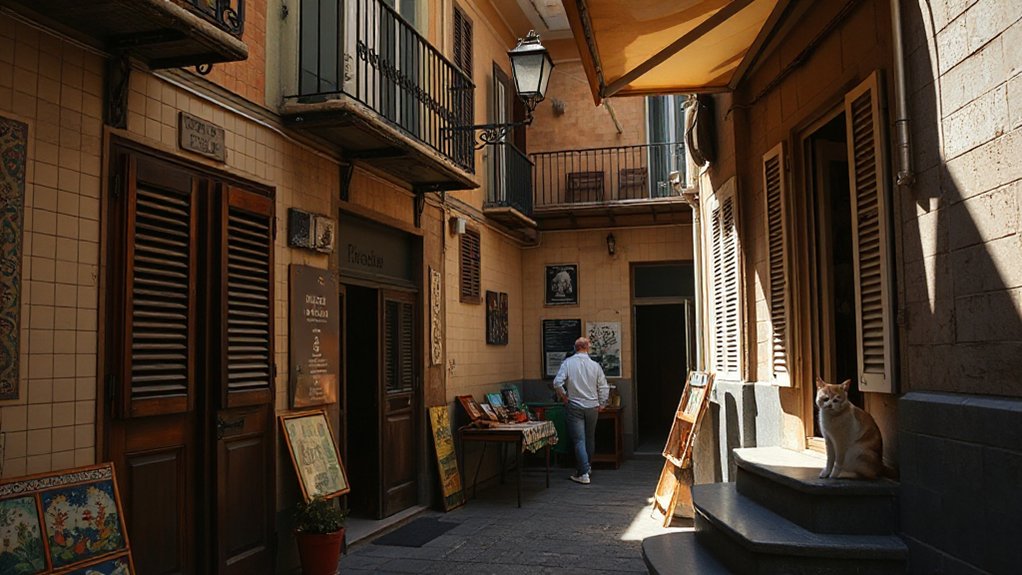
Behind El Rastro’s bustle, you’ll find pockets where the market hums at a gentler pace, a tapestry of stalls that don’t shout so much as invite you to listen. You drift past secondhand crates, noticing the quiet conversations between sellers and neighbors. The local market isn’t just commerce; it’s memory, tucked between racks and weathered signs.
In the far corners, you’ll spot overlooked shelves of brass trinkets, old maps, and small ceramic bowls that feel oddly intimate, as if they’ve waited for a familiar hand. The rhythm shifts when you slow down, letting fragrances and voices fuse into a single thread.
Hidden corners reveal a slower heartbeat, a sidestreet worth following rather than racing through.
Lavapiés: A Multicultural Pulse in Historic Streets
Lavapiés hums with multicultural street life, where conversations spill from cafés to markets and you feel the rhythm shift with each corner.
Historic nooks cradle stories as vibrant murals, musicians, and vendors layer textures of time and today, inviting you to listen closely.
You’ll taste a chorus of local food and see arts bloom in unexpected places, proving that the pulse of this neighborhood is inseparable from its streets.
Multicultural Street Life
In Lavapiés, the streets thrum with a steady, welcoming pulse: markets spill scents of cumin and citrus, while storefronts display a tangle of scripts in Arabic, Tamil, and Spanish. You walk, listening to vendors barter with warmth, tracing conversations that jump between languages and neighborhoods.
Multicultural street life isn’t noise for noise’s sake; it’s a living collage where daily rhythms become shared rituals. You notice the way food, music, and greetings braid together, inviting you to linger.
Cultural festivals and traditional crafts punctuate the day, weaving memory into the present. Here, you don’t just pass through—you participate, observe, and absorb the neighborhood’s evolving heritage.
- Markets blending cuisines and languages
- Street musicians layering melodies across borders
- Workshops where elders pass down techniques and recipes
Historic Nooks And Vibes
The maze of Lavapiés hides nooks that feel like old secrets told aloud in rhythm and color. You wander narrow lanes where doors lean toward each other, listening for whispers of centuries. In the shadows, local architecture threads through every facade, a mix of brick, plaster, and balcony lace that age wars softly with new paint.
You notice small workshops tucked between tapas bars and chalked storefronts, where traditional crafts survive on patient hands and patient hours. A corner mural hums with memory, a doorbell echoing stories of arrivals and departures.
The vibe is tactile, almost edible—dust motes in sunbeams, the scent of coffee and ink, a quiet, persistent pulse beneath the bustle. Lavapiés speaks in textures, not just sounds.
Local Food And Arts
What flavors and colors collide on Lavapiés’ streets, inviting you to taste the world in a single bite? You wander past markets and courtyards where Local cuisine threads through every vendor, and you sense an unspoken promise: you’ll learn to read a neighborhood by its aromas.
You notice how walls double as canvases in light and shadow, proving that Artistic hubs aren’t just studios—they’re daily accomplices to your appetite. You realize that the pulse here isn’t slick polish but improvisation, a menu of contrasts that stays with you.
- Steam from spice stalls curling beside graffiti-laden alleyways
- Flamenco echoes meeting North African tea across sunlit sidewalks
- Tiny galleries powering block parties with murals and music
Chueca’s Historic Lanes and Hidden Courtyards
Chueca hides its oldest whispers in narrow lanes where laundry lines arc between facades and steps curl up to quiet courtyards, inviting you to pause and listen for secrets tucked between doors. You’ll notice how Historic lanes thread through the neighborhood, guiding your gaze from sunlit plazas to those intimate spaces tucked behind doorways.
In the shade of tall balconies, you sense a hush of stories—neighbors sharing a joke, a chalk outline of a courtyard, a cat looped along a stone stair. Hidden courtyards reveal themselves in moments: a peek through a gate, a scent of orange blossoms, a fountain’s soft sigh.
The lanes don’t just connect places; they connect memories you’ll carry when you leave.
Barrio De Las Letras: Literary Traces and Bookshops
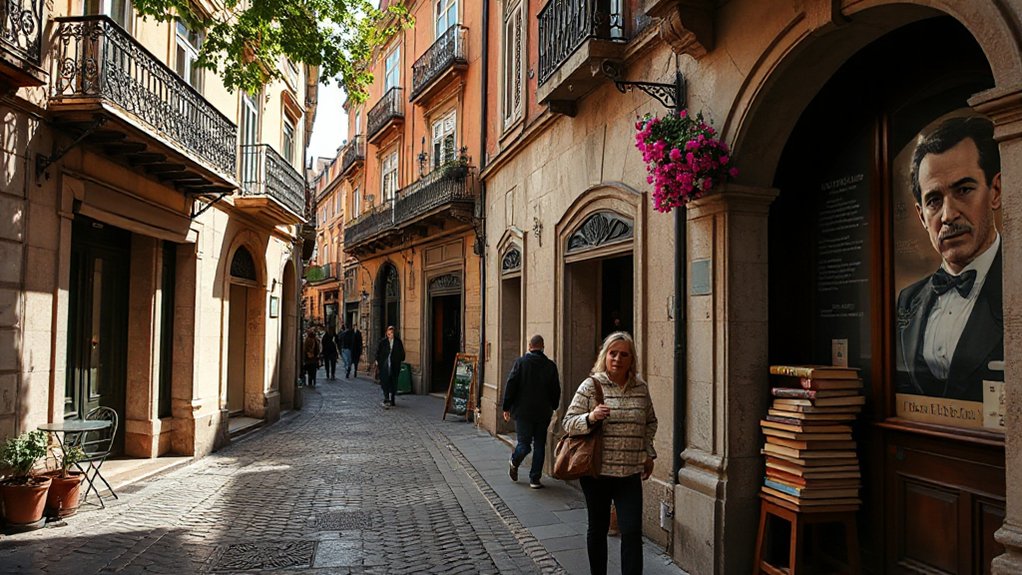
Perhaps you’ll notice it first in the quiet hum of a neighborhood where authors once walked, coffee in hand, tracing the same streets you now tread. Barrio de Las Letras reveals its pulse through Literary landmarks and the rhythm of bookshop atmospheres, where shelves seem to murmur prior chapters. You wander past facades that hosted Cervantes and Lope de Vega, and you feel history leaning in. The air smells of ink and toast, a mash of now and then.
You cluster around small tables, listening for a line that could have sparked a scene.
- Cafés pair coffee with archived drafts, inviting private musings.
- Bookshop windows glow, offering glimpses of forgotten epigraphs.
- Narrow courtyards hold literary whispers beneath jasmine.
How to Navigate Old Madrid on Foot: Practical Routes
From Barrio de Las Letras, you’ll step into Old Madrid with a practical compass in hand: a set of walkable routes that let you feel the city breathe at street level. You move along narrow pavements where history hums under your steps, tracing routes that blend hidden courtyards with grand facades.
You’ll notice how modern transportation threads into daily rhythms without erasing character, as tram lines and bike lanes weave beside centuries-old facades. Urban planning shows up in scaled, human-friendly blocks, inviting pauses at plazas where voices mix with church bells.
These routes emphasize rhythm over speed, enabling spontaneous discoveries—bookshops, cafés, tiny galleries—while keeping you calibrated to the neighborhood’s tempo. You leave with a map of footsteps, not just streets.
Tapas Hops: Where Madrileños Eat Like Locals
You trail through narrow lanes, where the clink of glasses and sizzle from a grill tell you you’re stepping into local territory. From hidden jamón gems to winding local tapas trails, you’ll notice how neighbors share plates and stories alike.
It’s in these small, unpolished spots that Madrid’s heart beats, inviting you to taste the city the way Madrileños do.
Local Tapas Trails
Tapping into Madrid’s local taprooms reveals a city where each bar is a doorway to a habit, not a hobby. You wander from 좁est lanes to sunlit plazas, chasing the rhythm of a night that begins with a small plate and ends with a shared smile.
Local tapas trails unfold as storytelling you can taste, a map etched in chipped mugs and friendly nods. You learn to read the room: order a caña, listen for the clinking, and follow the bartender’s tip on the next stop.
Tapas traditions greet you at every corner, and you collect Local culinary secrets like badges of neighborhood pride.
- A zigzag route through taverns that bite back with personality
- Plates that pair with evolving conversations and laughter
- Hidden courtyards where flavors linger and locals linger longer
Hidden Jamón Gems
A sliver of jamón glides across the tongue, salt and fat learning to play a quiet duet, and you realize the charm isn’t flash but fidelity—the ritual of jamón tasting perfected over patient hands.
In kitchens tucked behind brass doors, you glimpse secret recipes etched into practice, a shared language of texture, aroma, and timing. You chase these gems not for spectacle, but for the muted thrill of discovery, a Madrid pulse beating in every bite.
Churches, Squares, and Timeless Corners You’ll Miss in a Guide
Madrid is full of quiet corners you’ll notice only when you slow down: a baroque church tucked between modern façades, a sunlit square where a retiree chats with a kid on a bicycle, or a timbrel of bells that hints at centuries past.
You’ll sense Religious architecture guiding your pace, as Sacred sites spark small rituals in everyday life. The city teaches you to listen rather than rush.
1) A church doorway framing a street like a living painting
2) A square where shadows stretch and people trade quick greetings
3) A bell’s distant chime guiding you toward hidden histories
Daily Rhythm of the Markets: San Miguel and Beyond
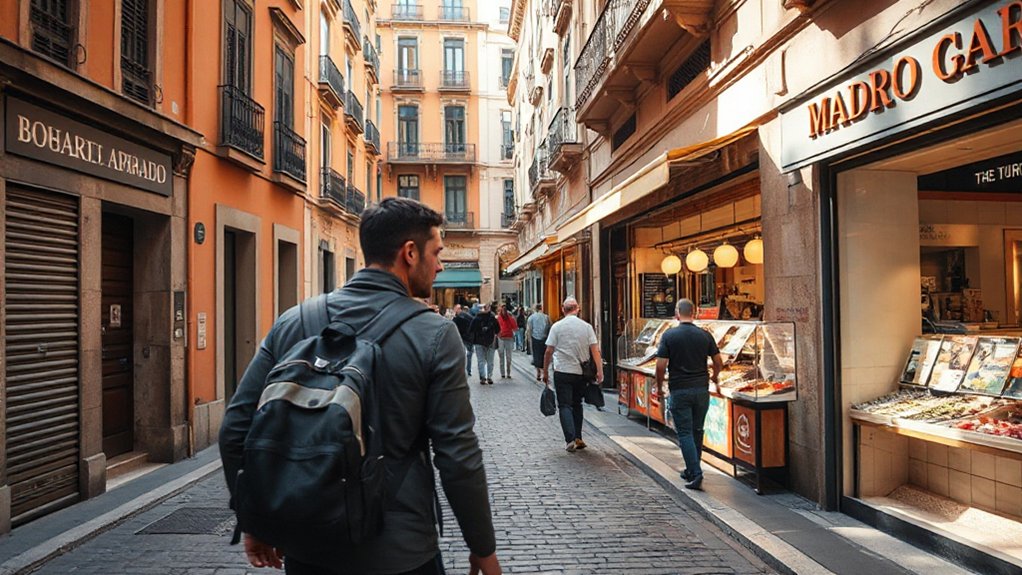
By dawn, the markets wake with a careful buzz: San Miguel first, where saffron-lit stalls spill into narrow lanes. Then outward to the surrounding plazas where vendors weave bread, cheese, and chatter into a daily rhythm you can almost hear in your bones.
You move from counter to counter, noting market traditions that endure: a nod, a receipt, a traded wink. The air fills with citrus, olive oil, and sun-warmed tomatoes; your steps slow to taste as you sample impulsive bites and steady routines.
Beyond San Miguel, side streets collect voices and recipes, revealing local flavors tucked in every snack and conversation. This rhythm isn’t spectacle but practice—a living map of Madrid’s appetite and memory.
Hidden Alleys and Secret Viewpoints With City Views
Narrow lanes twist away from the main boulevards, revealing secret courtyards and stair-stepped viewpoints where the city slides into your sightline like a whispered invitation. You’ll notice Secret alleys that thread between plaster walls, each turn offering a new sliver of the skyline and a quiet pulse of Madrid’s heart.
From above, rooftops frame grand, panoramic viewpoints that feel earned, not advertised, and you sense a resident’s patience in the angle of light.
- A narrow stairway that opens to a hidden terrace with a skyline peek
- A cul-de-sac balcony where chimneys punctuate the horizon
- A sunlit archway revealing distant domes and red-tiled roofs
Street Art That Tells Madrid’s Living Story
Street art in Madrid doesn’t just decorate walls—it narrates the city’s living history in bursts of color and facture. You walk through laneways where murals breathe with locals’ memories, each stroke a mile marker in time.
Street murals pulse in neighborhoods old and new, from renovated plazas to weathered facades, inviting you to pause and read the city’s conversations aloud. You sense graffiti history evolving as artists remix styles, reply to global currents, and honor overlooked voices.
The walls become storytellers, sometimes raw and urgent, other times playful, always tethered to place. You notice how permission walls and sanctioned projects shape access, yet the core impulse remains: to capture a moment, to keep Madrid honest and alive.
A Day by the Manzanares: Riverside History and Parks
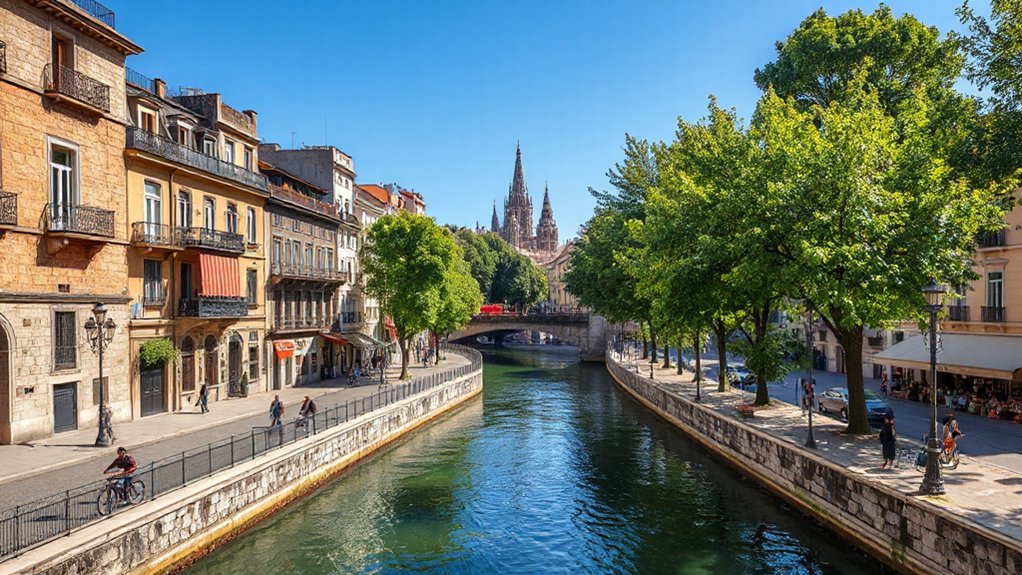
You’ll walk along the Manzanares and notice how the river carries memories of riverside landmarks that shaped Madrid’s character.
Parks line the banks like quiet chapters, inviting you to pause and feel the city breathe.
As you move, you’ll sense how this ribbon of green and stone connects history, leisure, and daily life in a single, unfolding story.
Riverside Landmarks
Gliding along the Manzanares, you can feel Madrid’s riverfront memories waking up—its paths, bridges, and parks telling a story of how locals have used this ribbon of water for centuries.
Riverside landmarks rise as quiet witnesses—granite embankments, timeworn villas, and the silhouettes of ferries that still carry histories between shorelines. You notice how life along the river folds into daily rhythms: coffee on the water, conversations under sunlit trees, and the hush before the boat tours glide past.
These markers map a shared memory, inviting you to trace routes once carved by walkers, cyclists, and families.
- Riverfront cafes buzzing with morning chatter
- Historic bridges framing skyline glimpses
- Boat tours slipping past waterfront relics
Parks Along Manzanares
Parks along the Manzanares unfold like green rooms along a river, each offering a pause from the city’s pace and a window into Madrid’s less told rhythms. You walk the riverside, feeling the current’s whisper as paths curve and become quiet listening spaces.
Manzanares parks host joggers, families, and lone readers, all drawn to the same horizon where water reflects brick and sky. Riverside pathways thread through meadow and shade, inviting quick detours or longer conversations with history.
You notice how the river shapes memory: old mills, planted embankments, and benches that bear the marks of countless conversations. It’s not just recreation; it’s a cadence, a living map of the capital’s seasonal character and evolving public life.
Architectural Echoes: Granada Street and Calle De La Cava
Granada Street and Calle de la Cava whisper with architectural echoes, where each doorway narrates a layered chapter of Madrid’s past. You walk the stones and feel the weight of centuries, a quiet dialogue between brick, iron, and weathered plaster.
I observe how street heritage hides in plain sight: corners that kept watch over traders, balconies that narrowed the light, and shopfronts that hosted whispered deals and bold ideas alike. The rhythm shifts with each turn, as if the city exhales history a little differently here.
- A brick façade bearing faded coats of arms, telling a civic story through time.
- A carved balcony rail catching a sliver of sun, hinting at daily life long ago.
- A narrow passageway, inviting you to imagine footsteps of residents and merchants.
Taverns With Century-Old Charm You Can Still Sit in
From the echo of carved balconies and brickwork, you slip into a different rhythm as Madrid keeps one foot in its oldest rooms. You wander into taverns where wood sighs with every chair, and the air tastes of tapas and time.
The scene feels intimate, unhurried, almost ritual, as locals slide onto stools and swap rumors with a nod. These spots aren’t museums; they breathe. You hear the clink of glasses, the hush before a song, the soft scrape of plates.
Traditional taverns keep stories in their beams, and century old charm lingers in faded murals and handwritten menus. You drink slowly, noticing how generations share a single, weathered countertop and the city’s patience with change.
Public Plazas as Social Anchors in Historic Madrid
You step into Madrid’s public plazas and feel the roominess that makes strangers feel familiar, as children chase pigeons and neighbors trade news in quick, bright bursts.
These squares act as social anchors, turning daily rhythms into shared moments—lunch, errands, celebrations—binding histories to present conversations.
As you observe, you’ll notice how historic plazas hold memory in stone and laughter, inviting you to listen, linger, and add your own chapter.
Public Squares as Social Hubs
Public squares in Madrid aren’t just open spaces; they’re social anchors that turn a city’s heartbeat outward. You sense this as you wander, listening to conversations spill from cafés and benches, where stories braid with the afternoon light. These plazas aren’t only stage; they’re invitation.
You observe families, painters, neighbors trading news, strangers sharing smiles, all orbiting a single, timbered fountain or a shaded kiosk.
- You notice how a ring of cafés becomes a living compass, guiding routes by scent, sound, and shared glances.
- You feel the plaza’s tempo shift with music, protests, or quiet late in the day, underscoring Madrid’s social hubs.
- You map memory onto stone, letting each step echo a moment you almost lived.
Historic Plaza Interactions and Life
Historic plazas in Madrid pulse with everyday rituals: a grandmother counting coins for the bus while a street musician tunes up, a group of teenagers trading jokes beside a kiosk, a couple lingering over a coffee as the fountain sends a cool mist into the square.
You observe how plaza interactions anchor daily life, turning corners into stages where neighbors meet, barter, and share stories. Local traditions emerge in small motions: a señorita’s nod to a vendor, a school class drifting by with backpacks swinging, a pensioner recounting yesterday’s news to listening ears.
These moments reveal collective memory, where every chair and coin cue a new conversation. The plaza remains a living archive, inviting you to listen, participate, remember.
Nightlife Through Historic Gates: Bars and Late Suppers
Nightlife here flows through old gates like a well-kept secret, where the walls themselves seem to hum with stories of all-nighters and late suppers. You slip through narrow arches and find bars tucked in courtyards, their glow soft as a streetlamp after rain. The cadence is unhurried: a wink, a glass, a shared bite, then quiet conversations that linger past midnight.
- An iron gate creaks open to reveal a dim room where laughter bounces off brick and mirrors.
- A courtyard bar glows warm, serving vermouth and tapas while neighbors swap memories.
- A late supper spot emits steam and spice, inviting you to linger, listening to history.
Historic gates frame each moment, guiding you toward late suppers and stories you’ll carry home.
Practical Tips for Staying in Character While Exploring
You’ve walked through gates that murmur with stories, and you’ll stay in character by letting those stories guide your steps rather than your itinerary. As you wander, listen more than you plan, letting small details steer you toward neighborhoods’ quieter rhythms.
Observe how locals move, speak, and pause, then mirror, but never mimic. Practice local etiquette: greet with a simple “buenos días,” and avoid loud interruptions near churches or markets. When in doubt, step back and watch, not assume.
Cultivate cultural sensitivity by addressing shopkeepers and elders with respect, and bilingual courtesies when possible. Carry a compact map, but trust your curiosity to lead you to untold corners.
Keep conversations light, curious, and patient, savoring pauses as much as proclamations.
Frequently Asked Questions
How Do I Avoid Crowds in Madrid’s Historic Neighborhoods?
You avoid crowds by wandering at dawn and shoulder-season days, discovering hidden alleyways and quiet plazas, where you’ll stumble into hidden alleyways and local markets, listening to locals, watching early vendors reveal aromas, textures, and stories before the rush.
What Are the Best Times to Visit El Rastro?
Visit El Rastro early in the day, around 8–9am, to dodge crowds. You’ll wander hidden courtyards and stumble upon local markets, where guides whisper stories and the city feels more yours than anyone else’s.
Which Neighborhoods Are Safest for Solo Travelers?
You’ll feel safest in central, well-lit areas with steady foot traffic, noting local safety tips and avoiding empty backstreets; choose neighborhoods with visible neighborhood surveillance, and trust your instincts, staying aware, respectful, and prepared for unexpected situations.
Where Can I Find Authentic, Budget-Friendly Tapas Nearby?
You’ll find authentic, budget-friendly tapas at local tapas bars around La Latina and Malasaña, where locals linger. Look for daily specials, ask staff for recommendations, and trust unassuming spots; you’ll discover budget-friendly eateries with genuine Madrid flavor.
How Can I Respect Local Residents While Exploring Historic Streets?
You’ll feel like a respectful legend, because you practice local etiquette and never rush past doors. You observe, ask, and thank, letting respectful photography unfold with quiet curiosity as you wander historic streets, avoiding crowds and loud selfies.
Conclusion
You wander Madrid’s old quarters and feel at home, you drift from brick lanes to sunlit plazas, you hear laughter in narrow alleys and you pause to listen, you window-shop vintage, you sip coffee with steam wisps, you trade stories with shopkeepers, you linger over tapas, you watch street art bloom, you follow sounds of late guitars, you map memories to maps, you stay curious, you stay present, you stay connected, you stay here, you stay.