
The best architectural wonders to visit in Barcelona pull you into a living museum where Gaudí’s fevered imagination meets Modernisme’s craft. Start with Sagrada Família’s cathedral-bloom, Park Güell’s mosaic hillside, Casa Batlló’s dragon-scale magic, and La Pedrera’s wavy stone cinema of light. Don’t miss Montjuïc’s museums and towers, or the Sant Gervasi–Eixample mosaic of brick and iron. Each corner tells a bold, time-defying story—and there’s more to uncover beyond the obvious.
Key Takeaways
- Sagrada Família: Gaudí’s iconic basilica blending Gothic Revival and Modernisme with ongoing, performance-art-like construction.
- Park Güell: Mosaic terraces, serpentine benches, and panoramic views blending nature with colorful ceramic storytelling.
- Casa Batlló: Dragon-inspired façade and light-rich interiors with organic, shifting colors and flowing forms.
- La Pedrera (Casa Milà): Wavy stone façade, sculpted chimneys, and rooftop vistas showcasing Modernisme boldness.
- Palau de la Música Catalana: Ornate stained glass, sculpture, and acoustically rich interiors for a vibrant architectural experience.
Introduction: Barcelona as a Living Architecture Museum
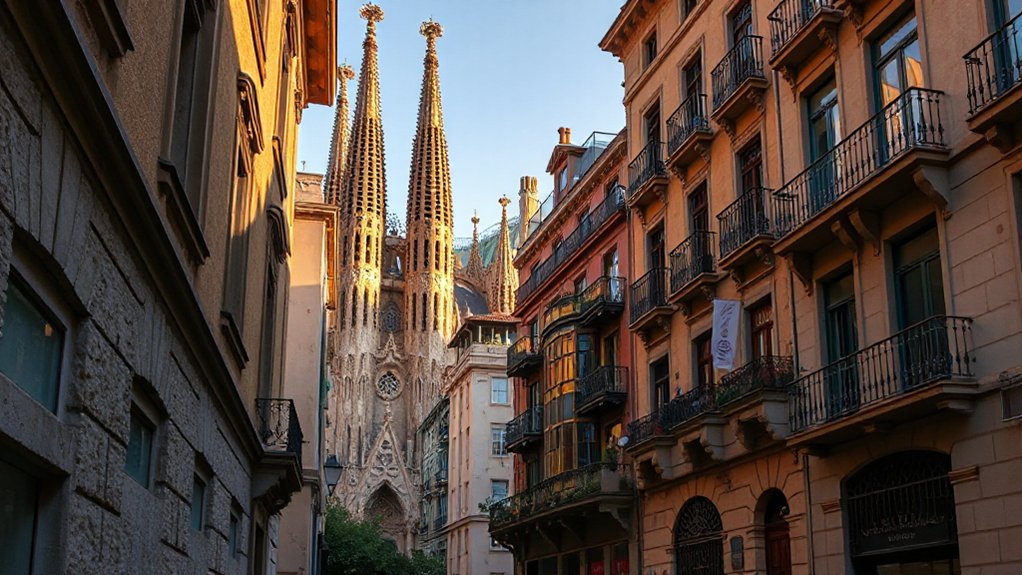
Barcelona isn’t a city you visit so much as a city you walk through with open eyes: a living architecture museum where every corner holds a story in stone, steel, and light. You’ll feel urban renewal pulsing beneath the surface, proof that a עיר can reinvent itself while staying true to its pulse.
The streets are a syllabus in architectural symbolism, each façade signaling a belief, a memory, or a dare. You’re not merely gazing; you’re decoding, comparing textures, scales, and rhythms that still press for attention.
This isn’t sightseeing fluff—it’s a dialogue with time, where innovation meets heritage in a bold, unapologetic chorus. You walk away convinced: the city’s form is its most persuasive argument.
Sagrada Família: Gaudí’s Timeless Fantasy Comes to Life
Sagrada Família doesn’t just rise from the horizon; it erupts from the ground with a stubborn, almost religious invitation to watch a dream take form. You step close and feel the air thrum with anticipation, Gaudí’s mind burning through stone.
This isn’t a building; it’s a manifesto, a Gothic Revival hymn fused with Modernist Details that defy ordinary gravity. Towers spiral like exhaled prayers, façades bloom in mosaic chaos, and every curve seems guided by some merciful accident you can only admire.
You sense patience carved into deadlines that never come, yet the vision stays ferociously present. You witness construction as performance art: a living, ongoing fantasy that insists you participate, question, and believe.
In Barcelona, obsession becomes wonder, and wonder becomes you.
Park Güell: Mosaic Whimsy in Nature and City Views
Park Güell unfolds like a dream you can walk through: mosaic whimsy clinging to hillside stones, serpentine benches curling around the air with color and heat.
You approach a panorama where nature and architecture flirt, a bold handshake between land and art.
Gaudí’s mosaic artistry dazzles the eyes, yet never overwhelms the quiet, sunlit steps that lead you toward city views.
Each tile tells a joke, a story, a shade of green or blue that feels almost musical.
You sense nature integration whenever a cypress silhouette frames the skyline, or when sunlight scatters through broken ceramic, turning stairs into a gleam.
It’s playful, masterful, and unapologetically Barcelonan—a living poem you don’t merely visit, you inhabit.
Casa Batlló: Dragon-Inspired Facade and Light Play
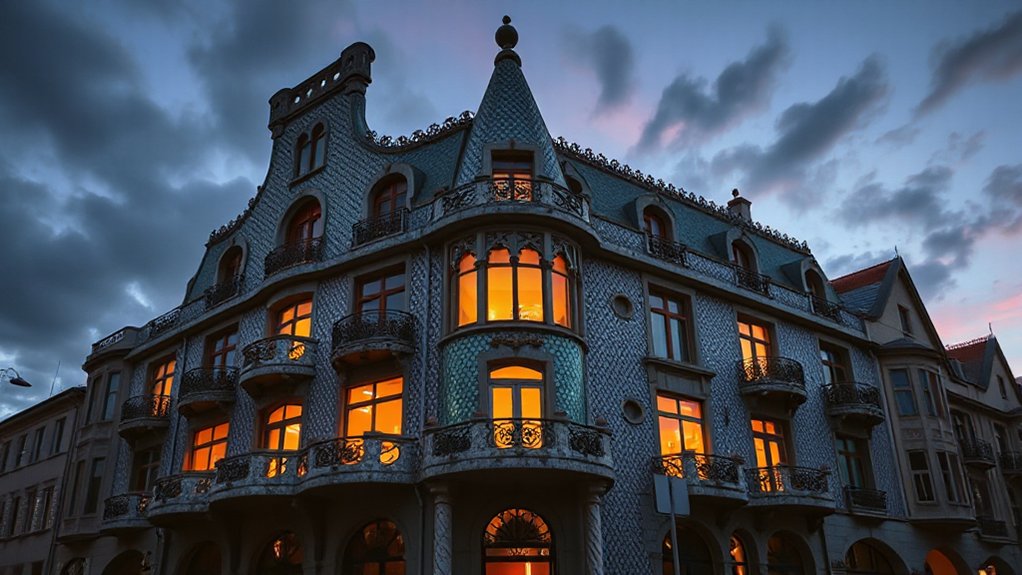
Casa Batlló greets you with a dragon-scaled facade that teems with myth and motion, inviting you to read its scales as a story of imagination.
Step inside to witness light play that dances across bone-white arches and nace-like curves, turning every corner into a living sculpture.
You can’t help but feel the building’s organic heartbeat—curved forms, shimmering colors, and a bold, sculptural rhythm shaping your Barcelona experience.
Dragon-Inspired Facade
Beneath Antoni Gaudí’s spellbinding roofscape, the Dragon-Inspired Facade of Casa Batlló shimmers with a mythic pulse, inviting you to peer deeper into its scavenged dragon-skin scales and glassy eyes. You feel the building speaking in crystalline curves, each tile and balcony a deliberate breath of Mythical creatures and architectural symbolism.
The dragon motif isn’t mere whim; it’s a functional rhetoric—dragon’s back railing, spine-like pillars, and scales that refract light into living shimmer. You’re drawn to how color and contour morph from dawn to dusk, as if the creature awakens, surveys the street, and blesses the passersby with guarded wonder.
This facade proves architecture as myth in motion, not static ornament. Architectural symbolism sings, and you’re listening.
Light-Play Interiors
The interiors dance with light the moment you step inside, as if the dragon’s glow escaped the façade and poured into every room. You’ll notice how color contrast sharpens every detail, and light diffusion softens gradual shifts between spaces, creating a living moodboard you can almost touch.
- Observe how dawn-tinged glass animates the walls, then shifts as you move.
- Notice pearl-toned plaster diffusing brightness without glare.
- See saturated accents punch through muted backdrops for dramatic focal points.
- Feel the air turn luminous, guiding footfalls like a chromatic heartbeat.
This is Barcelona at its most intimate, where illumination isn’t mere lamp but sculpture, shaping atmosphere with intent and audacious charm.
Curved Organic Forms
Dragon-spiraled contours curl across the Batlló facade, bending light into fluent, living shapes that feel less architectural and more breathe-in-motion. You stand before the dragon-inspired skin and sense the building breathe with you, not at you.
Organic shapes weave across balconies and window frames, turning stone into skin, stone into sculpture that palpably moves with the day’s cadence. The curved lines aren’t mere aesthetics; they choreograph light like water, producing subtle shifts from dawn to dusk.
You feel drawn into a tide of fluid forms, where every edge dissolves into arc and inhale. This isn’t ornament for show—it’s a manifesto: architecture that resonates, breathes, and invites you to join the motion.
La Pedrera: Wavy Stone, Iron Lace, Rooftop Drama
You’ll feel the wave in La Pedrera’s stone, rolling with a living grip that defies straight lines. The iron lace details reel you in with delicate braiding at every terrace and balcony, a whisper of craftsmanship you can’t ignore.
On the rooftop, the drama erupts in sculpted chimneys and sky-high views that make the city itself seem to tilt and breathe.
Wavy Stone Facade
Like a tide turned on stone, La Pedrera’s wavy façade undulates with a sculptor’s patience, each curve a deliberate breath of motion that catches light and shadow in a perpetual, sculptural debate. You feel the architecture breathe as marble waves ripple across the stone, a low roar of texture and form. The effect isn’t mere decoration; it’s a stubborn statement about time, craft, and place.
- Observe how the surface carries wind and weather, like living skin
- Notice the seamless blend of light with contour and depth
- Appreciate the repetition that becomes rhythm, not sameness
- Recognize the artistry in every grain, every line of stone sculptures
This façade isn’t flat; it’s a conversation in curvature and memory.
Iron Lace Details
Iron lace threads across La Pedrera’s silhouette with a disciplined elegance, catching light and air in delicate, purposeful filigree. You don’t just notice them—you feel them, a whisper of metal woven into the stone like a secret handshake with the wind.
The lace ornamentation isn’t mere decoration; it’s a structural gesture, turning straight lines into living contour. Each balcony balustrade murmurs with intricate patterns that invite a closer look, revealing micro-sculptures where repetition becomes rhythmic.
You sense a disciplined craft here, history meeting modernist audacity in every curl and twist. The iron work grounds the building’s wavy facade, yet it soars in personality, offering texture, shade, and a tactile invitation to trace its delicate, purposeful lines.
A definitive detail, quietly spectacular.
Rooftop Dramatic Views
From the rooftop, La Pedrera reveals its bold crescendo: wavy stone catching sun and wind, while sculpted iron lace threads the sky with a delicate, defiant elegance.
You step into a skyline panorama that feels engineered for drama, where chimneys become sculptural notes and air becomes a stage.
The rooftop gardens offer rare softness amid the slate and steel, a whisper of green against the sculptural chaos.
Here’s what grips you most:
- The wind-sculpted curves that bend light into living motion
- The iron lace that turns the void into lacework, fragile yet fearless
- The endless, vertiginous sightline across the city
- The intimate hush above the bustle, a private perch within a public masterpiece
Gothic Quarter: Medieval Echoes and Hidden Courtyards
Nestled in the heart of Barcelona, the Gothic Quarter feels like a time machine, where every stone whispers centuries of shadowed stories and moonlit secrets. You stroll beneath narrow arches and feel medieval architecture press against your ribs, urging you to listen.
The labyrinthine lanes reveal hidden courtyards tucked behind venerable facades, quiet pockets that invite breath and reflection away from the city’s bustle. You sense a relentless, intoxicating history: candlelit chapels, gargoyled corners, quiet monasteries repurposed into shops and bars, yet still stubbornly ancient.
Colors skip from stone to timber, and you decide to linger, letting the Quarter’s pulse thrum through your pace. It’s not merely old; it’s tactile time, demanding curiosity, rewarding every careful step you take.
Palau De La Música Catalana: Stained Glass, Modernisme, and Performance
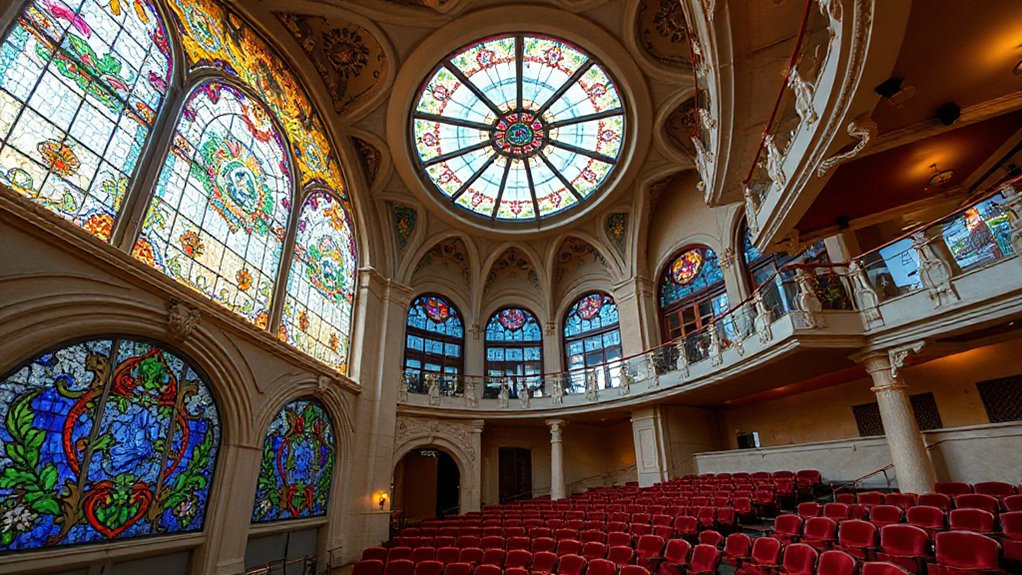
Glimpse Palau de la Música Catalana, and you’ll hear Barcelona’s heartbeat in stained glass and steel. You step inside, daring to feel the pulse of Modernisme as light seizes sculpture and roof. The space is a chorus of color, sound, and craft, where stained glass threads glow like fireflies around you.
You’ll witness performance as architecture—curves, stairs, and ceilings choreographing motion. This isn’t mere building; it’s a living stage, a declaration of taste and rebellion against dull geometry.
1) Savor the glass’s glow.
2) Notice the ornate ironwork guiding your gaze.
3) Feel the acoustic reverberation mold your rhythm.
4) Respect how Modernisme marries art and function.
Hospital De Sant Pau: Art Nouveau Campus of Light and Symmetry
Hospital de Sant Pau isn’t just a hospital; it’s a sunlit tapestry of Art Nouveau that still hums with patient energy. You stroll through pavilions linked by vine-draped courtyards, where tilework flashes like stained glass and corridors bend with deliberate grace.
The architecture isn’t ornament for show; it’s a language, speaking in light symmetry and gentle curves that guide you, almost breathing with you. You feel the craft in every arch, the way ceramic mosaics catch the sun and throw warm reflections across your path.
This campus isn’t relic nostalgia; it’s living design, proof that care and beauty can coexist. You’ll leave with a sharpened sense of place, convinced that Art Nouveau isn’t past its prime, but its pulse.
Torre Glòries: The New Barcelona Skyline in Color and Texture
You’ll notice how Torre Glòries flickers with color, turning the city into a living palette. Its glass skin teases texture, shifting hue with every angle and season.
This skyline newcomer invites you to read light and surface as one striking statement.
Colorful Facade Play
Torre Glòries bursts onto Barcelona’s skyline with a playful, night-sky palette that refuses to fade into the background. You’ll feel the building’s mood shift with daylight and after dark, as Colorful facades bloom in neon whispers and sunset tones, a bold argument for urban art.
The effect isn’t mere decoration; it’s a statement of Colorful facades and playful textures that invites touch and, yes, conversation.
- Notice how color shifts with the sun, keeping the tower alive.
- Observe how surfaces reflect street life in ripples and gradients.
- Feel the cadence of alternating tones guiding your gaze upward.
- Celebrate how color transforms ordinary views into a kinetic mural.
Glass and Texture Dynamics
The façade isn’t merely reflective; it interrogates light, turning daylight into a painter’s palette and night into a tectonic mural. Its surface textures shift with weather and angles, offering a tactile illusion you can almost touch—then you realize you’re admiring stained glass energy refracting through a modern cylinder.
This is urban skin at work, bold and unapologetic, shaping Barcelona’s silhouette while inviting comparison to old cathedrals. You witness architecture as texture, color, and motion—an ever-changing dialogue with the street.
Barceloneta and Waterfront Silhouettes: Bridges, Piers, and Sea-Facing Design
Barceloneta’s shoreline unfurls like a living postcard, where bridges skim the bay and piers push into the sea with confident lines. You feel the pulse of Seaside promenades whenever the salty breeze brushes your face, and you notice how marina architecture threads utility with poetry along the horizon.
The silhouettes resist cliché, shaping thoughtful spaces for sport, stroll, and spectacle.
- Observe how bridges stitch the bay into a single frame that invites lingering.
- Notice piers that extend with purpose, framing horizons for sunset photography.
- Sense the maritime design language guiding benches, lamps, and railings toward salt-scented harmony.
- Recognize the way open views reinforce a human-scale, breathable waterfront.
Barceloneta rewards you with crisp, seaworthy design that stays fiercely memorable.
Montjuïc Architecture: Museums, Towers, and Olympic Legacy
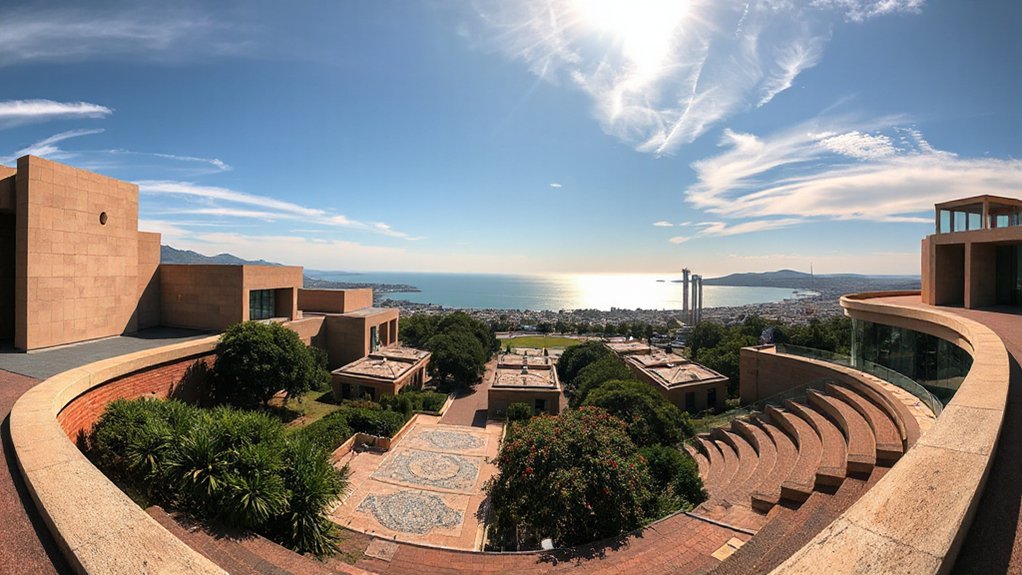
You’ll feel the pulse of Montjuïc as you wander through its museums and soaring Olympic Legacy Towers, each space shaping Barcelona’s modern story.
From bold exhibitions to sweeping city views, the hilltop complex invites you to question how memory and spectacle coexist.
Ready to compare the museum routes with the city’s commemorative towers and the lasting Olympic imprint?
Montjuïc Museums Tour
Why not start in Montjuïc with a sweep of culture that feels both intimate and monumental? You’ll step into a cluster of museums that pulse with light, texture, and a daring sense of place. This is where you’ll feel artistic sculptures weaving through galleries and cultural landmarks that shout Barcelona’s heart without shouting.
- Traverse the Fundació Joan Miró’s bold colors and playful forms, where imagination takes shape.
- Gaze at the Museu Nacional d’Art de Catalunya, where stone vaults cradle Catalan masterpieces.
- Wander the Centre de Cultura Contemporània de Barcelona for edgy, streetwise exhibitions.
- Seek the Magic Fountain’s reflections after dusk, a sparkling, accessible finale.
You’ll walk away convinced Montjuïc’s museums aren’t merely stops, but a vivid, architectural dialogue.
Olympic Legacy Towers
The Olympic Legacy towers punctuate Montjuïc not as relics of a single game, but as bold statements of ambition stitched into the hillside: soaring ribbed silhouettes that catch the sun, casting long shadows over the island’s museum cluster. You’ll feel their presence before you step close, a sculptural roar against the sky.
These Olympic towers aren’t mere monuments; they’re active harbors of memory, choreographing your gaze from fountain to gallery to park. Their metal ribs glow at dusk, turning pedestrian paths into routes of reverence and curiosity.
They’re legacy structures, stubborn, gleaming reminders that sport can seed bold architecture. Visit, observe, and let the towers sharpen your sense of Barcelona’s audacious, multi-layered heritage.
Modernisme Beyond the Core: Sant Gervasi to Eixample’s Mosaic Blocks
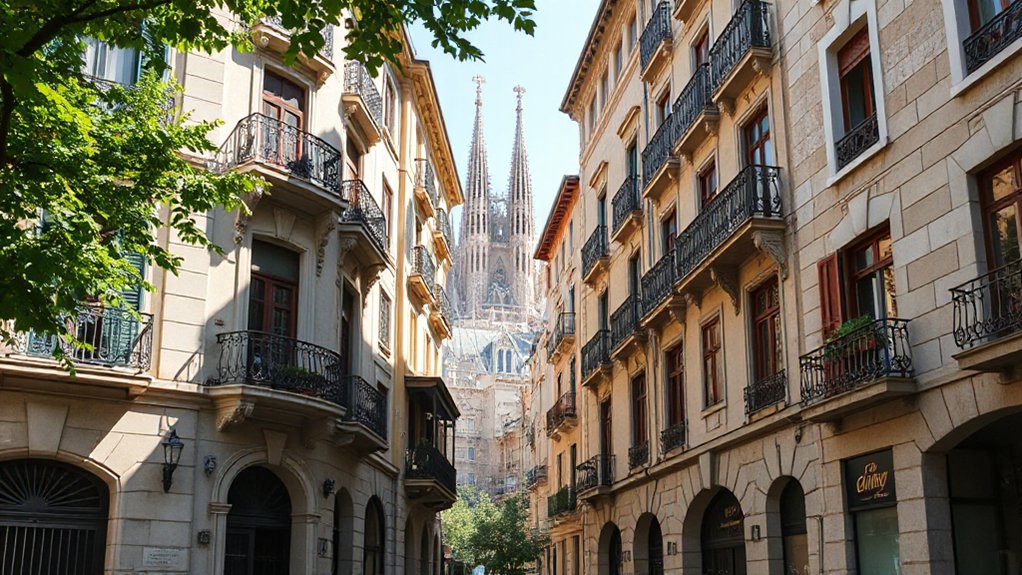
Sant Gervasi isn’t just a quiet counterpoint to Barcelona’s architectural blaze; it’s where Modernisme slips into intimate, everyday spaces. You’ll feel the movement breathe through stairwells, wrought balconies, and hushed courtyards, a mosaic that isn’t loud but meticulously crafted.
Historical influences mingle with daring forms, guiding you to textures that tease the eye and linger in memory. Artistic details become your compass, guiding footsteps through a softer, more personal landscape of brick, iron, and stained glass.
- Trace the quiet staircases that balance ornament with restraint
- Notice the playful ironwork that frames light
- Observe brick tonalities that age like fine parchment
- Compare block-by-block contrasts between Sant Gervasi and Eixample cores
You’ll leave convinced that Modernisme isn’t a show—it’s a practiced, curated conversation.
Planning an Architectural Day: Routes, Timing, and Practical Tips
If you’re mapping an architectural day in Barcelona, start with a smart loop that mixes Modernisme gems with contemporary street life, then let timing decide the rhythm.
You’ll optimize travel logistics by clustering neighborhoods, avoiding backtracking, and booking timed tickets to major icons.
Begin at dawn in Eixample, where glassy façades glow, then glide to Sant Martí for a brisk contrast between sailcloth roofs and steel canopies.
Pack light, wear comfy shoes, and stay hydrated as you chase light across façades.
Photography tips: frame crescents of ironwork at ground level, shoot façades with late-mawn sun, and bracket exposures for stained-glass dramas.
End with street cafe pauses to absorb the city’s pulse, not just its monuments.
This plan delivers efficient, immersive immersion with satisfying variety.
Hidden Gems and Contemporary Cuts: Up-and-Coming Spaces Reshaping Barcelona
From the echoes of Modernisme and the brisk rhythm of contemporary arteries, Barcelona keeps surprising with spaces that feel like promise in concrete and light. You’ll notice how hidden gems fuse urban renewal with fearless shape, steering the city toward fresh faces and uses.
- Reclaimed warehouses reimagined as studios, galleries, and kitchens for community makers.
- Micro-venues where contemporary art collides with experimental architecture, sparking late-night dialog.
- Co-working courtyards that blend greenery, breeze, and workable daylight like a secret city syllabus.
- Rooftop libraries and terraces turning neglected zones into vibrant public stages.
These spaces pulse with ambition, proving urban renewal isn’t cosmetic—it’s a kinetic force. You’ll feel the shift, see the craft, and want more.
Frequently Asked Questions
What Are the Best Times to Visit Each Site?
You’ll want early mornings or late afternoons; crowds fade and light dazzles. Schedule around Cultural festivals for electric energy, yet calmer midweek. Use Local transportation, glide between sites, savor quiet courtyards, and snap photos without rushing, breathe, soak in Barcelona.
Which Tours Best Cover Multiple Landmarks?
Yes—opt for a Guided group or a Private tour; both cover multiple landmarks efficiently, with insider tips, faster skip-the-lines options, and vivid narrations that keep you captivated while you hop between iconic Barcelona marvels.
How Do I Avoid Long Entrance Lines?
Skip the rush with priority booking, then arrive early or late—crowd avoidance works. Buy skip-the-line passes, scout lesser-known entrances, and pace yourself, because smart timing and planning turn your Barcelona visit into a serene architectural joy.
Are There Accessibility Options for All Sites?
Yes, there are accessibility options at most sites, and accessibility improvements keep rolling in, you’ll feel the gear shift of visitor assistance empowering every step, turning tours into breeze-worthy adventures rather than uphill climbs.
What Are Nearby Dining and Rest Options?
Nearby cafes line the streets you’ll wander, and local cuisine waits within easy reach—grab tapas after your tour, or a paella sunset. You’ll savor bold flavors, choose cozy spots, and relish every bite between stunning facades.
Conclusion
Barcelona isn’t just a city; it’s a whisper of stone and light you can’t quite forget. You’ll encounter feats that nudge the ordinary toward wonder, even when they’re crowd-pleasers. Some spaces might feel a touch overdone, but that’s part of the charm—an artful excess you learn to savor. Embrace the gentle drama, wander the avenues with open eyes, and let the skyline persuade you: this living architectural tapestry is best appreciated in person.