
Immerse yourself in Catalonia’s kitchen, where flame-kissed escalivada bowls you over with char and olive oil glow, and ocean-bright butifarra and regional sausages snap with fennel and garlic. Creamy Crema Catalana crackles with caramel as vanilla perfumes the air, while saffron and fish braise in suquet, tasting of sea wind and sun. Pair these delights with white Xarel·lo, or a sparkling Cava that keeps pace with every bite. Curious about the routes to savor them all? You’ll find more ahead.
Key Takeaways
- Catalonia’s core flavors center on sun-warmed tomatoes, almonds, and olive oil, with cheese aging and coastal farms shaping depth and terroir.
- Signature dishes include Escalivada (flame-roasted peppers and eggplants), Suquet de Peix (seaside fish stew), and Crema Catalana (vanilla-lemon custard with caramel).
- Traditional meats like Butifarra and regional sausages showcase fennel, garlic, and pepper, reflecting craft, rustic culture, and family recipes.
- Coastal preservation and market practices use salt, wind, and sea-scented traditions, influencing textures from salt-dried fish to dried cod.
- Wine and Cava pairings emphasize local terroir: Xarel·lo whites with fish, Cava with seafood, and robust reds like Garnacha with heartier dishes.
What Distinguishes Catalan Cuisine
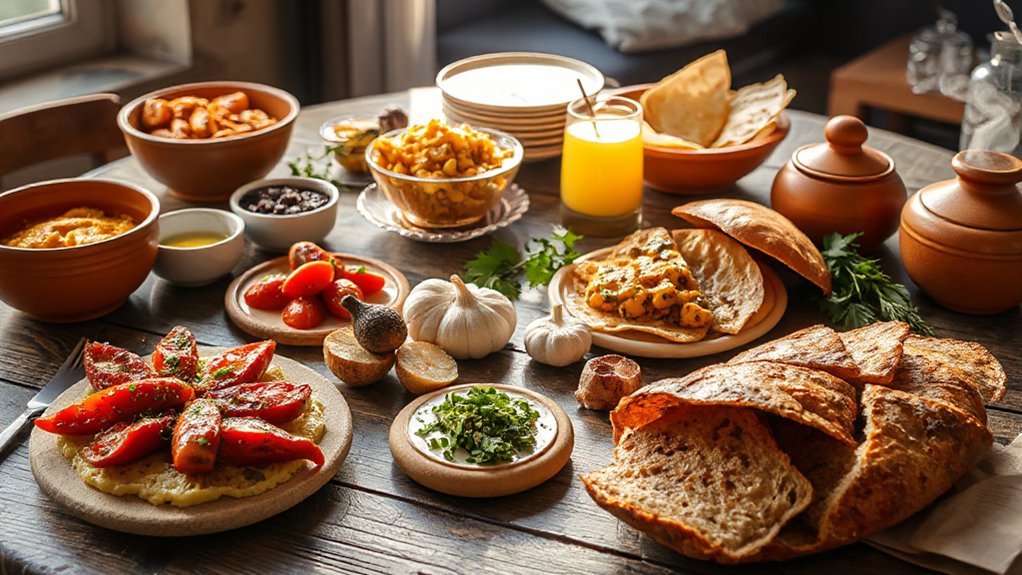
Catalan cuisine stands out for its paradoxes: rustic farmers’ fare refined with touches that feel almost coastal and cosmopolitan. You taste the way land and sea converse on one plate, a dialogue between fire and breeze.
You’ll notice how sun-warmed tomatoes glow beside almonds, how nutty olive oil coats everything with a soft, green sheen. You move through markets where Catalan festivals pulse in every booth, perfumes of fennel and citrus mingling with roasted peppers.
You sense regional textiles echoed in plate textiles and tablecloths, patterns that repeat like family recipes. You bite into succulent pork, saffron rice, and seafood that whispers of coves.
You learn a philosophy: tradition adapts, yet identity stays, vivid, communal, unmistakably Catalan.
Essential Catalan Ingredients You’ll Love
From the markets to the stove, the flavors that define Catalonia wake up your senses: a treasure map of ingredients that carry sun, sea, and village pride.
You’ll notice Catalan cheese aging in cool rooms, its notes ranging from grassy fresh to nutty, a dairy echo of Pyrenees meadows and coastal farms.
Olive oil production shapes every drizzle, a golden thread that ties bread, vegetables, and seafood into one luminous chorus.
In every bite, you taste history: cooperatives, limestone terraces, and centuries of stewardship over land and sea.
You savor bold paprika-cured sausages, almonds, and honey alongside seafood’s briny kiss.
These essentials invite you to cook with place, culture, and heart.
Escalivada: Flame-Roasted Veggie Classic
Escalivada is summer’s weather captured on a plate: blistered peppers, smoky eggplants, and sweet onions softened over flame until the skins crackle and peel away to glossy, sun-kissed flesh. You’ll taste charcoal perfume, the earthy bite of grilled vegetables, and the tang of olive oil that schools your senses in Catalan tradition.
The method honors rustic kitchens, outdoor grills, and communal breaks that flavor conversation as much as the dish itself. Roasted peppers glow beside smoky slices, while garlic whispers from a warm bed of tomatoes. You serve it at room temperature, letting flavors mingle like neighbors sharing heat and stories.
- blistered peppers
- smoky eggplant
- sweet onions
- olive oil drizzle
- garlic-tlecked tomatoes
Butifarra and Regional Sausages: A Meaty Cornerstone
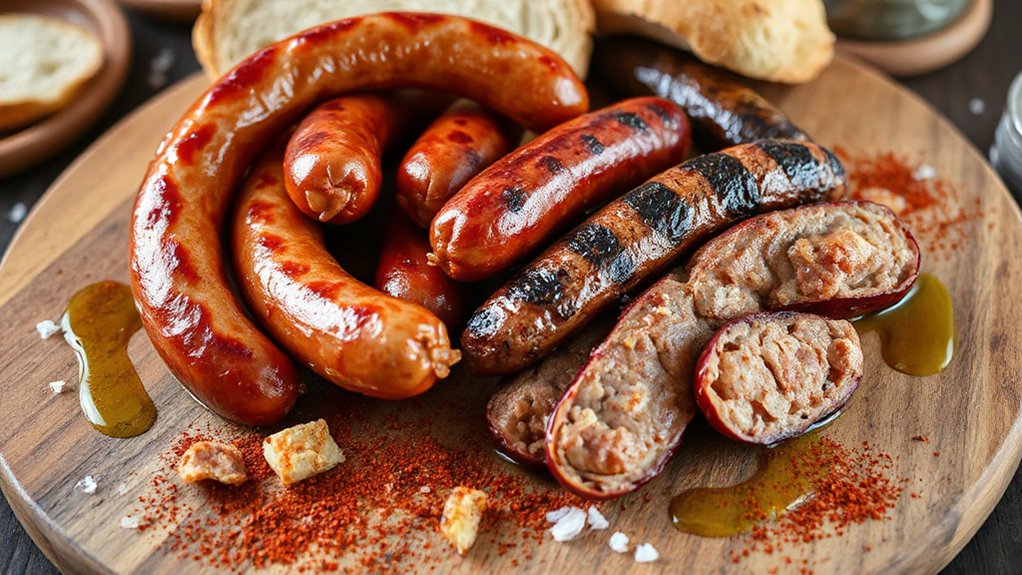
Butifarra and regional sausages are the beating heart of Catalan carnivorism, where coiled casings and bright spice collide with hillside farms and bustling markets.
You taste smoke curling from grills as vendors brag of Meaty traditions handed down through generations. The air carries fennel, pepper, and garlic, mingling with laughter and the clack of iron pans.
Each bite yields a memory: Sunday fairs, co-ops, family recipe scribbles on napkins. You explore sausage varieties from white butifarra fresh to darker, garlicky versions, each region naming its own twist.
Texture ranges from tender to snappy, yet the core remains honest, rustic, and communal. In every savor, you feel Catalonia’s appetite for craft, culture, and connection.
Crema Catalana: The Silky Catalan Custard
Ever tasted a dessert that tastes like a sunlit afternoon in a stone-walled town? Crema Catalana greets you with custard silk, a glow of vanilla and citrus, then a crackle of caramel singing like a street market.
You sense years of Traditional craftsmanship in every glossy spoonful, formed by patient hands and steady flame. In Catalan festivals, this dish is shared with warm laughter and stories, a ritual you almost taste in the air.
The custard wears a caramel crown, inviting you to break it and release its fragrant steam.
- delicate vanilla bean
- lemon zest sigh
- slow-baked cream
- caramel crackle
- festive sharing atmosphere
Suquet De Peix: Seaside Fish Stew Essentials
You’ll start with a selection of fresh, glistening fish—the kind that snaps at the spoon and perfumes the air with the sea.
The broth forms the soul of Suquet de Peix, built on a saffrony, all-day simmer that carries aromatics from garlic to thyme into every bite.
This sea-to-table tradition invites you to taste the coast’s story, from local markets to the kitchen, through every aromatic note.
Selection Of Fresh Fish
What makes a suquet sing begins at the fishmonger’s stall: a shimmer of silver scales, a salty breath of the sea, and the quiet certainty that freshness is the first ingredient.
You seek fish that tell stories of coves and tides, drawn straight from Coastal markets, where provenance matters as much as price. Choose firm bodies, clear eyes, and unbroken scales, then let the aromas guide you toward a cleaner, brighter stock tomorrow.
- Fresh fish lined up like sequins on ice
- Glistening fillets whispering ocean lore
- Crystalline eyes that promise vitality
- Briny, sun-warmed aroma of docks
- Local catches reflecting seasonal winds
Broth Basis And Aromatics
The broth for suquet de peix starts with a gentle simmer of bones and shells, a white-capped chorus that gathers all the sea’s essences into one pot. You’ll hear the soft clink of shells, feel the steam kiss your face, and taste hints of salt and brine stitching the kitchen to the harbor.
Broth preparation becomes ritual: you sweat the small, patient details, strain, then return the liquid to the flame with purpose. Aromatic herbs—bay, thyme, parsley—float like hush in the air, releasing resinous perfume that brightens lean fish.
The aroma speaks of Catalan markets and coastal mornings, of families gathering before the boil. You respect the base, then invite the freshness to keep company with the sea.
Sea-To-Table Tradition
Sea-to-table in Suquet de Peix is a ritual as old as the harbor itself, where the catch meets the pot in a chorus of immediacy. You stand at the stove, nose smoky with saffron, taste salt from the sea, and hear gulls above the quay.
The broth thickens with tomatoes, garlic, and coral-lit fish, each bite telling a coastal tale of fishermen who respect tides and rules. You feel the heartbeat of Seafood sustainability guiding every scrape of the spoon. Coastal fishing regulations keep the cycle alive, safeguarding young fish and reefs as the broth glows golden.
- Fresh catch rinsed under sunlit spray
- Peppery saffron and ripe tomatoes simmering
- Olive oil-rich steam lifting memories
- Crusty bread for soaking, voices nearby
- A quiet nod to responsible harvesting
Coastal Traditions: Anchovies and Salt Cod in Catalonia
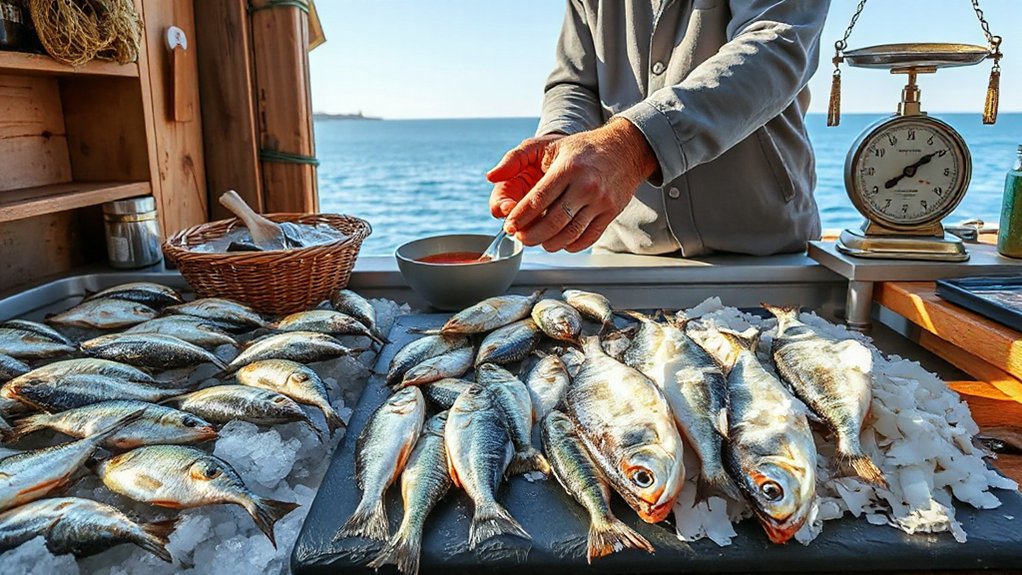
You taste the salt buzz on your lips as you wander along the coast, where salted cod hangs like pale flags and anchovies glint in drying racks. You learn how each culture shapes the catch—rigor in handling, curing, and keeping flavors bright—so every bite carries a memory of the sea.
You feel how coastal preservation practices knot tradition to daily life, keeping time with tides and tables alike.
Salted Cod Traditions
Beside the blue rush of the Mediterranean, salted cod and anchovies cling to Catalonia’s rhythm, cured into pale flake and bright fillet that perfume markets, taverns, and family kitchens with briny promise. You taste centuries in each bite, a thread through Catalan culinary history that still guides everyday meals and festival plates alike.
- Salted cod traditions anchor famiglia recipes and Sunday gatherings
- Patience is salt: desalted cod soaking through dawns
- Smoke, olive oil, garlic, and paprika color the air
- Market stalls hum with sailors’ tales and aroma
- Coastal ships tie memory to the plate, season by season
Anchovy Handling Techniques
Anchovies, quick as gossip in a harbor tavern, demand hands that know their work as well as the sea knows its currents. You handle them with rhythm: scales brushed away, fillets laid flat, eyes bright and honest.
For anchovy marination, you balance salt, oil, lemon, and garlic like a sailor compassing a new voyage, letting flavors mingle without overpowering the fish’s briny snap.
Your technique respects time—brief cures for freshness, patience for depth. Salt curing techniques show discipline: a cool rack, a shallow layer of salt, a resting hour or two, then rinse and dry to seal glittering fillets.
Sensory memory follows—the metallic kiss of oil, the ocean scent, the crisp bite that speaks of Catalan coast and generations.
Coastal Preservation Practices
Coastal preservation in Catalonia knits memory to the sea, where salt and wind become everyday pantry partners. You taste histories in salt’s kiss, feel brine on your lips, and hear nets sing at dawn.
Anchovies and salt cod carry legends of fishermen and markets, dried on wooden racks that smell of sun-warmed piers. Preservation here isn’t relic; it’s daily balance with Marine conservation and Coastal ecosystems, linking flavor to stewardship.
You learn patience, smoke, and salting rhythms that tame the ocean’s volatility into resilient staples.
- Salt-dried fillets glint like preserved rain in jars
- Wind-dried fish hang from thin ropes above stone counters
- Brine perfumes kitchens with mineral sweetness
- Wooden crates cradle sun-worn, peppery cod
- Local markets pulse with salty, sea-scented memories
Pa Amb Tomàquet: the Tomato-Bedrock Bread
Ever wondered how a humble slice of bread can carry the essence of a region? You’ll hear the crackle of rustic loaf as you tear a thick, sun-warmed piece.
You’ll rub it with a halved tomato, its juices seeping into the crumb like secret stories, then finish with a drizzle of olive oil and a pinch of salt. Pa amb tomàquet becomes a ritual, a portable taste of Catalan kitchens, a shared bite at dawn markets and late-night tapas.
You sense history in the simple act—farm to table, farmers’ hands to home tables. In Catalan festivals, the bread shines, a unifying thread amid spice and music, a bright, tomato-scented emblem of place.
Esqueixada: Shredded Salt Cod Salad
From the sun-warmed shore, you carry with you the memory of pa amb tomàquet, but today the plate tilts toward something cooler and briny: esqueixada, shredded salt cod salad.
- Flaked salt cod glints with olive oil and lemon
- Tomato wedges offer sunny brightness
- Onions bring a sharp, crisp bite
- Olives add a briny kiss
- Fresh herbs finish the plate with color and aroma
Salt cod proves its resilience, soaking up light vinaigrettes and peppery greens. You taste the sea’s patience in every shred, then a vinegary snap cuts through richness.
This dish invites simple flavor pairing, letting citrus, olive oil, and onion sing together. You’re in Catalonia’s coastal kitchen, where tradition meets fresh produce, and every bite tells a salted, sunlit story. Salt cod anchors the meal; the rest dances.
Cap I Pota: Rustic Offal Stew to Warm the Soul
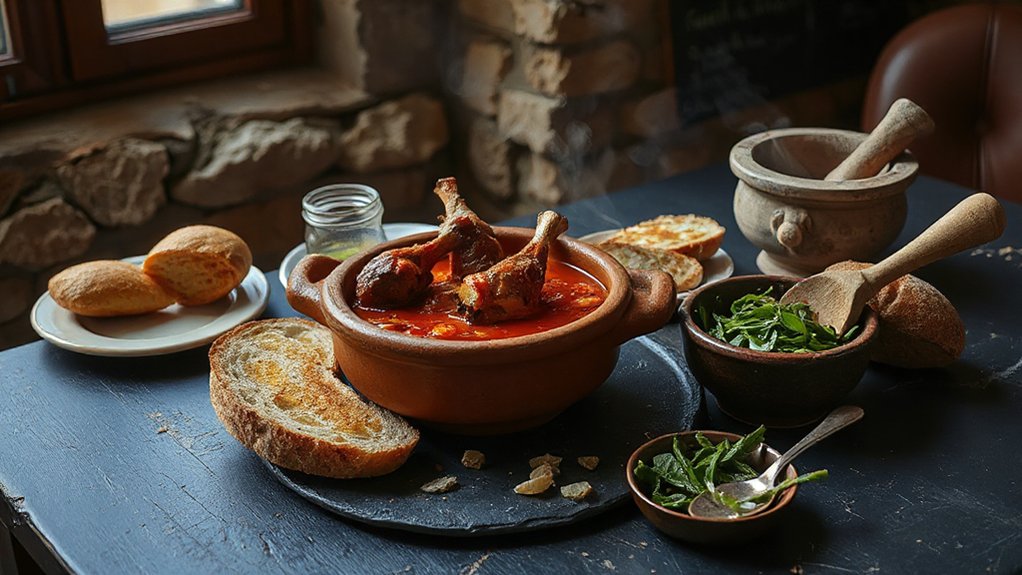
Cap i pota bubbles with a promise of grit and warmth, a rustic offal stew that knits soul to stove. You savor the scent of simmering broth, liver and heart lending depth as tomatoes, garlic, and paprika bloom like a summer market. You hear the clink of spoons, the hum of conversation, and footsteps of cooks passing down Offal traditions that anchor Catalonia’s heart to hearths across generations.
The stew thickens, ribbons of olive oil catching light, potatoes absorbing stories of long winters and feast days. You taste the velvet of rich stock, the tang of wine, the glow of pepper. In every spoonful, rustic stews carry memory, kinship, and the stubborn joy of staying warm together.
Catalan Pastry Delights: Puff Pastry and Creamy Fillings
Catalan pastry whispers of sunlit kitchens and seaside markets, where puff pastry puffs with the hush of a gentle breeze and cream fills the air with vanilla and citrus. You taste delicate layers, crisp edges, and cinnamon-scented hush as filling sighs through pastry folds. You move through Catalan desserts with confidence, noting pastry techniques that have traveled from convent ovens to street stalls, keeping pastry light yet indulgent.
- Golden, flaky shells embracing silken creams
- Lemon zest brightening vanilla whispers
- Almond paste peeking through sugared tops
- Whipped cream clouds meeting warm pastry
- Honeyed glaze sealing the caramel kiss
You savor texture, aroma, and ritual, a palate’s map of tradition, without drifting into what comes next.
From Market to Table: Where to Discover Heritage Dishes in Barcelona and Girona
You wander Barcelona’s markets and feel the sun-warmed fruit, the scent of smoked paprika, and vendors naming the same beloved recipes you’ll find in heritage dishes. From Market Sourcing Traditions to Barcelona’s Heritage Dishes, you glimpse how local pride flavors every bite, every shared story, every time you pay with a smile.
In Girona, Gastronomic Journeys unfold as you trace stalls to tables, tasting dishes born from memory and mother-tongue, where culture tastes as vivid as saffron.
Market Sourcing Traditions
Markets pulse at dawn in Barcelona and Girona, where the air tastes of citrus, olives, and smoke from roasting chestnuts as vendors trade stories as deftly as produce.
- You witness market traditions alive in every stall, from hand-signals to price haggling that feels musical.
- Sourcing practices reveal trusted networks, small farmers, and cooperative growers sharing the best of the season.
- You notice vibrant arrays of greens, peppers, and fish laid out with deliberate care and local pride.
- Vendors offer samples, inviting you to taste before you commit, a ritual of trust.
- You leave with a mental map of supply routes, seasonal rhythms, and the people who sustain Catalan tables.
Barcelona’s Heritage Dishes
From the scent of olive oil warming in a midnight skillet to the crackle of chestnuts roasting along the Rambla, heritage dishes in Barcelona and Girona tell the story of place and palate.
You wander markets where saffron, bombas, and calçots mingle with city pulse, and you sense how memory seasons every bite.
In Barcelona, ancestral stews meet modern fusion in tiny taverns and long-standing bodegas, where patience is traded for intensity of flame and time-honed technique.
Street food shortcuts become artful, portable heirlooms: fried cod, croquetas, and grilled peppers that taste of coastal winds and market mornings.
You savor textures, steam, and soil—heritage living through every shared plate, a living map of culture, craft, and communal appetite.
Girona Gastronomic Journeys
Gently yet insistently, Girona invites you to trace its food lineage from buzzing markets to candlelit tables, where saffron steam swirls over calçots and heirloom vegetables glint like treasures.
- You wander through traditional markets, copper pans gleaming above sheafs of tomatoes and Arbequina olives.
- You listen to the sizzle of grilled suquet while azulejo tiles reflect warm light.
- You taste almond paste, clarifying memories of Catalan festivals and family feasts.
- You wander alleyways where fishermen share salt, lemon, and stories of harbors.
- You finish with a spoonful of crema catalana, small sparks of citrus on your tongue.
From market to table, heritage lives in every bite, Catalan festivals guiding your palate. Traditional markets anchor the journey.
Seaweed, Sea Sauce, and Coastline Flavors
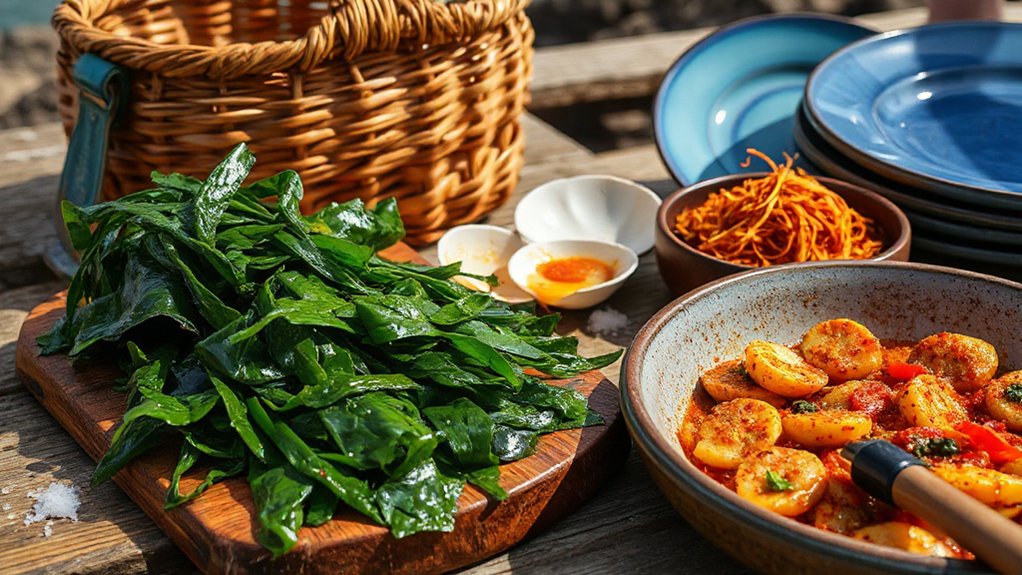
Seaweed brushes the Catalan coast with a briny whisper, its green fronds lending a crisp bite to markets and kitchens alike. You taste the tidal sweetness as you walk along the shore, where fishermen dry the harvest in salty sun.
Seaweed harvesting isn’t mere foraged greens; it’s a patient ritual, tied to tides and communal memory, feeding coastal families for generations.
In markets, ribbons of nori-like strands mingle with jellied mussels and sun-kissed olives, inviting exploration.
Sea sauce varieties appear in small bowls, pale and briny, bright with lemon or smoky paprika, ready to lift grilled sardines or warm bread.
You sense a coastline flavor map: mineral, oceanic, and deeply Catalan in its humble, sea-kissed flair.
Pairing Catalan Dishes With Local Wines and Cavas
You’ll feel how local rules shape every sip, guiding you to pair bold Catalan dishes with crisp whites, lively rosés, and sparkling cavas. Think age, aroma, and acidity dancing together—white wines with seafood bites, rosé beside grilled vegetables, cava lifting rich, saffron-klecked sauces.
This isn’t just chemistry; it’s a cultural conversation, where regional styles map a palate of place.
Local Pairing Rules
In Catalonia, the table isn’t just a meal; it’s a conversation between land and sea, where dishes and wines converse across the course of a meal. You’ll feel how Local pairing rules steer harmony: light whites with delicate seafood, bold reds beside hearty stews, and sparkling Cavas to cleanse the palate between bites. Trust regional rhythms, not rules that confine flavor. Let the terroir guide you, and listen for texture, acidity, and salt.
- Ajoarriero’s salt meets fresh xarel·lo sparkle
- Garri and catfish pair with joven local whites
- Botifarra sprints beside robust Merlot-like varietals
- Escalivada embraces glints of Cava brut
- Suquet invites round, sun-warmed reds to linger
Wine Styles Matchups
Ever notice how a Catalan table can feel like a conversation between coast and orchard, where each wine answers a dish’s plea for balance? You’ll taste how wine styles match the land’s bounty, from sparkling cavas that lift seafood and olive-laced tapas to bright white xarello with fishy stews.
Reds like garnacha and samso-ish local blends temper heartier stews and pork, offering flavor harmony without overpower. In summer, chilled crianxa-style rosats cradle tomatoes, almonds, and garlic, while aged vinos may echo smoky charcuteria in winter.
Think in contrasts: effervescence with delicate acids, tannins with fat, mineral notes with shellfish. This is wine pairing as dialogue, a cultural ritual that threads season, coast, and orchard into a single, savory chorus.
Family Kitchens: Stories Behind Catalan Classics
Family kitchens in Catalonia aren’t just rooms with a stove; they’re archives of scent and memory, where grandmothers swap secret techniques with neighbors as the afternoon sun pours through lattice windows. You taste generations in every simmer, in the clink of copper, in the rhythm of chopping.
Through family recipes, the region speaks in brine and citrus, weaving culinary storytelling into everyday meals.
- Aròs a la llesca cooling on a rack, sun-warmed crusts signaling Sunday
- Tomato rubbed with olive oil, the bright kiss before garlic joins
- Picada releasing pine, almonds, and marjoram into a velvet sauce
- Sardines charred just enough to sigh with sea
- Dulce de membrillo pairing with cheese, a sweet, tangy memory
These moments anchor culture, passing warmth from one kitchen to the next.
Seasonal Calendar: When Dishes Shine at Their Peak
As the year turns, Catalonia’s markets and orchards sing in accord with the seasons, and your kitchen learns to listen. You track peak moments when cherries blush, fennel crowds the stalls, and calçots crackle over ember glow, aligning meals with nature’s cadence.
In spring, you savor verdant trinkets and early bulbs, then welcome summer’s sun-kissed tomatoes, peppers, and fish, kept bright by sea breeze.
Autumn brings chestnuts, mushrooms, and game, while winter coats the table with Spitzen of citrus and hearty legumes.
You’ll find medieval festivals marking harvest pulses and culinary workshops teaching you to weave tradition into daily life. The calendar isn’t rigid; it invites improvisation, seasonal storytelling, and shared feasts that sharpen your senses and deepen Catalan heritage.
Planning a Catalan Tasting Route: Practical Tips
Mapping out a Catalan tasting route is a delicious map-making exercise: start in a coastal town where sea breeze meets snappy prawns, then weave inland through markets crowded with olives, sobrassada, and vibrant peppers.
You’ll pace your day by Local street markets, letting aromas guide where to eat and what to savor, while you note how traditional cooking methods reveal regional soul.
- Fresh seafood bites beside sizzling pans
- Hand-cranked ajoblanco and smoky paprika lifts
- Market-sourced produce pairing with aged cheese
- Slow-cooked stews in rustic taverns
- Tapas-size portions to sample many borders
Carry a notebook for notes, timing for markets, and respect for locals, so your route stays delicious, authentic, and repeatable.
Frequently Asked Questions
What Regional Dishes Define Catalan Coastal Vs Inland Cuisine?
You’ll savor Catalan seafood along the coast, then switch to Mountain charcuterie inland; coastal flavors shimmer with briny sails, while inland plates echo hillside smoke, rustic warmth, and storied markets, revealing a vibrant, flavor-crammed regional coastline-versus-valleys contrast.
How Do Year-Round Catalan Ingredients Vary Across Seasons?
Seasonal harvests breathe through Catalonia, and you’ll notice ingredient freshness shifting with spring greens, summer tomatoes, autumn mushrooms, and winter citrus. You savor seasons’ variations, tasting coastal sea air and inland earth in every colorful bite. You’re welcome.
Which Wines Best Pair With Classic Catalan Dishes?
You’ll savor classics with bold wine pairing, favoring vibrant reds and crisp whites from local wineries, balanced by acidity that cuts through richness. You taste a tapestry of terroir, where aroma, sun-kissed grapes, and Catalan tradition serenade your senses.
Are There Vegetarian Substitutes for Traditional Catalan Meats?
Yes, you’ll find vegetarian alternatives that mimic texture and savor. Think smoky, saffron–kissed veggie sausages or mushroom “meat” stews. These Meat substitution options honor tradition while letting you savorCatalan flavors with carefree, colorful, sensory-rich gusto.
Where Can I Safely Source Authentic Catalan Products Locally?
You can source authentic Catalan products locally at vibrant local markets and from trusted artisanal producers, where aromas mingle with sea breeze and saffron heat, letting you taste honest craft and Catalan culture in every bite.
Conclusion
You’ll leave with a mouthful of memory, not just meals. Catalonia’s flame-kissed vegetables, smoky sausages, and satin crema whisper of sunlit markets, stone kitchens, and late-night toasts. Taste becomes time as you wander from seaside sips to Pyreneen panoramas, gathering stories like spices. Let the scenery and savoring fuse, turning every bite into a postcard, every plate a doorway. In this land, flavor isn’t eaten—it’s shared, sung, and stitched into your heart.