
In Asturias, you sink into an unhurried village rhythm where whitewashed lanes, slate chapels, and markets braid daily tasks with crafts and communal rituals. You move through textures—meadow scents, coastal winds, stone walls—and listen for restrained histories in concise chatter. Stay in casas rurales or hórreos, observe workshops, and join local meals that turn routine into ceremony. Learn sidra etiquette, pace alongside growers, and respect private spaces. If you keep exploring, you’ll uncover how daily life becomes enduring memory.
Key Takeaways
- Stay in rural casas rurales or hórreos-anchored lodgings to observe farm routines, crafts, and daily rhythms.
- Participate respectfully in cider culture: learn proper Sidra pouring, eye contact, and accompanying local phrases.
- Visit markets, fishing ports, and mountain lookouts to witness seasonal cycles and community life.
- Join local festivals, crafts, and workshops to transform routine into collective ritual and memory.
- Pace interactions with growers, bakers, and shepherds, tasting seasonal dishes slowly to appreciate regional history.
What Traditional Asturian Life Feels Like: Pace, People, and Place
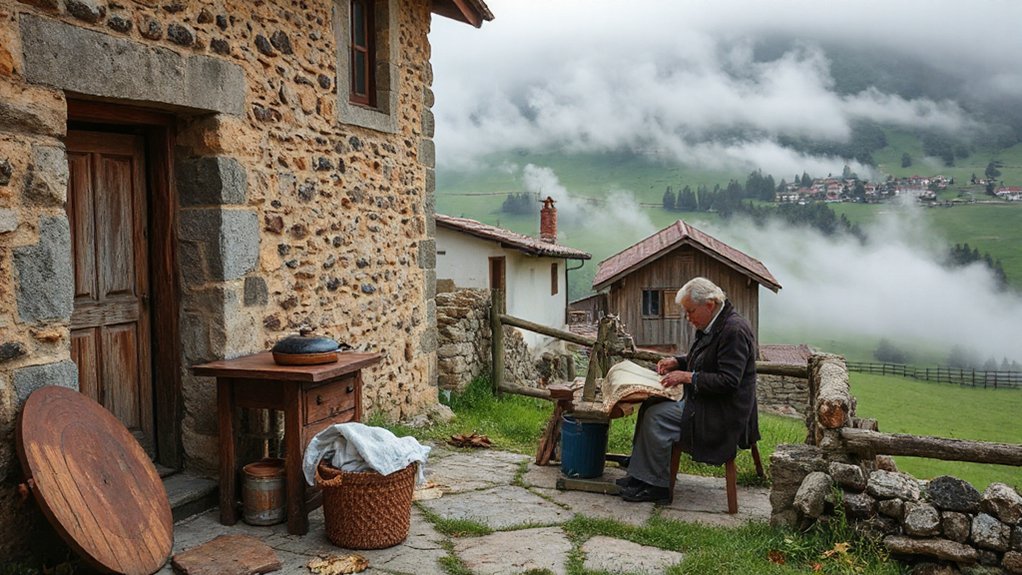
In Asturias, life unfolds at a pace that feels deliberate yet unhurried, shaped by weather, landscape, and a deep-rooted sense of community. You notice how locals move with purpose, pausing to exchange a nod or a shared anecdote that roots strangers in a common moment.
The pace isn’t slow for its own sake; it accommodates daily crafts, family meals, and the attentive listening required by traditional music performances that surface in village squares and kitchens. You observe how local crafts reflect materials at hand, skill passed down, and a pragmatic beauty that doubles as social glue.
Place emerges through textures—meadow scent, stone walls, coastal wind—while people speak with restraint, yet convey rich histories in concise, practiced turns.
Start Your Exploration in Asturias’ Villages and Parishes
Start your exploration by tracing daily life through Asturias’ villages and parishes, where roads thread between whitewashed houses and slate-roofed chapels, and the rhythm of local routines reveals how community is kept in place.
You move through micro-eras, noting how markets mark weeks, elders barter stories, and children run errands with practiced ease.
The landscape shapes behavior: narrow lanes bend social interaction toward shared spaces, and chapels punctuate the calendar.
You observe local cuisine shaping hospitality, from communal bites to seasonal foraging dishes, revealing reciprocity embedded in meals.
Traditional festivals punctuate the year, weaving memory into performance and ritual.
Analysis links place to identity: these parishes sustain cohesion through routine, food, and celebration, shaping a living tapestry you’re invited to enter.
Lodging Like a Local: Casas Rurales, Hórreos, and Rural Stays
Casas rurales, hórreos, and other rural stays offer a doorway to everyday life in Asturias, not just a place to sleep. You step into a fabric where traditional crafts show up in woodwork, stonework, and small details that echo farmstead routines.
The lodging becomes a field-note of rural architecture: corrugated roofs, ashlar walls, granaries perched on stone legs, and plazas that double as kitchens during festival weeks. You observe how hosts balance hospitality with preservation, letting guests witness workshop rhythms rather than glossy showroom polish.
Staying here invites you to map chores, tools, and seasonal rhythms, decoding how people separate sacred craft from utilitarian need. In this microcosm, lodging mediates culture, memory, and everyday resilience.
Sidra Etiquette 101: How to Pour, Toast, and Sip
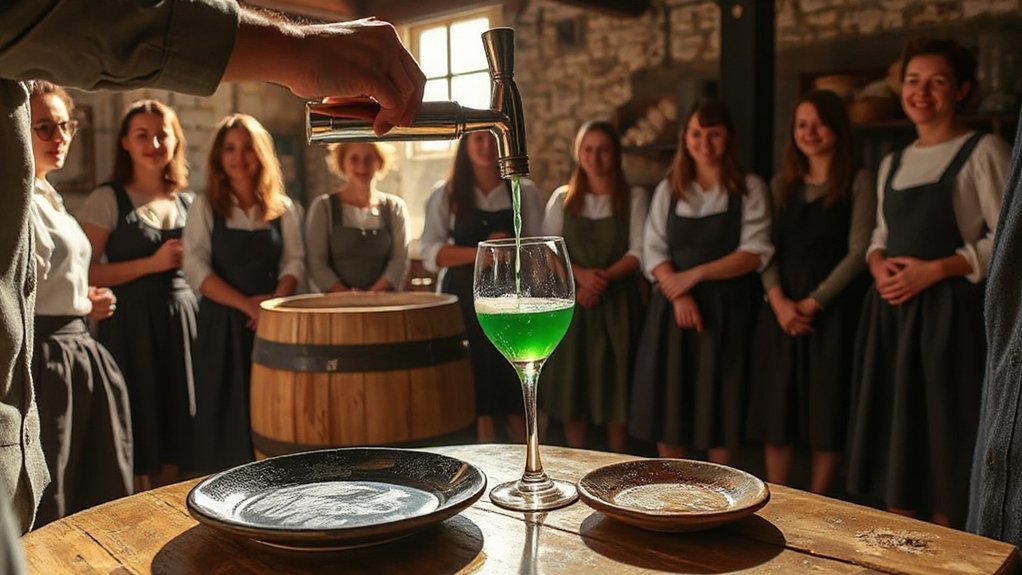
You’ll notice how pouring Sidra isn’t just a move, but a performance that signals respect—steady, low, and with the customary tilt to honor the drink.
As you lift the glass, the toast codifies social bonds, while the foam and head cue timing and sharing.
This brief guide tightens the ritual into precise actions: pouring precision and toast etiquette that shape sip-worthy moments.
Pouring Precision Tips
Pouring sidra with precision is a ritual that reveals both technique and respect for the tradition. You position the bottle at a slight angle, near the neck, then tilt with a steady, practiced wrist to guide the spray into the glass. The flow should be thin, continuous, and above the rim, not splashing.
Listen for the hiss as the gas releases, an audible cue that you’ve synchronized with the cider’s temperament. Your stance mirrors the social space around you: calm, deliberate, attentive.
In traditional attire or at local festivals, this ritual becomes a shared moment, a cue for conversation and mutual observation. Mastery emerges from repetition, patience, and a keen sense of when to pause before the full pour.
Toasting Etiquette Essentials
Toasting in Asturias isn’t just a formality—it’s a social cue that binds ritual to conversation. You learn the sequence: pour, pause, lift, and share a moment before the clink. The ritual isn’t blank ceremony; it shapes how stories surface, how eye contact travels, how a room breathes.
1) Observe the host’s nod, then offer a moderate clink at chest height to honor the sidra’s provenance.
2) Tilt the glass slightly, sip, and note aroma before speaking, so wine tasting becomes a collaborative observation.
3) Pass the glass with both hands when someone speaks, letting the moment linger as folk dancing footsteps echo in the memory.
This pace reveals communal ethos, where technique informs meaning and shared experience deepens trust.
Fabada and Other Must-Try Asturian Dishes
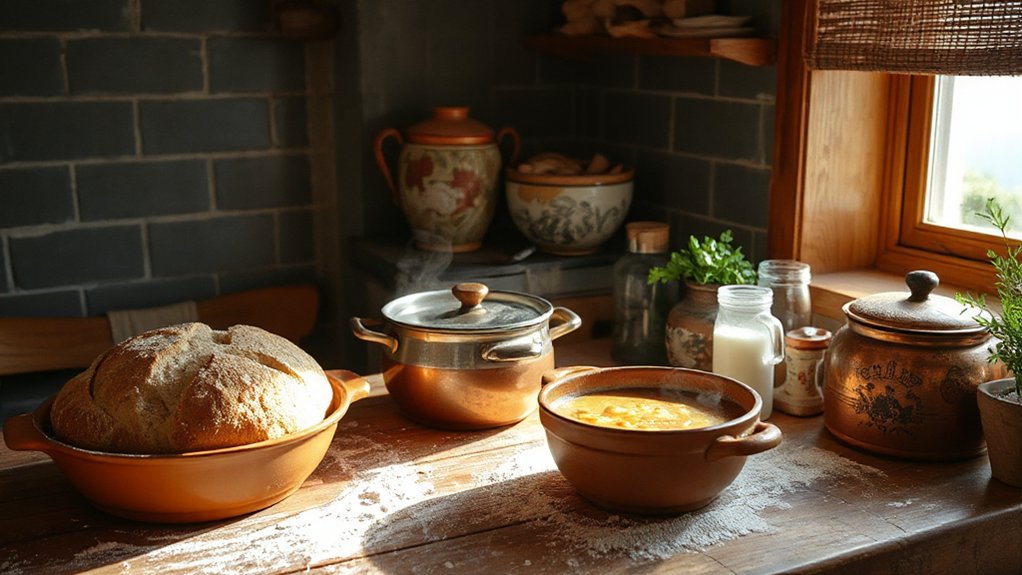
You’ll start with the core of Asturian cuisine: fabada, a stew that binds beans, chorizo, and morcilla into a single, reflective dish.
In exploring Fabada Fundamentals, you’ll notice how each ingredient reveals regional history, social ritual, and seasonal abundance.
This isn’t just food; it’s a lens on everyday life, inviting you to taste how tradition travels and persists through shared tables.
Fabada Fundamentals
Fabada Asturiana sits at the heart of Asturias’ culinary identity, a heartier bean-and-meat stew that reveals the region’s pacing and patience. You observe how slow simmering binds flavors, echoing Asturian folklore and the care embedded in daily life. The dish becomes a lens for memory, where beans absorb rain, smoke, and story, and meat yields to the pot’s quiet insistence.
You’ll taste discipline, not bravado, in the texture and aroma, and notice how traditional crafts appear in the kitchen’s rhythm—handfuls of salt, careful trimming, patient soaking.
- A clay pot hisses with dawn heat, beans swelling as if listening to legends.
- Meat curls into tenderness, releasing savory steam that ties generations together.
- Aromatics bloom, a scent map guiding visitors through farmyards and shared tables.
Asturian Dishes Delights
Asturias offers more than its famed Fabada; it presents a repertoire where slow craft and regional ingredients converge to tell a place through scent, texture, and ritual. You taste the robust bean stew, but you also sense histories steeped in smoke and vineyard air, where chorizo oil coats the pan.
Beyond Fabada, you encounter cachopo’s layered meet-and-cheese, and blue hues of Cabrales shaping every palate memory. In kitchens, you watch the mise en place as communal rituals form: soaking, simmering, tasting, adjusting with salt, paprika, and stock.
Asturian music threads through these moments, offering cadence to hands at work. Traditional festivals punctuate meals, turning dining into a shared archive, where recipes migrate, adapt, and endure.
Daily Life in Asturias: Markets, Alboradas, and Fiesta Timelines
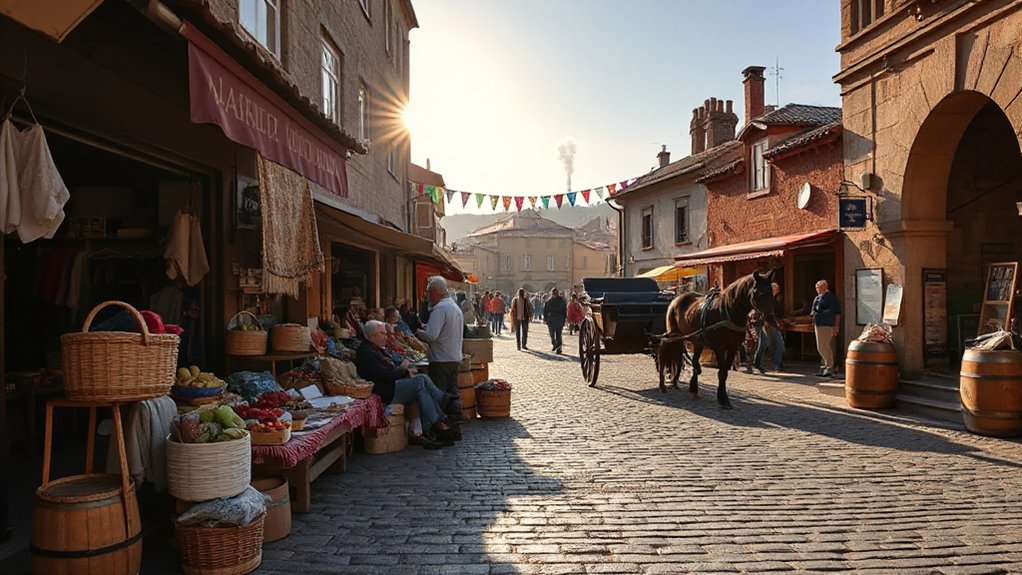
Markets, alboradas, and fiesta timelines shape daily life in Asturias by anchoring time to communal routines as much as to the clock. You move through dawns and plazas with a practiced gait, sensing how traditional markets set the pace for traders and neighbors, while alboradas stitch wakefulness to shared memory.
Fiesta timelines organize conversations, meals, and rest, producing a rhythm that isn’t about minute-by-minute precision but communal expectation.
- Traditional markets pulse at week’s edge, where vendors negotiate with neighbors as a social currency.
- Fiesta timelines thread ceremonial moments into ordinary hours, turning errands into gatherings.
- You absorb place through smells, sounds, and pauses that reveal how people synchronize work, kinship, and memory.
Meet the Makers: Visits to Farms, Crafts, and Workshops
You move from the village square toward the kitchen gate and feel the day’s work begin in miniature: goats’ bells, the rasp of a knife, and the scent of hay turning under hands that know each tool’s habit.
In farmyards you observe how labor rhythms reflect place: pastry flour dust on forearms, a loom’s cadence in a shaded shed, hens tapping grain beside a sunlit trough. You ask makers why they persist, and the answers reveal social memory as technique—farmhouse traditions braided into every task.
Craft and agriculture merge, not as spectacle but as relation: craftspeople trade knowledge across generations, products bearing their signatures. The visits illuminate how artisan workshops sustain taste, skill, and community, while keeping knowledge practical, observable, and enduring.
Heritage Trails and Timeless Viewpoints: Ancient Routes to Lookouts
Winding along ancient routes that still carry the weight of centuries, Heritage Trails connect villages, crossroads, and rocky outcrops into a living map of memory. You walk with locals’ knowledge, decoding how paths shaped kinship, labor, and seasonal mobility. The routes reveal formation of landscape, climate, and risk, guiding you to vantage points where weather, myth, and history converge. Mountain lookouts become classrooms, where you learn to read land-use changes from stone allotments to grazing lines, and you sense how communities negotiated isolation.
You don’t just observe; you participate in a field of memory that binds present travelers to ancestors.
- Follow switchbacks to exposed rocks, where wind composes time into sound.
- Pause at cairns and marker slabs that annotate shared journeys.
- Stand at a lookout, surveying valleys as living archives.
Coastal Asturias: Fishing Ports, Lighthouses, and Seaside Lore
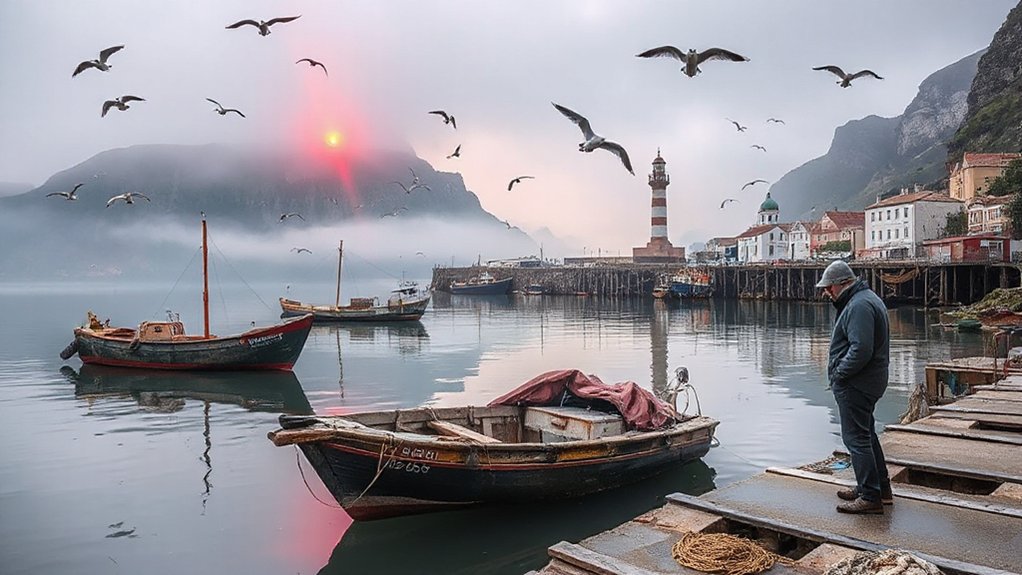
You’ll move along the coast and notice how Coastal Fishing Traditions shape daily rhythms, from early nets to dusky markets.
Lighthouses stand as quiet archives, their creaks and lights marking time for sailors and town folk alike.
While legends thread through harbors and stories of storms and steadfast communities.
This place invites you to map Seaside Community Lore across practices, memories, and the practical know-how that keeps these shores resilient.
Coastal Fishing Traditions
How do coastal communities in Asturias keep their fishing heritage alive day to day? You walk along the harbor and feel the cadence of daily nets, baskets, and boats, a living archive of practice and pride. You observe routines that bind season to season, economies to meals, and families to tides.
The interplay of seafood markets and coastal crafts reveals a system where memory meets technique, and knowledge is passed in hands-on, apprenticeship-style exchanges. You sense how collectors and fishers shape identity through ritual catches, cooperative sales, and shared narratives that anchor the present in a robust past.
- Scenes of stallholders weighing, bargaining, and displaying glistening catches
- Weavers and tanners transforming rope, nets, and leather into practical keepsakes
- Elders teaching youngsters the rhythms of spearing, flensing, and sorting by grade
Lighthouses And Legends
Lighthouses pepper the coastline of Asturias like sentinels of memory, their weathered timbers and painted bands marking more than navigational routes—they map the rhythms of seafaring life.
You observe how light and stone organize everyday work, from harbor rituals to nightly watches, revealing a community’s reliance on precise knowledge and shared narratives.
The towers anchor coastal identity, yet their histories are plural, built from tides of mariner legends and failed rescues, each telling a different version of risk and care.
You assess lighthouse history not as solitary beacon-making but as a nexus of labor, memory, and territory, where keepers, fishermen, and visitors negotiate meaning.
In this ethnography, legend and function intertwine, guiding present encounters with the sea.
Seaside Community Lore
Sea-side lore in Asturias gathers where fishing ports, weathered lighthouses, and daily rituals meet. It reveals how stories travel through boats, bodega walls, and market stalls. You observe how local legends thread through conversations at the quay, shaping routines and identity. While coastal folklore anchors memory in salt and wind, the atmosphere blends empirical detail with myth.
This shows how craft, commerce, and ritual produce shared meaning rather than pure romance.
- A morning net repair by the harbor where old men swap tales about storms and seals
- A lighthouse keeper recounting warnings that echo through fog and alleyways
- A market barter that, in a single gesture, cod, cider, and kinship become inseparable
Seasonal Rhythms: Farming, Fishing, and Municipality Celebrations
In Asturias, seasonal rhythms weave farming, fishing, and municipality celebrations into a living calendar you can feel in the air and on the land: fields drawn by oxen and tractors alike, nets hauled at dawn, and town squares swelling with song, dance, and shared meals.
You observe how farmers time plowing, sowing, and harvest with moon phases, droughts, and market days, revealing resilience and adaptation.
Fishermen calibrate tides to haul gear, curing fish and trading catch as communal knowledge passes through generations.
Municipal celebrations marshal traditional crafts and local folklore into public memory, shaping identity through processions, dances, and crafts fairs.
The pattern shows interdependence among communities, elders, and youth, sustaining both economy and meaning through embodied practice.
Asturian Language and Warm Hospitality: Phrases to Use
You’ll notice how a few warm Asturian phrases quietly open doors, signaling respect and curiosity before you even start a conversation.
This section examines friendly words and warm welcome expressions as social cues that invite reciprocity, not just polite routine.
Friendly Phrases in Asturian
In Asturias, everyday hospitality hinges on small, spoken gestures; even a simple greeting reveals the warmth of place. You’ll notice how friendly phrases in Asturian open doors, shaping subtle social rhythms and trust. The language acts as a thread between family, farmers, and visitors, tying daily chores to shared meanings.
You’ll hear clipped intensifiers, soft vowels, and respectful forms that signal belonging, not performance.
- Salú, buenos díes — a practical starter that invites trust.
- Gracies or gracies-ta, depending on closeness, acknowledging help with balance.
- Dende’l corazon, a heartfelt gesture that marks gratitude and communal spirit.
In these moments, Asturian festivals and traditional crafts surface as contextual anchors, revealing communal memory and ongoing hospitality.
Warm Welcome Expressions
The phrases mix warmth with a subtle regional cadence, revealing language nuances shaped by mountain villages and coastal towns alike. You’ll respond with humility, using greetings that acknowledge prior guests and the meal that awaits, signaling reciprocity rather than command.
In practice, a host may couple a question about your day with an offer of cider or cheese, weaving culinary traditions into social scripts. Your attentive listening, small gestures, and tailored compliments reinforce connection, turning language into practice and place into memory.
Responsible Travel in the Countryside: Respect, Tips, and Etiquette
Responsible travel in Asturias’ countryside hinges on mindful presence: visitors should observe local rhythms, respect private spaces, and choose actions that minimize harm to people, land, and livelihoods. You’ll sense how daily life interlaces with landscape, and how small gestures carry weight in local ethics.
The aim is to observe, not extract; to participate without displacing. In practice, that means honoring private properties, avoiding stray trash, and leaning into eco-friendly practices like reused containers and slow meals that celebrate local cuisine while reducing waste.
Your choices shape welcome, trust, and sustainability.
- Pause before entering a doorstep, greeting residents with local phrases and a listening posture.
- Tread softly on fields, pack out what you bring, and prefer public routes over private shortcuts.
- Share meals mindfully, ask about traditional recipes, and credit local producers.
Practical Planning for Asturias: Transport, Timing, and Packing List
To plan a visit with the same sensitivity you bring to daily encounters, you’ll map how transport, timing, and gear shape your experience in Asturias. You move through buses, trains, and footpaths as if tracing a social map, noting how schedules influence conversations with locals and the rhythm of markets.
Timing matters: dawn harvests, midday rests, evening gatherings at cultural festivals. Your packing list balances practicality and tact—layers for sudden weather shifts, a notebook for impressions, a small gift for hosts.
Consider local cuisine during long waits or communal meals, and how transport gaps steer you toward informal exchanges. This planning reveals pathways where infrastructure meets ritual, where punctuality becomes etiquette, and where deliberate pacing deepens perception of tradition rather than mere scenery.
What You’ll Take Away: Reflections and Ways to Extend the Feeling
What you’ll take away from time in Asturias isn’t a checklist of sights but a yielded shift in perception: you’ll sense how daily rhythms—markets opening, bells at dusk, neighbors pausing for a chat—thread through the day like a living protocol.
This reflection isn’t passive. It analyzes how Cultural festivals and Traditional crafts encode communal memory, offering boundaries and invitations to participate. You’ll notice how participation reframes duration, turning routine into ritual and strangers into interlocutors.
- Feel the cadence of a town festival, where music, food, and conversation braid into shared time.
- Observe artisans at work, tracing tools and gestures that preserve techniques across generations.
- Let conversations linger, identifying the tacit rules that sustain trust and belonging.
Quick-Start Itinerary: A 3–5 Day Asturian Immersion
A three-to-five day Asturian immersion can be crafted as a lived ethnography, where you move from market to hillside hamlet and let place name and routine reveal itself through your own steps. You sketch a route that foregrounds daily labor, craft, and conversation, not mere sights.
Each dawn you note textures: sea salt, wooden beams, slate roofs, and the weight of portable radios in village squares. You pace alongside growers, bakers, and shepherds, listening for cadence in speech and taste in air.
You sample local cuisine with restraint, mapping where stories repeat around fires and ovens. You attend traditional festivals, observe ritual timing, and compare calendars.
Your itinerary becomes analysis: practice, pause, and return with questions rather than conclusions.
Frequently Asked Questions
How Can I Experience Traditional Asturian Life on a Budget?
You can experience Asturian life on a budget by staying in family-run hostels, cooking at local markets, and walking village routes; savor Asturian cuisine in taverns, and admire Local crafts while talking with artisans, appreciating regional rhythms.
What Are the Bare Essentials to Pack for Rural Asturias?
You’ll pack a sturdy jacket, boots, water, and a map, because 60% hike rural trails daily. You’ll savor local cuisine and seek traditional crafts, noting wind, rain, and soil shape life as you travel light, yet prepared.
Is It Safe to Visit Remote Villages Alone or as a Solo Traveler?
Yes, you can visit remote villages solo, but trust local customs and assess village safety. You’ll notice how locals welcome you, yet you should observe boundaries, read signs, and adapt your pace, respecting traditions while documenting ethnographic impressions.
When Are the Best Times to Experience Local Festivals?
Catch the pulse at peak feast times, you’ll savor Local gastronomy and Folk music, and you’ll see communities thriving. You plan trips around festivals, observing rituals, rhythms, and connections—seasonal calendars guiding your ethnographic, descriptive journey.
How Can I Responsibly Photograph People and Places?
You should practice cultural sensitivity and practice respectful photography, asking permissions, avoiding intrusions, and honoring boundaries; observe with intent, document context, and reflect ethically on your impact, ensuring your ethnographic notes acknowledge communities’ voices and consent.
Conclusion
You’ll leave Asturias carrying a pocketful of textures—stone lanes, wooden shutters, the hiss of cider, the warmth of lingering meals. You’ve felt pace slow, strangers become neighbors, and a landscape that asks for gentler listening. The more you move through villages and real conversations, the more you sense how traditions endure when shared, not collected. Will you let this countryside change how you travel, how you eat, and how you inhabit a place, even after you’ve returned home?