
Catalonia is a living gallery where Gaudí’s daring visions meet Gothic echoes and sunlit coastlines, inviting you to stroll through streets that feel like drawings in stone. You’ll trace Modernisme’s bold curves in hidden lanes, admire ironwork, mosaics, and carved capitals, then pause at plazas where light chisels the air. Coastal towns offer geometric clarity and weathered charm, while intimate patios and courtyards reveal layered histories. Stay curious, because more moments like these await just ahead.
Key Takeaways
- Catalonia offers diverse architectural dialects—from Gothic and Romanesque to Modernisme—across cities like Barcelona, Girona, and coastal towns.
- Gaudí and regional artisans fuse organic forms, mosaics, ironwork, and carved details into living, sustainable urban designs.
- Coastal architecture showcases geometric clarity, weather-resistant materials, and sculptural pavilions blending resilience with beauty.
- Urban renewal and public art transform streets into open-air galleries, linking old cores with new, permeable urban forms.
- Intimate spaces like patios and courtyards create micro-oases where light, texture, and memory harmonize Catalan craftsmanship.
Catalonia’s Architectural Tapestry: An Overview for Design Lovers
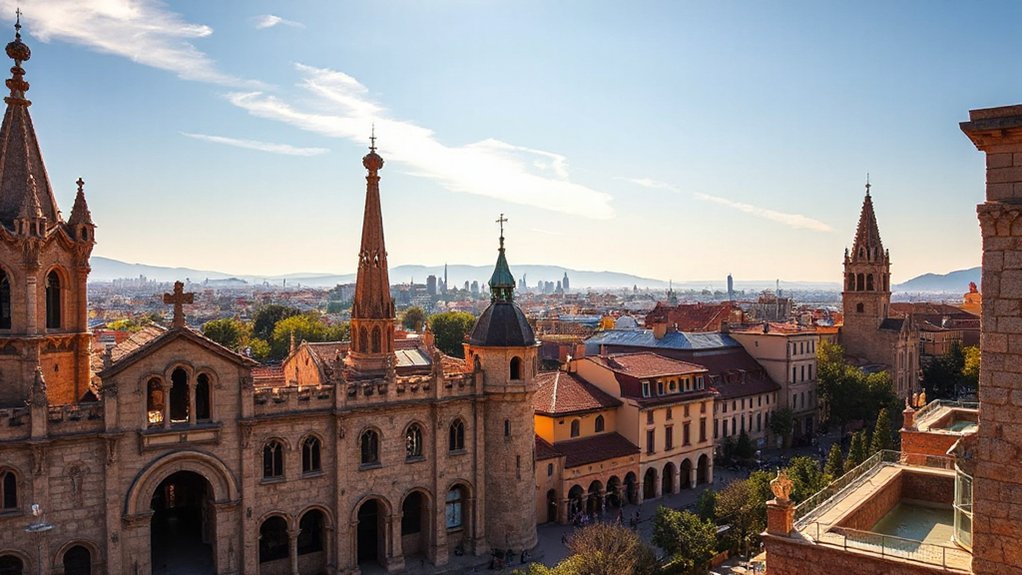
Catalonia isn’t just a place to visit; it’s a living atlas of architecture, where every city—from Barcelona’s bold lines to Girona’s stone-wweave—speaks in its own distinctive dialect. You walk through layered streets and instantly sense Cultural influences shaping forms, textures, and silhouettes.
Old workshops linger in the air, revealing Traditional craftsmanship that persists beneath contemporary polish. In coastal towns, light sculpts whitewashed walls, while inland courtyards cradle shade and sound, guiding your gaze to carved balconies and tiled façades.
Materials tell stories: limestone, terracotta, and dark timber narrate trades handed down through generations. You notice how public spaces and private niches converse, creating a tapestry that fuses function with feeling.
This overview invites your design senses to map lineage, craft, and shared memory across Catalonia’s built landscape.
Gaudí’s Barcelona: Stroll Through His Living Drawings
You walk through Gaudí’s Barcelona as if the streets themselves are sketches coming to life, curving arches guiding your gaze like living drawings in stone.
You feel the mosaic textures, the organic forms, and the way light slides along ironwork, turning buildings into animated pages.
This is where his architectural legacy breathes, inviting you to notice how each edge, curve, and color hums with intention.
Living Drawings In Action
In Gaudí’s Barcelona, the city itself seems to breathe as you stroll, and his “living drawings” unfold before your eyes in stone, tile, and light. You notice plans become pulse—the curves curl with wind, the textures hum with sunlit memory, and benches seem carved from wind itself.
Each façade reads like a page in an ongoing sketchbook, where color and form interact as if wind and weight converse. The surfaces shift as you move, revealing hidden mosaics and deliberate imperfections that feel purposeful, not accidental, part of an overarching living art.
This isn’t static sculpture; it’s an artistic movement made public, intimate, immediate. You’re not merely observing—you participate in a dialogue of light, shade, and structure.
Gaudí’s Architectural Legacy
You walk the undulating avenues and feel how textures and colors breathe with the wind, how stone and iron converse with sunlit courtyards. His work isn’t static—it’s a method, a study in sustainable design that uses natural ventilation, shading, and evolving geometry to choreograph comfort.
You notice how every balcony, chimney, and tile hints at a larger, organic plan, a living diagram of growth rather than imposition. This is architectural preservation with a pulse: bold imagination paired with careful, durable craft, ensuring future generations still hear Gaudí’s resonant dialogue with the city.
Modernisme Beyond Barcelona: Lanes, Facades, and Hidden Gems
You’ll notice Modernisme whispering through narrow lanes and quiet courtyards, where sunlit façades reveal details you almost miss at first glance.
From Mallorca to Girona, facades unfold like clues—mosaics, wrought iron, and bold curves bold enough to stop your step.
Hidden gems await behind quiet doors, inviting you to pause, look closer, and imagine the stories they still guard.
Lanes of Modernisme Gems
Beyond Barcelona’s famous blocks, the lanes of Catalonia hide a spine of Modernisme that whispers from facades, doorways, and courtyards. You stroll past narrow corridors where ironwork curls, tiled mosaics glint, and carved stone catches the light.
Each turn reveals a microcosm of the modernisme movement, where function and flourish collide in playful balance. You notice rhythmic cornices, sweeping arches, and stained-glass peeks through communal nooks.
Details matter here: a doorbell cluster like a tiny orchestra, a balcony rail that doubles as sculpture, a vent rendered as a delicate leaf. You sense a slow, deliberate hand guiding design, turning ordinary strolls into curated discoveries.
In these lanes, architectural details invite memory, inviting you to linger, observe, and imagine how daily life once shimmered.
Facades Beyond Barcelona
Facade techniques vary: decorative reliefs, polychrome tiling, and cantilevered balconies create layered texture that rewards slow inspection. You sense architectural symbolism in spirals, floral motifs, and mystical emblems tucked above doorways, signaling craft and meaning without shouting.
In smaller towns, corners glimpse artisans’ persistence: ironwork curls, carved capitals, and glazed panels that glow after rain. You leave with a quiet respect for how Modernisme stretches outward, transforming street fronts into lyrical, enduring expressions of Catalonia’s artistic sensibility.
Hidden Architectural Treasures
The charm isn’t in grand signs but in quiet detail: hidden mosaics tucked into stair risers, mosaics catching sunlight like underwater constellations. You glimpse secret courtyards peeking between buildings, where vines alphabetically spell out months of the year.
Facades retreat into the background, yet their silhouettes cue your curiosity. You circle corners, listening for a hinge’s soft sigh, and realize you’ve entered a network of intimate, untold Modernisme chapters beyond Barcelona’s famous glare.
Gothic and Romanesque Legacies: Churches That Wear History
Gothic arches rise like fingers tracing the vaults, and Romanesque heft anchors each doorway with a quiet, enduring gravity. You walk into stone breaths and shadow, where time thickens the air with echoes of prayer and chisels.
You notice how slender columns push upward, how rib vaults lace the ceiling, and how stained glass hums with color as if a hymn were poured into light. The churches wear their ages with deliberate grace, displaying medieval symbolism in carved saints and guideposts for the faithful.
Ecclesiastical craftsmanship speaks in paired capitals, belt courses, and meticulous ornament that invites a closer gaze. You feel history settle around you, a tangible archive, urging reverence, curiosity, and a renewed conversation with stone.
Coastal Town Architecture: Bold Statements by the Sea
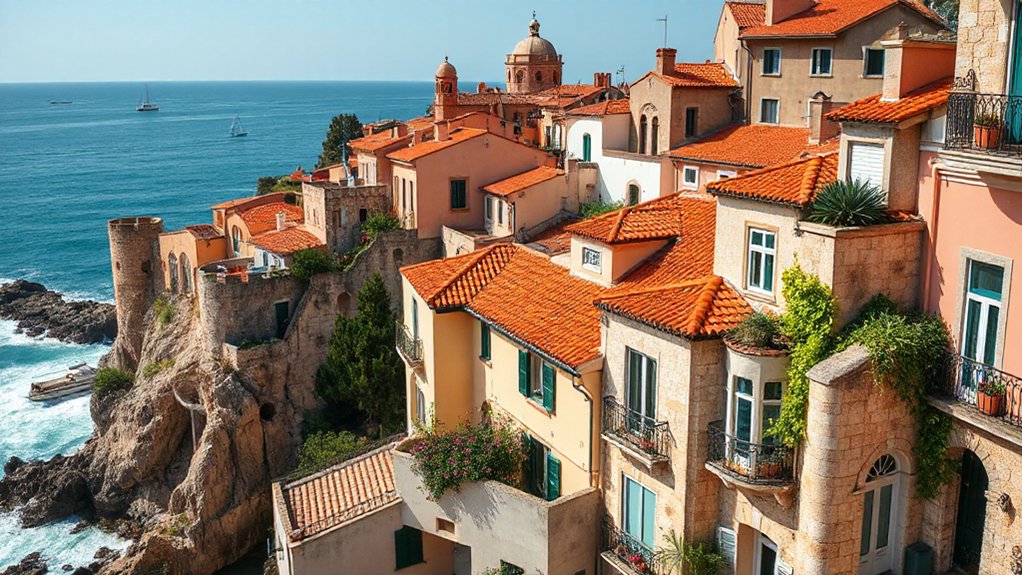
Coastal towns throw their architecture onto the sea with bold, unapologetic statements. You walk along gull-stitched promenades, feeling salt wind braid your hair as lines lean into the tide.
Facades rise in geometric clarity, terrace steps spiraling toward horizon blues, while windows frame seascapes like living paintings. You notice seaside sculptures standing guard near docks, their weathered textures answering every spray with stubborn grace.
In sunny squares, coastal pavilions tuck under eaves, shade spilling onto pavement, inviting conversations that drift between crafts and tides. Materials resist the weather: sun-bleached stone, copper that learns green patina, glass that captures shifting light.
You sense a language of resilience, crafted to outlast storms and celebrate salt-air life.
Contemporary Catalonia: Iconic Works by Modern Architects
You notice how contemporary Catalonia shapes its skyline with iconic modern facades that speak with glass, steel, and light. You wander through streets where playful, innovative urban forms redefine how we move, dwell, and meet.
You’re invited to compare the bold surface rhythms of these works to the place they rise from, sparking questions about vision, craft, and context.
Iconic Modern Facades
The surfaces reveal material honesty—steel ribbons, timber warmth, limestone weathering—yet remain flexible to evolving uses. Sustainable design threads through skylines, from energy-efficient glass to shading devices that tame heat without dulling character.
You notice how façades respond to climate and climate to city life, reflecting daily cycles and seasonal moods. Urban renewal feels tangible as old cores meet new skins, creating composite identities.
In Catalonia, facades aren’t static; they invite dialogue, adaptation, renewal.
Innovative Urban Forms
From the vantage point of a city sidewalk, Innovative Urban Forms unfold as living maps—bold clusters of density, permeability, and mixed uses that redefine how Catalonia experiences space. You navigate edges where transit, shops, and courtyards braid together, shaping daily rhythms.
Modern ensembles emphasize urban ecology, where green pockets stitch through streets, regulating heat and air flow while inviting chance encounters. You notice how façades dissolve into activity hubs, inviting pedestrians to linger rather than pass through.
Sustainable design threads through material choices, daylight, and energy strategies, reducing footprints without sacrificing spectacle. These forms aren’t static; they adapt to climate, program, and culture, turning blocks into dynamic neighborhoods that reflect Catalonia’s contemporary ethos.
- Density with accessibility that invites exploration
- Permeable ground planes linking indoor and outdoor life
- Green corridors weaving through built environments
- Energy-smart envelopes supporting low-impact ambition
Museums, Galleries, and Public Art: Culture on Display
Museum corridors hum with the pulse of ideas as you wander among canvases, sculptures, and bold public installations that turn streets into open-air galleries.
You notice how museums cradle light, letting color breathe in quiet rooms and reveal textures you almost feel under your fingertips.
Galleries spill moments of stillness into bustling neighborhoods, inviting conversation as you examine lines, shadows, and technique.
Public murals pulse on brick and plaster, turning familiar facades into narrative stages, while street installations punctuate corners with surprising scale and tactility.
You sense a dialogue between collected memory and contemporary voice, between curated silence and public action.
In Catalonia, culture feels accessible, immediate, and alive, inviting you to move, observe, and reconsider every corner.
Patios, Palaces, and Courtyards: Intimate Spaces That Inspire Design
Within Catalonia’s fabric of intimate spaces, patios, palaces, and courtyards invite you to slow down and listen to the echo of history in stone and light. You feel the restraint of design guiding gaze upward, then inward, toward hidden courtyards and quiet fountains. Indoor gardens peek from shaded corridors, offering green hush amid marble and tile.
Secret patios reveal themselves as micro-oases where weathered walls tell stories of patrons and painters. You’re drawn to the way space becomes a dialogue between memory and craft, where footsteps echo softly and breath slows. Design inspiration arrives from measured proportion, material warmth, and the intimacy of sightlines that frame a single cherished moment.
- Whispered courtyards and their layered histories
- Indoor gardens as living, evolving rooms
- Hidden arches guiding light and shadow
- Courtyard rituals shaping architectural rhythm
The Sense of Place: Light, Color, and Material Palettes in Catalonia
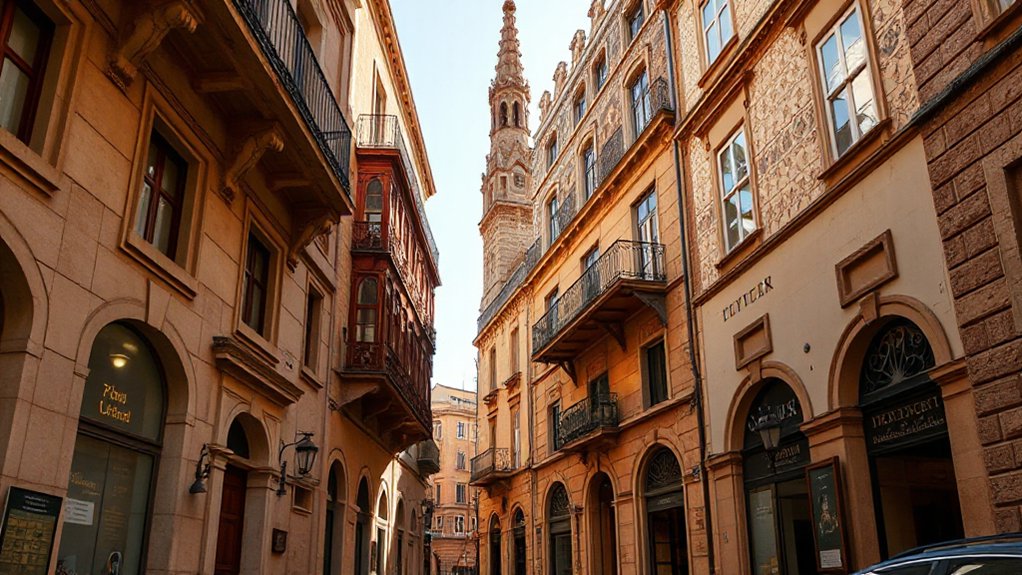
Light spills across Catalonia’s streets and interiors, stitching warmth to stone and pigment with the quiet authority of place. You notice how daylight changes from dawn to dusk, shaping stone textures and revealing subtle color shifts in pastel walls, terracotta, and limestone.
Light harmony threads through Modernist glass, Gothic tracery, and medieval courtyards, turning surfaces into tactile maps of time. You feel the air hum with material diversity: heat-worn brick, cool ceramic tiles, limestone’s cool grain, pine and oak timbers, and polished terrazzo floors.
Shadows carve edges, guiding your gaze toward carved balconies and sun-drenched plazas. In every corner, the palette converses with light, creating atmospheres that feel distinct, memorable, and utterly Catalan.
Planning Your Catalonia Art & Architecture Itinerary
Start by mapping your interests: be it Gothic cloisters, Modernist facades, or Romanesque chapels. Then cluster sites by proximity to minimize travel time and maximize daylight hours for photography.
As you plan, you’ll tune routes around local art and historic landmarks, aiming for efficient mornings and relaxed afternoons. Visual cues—stone textures, glass reflections, metalwork—guide your pacing, not fatigue. Use neighborhoods with dense curiosities, and allow occasional pauses to compare details across eras. Keep a flexible frame for sunrise shots and golden-hour silhouettes. Balance crowd-heavy icons with quieter corners to savor authenticity.
Pack a lightweight map, a charged camera, and a comment-ready notebook for impressions.
- Prioritize clusters by proximity
- Time light for photography
- Mix iconic and offbeat sites
- Note local art and historic landmarks impressions
Reading Catalonia’s Built Environment: A Design-Lover’s Masterclass
From Gothic cloisters to soaring Modernist façades, Catalonia’s built environment reads like a living storyboard of adaptation and ambition. You’ll trace patterns of stone, brick, and glass that reveal how space breathes with time, light, and function. Each avenue becomes a page in a design-lover’s masterclass, where façades speak in tactile rhythm and rooflines sketch weathered conversations between past and present.
You notice how urban sustainability threads through dense cores, permeable courtyards, and transit-linked cores that reduce footprints without sacrificing drama. Cultural preservation anchors sightlines, guiding restoration choices that respect craft while inviting fresh use.
You compare plaster textures to steel curves, you map how public squares mediate crowds, and you sense the discipline behind every adaptive reuse. In this landscape, informed observation sharpens taste and judgment.
Frequently Asked Questions
How Does Catalonia Blend Tradition With Contemporary Architecture?
You’ll see Catalonia blend tradition with contemporary architecture through Cultural fusion and Architectural innovation, where medieval silhouettes meet glassy towers, sunlit courtyards, and flowing lines; you observe textures, light, and craft harmonizing old and new.
Which Lesser-Known Sites Rival Gaudí’s Masterpieces?
You’ll discover hidden courtyards and local mosaics that rival Gaudí, as you wander lesser-known sites. You notice light playing on stone, textures telling stories, and quiet corners where color, texture, and form blend into Catalonia’s living architecture.
Can Architecture Reveal Regional Social History in Catalonia?
Architecture reveals regional social history in Catalonia, you see: cultural identity threads through walls, while architectural symbolism contrasts modern bustle with medieval echoes. You notice people, pride, and pasts intertwine, shaping streets, spirit, and shared memory.
Where to Find the Best Light-Driven Design Moments?
You’ll find light driven moments where light inspired design innovations peel through façades, guiding your gaze. You’ll notice skylights, courtyards, and shadows choreographing space, inviting you to trace how daylight becomes architecture’s pulse and mood, beautifully.
How Do Public Spaces Shape Daily Catalan Life?
Public spaces shape daily Catalan life by inviting you to linger, observe, and participate; public art sparks conversations, urban design guides movement, and you feel the city reframe your rhythms, breaths, and routes with visual, tactile clarity.
Conclusion
In Catalonia, curious minds crave enchanting corners, caught between clever curves and carved corners. Cast your compass toward crystalline cathedrals, carve-laden courtyards, and chromatic façades that flirt with the sea. Let lantern-light linger on lattice, let lime-washed lanes lend lore, let modernist mosaics melt into moonlit memories. You’ll sense some soulful symmetry, savor startling surfaces, and savor stories stitched in stone. Step softly, seek spaces that speak, and surrender to the spell of design-drenched days.