
Head to Galicia’s docks, markets, and seaside tavernas for daily, briny freshness you can taste. Start at dawns in A Coruña’s Mercado de Abastos, where cod, sardines, and octopus arrive still steam-warm and glistening, then wander harbor walks with nets and ice‑cool fish. Eat at traditional casas and tabernas along Costa Da Morte, where grilled sardines crackle and pulpo dissolves on the tongue. Seek sustainable catches, ask locals about provenance, and feel the sea in every bite—more flavors await beyond.
Key Takeaways
- Visit Mercado de Abastos in A Coruña for daily catches like cod, sardines, and octopus, sourced fresh each morning.
- Dine at Casas and tabernas along Galicia’s coast for simple, grilled-to-order seafood with local, seasonal flavors.
- Explore coastal markets and harbors to taste fish straight from nets, boards, and ice, minimal handling guaranteed.
- Seek out Costa Da Morte dining spots offering signature dishes: octopus, sardines, mussels, and razor clams with regional techniques.
- Sample shellfish tastings—mussels, clams, prawns—paired with lemon, olive oil, parsley, and white wine for authentic freshness.
Why Galician Seafood Tastes Incredibly Fresh
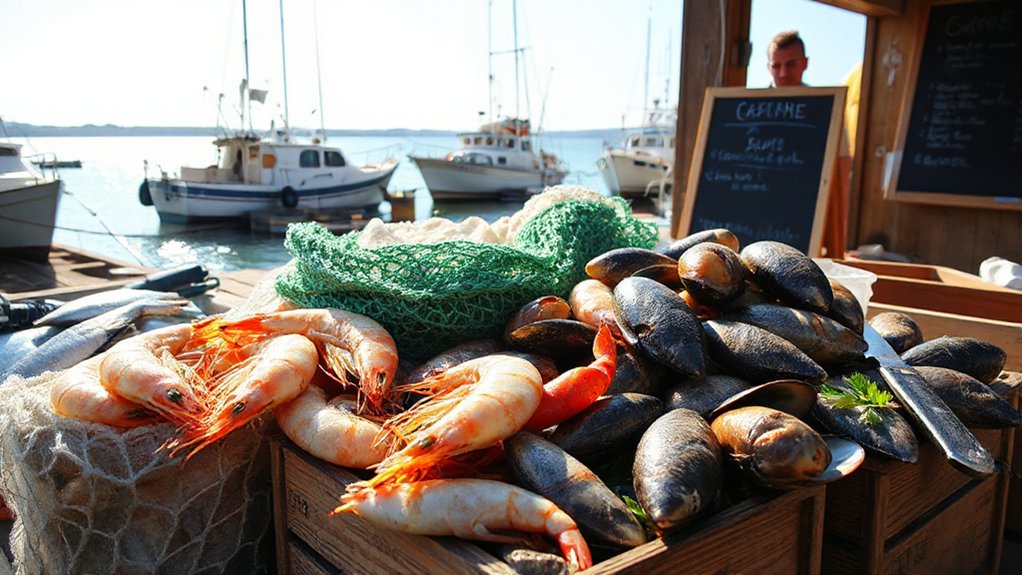
The seafood in Galicia tastes incredibly fresh because the water is a constant, briny cradle that never lets freshness downshift. You feel the sea breeze cling to your skin as you smell salt and iodine, then see glistening fillets resting on crushed ice.
You learn that seafood preservation starts with rapid chilling, careful handling, and clean processing right at the dock. You notice traditional nets and wooden boats still in use, a nod to fishing traditions that balance yield with quality.
You taste the result in every bite: firm texture, sweet sweetness, and a clean finish. The method respects the catch, limiting waste and protecting flavor, so every meal mirrors the coast’s honest, safeguarded bounty. Precision, care, and discipline.
How Galician Markets Guarantee Daily Catches
Markets wake early in Galicia, and the scene is electric with dockside chatter, ticking clock, and baskets already brimming. You sense cod, sardine, and octopus arriving as sun climbs, backed by strict drums of oversight.
Daily catches are trusted through strong seafood sustainability and precise fishery management, ensuring surplus never erodes tomorrow’s harvest.
- Fishermen rotate vessels to balance pressure and freshness
- Auctions prioritize speed, minimizing delays and spoilage
- Regulators monitor quotas, tag-by-tag, across ports
- Buyers reserve prime lots, aligning demand with limited supply
With every purchase, you feel provenance, not rumor; every bite confirms responsible practice. Markets safeguard tomorrow by honoring today’s limits, so Galicia’s coast remains bountiful, vibrant, and trustworthy for you.
Daily Seafood at A Coruña Markets: Where to Go
Across A Coruña, daily seafood hotspots buzz from dawn, when the harbor fog still clings to nets and crates, to the first blue glare of the morn. You weave through stalls where glistening fish steam with breath of the sea, and you taste salt on your lips from the brisk breeze off the quay.
Ask where to go, and locals point to the early-rustle of the Mercado de Abastos, then the glassy counters of the fish hall, where plump sardinas and percebe crystals gleam. You feel the market history pulse beneath boots and chatter.
Think seafood preservation as you learn quick, practical tips—consume soon, keep cool, respect the ice. Your choice shapes freshness, flavor, and a day’s true Galicia bite.
Coastal Towns Where You Taste Seafood at the Source
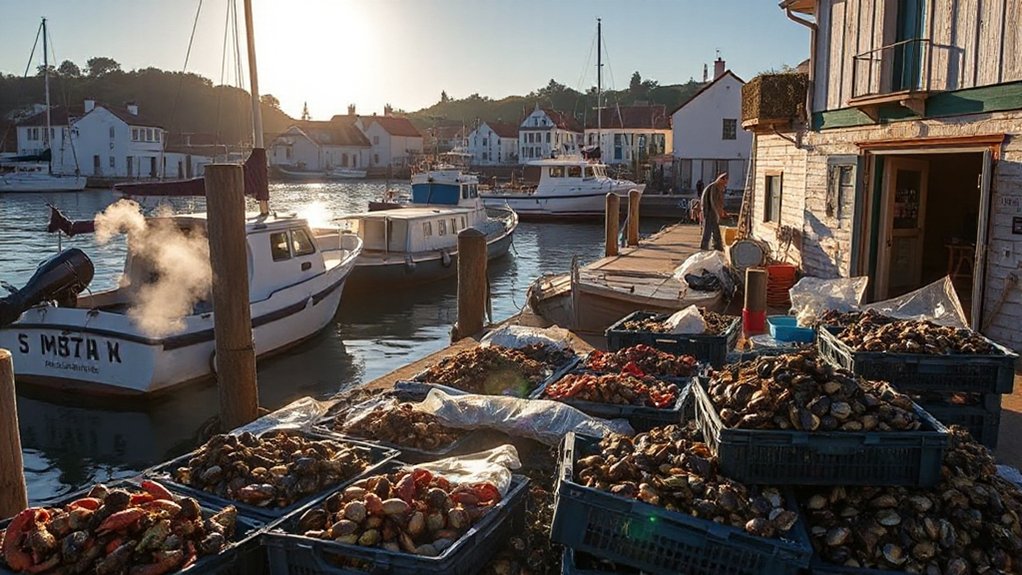
You stroll along harbor walks where Fresh Catches Daily glisten on ice, ready for your plate. Weaving from pier to tavern, you taste the sea along Harbor-to-Table Walkways, each stall a story of nets and sun-warmed fish.
You savor the pulse of the coast as Local Harvests surface in colorful markets, inviting you to savor seafood at the source.
Fresh Catches Daily
Seafood preservation matters here, keeping flavors intact from dock to plate. You notice the fishermen’s discipline—clean lines, honest hands, careful ice, and respectful storage—proof of brisk, sustainable rhythms. The town moves with precise fishing techniques that translate into brightness on your tongue.
- Dockside sorting and quick cooling
- Ice-chilled drawers for freshness
- Minimal handling, maximum integrity
- Local markets, direct taste, no fluff
Harbor-to-Table Walkways
Nets dry on rack walls, the fishy aroma sharp yet inviting, mingling with briny breeze. You glimpse harbor architecture—whitewashed façades, slate roofs, wrought-iron balconies—that tells the town’s pulse without shouting.
Vendors call softly, offering eel, sardine, and octopus tasting on the spot, the lemon squeeze bright against salt. Salt spray beads your skin as gulls wheel above weathered pilings.
This route doubles as coastal preservation: preserved lanes, tidy fish houses, and careful restoration that keeps tradition breathing. You move, flavor first, memory second, the coastline steady as a heartbeat.
Taste Local Harvests
Salt-streaked air wraps around you as fishermen haul baskets of just-caught fish from dusted boats, and the markets come alive with airbrushed laughter and the clink of ice.
Here, you taste local harvests by wandering coastal towns where seafood is your first stop, not your After. You witness seafood sustainability in practice, from careful quotas to short supply chains, and you feel the pride in Local fishing practices that keep traditions alive while modern vigilance protects reefs.
Let these steps guide you:
- Pick fish at dawn, when glare is gentler on the slate.
- Ask about where it was caught and by whom.
- Choose smaller, seasonal varieties.
- Support markets that trace every catch.
Costa Da Morte’s Top Seafood Restaurants to Try
You’ll chase the freshest catch at stalls and docks, where glistening fish and briny air set your senses alight. Coastline eateries serve up coastal dining gems with steam and citrus perfuming the room, while tide-swept table delights invite you to taste the sea’s heartbeat.
In Costa Da Morte, the flavor lineup—freshest catch spots, coastal dining gems, and tide-swept table delights—promises a raw, immersive seafood moment.
Freshest Catch Spots
Costa da Morte is where the Atlantic lunges at shore, delivering a daily bounty of fresh-caught treasure. You follow the spray, the scent of brine, and the hiss of nets to spots where the bite is immediate and honest.
- Sardines pressed into oily paper, bright-eyed and briny.
- Octopus drums on the grill, tender, smoky, lemon-sparkled.
- Mussels steaming in copper pots, iron-dark, sea-sweet.
- Razor clams opened to reveal sweet, ocean butter.
Here, seafood sustainability guides every choice, and fishing traditions echo in the rhythm of the day. You taste the lineage in every bite, the careful balance between catch, craft, and coast. Your map tightens; the coast feels closer.
Coastal Dining Gems
What makes Costa da Morte’s dining scene sing is how the sea leans in at every table, from cliff-side taverns to harbor-side bistros. You’ll taste coastal gems where cooks balance tradition with modern technique, sourcing daily from nearby nets and markets.
Expect simple, honest plates: briny mollusks, charred fish fillets, and shellfish glistening with seawater. The ambiance is tactile—salt on skin, wind in hair, lantern glow flickering over chipped ceramic.
You notice seafood sustainability woven into menus, with fish chosen for freshness and fishers’ ongoing quotas respected by meticulous procurement. Guides highlight fishing regulations, ensuring responsible catches without compromising flavor.
Patience rewards you: the first bite carries mineral sweetness, the next reveals smoky depth, and every bite reinforces the region’s vow to protect the coast.
Tide-Swept Table Delights
Seafood here tastes like a tide playlist, each bite surfacing with brine, smoke, and sun-warmed nets. You walk Costa Da Morte’s shore and feel the rush of stories in every plate, a chorus of freshness and practice. You’ll savor careful picks that honor Seafood sustainability, from shore to stove, with fishermen guiding the pace.
Tide pool exploration becomes a tasting ethos, where kelp aroma clings to the air and the ocean insists on honesty.
- Grilled sardines with lemon zing and hot olive oil
- Steamed spider crabs, buttered crust, and parsley
- Razor clams, garlic, and white wine
- Seabass carpaccio, caper, and citrus glow
Traditional Galician Seafood Feasts You Must Experience
Ever wondered what makes a Galician feast feel like a tide coming alive? You step into a shared table, and the air tastes of salt, smoke, and lemon zest. Crabs crack open with a satisfying snap, clams release a briny sigh, and grills hiss as sardines line the fire with glossy skins.
You savor Seafood preparation refined over generations, where simple ingredients become ritual—hands seasoned by experience, pots singing with garlic, olive oil, and parsley. The Cultural significance hums beneath every bite, a communal vow to honor fishermen, boats, and family stories that circle the room.
You’re swept up in laughter, stories, and the clang of glasses, tasting not just seafood but heritage, celebration, and place.
How to Order Seafood Like a Local in Galicia
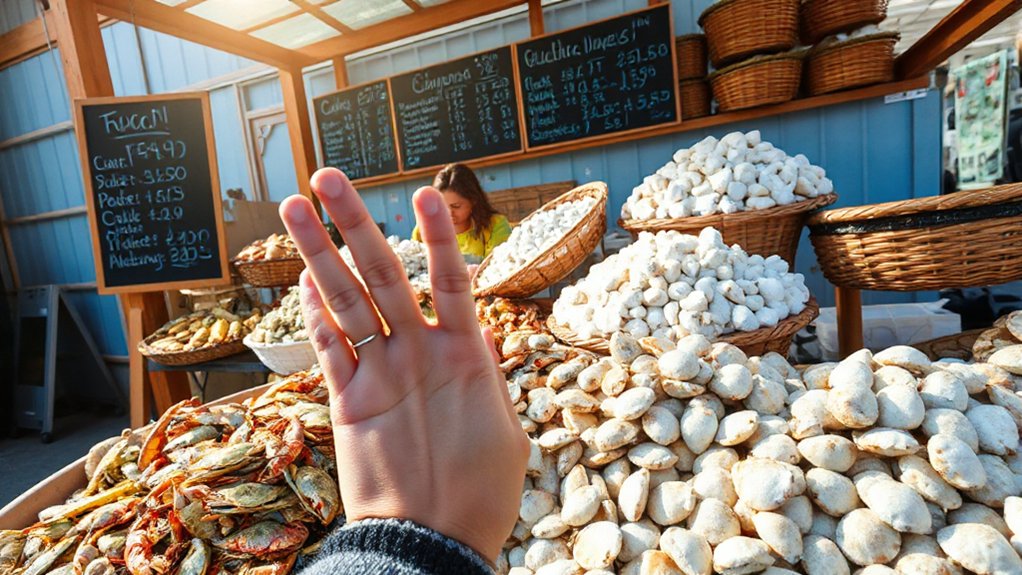
Step up to the counter or at the table with a quick, confident bite of Spanish or Galician phrases; locals do the same, and your ease will earn you respect before you even order.
1) Salta a la barra con una sonrisa and ask for the freshest catch of the day.
2) Use Seafood etiquette: point to your choice, confirm weight, and say “¿cuánto cuesta?” to gauge value.
3) Acknowledge Local fishing traditions by asking about the boat or harbor source when possible.
4) Thank your server in Galician with “Grazas,” then savor the aroma, steam, and briny air as your plate arrives.
Seasonal Highlights: Peak Seafood by Season
Spring arrives with a bright net of possibilities: tender mussels swelling in their shells, slim sash-like slices of merluza, and sardines that snap fresh from cooler loads. As the calendar shifts, you’ll notice peak seafood by season shaping markets and plates.
In spring, you taste bright, briny notes; in summer, sweetness lingers through grilled fillets; autumn brings richer, deeper iron flavors; winter, sturdy, comforting shellfish.
You play a role in Seafood sustainability by choosing fisheries that minimize bycatch and protect habitats. Be mindful of fishing regulations that guard spawning periods and quotas, ensuring abundance remains for the next table.
Let seasonal variety guide your choices, yet stay disciplined about origin, freshness, and responsible sourcing. Your palate, mapped to the coast, sustains Galicia’s seafood future.
Must-Visit Casas and Tabernas Across Galicia
Galicia’s seafood scene comes alive in its casas and tabernas, where narrow lanes funnel aroma, salt, and flame into intimate, humming rooms. You’ll feel smoke kiss grilled pescado, hear clatter of pans, and taste briny air between bites.
These spots showcase authentic cooking techniques and coastal character, not gloss. From humming kitchens to candlelit corners, you sense history in every shell.
- Sear and baste octopus until tender, then kiss with paprika
- Steam mussels in white wine, mint, and garlic
- Roast sardines over embered grapevine wood
- Finish with lemon, sea salt, and a drizzle of olive oil
Seafood festivals nearby punctuate weekends, turning tables into shared celebration, a brisk, sensory chorus you won’t forget.
Dockside Spots: Fishermen’s Stalls for the Day’s Haul
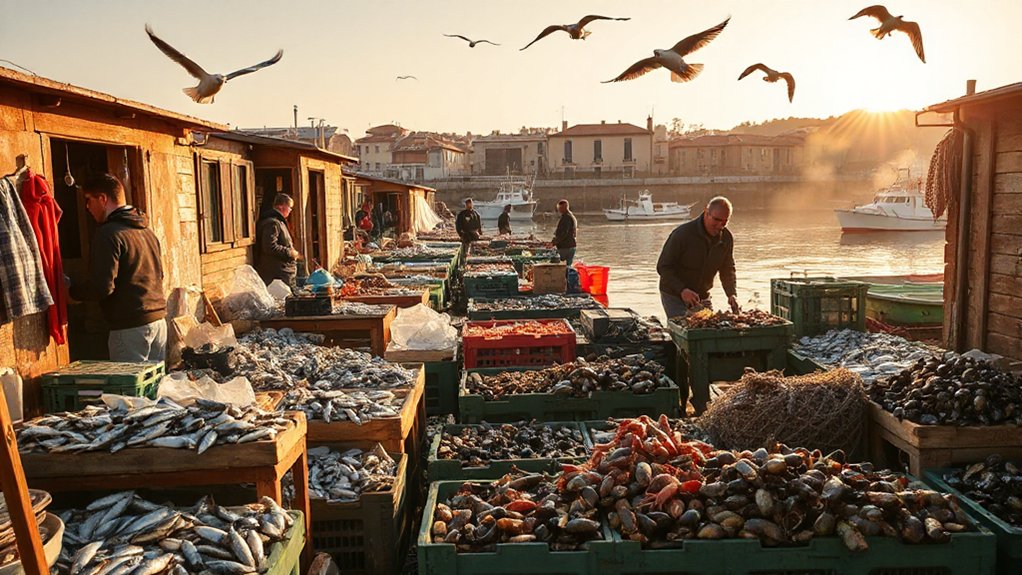
The boats nose in at dawn, nets heavy with the blue shimmer of the sea, and the stalls spring to life with salt in the air, fish steam fragrant, and tempers bright as copper in the sun.
You move along the quay, market hustle buzzing, choosing the day’s haul by glint and heft. You ask about fishing techniques as shouts rise with each catch, noting how lines and lobes are still damp from the morning tide.
Vendors flip fillets, rinse scales, and reveal gleaming eyes that promise freshness. You taste the crisp sea spray in the air, feel the chill of seafood preservation on ice, and hear the crack of ice.
The stall’s rhythm guides your selections, honest, immediate, satisfying.
Signature Shellfish Dishes: Mussels, Clams, Razor Shells
You can taste the sea in every bite when mussels, clams, and razor shells arrive at the table, steam curling off shared platters as garlic, parsley, and a splash of white wine wake their briny sweetness. You’ll notice how each shellfish variety carries a distinct coastal memory, from briny whispers to mineral notes, a testament to Seafood sustainability in Galicia’s waters. Their simplicity shines, yet every bite delivers depth.
- Mussels glistening with herbaceous broth
- Clams releasing a lemony, caffeinated finish
- Razor shells yielding clean, delicate sweetness
- Shared plates encouraging conversation and mindful sourcing
Let the shells guide your palate, respect the harvest, savor the season, and celebrate shellfish varieties.
Prawns and Shrimp: Best Windows and Pairings
Then come prawns and shrimp, where the window of peak sweetness is narrow and beautifully defined: just after they blush pink, before the shells stiffen or the meat toughens, they taste of clean salt and a whisper of seaweed.
You’ll chase that flash of ocean brightness with rapid, simple cooking techniques: quick grill, blistered in butter, or a bare sauté that keeps the bite firm. Avoid overcooking, or the snap fades.
Pairings sing in Galicia—lemon, garlic, paprika, drizzle of olive oil, and crisp white wine to lift the sweetness.
Attend seafood festivals to taste contrasts: sea-sweet shrimp next to charred shells, smoky glands of flavor, and the briny afterglow that lingers long after the bite.
Pulpo a La Gallega: Octopus Experiences You’Ll Love
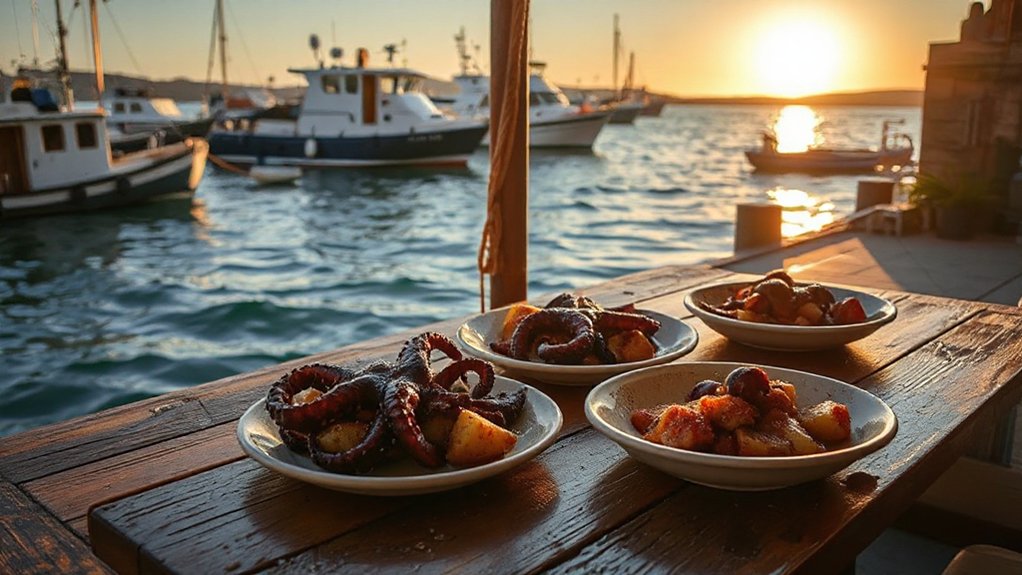
Sea smells cling to the air as tender octopus meets fire, and you’ll feel Galicia come alive in a single bite. Pulpo a la Gallega invites you to savor simplicity—charred edges, smoky sweetness, and paprika kiss. You’ll notice Octopus traditions in every slice, the craft passed down like a secret recipe at Seafood festivals. You’re not just tasting a dish; you’re tasting history.
- Order at a salted table and watch the boil-water ritual, then the red dust of paprika drifting like autumn leaves.
- Listen for the quick fork tapping as you test the tenderness and glow of olive oil.
- Feel the warmth of the plate inside your palms.
- Savor the sea in each bite, brief and bright.
Markets vs. Restaurants: Where the Freshest Ends Up
Markets hum with a barter of briny scents: icecrisp crates, sun-warmed stalls, and fishmonger hands flashing silver as they rinse the day’s haul. You sense the split second decision between market and restaurant: where the freshest ends up depends on timing, price, and responsibility.
Market shopping lets you gauge catch quality firsthand—glittering eyes, firm bodies, and the scent of sea on skin. You can ask fishermen for origin, method, and practice, supporting seafood sustainability with each choice.
Restaurants offer convenience and steady supply, yet you trade some control for consistency. For peak freshness, you may bounce between both: buy the day’s best at the market, savor it at lunch, and let a chef refine the rest with respect for the ocean.
Reading a Galician Seafood Menu: Terms You Need
Reading a Galician seafood menu is like listening to the coast: the names hint at where the catch comes from, how it’s prepared, and how far you’ll savor the sea. You’ll decode terms, skim sections, and feel confident choosing your plate.
- Seafood vocabulary: learn terms for freshness, weight, and methods, like aji rezept? No—think zones, rivers, and steam.
- Live vs. preserved: note whether the listing is nativa, concha, or conservado to judge texture and intensity.
- Preparation cues: “a la plancha,” “a la parrilla,” or “cocido” signal heat, oil, and aroma.
- Menu navigation: start with lighter catches, move to bolder, and ask for local vintages to pair.
You’ll taste with precision, avoiding fluff while savoring Galicia.
Day Trips for Oyster and Shellfish Tastings Near Galicia
What better way to understand Galicia’s coast than by chasing oysters and shellfish on day trips that tease your senses from harbor to table? You’ll drive along misty shores, fragrance of salt and seaweed guiding you toward nearshore farms.
At oyster beds, you’ll watch sprightly tongers harvest pearls of brine, then savor the clean, mineral bite that follows. In tucked bays, you’ll sample briny clams and plump mussels, the shells clacking like coastal percussion.
Your guide explains oyster farming practices and seasonal rhythms, keeping flavor honest and fresh. You’ll meet growers who balance tradition with science, underscoring shellfish preservation as a shared duty.
Sustainable Seafood: Choosing Responsible Options
You taste the sea in every bite, but you’re also choosing fish that come from farms and fleets that respect the waters you love.
Look for labels and stories about responsible sourcing practices, and notice how gear, seasons, and quotas shape what ends up on your plate.
Responsible Sourcing Practices
How can you tell a fish’s journey from sea to plate? You sense its provenance in every bite, guided by responsible sourcing. You’ll notice how seafood certifications, traceable labels, and transparent sourcing become your compass, steering you toward trusted producers.
You’ll also encounter tight controls around aquaculture practices, ensuring clean water, humane treatment, and minimal environmental footprint. The scent of salt, brine, and fresh sea breeze aligns with a clean, documented chain, from nets to markets.
- Check seafood certifications on packaging or menus.
- Seek producers with verifiable traceability across the supply chain.
- Favor farms or fisheries that publish annual sustainability metrics.
- Prefer aquaculture practices that minimize habitat impact and antibiotic use.
Local Fisheries Impact
Local fisheries shape the bite on your plate as surely as the sea shapes the coastline. You bite into briny air, then the fish tells you a story of nets, tides, and grit. The fishing industry pulses with morning boats, creaking hulls, and the hush before haul.
You taste the honest, salt-forward flavor that comes from careful quotas and seasonal runs, not overfishing or waste. Yet you feel the ecological impact in the subtle notes—slower fish stocks, guarded reefs, and communities watching every catch.
Choosing smarter options, you support selective gear, traceable origins, and outlets that publish catch data. Your choice nudges fishermen toward sustainable practices, preserving flavor today and tomorrow while keeping Galicia’s coastline resilient and wild.
Planning a 3-Day Galicia Seafood Tasting Route
Begin planning your 3-day Galicia seafood tasting route by anchoring each day to a single flavor profile—crisp shellfish, briny fish, and creamy, garlicky sauces—so you can move from docks to tavernas with purpose. You’ll sync meals with Seafood festivals and culinary traditions, weaving markets, pierside stands, and candlelit tavernas into a tight loop of aroma and texture.
- Day one: crisp shellfish—body-witing clams, barnacles, prawns, and scallops with a splash of lemon.
- Day two: briny fish—moccasin-quick sardines, anchovies, and hake, grilled over embers.
- Day three: creamy, garlicky sauces—pulpo a la gallega and langoustine with rich allioli.
Map your route, taste deliberately, savor the finish.
Frequently Asked Questions
How to Spot Truly Fresh Seafood in Galicia Markets?
You’ll spot truly fresh seafood by clear eyes, briny scent, firm flesh, and bright gills; ask for sustainability notes, and notice locals buying with pride. Choose stalls championing Seafood sustainability, and time your visit around Local seafood festivals.
Which Markets Guarantee Daily Catches in Galicia?
You’ll find markets promising daily catches through seafood sustainability and artisanal fishing practices. Look for vendors who highlight sustainable limits, local boats, and seasonal freshness, letting you savor briny air, glistening scales, and crisp, ocean-scented aromas.
Best Time of Day to Buy Fresh Shellfish?
Most mornings, you’ll catch waves of opportunity as oysters peak within two hours of dawn. The best time of day to buy fresh shellfish is just after sunrise. Seafood preservation and sustainable fishing practices guarantee lasting, brighter flavors.
Are Farmed Seafood Options Common in Galicia?
Yes, farmed seafood options are common in Galicia. You’ll notice sustainable farming practices and seafood certifications guiding choices, with crisp, briny aromas, and visible nets and pens shaping your sensory journey toward responsibly sourced, quality Galician flavors.
How to Tell if Octopus Is Cooked to Perfection?
Octopus tenderness hinges on gentle, controlled heat; perfect cooking techniques render meat velvet-soft, never rubbery. You test with a fork: it slides in easily, skin glistens, and tentacles curl pleasantly—you taste succulence, not chewiness.
Conclusion
In Galicia, you’ll taste freshness on every shell, every briny breeze, every fisherman’s grin. Picture markets buzzing from dawn, hoses hissing, fish gleaming like wet coins. Did you know that Galician daily catches average over 40 tons across key ports? That rhythm—crack of ice, splash of seawater, and a chorus of locals swapping stories—pulls you toward coastal towns where oysters still cling to their shells. You’ll leave with salt on your lips and a memory of the sea’s heartbeat.