
To score the best tapas in the Basque Country, start with timeless Old-Town taverns for crisp crusts, sherry-backed bites, and a living archive vibe, then pivot to modern pintxos scenes where sleek technique meets Basque pride, with bold regional flavors and eye-catching plating. Seek neighborhood bars that feel like living rooms, plus off-the-beaten-path gems for seasonal, craft-focused bites. Pair everything with txakoli or cider to balance fat and acid. Want more route ideas and pacing tips?
Key Takeaways
- Explore Old-Town taverns in Bilbao and San Sebastián for traditional pintxos, sherry-back flavors, and living-archive atmosphere.
- Seek Modern Tapas scenes beyond Old Towns, blending Basque pride with global influences and striking presentations.
- Visit neighborhood bars that feel like living rooms, prioritizing seasonal, locally sourced pintxo options.
- Aim for anchors: local craft beer, shareable plates, and standout seafood for balanced pacing.
- Balance quality and variety by mapping route efficiency, minimizing waits, and reserving space for a memorable final bite.
Plan Your Basque Pintxo Tour: What You’ll Learn
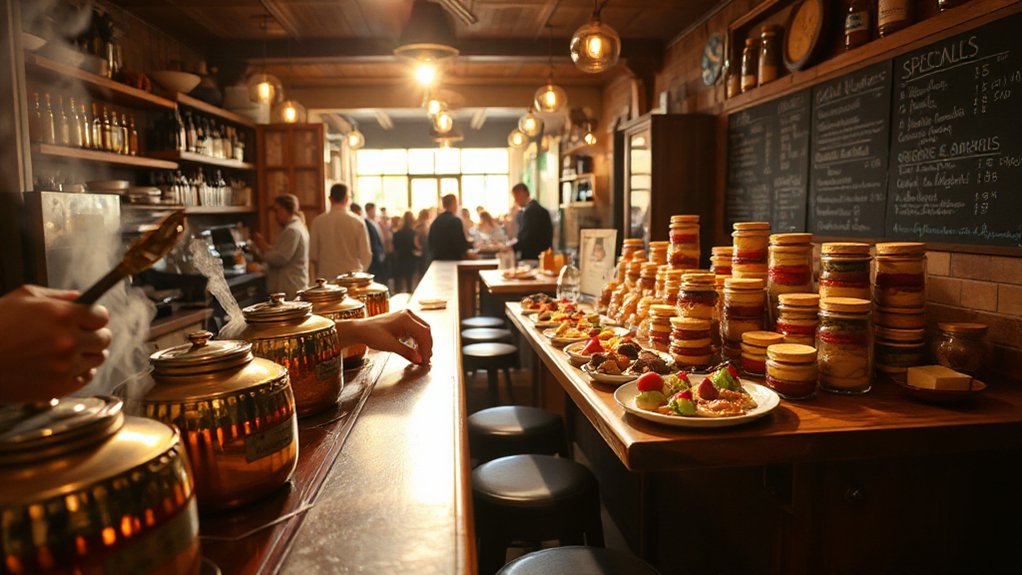
Mapping out a Basque pintxo tour isn’t just about picking restaurants; it’s about prioritizing variety, route efficiency, and pacing your evening. You’ll learn to map a logical circuit that balances crave-worthy bites with time, avoiding fatigue and backtracking.
Expect a framework: anchors (local craft beer), smaller plates to share, and standout seafood specialties that showcase coastal freshness. You’ll gauge portioning so each stop builds momentum without overload, reserving room for a final, memorable bite.
This plan emphasizes quality over quantity, depth over dilution, and timing over guesswork. You’ll identify neighborhoods where kitchens spark, bars where bartenders guide pours, and routes that minimize waits.
What Makes Basque Tapas Unique and Why It Matters
You taste a tradition that’s as much social ritual as it’s flavor, where Basque tapas fuse bold, clean flavors with a shared dining rhythm.
The emphasis on seasonality and regional ingredients creates a distinct flavor identity you can feel in every bite, from pintxo to plate.
That social dining dynamic—not just what you eat, but how you group, compare, and move—matters, shaping why Basque tapas stand out and why it matters to your experience.
Basque Flavor Identity
You taste how Basque tapas balance simplicity with technique, where tradition informs every bite without stifling invention. Basque culinary history threads through every kitchen, guiding cooks to elevate modest fare with precision, restraint, and confidence.
Regional flavor influences arrive from coastal dynamics, inland livestock, and hillside foraging, creating a signature profile that’s unmistakable yet adaptable to modern palates.
Your palate recognizes the interplay of smoke, brine, and herbal brightness that defines the region.
This identity matters because it frames conversations at the bar, guiding selections and inspiring cooks to honor craft while inviting exploration.
Social Dining Tradition
The Basque tapas scene isn’t just about what you eat; it’s a social ritual built around shared plates, standing counters, and conversation that stretches long after the last bite.
In this tradition, you participate in Tapas etiquette that blends neighborliness with restraint—no elbows, no rushing, just a quiet choreography of orders and passes.
You move from bar to bar or seat to seat, sampling a spread that mirrors the neighborhood’s character.
Communal dining isn’t a gimmick; it’s sense and timing—plates cleared, discussions brief enough to invite the next round.
Your goal isn’t speed but balance: appreciate the plate, acknowledge the cook, and let the chatter weave.
And when a dish disappears, you smoothly signal appreciation with a nod or a small smile.
Old-Town Taverns for Timeless Pintxos Hubs
Old-Town taverns cling to tradition, their narrow lanes and wood-paneled bars inviting you to sample timeless pintxos as locals do. You’ll sense a living archive in every bite, where Historical taverns meet the murmurs of regulars and the clink of small plates.
Traditional recipes anchor the scene, yet you’ll notice subtle modern precision in technique and presentation.
- Seek classic basque logic: crisp crusts, tender interiors, and bold sherry-backed flavors.
- Trade tips with veterans over a counter, letting heritage guide your pintxo picks.
- Pair with a house txakoli to balance salt, fat, and acid for a coherent, shop‑worn charm.
Modern Tapas Scenes in San Sebastián and Beyond
Modern tapas in San Sebastián fuse sleek technique with bold regional character, revealing a scene that’s as inventive as it’s rooted in Basque pride. You’ll notice chefs blending local seasonality with global references, turning pintxo culture into a platform for experimentation.
Fusion flavors emerge in delicate foams, black garlic accents, and marine-first citrus brightness, while textures range from crisp confits to silky emulsions. Contemporary presentations emphasize minimalism, letting choreography of colors and shapes guide your gaze as much as your palate.
You’ll find micro-sagas of flavor in compact bites, designed for sharing or studied, solitary tasting. The scene extends beyond the old town, moving along street-front galleries and intimate bars where craft and conversation mingle.
Expect vibrant, intelligent dining that respects tradition while pushing boundaries.
Bilbao’s Neighborhood Bites: Where to Eat Like a Local
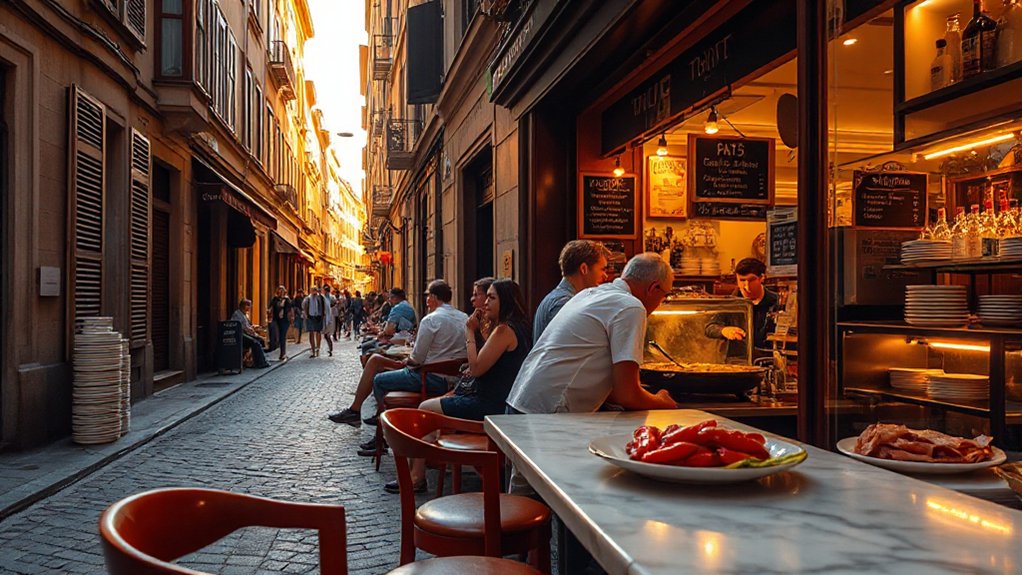
Across Bilbao’s neighborhoods, you’ll trade high-profile pintxos for neighborhood bars that feel like living rooms with flame and flash. You’ll discover how locals curate bites, leaning on neighborhood markets, bar stools, and steady hands. The pulse stays rooted in local ingredient sourcing and traditional cooking techniques, giving you flavor with provenance.
- Hit old-school taverns where family recipes anchor the menu and conversations flow as freely as the flame.
- Seek bars that source from nearby producers, letting seasonal produce and small-batch items dictate the pinxto lineup.
- Watch cooks blend precise technique with casual flair, delivering bite-sized brilliance without theatrics.
Hidden Basque Pintxos Gems Off the Tourist Path
From intimate pinxto bars to corrugated-floored taverns, you’ll find secret spots that prize craft over show. The selections lean regional, seasonal, and instinctive, with fish kissed by salt, peppers blistered to perfection, and simple riffs elevated by technique.
You’ll taste memory in each bite, not hype in the glass. Seek these understated corners, and you’ll collect a personal map of flavors, where true Basque pride hides in plain sight.
Pairing Cider and Wine With Basque Plates
- Tie a dry cider to grilled cod or chistorra for tang and balance.
- Pair a crisp white with tortilla or bacalao to accent citrusy notes.
- Match a mineral-driven red with aged cheeses for depth without heaviness.
Plan and Pace: Route Ideas for a Pintxo Trail
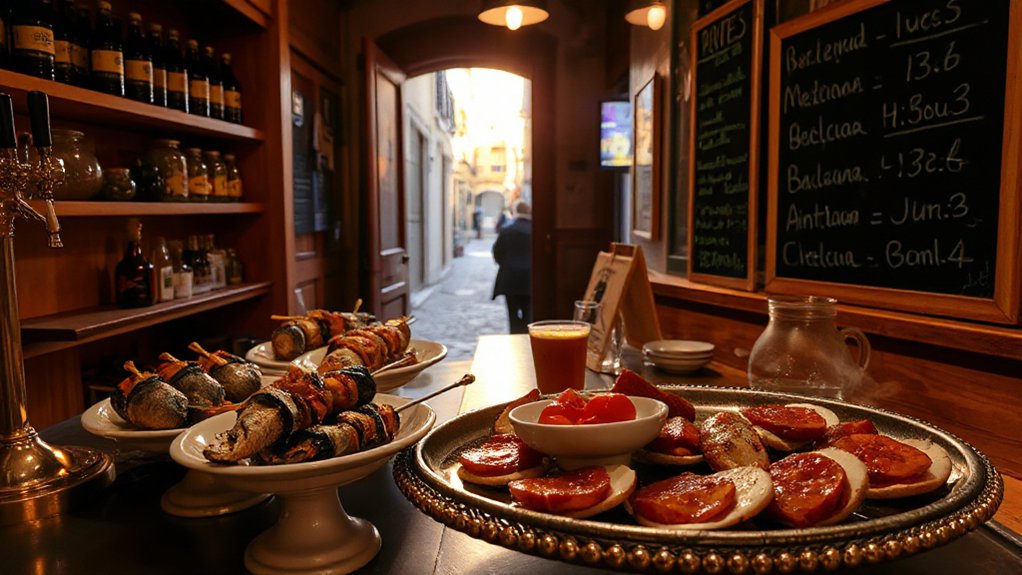
Set out with a plan that keeps your pintxo crawl efficient and delicious: map a loop or linear route that concentrates on neighborhoods with dense pinxtos bars, then pace the stops so you sample without overload. You’ll want a logical sequence that minimizes backtracking and fatigue, letting you compare flavors as you go.
Prioritize corners where each bite tells a story, and leave room for small detours toward popular spots during peak times. Build in Cultural festivals as optional timing cues—phrase it as a celebratory context, not a schedule crush.
Consider Culinary workshops nearby for hands-on insight between tastings, enriching your palate. Track pacing on a simple map, noting stalls that excel in technique, texture, and balance, so your trail ends satisfying, not overdone.
Frequently Asked Questions
What Languages Should I Expect at Tapas Bars?
You’ll encounter Spanish mainly, with Basque influences common in local dialects; expect some menu language in Basque or bilingual. You’ll converse confidently, recognizing gestures, and you’ll enjoy clear, savvy notes on what each bar serves.
How Early Should I Arrive for Popular Spots?
Arrive early, around 30 minutes before peak hours, to secure a seat and soak in local drink culture. You’ll appreciate traditional dining etiquette as spots fill, so line up, order confidently, and savor the first rounds.
Are Reservations Needed for Pintxo Crawls?
Yes, reservations aren’t typically required for pintxo crawls, but you should secure popular spots early. Observe pintxo etiquette, mingle with locals, and use bar hopping tips to pace tasting and maximize variety.
What’s the Tipping Custom in Basque Taverns?
Tipping isn’t obligatory, but you’ll show appreciation with small coins or rounding up, following Cultural etiquette. In Basque taverns, leave a modest gratuity for Traditional serving; your generosity is noticed and welcomed, especially after standout pintxo selections.
Is It Safe to Drink Tap Water in Eateries?
Yes, you can generally drink tap water in eateries, but trust local water quality reports; if uncertain, choose bottled water options. Like a cautious palate, you’ll notice subtle differences, ensuring your meal stays invigorating and safe.
Conclusion
You’ll leave craving more than just bites—you’ll crave the Basque spirit, punchy pintxos, and those intimate tavern moments. Stay curious, pace your walk, and let the cider fizz lift every bite. This isn’t a food tour; it’s a delicious, memory-making quest through Old-Town aisles and modern dining rooms alike. Trust the locals, follow the aroma, and beware: your taste buds will declare a lifelong love affair with Basque tapas. It’s legendary—utterly, impossibly legendary.