
The most beautiful mountain villages in Aragón sit tucked among craggy slopes, where sunlit stone houses, copper roofs, and narrow lanes whisper centuries of craft and welcome. You’ll stroll past carved wood, terraced orchards, and frothing ovens, pause at cliffside viewpoints, and feel the pine-scented air mingle with chimney smoke. Dawn pale golds, blue-hour silhouettes, and market bells greet your steps. Pack sturdy boots, taste hearty alpine dishes, and let the slow rhythm invite you into the story you seek. More awaits beyond.
Key Takeaways
- Aragón’s mountain villages blend ancient stone architecture with dramatic canyon and valley views, reflecting their rugged high-elevation character.
- Authenticity and character shine through narrow lanes, carved wood details, and traditional markets preserving local crafts and flavors.
- Panoramic viewpoints from cliffside hamlets and terraced meadows offer striking sunrise, sunset, and blue-hour photography opportunities.
- Seasonal Rhythms: summer hayfields and wildflowers contrast with winter snow, shaping festivals, cuisine, and village life.
- Accessible, family-friendly routes connect centers to viewpoints via shaded lanes, with local cafes and ovens enhancing the experience.
What Makes Aragón’s Mountain Villages Uniquely Magical
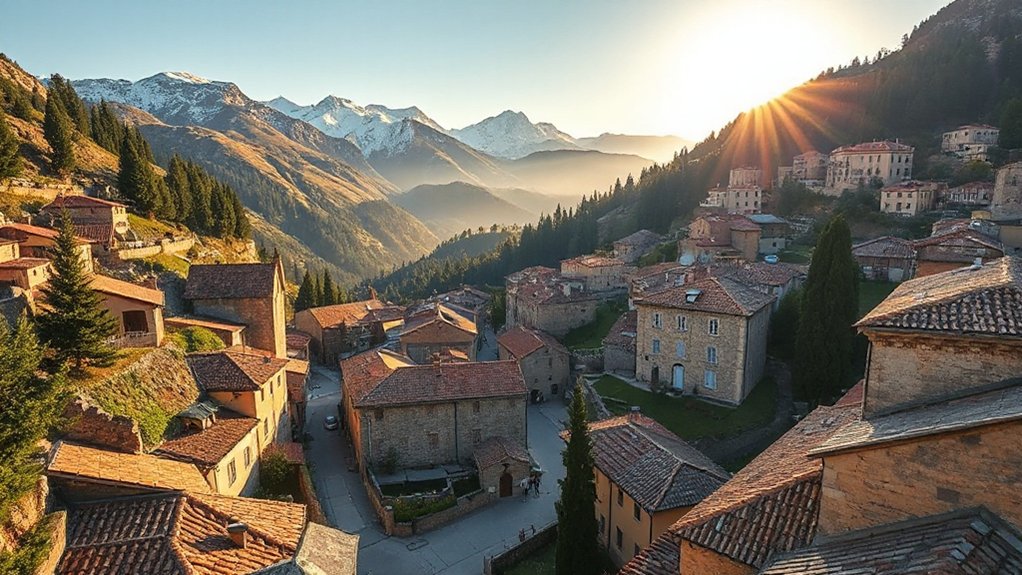
Aragón’s mountain villages feel like open secrets whispered into the wind: tucked among craggy slopes, they fuse ancient stone with bright, living energy. You step into terraces where sunlight slips between copper roofs and old walls exhale memory.
The magic isn’t myth alone; it’s texture you can taste in local cuisine, where peppers, olive oil, and roasted chestnuts carry hillside heat. It’s in the rhythm of village mornings, bells summoning laborers, elders trading lore, hands shaping bread beside a crackling oven.
Folklore traditions survive in carved wood, embroidered textiles, and dances that circle stone and sky. You sense a cooperative heartbeat: survival forged with beauty, practical ingenuity, and a stubborn, radiant identity that refuses to fade.
How We Chose the Prettiest Villages (Criteria for Beauty and Scenery)
We measure beauty by how landscapes feel in your eyes—Visual Harmony and Scale, where streets balance with mountains and colors breathe in proportion.
We weigh Authenticity and Character, favoring villages that wear their past like a visible compass, not a costume.
In short, you’ll feel the verdict in how place and light align, guiding you to those villages that stay true to their essence.
Visual Harmony and Scale
Visual harmony isn’t just about pretty facades; it’s about how a village gathers into a single, legible portrait when you scale the map and step onto the street. You feel the sequence: roofs, walls, lanes, and pines aligning like notes in a chorus.
When scale shifts, taller towers surrender to hillside rhythm; alleys breathe, courtyards pulse, plazas hold. You measure harmony by sightlines that lead you naturally, not forced; by spaces that invite lingering, then movement.
Landscape conservation guides the balance between growth and green seams, ensuring views stay intact as families shape the next chapter. Local craftsmanship threads character into the whole—stone, wood, tile—without shouting.
The result is a village you can read at a glance, then discover detail on every quiet corner.
Authenticity and Character
What makes a village feel true to itself? You sense it in the air: stone that remembers hands, narrow lanes that hum with footfalls, and doors that open onto stories. Authenticity isn’t photo-ready polish; it’s living character, forged by daily rhythms and shared memory.
You weigh it by subtle cues: preservation of balconies, the cadence of local cuisine, and the pulse of festivals and traditions that bind neighbors. The prettiest villages honor their roots without nostalgia, inviting you to participate rather than observe.
You look for places where craft and landscape meet, where water, wind, and stone tell the same honest tale.
- Local cuisine as a thread that ties family tables to centuries of taste
- Festivals and traditions that choreograph communal belonging
- Architectural honesty—materials, scale, and weathered patina
- Everyday life that remains welcoming, not curated
Ordesa-Adjacent Villages: Valley Vibes You Can Feel
Nestled just beyond the towering arches of Ordesa, these villages settle into the valley with a quiet confidence, where time slows to the rhythm of goat bells and rustling pines. You walk narrow lanes bordered by stone-and-wood homes, and the air carries resin, earth, and distant streams.
Valley life feels tangible: farms practice time-tested rhythms, markets glow with fresh cheese and honey, and you sense stories in every doorway. Local festivals punctuate the calendar with color—processions, dances, and shared meals that bind neighbors and visitors.
You’ll notice traditional crafts—woven textiles, carved spoons, and pottery—that survive by hands that know the mountain’s moods. Practical paths exist too: reliable trails, shade, water, and welcome silhouettes of villagers guiding you home.
Cliffside Hamlets With Views You’Ll Never Forget
Cliffside hamlets hang above the canyons like perched birds, their white-washed walls catching the last gold of the sun as you thread narrow stairs between doors carved from weathered stone. You’ll feel the air tilt with each step, and the panorama widen your perspective in an instant, a lesson in cliffside architecture you don’t forget.
You live for the view, not the rush, savoring quiet courtyards that hold fern shadows and distant church bells.
Panoramic vistas meet practical charm: shade, drip-free terraces, and car-free routes that keep paths honest and intimate.
- Grainy stone textures you’ll trace with fingers
- Narrow lanes guiding every ascent
- Cooled courtyards inviting slow, thoughtful breaks
- Sunlit balconies framing the canyon’s edge
The Stonework and Chimneys That Define Aragón’s Houses
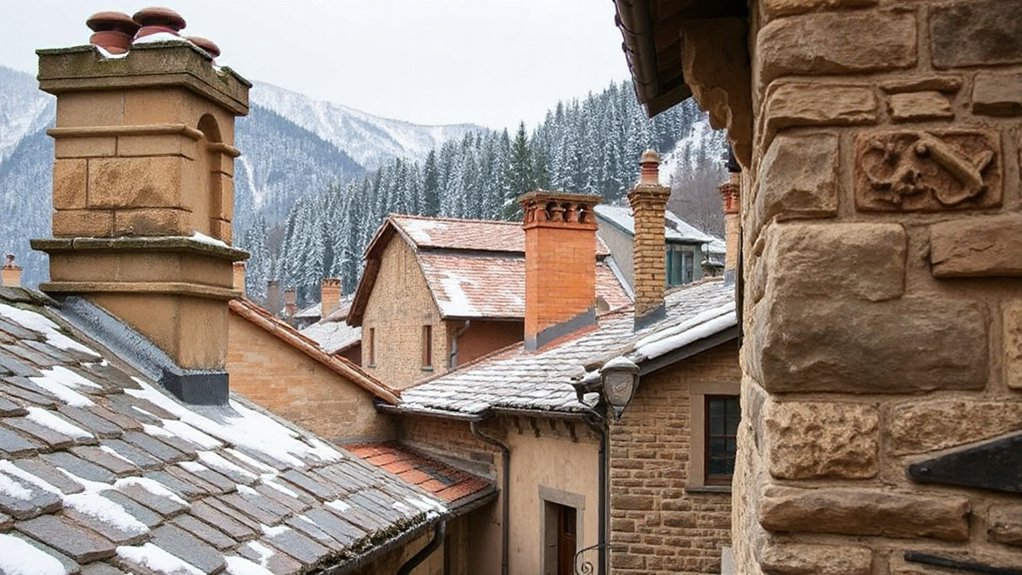
You’ll notice how the stonework speaks of weather and time, each block telling a local story of craft and care. The mountain chimneys rise with practical elegance, their bricks and slates revealing age-old techniques still in use today.
Observe how Aragón’s housing aesthetics blend rugged materials with enduring practicality, inviting you to read the walls as a map of place.
Stonework Heritage Details
Stonework in Aragón isn’t just decoration; it’s a language we touch with our hands and feel in our lungs. You’ll notice how rough limestone hums with weather, how slate shingles hold stories, and how carved motifs echo hillside legends. This heritage guides your steps, inviting you to read walls as if they were pages.
You’ll sense the rhythm of the masons’ chisel, the patience behind each dry-stone pattern, and the quiet resilience that keeps homes warm.
- Traditional crafts you can trace in every doorway and lintel
- Details that shift with seasons, framing light and shadow
- Local festivals where stonework shines as communal memory
- Practical care tips to preserve texture without losing character
Mountain Chimneys Craft
Chimneys rise like quiet landmarks above Aragón’s slate roofs, their brickwork and stone telling the season’s weather in heat and smoke. You walk the lanes and feel the ash-scented wind rise from the rooftops, a signature of mountain life.
The Mountain Chimneys Craft blends sturdy masonry with grace: careful mortar, beveled edges, and stone kept dry to guard against damp winters. You notice how flues vent rain-washed air, how chimneys curve to shed snow without burdening the walls.
This craft supports daily rituals—traditional festivals heat the village ovens, and you taste the warmth in bread and stews. Local cuisine centers on shared meals around the fire, where chimney silhouettes choreograph conversations and memories.
Practical, enduring, this architecture keeps the landscape alive.
Aragón Housing Aesthetics
Aragón’s houses speak in stone and smoke, their façade textures telling years of weather, work, and welcome. You walk the lanes and feel the grit of time sharpening every edge, yet notice how life leans into light with careful timber, iron, and clay.
The dialogue between old craft and modern architecture shapes a quiet resilience, where stone walls cradle warmth and solar-fed glow. You’ll see chimney caps crowned with simple grace, tight joints, and balconies that invite the wind.
Urban development nudges the horizon without erasing memory, preserving a stubborn charm.
- Stonework as storyteller, not decoration
- Chimneys as punctuation marks of season
- Terracotta and slate syncing with sunlight
- Adaptive reuse guiding contemporary rhythms
Local Flavors to Taste in Each Village
As you wander from village to village, the local flavors unfold like a map you can taste: crisp mountain air turning into sheep’s milk cheeses, smoky embers surrendering to paprika heat, and honey from terraced hillsides glistening on warm bread.
You’ll notice how each village preserves culinary traditions through simple, honest fare—coarse bread, roasted almonds, and tangy rustic yogurts. Try a bite of aged ewe cheese, then a spoon of peppery, sun-bright tomato sofrito, rounded by olive oil’s fruit.
Local flavors reveal history in mouthfuls, from the smoke-kissed peppers of the valley to herb-scented goat milk desserts. Carry water, pacing your tasting, so your senses stay sharp and your memories stay stitched to place.
Hidden Trails From Village Centers to Panoramas
Hidden trails thread village centers to soaring panoramas, linking close-knit courtyards with distant horizons. You’ll notice how paths weave from stone lanes to open skies, revealing quiet valleys between switchbacks and pines.
Keep your pace steady, Eyes on the path, and the views will unfold with each careful step.
Hidden Trails Connect Villages
Have you ever followed a narrow path from a village square to a secret overlook, only to find a panorama revealed by terraced fields and wind-carved pines? You move from village to village along a thread of hidden trails, each connection telling its own quiet story.
The routes weave between stone walls, echoing with local folklore and the scent of shared kitchens. You carry practical steps in mind: sturdy boots, a lightweight map, slow pace, respect for livestock and gates. Along the way, tiny discoveries sharpen your senses and deepen belonging.
- Follow fence lines that hint at old routes
- Listen for distant bells and whispered farm tales
- Notice stone markers guiding toward panoramas
- Savor a pastry that fuses regional culinary traditions
Panoramic Views From Pathways
From village centers, narrow paths unfurl like whispered invitations, threading you toward skylines that bloom above terraced fields and pine-streaked horizons.
As you walk, the air tightens with mountain echoes, guiding you along routes that reveal sudden panoramas with every bend.
Keep to the compact trails, where stone steps and wooden switches pace your ascent without jostling your breath.
Pause at vantage points where wildflower blooms spill color across the slope, offering a moment to map the village’s silhouette against distant ridges.
Carry water, wear sturdy shoes, and time your ascent for late-morning light to sharpen liners of evergreens.
The payoff is plain: a quiet majesty that rewards steady feet and patient curiosity.
Village-by-Village Snapshots: Name, Elevation, Setting
You’ll meet each village by its distinct clock and ridge line: name, elevation, and the setting that frames it. You walk with measured steps, noting how hills cradle stone homes, how wind carries distant bells. Every snapshot feels purposeful, practical, and poetic, guiding you to rhythm and place.
- Name: village label, altitude, terrain, vistas that define its mood
- Elevation: meters above sea level, how cool air settles, how trails begin
- Setting: valley, cliff, or hillside, the panorama shaping daily life
- Local customs, traditional festivals: small rites that color the calendar and invite curiosity
Family-Friendly Routes and Easy Viewpoints
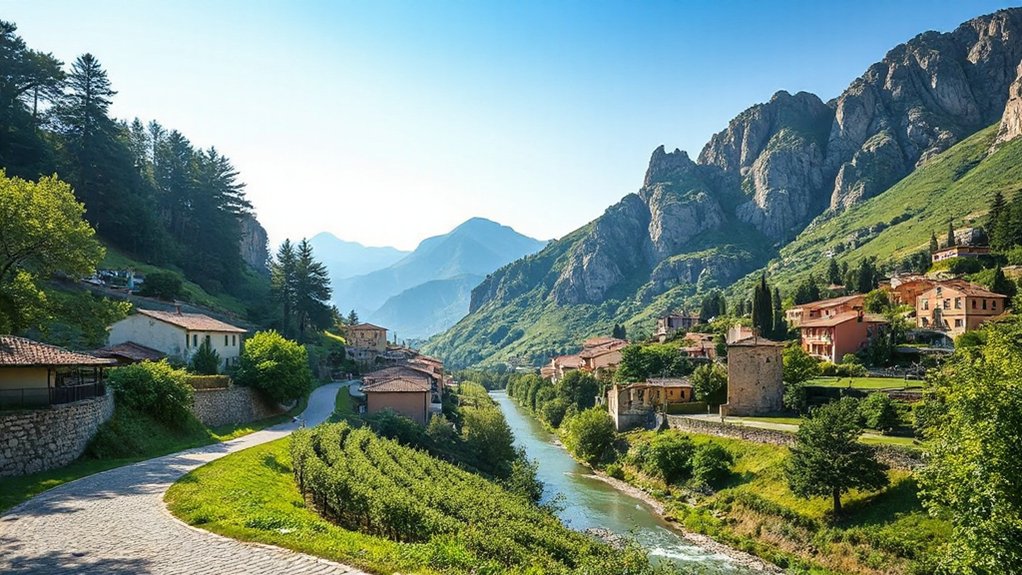
Families can wander these valleys with confidence, because the routes are gentle, well-marked, and travel-friendly for all ages. You’ll traverse shaded lanes where wildflowers nod and stone bridges crisscross clear streams.
Easy viewpoints reward you with panoramic, postcard-perfect valleys without demanding climbs, so little legs stay steady and curious. Pack light snacks and water, and pause at village benches to swap stories with locals.
Along the way, you’ll savor local cuisine samples from cottage ovens and tiny cafes, a comforting reward after a measured stroll. Watch for signs of traditional festivals turning the routes into living history—families dancing, music lifting the air.
These routes blend ease with memory, inviting you to slow, observe, and return.
Best Photography Spots at Dawn and Blue Hour
Start with the quiet hush of dawn at the village edge, watching the first light stroke the peaks while you set up your lens for a clean wide shot.
Move through the blue hour with intent, lining up your composition to catch the valley’s silhouettes and the warm glow on stone cottages.
As the light shifts, let the scene teach you where the Dawn Patrol Perspectives and Blue Hour Compositions meet—snap, adjust, and listen to the moment.
Dawn Patrol Perspectives
Dawn unfurls like a slow, breath held over the ridges, turning granite into silver and the valleys into whispers of color. You step into pale light, listening for the tempo of the land, guided by quiet creaks of old wood and distant church bells. Patience pays in simple truths: a clear overlook, a shimmer on a stream, a ridge silhouetted against pink.
Find your stance, anticipate the sun’s arc, and let the horizon do the rest. Mountain folklore threads through these moments, pairing superstition with steady focus. Local festivals add a soft cadence to your morning, a backdrop you’ll return to.
Your lens drinks first light, your memory holds the scene.
- Seek east-facing summits at dawn
- Use a slow shutter for mist
- Include distant villages in frame
- Freeze motion with a tripod
Blue Hour Compositions
Blue hour softens the slate and snow into a hushed palette, inviting you to compose with silhouettes and glow rather than detail. You’ll seek elevated viewpoints where village rooftops melt into the valley and church spires pinch the cobalt sky.
Move with patience, timing your shutter to catch first stars and fading embers of sunset in a single frame. In Night photography, use a sturdy tripod and a low ISO to preserve texture while avoiding noise.
Natural lighting shapes mood; let street lamps flicker amber against icy walls, and reflections ride the river like glass. Scout spots near historic bridges, meadows, and terraced orchards, where quiet gradients of blue hour reveal architectural rhythm and a sense of place, not just scenery.
Where to Stay: Quaint Inns and Rural Casas
From stone-and-wood inns perched along terraced lanes to rustic casas with sun-warmed patios, Aragón’s village stays invite you to slow the clock and breathe the mountains in. You’ll find warmth in slate roofs, creaking beams, and terracotta floors that hush your steps.
Stay where you can walk to a bakery at dawn, savor local cuisine, and swap tips with neighbors about trail routes and farm-fresh produce. The rhythm here prizes quiet mornings, starlit evenings, and simple comforts.
- Rustic casa with a private patio and a view of olive groves
- Inn with vaulted dining room serving local cuisine and regional wines
- Mountain lodge-style room, warm hearth, and easy trail access
- Village guesthouse near a plaza, festival traditions, and friendly faces
Cultural Quirks That Tell the Village Story
In Aragón’s mountain villages, culture isn’t a museum exhibit but a living rhythm—hushed siestas, plucked guitar strings after a long day, and the steady cadence of neighbors greeting you by name. You walk the narrow lanes and feel how stories cling to stone walls, voiced in quick, knowing exchanges.
Local legends weave through tavern chats, every doorstep a bookmark to a past that still hums beneath the hills. You’ll notice the way doors open to welcome strangers, and the ritual of shared bread at dusk, a quiet pact of hospitality.
Traditional festivals pulse with color, songs, and handmade crafts, offering a practical map for memory—observe, participate, carry the village’s heartbeat forward.
Seasonal Highlights: Summer Blooms and Winter Snows
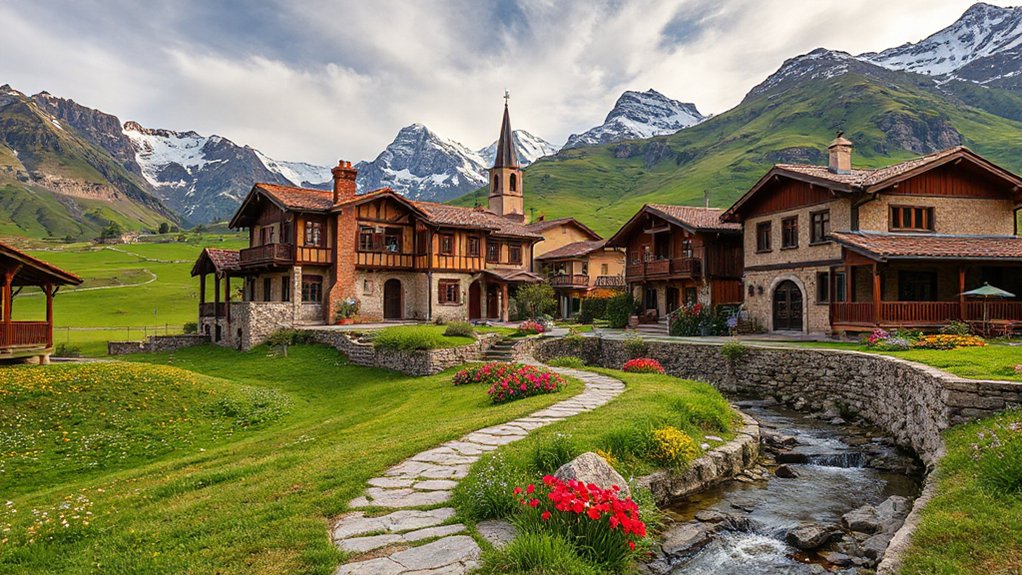
Summer in the Aragón hills arrives in a blaze of color and scent: hayfields turning gold at dawn, wildflowers stitching the slopes, and bees droning in a busy chorus that mirrors village life.
You wander through seasons where summer blooms glow, and winter snows hush the valleys into silver stillness. In this landscape, Alpine cuisine climbs from dairy to stove, savoring mountain herbs, charred peppers, and hearty stews that warm hands and spirits. Traditional festivals punctuate the year, stitching memory to mountain stone with song, dance, and shared plates.
You learn to read the weather in the pines, the way snow compacts on northern faces, and how village rhythms ride climate.
- Summer blooms and alpine markets pair with simple, robust meals
- Festivals celebrate harvests, fires, and community
- Winter snows shape trails, lighting, and shelter
- Local crafts echo the mountains’ enduring lines
Practical Tips for Mountain Village Trips in Aragón
Aragón’s mountain villages reward planful travelers with time-saving routes, sturdy gear choices, and small, meaningful rituals that keep you anchored on the trail. You’ll map daylight, pack layers, and choose waterproof boots that bite into granite rather than slip across scree.
Carry a lightweight rain shell, a compact first-aid kit, and a pocket notebook for notes and reminders. Move with deliberate pace, letting narrow lanes lead you to hidden miradores and quiet, stone courtyards.
Embrace local cuisine as a pause, tasting simple cheeses, roasted peppers, and herbs that perfume the air. Participate in traditional festivals when possible; shared songs, bells, and coffee breaks stitch you into the village rhythm.
Respect curfews, leave no trace, and return energized, refreshed, and wiser.
A Day-by-Day Micro-Itinerary for a Aragón Village Tour
From the quiet after sunrise to the glow of lanterns at dusk, a day in Aragón’s village network unfolds like a map you can walk.
- Follow a tight loop: village A to B, morning markets, a hillside view, lunch with local cuisine.
- Pause at a historical landmarks stop, absorb stone stories, sip coffee, and note the contrast of ages.
- Hike a short trail, then a shaded plaza, where locals share tips and you trade travel notes.
- Finish with sunset dining on terrace herbs, tusk-quiet barns, and a vow to return.
This micro-itinerary keeps pace, balances scenery with heritage, and leaves room for spontaneous chatter and memorable meals.
Extending Your Aragón Village Journey Beyond the Peaks
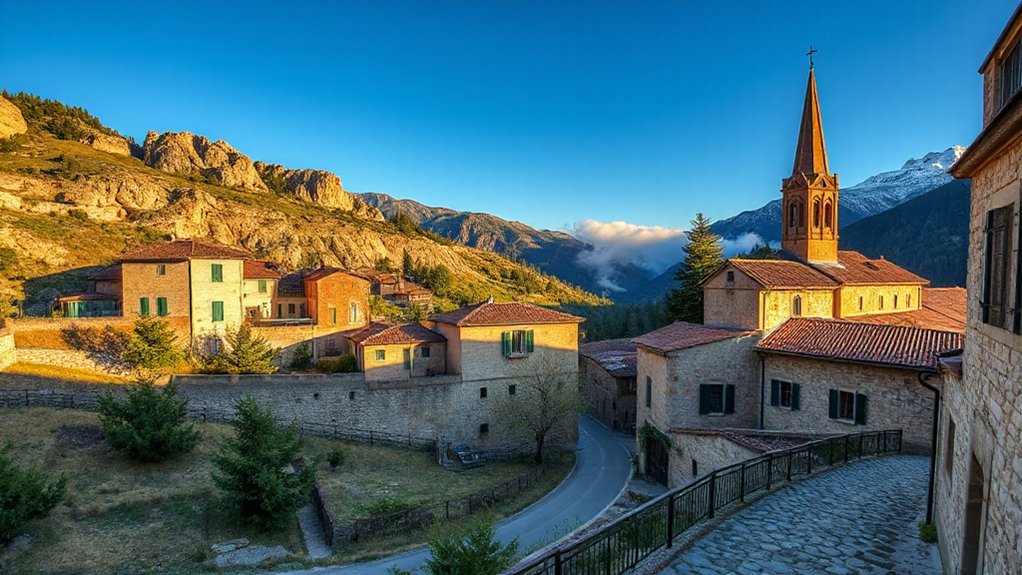
Beyond the peaks, you’ll want to thread Aragón’s villages into a longer tapestry, where every ridge invites a new doorway, every hillside promises another viewpoint, and time slows enough to savor conversations over coffee and grilled pine nuts.
Extending your journey means tracing lowland valleys after harvest fairs, and letting your feet decide the pace, not the itinerary.
Seek Local cuisine in tavernas that glow with embers and shared plates, where saffron, peppers, and roast lamb tell stories of soil and sun.
Attend Traditional festivals if you can, stepping into processions that color the streets and fuse generations.
Pack lighter than you think, stay open to detours, and let village hospitality deepen your Aragón experience beyond the peaks.
Frequently Asked Questions
What Makes Aragón’s Mountain Villages Uniquely Magical Even in Winter?
You’re drawn by snow covered pathways and warm alpine traditions, where quiet alleys glisten and wood-smoke scents mingle; you feel timeless charm, approachable scale, and practical warmth, inviting you to linger, explore, and savor winter’s intimate, mountainous magic.
How Do Locals Preserve the Stonework and Chimneys Over Time?
You preserve stonework and chimneys by embracing traditional craftsmanship and architectural conservation, patching mortar, repointing with lime, and repairing timber ladders. You document wear, source local slate, and maintain fuel-safe chimneys with careful, patient, hands-on care.
Which Villages Are Most Family-Friendly for Easy Routes?
You step through a story-book valley, choosing family-friendly villages with easy routes; traditional architecture guides your pace, and local festivals bolt color into your days, a steady beacon. You’ll savor gentle trails, welcoming locals, and timeless charm.
Where Are the Best Dawn Photography Viewpoints in These Villages?
You’ll find Sunrise viewpoints along ridge trails above town squares and church bells, where dawn breaks pink over russet roofs. For dawn photography tips, scout quiet lanes, arrive early, use a tripod, and frame village silhouettes against pale skies.
What Seasonal Farmers’ Markets and Local Flavors Should Visitors Seek?
Like a village clockmaker, you’ll chase seasons at Farmers’ markets, savor Local flavors, and swap stories, sampling honey, truffled mushrooms, and bread dipped in olive oil, while locals guide you to harvests and seasonal feasts.
Conclusion
As you trace the winding lanes, a hush settles over the heart of Aragón. Stones remember every footfall, chimneys cradle winter’s smoke, and dawn spills pink light across cliffside balconies. You’ll map villages in your mind, only to find a surprise at every bend—a song in the wind, a hidden orchard, a doorway left slightly ajar. The mountains aren’t done with you yet; they tease, promise, and pull you forward, until you finally understand why you stayed so long.