
Sunday lunch culture in Spain is more than a meal; it’s a sacred family ritual that weaves neighbors, relatives, and time into a shared identity. You arrive to a practiced rhythm: greetings, seating, toasts, and a deliberate flow from starters to dessert. Dishes like tortilla española, cocido, gazpacho, and ajo blanco anchor memory, while sangría and wine pace conversation. Roles shift across generations, with hands-on preparation and serving shaping belonging. If you keep exploring, you’ll uncover how the table binds lineage and community.
Key Takeaways
- Sunday family lunches in Spain are both a meal and a social ritual uniting generations through storytelling, reciprocity, and shared memories.
- The meal follows a deliberate structure: greetings, seating, courses, toasts, and steady serving cadence signaling respect and belonging.
- Signature dishes (tortilla española, cocido, gazpacho) and regional variations embody time, space, and memory, often paired with wine or sangría.
- Roles at the table flow across generations, with elders guiding younger cooks and participants contributing to hospitality and communal memory.
- The table acts as a cultural bridge, shaping identity through choreography, conversation, gestures, and post-meal routines that reinforce bonds.
What Sunday Lunch Means in Spain
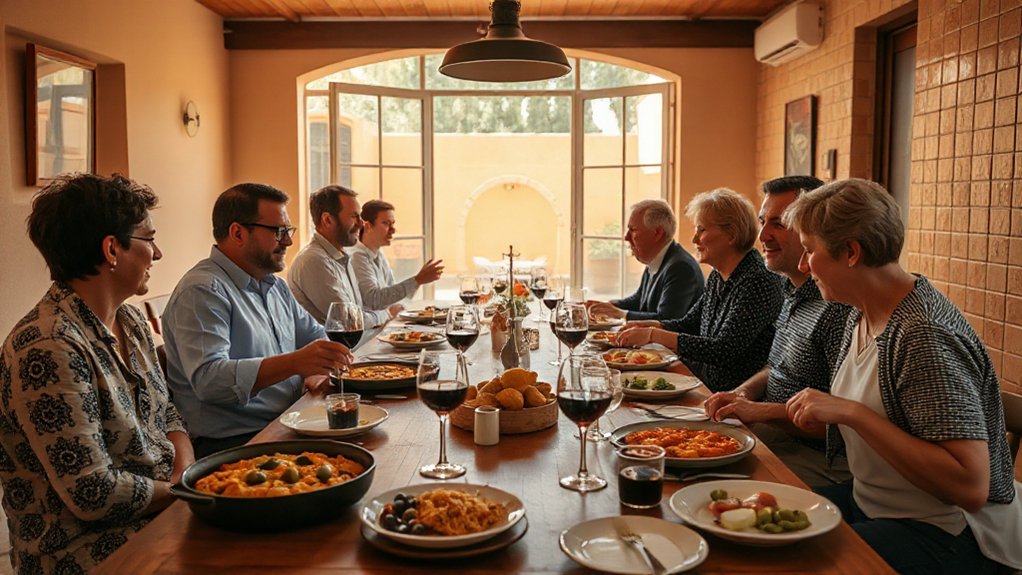
Sunday lunch in Spain is more than a meal—it’s a social ritual that stitches family, neighbors, and time itself into a shared rhythm.
You observe how the table becomes a stage where Cultural symbolism is performed through foods, seating order, and toasts, each gesture signaling belonging.
Conversation threads weave across generations, and you notice how small details—a grandmother’s blessing, a cousin’s joke, a neighbor’s plate refills—mark inclusion and reciprocity.
The act extends beyond nourishment, reinforcing Family bonding through repeated patterns of gathering, waiting, and storytelling.
You sense the spatial choreography: doors opening to welcome others, the quiet after dessert, the return to slow, unhurried pace.
In this rhythm, everyday life is elevated, becoming an ethic of care and communal continuity.
How the Spanish Sunday Lunch Is Structured
The structure of the Spanish Sunday lunch unfolds like a practiced routine that balances ritual, hierarchy, and hospitality. You enter with punctual warmth, greet elders first, and pass through a sequence that marks time and status.
Seating follows a subtle order: parents near the head, younger relatives flanking, visitors welcomed with a shared plate. Courses unfold deliberately, each course signaling progression of conversation and attention, not just nourishment.
The host negotiates rhythms—toasts, prayer or words of gratitude, and the cadence of serving—so that everyone feels valued and included. Cultural symbolism threads through the passage from starter to dessert, embodying respect for lineage and shared history.
You sense family bonding deepen as topics cycle—stories, memories, plans—binding generations through everyday ritual and collective savor.
Signature Dishes of the Spanish Sunday Lunch
Across Spanish Sunday lunches, a handful of dishes anchors the meal as much as conversation anchors the room: tortilla española that absorbs the lingering heat of the skillet, cocidos that braid meat and legume into a single pot of comfort, and the reporters’ favorites—gazpacho or ajo blanco—that reset palate and pace.
You observe signatures not as showpieces but as cultural cues, revealing how households arrange time, space, and memory around food. Tortilla marks a communal improvisation with eggs, potatoes, and onion; cocido embodies regional layering, often evolving with pantry, season, and guest list.
Cultural significance arises in shared recipes, while Seasonal variations push menus toward market abundance or scarcity, shaping what families claim as their own.
Beverages That Pace the Meal: Sangría, Wine, and More
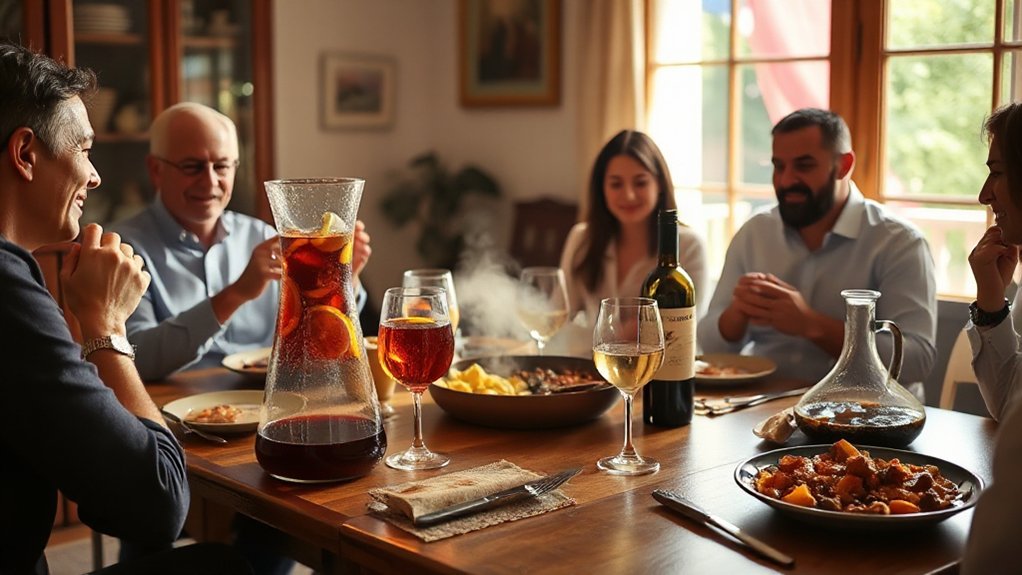
Beverages pace the meal by shaping tempo as much as they refresh the palate. You watch as sangría loosens conversations, its fruit-sweet spark signaling a switch from formal to familiar.
Wine accompanies the main courses with a measured rhythm, its tannins and acidity mirroring the bite of grilled greens and meat, inviting pauses that let stories surface.
In many homes, water and sparkling alternatives reset the table between courses, a practical cadence that echoes cultural rituals.
Cultural significance emerges in the shared clinking of glasses, in the ordering of refills, in the quiet nods that say “more when ready.”
Beverage traditions thread through family memories, anchoring the gathering while evolving with taste preferences and seasonal bounty.
Who Cooks, Who Serves, Who Cleans: Kitchen Roles Across Generations
In many households, kitchen labor flows across generations as an unspoken map of duty and affection, shifting with who’s available, who’s learning, and what traditions the family wants to preserve.
You observe how roles crystallize into a Kitchen hierarchy that fluctuates with season, circumstance, and skill, rather than rigid rule. Younger members test recipes, older ones supervise, and everyone negotiates tasks like prep, serving, and cleanup.
This dynamic reveals deeper values: care, reciprocity, and lineage. You can sense how Family participation binds kin through shared tasks, even as individual comfort zones push boundaries.
The rhythm of who cooks, who serves, who cleans becomes a microcosm of social balance, negotiation, and affection, shaping the afternoon as a collective, evolving practice.
Hosting and Etiquette at Sunday Lunch
You notice how hosting rituals shape the rhythm of Sunday lunch, from arrival greetings to the cadence of seating and sharing.
As the meal unfolds, etiquette during the meal becomes a map of respect, signaling attention to guests, hosts, and the conversation itself.
This moment invites you to analyze how small etiquette choices—like offering seconds or passing dishes—stage communal belonging and collective memory.
Hosting Rituals
Hosting rituals at Sunday lunch reveal how hospitality is practiced and read by both guests and hosts. You observe a choreography: gestures of invitation, timing of arrival, and the quiet check of seating, cutlery, and portions.
You notice how conversations rise with the aroma of caldo or roast, then settle as plates circulate, and how hosts gauge appetite and mood, adapting portions and pacing.
Cultural significance emerges in the ritual of offering second helpings, pouring wine, and the deliberate pause before dessert.
You sense family bonding in the shared spaces and routines that anchor generations, from the warm greeting at the door to the respectful deference around the elder’s chair.
The ritual language, concise yet meaningful, reinforces belonging without imposing rigidity.
Etiquette During Meal
Even at Sunday lunch, manners guide the flow of meals as much as the menu does, shaping how guests and hosts navigate the table together.
You observe how the table becomes a stage for cultural symbolism, where shared plates, pasados of bread, and the murmured reminder to wait for everyone signal belonging.
You notice hosts gently time servings, avoiding haste to honor conversation as much as appetite.
Table manners surface in small rituals: the precise placement of napkins, the brushing aside of utensils after use, the discreet pass of condiments.
You hear thanks threaded into every bite, not as formality but as reciprocity.
Etiquette consequently mediates intimacy, balancing tradition with evolving comfort at the Sunday table.
Regional Variations: Northern Spain vs Southern Spain
Northern Spain and Southern Spain diverge in what gets plated at Sunday lunch, shaped by geography, climate, and history. You see regional ingredients and culinary influences coloring every plate, revealing distinct rhythms of life across the peninsula.
In the north, you taste hearty seafood, charred peppers, and robust stews; in the south, brighter citrus, olive oil, and grilled meats dominate. You notice how traditions migrate with markets, climate, and labor, not merely taste.
The cook’s choices map social memory, signaling identity and belonging. You compare techniques, textures, and pacing, sensing how seasons dictate pacing and portion sizes. Regional identities emerge through shared meal patterns, even as modern cookery blends boundaries.
- Northern freshness and seafood-led plates
- Mountain and coastal product use
- Olive oil versus lard traditions
- Tapas-to-lamil plates in casual meals
- Market-driven, seasonally aware recipes
Conversation at the Table: Gossip, Memories, and Stories
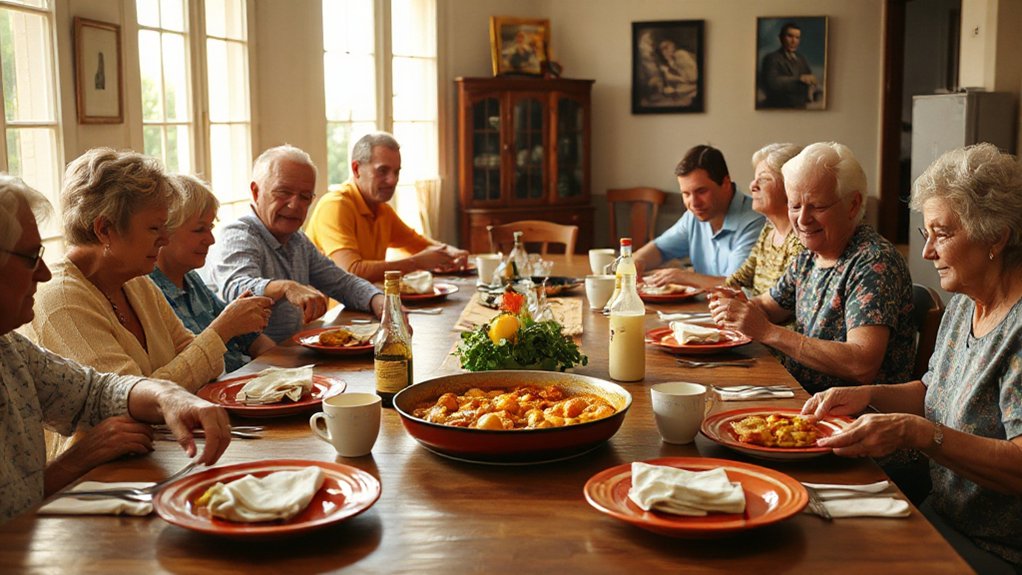
Across Sunday tables, chatter threads through the meal, stitching gossip, memories, and stories into the texture of every plate. You observe how conversations travel between generations, turning the meal into a small archive of family life.
Gossip functions as social glue, signaling alliances, tensions, and loyalties, while memories surface as shared scripts—birthdays, rescues, old recipes—reinforcing continuity.
Stories drift from guerra to grandchild, often reframed to teach restraint or generosity, revealing cultural significance in how time is valued and negotiated.
You sense deliberate pacing: silences invited after a joke, then a quick pivot to a kitchen anecdote.
This ritual sustains family traditions, embedding values within dialogue and making the Sunday meal a living repository of identity and belonging.
The Social Rhythm: Football, Siesta, and Post-Meal Strolling
The social rhythm of Sunday unfolds through a trio of shared tempos: football, siesta, and post-meal strolling. You observe how each moment anchors cultural traditions, shaping expectations and sociability, while family bonds grow through practiced ritual and quiet pauses.
- You feel the stadium roar shaping the afternoon, then the hush of the siesta.
- You notice adults swapping views on players, while kids test memory with recaps.
- You sense the slow walk afterward, shoes tapping courtyards, streets, and plazas.
- You hear the cadence of conversation returning as plates cleared, coffee poured.
- You witness memory and proximity fused, as elders guide the younger through routine.
In this rhythm, cultural traditions frame time, and family bonds reinforce solidarity and belonging.
Food as a Shared Craft: Preparation as a Team Activity
Food becomes a shared craft when preparation moves from the kitchen to the table as a collaborative practice. You observe how neighbors and kin converge, passing bowls, refining recipes, and negotiating timing. The act binds participants through hands-on rhythm, transforming everyday tasks into communal intention.
In this ethnography of the Sunday rhythm, teamwork reveals more than technique; it reveals cultural significance embedded in every chopped herb, stirred sauce, and practiced gesture. You notice elders guiding younger cooks, apprentices learning by listening to sizzles and stories, while the room calibrates around sensory cues—aroma, heat, texture.
Culinary traditions emerge not as fixed lore, but as living collaboration, where shared labor preserves memory, validates identity, and reinforces hospitality as a communal resource.
Sunday Lunch and Spanish Identity: Belonging Through a Table
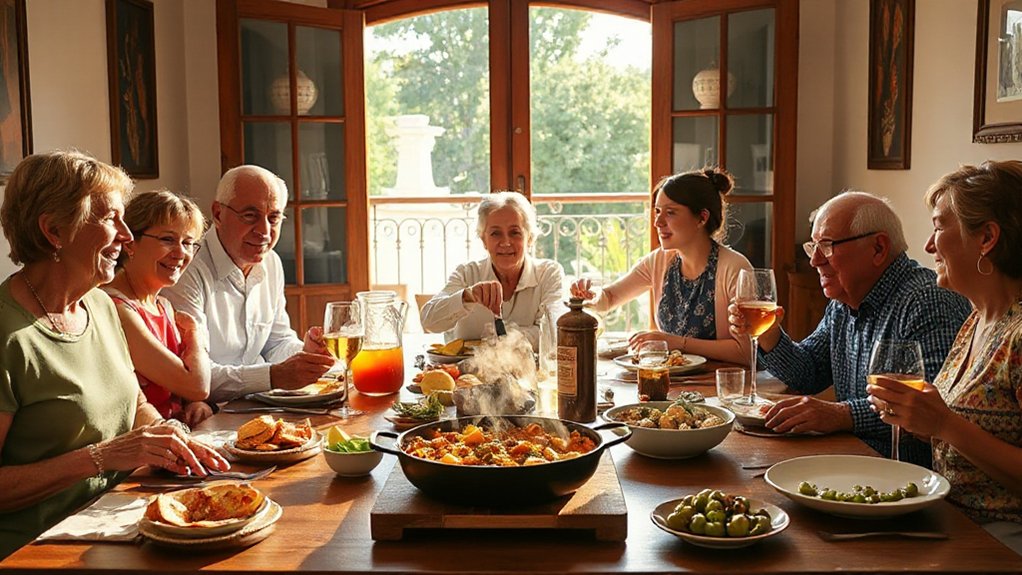
Sunday lunch in many Spanish homes stitches kin and neighbors into a shared table where belonging is performed as much as eaten. You sense how Cultural significance grounds daily meals in memory, while Historical origins surface in patterns of seating, dishpassing, and foot-well murmurs.
You observe that meals become a script for identity, marking who belongs and who’s welcomed. The table becomes a boundary-drawing device, yet also a bridge, weaving generations through shared recipes and stories.
You feel belonging emerge not merely from nourishment but from participation, gaze, and reciprocal care.
- Shared timing as social glue
- Generational dialogue over simmering pots
- Nonverbal cues shaping inclusion
- Recipe transmission as cultural memory
- Hospitality as identity production
Sunday Lunch and Spanish Identity: Belonging Through a Table
Even as the table fills, belonging in Sunday lunch feels less about the dish on the plate than the choreography around it: the way conversations drift from neighborhood gossip to family histories, the ritual of passing the cazuela just so, and the quiet pressure of seating order that signals inclusion.
You observe how Cultural symbolism enshrines roles—eldest at one end, guests at the other—while Culinary traditions anchor memory in shared tastes and textures. The table becomes a microcosm of Spanish identity, where repetition consoles fatigue and novelty dissolves into familiarity.
You notice consent in compliments, restraint in debate, and collective pride in provenance. Through daily meals, belonging emerges as negotiated practice, performed, renewed, and quietly consequential.
Frequently Asked Questions
How Do Invitations to Sunday Lunch Usually Work?
You’re invited informally, usually by a phone call or message a day or two ahead, and you RSVP promptly. Sunday lunch etiquette varies, but you’ll find family seating arrangements organized, comfortable, and conversational, not hierarchical, with warm, inclusive dialog.
Are There Any Dietary Customs During the Meal?
You’ll notice dietary customs vary: you should expect vegetarian options and respect Religious dietary restrictions, with hosts labeling dishes and offering alternatives, while you assess shared plates, aromas, and ritual pacing, noting how inclusion shapes communal harmony and participation.
What Happens if a Guest Arrives Late?
If you’re late, you’ll likely face gentle reproach, then be offered food as you apologize; studies show 70% expect punctuality, so you’ll follow guest apology protocols while hosts assess your respect and integrate you into the table.
Do Snacks Precede the Main Sunday Lunch?
Yes, snacks often precede the main Sunday lunch. You encounter traditional hors d’oeuvres as gentle prefaces, shaping expectations; snack timing matters. You observe, you compare families, you note rhythms, social bonds, and evolving culinary etiquette.
How Is Cleanup Shared After the Meal?
Cleaning after the meal is shared, with you pitching in as needed. Table etiquette guides lingering dishes, glasses, and crumbs, while beverage choices reflect ritual rhythm; you observe, coordinate, and respect elders while sweeping and tidying cooperatively.
Conclusion
You witness Sunday lunch as a living ritual, where timing, taste, and talk braid together your sense of belonging. You move through tasks, savor sauces, and watch generations choreograph care, all while the football hums in the background and the siesta lingers. Food becomes a shared archive, a portrait of who you are becoming. You depart with a felt map of community, even as a holographic iPhone buzz glances your watch—an anachronism that somehow fits this timeless table.