
The Paseo is your evening stroll as a crafted urban ritual, blending street life, culture, and design to foster connection, safety, and place. Across cultures it varies in rhythm, pace, and social cues, yet always anchors collective memory in streets, plazas, and shops. Timing isn’t fixed; it unfolds as a negotiated mood shaped by light, sound, and pace, enhancing well‑being and civic life. If you keep exploring, you’ll uncover how to shape and participate in your own Paseo.
Key Takeaways
- A paseo is a culturally flavored evening stroll that blends social interaction, urban movement, and shared public space to reinforce community identity.
- It evolves from promenades and market lanes, balancing safety, commerce, and social exchange within evolving civic rituals.
- Rhythms shift by culture and time, often peaking at dusk with varied pacing, music, chatter, and pauses shaping collective memory.
- Social encounters along the paseo function as signposts, with micro-rituals, greetings, and nearby art or cuisine shaping belonging.
- Design and planning—lighting, shade, multimodal access, and plazas—enable comfortable, safe, and engaging evening experiences.
What Readers Want to Know About the Paseo
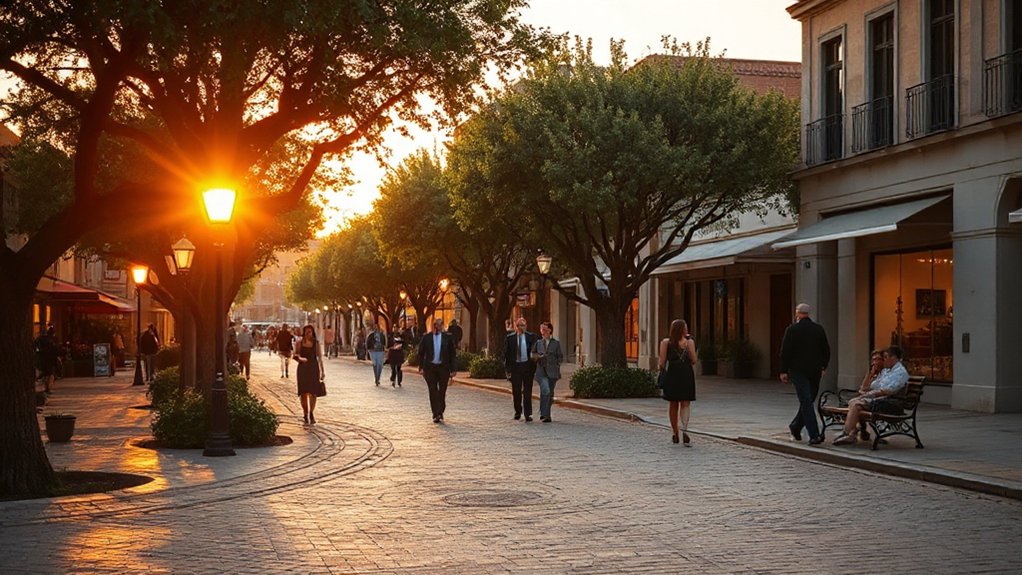
The Paseo invites questions about why people turn to it at dusk and what that choice says about how we experience a city. You’ll notice that readers want practical context, grounded in history, not hype. You seek concise explanations of what the stroll represents: a predictable ritual, a social barometer, a moment when streets feel navigable rather than overwhelming.
Historical influences shape this habit, as older avenues and promenades establish a cadence that persists even as neighborhoods shift. You’ll also see how urban evolution informs the scene—changing storefronts, lighting, and safety norms align with evolving expectations of leisure.
The goal is clarity: link everyday observation to broader patterns without overgeneralizing, acknowledging nuance while highlighting the stroll as a reflective, communal practice.
The Paseo: Foundational Context and History
Across city streets, the paseo didn’t spring from a single spark but grew from a blend of earlier promenades, residential promenades, and market lanes that braided into a nightly habit. You trace its roots by examining how urban architecture shaped routes, plazas, and sheltering canopies that invited pause.
The practice emerges from practical needs—safety, commerce, social exchange—yet it evolves as a civic ritual, reflecting shifting demographics and governance. Historical landmarks anchor memory, offering visible milestones that travelers reference as they move.
You note that the paseo is less about wandering aimlessly and more about negotiating public space: timing, light, and space allocation guide a collective performance. Context matters: the streets become a canvas for communal identity and continuity.
How the Paseo Varies Across Cultures
Viewed through different cultural lenses, the paseo reveals distinct rhythms, purposes, and rhythms of space that shape how people linger, move, and interact. You observe how communities adapt the walk to fit daily life, ceremonial cycles, and social expectations, revealing Cultural adaptations in practice.
In some places, the paseo becomes a communal corridor for conversation, while elsewhere it functions as a quiet break in work rhythms.
You notice how attire signals belonging, with Traditional attire crafting visible cues about status, season, or festival, yet the act of strolling remains a shared ritual.
The variation highlights negotiation between public performance and private ease, where locals tailor pace, pauses, and routes to sustain cohesion, memory, and belonging within evolving urban textures.
Spaces That Shape the Paseo: Streets, Plazas, and Shops
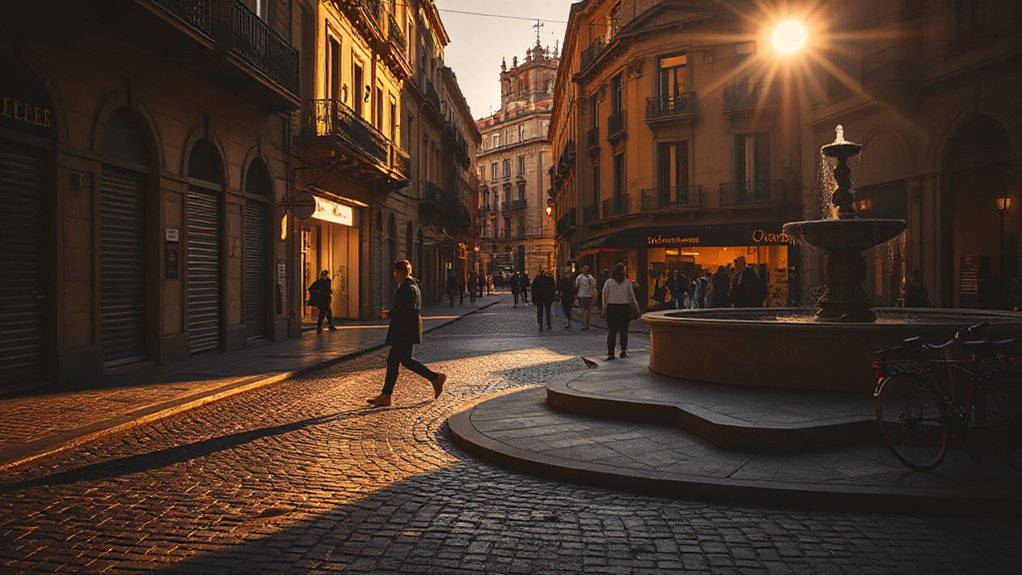
Streets, plazas, and shops don’t just house the paseo—they choreograph it, guiding pace, pauses, and gathering. You move through a tapestry where design shapes social rhythm as much as desire.
Wide thoroughfares slow at shaded corners, inviting conversation; narrow lanes funnel foot traffic toward inviting thresholds. Plazas anchor gatherings, their pavements echoing with spoken welcomes and implied etiquette.
Shops punctuate the route, their storefronts signaling shifts in mood and tempo, from quick errands to lingering conversations. Local cuisine textures the experience, with aromas stitching memory to moment and inviting spontaneous stops.
Street performers punctuate the route with improvised tempo, creating micro-edges of anticipation. This spatial choreography reveals how place disciplines movement, turning a simple walk into a practiced social ritual.
When the Paseo Comes Alive: Timing and Rhythm
When the paseo comes alive, timing deepens its social current. You sense tempo as a collective choice, not a random happenstance, where dusk nudges conversations and footfalls align with storefront hum. The rhythm reflects cultural influences, weaving music, chatter, and pause into a shared heartbeat.
By tracking historical origins, you see how generations calibrate pace: slower in intimate corners, brisker along transit routes, punctuated by greetings and detours that invite curiosity. Your attention shifts from individual action to pattern, from one-on-one to community tempo.
The timing isn’t a schedule, but a negotiated resonance—a living map of sociability.
- How cadence shapes encounters and identity
- The role of space in guiding flow
- Adaptive pacing across venues
- Social cues in the rhythm
- Timing as collective memory
The Social Choreography of the Evening Stroll
You observe how social cues unfold on the move, signaling interest, tension, or accord without explicit talk.
The rhythm of encounters shapes your pacing and space, guiding when you slow or quicken and where you pause.
Space and pace dynamics frame how people read one another, from greeting to glance to nod, forming the choreography of shared evenings.
Social Cues On Display
Evening strolls reveal a subtle social choreography: people adjust pace, posture, and gaze to align with the unspoken rhythms of shared space. You observe how micro-gestures signal courtesy, boundary, and attention, shaping the walk as a social instrument.
In this display, cultural variations emerge in spacing, eye contact, and pace, while modern adaptations alter the tempo with phones and headphones as ambient cues. You’re invited to read the room’s tempo, not just your own steps.
- Pace adjustments as a politeness signal
- Posture cues indicating openness or boundary
- Gaze patterns guiding interaction or avoidance
- Device use as contextualized boundary markers
- Temporal shifts tied to crowd density and lighting
Rhythm Of Encounters
The rhythm of encounters on the evening stroll unfolds as a shared tempo, where pedestrians modulate speed, spacing, and micro-gestures to synchronize with the surrounding flow. You notice how conversations thread through crossings, how pauses become punctuation, and how eye contact signals acknowledgment without forced intimacy.
This social choreography reveals more than courtesy; it exposes underlying norms that shape urban life. As you move, you weigh urban myths and cultural stereotypes that travelers carry—stories about neighborhoods, age groups, or dress codes—yet you respond by calibrating your own visibility and tempo.
The choreography is neither random nor purely performative; it adapts to crowd density, lighting, and weather, producing a living map of communal rhythm. In this theatre, etiquette and perception mutually shape what feels safe, inviting, or tense.
Space And Pace Dynamics
Space and pace, as you walk, reveal how fluid boundaries become during the stroll: pedestrians negotiate distance, weave around obstacles, and adjust tempo to the crowd’s mood. You observe space as a social instrument, where urban aesthetics shape movement and posture, and where cultural influences color space with cadence and courtesy.
The walk becomes a calibration of proximity, a study in flux that tests attention, awareness, and restraint. You sense rhythms align with streetlight timing, storefront glare, and crosswalk pauses, producing a choreography that feels both personal and shared.
This analysis shows how space functions as communication, while pace encodes intention, belonging, and memory within a city that keeps redefining itself.
- Space as social instrument
- Proximity, restraint, and etiquette
- Urban aesthetics guiding form
- Cultural influences shaping tempo
- Shared choreography, evolving boundaries
The Senses on the Paseo: Sound, Light, and Pace
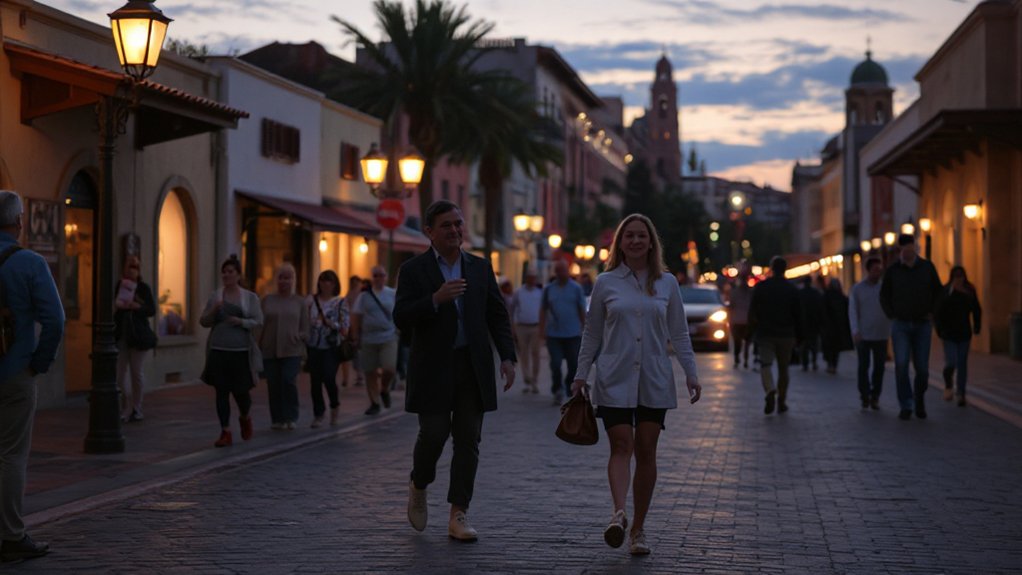
As you stroll the Paseo, sound, light, and pace braid together to shape a lived experience rather than a mere sequence of sights. You analyze how auditory cues—crackling leaves, distant laughter, footsteps—signal social rhythms and density, guiding your tempo without explicit instruction.
Light shifts mark boundaries: storefront glow, streetlamp amber, neon flicker, each modulating mood and attention. Pace becomes a negotiation between curiosity and caution, a self-regulated cadence that tunes perception rather than merely extends time.
In this microcosm, sensory overload can sharpen focus or dull resonance, depending on context. The environment rewards selective attention: you filter competing signals, aligning action with intention.
Taken together, sound, light, and pace reveal how the Paseo constructs meaning through embodied experience.
People You Meet on the Paseo
Along the Paseo, the people you encounter become informal signposts of community rhythms, revealing who’s present, why they’re there, and how spaces are negotiated. You observe patterns in voluntary chats, passing crafts, and quick exchanges that map local needs. Each person contributes a thread to the street’s narrative, shaping how evenings unfold with intention or spontaneity.
You notice how artistic expressions color the curbside, and how culinary experiences lure neighbors toward shared moments, even briefly. The encounters aren’t random—they reflect social economy, access, and trust. You learn to read pauses, gestures, and conversations as data about belonging, zoning, and opportunity, rather than mere noise.
- Proximate conversations that reveal shared interests
- Portable performances or informal showcases
- Quick trades or favors that ease daily life
- Food cues guiding social pockets
- Impromptu collaborations and neighborly introductions
Safety Signals: Light, Presence, and Community Trust
As you walk, consider how light cues guide your pace, signaling safety cues without shouting for attention. Your presence—visible, courteous, steady—acts as a quiet guarantee that others feel watched over and less alone.
Together with community trust, these signals create a feedback loop that keeps the paseo purposeful rather than precarious.
Light Cues For Safety
Light cues illuminate not just the path but the social fabric of the Paseo, signaling safety through visible presence, reliable lighting, and communal trust.
You assess how lighting design shapes behavior: consistent luminance reduces ambiguity, and well-placed fixtures deter hazards by increasing anticipation rather than fear. Light cues guide your pacing, encourage pauses, and invite observation of neighbors’ routines, cultivating safety awareness through predictable patterns.
The interplay of brightness, color temperature, and shielded fixtures communicates care and orderly space, reinforcing trust across groups. You weigh how unintended shadows or glare might obscure risks, prompting adaptive strategies.
By decoding these signals, you participate in a shared sense of responsibility that strengthens the night stroll as a communal practice.
- Visible presence as deterrence
- Consistency in luminance levels
- Shielded, glare-minimized fixtures
- Strategic path delineation
- Trust-building through reliable routines
Community Presence Signals
Presence isn’t just being there; it’s the predictable cadence of crossing guards, shopkeepers, and volunteers who marshal the street’s tempo, reinforcing safety as a communal habit.
This creates a feedback loop: visible care boosts comfort, which encourages more foot traffic, strengthening Community bonding. In turn, a lively, well-patrolled corridor supports the local economy by sustaining late-hour commerce and infusing streets with regulars who fund small businesses.
The neighborhood becomes less about isolation and more about mutual reliance, cultivating trust and a resilient urban rhythm.
The Paseo as Social Ritual: Connection, Belonging, and Identity
The Paseo functions as a social ritual that binds people through shared time, space, and routine, turning an ordinary evening into a platform for connection, belonging, and identity-making. You observe how pathways become forums for micro-rituals—greetings, pauses, and shared glances—that crystallize collective memory and cultural symbolism, while reinforcing ritual significance through repetition.
In this frame, belonging emerges not from destination but process: the act of strolling together creates social overlays, hierarchies, and solidarities that shape you. Your understanding deepens as you notice how groups negotiate space, time, and pace, translating movement into personal and communal meaning.
- Shared routines as identity scaffolding
- Greet-and-pass rituals as social glue
- Pace and proximity signaling inclusivity
- Local landmarks as memory anchors
- Subtle performances of belonging
Benefits Beyond Leisure: Mental Health and Civic Life
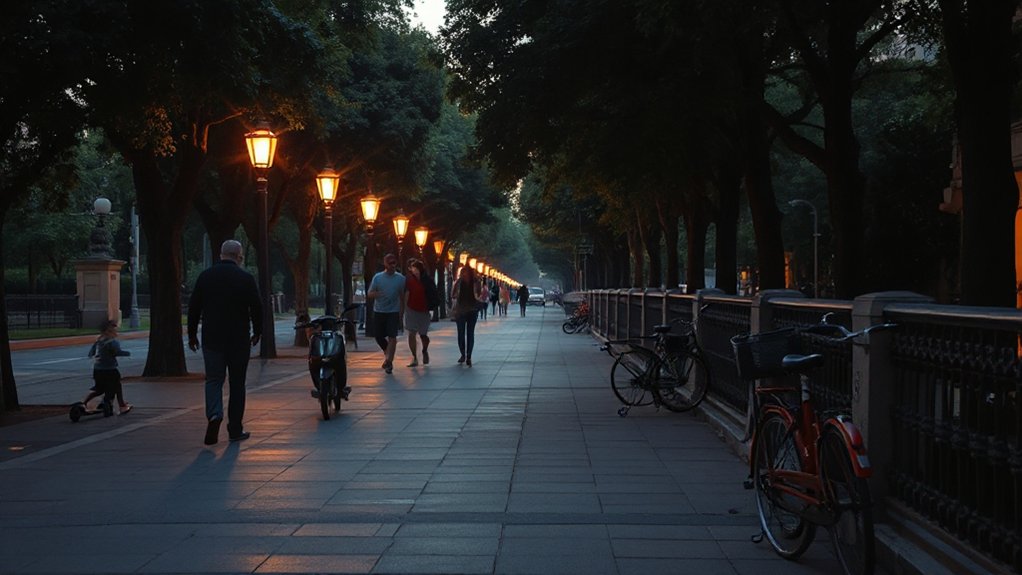
You may notice how a stroll nudges your mood and endurance, hinting at mental health benefits that extend beyond the moment. As you walk, consider how routine pacing and shared spaces foster civic awareness and everyday engagement, strengthening communal life.
In weighing stress reduction, social connection, and participation in local dialogue, you can begin to map how the Paseo shapes both inner well-being and outward responsibility.
Mental Health Benefits
What if a simple evening stroll could steady your mood and sharpen your sense of self? You assess how routine motion influences inner states, not just scenery. The mental health benefits emerge when you notice patterns: calmer thinking, reduced rumination, and clearer executive function after steady pacing.
Mindfulness practices during the walk—breathing, sensory labeling, and intentional attention—cultivate present-moment awareness that supports emotional resilience.
Context matters: social cues, lighting, and tempo shape your stress response, guiding you toward cognitive appraisal rather than avoidance.
Over time, these shifts can bolster self-efficacy and mood stabilization, aligning daily choices with a steadier baseline. You transform a promenade into a deliberate practice of mental balance and reflective steadiness.
- Mindfulness practices during the stroll
- Reduced rumination through paced breathing
- Enhanced sensory grounding and attention
- Strengthened emotional resilience under stress
- Improved mood regulation and clarity
Civic Engagement Impacts
Civic involvement expands the benefits of the Paseo beyond personal mood to shape community well-being, turning individual routines into collective practice. You participate not just for moments of calm, but to influence local life, networks, and decision making.
As you stroll, you encounter urban art that mirrors residents’ voices, inviting critique, dialogue, and shared pride. You notice how conversations at pop-up food markets weave everyday needs with public space meaning, translating private tastes into public priorities.
This practice elevates social trust, signaling that streets belong to all, not just walkers or shoppers. In this setting, the Paseo becomes a platform for collaborative problem solving, anchoring civic life to recurring, accessible experiences, and reinforcing a healthier, more inclusive urban culture.
Stress Reduction Effects
The Paseo’s rhythm can steady more than mood: it also buffers stress, linking personal calm to broader mental health benefits that ripple into civic life. You’ll notice how pacing and environment foster quiet moments that reduce daily tension, enabling clearer judgment in community matters.
This stress relief isn’t just private; it sets a template for public interactions, where calmer individuals contribute to steadier dialogue and more constructive collaboration. Relaxation techniques you employ during a stroll—breathing, pacing, sensory focus—become repeatable methods that scale beyond personal benefit.
The practice encourages reflective choice, reduces reactive impulses, and broadens your capacity for patience in civic discussions. Stress relief, when habitual, reinforces resilience and collective well-being.
How Cities Design for the Paseo: Planning and Policy
Cities design the paseo through coordinated planning, policy, and public engagement that align streets, plazas, and transit with people’s routines. You evaluate how zoning, street typology, and green corridors shape evening travel, ensuring spaces invite lingering, not just passage.
Planning centers on multimodal access, safety, and durability, balancing commercial importance with civic respite. Policy tools—design guidelines, traffic calming, and capital budgeting—translate these aims into predictable, repeatable outcomes.
You must consider timing, equity, and accountability: who benefits, who’s excluded, and how to adjust. Urban aesthetics come into play as lighting, materials, and sightlines create legibility and mood, while environmental sustainability drives shade, canopy, and permeable surfaces.
The result is a resilient framework that respects history, supports current routines, and adapts to future urban rhythms.
How to Start Your Own Paseo: Practical Steps
To start your Paseo, first pick a neighborhood that already feels walkable and meaningful to you, so the pace and vibe suit the long walk you want to host.
Then plan a route that connects sources of daily life—shops, benches, trees—so neighbors can easily join and feel ownership.
Invite neighbors early, explain the concept, and ask for input on timing and logistics to build shared commitment from the start.
Pick A Neighborhood
Choosing a neighborhood sets the tone for your paseo by anchoring whom you’ll invite, when you’ll stroll, and what you’ll observe along the way.
You’ll weigh how a place’s rhythms, safety, and scale shape your pacing, conversations, and discoveries. Focus matters: urban art can reveal community memory, while culinary culture highlights daily routines and hospitality. A thoughtful pick foregrounds accessibility, seasonality, and inclusivity, ensuring varied perspectives without overloading the route with novelty.
- Assess safety and lighting at peak stroll times
- Map cultural anchors: galleries, murals, markets
- Consider resident invitations and mixed-age appeal
- Compare nearby eateries and snack stops
- Align neighborhood mood with your group’s energy
Plan A Route
Start with a clear, practical outline of your paseo: identify the start point, the approximate duration, and the key moments you want to observe or share. You’ll map a route that balances pace with pause, prioritizing meaningful vantage points and safe, walkable streets.
Analyze how each segment frames you: the texture of sidewalks, live storefronts, and the rhythms of the neighborhood after dusk. Context matters: choose routes that reveal urban art without crowding, and that highlight culinary stops as cultural markers, not merely calories.
Plan contingencies for weather or crowding, and build in short, reflective pauses to compare expectation with experience. This approach yields a route that’s both intentional and adaptable, offering insight into how local culture animates a simple evening stroll.
Invite Neighbors Early
- Identify stakeholders and preferred communication channels
- Present objectives, safety guidelines, and shared responsibilities
- Schedule a pilot walk to gather feedback
- Address inclusivity and accessibility needs
- Establish a feedback loop for ongoing adjustments
Common Mistakes to Avoid (and How to Do It Right)
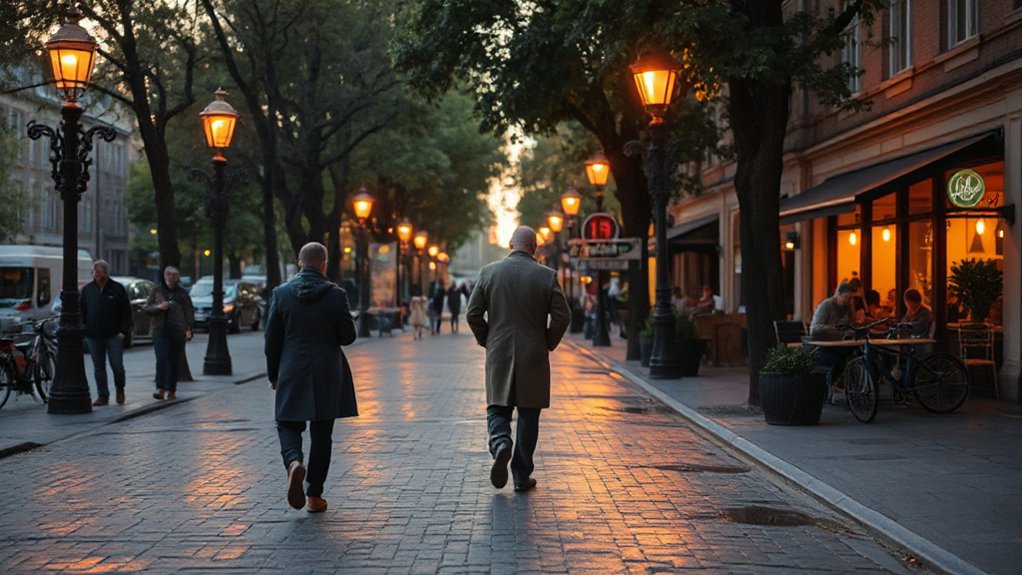
Evening strolls can feel effortless, but small missteps—like pacing too quickly or lingering too long on crowded sidewalks—undermine the experience. Common mistakes arise when you treat the paseo as a race or a checklist instead of a social, sensorial ritual.
You’ll often gloss over subtle signals: a pause to let someone pass, a quick nod, or noticing a storefront display without staring. To do it right, adopt mindful pacing, calibrating your speed to the tempo of others and the environment.
Maintain situational awareness, so conversations stay light and respectful. Practice respectful greetings, even with familiar faces, to reinforce community tone.
Reflect on how space, timing, and intention shape connection, not just distance traveled. The goal is a smoother, more considerate, shared experience.
Frequently Asked Questions
What Are Common Misperceptions About the Paseo?
Misperceptions include assuming the paseo is only social, not cultural significance or historical origins; you miss its dialogue with communities. You overlook intentional pauses, ritualized visibility, and how space shapes identity, economy, and collective memory.
How Can I Join a Local Paseo Group?
You can join a local paseo by researching groups, attending a meeting, and volunteering; start with a friendly inquiry. Paseo safety matters, and good Group leadership helps you feel welcomed, informed, and connected as you explore the stroll.
Do All Cities Permit Late-Night Paseos Alike?
Not all cities permit late-night paseos, you’ll find urban safety and cultural significance vary. Some municipalities restrict hours, while others embrace, urging respectful conduct; you should research local policies, evaluate personal risk, and consider community norms before joining.
What Etiquette Governs Paseo Conversations?
You should observe Conversation etiquette that respects personal space and timing, recognizing how Cultural significance shapes topics; you engage thoughtfully, listen actively, pause when needed, and steer conversations to inclusive, reflective tones that honor varied perspectives.
How to Measure a Paseo’s Community Impact?
Pace your measure of a paseo’s impact by tracking Cultural significance and Environmental effects, you exaggerate your confidence, then analyze, contextualize, and reflect: you quantify community bonds, observe ecological footprints, and interpret evolving social value through continuous observation.
Conclusion
You trace the paseo like a quiet current, moving through sidewalks and stories you didn’t know you carried. It’s not just a stroll; it’s a listening act, a city breathing with you. When you walk, you test rhythms, notice gaps where cafés pulse and plazas widen, and your own pace learns to harmonize with neighbors. In this analysis, the paseo becomes a mirror—reflective, practical, and alive—urging you to design, participate, and return with fresh questions.