
Discover Extremadura’s underrated towns where life slows to a starch of time. You’ll wander narrow lanes, uncover authentic markets, and taste centuries in every courtyard and festival. Villafranca De Los Barros feels like a wine-soaked doorway to history; Zafra hides medieval charm in its stone lanes; Olivenza blends two nations’ rhythms with olive-scented streets. Beyond, hidden viewpoints, arcades, and quiet plazas await you. Stick with this guide and you’ll open more quiet wonders tucked along the way.
Key Takeaways
- Extremadura’s lesser-known towns offer authentic experiences through markets, festivals, and intimate plazas away from tourist crowds.
- Villafranca de los Barros and Zafra showcase wine heritage, medieval charm, and hidden courtyards with local tastings.
- Olivenza blends Spanish-Portuguese culture with olive groves, scented streets, and traditional cafés weaving Bunuelos lore.
- Trujillo and Alcántara provide dramatic landscapes, cliff-top views, ancient bridges, and deep historical layers.
- Herrera, Medellín, and Castuera reveal quiet plazas, intimate atmospheres, and agricultural hubs shaped by local traditions.
What Makes Extremadura’s Towns Underrated?
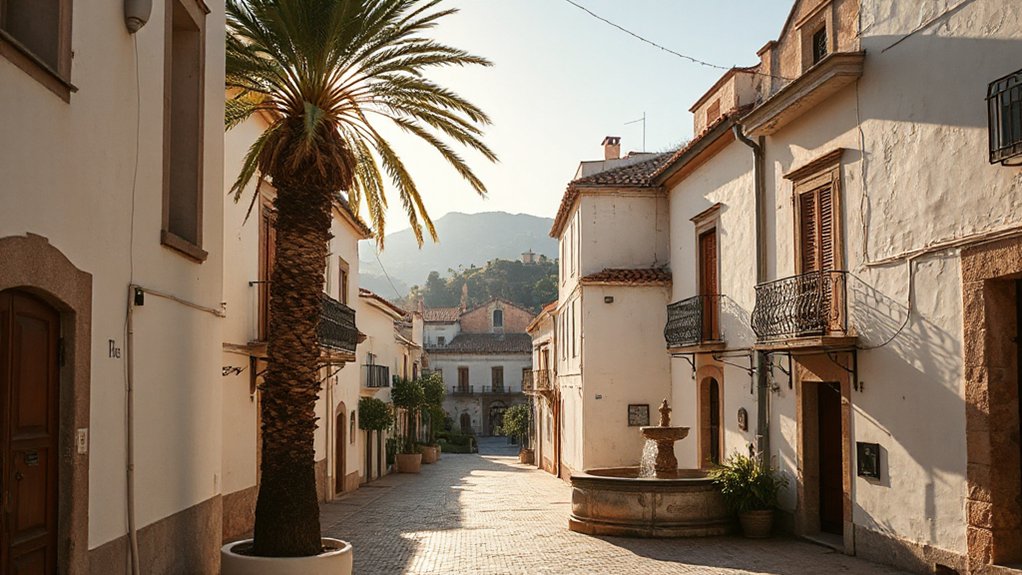
Extremadura’s towns fly under the radar in travel guides, yet their charm is hard to miss once you notice it. You feel the pull in narrow lanes where time slows and conversations drift from shade to sunlit façades.
What makes them underrated isn’t grandiose monuments but a quiet, stubborn authenticity: intimate plazas, walls seasoned with rain and memory, and markets where you sense history in every aisle. You discover it’s in the everyday—the way locals greet you with a quick joke or a shared sweet from a bakery.
Local festivals pulse with life, and culinary traditions invite you to taste a region that refuses to shout yet speaks volumes. The reward is simple clarity: honest places, honest people.
How to Plan an Efficient Extremadura Itinerary
Mapping an efficient Extremadura itinerary starts with a realistic pace and a smart map. You’ll track distances between towns, mix quick highlights with lingering moments, and leave room for spontaneous conversations with locals.
Start in the west, then roll eastward to minimize backtracking, choosing two or three anchors per day to avoid fatigue. Prioritize authentic encounters: Cultural festivals when possible, and stops at markets where local artisans showcase their crafts.
Pick a core theme—romanesque churches, olive groves, or castles—and thread it through your route, leaving daylight for sunset views and café pit-stops.
Pack light, plan flexible entries, and reserve a couple of open-ended hours for wanderings. Keep notes on weather, transport options, and seasonal closures to stay efficient without rushing the experience.
Villafranca De Los Barros: an Underrated Extremadura Wine-And-History Hub
You’ll feel the buzz of Wine Heritage Trails guiding you through Villafranca De Los Barros, where vineyards whisper stories of centuries in every breeze.
Historic Landmarks stand beside cellar doors, inviting you to taste the terroir that defines the town’s character.
As you wander, you’ll sense buds swelling into a tells-you-so moment about local viniculture and the enduring marriage of history and flavor.
Wine Heritage Trails
Villafranca de los Barros isn’t just a stop on a map—it’s a pulse of Extremadura’s wine heritage, where centuries of vines and barrels whisper in every alley. You’ll feel the countryside breathe as you follow winding routes, taste the land, and connect with local makers who keep traditions vivid.
- Wine tasting sessions that tease a spectrum from rustic to refined
- Vineyard tours revealing soil, microclimate, and careful craft
- Historic cellars where time wears the aroma of aged oak
- Small-batch producers who welcome curious palettes
- Scenic viewpoints that frame the baroque towns and rolling vines
In this trail, you don’t just drink wine—you walk through history, savoring every story the vines offer. Your senses sharpen, your curiosity deepens, and you leave with a map of flavors to revisit.
Historic Landmarks, Buds
Hidden in Extremadura’s folds, Villafranca de los Barros earns its stripes as a heritage hub where wine lanes meet ancient stones. You’ll wander tight lanes where historic architecture punctuates every corner, from sun-warmed facades to quiet courtyards that whisper centuries of change.
The town’s landmarks unfold with deliberate calm: a church tower that nudges the skyline, a stone arch that still guards old routes, and plazas that pulse with daily life. You feel history in the air and the subtle taste of time in the air too, as if the vines themselves hold memory.
Local festivals flavor the streets, sparking color and song, while quiet corners invite reflection. This is a compact chronicle of place, a precise heartbeat in Extremadura’s broader wine-and-history chorus.
Local Viniculture Experience
The town’s vinicultural heartbeat is best felt where the vines spill into the streets and the cellar doors open onto sun-warmed stone. You’ll wander Villafranca De Los Barros with a casual curiosity, noticing how local vineyards frame every corner, how history lingers in the aroma of oak and dust.
You’ll join a small group for wine tasting, sampling labels that carry centuries of soil and sun. The guide points to hidden courtyards, old presses, and grape presses repurposed into benches. You’ll hear stories of terroir, family dynasties, and the seasons that shape flavors.
A few stops reveal modern winemaking alongside ancient practice, inviting you to decide what stays with you.
- local vineyards
- wine tasting
- historic cellars
- family-run estates
- terroir-driven profiles
Zafra: A Medieval Crossroads Off the Beaten Path
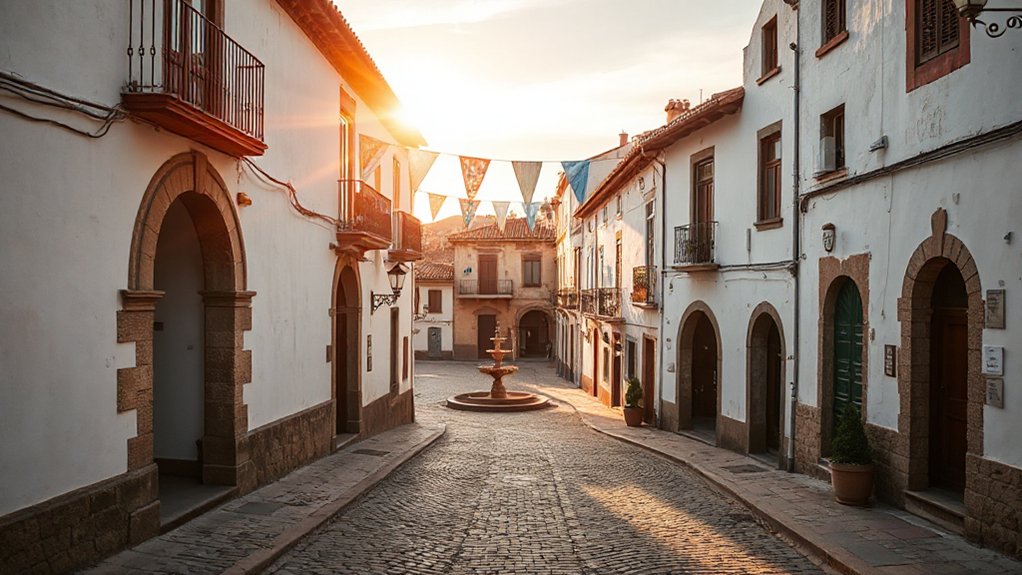
Zafra greets you as a medieval crossroads where stone streets pulse with history, its walls whispering stories of traders and travelers who once charted this route. You’ll feel the offbeat charm in tucked courtyards, arcaded plazas, and bakeries still kneading tradition into every crust.
This is the kind of place where the past isn’t distant—it crosses your path, inviting you to notice the subtle highlights that define its medieval heartbeat.
Medieval Crossroads Charm
Stretched along a crossroads where stone lanes and whitewashed facades meet, Zafra reveals its medieval heartbeat in every narrow alley and arched passage, inviting you to pause and trace the town’s layered history with your feet.
You’ll sense medieval architecture in the silhouette of towers, cloisters, and carved doorways, while town preservation efforts keep the textures intact. The charm is practical as well as cinematic, a living museum where residents keep the past usable and welcoming.
- Wander the narrow callejones that connect plazas and palaces
- Compare the old fortress walls with modern life at street level
- Notice carved symbols that hint at trade routes and guilds
- Enter courtyards where shade cools brickwork and stories
- Feel the pulse of centuries through preserved façades
Offbeat Zafra Highlights
Hidden courtyards tucked between whitewashed walls reveal Zafra’s offbeat pulse, where locals drift through sunlit alleys and legends mingle with everyday chores. You wander the medieval lanes, spotting arcades that shelter small workshops and doors that guard centuries of stories.
The market hums with fresh produce, and a baker’s window erupts with warm, sesame-sprinkled loaves. You pause to taste local cuisine—tender lamb, saffron-tlecked rice, and smoky paprika that lingers on your tongue.
Street corners host quiet conversations, while a distant church bell marks time like a heartbeat. Cultural festivals erupt with color, drums, and storytellers, inviting you to join.
In Zafra, the offbeat remains inviting, unhurried, and endlessly surprising, a crossroads where history and everyday life mingle with fearless ease.
Olivenza: Borderland Charm and a Bunuelos History Walk
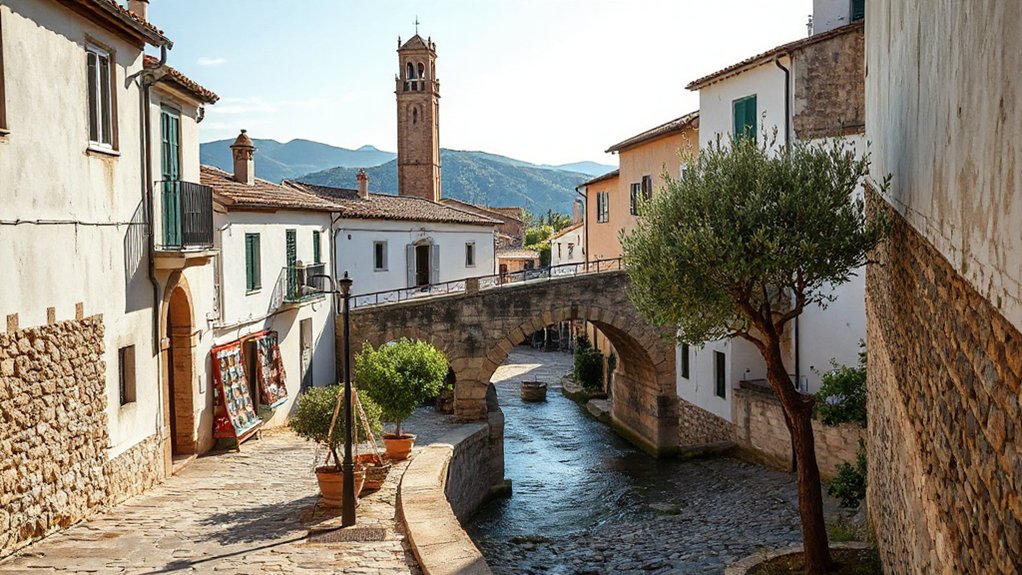
Olivenza sits at the edge of Extremadura and Portugal, where the river’s murmur and stone walls keep a quiet, border-spanning witness: a town that’s felt both sides of history. You walk old lanes, sipping Bunuelos history as if it were a local recipe, crisp and intimate.
Olive groves shade your wander, their scent mingling with slate roofs and warm façades. You notice how cultures braid together here, in plazas and arches, without shouting. Pause at the border marker, feel the tug of two nations, then step back into life’s tempo.
- Border-touched streets with a shared rhythm
- Archways framing sunlit corners
- Markets where olive oil perfumes the air
- Bunuelos history whispered in cafés
- A town that invites slow discovery
Trujillo: A Cliff-Top Tale That’s Worth the Detour
From Trujillo’s cliff-top lanes, you feel history rising with every step, the town’s past and panoramas spilling into view. You’ll notice how the fortress towers over whitewashed alleys, hinting at centuries of power, faith, and fire.
It’s a detour that rewards your curiosity with clear, cliff-hard details about the place’s story.
Cliff-Top History Unveiled
Trujillo perches along a razor-thin cliff, and from its edge you glimpse a town that has learned to lean into history rather than hide from it, layer by stubborn layer. You’ll feel the past echo in every stone, as if walls were listening for a future they helped shape.
Ancient legends drift through narrow lanes, braided with stonework and memory. Cliffside views reveal a skyline stitched with fortifications and faith, where every overlook invites a reconsideration of what a town can endure and endure again.
- A wall-carved whisper of battles past
- An ancient doorway still framing the weather
- A chapel that breathes with sea-salt wind
- A watchtower keeping time with the tides
- Streets paved by centuries of footsteps
Detour Worthy Details
You’ll pause at a doorway where sunlit dust motes drift in the air, then descend a narrow stair into a courtyard perfumed by orange blossoms and roasting coffee. Local cuisine nudges your senses—savory stews, smoky paprika, crisp bread—each bite hinting at centuries of cross-cultural trade.
Cultural festivals pulse through the streets, colors clashing and harmonizing in equal measure, drums answering bells, dancers looping around stone corners. You leave with a richer map, not just of walls, but of lived, lingering memory.
Alcántara: River-Gorge Viewpoints and Ancient Bridge Walks
On the edge where the Tagus carves a steep gorge, Alcántara reveals its dramatic viewpoints along the river and the bridge that has stirred travelers for centuries. You step to the rim and feel the wind sculpt the limestone, then trace the river’s silver line beneath the ancient arches.
The walk over the stone spans lets you imagine centuries of crossings, trades, and tales. You’ll notice how the gorge narrows, how the water recedes to mirror-like pockets, how the old stones keep the river’s memory.
- River viewpoints framing the gorge
- Ancient bridges whispering of crossings
- Stonework that invites careful inspection
- Echoes of footsteps from centuries past
- Quiet, awe-filled horizons after every turn
Guadalupe: A Holy Site Without the Crowds
You feel Guadalupe’s sacred space breathe with you, a quiet crowd that isn’t loud but reverent. In this hushed setting, the monastic history speaks softly, and you sense a pilgrim experience that isn’t hurried or crowded.
Solitude surrounds you as you trace the lineage of devotion, from past chapels to present quiet corners, where every step hints at what remains uncrowded.
Sacred Space, Quiet Crowd
How quiet can a sacred place be in a country famous for its religiosity? You step into Guadalupe and feel it soften around you, as if the walls inhale.
Sacred spaces reveal themselves through restraint: a bell’s hush, a candle’s glow, a distant chant that never crowds the square. You notice how the faithful move with care, how quiet crowds listen more than they speak, how history glows without shouting.
You carry the sense of reverence without the tourist swarm, and you understand why this town stays underrated. Find the balance between awe and accessibility, and let the inner chapel become your map.
- tranquil cloisters
- lantern-lit paths
- hushed courtyards
- soft-spoken guides
- contemplative bells
Monastic History Uncrowded
Guadalupe’s monastic history unfolds softly, almost beneath breath rather than announced. You wander with measured steps, noticing how the stones hold centuries without shouting.
The monastic architecture stitches quiet into the hillside: arches lean toward candle glow, cloisters whispering with your passing shadow. You sense a lineage of discipline and devotion, not theater.
The site invites silent retreats of the mind, where a single bell punctures stillness and mercy follows in the echo. You glimpse pilgrims and scholars alike, not crowding, but pacing the same measured rhythm, savoring cool stones and cool air.
As you breathe, you feel where prayer settled into the town, where reverence remains unhurried, accessible, and nearly invisible. This is history preserved, not spectacle.
Pilgrim Experience, Solitude
Leaving the hushed cathedral precinct behind, you step into Guadalupe with a quiet expectancy, where solitude isn’t loneliness but a companion you can walk beside. You notice pilgrim solitude in the streets—pilgrims moving with purpose, yet unhurried, savoring small sights.
The town becomes a chapel of light and stone, inviting tranquil journeys rather than crowds.
- A quiet courtyard whispering of devotion
- Stone arches framing your focused, steady steps
- A midday breeze that steadies your pace
- A simple meal shared in unspoken camaraderie
- A church bell tolling softly, guiding reflection
You leave lighter, more attentive, as if the town itself offers a permission slip to observe, listen, and linger. Guadalupe teaches that true pilgrimage can be intimate, unhurried, and deeply personal.
Alconétar: Roman Roots Meeting Rural Calm
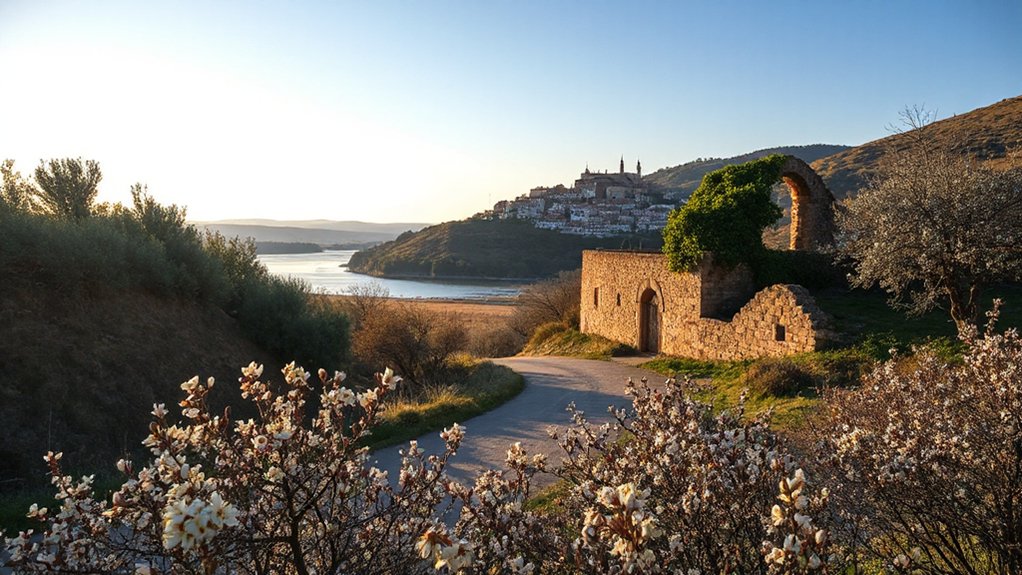
Alconétar sits along the Tagus with a patient, Roman whisper in the air, where ancient stones and modern lanes meet in a quiet, almost genteel calm. You sense layers of history in every curb and doorway, a town that pauses to listen before it speaks.
The river carries stories of aqueducts and markets, and you feel the pace slow, then align with the locals’ steadier heartbeat. You stroll past whitewashed homes, spot remnants of Roman roots tucked between olive trees and quiet plazas.
Local cuisine tempts you with simple, soulful flavors—garlicky stews, grilled fish, crisp bread. Cultural festivals punctuate the year, weaving song and dance into the air, inviting you to participate, observe, and remember that endurance can taste delicious.
Herrera Del Duque: Wild Landscapes and Quiet Plazas
You’ll feel the wild landscape unfold around you, a rugged theater where wind-carved ridges meet open skies.
In the quiet plazas, time slows, and you sense local life breathing at a human pace.
This contrast—untamed scenery and intimate squares—invites you to explore how Wild Landscapes Revealed and Quiet Plaza Charms intertwine in Herrera Del Duque.
Wild Landscapes Unveiled
From the moment you arrive in Herrera del Duque, the landscape unfolds with a raw, wind-sculpted beauty: scrubland and low limestone hills casting bold silhouettes against a sky that seems to widen with every step.
- Feel the wind shape the clay, hear it carve quiet canyons between ridges
- Notice the stubborn flora clinging to limestone, a green graffiti on ancient stone
- Observe distant hills punctuated by weathered, human-scale tracks
- Sense how urban architecture meets wilderness in low-slung built forms and shadows
- Immerse yourself in local festivals that pulse with rustic rhythm and climate-worn charm
This terrain respects restraint; it invites you to listen, walk, and reflect on the balance between wild landscapes and human pace.
Quiet Plaza Charms
Quiet plazas in Herrera del Duque feel like pauses stitched into the landscape, where sun-warmed stones reflect a patient, centuries-old rhythm. You walk slowly, noticing how local traditions linger in doorways, a quiet commerce, and the soft clatter of chairs.
The town’s heart isn’t loud; it breathes through shaded corners and simple rituals that repeat with the dawn. You glimpse hidden courtyards behind iron gates, small breaths of shade where laundry lines crease the light.
In these spaces, conversations drift like dust motes, framed by whitewashed walls that keep secrets and welcome visitors. Expect understated ceremony, not spectacle.
You’ll leave with a memory of calm, of intimate corners, and the sense that quiet plazas hold the islanded pulse of Herrera’s everyday life.
Medellín: Cliff-Top Fortress With Cinematic Scenery
Perched dramatically on a cliff above the Guadiana valley, Medellín’s fortress feels carved from a cinematic frame, where stone walls and battlements silhouette a sky-brushed horizon.
You explore with your senses wide open, tracing stone textures, listening to wind through towers, and feeling history pulse in the air. The overlook instantly places you inside a grand scene, yet you stay grounded, noticing niche details—ironwork, faded banners, and distant cattle bells.
Local cuisine wafts from nearby terraces, hinting at quick bites before the next ascent; cultural festivals color the evenings with music and storytelling. You’re reminded that this town isn’t just scenery; it’s a living page of Extremadura.
- Cliff-top passages that frame sweeping views
- Narrow stairways revealing hidden courtyards
- Battle-scarred ramparts echoing
- Panoramas that punctuate each pause
- Local cuisine and cultural festivals at heart
Castuera: Agro-Gateways and Traditional Crafts
Castuera opens its doors as an agro-gateway where olive groves, vineyards, and melon fields roll out like a living map. You walk its lanes and sense the pulse of production, from cooperative yards to roadside stalls.
Agro-life isn’t just work here; it shapes the town’s tempo, guiding conversations and meals. You notice how Local art threads through markets, studios, and faded storefronts, turning daily trade into small, vivid exhibitions.
The craft isn’t museum-bound; it’s practiced, shared, and seasonal, echoing the rhythm of harvests and fairs. Traditional festivals punctuate the year, with music, flame, and handwork that invite you to participate rather than observe.
Castuera remains practical, purposeful, and quietly celebratory in its enduring craft and farming heritage.
Azuaga: Roman Relics Meet Modern Iberian Town Life
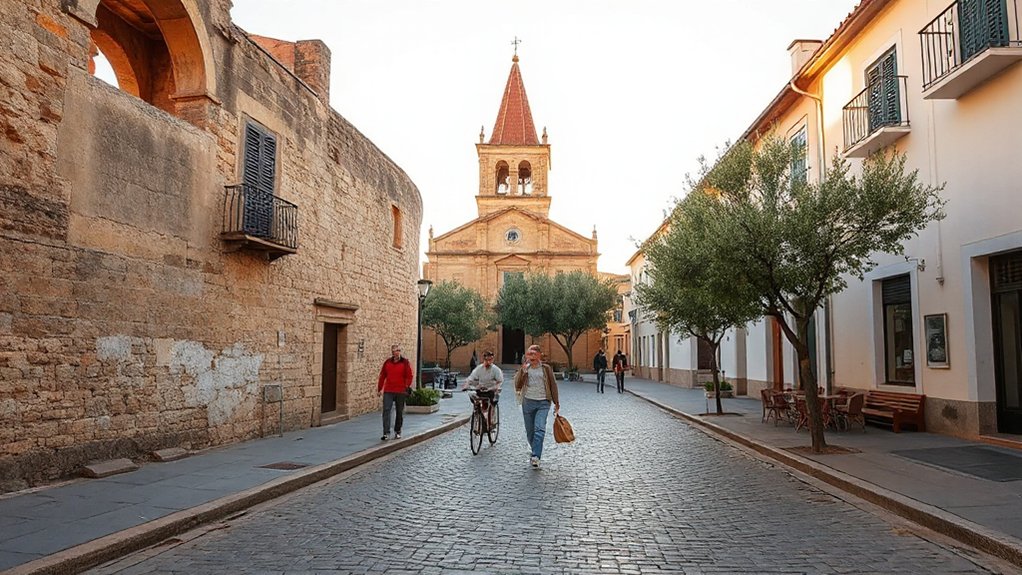
Azuaga wears its history on the surface, where Roman relics peek from sidewalks and plazas as if the empire never left. You walk its lanes and feel time pull you forward, boots tracking centuries as you sip from local life.
The town hums with a quiet, modern rhythm, yet echoes of mosaics whisper from curb cuts and stones. You taste local cuisine that bridges eras, and you watch traditional festivals breathe in the square.
- Roman stones underfoot meet contemporary cafés
- Old walls frame new galleries and markets
- Mosaic hints guide your evening strolls
- Liveliest corners host impromptu folk music
- Cuisine that blends relic recipes with today’s flavors
Mérida’s Quieter Corners Beyond the Amphitheater
Mérida reveals its quiet charms beyond the grand amphitheater, where narrow lanes thread through sun-warmed stone and small courtyards pulse with everyday life. You walk past shuttered balconies, catch a whiff of local cuisine drifting from a tucked-away tavern, and glimpse life moving at a more human pace.
In these corners, history feels intimate, not advertised, as you pause at a fountain that murmurs of old baths and Roman bricks. A sunrise-lit bakery invites you to linger over a shared loaf.
Local conversations drift from door to door, offering slices of daily ritual. If you time it right, you’ll witness traditional festivals unfold with restrained fervor, banners brushing walls and neighbors exchanging stories, quietly stitching Mérida’s layered identity.
Vegaviana: New Forest Trails in Old Hills
Vegaviana invites you to trade road noise for the soft hush of new forest trails set against ancient hills. You step onto pine-scented paths where shadows drift and birds mark the rhythm of your walk, a gentle reminder that discovery can be simple.
The air feels cooler here, and every turn rewards with a fresh view of forest adventures waiting just beyond a bend. You notice old stone markers, scrubby clearings, and the way light pools on ferned floors, making you slow down to savor the moment.
This isn’t haste; it’s connection, a practiced patience amid Old hills.
- Forest adventures unfold with every mile
- Quiet slopes, bright needles, and distant farmlands
- Ferns, moss, and sunlight in resin-soft coins
- Wildlife glimpses that make you smile
- Simple paths, lasting impressions, renewed curiosity
Jarandilla De La Vera: Misty Mornings and Castle Vibes
Mist fog curls around Jarandilla de la Vera as dawn slides over the hills, and the town wears its castle like a quiet heartbeat beneath the skyline. You wander narrow lanes where stone facades glow, and you sense history leaning close, listening.
The morning air tastes of pine and damp earth, and you notice how the mist clings to the balconies where laundry nods in the breeze. Castle vistas punctuate your steps, a constant reminder of resilience and time’s slow rhythm.
You sample local cuisine that sticks to memory—the smoky notes, simple ingredients, and honest cookery. Cultural festivals pulse through the calendar, bringing song, tradition, and neighbors together in shared space.
In Jarandilla, everyday moments feel purposeful, layered, quietly cinematic.
Santa Marta De Magasca: Wind-Swept Plains and Rural Flavor
Santa Marta de Magasca spreads wide and windward, its plains brushing against the horizon like a living map of the region’s rural heartbeat. You walk the open flats, feeling the pulse of wind and earth, tasting the salt of grit in the air, and sensing stories in every hedgerow.
Local life moves with steady purpose, unhurried but keenly attentive. The town wears its heritage lightly, a canvas of honest days and honest meals. You’ll notice the steady rhythm of campo life, the scent of meat and smoke from nearby grills, and the warmth of welcome that lingers after the sun drops.
- local cuisine
- cultural festivals
- wind-swept vistas
- rustic architecture
- intimate taverns
How to Blend Food, History, and Nature in Extremadura’s Hidden Towns
To blend food, history, and nature in Extremadura’s hidden towns, you follow three intertwined trails: a plate that carries centuries of farming and shepherding, streets where ancient walls whisper past lives, and landscapes that shape every bite.
You taste local cuisine that folds meadow herbs, smoked paprika, and river trout into memorable lessons about place. You wander narrow lanes, catching echoes of olive presses and vaulted kitchens, then step into groves and cliffs where skylines dictate the meal’s rhythm.
Each bite becomes a memory, each pause a natural escape. You learn to read a town by its aromas, textures, and views, turning simple meals into immersive history, vibrant culture, and lifelong gratitude.
Frequently Asked Questions
What Hidden Gems Define Extremadura’s Underrated Towns?
Hidden history surrounds you as you wander, revealing Local architecture that whispers old stories. You’ll notice narrow lanes, sunlit plazas, and quiet courtyards, where authentic charm emerges, inviting you to uncover-hidden gems and savor Extremadura’s understated, unforgettable soul.
Which Seasons Best Reveal Extremadura’s Quiet Towns?
You’ll discover Extremadura’s quiet towns best in spring and autumn, when weather comforts your strolls. You’ll witness historical landmarks standing hushed, and nature radiates; natural parks glow, inviting reflective pauses amid cobblestones and straw-roofed villages.
How to Sample Local Flavors Beyond Mainstream Routes?
You’ll sample local flavors by wandering taverns and markets, choosing small producer bites and regional tapas. Sip local wine, seek traditional crafts demonstrations, chat with makers, and let hidden courtyards reveal authentic Extremadura in quiet, unlisted corners.
What Small-Town Festivals Are Worth Timing For?
Packed crowds aren’t everything: 70% of visitors miss tiny festivals you’ll love. You’ll witness historical architecture and traditional crafts up close, timing your trip to these streetside celebrations unveil surprising, vivid, observant moments you’ll carry home.
How to Travel Between Underrated Towns Affordably?
You can travel affordably by bus or rail between underrated towns, spotting historical architecture along the way, and embracing adventure tourism whenever routes line up with scenic detours; pack light, plan off-peak, and stay flexible for savings.
Conclusion
You’ll leave Extremadura with a map full of whispers, not just places. Think of Villafranca’s vines as a quiet chorus, Zafra’s stone lanes as a memory loom, Olivenza’s border air as a hinge between worlds. I once chased a bunuelo-scented breeze through Vegaviana, and realized small towns aren’t detours but deliberate pauses. If you pack curiosity, you’ll find data points in every sunset: 60% of travelers report richer experiences when they wander off the main roads. Trust the side roads.