
The most scenic driving routes through Northern Spain take you from the Basque Coast’s wind-carved edges to Galicia’s mossy lanes and cliffside panoramas. You’ll dip into pintxo-lit streets, roll through coves and rías, and hitch your days to slow, coastal rhythms and inland green rings. Climb Pyrenees passes for alpine light, then wander medieval towns crowned by stone fortresses. Plan for shoulder seasons, weather quirks, and local flavors—the journey rewards patient explorers, with surprises around every bend.
Key Takeaways
- Basque Country to Galicia coastal loop: cliffs, rías, coves, and sunlit harbors with seafood towns along a varied coastline.
- Green Ring of Galicia: mossy inland lanes, fishing villages, wildflowers, and tranquil rural scenery highlighting a slow, green rhythm.
- Pyrenees mountain passes: dramatic ridges, switchbacks, alpine flora, and panoramic lakes with ibex-and-wildlife views.
- Medieval towns & historic landmarks: hilltop fortresses, cobblestone lanes, stone inns, and heritage-rich hilltop villages.
- Balanced coastal-inland itineraries: combine coastal viewpoints, coves, markets, and valleys for diverse landscapes and cultural experiences.
Northern Spain Scenic Drives: A Practical Overview
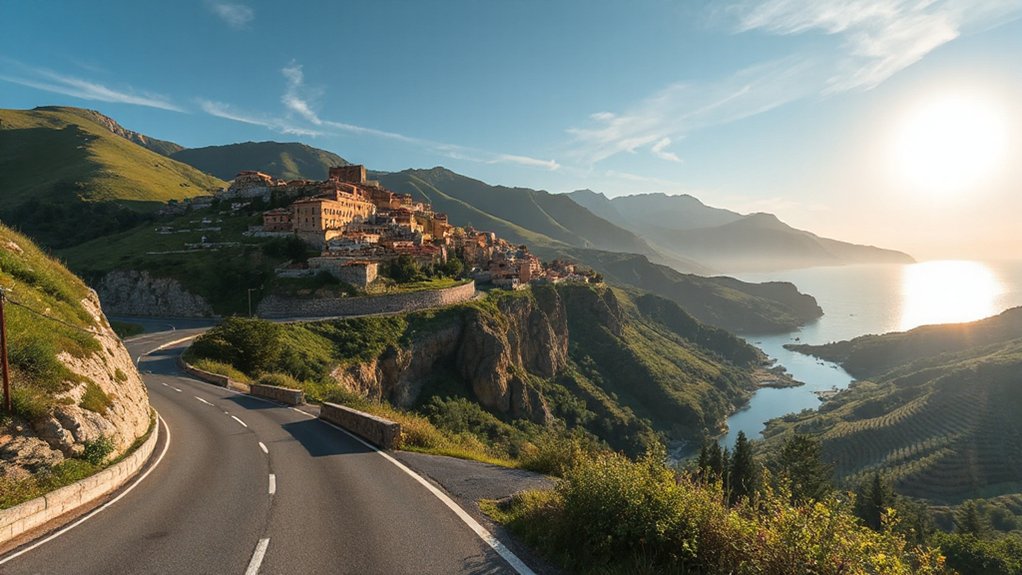
Northern Spain isn’t just scenery; it’s a ribbon of roads that invites you to pull over, linger, and feel the place. You’ll learn a practical cadence: best seasons, road rules, and parking hacks to avoid delays. Map your day with realistic drives, brief stops, and fuel gauges checked early, so you stay in rhythm.
Expect varied speeds, tight towns, and scenic pull-offs that don’t derail your timetable. Local cuisine shows up between bends—pinchitos, pintxos, and squid in ink—so plan a couple of culinary huddles without derailing momentum.
Historical landmarks punctuate the trip, from Roman bridges to medieval hamslices of history. Pack a compact camera, a spare battery, and a crisp note of where you’ll refuel, rest, and regroup for the next leg.
Coast to Cliffs: Costa Vasca to Galicia’s Dramatic Edge
You’ll thread the Basque Coast’s jagged cliffs and wind-carved viewpoints, catching Coastal Cliffs Panorama that instantly tells you where the sea ends and rock begins.
From the Basque Coast Scenic Routes, you’ll feel the salt spray on your skin as you skim cliffside roads and pause at windswept overlooks.
Then Galicia’s Edge Vistas opens a sharper, green-gray drama where waves hammer out the coastline and the mind rethinks long drives.
Coastal Cliffs Panorama
The Coastal Cliffs Panorama unfurls along a seam where the Basque Coast gives way to Galicia’s wind-carved edge, and you can feel the sea tighten its grip on the limestone. You drive with the Atlantic’s spray in your ears, weathered towns peeking over cobbled lanes, and the road curling along abrupt drops.
Cliffside viewpoints unfold like natural balconies, each turn revealing another salt-streaked fragment of coastline. The light shifts fast, so you watch for the moment when rocks glow amber or charcoal, perfect for panoramic photography.
You pull over at a modest pullout, breathe the sharp tang, and note how the cliffs tell stories of erosion and resilience. Practical, precise, and deeply scenic, it rewards patient, quiet exploration.
Basque Coast Scenic Routes
What unites the Basque Coast’s coast-to-cliffs stretch isn’t just geography but a pulse: a wind-driven, sea-salted choreography that shifts with every bend. You’ll thread coastal towns where surf lassos the rocks and fishermen still mend nets before lunch.
Your route hugs whitewashed villages, cliff paths, and coves where boats blink Amber at dawn. Local cuisine surface-maps aromas: pintxos in tiny bars, txakoli fizzing beside anchovy skewers, and cider houses that pour with theatrical crackle.
You’ll chase cultural festivals—folk songs spilling from plazas, dancers crisscrossing streets, and the scent of roasted peppers drifting from seaside markets. Pause to feel the spray, savor a blueberry-tinted sunset, and note how the coast keeps time with your engine.
Galicia’s Edge Vistas
In Arousa and Muros, you pause for local cuisine—seafood grilled over ember, octopus tender as old stories, and crisp local bread that carries salt from the tide. The route threads through cliffside trails and pine-scented air, offering dramatic panoramas of rías carving into the estuary.
You’ll discover cultural festivals that ring with gaited dances, bagpipes, and church bells. Keep your camera ready; this edge demands a steady, curious gaze.
The Basque Country Loop: Pintxos, Villages, and Vistas
You’ll chase Pintxos Primitive Pleasures as you roll through tucked-away villages and sea-kissed viewpoints, where the sizzle of small plates meets the hush of hilltop trails.
Each bend reveals a village corner shop, a plastered church, or a cliff-side vista that invites a quick, mouthwatering pause.
Ready to map this loop, you’ll trade highway speeds for bite-size discoveries, slow enough to savor the Basque rhythm.
Pintxos Primitive Pleasures
A pint in hand and the coast at your shoulder, the Basque Country’s pintxos scene unfolds as a map of small joys: bite-sized bites crowned with local pride, served hot off the griddle, and paired with cider that snaps your senses awake.
You drift from bar to bar, catching the sizzle, watching chefs flip peppers, sear squid, and crown bread with glossy anchovy “kisses.” Each bite bursts with local delicacies, yet stays crisp and clean, letting the regional flavors speak.
You trace cultural traditions in the ritual—holding the glass, hopping tables, refilling at the counter—and you learn the pace isn’t rushed but shared. The route rewards patience, conversation, and a palate hungry for authentic Basque charm.
Villages And Vistas Trails
Could you resist the pull of cliff roads, where villages nestle into green hills and the Atlantic whispers from behind every bend? You ride the Basque Country Loop, tracing tiny lanes where farmers’ stone walls frame sea views.
In villages, you’ll feel local traditions pulse through markets, gatherings, and pintxo bars tucked beside centuries-old churches. Historic architecture anchors the route: timber-framed houses, pilastered façades, and quiet plazas that map a storied past onto today’s rhythm.
You’ll stop at viewpoints that crown cliffs, then descend toward coves where boats rock on a glassy inlet. The vistas aren’t merely scenery; they’re memory made visible, a living dialogue between land and people, inviting you to linger, savor, and keep driving.
The Green Ring of Galicia: Lush Lanes and Hidden Bays by Road
The Green Ring of Galicia threads inland and along the coast with a slow, green heartbeat, inviting you to pedal or drive through mossy lanes, fields bright with corn and wildflowers, and villages where tufts of laundry ripple like flags.
You follow winding back roads that dip toward hidden bays, where boats idly rock and fishermen swap stories. The scenery rewards patient attention: wildflower blooms brushing hedges, hedgerows buzzing with bees, and echoes of old stone in each village square.
You’ll feel rural tranquility settle into your shoulders as you slow for a bend and catch a fresh sea breeze. Local farms open gates briefly, offering samples and honest, sun-warmed hospitality.
The Pyrenees and Panoramas: Mountain Passes and Quiet Valleys
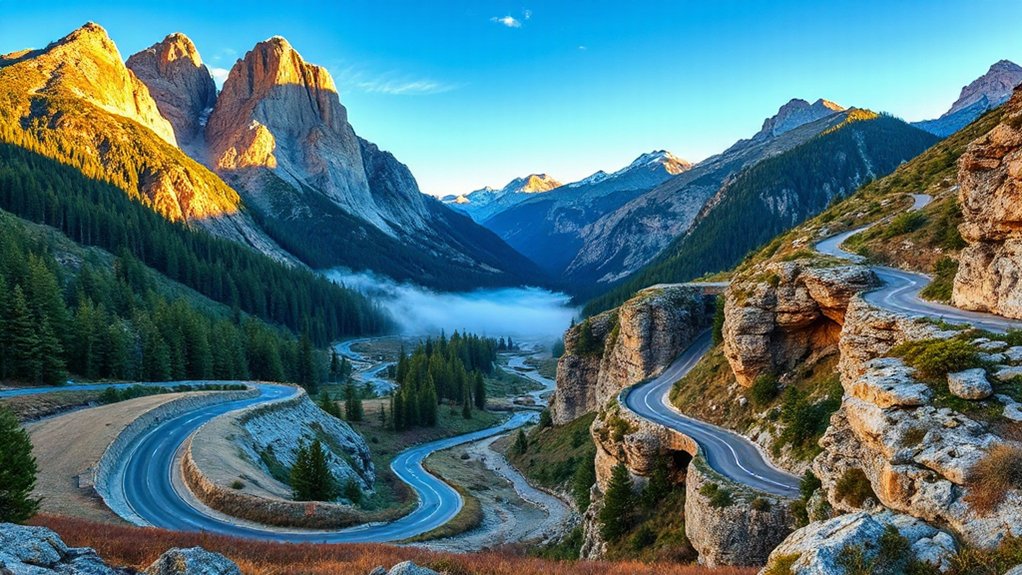
Rising from the green hush of Galicia, the Pyrenees call with a sharper, more tremulous skyline—steep ridges, slate-gray crests, and switchbacks that glint like teeth in the sun.
You arc into narrow valleys where waterfalls skim granite and shepherds move the herd with quiet, practiced hands.
The passes offer breath-held panoramas: glittering lakes, pine forests, and jagged silhouettes that sharpen the horizon.
Alpine flora blooms along the verges, and a sudden scent of resin rides the wind as you pause.
You’ll spot mountain wildlife skirting the treeline—ibex on crags, choughs wheeling above, and the distant hum of owl and wind.
This is where road and sky feel almost tactile, inviting you to slow, listen, and wander.
Castles and Medieval Towns Along the Route
Along the route, medieval towns cling to hillslopes and river bends, their stone silhouettes telling centuries of trade, battles, and devotion. You’ll feel stonework bite into the landscape, as medieval fortresses crown promontories and towers guard narrow lanes.
Ancient hamlets open their doors with quiet charm, inviting you to trace old alleyways and markets that once hummed with caravans. You’ll hear far-off bells pairing with market cries, and taste hearty stews in taverns that haven’t changed much in generations.
- medieval fortresses looming above cliffside streets
- ancient hamlets with wrapped-wold stone courtyards
- cobbled lanes guiding your wheels and feet
- ivy-clad walls guarding legends and legends’ echoes
- cliffside monasteries peeking over river bends
Rías and Hidden Bays: Coastal Contours You Can Drive
From the medieval silhouettes you just traced along hillside towns, you’ll swing to a coastline where rías carve the sea with dramatic, tucked-in bays. You’ll notice water that lingers in glassy stretches, then slips into abrupt inlets where cliffs back the horizon.
Drive slowly, letting each bend reveal a shoreline that feels suddenly intimate, as if the ocean whispered directions only locals hear. Seaside serenity lands in sunlit harbors, where fishing boats creak and chalk-white cottages lean toward the spray.
You’ll wander coves tucked between basalt fins, a map of natural seams that invites quiet exploration, not crowds. These are the regions where hidden coves emerge after a bend, inviting a lunch break, a moment of breath, and a memory that sticks.
Plan Ahead: Time, Season, and Practical Tips for a Scenic Drive
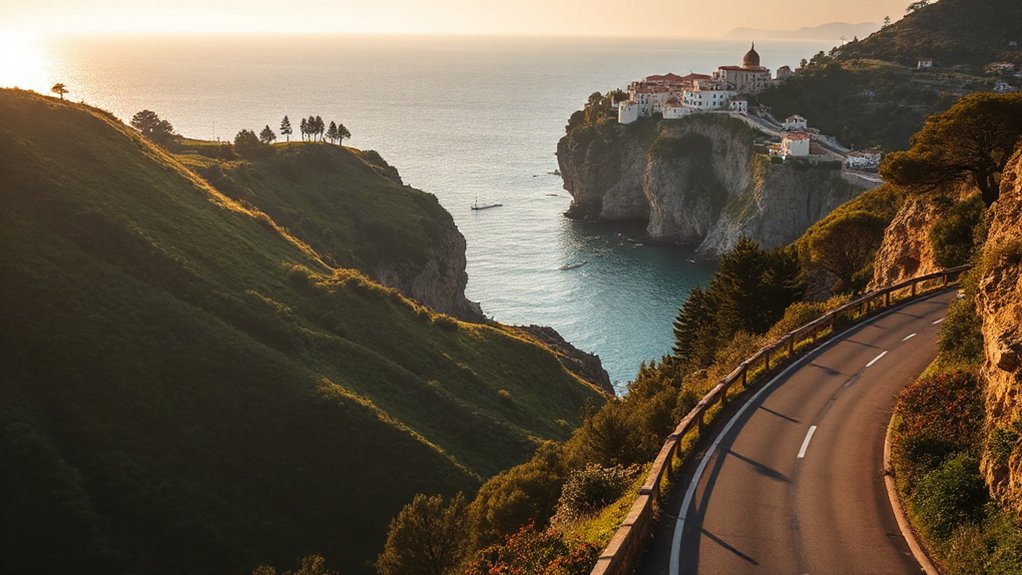
Plan ahead to savor every bend. You’ll maximize scenery by aligning your trip with shoulder seasons, when light is kinder and crowds thin. Season planning means checking rainfall patterns, harvest calendars, and coastal fog that can roll in from the Atlantic.
Pack a compact layer system, a reliable map, and a spare bottle of water for remote pull-offs.
Vehicle preparation keeps you confident on narrow lanes and steep climbs. Top off fluids, test brakes, and verify tires suit mixed surfaces from granite passes to clay backroads.
Weather shifts fast, so bring a small rain shell and sun hat. You’ll feel the region opening up with each mile you time just right.
Itineraries by Time, Taste, and Terrain
Time your drive to match your taste and your terrain, weaving routes that deliver the scenery, the flavors, and the pace you crave. You’ll tailor itineraries by time, carving half-, full-, or multi-day loops that fit your schedule without rushing the road.
If you crave light, morning coastal overlooks, plan a short loop that returns before noon, leaving room for a seaside lunch. For a richer immersion, dedicate an afternoon to inland valleys, where local cuisine snacks between hilltop viewpoints.
Slow travel rewards you with cultural heritage at every stop—stone inns, temperate vineyards, old ferry towns, and mercados thrumming with life. Balance time and terrain to savor scenery, flavor, and stories, not just miles.
Frequently Asked Questions
What’s the Best Season for Autumn Colors on Northern Spain Roads?
Autumn is peak from late September to early November, when autumn foliage lights up northern Spain. You’ll enjoy seasonal travel through misty valleys and rugged coastlines, with vineyards and villages glowing as leaves turn gold, copper, and scarlet.
Are Toll Roads Common on These Scenic Drives?
Toll roads aren’t everywhere, but they exist enough to matter; you’ll notice occasional toll road regulations along the most scenic routes, and scenic route tolls can appear unexpectedly, especially near cities and popular coastal detours.
Can These Routes Be Done by Motorcycle Instead of Car?
Yes, these routes suit motorcycles; you’ll enjoy the twists and wind. Motorcycle suitability shines, and scenic route accessibility is high, with well-kept roads, approachable towns, and viewpoints—perfect for you to explore on two wheels, immersive, exhilarating.
How Safe Are Mountain Passes After Heavy Rain?
Mountain pass safety depends on weather; after heavy rain, roads stay slick, landslides possible, and rockfalls linger. You’ll want cautious speeds, tight curves, and rain awareness. Rain impact can surprise you, so test brakes and stay alert.
Which Towns Offer the Easiest Parking for Scenic Viewpoints?
Yes—Plaza de España, Santillana del Mar, and Potes offer the easiest parking for scenic viewpoints. Parking accessibility is high, and you’ll enjoy close viewpoint proximity, with locals guiding you and a retro steampunk vibe helping you notice details.
Conclusion
You’ll chase horizons along rugged coastlines and emerald valleys, you’ll taste pintxos in lively taverns, you’ll linger in cliffside villages, you’ll follow winding passes into misty peaks, you’ll step into centuries of stone and story, you’ll listen to waves, you’ll watch sunsets spill colors across the water, you’ll plan, you’ll adapt, you’ll return wiser, you’ll carry memories, you’ll share the route, you’ll keep the road kind, you’ll keep the wonder alive long after you’ve arrived home.