
The most common driving mistakes tourists make in Spain come from underestimating local rules and rhythms. You might ignore lane discipline, misread roundabout flow, or miss brief pedestrian crossings at roundabouts. Signs can be confusing—blue circles mean mandatory actions, red borders hint at prohibitions, and white panels show speed limits. Toll routes vs. free roads, urban LEZ rules, and narrow historic streets catch many off guard. Stay patient, signal clearly, and expect local pace—you’ll handle surprises better as you keep exploring. More tips await.
Key Takeaways
- Failing to adapt to local driving customs and roundabout etiquette, including lane discipline, signaling, and pedestrian interactions.
- Relying too much on GPS while missing real-time signs, toll routes, and temporary detours affecting route planning.
- Parking in restricted zones or misreading blue zones, time limits, and local parking rules.
- Underestimating tolls, car rental charges, and deposit/refund policies, plus neglecting pre-trip checks.
- Encountering driving hiccups calmly by signaling, pulling over safely, and knowing when to call roadside assistance.
Understand Spain’s Unique Driving Rules and Expectations
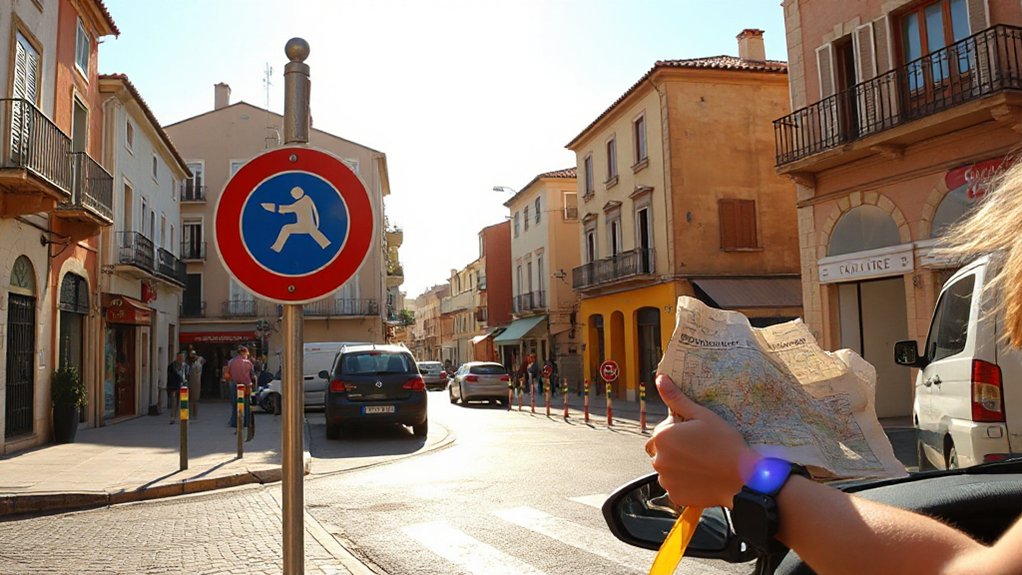
Driving Spain’s roads isn’t just about following speed limits; it’s about understanding local rules and expectations that can surprise first-time drivers. You’ll notice that local driving customs shape how people interact on the street, from lane discipline to courteous horn use.
Spanish traffic laws emphasize seat belts, helmets for bikers, and strict penalties for mobile phone use behind the wheel, even in rural areas. You might encounter roundabouts handled with practiced flow, and priority rules that depend on signage or road layout, so stay alert.
Pedestrian zones and residential restrictions vary by city, so plan routes accordingly. By observing, you’ll adapt quickly, reducing risk and staying compliant.
Remember: awareness of Local driving customs and Spanish traffic laws keeps your trip smooth and safe.
Master Spain’s Road Signs and Signals: A Practical Guide
You’ll start by recognizing the road signs and signals you’ll encounter across Spain, from speed limits to priority rules.
Observing how these symbols guide your decisions helps you anticipate hazards and stay legal. This quick guide aims to sharpen your eye for the signs so you can drive with confidence and clarity.
Decoding Road Signs
Spanish road signs follow consistent shapes, colors, and symbols, so you can read a sign at a glance without stopping to decipher every word. Decoding signs isn’t about language; it’s about pattern recognition you’ll use every drive.
You’ll notice red borders signaling danger or prohibitions, blue circles indicating mandatory actions, and triangles warning of hazards ahead. Pay attention to local limits—numerals on white panels reveal speed caps, urban zones, and periodic enforcement.
Expect priority signs that show who goes first, and understand circular signs that regulate turns, passes, and lane use. This isn’t trivia; it’s driving customs and road etiquette encoded visually.
Stay vigilant at roundabouts and near school zones, where small symbols carry big consequences. With practice, you’ll decode cues quickly and drive with confidence.
Signals You’ll Encounter
In Spain, signals aren’t just decorative; they guide every maneuver. You’ll notice how lights, arrows, and lane markings communicate priorities before you even turn a wheel.
Traffic signs with circular blue or red borders tell you where to go, while green arrows indicate permitted turns. Pedestrian buttons and crosswalk signals demand your attention, especially in busy city centers.
You’ll also encounter speed cameras and variable message boards that update conditions in real time.
Remember emergency roadside procedures: pull over safely, turn on hazard lights, and use reflective triangles if available.
Keep a mental map of priorities at roundabouts, tunnels, and motorway exits.
Stay alert to changing signals at night or during rain, and anticipate others’ uncertainty.
Traffic camera awareness shapes your decisions—don’t improvise.
Navigate Toll Roads, Free Roads, and GPS Quirks
Finding your way through Spain’s road system can feel like a maze at first: toll roads, free routes, and quirky GPS quirks all pile up, demanding a quick mental map. You’ll notice tolls on major highways and dynamic signs guiding you to the fastest path, yet free roads often save time with circular routes around cities.
Stay alert for occasional roadwork and temporary detours that change your planned exit, and trust the map for parallel, non-toll options when you want savings. When using GPS, expect occasional misalignment: signals lag, or exits appear earlier than you expect.
Practice toll road navigation in advance, and compare routes with the free roads option to choose the best fit. GPS quirks fade once you anticipate them.
Renting a Car in Spain: Fees, Deposits, and Traps to Avoid
When you’re renting a car in Spain, watch for hidden fees that can pop up at the counter or in the fine print. Know how deposits are handled and how long refunds take, so you’re not surprised after you return the car.
Also, read the fuel policy and other traps aloud—clarity now saves hassles later.
Hidden Fees To Watch
Hidden fees can catch you off guard, especially when you’re trying to keep every euro in check while renting a car in Spain. You’ll want to read the fine print on fuel, mileage, and optional extras, because small charges can add up fast.
Watch charges show up in unexpected places: airport pickups, one-way drops, and additional driver fees can inflate the total before you even hit the road. Insurance add-ons may duplicate your coverage, or you might be steered toward costly excess options.
Decline anything you don’t need and confirm limits upfront. Remember to inspect the car for pre-existing damage and photograph it, so you’re not billed for what you didn’t cause.
Hidden fees exist, but informed choices keep your budget intact.
Deposit Refund Timelines
Deposit refunds aren’t instant, but they aren’t endless either. When you return a rental, the timeline for your deposit refund depends on the company and your payment method.
Many operators process refunds within 5 to 10 business days, but some banks can stretch that to a couple of weeks. Expect partial holds or pending credits during the post-return review; a quick inspection usually speeds things up.
Always ask for written confirmation of the refund amount and the expected date. If you notice a delay beyond the stated refund timelines, contact the rental agency with your contract number and return time.
Keep your receipt handy, as it anchors the process and protects you against disputes over deposit refunds.
Fuel Policy Pitfalls
Fuel policies in Spain can surprise travelers if you don’t pay attention to the details. When you rent a car, read the rental agreement closely about fuel, otherwise you’ll confront extra charges for something you can control.
Many cars come with a full-to-full policy, meaning you must return the tank full; otherwise the operator may bill you for an approximate fill plus a service fee. Some companies offer pre-purchase options or full-to-empty deals that seem convenient but backfire once you’re home.
Check whether fuel costs are bundled with the rate or billed separately, and watch for hidden surcharges on refueling. Always verify the exact tank size and the required return condition to avoid unnecessary penalties in the rental agreements.
Parking in Spanish Cities: Rules, Fines, and Fast Fixes
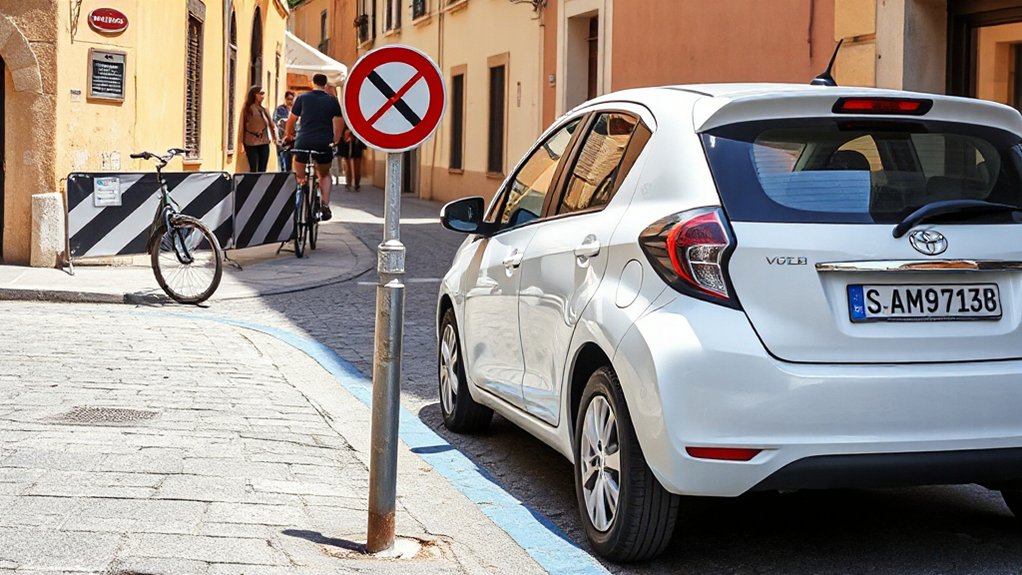
Parking in Spanish cities can be a headache if you don’t know the rules, fines, and quick fixes, but once you’ve learned the basics it becomes much smoother. You’ll notice color-coded signs, time limits, and resident permits that shape where you can park.
Pay attention to blue zones, meters, and posted hours, or you’ll risk penalties. If you’re unsure, walk the block first or ask locals; most spots aren’t obvious at first glance.
Keep receipts in case a dispute arises, and know that fine escalation can happen quickly for repeated offenses. When in doubt, park legally and move on, avoiding stress and tickets.
Understanding parking regulations helps you save time and money, letting you enjoy your visit.
Roundabouts and Driving Etiquette in Spain
Roundabouts are a daily staple on Spanish roads, and understanding them can save you time and nerves. You’ll notice traffic flows differently here: yield to vehicles already circulating, scan exits early, and signal when you depart.
Enter at a steady pace, avoid revving or stopping abruptly, and let larger vehicles roll through first if they’re already inside. Roundabout etiquette emphasizes courtesy over speed, so keep to one lane unless you’re changing exits, and use your blinker to guide others.
In Spain, drivers may pause briefly to let pedestrians cross at crosswalks near roundabouts, so stay alert. These cues reflect Spanish driving customs: patient, predictably cautious, and intent on shared efficiency.
Respectful positioning and lane discipline curb confusion for everyone.
Plan for Zonas De Bajas Emisiones: Impact on Your Route
If you’re planning to drive in Spain, you’ll want to map out routes with Low Emission Zones (LEZs) in mind, because these areas restrict or charge for high-polluting vehicles. You’ll notice Zonas de bajas emisiones vary by city, and signage can be subtle yet decisive.
Plan ahead by checking regional rules and scheduled days of restriction, especially in busy city centers and near tourist hubs. Your route choices may shift to avoid penalties or delays, influencing travel time and fuel use.
This isn’t just compliance—it’s about reducing environmental impact and supporting cleaner air. Keep your documentation handy, and consider eco-friendly options like smaller cars or off-peak travel to minimize disruption.
Environmental impact matters, even before you arrive.
Urban Driving in Spain: Tackle Narrow Streets Like a Local
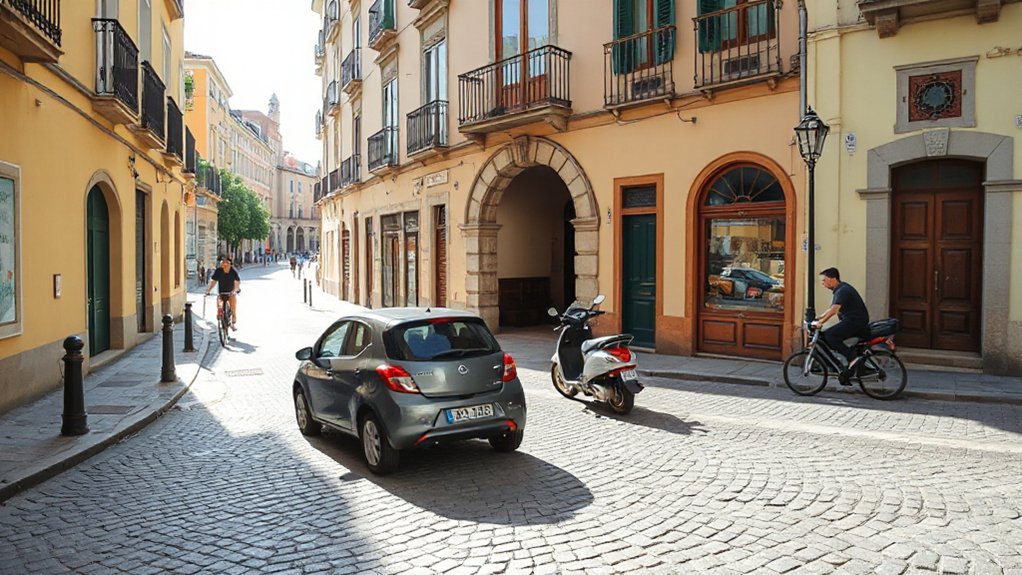
Finding your way through Spain’s streets isn’t just about speed; it’s about reading the rhythm of narrow, built-up corridors the way locals do. You’ll notice how historic architecture frames every turn, how tight corners demand anticipation, and how patience beats pressure in busy block sections.
Embrace local traffic customs: yield to pedestrians, use mirrors, and pace through tight streets with confidence, not bravado.
- Observe doorways and wheel tracks to gauge lane width.
- Signal early, then slow as you navigate bends and parked cars.
- Let buses and scooters pass first in narrow sections, reclaiming space calmly.
This approach keeps you aligned with real-life flow, reducing stress while preserving safety and appreciation for the city’s character.
What to Do If You Have a Driving Hiccup on the Road?
Even when you’re cruising smoothly, a hiccup can pop up on Spain’s roads—like a sudden brake, a missed turn, or a confusing sign—and you’ll want a quick, calm plan to recover.
If you stall or misjudge a corner, stay composed, signal, and pull to a safe spot. Check your surroundings, switch on hazard lights, and assess the situation.
If you can’t resume safely, call for Emergency roadside assistance or a tow, and follow their instructions. Keep your documents handy and note your location to speed up help.
For persistent issues, switch to a safe, well-lit lane if possible, and avoid repeating the same risky moves.
Remember car breakdown procedures, then resume driving only when you’re confident and safe.
Frequently Asked Questions
Do Police Stops Require Language Assistance or Interpreter Apps?
Yes, police stops can involve language barriers, so you should use interpreter apps if needed. Bring familiar phrases, keep calm, and clearly explain your situation. Interpreter apps help bridge gaps and improve accuracy during your roadside exchange.
Are Driving Apps Reliable for Real-Time Zona Emissions Data?
Yes, driving apps aren’t perfectly reliable for real-time zona emissions data, so you’ll notice minor gaps and delays as traffic congestion shifts. Still, they help you? navigate Parking regulations and avoid hotspots while you drive confidently.
Can I Rent a Car With an International Driver’s License?
Yes, you can rent a car with an international driver’s license. Check that it’s recognized by the rental company. Keep in mind International permits and driving regulations vary, so confirm requirements before you travel.
How Do I Handle Temporary Road Work Detours Safely?
Start by keeping to the speed limit and watching for signs as temporary roadwork creates detours. You’ll navigate detour safety by slowing, merging early, and signaling well, so you stay calm and drive through confidently, unscathed, unfrazzled.
What to Do if My GPS Loses Signal in Rural Spain?
If GPS loses signal in rural Spain, you should rely on map memory and road signs, then search for tall landmarks to reorient. GPS troubleshooting tips help you regain accuracy, supporting safer rural navigation and steady decision-making.
Conclusion
You’ll leave with wheels ready and expectations tempered, like a traveler steering through a seasoned map. Spain’s roads hum with personality—sighing toll booths, stubborn GPS quirks, and plazas that teach patience. Stay mindful of signs, savor the rhythm of roundabouts, and respect zonas de bajas emisiones. If a hiccup hits, breathe, retrace, and adapt. With once‑in‑a‑lifetime vistas just ahead, you’ll glide, learn, and collect stories as you go. Safe travels, and buen viaje.