
Spanish plaza culture thrives because daily life, social trust, and memory fuse in flexible spaces that blend work, leisure, and culture. You’ll notice how benches, shade, and arcades frame pauses, guiding conversations, markets, and performances. Inclusion across ages and genders strengthens participation, while lingering at shared tables builds ties. These plazas act as classrooms for adaptability, balancing commerce with ritual. Yet policy, costs, and design pressures challenge authenticity. If you keep exploring, you’ll uncover how communities keep it alive amid constraints.
Key Takeaways
- Spanish plaza culture thrives because daily life blends work, socializing, and leisure in shared spaces like cafes, benches, and markets.
- Mixed-use design, shaded courtyards, and adaptable architecture frame gatherings, boosting linger time and community memory.
- Inclusive participation and walking-scale streets foster rituals, music, and street exchanges that knit neighborhoods together.
- Resilience emerges from informal networks, markets, performances, and collaborative safety measures amid policy and economic pressures.
- Cultural preservation/enduring memories rely on shared bread, hospitality, and routine rituals that anchor identity in public space.
What Plaza Culture in Spain Really Is
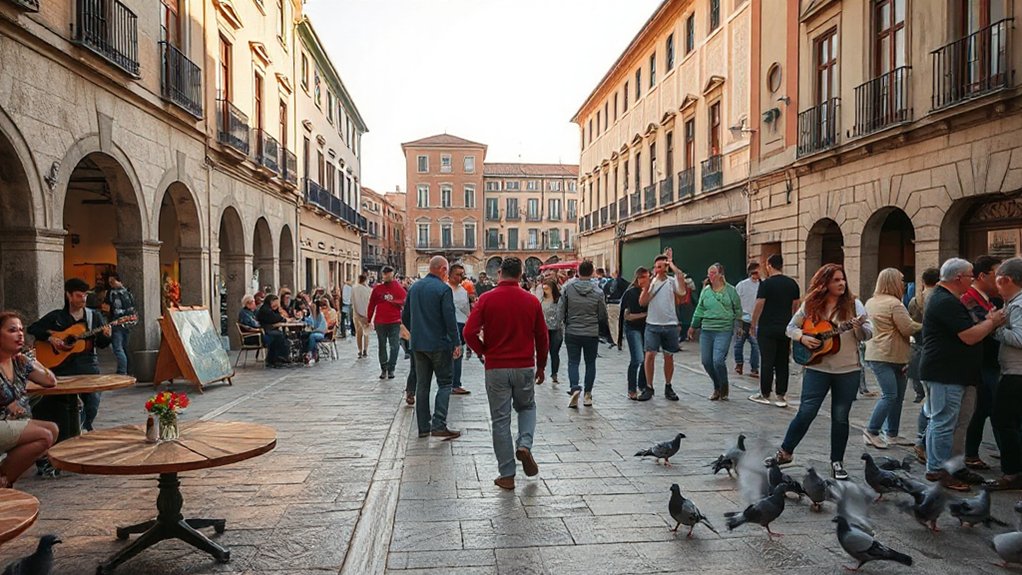
Plaza culture in Spain isn’t a single tradition but a living ecosystem built on daily routines, social rituals, and shared spaces. You observe how people drift between coffee bars, benches, and shade, forming a rhythm that blends work, leisure, and conversation.
This culture isn’t static; it’s braided from historical influences that trace back to Roman forums, Moorish courtyards, and later urban reforms that favored mixed uses. You notice how open squares invite casual encounters, while narrow lanes guide spontaneous performances, illustrating a dynamic architectural logic.
Architectural styles matter because they frame pauses, sightlines, and gathering spots. You sense a deliberate adaptability: plazas morph with seasons, markets, protests, or quiet study.
In this ecosystem, everyday proximity builds social trust, civic memory, and a shared sense of place.
Why Public Plazas Matter: Social and Economic Roles
Public plazas knit communities together, strengthening social cohesion by reminding you that shared spaces are where everyday interactions become collective norms.
They also boost economic activity, drawing locals and visitors into shops, markets, and informal exchanges that sustain nearby livelihoods.
Accessibility matters, because when plazas invite everyone—regardless of mobility or income—you create a more vibrant public life and broader civic participation.
Social Cohesion Benefits
Public plazas function as social accelerants, weaving residents into shared routines and networks that extend beyond mere gathering spaces. You observe how daily moments—unplanned chats, neighbors watching kids, impromptu performances—build a lattice of trust that shortens social distances.
This cohesion supports resilience during shocks, since people know where help originates and how to mobilize quickly. You notice that regular meetups cultivate accountability, reducing stray conflicts and fostering calm, predictable environments.
Community bonding emerges as residents anticipate others’ needs, share resources, and celebrate milestones together, strengthening mutual obligation. Cultural preservation plays a subtle, integral role: traditions, language cues, and communal rituals anchor identity, guiding behavior and encouraging inclusive participation.
The result is a plaza ecology that sustains social capital, enriching everyday life while reinforcing shared responsibility.
Economic Activity Boost
Across bustling corners, plazas transform foot traffic into sustained commerce, turning everyday passerby into potential customers and regulars into repeat visitors. You observe how open markets, street performances, and cafe terraces concentrate buying power in a compact space, creating a reliable micro-economy.
The significance isn’t accidental; it’s rooted in predictable rhythms—lunch crush, evening strolls, festival weekends—that merchants exploit with flexible pricing and promotions.
Historical preservation subtly guides investment, signaling legitimacy to both vendors and patrons, while cultural symbolism gives products narrative appeal, inviting longer stays and repeat trips.
Public space becomes a testing ground for new ideas, from pop-up shops to local crafts, sustaining small profits that compound over time.
In this dynamic, accessibility and safety heighten trust, sustaining continual circulation of capital.
Public Space Accessibility
How does accessibility shape plaza life and its broader impact on community and commerce? You observe how public space accessibility informs who gathers, who trades, and who shares information. When plazas invite all ages, abilities, and mobility levels, social interactions become frequent and spontaneous, boosting daily exchanges and trust.
Barriers—staircases, uneven pavement, or restricted hours—limit participation and push activity to peripheral zones, weakening the plaza’s central role. Inclusive design fosters frequent occupancy, longer stays, and diverse events, reinforcing urban rhythms and local economies.
This approach aligns with urban design principles that balance mobility, safety, and comfort, while supporting cultural preservation by enabling traditional markets, performances, and rituals to persist. Accessibility therefore sustains civic life, economic vitality, and shared identity within Spanish plaza culture.
Markets, Music, and Daily Life in the Plaza
Historical influences surface in counterpoint between vendor stalls and stone steps, while architectural styles frame stages for street performances, guiding attention without demanding it.
You observe rhythms of preparation, display, and turnover that reflect social timing as much as commerce. Music threads through conversations, heightening memory and mood, clarifying the plaza as a living archive rather than a static backdrop.
This environment balances spontaneity with routine, revealing how daily life sustains the cultural ecosystem rather than merely entertaining visitors.
Shared Tables and Street Etiquette in Spain
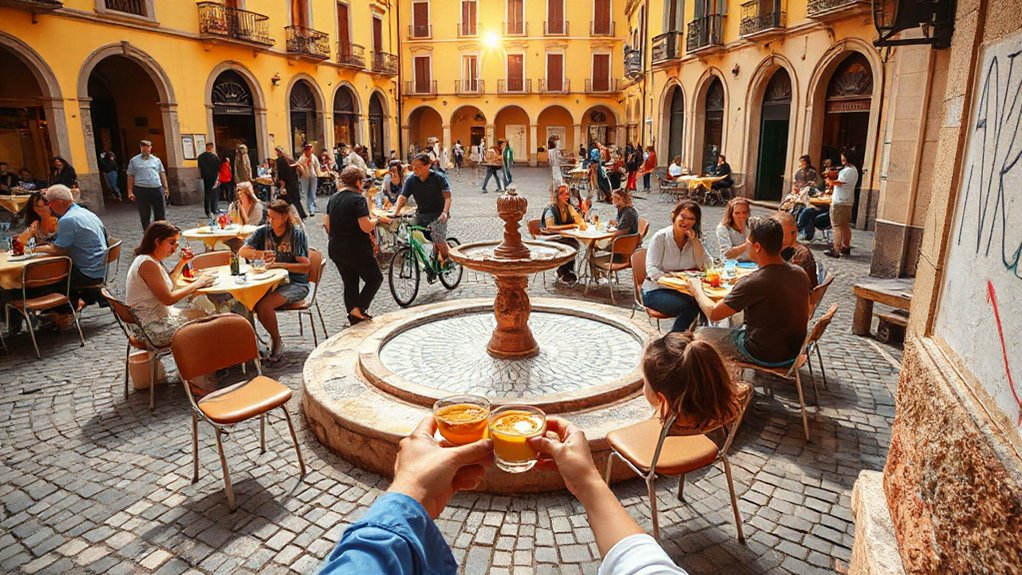
Shared tables in Spain reveal how hospitality extends beyond private circles into communal space, shaping who sits where, when, and with whom. You notice etiquette that blends ritual with practicality: elbows tucked, glasses refreshed, conversation brief during a quick bite, then a pause for someone else to speak.
This cadence isn’t merely ritual; it directs flow through the plaza, turning strangers into familiar companions and reinforcing boundaries with courtesy. You sense community bonding forming as plates travel, stories surface, and shared bread acts as a symbolic treaty.
Observing, you understand that cultural preservation happens not in monuments alone but at the table, where everyday choices sustain memory, language, and trust, ensuring plazas remain living forums rather than static spaces.
Who Participates: Inclusion Across Gender and Age
In plazas across Spain, participation spans ages and genders with notable fluidity, yet patterns reveal both inclusion and gatekeeping. You notice older adults mentoring younger players while newcomers improvise roles, bridging tradition with modern expectations.
Cultural diversity appears in conversations, musical tastes, and food stalls, showing how different backgrounds circulate influence without erasing shared codes. You witness women guiding debates, students testing ideas, retirees organizing events, and migrants shaping social rhythms through language, humor, and bargaining.
The sense of community participation grows when spaces invite contribution, not conformity, yet thresholds persist—language, time constraints, and social networks can privilege some voices over others.
The Plaza as a Classroom: What It Teaches About Adaptability
The plaza operates like a living classroom where adaptability is learned through daily practice rather than formal lessons. You observe how routines bend to weather, crowds, and moods, turning interruptions into improvisations.
In this urban theater, you’re not a passive spectator; you’re a participant shaping outcomes with quick pivots, shared norms, and tacit cues. You notice how community storytelling threads dispersed experiences into a coherent whole, strengthening social memory even as you adjust to shifting seats, vendors, and sounds.
You appreciate urban resilience not as a slogan but as practice—repacking plans, redistributing space, inviting new neighbors into conversations. The plaza teaches you to test ideas in real time, calibrate risk, and maintain belonging, even when the script changes.
Current Challenges Facing Plaza Culture
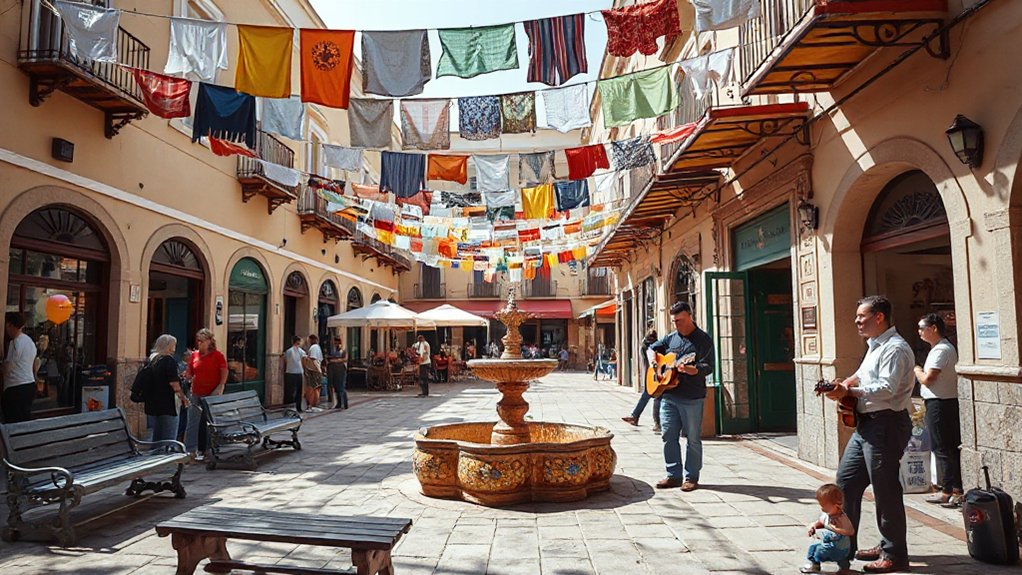
You’ll notice policy pressures and enforcement shape where plaza life can happen, influencing which activities are permitted and when.
As costs rise on streetside vendors and performers, economic strains reshape who can participate and how you experience the space.
These forces raise questions about accessibility, sustainability, and the balance between spontaneity and regulation in plaza culture.
Policy Pressures Impacting Plaza
What policy pressures threaten the significance of plazas, and how are they reshaping daily life? You observe how urban design mandates, zoning rules, and licensing regimes constrain informal gatherings. Regulations push vendors toward regulated hours, restrict street seating, and privilege transit efficiency over social space, subtly narrowing plaza timeframes you might’ve once trusted.
Public consultations promise inclusivity, yet the process often centers aesthetic conformity and noise limits over lived experience, diluting cultural rhythms. When funds skew toward monumental projects, intimate exchanges risk being sidelined.
Yet you notice resilience in adaptive layouts, temporary installations, and community-led safety measures that preserve communal value. Urban design and Cultural preservation collide—balancing policy with spontaneity remains the plaza’s test.
Economic Strains On Streetside Culture
Economic pressures tighten the lifelines of streetside culture, compressing both time and space for spontaneous exchange. You observe how urban renewal projects redraw storefronts, pricing out informal vendors, and narrowing the passageways that once invited casual encounters.
When rents rise, your daily routes shift, forcing compromise between livelihood and visibility. You notice the tension between urban renewal’s polish and the need for accessible edges where locals gather.
Cultural preservation becomes a negotiation, not a museum display, as communities defend corners that host memory, music, and meals. You evaluate policy gaps that treat plazas as commodities rather than living rooms.
The result is a culture that survives by adaptation, collaboration, and deliberate design, sustaining improvisation amid financial strain.
How to Experience Plaza Culture Authentically
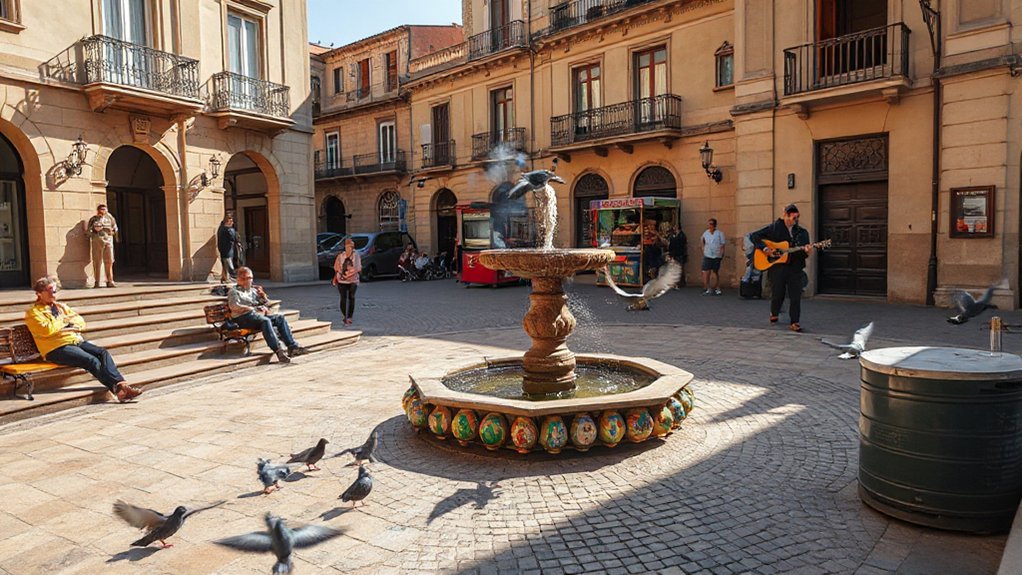
Starting with a plaza as a social stage, you can experience authentic culture by paying attention to how locals move through space, greet one another, and switch roles—from buskers to vendors to regulars. You’ll notice rhythms: the pace of conversations, the timing of shared glances, and who steps into leadership when a moment calls for it.
This is less performance and more social choreography, reflecting historical origins embedded in daily life. Observe how architectural styles frame encounters—benches, shade, arcades—shaping seat choices and lingering.
Sense how spaces invite participation, not spectatorship, as people shift from observers to interlocutors. Authentic experience emerges when you read subtle cues, respect unspoken norms, and remain present without forcing interaction.
How to Get Involved and Support Your Local Plaza
Getting involved with your local plaza starts with observation and small, consistent actions. You track how daily routines unfold: who gathers, when events peak, which roles sustain activity. Then you translate insight into action—volunteer for cleanups, assist with organizing, or help greet newcomers.
Prioritize inclusive participation, inviting voices from families, elders, and youth to shape programming. You support efforts that fuse commerce, art, and conversation, ensuring physical spaces invite lingering and exchange.
Measure impact with simple checks: attendance, feedback, repeat participation. Build partnerships with neighborhood associations, schools, and cultural groups to broaden reach.
Through deliberate participation, you reinforce community engagement and strengthen Cultural preservation, turning the plaza into a living archive rather than a static stage. Your steady involvement sustains momentum and meaning.
Frequently Asked Questions
How Has Plaza Culture Evolved With Modern Technology and Social Media?
You observe plaza culture evolving with digital engagement and social sharing, shaping rhythms and spaces. You notice nuanced connections, where live poetry, music, and debates intensify online, while anonymous posts spark micro-movements—you feel the pulse in real time.
What Legal Protections Support Informal Plaza Activities?
Like a net catching whispers, legal protections support informal plaza activities through frameworks and norms. You’ll see Legal frameworks and Community enforcement shape behavior, balance rights, and preserve spontaneity while addressing safety, access, and accountability in these shared spaces.
Are There Regional Differences in Plaza Etiquette Across Spain?
You’ll notice regional differences in plaza etiquette across Spain, reflecting regional customs and local traditions. You observe varied pacing, greetings, and seating norms, and you adapt respectfully, noting how regional customs shape conversations, sharing, and collective pauses in social spaces.
How Do Plazas Foster Entrepreneurship and Small-Scale Economies?
You wonder how plazas spur entrepreneurship, and they do, ironically thriving on crowds. You observe market stalls and local artisans turning social spaces into micro-economies, where you buy, barter, and network, fueling resilience with practical, informal, observable commerce.
What Safety Measures Exist for Large Plaza Gatherings?
You’ll notice security patrols and emergency protocols form the backbone of safety at large plaza gatherings. You stay aware, follow directional cues, report anomalies promptly, and rely on trained responders who coordinate with authorities to minimize risk.
Conclusion
In Spain, plazas aren’t mere spaces; they’re living classrooms of daily resilience. You can feel how social economies breathe here—informal markets, music, shared meals—yet struggles tempt isolation and drift. Observe how age, gender, and strangers share tables with practiced ease, a proof to adaptability. If you want to understand urban culture, linger, listen, and participate. Experience teaches faster than any guidebook, and the plaza’s pulse, fierce as a comet, shows how communities endure, reform, and thrive together.