
Start at Plaza Mayor and stroll east to trace Romanesque, Plateresque, and Baroque layers across façades, courtyards, and towers. Plan 4–6 km routes that link major portals, towers, and patios, using pedestrian zones and official maps for accessibility. Watch for uneven stone and weathered steps; wear supportive shoes. Photograph during the Golden Hour with careful white balance, and respect interior access rules. If you keep exploring, you’ll uncover how preservation, light, and history reveal Salamanca’s stone narrative.
Key Takeaways
- Start at Plaza Mayor and map a 4–6 km route that links major portals, towers, and patios with minimal backtracking.
- Visit Old and New Cathedrals, University façades, courtyards, and cloisters to understand architectural layering and stonework.
- Plan for uneven medieval surfaces, wear supportive footwear, and check pedestrian zones and accessibility with current city signage.
- Time shots during the Golden Hour, balance contrast with diffusers, and seek permission for interiors and people photography.
- Respect access rules, avoid touching stonework, minimize flashes, and extend exploration to chapels, theaters, and convent yards.
Why Salamanca’s Golden Stone Shines
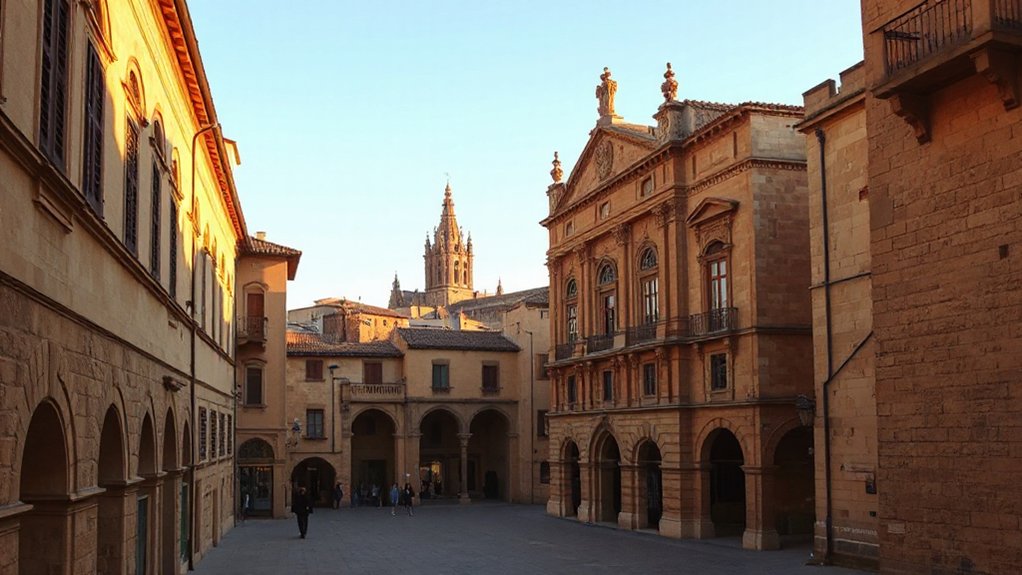
The golden hue of Salamanca’s stone derives from the local calcareous limestone, which absorbs and reflects sunlight with a warm, honeyed glow. You observe how mineral composition and porosity influence color saturation across façades, squares, and rooftops.
Historically, the stone’s durability and workability enabled intricate carvings, contributing to the survival of monuments through centuries of political change. Its light-absorbing properties reduce glare at certain times of day, while reflective moments heighten visibility of architectural details, enhancing legibility for viewers.
The material’s impact extends beyond function; cultural symbolism arose as the stone became a visual shorthand for regional identity, memory, and scholarly aspiration. In this context, the golden stone embodies historical significance and cultural symbolism, shaping Salamanca’s architectural narrative.
Plan Your Golden Walk: Best Route and Timing
From the golden glow of Salamanca’s stone, you can plan a compact, efficient route that foregrounds key monuments while optimizing light and pace. Begin at the Plaza Mayor, proceeding east along the Romanesque and Plateresque façades, then turn toward the University building complex.
Use morning light on facades facing east to reveal details in relief; late afternoon light enhances west-facing elevations. Favor walking routes that minimize backtracking and maximize continuity, linking major portals, towers, and patios within a walkable circuit of 4–6 kilometers.
Employ timing strategies to avoid peak crowds and capture soft shadows, especially near landmarks like the Old Cathedral and the New Cathedral’s exterior. Record durations between stops to maintain steady cadence, preventing fatigue while preserving photographic opportunities.
Must-See Architectural Landmarks for the Stone
Salt-waced stone dominates Salamanca’s skyline, and you’ll want to prioritize its most enduring landmarks: the Old Cathedral’s romanesque and Gothic shifts, the New Cathedral’s towering limestone façades, and the University’s grand Plateresque portals.
You assess must-see sites by architectural styles and historical significance, not mere aesthetics. The Old Cathedral exemplifies Gothic rib vaulting and early Romanesque proportions, illustrating evolving clerical commissions across centuries.
The New Cathedral pairs Baroque ornament with monumental massing and urban visibility, reflecting post-medieval civic ambition.
The University’s Plateresque façades fuse sculptural detail with integrated scholastic symbolism, signaling cultural ambition during Renaissance contact.
Emphasize historical preservation as you study stonework, cornice lines, and decorative programs. This approach clarifies how architectural styles converge to define Salamanca’s urban identity, guiding careful conservation and informed interpretation for visitors and scholars alike.
Lighting for Color-Perfect Photos: When to Shoot
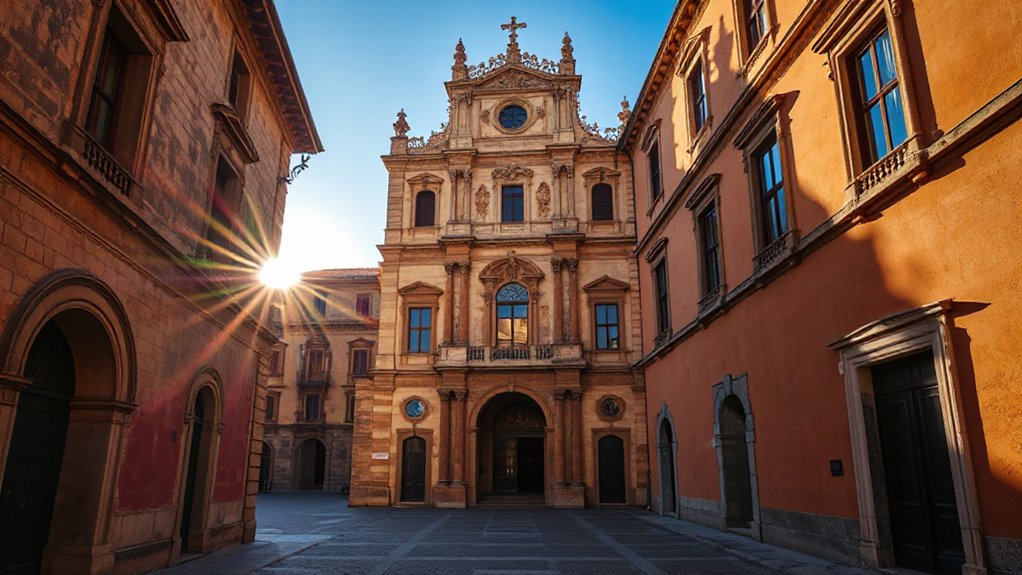
You’ll time your shots to the Golden Hour, when warm, directional light reveals architectural textures and color accuracy.
Employ Soft Light Techniques to temper shadows and retain detail across facades, windows, and ornamentation.
Consider Weather and Light Mood as a historical variable, since overcast skies or clear atmospheres alter color rendering and overall atmosphere.
Golden Hour Windows
What makes the golden hour windows in Salamanca decisive for color-perfect photography is how the low, oblique sunlight bathes façades, casting long shadows and warming stone hues. You observe façades reveal detailed texture in raking light, enhancing carvings and datum markers without excessive contrast.
The period’s directional illumination emphasizes golden limestone, enabling consistent color rendering across surfaces. To maximize outcomes, time your shoot with municipal clock adjustments, noting that sunrise reflections illuminate east-facing elevations while staying brief for safe framing.
In late afternoon, evening shadows deepen chroma on arches and cornices, preserving nuanced warm tones before dusk. This window yields balanced exposure, reducing blown highlights and muddy midtones, supporting accurate white balance.
Architectural study benefits from predictable color shifts and measurable light quality variations.
Soft Light Techniques
Soft light offers a diffuse, wraparound illumination that minimizes harsh shadows and preserves reliable color fidelity across architectural surfaces.
In Salamanca, you’ll study soft light techniques that emphasize even tonality on golden stone without blown highlights. Shoot in conditions where skylight wraps around façades, avoiding strong directional glare that exaggerates textures.
Use reflectors or diffusers sparingly to equalize contrasts between lit and shaded areas, maintaining clarity in stone grain and carved details. Consider the time surrounding overcast shifts or late afternoon afterglow to balance warmth with true color.
Monitor white balance closely to prevent color shifts in ochre and cream limestone. These practices support color enhancement while preserving historical materiality, aligning lighting techniques with archival documentation and precise restoration photography aims.
Weather and Light Mood
When planning color-accurate photography in Salamanca, the weather and light mood determine the palette and mood of every shot. You time exposures to the sun’s azimuth, noting how morning and late-afternoon angles accentuate golden stone bands and carved cornices.
Overcast days reduce contrast, producing even tonality and preserving subtleties in shadowed recesses, though you trade warm highlights for cooler color balance. In bright, sunlit conditions, you capture crisp textures and pronounced depth, but you must manage specular hotspots on polished surfaces.
Seasonal variations matter: summer haze can soften edges; winter skies yield cooler hues and higher dynamic range demands. Seek sunlit serenity for corridor views, cloudy charm for cloistered courtyards, and document the material’s true warmth without distortion.
Patios, Towers, and Hidden Details to Seek
Patios, towers, and hidden details reveal Salamanca’s architectural layering, from centuries-old courtyards and cloisters to the ascent of bell towers that punctuate the skyline.
You study how hidden courtyards emerge behind austere façades, offering shade, water, and microclimates that shaped daily life.
Observe ornate facades where carved stone and decorative tiles register stylistic evolutions between Romanesque, Gothic, and plateresque phases.
Consider how towers rise with measured proportion, their elevations signaling civic pride and scholarly legacy.
Focus on restraint in ornament, not excess, ensuring that each element serves structure and vision.
You note clerestory windows, corbel supports, and arcades that distribute weight while framing light.
These features collectively disclose Salamanca’s urban rhythm, institutional purpose, and enduring material fidelity to golden stone.
Practical Tips for Access and Etiquette
Access the sites early in the day to minimize crowds and guarantee access to key interiors. Noting that some buildings have restricted areas and timed tours.
As you visit, follow posted etiquette, keep voices low, and respect signage and roped-off sections to preserve fragile heritage.
Expect guidelines on photography, movement, and dress codes rooted in historical contexts and conservation practices.
Access Tips For Salamanca
Salamanca’s historic center is best traversed on foot or by occasional taxi, since many streets are narrow, cobbled, and restricted to vehicular traffic in areas of cultural heritage. You should plan routes using pedestrian-friendly avenues and signage near main plazas.
For arrival, consult visitor centers for current maps and accessibility notes, as well as seasonal changes to pedestrian zones.
Local transportation options include urban buses with stops near the university precinct and cathedral, though bikes may be restricted in core zones.
When approaching landmarks, allow time for staircases and uneven surfaces typical of medieval architecture.
Weather can affect footing on stone pavements, so wear supportive footwear.
Rely on official information to minimize detours and maximize efficient exploration of Salamanca’s architectural precincts.
Etiquette While Visiting
When visiting, follow quiet, respectful behavior in public spaces and at sacred sites; speaking softly, avoiding loud music, and refraining from photography where prohibited helps preserve the site’s integrity. You should observe access rules, mind signage, and respect restoration areas to minimize impact.
Cultural sensitivity guides interactions with locals and guides, recognizing historical context and architectural significance. Practice Photography etiquette by limiting flash, framing shots discreetly, and seeking permission when documenting individuals or vulnerable interiors.
Maintain orderly movement, avoid touching stonework, and store bags to prevent damage. Your conduct reflects scholarly respect for Salamanca’s golden stone architecture, ensuring preservation for future study and visitors.
- Respect access limits and signage at all times
- Seek permission and minimize disruption in interiors
- Observe cultural sensitivity in all interactions
Respectful Behavior Guidelines
To minimize disruption and protect historic fabric, visitors should follow practical access guidelines that govern movement, photography, and interaction with interiors. In Salamanca’s Golden Stone architecture, respectful behavior hinges on cultural sensitivity and preservation etiquette.
Move slowly in confined spaces, keeping to designated routes and refraining from touch unless explicitly permitted. Use quiet communication, minimize camera flashes, and avoid tripods in sensitive areas. Observe posted restrictions on photography, especially near altars, frescoes, or fabric elements.
Document impressions verbally rather than physically recording fragile surfaces. Supervised access and guided tours provide context; follow guides’ directions regarding standing, tethered ropes, or scaffold zones.
Refrain from food, litter, or vandalism, and report hazards promptly. These practices sustain authenticity, enable future study, and honor the site’s historical significance.
Nearby Gems to Extend Your Golden Stone Tour
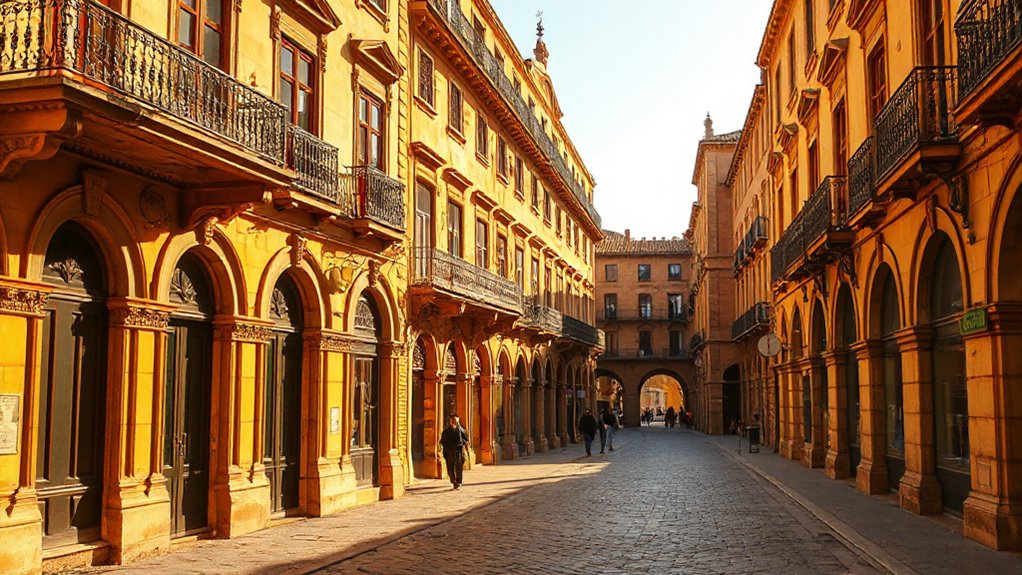
Nestled just beyond the core historic core, the nearby gems extend a Golden Stone Tour with accessible sites that complement Salamanca’s main monuments. You’ll encounter modest chapels, civic theaters, and conventual yards where medieval and Baroque layers survive in careful relief. These locations preserve architectural coherence while offering focused context for urban development, religious patronage, and civic governance.
The experience highlights street patterns, elemental stonework, and the interplay of light on façades, aligning with precise historical terminology. Expect notes on preservation statuses, restoration timelines, and provenance of sculpture and tilework. Local cuisine and cultural festivals surface in the social backdrop, enriching interpretation through tangible communal traditions and periodic celebrations that echo the city’s maritime, agricultural, and scholarly exchanges.
- Historic chapels and civic spaces
- Convent and monastery precincts
- Small theaters and architectural courtyards
Frequently Asked Questions
Are There Best Times of Year to See Salamanca’s Stone Glow at Sunset?
Yes. In Salamanca, seasonal lighting peaks near late spring and early autumn, when skies clear for sunset views; you’ll witness warm, golden hues bounce off limestone. Allocate golden-hour windows for ideal sunset views and photography.
How Long Does a Comprehensive Golden Stone Tour Typically Take?
A thorough golden stone tour typically takes about 2.5 to 3.5 hours. You’ll study Historical preservation, note Architectural details, and gain context, pacing through interiors and facades while guided by verified sources and local expert insights.
Can You Access Interior Courtyards Not Listed in Guides?
You can’t assume private access to interior courtyards; many Hidden courtyards aren’t open to the public. Like a locked manuscript, private access remains restricted, requiring official permission, documentation, or guided scholarly programs to visit safely and legally.
What Makes Certain Façades Glow More Vividly Under Midday Light?
Certain façades glow more vividly at midday thanks to architectural lighting interactions with stone material properties—high quartz content and honeyed limestone reflectivity amplify warmth. You observe texture, grain, and aging, noting how sunlight angles emphasize historic detailing.
Are There Walking Tours Focused on Less-Known Golden Stone Works?
Yes, you’ll find tours highlighting hidden gems and lesser known facades, though organizers hedge their bets on certainty; you’ll still discover remarkable details, documented architecture, and the city’s golden stone narrative through well-planned itineraries.
Conclusion
Salamanca’s golden stone dazzles not because it’s timelessly perfect, but because you’re primed to misread perfection as permanence. As you chase sunlit façades, remember the builders’ methods and commissions were as contingent as today’s tourism trends. The glow may flatter, yet the real lesson is fragility: carved narratives fade when misused or overwhelmed by crowds. So observe, document, and move with measured reverence—lest your selfie erases the history you came to study.