
Drive Spain’s mountain routes with caution: expect tight switchbacks, blind bends, and narrow lanes, so brake early, use engine braking on descents, and keep a steady, predictable pace. Choose a capable vehicle, check tires, fluids, lights, and spare parts, and pack an emergency kit, water, and warm clothes. Plan routes around fuel, rests, and potential closures, and stay alert for wildlife and changing weather. Slow down in villages and near schools; more tips await if you keep exploring.
Key Takeaways
- Plan routes with fuel, breaks, and contingencies; pack extra fuel and carry an emergency kit for remote mountain stretches.
- Choose a capable vehicle with good ground clearance, reliable tires, and functioning safety features; check fluids, belts, and tools.
- Brake early and smoothly, use engine braking on descents, and maintain steady speeds with ample following distance.
- Adapt to fog, low visibility, and altitude; use headlights, monitor instruments, and take breaks when fatigued.
- Drive slowly through switchbacks and narrow lanes, yield to larger vehicles, and stay vigilant for wildlife, cyclists, and pedestrians.
What Makes Spain’s Mountain Passes Risky
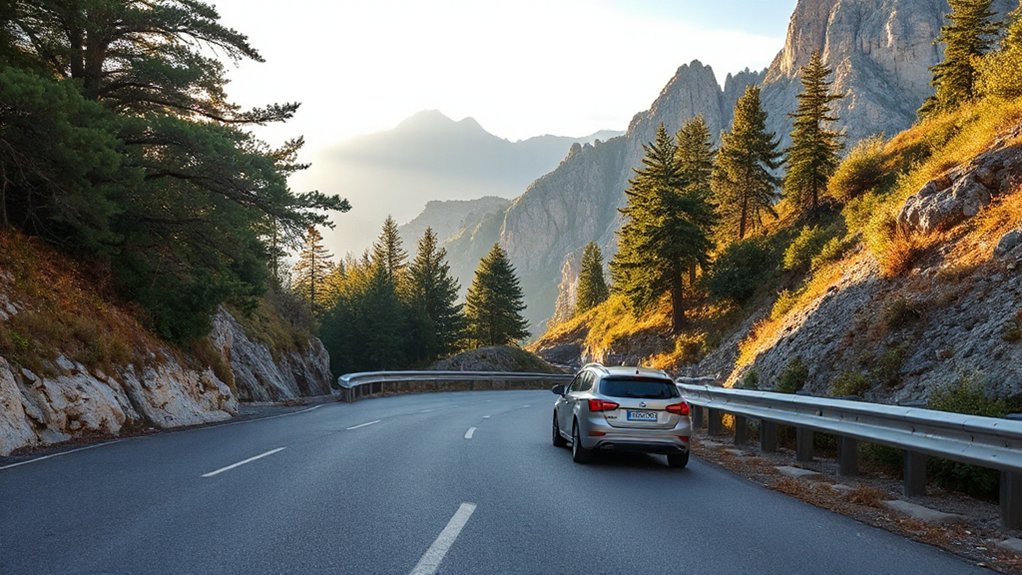
Spain’s mountain passes pose real hazards: tight switchbacks, sudden weather shifts, and limited guardrails demand careful, deliberate driving. You’ll face blind bends, dropping grades, and unexpected debris after a rain.
Narrow lanes leave little room for error, so you slow for every curve and mirror check before hugging the apex. Wildlife crossings appear where you least expect them, so scan shoulders and use headlights at dawn or dusk.
Weather can flip in minutes, turning dry tarmac slick or foggy; keep a steady pace, increase following distance, and avoid abrupt lane changes.
Road signage may be terse but essential—observe warnings, speed advisories, and exit cues. Stay alert, plan routes, and respect local closures to minimize risk.
Choosing the Right Vehicle for Spain’s Alpine Routes
Choosing the right vehicle makes a big difference on Spain’s alpine routes. You’ll benefit from a model that handles steep grades, tight passes, and variable weather without extra effort.
Prioritize drivetrain, ground clearance, and cargo practicality to stay prepared for climbs, switchbacks, and detours. Luxury sedans can offer comfort and stability, but you may prefer a higher stance for visibility.
Electric vehicles deliver quiet, efficient performance, though you’ll plan charging stops around long climbs. Choose a vehicle that balances power, range, and reliability.
- Assess drivetrain and horsepower for sustained climbs
- Confirm ground clearance and suspension suit rough alpine surfaces
- Verify charging infrastructure or fuel strategy for your itinerary
Keep safety features active, and tailor choices to your route, weather, and duration.
Braking and Speed on Switchbacks Explained
On switchbacks, you’ll use steady braking to control your pace before corners and coast as you exit.
Keep your speed in check with smooth, deliberate inputs and plan descent pacing with tired, constant pressure on the brakes when needed.
We’ll cover braking techniques on switchbacks, speed management for curves, and practical descend-safe pacing strategies as you proceed.
Braking Techniques On Switchbacks
When you approach a switchback, brake early and smoothly to control your speed, then accelerate gradually as you exit the turn. You’ll maintain traction by using steady pressure and avoiding abrupt inputs. Stay relaxed, look ahead, and anticipate the next change in direction.
Road signage nearby can cue grade, distance, and exit points, so scan early and confirm your plan. Wildlife crossings may appear unexpectedly; reduce speed and be ready to stop if an animal steps onto the road.
- Brake smoothly before the apex, and release as you roll through the turn.
- Use engine braking on steep descents to prevent overheating.
- Accelerate gently after the crest to stabilize balance.
Tip: keep doors closed and lights on in low visibility.
Speed Management For Curves
Braking and speed on switchbacks demand deliberate control: slow early, smooth through the curve, and resume power only as you’re straightening out. You’ll manage curves by easing off well before the apex, then roll onto the throttle as you straighten. Keep hands steady, eyes up, and anticipate how the road tightens ahead.
Brake in a straight line whenever possible, avoiding late, abrupt deceleration that can unsettle the vehicle. Use lower gears to assist control on steep climbs or descents, and never brake too hard while turning.
Watch for wildlife crossings and adjust speed accordingly; animals can emerge suddenly. Follow roadside signage for curve radii and recommended speeds, and maintain a conservative margin for oncoming traffic and blind corners.
Descend Safe Pacing Strategies
Descend safely by prioritizing controlled braking and steady pacing on every switchback. You’ll maintain grip and predictability by easing off early, downshifting smoothly, and avoiding abrupt steering. Let visibility guide your pace, and stay within your lane as you navigate tight turns. Stay mindful of changing road surfaces, guardrails, and potential wildlife near mountain flora. Expect slower speeds near villages and pull-outs where local cuisine smells tempt you to linger—resist the distraction and keep moving.
- Apply gentle, progressive braking before entering bends; avoid late braking.
- Downshift early and maintain a steady throttle to stabilize weight transfer.
- Use brake accrual on long descents, then release to recover heat and prevent fade.
Stay prepared, observe the scenery, and respect the mountain’s rhythm.
Weather, Visibility, and Altitude: What Changes on the Road
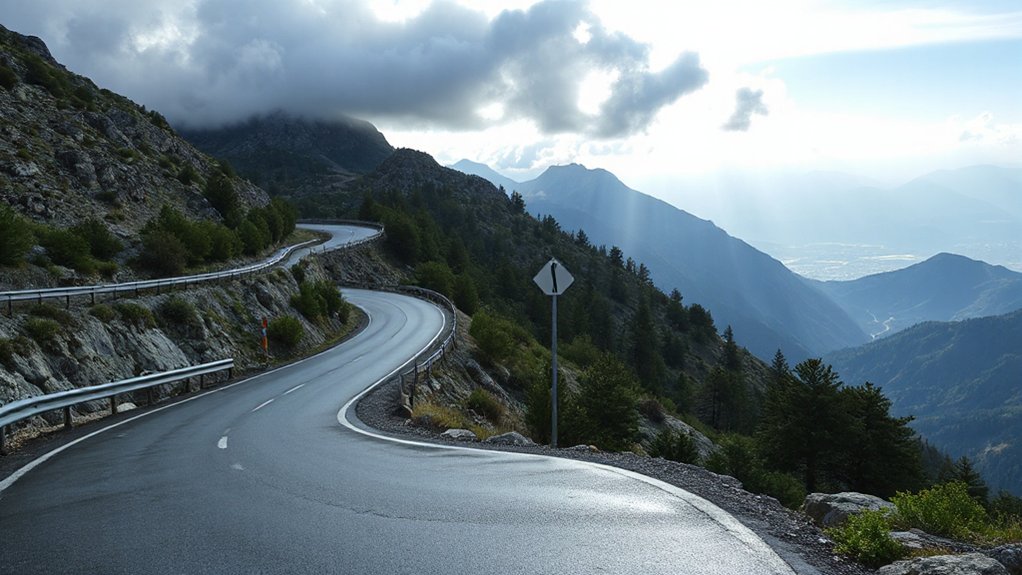
Weather can drop visibility quickly and altitude can sharpen or mute engine response, so plan for changing light, mist, and thinner air.
You’ll notice fog on early mornings and higher elevations, as well as drier asphalt on exposed ridges—adjust speed and following distance accordingly.
Stay alert to sudden weather shifts and use your headlights and instruments to maintain safe, steady progress.
Weather-Induced Visibility
When visibility drops in Spain’s mountains, slow down and increase following distance—hills, sharp bends, and fast-moving fog can turn a short stretch into a dangerous stretch in an instant. You’ll protect yourself and others by choosing lights appropriately, using road signals, and scanning far ahead for hazards like wildlife crossings and unexpected roadside signage.
1) Slow to a safe speed and maintain generous space to react.
2) Use low beams or fog lights as needed, and refresh your focus every few seconds.
3) Read roadside signage early and anticipate changing conditions around bends.
Weather-induced visibility shifts demand steady hands and disciplined judgment. Stay patient, stay observant, and respect the mountain’s tempo.
Altitude-Related Driving Conditions
Altitude changes alter more than scenery; they affect air and road conditions, speed perception, and how your vehicle performs. As you climb, thinner air can reduce engine power, braking effectiveness, and cooling, so anticipate longer stopping distances and gentler throttle inputs.
Weather shifts quickly in high passes—fog, drizzle, or sudden rain can create slick surfaces and glare from low sun. Altitude sickness isn’t just a health concern for passengers; fatigue and dizziness can impair your focus, so stay hydrated and take short breaks if you feel off.
Watch road signage for lane reductions and switchback warnings, and honor them even when visibility improves. Stay conservative on curves, adjust for reduced air density, and prioritize safe, steady driving over haste.
Reading Spain’s Mountain-Road Design and Etiquette
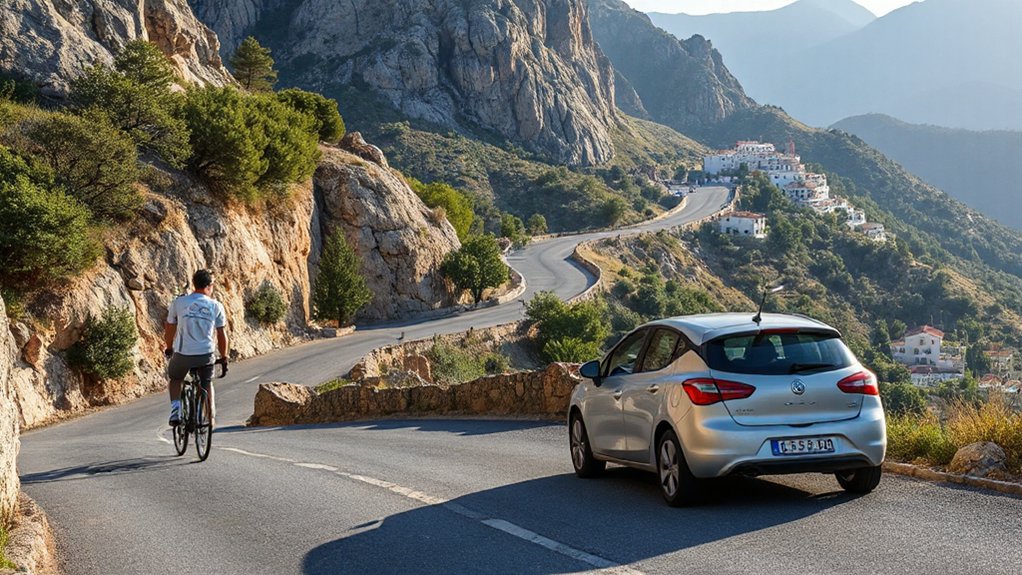
Reading Spain’s mountain roads isn’t just about staying alert; you’ll also need to understand how the design and etiquette shape every drive. You’ll notice that narrow lanes, sharp switchbacks, and frequent pullouts require slow, deliberate moves and anticipation of oncoming traffic. Mountain road signage guides you through hairpins, grade changes, and seasonal closures, while local driving customs influence passing etiquette and yielding behaviors.
Stay within posted limits, use lower gears on descents, and keep a steady throttle to minimize brake heat. Being predictable keeps everyone safer.
- Observe, don’t assume, and signal early when approaching bends.
- Yield to larger vehicles at narrow sections; use pullouts when safe.
- Watch for cyclists and livestock; reduce speed in villages and near schools.
Planning Safe Routes: Fuel, Rest, Emergencies, and Contingencies
If you’ve been reading Spain’s mountain-road design and etiquette, you’ve seen how narrow lanes and tight switchbacks demand planning. In this subtopic, you map your route with fuel, rest, and contingency needs in mind, so you’re never caught short or stressed.
Pack extra fuel for remote stretches and know where you’ll refuel before climbs or long descents. Plan regular breaks to stretch and stay alert, especially after dawn or foggy starts.
Keep a small emergency kit, water, and a light, portable charger in reach. Note wildlife crossings as you approach villages or forested passes, and slow accordingly.
Rely on clear roadside signage to confirm turns, hazards, and detours, and adjust your plan if signs indicate closures.
Vehicle Prep and Up-to-Date Safety Gear for Alpine Driving
Before you hit the road, confirm your vehicle and gear are ready for alpine conditions: full fuel, antifreeze at the proper level, and tires suited for mountain terrain with adequate tread and correct pressure for temperature changes. You’ll rely on up-to-date safety gear to handle sudden weather shifts and isolated stretches.
Check tire maintenance, spare parts, and lights, and keep an emergency kit within easy reach. Pack high-visibility vests, a flashlight, and reflective triangles. Keep cables or a scraper handy for icing mornings.
- Tire maintenance checks and pressure adjustments based on temperature
- Emergency kit contents and accessibility
- Vehicle fluids, spare belt, and a basic tool set
Quick Pre-Drive Drills and a Final Safety Checklist
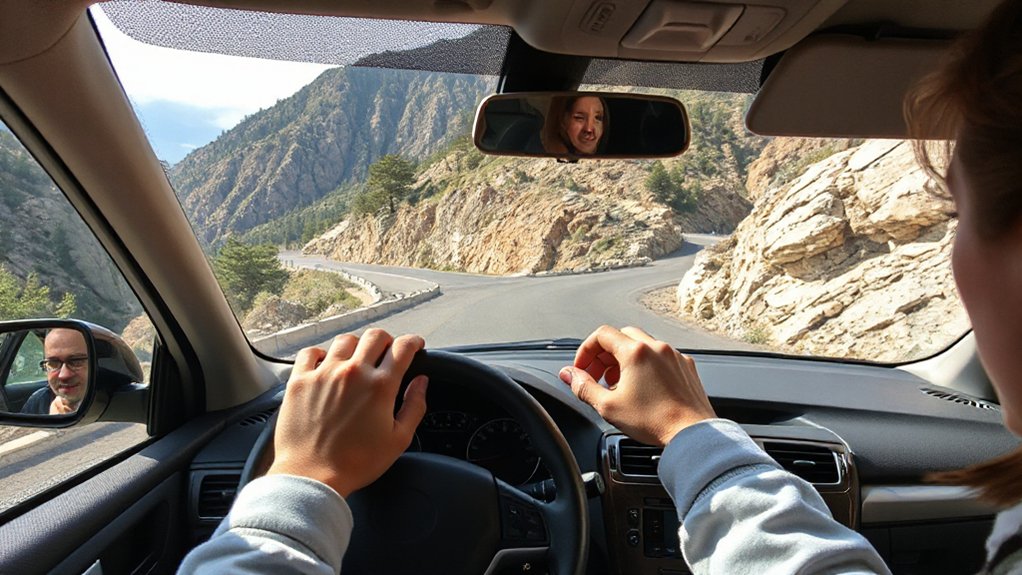
Quick pre-drive drills set the tone for a safe mountain ride: run a rapid, no-nonsense check of lights, brakes, and steering, then confirm mirrors and tires sit within proper tread and pressure ranges for the day’s temps. You’ll want to verify wipers, fluid levels, and emergency kit, too, before you roll toward alpine curves.
As you start, scan for mountain wildlife and unexpected livestock near bends, and keep speed steady on shaded, slick patches. Maintain a safe following distance, use lower gears on steep descents, and test ABS with gentle braking where needed.
Final safety checklist: seat belt, door locks, GPS/phone hands-free setup, and weather updates. While you pause at scenic viewpoints, refocus, then proceed with calm, deliberate driving.
Frequently Asked Questions
How Do Mountain Weather Changes Affect Tire Performance?
Tire tread degrades in cold, wet mountain air, reducing grip; you must adjust speed and braking. Weather adaptation matters: check temps, tread depth, and road spray. Keep tires properly inflated for ideal traction and instant response.
What Warning Signs Indicate Rockfall or Landslide Risk?
Rockfall warning and landslide signs aren’t dramatic flair; they’re real. You’ll notice fresh cracks, exposed rock, shifting soil, and sudden dust. If you see this, slow, stop if safe, and avoid unstable slopes. Stay vigilant, prepared.
Can You Legally Drive With Snow Chains in Spain’s Alps?
Yes, you can drive with snow chains in Spain’s Alps, but follow Winter tire regulations and snow chain requirements, and carry appropriate equipment. Check road signs, fit chains on snowy grades, and adapt speed before resolution of conditions.
How Should You Handle Fog Banks on Narrow Passes?
Under a cloud of fog, you slow and use fog navigation, headlights on low beam. In Narrow pass tips, pull aside if visibility collapses, reduce speed, and follow lane markings; keep steady, signal early, and stay focused.
What Are the Best Times to Avoid Avalanche Zones?
You should avoid avalanche zones during peak‑sun hours and after fresh snowfall. Avalanche safety matters, monitor forecast updates, and adjust plans quickly when mountain snow conditions deteriorate; prioritize safe routes and travel windows to minimize risk.
Conclusion
You’ve got the tools now to handle Spain’s mountain passes, so stay sharp and prepared. Remember: switchback brakes demand steady control, not speed, and a well-fueled, well-maintained vehicle is your best defense against sudden hazards. One striking stat: mountain highways see more than 40% of inland crash severe injuries due to high-velocity turns and sudden weather shifts. Keep a calm pace, plan rest stops, and carry essentials so you arrive safely—every time.