
To discover Castilla y León’s medieval heritage, follow purposeful routes that link castles, cathedrals, plazas, and monastic networks, revealing how power, faith, and trade shaped everyday life. Read the townscapes for clues in street layouts, heraldry, and market sites, and notice fortress-lineages and hilltop churches that mark strategic priorities. Explore preserved interiors, inscriptions, and artworks to trace patronage and craft networks. A week-long plan maps gateways, vantage points, and seasonal openings—more layers await as you continue.
Key Takeaways
- Explore a network of medieval monuments, cathedrals, castles, and churches across Castilla y León to trace patronage, trade, and religious influence.
- Follow townscapes, market squares, heraldry, and roadways to read social hierarchy and economic priorities through time.
- Visit museums and archives to access artifacts, inscriptions, and manuscripts that illuminate daily life and craft guilds.
- Study architectural features such as gatehouses, towers, cloisters, and capitals to date buildings and reveal patronage.
- Combine ruins, legends, and parish records with digital resources to build a layered, credible picture of regional heritage.
What Makes Castilla Y León a Medieval Treasure
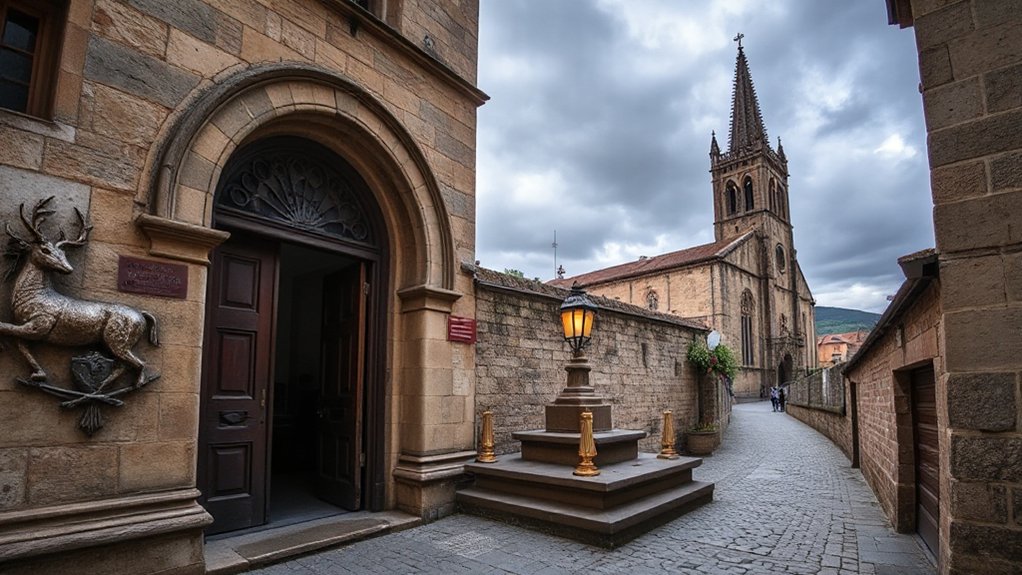
Castilla y León stands out as a medieval treasure because it preserves a dense, interconnected web of monuments, routes, and cultural practices that collectively reveal the era’s political, religious, and artistic forces. You trace this fabric through royal pacts, monastic networks, and fortress-lineages that shaped interregional authority and daily life.
The region’s landscape encodes continuity and change, from Romanesque churches to early Gothic cathedrals, each site validating archaeological and textual evidence of patronage, pilgrimage, and trade. You observe how medieval festivals animate town squares, reenacting rites and markets that unified diverse communities under shared memory.
Heraldic symbols pepper urban and rural spaces, signaling lineage, alliances, and legitimacy. Context, sources, and fieldwork together confirm Castilla y León’s role as a living archive of medieval power and culture.
How to Read a Medieval Town: Architecture Clues
You’ll start by noticing how street layouts and building placements reveal medieval planning, from defensible domains to market-centric cores.
Architectural clues like gatehouses, tower silhouettes, and arcades help date neighborhoods and indicate authority, commerce, or monastic influence.
As you observe, connect these features to their social contexts, so you can infer purpose and power behind each street and block.
Architectural Clues Unveiled
Architectural clues are your most reliable guide to a medieval town’s rhythm and history: you can read its chronology in layout, material choices, and the way space is organized. You assess structural logic by wall thickness, window placement, and progression between public and private domains.
Through vaulted ceilings and masonry joints, you trace technological shifts and labor organization, while defensive elements reveal sociopolitical tension. Context matters: towers, chapels, and granaries align with trade routes and patronage networks, reflecting economic cycles.
Evidence surfaces in inscriptions, heraldic symbols, and reused stones, linking architecture to identity and memory. Note how kitchens and guild spaces shape daily life, hinting at Medieval cuisine without detailing recipes.
You synthesize these signals to interpret the town’s evolving landscape and governance.
Street Layout Signals
Street layouts encode a town’s priorities as clearly as stone and timber. You examine how streets align with defensible sites, market hubs, and religious precincts, revealing planning intent beyond ornament.
Street patterns expose circulation logic: grid fragments signal civic confidence, while irregular skeins hint at organic growth and topography constraints. You assess block geometry, width, and sightlines to gauge traffic aims, whether promotes pedestrian flow, livestock channels, or ceremonial processions.
Signage symbols, when present, reinforce function—wayfinding, tolls, or guild boundaries—offering documentary echoes in stone and plaster. Contextually, medieval Castilian towns often cluster around a central plaza, radiating outward to peri-urban workspaces; streets then map social hierarchy and economic priorities, transforming archival interpretation into spatial evidence.
Castles You Can’t Miss in the Region
Castles in Castilla y León offer tangible evidence of medieval power and daily life, with each fortress revealing its own strategic logic, construction era, and evolving role in border defense and governance. You’ll examine sites like the hilltop fortress whose concentric rings show military adaptation, and the riverside strength whose gatehouses defend trade routes.
You’ll assess masonry techniques, fortification silhouettes, and the functions they served—from deterrent to administrative hub. Medieval cuisine and Castle legends surface in contemporaneous archives, kitchens, and storytelling, helping you contextualize life beyond stone.
You’ll compare defense architectures across provinces, noting how geography shaped siting and access. In every visit, you’ll translate stones into social history, distinguishing durable evidence from legend while tracing regional medieval networks.
Cathedrals and Churches That Define the Era
You’ll see how Gothic arches trap light to shape space, guiding the eye upward and signaling a shift in medieval aesthetics.
The monastic impulse leaves a mark in cloisters and sculpture, revealing how devotion and daily life intersect in stone.
Portal sculptures and totems compress meaning into their figures, offering concrete evidence of both artistry and belief shaping Castilla y León’s churches.
Gothic Arches And Light
Gothic arches in Castilla y León define a luminous, vertical language that transformed sacred space: pointed vaults and ribbed ceilings draw the eye upward, while rose windows and tall chancels flood interiors with filtered light. You’ll notice how structural ribs delineate weight and direction, creating legible tiers that guide perception from nave to apse.
The architecture couples technical prowess with symbolic aims, embodying Light symbolism through apertures that puncture darkness and temper illumination. In chapels and transepts, buttresses articulate exterior poise while interior spaces gain permeability, rhythm, and breathing room.
Contextually, these features respond to religious reform and liturgical needs, aligning form with ritual duration. This analysis supports identifying Gothic architecture as more than style: a crafted instrument for experiential ascent.
Monastic Influence And Sculpure
Monastic patrons and monastic-rich networks shaped Castilla y León’s cathedrals and churches as much as secular power did, aligning sacred architecture with liturgical life and communal identity. You’ll examine how monastic architecture concentrates spatial hierarchy around choirs, cloisters, and ambulatory routes, reinforcing disciplined worship while signaling prestige.
The evidence shows commissioning patterns that linked abbots, priories, and monastic estates to urban growth, creating a network influence that rivaled lay patrons. Sculpture techniques reveal stylistic continuities with regional traditions, yet adaptives respond to liturgical functions, pedagogy, and pilgrimage.
You’ll note how preservation strategies preserve sculptural programs, inscriptions, and capitals as textual sources for reform-era ideas and monastic reform movements. Contextually, these configurations illuminate power, piety, and memory, shaping the era’s visual language beyond royal commissions.
Portal Sculptures And Totems
- Narrative reliefs depict saints, miracles, and royal charity.
- Visceral motifs contrast judgment with mercy.
- Statuary reinforces patronage and political legitimacy.
- Ornamental archivolts frame doctrinal programs.
- Iconographic cycles synchronize liturgical seasons with memory.
Context anchors interpretation: construction phases reveal workshop practices, regional styles, and the evolution of sacred space. You read evidence in weathered stone, linking Medieval symbolism to daily worship and communal memory.
Portal sculptures. Portal sculptures.
Towns Where History Lives in Every Alley
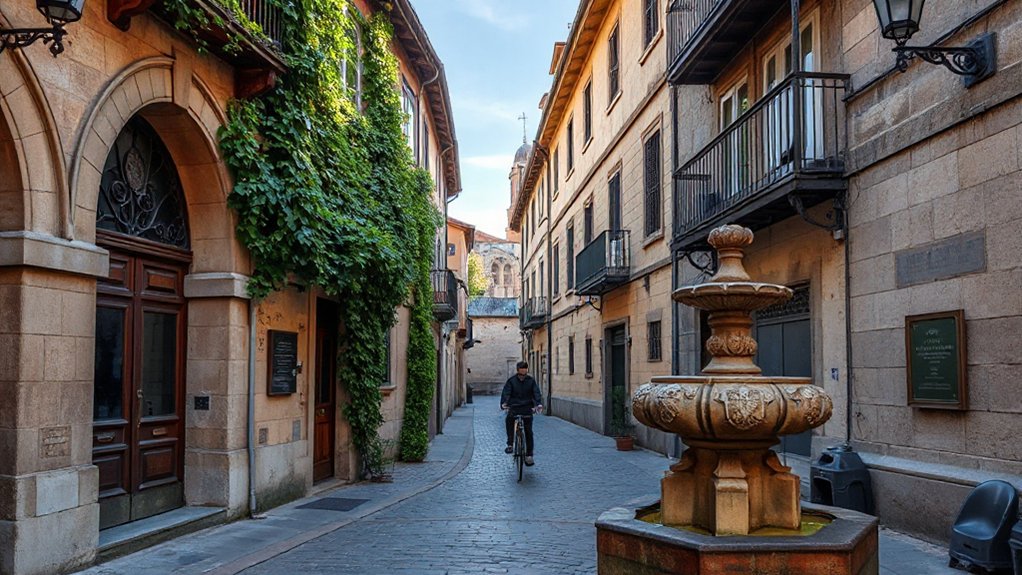
Towns in Castilla y León reveal history at every turn, with narrow lanes, stone houses, and hilltop churches that bear witness to centuries of change. You walk these streets as a historian in motion, tracing urban layers through mapped continuity and abrupt disruptions. The evidence converges in plazas, arcades, and preserved façades, where architectural strata align with documentary records and oral memory.
You note how medieval cuisine surfaces in market routines and tavern signs, connecting daily life to durable traditions. Town legends echo through place names, carved heraldry, and festival calendars, offering corroborating cues for change over time.
Contextual analysis shows how geography, economy, and governance sculpted distinct townscapes, while proximity to routes and monasteries intensified cultural exchange and resilience.
Hidden Villages With Centuries of Stories
Hidden villages across Castilla y León preserve centuries of stories tucked into quiet lanes, faded heraldry, and roadside chapels that many maps overlook. You’ll notice how narrow paths encode memory, with stone walls bearing marks of medieval farming and shared fields that shaped daily life. The evidence sits in chapel frescoes, ruinous arched gateways, and stubborn poppy fields that survive droughts and dynasties.
- Ancient threshing rings near windblown hedges
- Legends etched in faded coats of arms
- Sun-bleached milestones marking parish boundaries
- Field layouts revealing collective cultivation cycles
- Local voices recounting village legends around winter fires
You assess sources critically, triangulating oral tradition with ruin geometry and parish records. The portrait is contextual, not romantic: hidden villages reveal a continuous social fabric rather than isolated curiosities.
Museums and Archives for Authentic Context
Museums in Castilla y León shape what you consider authentic medieval life by presenting curated narratives and material evidence. Archives provide the documentary context that sharpens your interpretation of artifacts and monuments.
Together, they offer the evidentiary backbone you need to anchor discoveries in real histories.
Museums That Inform
Relying on carefully curated collections and archival access, museums and archives in Castilla y León provide the authentic context needed to interpret medieval heritage. You’ll assess how displays translate evidence into understanding, focusing on material culture, provenance, and narrative framing.
The approach is analytical: each artifact interrogates context, provenance, and function, not just ornament. You’ll see how Medieval cuisine informs daily life and how heraldic symbols reveal power networks, loyalties, and lineage.
The best collections juxtapose artifacts with documentary sources, guiding you toward inferred practices and social structures. Your observations should balance objectivity with interpretive caution, avoiding speculation when evidence is thin.
- Curated artifacts and manuscripts
- Provenance and dating methods
- Contextual labels linking daily life
- Heraldic symbols and lineage
- Comparative regional displays
Archives For Context
How do archives sharpen context for medieval Castilla y León? You examine records, inventories, and correspondence to uncover governance, land tenure, and religious networks that shaped daily life.
Archives provide a scaffold for interpretation, anchoring artifacts and narratives in verifiable provenance and dates. You assess archival provenance, cataloging practices, and cross-references with chronicles, court rolls, and charters to distinguish legend from demonstrable fact.
Digital preservation secures fragile manuscripts and enhances searchability, enabling targeted comparisons across collections. Archival research reveals gaps, biases, and regional variation, guiding you to credible interpretations rather than generalized myth.
Authentic Medieval Artifacts
When you seek credible context for medieval Castilla y León, authentic artifacts in museums and archives anchor interpretation in material evidence and provenance, not conjecture. You evaluate objects through provenance records, dating methods, and contextual notes, distinguishing replicas from originals.
The emphasis falls on how artifacts reveal Medieval metallurgy, and how artisan craftsmanship shaped everyday life and grand commissions. You compare metalwork, tools, coins, inscriptions, and textiles to reconstruct workshops, trade routes, and patronage networks with disciplined sourcing and conservation principles.
- Provenance trails and dating notes illuminate ownership and period
- Metalwork analysis demonstrates medieval metallurgy techniques
- Tools and implements reveal workshop organization and labor division
- Inscriptions, stamps, and marks verify origin and operator identity
- Craftsperson signatures illustrate artisan craftsmanship and reputation
Seasonal Timing: When to Visit for Atmosphere
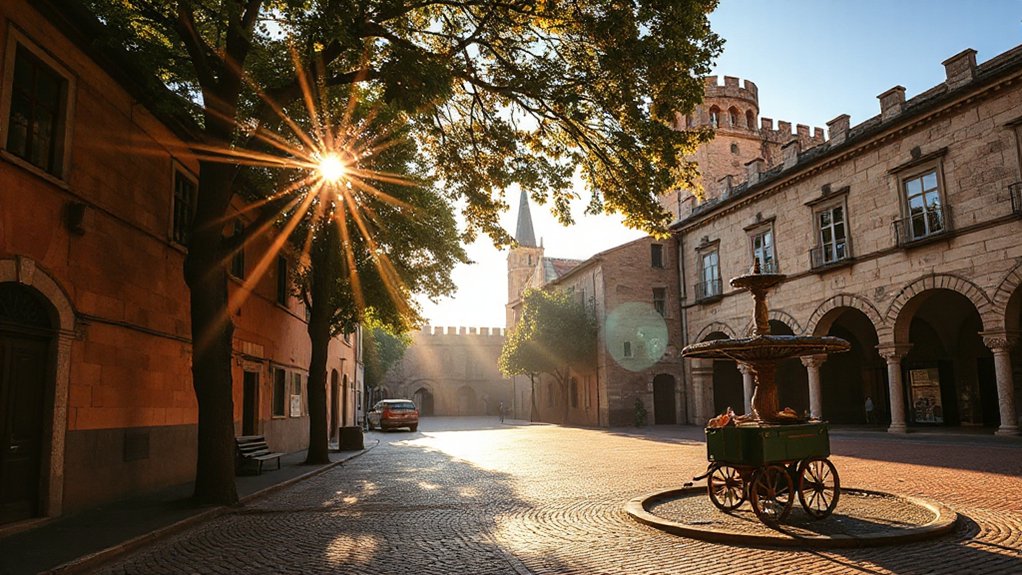
Seasonal timing shapes the atmosphere you’ll encounter across Castilla y León, influencing everything from crowds to illuminated monuments. In spring and early summer, you’ll find temperate days that enhance open-air explorations of fortress walls and monastic cloisters. Yet peak crowds can dilute the sense of quiet contemplation.
Autumn brings cooler air and shorter daylight hours, sharpening the contrast between stone and sunset, which deepens the perceived antiquity of sites. Winter, though capricious, often grants solitary access to major landmarks after dusk, when lighting creates dramatic silhouettes and enhanced acoustics around chapels.
Consider how Medieval cuisine emerges in seasonal markets and taverns, revealing usage patterns tied to harvests. Castle legends gain resonance when you time visits to local festivals, aligning narrative heft with atmospheric authenticity.
Practical Planning: Transport, Lodging, and Pace
Effective planning ties transport logistics, lodging options, and pacing to your itinerary, so you can balance time on the road with meaningful medieval site visits. You’ll evaluate travel modes, access to towns with Renaissance and Romanesque cores, and how lodging choices affect morning starts and museum hours.
Transport Logistics Overview
Castilla y León is a large, multi-modal travel challenge, so you’ll want a clear plan that matches your itinerary and pace. Transport logistics here demand multimodal awareness, timed connections, and flexible routing to minimize backtracking. You’ll balance high-speed rail, regional buses, and car access to reach medieval hubs, avoiding overload on peak days.
Energy, costs, and environmental considerations matter as you map distances between castles, towns, and markets. Expect variable infrastructure outside major cities, with slower speeds on winding routes. Use modern apps for real-time updates, and keep a buffer for weather shifts.
Medieval cuisine and castle architecture often cluster near rail nodes, guiding your pacing and stops.
- Plan rail-to-bus handoffs around core routes
- Allocate time buffers for rural detours
- Check seasonal service variations
- Prioritize energy-efficient options
- Pack compact, versatile gear
Lodging Options Guide
What lodging fits best with multimodal travel and medieval itineraries? You’ll prioritize location, price, and access to rail, bus, and car routes that weave between heritage sites.
Opt for midrange inns or boutique hotels near historic cores to minimize detours and maximize daytime site time. In Castilla y León, look for establishments that clearly disclose parking options, walking proximity to monuments, and reliable wi‑fi for research breaks.
Seek hosts or staff who can share local dining tips, linking Medieval cuisine with nearby markets. Consider properties with conservation credentials, supporting heritage preservation through responsible practices.
Your choice should balance authenticity with comfort, ensuring you’re rested for dawn departures to cathedrals, castles, and monastic ruins, while avoiding unnecessary detours that inflate travel time and expense.
Pace and SchedulingTips
To plan efficiently, map your day around a core route that links major medieval sites with reliable transit windows, then build flexible buffers for unforeseen delays or openings at monuments. You’ll benefit from pacing that prioritizes high-density clusters, using verifiable timetables and seasonal schedules to reduce wait times.
Consider how Medieval cuisine influences meal timing and rest breaks, and how heraldic symbols affect admission periods at certain facilities. Track evidence-based dwell times at each site, and adjust as data suggests.
Balanced itineraries minimize fatigue and maximize reliability, especially when weather or crowding shifts accessibility. Maintain a concise log to compare planned versus actual times, refining future routes.
- Core route linking sites
- Verified transit windows
- Timely meal and rest breaks
- Dwell-time benchmarks
- Evidence-based adjustments
Savvy Budget Tips to Explore Medieval Sites
Smart budgeting can open access to some of the region’s most storied sites without sacrificing depth. You’ll maximize value by prioritizing UNESCO-listed terminals, municipal museums, and monastery complexes with low entry fees or free days. Assess combo passes that bundle multiple sites; they often reduce per-site costs while widening context.
Travel in shoulder seasons lowers fares and crowds, aiding a slower, more reflective read of medieval spaces. Seek official city or regional tourism pages for discounts tied to student, senior, or family groups, and combine public transport with walking to absorb architectural details up close.
When you contextualize observations, you’ll notice medieval fashion influences in attire and daily life, and heraldic symbols carved into façades, gates, and tombs, clarifying social hierarchies. Evidence-based planning yields richer experience at prudent cost.
Guided vs. Self-Guided Experiences: What to Choose
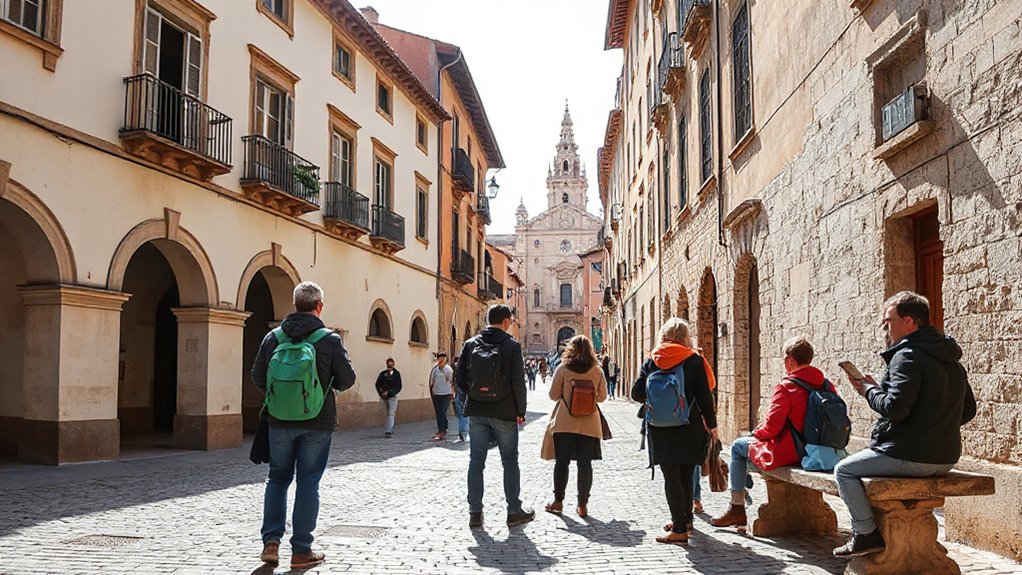
Choosing between guided and self-guided tours hinges on how you weigh structure against spontaneity. With evidence suggesting guided options boost access to obscure sites and contextual storytelling.
You’ll weigh your itinerary against time, budget, and learning style. Noting that self-guided routes offer flexibility but may miss nuanced histories.
This discussion frames how to balance efficiency, depth, and your personal pace when planning your Castilla y León discoveries.
Guided or Self-Explore?
Guided tours offer structured exposure to Castilla y León’s medieval heritage, ensuring you don’t miss key sites or stories even if you’re short on research time. You’ll gain context through curated routes, expert insights, and consistent pacing, which helps you compare eras efficiently.
Self-exploration offers flexibility, enabling deeper dives into personal interests like medieval fashion or legend storytelling, but it demands planning and discernment to avoid gaps.
The choice hinges on time, learning style, and budget, with hybrid options blending guidance and autonomy. Informed travelers often combine concise tours with self-guided detours to optimize both breadth and depth.
- Structured route vs. spontaneous discoveries
- Expert narration vs. independent interpretation
- Time efficiency vs. customization
- Core sites vs. niche interests
- Historical context vs. vivid storytelling
Choosing Your Itinerary Shortcuts
Whether you crave structure or spontaneity, selecting between guided and self-guided itineraries hinges on time, learning goals, and how you want to engage with Castilla y León’s medieval heritage.
Guided paths offer efficiency, curated access to Castle legends, and expert context that anchors your understanding of Medieval fashion within social hierarchies and ceremonial spaces.
Self-guided routes reward pace control, enabling deeper personal inquiry into artifacts, architecture, and provincial routes at your own cadence.
Consider your payoff: a time-limited visit benefits from organized tours; a lingering, curiosity-driven exploration benefits from flexibility.
Context matters: regional networks, accessibility, and language support shape value.
Local Cuisine That Echoes the Medieval Palate
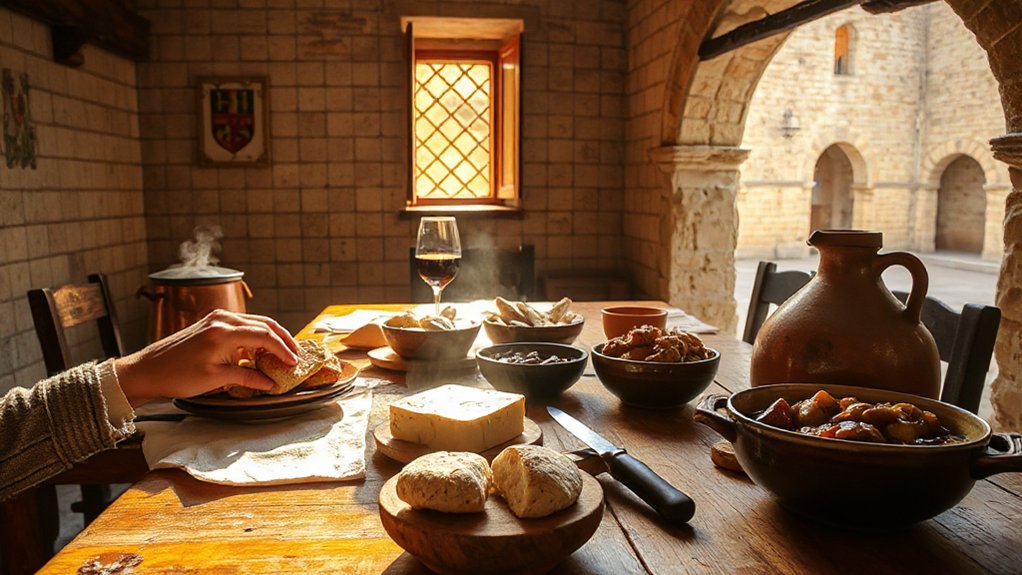
Medieval Castilian cuisine isn’t just about taste; it reveals how people in Castilla y León lived, traded, and governed. You’ll see how meals mirrored social structure, seasonality, and scarce resources, with evidence from manuscripts, tavern accounts, and monastery inventories.
The palate echoes broader medieval culture, including fashion aesthetics and heraldic symbols reflected in tableware, fabrics, and banqueting decor.
- Seasonal meat and pulses paired with coarse bread
- Salted fish from long-distance networks, preserving status notes
- Spiced sauces illustrating trade routes and court influence
- Quiet, communal dining aligning with feudal hierarchies
- Display of heraldic symbols on banners and service ware
This picture helps you assess provenance, trade links, and governance through what people ate, not just what they preferred.
Festivals and Rituals That Bring the Era Alive
Festivals and rituals in Castilla y León operationalize medieval life, turning calendars into public displays of faith, power, and communal identity. You observe how processions, markets, and vigils encode social hierarchies, contested histories, and local loyalties, then ask what survives as tradition and what evolves as museum culture.
Evidence from archival programs shows calendar-driven cycles—Holy Week, harvest celebrations, saint’s days—shaped civic calendars and urban space, aligning ritual with governance.
Contextually, participants adopt styles that echo medieval fashion, signaling status, piety, and craft networks, while heraldic symbols mark affiliations on banners and garments, reinforcing collective memory.
You’ll note geographic variation: border towns emphasize military orders; inland enclaves foreground monastic rhythms.
Thematic continuity persists through guided reenactments, auctions, and educational tours that translate past rituals into present understanding.
Safety and Respect While Exploring Heritage
Exploring Castilla y León’s medieval heritage demands careful attention to safety and respect, because exposure to fragile sites, crowded events, and sensitive cultural contexts can create risks for visitors and communities alike.
- Follow local guidelines, wear appropriate footwear, and stay on designated paths to protect fragile fabrics and stonework.
- Respect clothing codes and signs at sites tied to medieval fashion and royal ceremonies, avoiding disruptive photography or contact.
- Seek guided interpretations to contextualize artifacts, preserving authenticity for communities and future researchers.
- Observe quiet zones during ceremonies or restorations, minimizing noise and distraction.
- Report damage or unsafe conditions promptly to authorities or site staff.
These practices help you study history rigorously while safeguarding tangible heritage and living traditions.
How to Map a Week-Long Medieval Itinerary
To plan a week-long medieval itinerary, start by mapping regional strengths, seasonal availability, and transportation logistics to guarantee a logical progression from one site to the next. You’ll align major clusters—cathedrals, fortresses, monasteries—with realistic travel windows and entry times, minimizing backtracking.
Build a route that foregrounds durable, evidence-based sites: UNESCO towns, well-documented guild halls, and preserved towers. Then test contingencies for weather and closures. Track durations precisely, allowing time for interpretive exhibits, local guides, and pedestrian access.
When evaluating sites, compare architectural styles, medieval fashion influences, and the persistence of heraldic symbols in sculpture and stained glass. Document sources, corroborating facts with archival materials or scholarly summaries.
Finalize a compact, day-by-day plan that preserves flexibility without compromising thematic coherence.
Packing and Gear for Cobblestones and Castles
Packing for cobblestones and castles requires targeted gear choices that balance comfort, performance, and evidence-based practicality. You’ll want footwear with grip and support, a compact daypack, a weather-appropriate layer, and a lightweight headlamp for dim corridors, all chosen for durability and ease of use.
Packing decisions reflect how you’ll encounter Medieval gastronomy environments and castle symbolism, informing what you carry and what you leave behind.
- Sturdy walking shoes with grippy soles
- Packable rain shell and lightweight fleece
- Compact water bottle and energy snacks
- Small flashlight or headlamp with extra batteries
- Map, notebook, and pen for quick notes
These choices keep you agile on uneven streets, enable quick documentation, and support a focused, evidence-based exploration of the era.
Essential Tips to Authentically Feel the Era
As you step from practical planning into the lived experience of Castilla y León’s medieval heritage, focus on how the environment signals its past. You’ll notice streets and plazas shaped by ancient zoning, stone textures, and wear patterns that reveal centuries of footsteps. Analyze tactile cues: worn steps, arched doorways, and parapets that constrain light and sound, guiding perception toward historical rhythms.
Observe how light accelerates or softens the mood at different hours, aligning with daily medieval routines. When you encounter Medieval fashion in street life or reenactments, assess fabric weight, color, and cut as evidence of social roles and craft networks.
Heraldic symbols on shields, banners, or crests offer provenance and status, anchoring the era in tangible, contextual detail.
What You’ll Experience, How to Plan, What to See
Expect a tapestry of living history: the medieval heritage of Castilla y León unfolds through immersive experiences, practical planning, and must-see sights. You’ll assess sites by medieval function—monastic precincts, fortifications, and markets—to map authentic narratives, not just attractions.
Plan with transportation, opening hours, and seasonal events in mind, prioritizing regions with dense medieval layers to maximize evidence-based immersion. You’ll notice how Medieval fashion and heraldic symbols recur in architecture, sculpture, and restoration notes, revealing social hierarchies and daily life.
Your itinerary should balance guided insight with independent exploration, allowing cross-referencing sources for accuracy and context.
- Strategic routes that cluster fortresses, churches, and archives
- Timed visits aligned with festivals and reenactments
- Photo notes on heraldic motifs and textiles
- Museum corroborations for garments and insignia
- Documented comparisons of regional styles
Frequently Asked Questions
How Has Castile and León’s Landscape Shaped Medieval Life?
The landscape shapes your medieval life by guiding settlement, defense, and agriculture; you witness medieval architecture and regional traditions harmonizing with hills and rivers, evidencing how terrain steers power, trade routes, and social rituals in Castile and León.
Which Local Legends Influence the Region’s Medieval Sites?
Echoing legends, you’ll find Medieval folklore shaping sites as you explore, because stories of Legendary castles influence where you wander, inferences framed by archaeological evidence and local archives, guiding your interpretation of medieval memory through landscape, folklore, and ruins.
What Are the Best Offbeat Medieval Routes to Explore?
You’ll chart offbeat routes by following medieval art motifs and castle architecture, analyzing site clues, and cross-referencing maps, guides, and archives; you’ll evidence how remote towns preserve authentic medieval art and fortress layouts amid evolving landscapes.
How Did Medieval Governance Manifest in Town Layouts?
You walk through a town where medieval feudalism shapes streets, with town fortifications lining the center; you notice how governance manifests in planning, market squares, and defensive towers, supported by evidence, context, and careful, analytical interpretation.
Which Crafts Preserve Medieval Techniques Today in the Region?
You’ll find Medieval textile practices preserved through museums, workshops, and guild traditions, evidencing Craftsmanship preservation across Castilla y León. You analyze regional archives and artisans’ testimonies, noting enduring techniques, materials, and contexts that sustain historical textile methods today.
Conclusion
You’ll walk away with a map etched in memory, as if you’d traced the skyline with a scholar’s hand. The stones speak in echoes of kingdoms, and you’ll parse their testimony—facades, fortresses, chapels—each a clue in a vast, living archive. Like a lit candle in a stone hall, you’ll feel history shed light on present choices. Your week will become evidence: deliberate steps, careful notes, the sense that time, finally, reveals its medieval heart.