
To decide between an apartment, villa, or townhouse in Spain, start with your daily routines, budget, and long-term plans, then weigh space, privacy, and maintenance needs. Apartments cost less upfront but carry higher ongoing fees; villas demand more upkeep and taxes; townhouses strike a balance with shared walls and more space. Consider location, access to services, and neighborhood rules. Align amenities and security with your lifestyle, and examine financing and legal requirements. More details await as you refine these factors.
Key Takeaways
- Define goals and lifestyle needs to choose between apartment, villa, or townhouse based on space, privacy, and long-term plans.
- Assess total costs: upfront price, taxes, maintenance, and HOA/community fees for each property type.
- Evaluate location and community features: proximity to services, transit, security, and amenity access.
- Clarify maintenance responsibilities and privacy/security requirements for each option.
- Verify legal, financing, and risk aspects: contracts, title, lender requirements, and potential ongoing costs.
Define Your Spain Home Goals
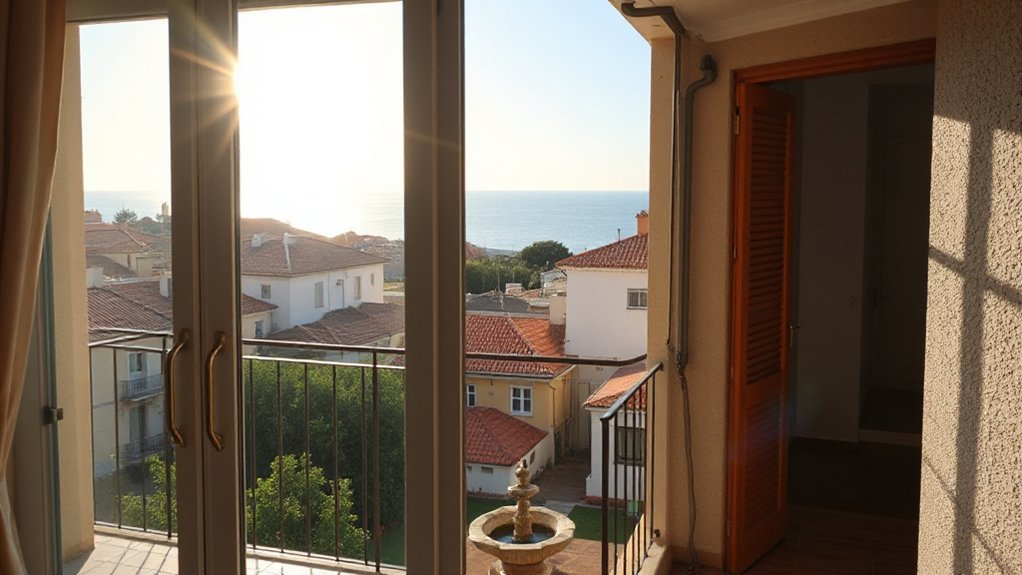
To define your Spain home goals, start by clarifying what you’ll use the property for and what success looks like. You’ll map daily living needs, future plans, and potential investment returns with crisp criteria.
Identify non-negotiables, such as proximity to services, climate considerations, and regulatory requirements, then translate them into measurable targets.
Consider how Luxury amenities fit into your lifestyle—quiet spaces, wellness areas, and security features that justify higher costs.
Assess Architectural styles that align with local zoning, resale appeal, and personal taste, ensuring they endure beyond trends.
Prioritize flexibility for seasonal use, long-term maintenance, and potential rental income.
Document timelines, budget boundaries, and decision milestones to prevent scope creep and keep your evaluation disciplined and outcome-focused.
Cost Breakdown by Home Type in Spain
Costs vary by home type in Spain, with upfront prices, ongoing taxes, and maintenance shaping long-term affordability. You’ll see distinct cost profiles across apartment, villa, and townhouse, driven by space, land impact, and common area fees.
Apartments usually offer lower purchase costs and fewer maintenance responsibilities, but higher per-square-meter fees can offset savings.
Villas incur higher upfront sums and property taxes, yet often provide larger lots and privacy, with extra maintenance duties.
Townhouses sit between, balancing shared walls with more space than apartments.
Consider luxury amenities and architectural styles, as they influence resale value and running costs.
- Upfront price vs long-term ownership
- Maintenance and community fees
- Tax implications by property type
- Impact of luxury amenities and architectural styles
How Location Shapes Your Spain Life
Location choices shape your daily rhythms through local culture access, commute time, and nearby amenities. You’ll gain instant leverage from a shorter, predictable commute, which frees time for work, social life, or exploration.
Prioritizing proximity to cultural hubs and practical services guarantees you’re embedded in your preferred lifestyle from day one.
Local Culture Access
- Proximity to festivals and street markets
- Accessibility to neighborhood associations and clubs
- Frequency of cultural events within walking distance
- Opportunities to participate in local rituals and cuisines
In practical terms, an area rich in tradition offers spontaneous interactions and authentic experiences. You’ll adapt faster, learn language nuances, and build networks through shared calendars.
This focus on cultural access often yields greater personal value than mere space, reinforcing that location is a cultural asset as much as a home feature.
Transport And Commute
Choosing the right neighborhood can cut your daily grind in half: how you get to work, schools, and amenities shapes your time, budget, and stress levels.
In Spain, Transport And Commute matters as much as floor plans. You should map public transportation access, including trains, buses, and metro lines, and evaluate reliability, frequency, and last-mile options.
Consider proximity to major employment hubs and the density of transit routes from your residence type—apartment, villa, or townhouse.
Commuting options, not just distance, determine daily predictability and costs. Analyze peak-hour congestion, potential transfers, and seasonality.
A sound choice minimizes downtime and fuel or transit passes, while maximizing flexibility for after-work activities and weekend trips.
Prioritize routes with stable schedules and integrated ticketing for overall efficiency.
Neighborhood Amenities Proximity
As you weigh where to live in Spain, nearby amenities become a key differentiator. Proximity to shops, schools, parks, and healthcare shapes daily routines, cost of living, and long‑term satisfaction. You’ll assess how well a neighborhood supports your lifestyle, from walkability to the reliability of services.
Garden design becomes part of the overall curb appeal and private space you’ll actually use, while neighborhood safety underpins comfort during evenings and weekends. Balance convenience with character, and consider how future needs may shift, such as growing families or aging relatives.
A location with strong amenities reduces commute time, supports social ties, and preserves resale value.
- Proximity to essential services
- Walkability and transit access
- Garden design as usable space
- Neighborhood safety and lamped lighting quality
Privacy, Security, and Maintenance Considerations
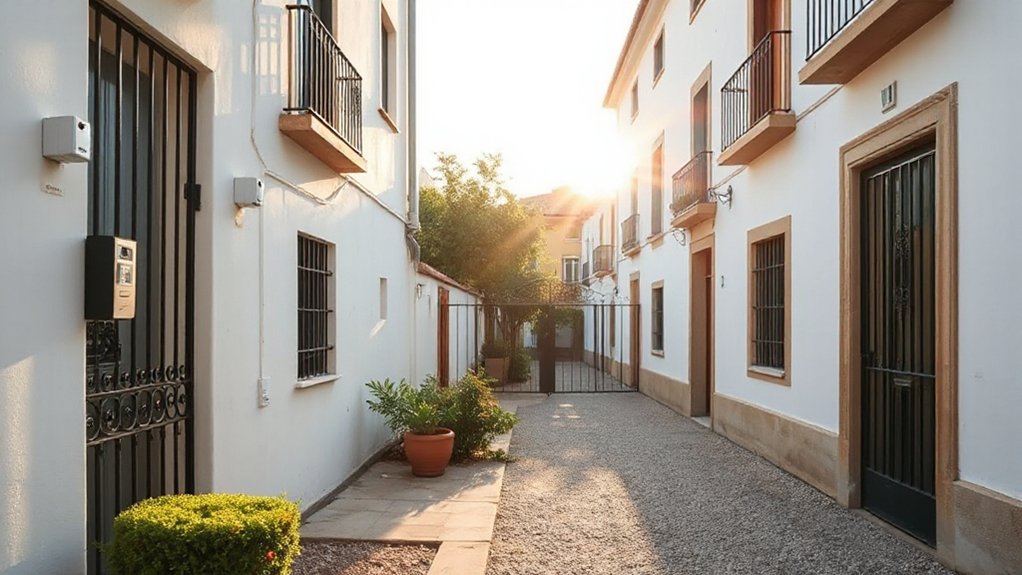
Privacy, security, and maintenance are fundamental when choosing among an apartment, villa, or townhouse in Spain. You’ll assess perimeters, access controls, and common-area upkeep to gauge ongoing effort and cost.
In apartments, you’ll rely on building-wide systems, yet you may trade privacy for shared responsibility.
In villas, you gain seclusion but shoulder more external maintenance.
Townhouses often balance both, with semi-private spaces and shared services.
Consider property privacy—fencing, sightlines, and window protections that protect daily routines.
For home security, examine neighborhood crime data, lighting, and entry-point reliability, plus whether local bylaws support rapid response or on-site personnel.
Maintenance expectations matter: schedules, warranties, and service contracts should match your tolerance for repairs and lifetime costs.
Decide which combination aligns with your lifestyle, finances, and risk tolerance.
Financing, Legal Checks, and Regulations in Spain
Guarantee your due diligence covers legal procedures, title status, and potential encumbrances before committing. Regulatory compliance is non-negotiable: confirm residency permissions where relevant, and align with local planning rules and HOA or community covenants.
In practice, engage professionals for document authentication, cadastral accuracy, and contract scrutiny. Maintain meticulous records of all permits and financial commitments.
Be prepared for diligence milestones, timelines, and potential regulatory changes that could affect cost or ownership.
- Financial terms and lender requirements
- Title and encumbrance verification
- Contract and disclosure scrutiny
- Ongoing compliance and reporting
Lifestyle Fit: Daily Routines and Guests
Choosing among an apartment, villa, or townhouse isn’t only about cost or legality—it also hinges on how daily life feels. Your daily routine matters: how you cook, entertain, and relocate guests shapes what aligns with your space type.
An apartment favors predictable routines, compact workflows, and shared amenities that streamline hosting but limit privacy.
A villa offers room to spread out, long outdoor sessions, and independent guest areas, yet demands more maintenance and scheduling.
A townhouse balances interior practicality with outdoor access, supporting mixed routines and occasional visitors without full-scale upkeep.
Consider pet policies and outdoor space access for dogs or cats, plus how often you host relatives or friends.
Align these realities with your calendar, energy, and guest expectations to choose confidently.
Smart Questions to Ask Before You Buy in Spain
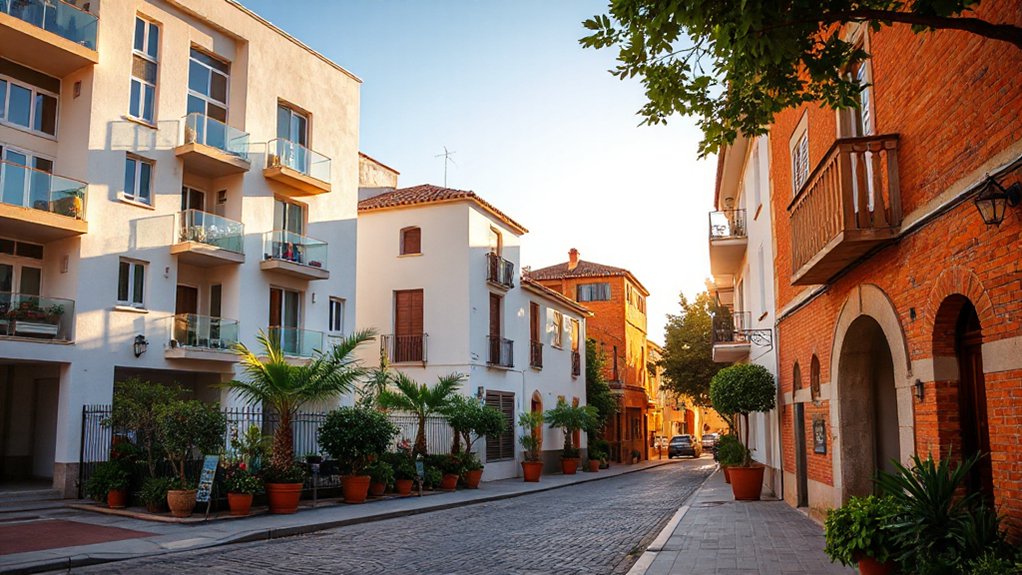
Before you buy in Spain, ask how financing and costs will affect your total outlay, including taxes, fees, and potential mortgage terms.
Then evaluate the development’s community and amenities to gauge long-term value and lifestyle fit.
Finally, clarify maintenance responsibilities, including what’s covered by homeowners’ association or management and what you’ll handle yourself.
Financing And Costs
To buy in Spain, you’ll want a clear view of all financing options and ongoing costs up front, so you can compare total commitments rather than just quoted interest rates. You assess loan terms, currency risk, and associated fees, then map those to your cash flow and long-term costs.
Focus on how luxury amenities affect value, and how property taxes impact annual budgets.
- Compare fixed vs. variable rates and total repayment
- Include all costs: appraisal, notary, registry, insurance
- Anticipate maintenance, community fees, and possible tax changes
- Confirm lender requirements for residency, employment, and income proof
This disciplined check prevents surprises, helping you decide between asset protection and ongoing affordability.
Community And Amenities
Clarify hours, guest policies, and any reservation systems for pools, gyms, or courts. Investigate the calendar of community events to gauge social turnover, security, and neighbor engagement.
Inquire about management transparency: dispute resolution processes, annual budget availability, and reserve funds for major repairs. Consider proximity to essential services, transport, and safety features like lighting and surveillance.
Confirm maintenance schedules align with your lifestyle and anticipate ongoing fees beyond upfront purchases. A clear picture speeds your risk assessment and decision.
Maintenance Responsibilities
Maintenance responsibilities in Spain require clear, concrete answers up front. When you evaluate properties, you must distinguish what you’re responsible for versus what the HOA or landlord handles, and document it in writing. Clarity prevents surprises about ongoing costs and who maintains shared areas, landscaping services, and security systems.
Ask concrete questions about frequency, contractors approved by management, and process for approving repairs. Confirm the patrols, alarm monitoring, and access controls for security systems, plus who pays for upgrades. Understand liability coverage and maintenance timing to avoid gaps.
- Ownership splits: interior maintenance vs. common areas
- Roles for landscaping services and seasonal upkeep
- Security systems: monitoring, maintenance, upgrades
- Budgeting: routine vs. emergency repair responsibilities
Frequently Asked Questions
How Do HOA Rules Differ Between Apartments, Villas, and Townhouses in Spain?
HOA rules vary: apartments carry higher community fees and stricter rules, villas have lower fees and looser controls, townhouses sit in between. You’ll notice privacy levels differ; measurements emphasize communal spaces, security, and shared maintenance requirements.
Which Property Type Yields Best Rental Yield in Spain’s Markets?
You’ll want to know: rental yields vary, but luxury amenities often lift yields, especially in limited markets. You’ll maximize returns in properties with strong community restrictions and premium services, balancing demand against management costs for consistent, higher occupancy.
What’s Typical Maintenance Cost Variance by Home Type in Spain?
You’ll typically see maintenance costs vary by home type, with villas higher and apartments lower; consider Property insurance and Utility expenses, budgeting multipliers, and your local market, as these impact annual upkeep more than initial purchase price.
How Do Natural Disasters Affect Each Property Type in Spain?
Wildfire risk and flood zones shape each type: you’ll face higher exposure in villas, moderate in apartments, and variable in townhouses; you’ll mitigate with planning, insurance, and resilient design, while maintaining vigilance and proactive emergency preparedness.
Which Property Type Offers the Strongest Resale Value in Spain?
You’ll find villas typically hold the strongest resale value in Spain, driven by luxury amenities and design flexibility that attract premium buyers, while apartments and townhouses lag behind in some markets.
Conclusion
Choosing among apartment, villa, or townhouse hinges on your Spain goals, budget, and lifestyle. Weigh location, upkeep, and potential appreciation against privacy and shared costs. In practice, map daily routines, guest patterns, and security needs; run the numbers on maintenance, fees, and financing. Ask pointed questions early, verify legal checks, and check local regulations. Your decision should align with long-term plans and new routines—think of it as selecting not just a home, but a life roadmap.