
Holy Week isn’t just a holiday; it’s a year‑long lens on sacrifice, forgiveness, and renewal that blends liturgy, family practice, and community service across cultures. You’ll see processions, services, and fasting choreograph city streets and home tables alike, turning sacred events into shared action. Its rituals travel and adapt, shaping identity, memory, and social life beyond Easter. If you keep exploring, you’ll uncover how to bring this dynamic into daily life and sustained communal practice.
Key Takeaways
- Holy Week weaves liturgical meaning with cultural identity, turning sacred events into shared communal experiences beyond strict doctrine.
- Processions, readings, and acts of service shape social memory and regional traditions that endure year after year.
- Family and home practices translate ritual into daily life, fostering spiritual literacy and ongoing reflection beyond Easter Sunday.
- Tourism, media, and migration reshape practices while preserving core symbols, inviting cross-cultural resonance.
- A year-round approach sustains Holy Week’s values through continuous inquiry, practical steps, and community accountability.
What Holy Week Is, Exactly, and How to Observe It
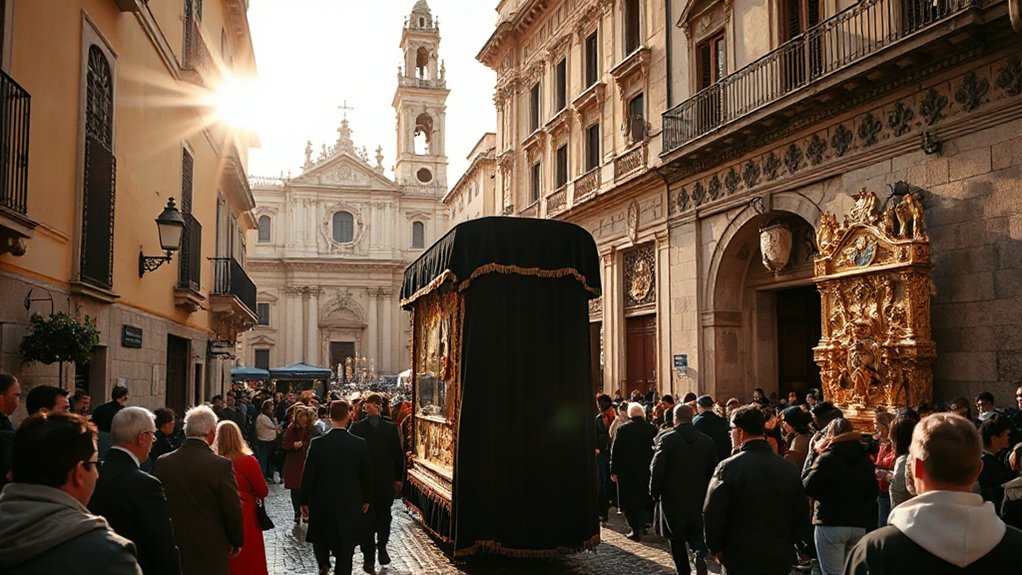
Holy Week is the decisive lead-up to Easter, spanning the final week of Lent for many Christian communities. You’re analyzing its structure, purposes, and timing rather than simply following a calendar.
You observe that this period centers on reflection, communal identity, and narrative reenactment, shaping how believers interpret sacrifice, forgiveness, and renewal. The observance blends liturgical elements with lay practices, varying by region yet sharing a core trajectory toward Holy Saturday and Easter Sunday.
You identify Easter traditions as outward signs—processions, readings, meals, and acts of charity—that convey inner meaning and memory. The cultural significance emerges where communities negotiate history, theology, and everyday life, turning sacred events into a shared cultural resource that informs values, ethics, and hospitality.
Core Holy Week Rituals: Processions, Services, and Fasting
You’ll examine how Processions and Prayers shape public devotion, tracing how movements through streets or sanctuaries frame collective meaning.
You’ll compare Sacred Services Observed across traditions, noting what rituals emphasize, who leads, and how liturgies signal turning points in Holy Week.
You’ll consider Fasting and Reflection as discipline and invitation, asking how restraint redirects attention from self to communal memory.
Processions And Prayers
You observe how processions choreograph street space, guiding crowds with cadenced steps, drums, and banners, while prayers punctuate pauses, inviting personal reflection within public performance.
This duality reveals a tension between spectacle and worship, where collective memory is enacted through synchronized motion and individual intent.
Meditative music underscores solemnity, shaping tempo and mood as figures move in rhythm with centuries of tradition.
Symbolic decorations—floral arrangements, statuary, and cruciform symbolism—translate abstract beliefs into tangible cues, aiding comprehension across generations.
Together, they frame meaning, while inviting scrutiny of authority, endurance, and the politics of public piety.
Sacred Services Observed
Each service frames sacred symbols within a coherent narrative, translating tradition into audible and tactile experiences. The precincts become archives as you observe lector passages, eucharistic administration, and penitential acts synchronized with candlelight and procession cues.
Ritual music anchors tempo and mood, signaling progressions between contemplation and intercession. You note how clergy, volunteers, and congregants coordinate gestures to preserve reverence while enabling accessibility.
The analysis highlights continuity and adaptation, illustrating how sacred services sustain meaning across generations without dissolving into mere ceremony.
Fasting And Reflection
Fasting during Holy Week functions as a disciplined counterbalance to the ritual pace of processions and services, focusing attention inward while shaping communal rhythm. You experience fasting as a deliberate boundary that reframes time, converting external spectacles into opportunities for inward assessment.
The practice compresses appetite and schedules, creating space for meditative silence amid the crowd’s cadence and the city’s bustle. In this constriction, you test desires, revealing how ritual pressure can steer behavior toward intention rather than spectacle.
Investigations of fasting reveal social undercurrents: shared restraint binds participants, while individual discipline reflects personal conviction. You document outcomes through spiritual journaling, translating sensory deprivation into cognitive inquiry about meaning, sacrifice, and renewal, thereby bracketing the week’s drama with a measured, reflective core.
Holy Week at Home: Practical Ways to Observe as a Family or Neighborly Community
As you consider Holy Week at home, you’ll weigh how family worship and neighborly acts of kindness shape shared meaning beyond church walls.
This framing invites analysis of how routines—prayer, scripture, reflections—meet practical needs and foster communal accountability.
Family Worship at Home
When you observe Holy Week at home, you transform ordinary evenings into a focused, reflective practice that centers family rhythms around the events of Jesus’ last days. This approach treats worship as a context for inquiry, not a background ritual, inviting you to analyze symbolism, storytelling, and experiential learning.
You’ll map daily readings to lived experience, question perspectives, and document insights as a family. The structure supports both reverence and discussion, weaving tradition with critical thinking.
Incorporate Easter crafts and deliberate family meals to reinforce themes, while avoiding performative pressure. By design, this cadence nurtures shared memory, spiritual literacy, and communal accountability, turning home into a workshop where faith meets daily life.
- Create reflective journals linking scripture to lived moments
- Schedule short, meaningful prayers during meals
- Prepare Easter crafts that symbolize key lessons
Neighborly Acts of Kindness
In this field study, you assess why acts of service emerge during Holy Week and how families or nearby communities organize them. Context matters: neighborhoods with clear communication channels route resources efficiently, aligning timing with charitable giving drives and community outreach events.
You examine incentives, barriers, and inclusivity—who participates, who’s served, and who benefits long term. The investigation highlights measurable impact, from funds raised to volunteered hours, while noting potential fatigue or dependency risks.
The conclusion emphasizes sustainable, reciprocal care that strengthens social fabric without eroding agency.
Holy Week Around the World: Traditions That Shape Global Practice
Holy Week Around the World reveals how local histories, rites, and social dynamics shape a global practice that transcends borders. You study how rituals travel, clash, and fuse, revealing Cultural influences and Modern adaptations that reframe tradition as a living system rather than a static script.
You analyze why communities adopt processions, tableaux, or silent observances, and how tourism, media, and migration reshape meaning without erasing core symbols. You see power, identity, and memory converge in shared gestures, even when practices diverge.
You question how authorities authorize or resist change, and how grassroots actors sustain relevance across generations and continents.
- Local roots meet global pathways through ritual innovation
- Power, memory, and identity shape evolving observances
- Cultural influences and Modern adaptations drive cross-cultural resonance
Personal Reflections: Compassion, Hope, and Service in the Holy Week Lens
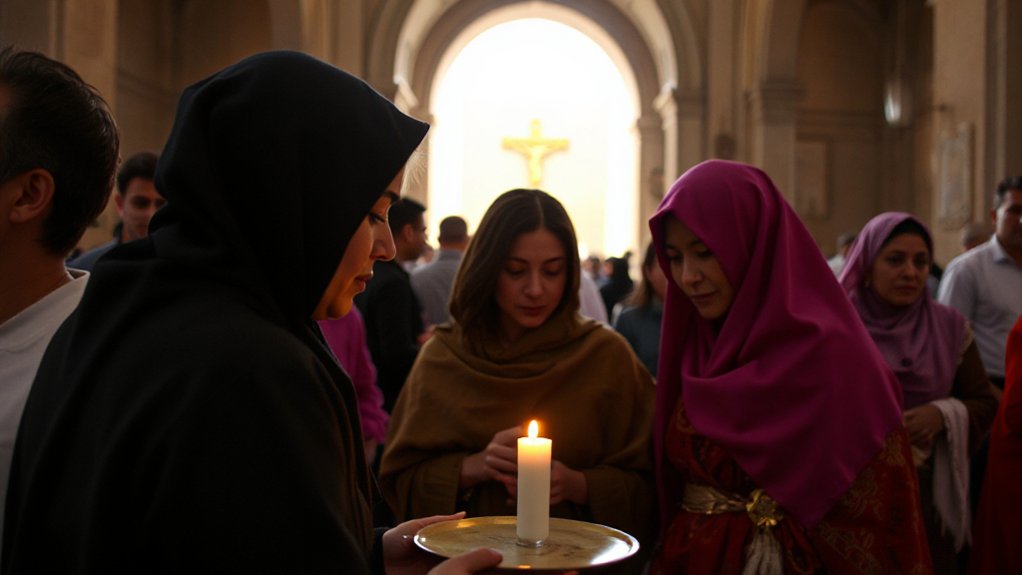
Across Holy Week, compassion, hope, and service become practical lenses for understanding how communities live their beliefs. You observe how ritual acts translate into everyday conduct, revealing patterns of moral reasoning that extend beyond liturgy.
In examining personal reflections, you test assumptions against lived experiences, noting when small gestures—sharing meals, listening ministries, or neighborly aid—become markers of spiritual growth.
You consider how different cultural contexts shape notions of sacrifice, forgiveness, and duty, highlighting the cultural significance embedded in practices that may appear similar on the surface.
This inquiry remains analytical and grounded: trace causes, assess effects, question narratives, and identify overlooked motives that propel collective compassion, while avoiding romanticized conclusions about faith as mere sentiment.
Bringing It Home: A Simple, Year-Round Plan to Keep Holy Week Spirit Alive
To keep Holy Week spirit alive year-round, start with a concrete, repeatable plan that translates ritual insight into daily practice. You’ll test how cultural significance and historical origins shape meaning, then adapt rituals into small, measurable steps you can sustain.
This approach treats Holy Week as a continuous inquiry rather than a seasonal duty, inviting critical reflection on what endures beyond Easter memory. You’ll map routines to current life, identifying practices that align with communal values and personal growth.
By observing outcomes, you’ll refine methods, ensuring relevance across contexts. The plan emphasizes accountability, documented goals, and periodic review to prevent decay of meaning over time.
- Tag weekly activities with reflective notes to track impact
- Rotate focal themes to mirror seasonal shifts
- Assess cultural significance in daily choices and conversations
Frequently Asked Questions
How Can Holy Week Inspire Community Service Beyond Easter Sunday?
You explore how Holy Week inspires you to engage in secular community initiatives and interfaith dialogues, analyzing motives and outcomes, evaluating inclusivity, and investigating sustainable volunteer patterns that extend service beyond Easter Sunday into year-round civic collaboration.
What Artistic or Musical Traditions Accompany Holy Week Worldwide?
Religious processions weave time like a loom; Sacred music threads history through streets worldwide. You analyze how these traditions travel, shifting motifs and instruments, revealing local identities while harmonizing ritual with modern performance, and you observe lasting cultural resonance.
How Do Non-Religious Households Observe Holy Week Respectfully?
You observe holy week respectfully by embracing secular reflections and cultural adaptations, recognizing the plural meanings it holds. You examine practices, invite dialogue, and honor local traditions while avoiding religious prescripts, thereby analyzing symbolism without requiring faith-based participation.
Can Holy Week Practices Influence Daily Mindfulness and Compassion?
You discover that holy week practices influence daily mindfulness and compassion by guiding your habits like a compass. Meditation practices sharpen awareness, while Compassion cultivation expands empathy, helping you analyze actions, contextualize motives, and pursue intentional, compassionate daily choices.
What Are Common Misconceptions About Holy Week Rituals?
Common misconceptions about holy week rituals overlook ritual origins and cultural differences, assuming uniform practice; you’ll see diverse meanings as communities adapt symbols, timings, and processes, reflecting historical roots, local artistry, and social priorities rather than a single, universal rite.
Conclusion
You step back to see Holy Week not as a calendar moment but as a lens—an invitation to examine how devotion, ritual, and service intersect. By tracing processions, meals, and quiet prayers, you uncover a pattern: meaning isn’t fixed in memory, but forged through action and mutual care. So you observe, you question, you participate, and you carry that practice forward. The deeper you look, the more ordinary acts become transformative, revealing a shared path toward hope and renewal.