
Walk Bilbao with your senses alive, starting at the riverfront where the Guggenheim’s titanium curves scatter sunlight and set a brisk, reflective rhythm through the city. Wander Las Siete Calles to feel historic textures—narrow lanes, hidden courtyards, and pintxos that pair with legend. Circle the Art Triangle for a single-day loop, then notice how street art interacts with ironwork and plaster. Stay curious; the city’s textures, shadows, and voices promise more than a brochure can tell you.
Key Takeaways
- Explore Bilbao’s kinetic art and architecture by strolling riverfronts, observing textures of concrete, glass, steel, and the play of light on surfaces like metal and plaster.
- Visit the Guggenheim Museum and nearby modernist landmarks to feel how titanium curves and ironwork shape streets, reflections, and city rhythm.
- Wander the Old Town (Las Siete Calles) to see historic bars, pintxos, courtyards, and morning shadows revealing texture-rich details.
- Use a focused museum plan: 2–3 key spaces, pre-booked tickets, and quiet galleries or balconies to respect conservation.
- Merge art with local culture by noting street art, textures, and shadowed corners, then enjoy riverfront cafés and boat tours for a holistic experience.
What Makes Bilbao’s Art and Architecture So Distinctive
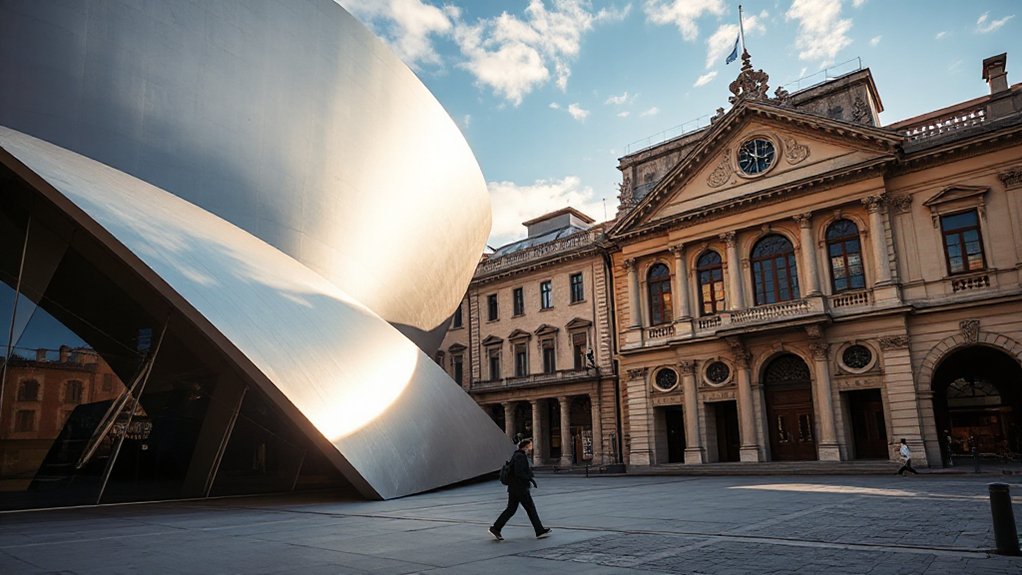
Bilbao’s art and architecture feel unmistakably kinetic, a city where grit and elegance braid together in concrete, glass, and steel. You move through streets that pulse with textures—rusted metal, polished stone, sun-bleached concrete—and you sense a conversation between old craft and new audacity.
Cultural fusion hums in the market stalls, in bas-reliefs, in the way Basque motifs mingle with global forms. You notice how spaces invite play: a museum’s edge frames a river, a plaza becomes a stage for spontaneous performance, a gallery breathes with neighboring cafés.
Artistic innovation isn’t showy here; it’s habitual, practical, inevitable. You feel the result: a city that refuses repetition, rewards curiosity, and keeps reinventing its own language.
Start at Bilbao’s Riverfront: The Guggenheim Effect
You step onto the Bilbao riverfront and feel the Guggenheim spark lighting up the scene, chrome petals catching the sun and crowds buzzing with anticipation.
The city’s pulse seems to ride the breeze—glass, metal, and water weaving a living urban sculpture that invites you to pause, stare, and ask what a building can do to a place.
This is your invitation to map the effect: how the museum’s presence shifts mood, traffic, and rhythm along the river as you wander from bridge to promenade.
Guggenheim Spark Effect
The Guggenheim Spark Effect lands right on Bilbao’s riverfront, where the titanium curves of the museum catch the light and tug attention toward the water. You feel the city pause as reflections ripple across the façade, and the air carries a quiet, metallic hum that invites exploration.
The effect isn’t just visual; it nudges your pace, urging you to notice texture, scale, and shadow in tandem. Guggenheim sparkle surrounds the building like a halo, while art shimmer echoes along the riverbank, inviting you to compare polished externals with the gallery’s inner surprises.
You’ll carry this moment into every doorway you cross, letting design teach you how to see.
- Titanium skin catching sun and shadow
- Reflections dancing on the water
- Subtle contrasts between form and light
- Hidden textures behind polished surfaces
- A quiet invitation to linger and observe
Riverfront Urban Pulse
Riverfront cafes spill steam and chatter onto the path, inviting you to linger between bite-sized tapas and bright coffee cups. Boat tours drift past, their bells and engines stitching the skyline to your view, lacquered hulls skimming the current.
You measure time by shadows on the promenade and the soft clink of glasses. The Guggenheim’s glow echoes in the river’s shimmer, a companion to your discoveries along this lively, walkable artery.
The Old Town by Foot: Las Siete Calles Stroll
Winding through Las Siete Calles, you step into Bilbao’s Old Town where every street feels like a doorway to another era. You walk narrow lanes, hearing bells, catching chalk-white façades, and smelling sizzling pintxos from tiny bars. The pulse stays steady as you pause by historic landmarks, then drift toward intimate squares, where laundry dances above stamped stone. You’re guided by locals’ whispers and the clatter of a market stall.
The cadence feels intimate, personal, and alive.
- Follow the arc of the Amporella river around old bridges
- Sample pintxos and local cuisine at tiny taverns
- Read plaques beside historic landmarks for quick context
- Peek into courtyards tucked between storefronts
- Listen for neighborhood tales spoken softly by locals
The Art Triangle: Plan a Single-Day Museum Loop
Glance at Bilbao’s Art Triangle and you’ll feel the city pulse through you: a single-day loop that stitches the Guggenheim’s bold curves to the old masters housed in nearby museums, all within easy strolls and quick subway hops.
You map a core circuit: start with contemporary murals brightening riverfront walls, then step inside the Guggenheim for a dose of daring sculpture. Move on to nearby halls where classic textures meet modern curators’ provocations, each room guiding your gaze.
You’ll notice sculpture gardens between galleries, where metal, stone, and sky want a conversation with your footsteps. You’ll finish with a late-afternoon promenade, a final sip of Bilbao’s energy, and a sense you touched the city’s living museum in a single, satisfying arc.
Frank Gehry’s Masterwork: Highlights Inside the Guggenheim Bilbao
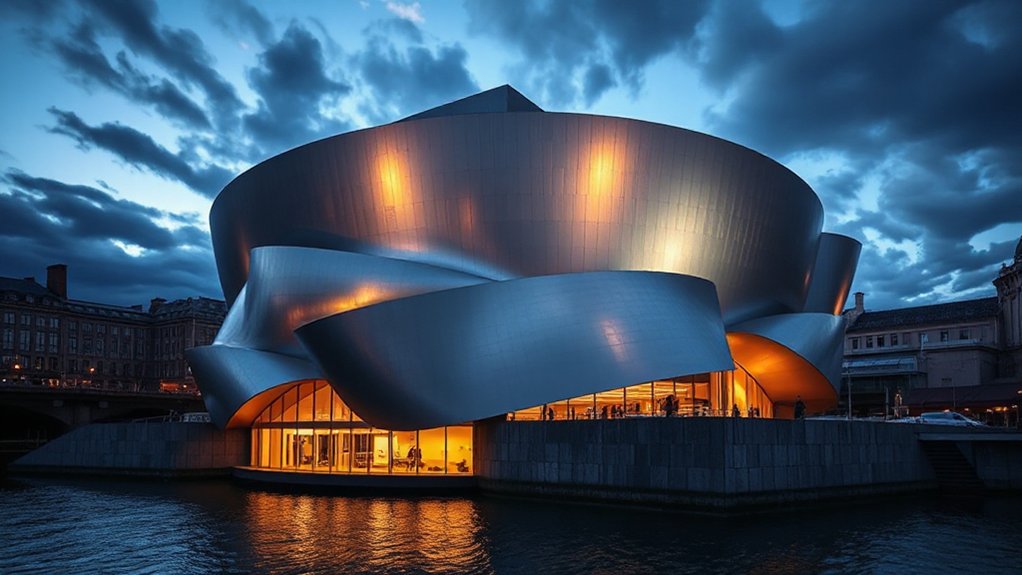
Frank Gehry’s masterwork unfolds like a sculpted foray into light and movement, its titanium skin catching Bilbao’s sky and turning it into a kinetic partner in the gallery space. You wander through galleries where form erupts in curves, reflections, and shadow, each corridor guiding your eye to a fracture of sensation rather than a straight line.
Inside, you feel architecture as a living sculpture, inviting touchless dialogue with Contemporary sculpture’s bold language and its glittering surfaces. The building’s interior rhythm echoes outside, while conservation-minded details keep the marvel in shape for generations, a quiet nod to Architectural conservation amid spectacle.
- Titanium dialogue with light
- Curved spaces guiding movement
- Reflections creating depth
- Spatial choreography and flow
- Conservation-minded detailing
Beyond the Big Hitters: Bilbao’s Contemporary Art Gems
You’ll notice Bilbao’s edge as you wander beyond the famed landmarks, where Hidden Contemporary Corners pulse with unknown voices.
Local Collective Creations crowd the walls and studios, each piece sparkling with a hands-on, in-the-matersense energy.
Luminary Studio Spaces light up conversations you didn’t know to have, inviting you to trace fresh stories through the city’s evolving art map.
Hidden Contemporary Corners
Hidden gems often hide in plain sight, and Bilbao’s lesser-known contemporary spots prove the point with quiet, bristling energy.
You stumble upon quiet courtyards where Hidden murals peek between bricks, and a doorway leads to a courtyard gallery, walls pulsing with color.
Contemporary sculptures greet you along narrow lanes, balancing industrial grit with delicate form. You notice how light shifts fastest on these hidden corners, revealing textures you’d miss from the main paths.
The vibe stays intimate, almost conspiratorial, inviting you to linger, listen, observe.
- Hidden murals catching sun at odd angles
- Narrow lanes hosting intimate sculpture pairs
- Quiet courtyards as makeshift galleries
- Textures contrasting brick, glass, and steel
- Morning shadows revealing hidden details
Local Collective Creations
Local collectives turn Bilbao’s art scene into a pulse you can walk through. You’ll find tampered walls that glow at dusk, where Public murals bloom in alleys you nearly miss, and then reveal a story you didn’t know you were craving.
You move from crate-yard studios to crisscrossed corners where hands hammer ideas into the air, and you feel the city lean in, listening.
Sculptural installations punctuate vacant lots and bridges, balancing whim with restraint, inviting conversations with strangers who stop to study the lines and shadows.
It’s not about fame; it’s about shared impulse, the communal push to transform space into conversation.
You leave with a map stained by spray, footsteps echoing in fresh emotion.
Luminary Studio Spaces
Luminaries aren’t the marquee names here, but the studios tucked along Bilbao’s back streets glow with a steady, intimate light. You wander into narrow corridors where doors sigh open to reveal reverent, unpretentious spaces—creativity without glare. The air tastes faintly of oil, coffee, and fresh chalk as you observe how studio collaborations breathe between walls, and how light fractures on steel and glass.
In these creative workspaces, ideas collide quietly, then bloom into tangible forms. You’ll notice works in progress, conversations folded into the hum of scanners and brushes, and a tempo that favors process over product.
- Quiet intersections of collaboration and craft
- Sunlit corners double as brainstorming nooks
- Walls bearing sketches, notes, and stray quotes
- Tools tucked like accessories in a well-loved bag
- Timeless patience guiding every fragile detail
Basque Modernism in Context: Key Sites and Stories
Basque Modernism unfolds not as a single blueprint but as a conversation between light, stone, and idea, shaping Bilbao’s streets with a kinetic honesty you feel in every turn. You walk past ribbons of ironwork and plastered facades where gaps catch sun like breath.
The Basque identity emerges in craftsman’s hands and meaning, a shared pulse pulsing through corners, plazas, and quiet stairwells. You trace the Modernist movement through landmarks where function meets feeling, where balconies tilt toward the river and windows frame cloudy skies as if framed artworks.
Stories accumulate in names and plaques, quiet reminders of reform, resilience, and renewal. You’re not merely observing; you’re part of a dialogue that keeps Bilbao honest, evolving, alive.
Practical Tips for Seeing Art Without Overwhelm
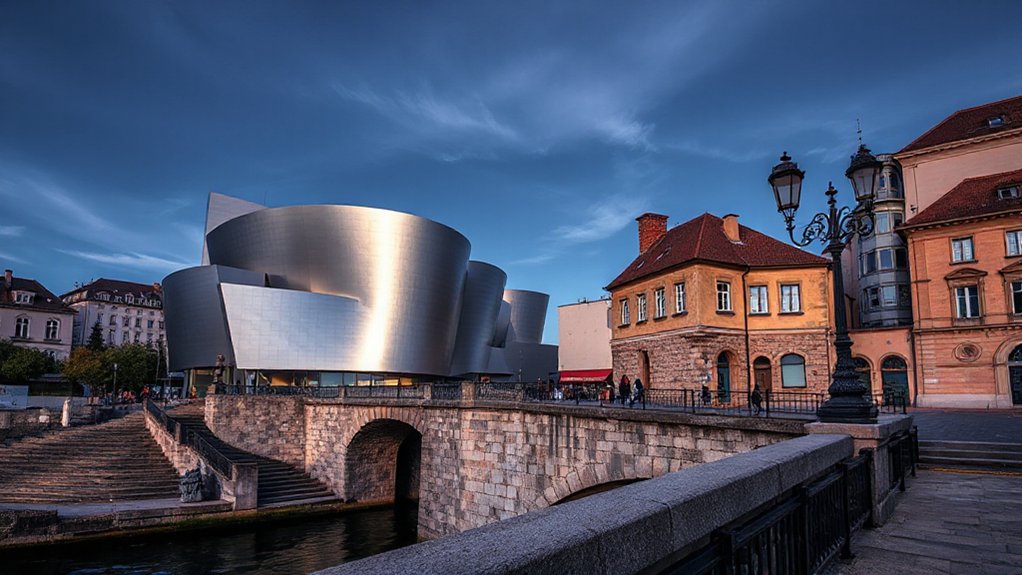
You’ll book a sensible route, mapping must-sees and easy highlights so you don’t zigzag through fatigue.
As you wander, pace yourself—allow pauses between rooms, sip coffee, and let a single work linger in memory rather than chase every detail.
Balance light and lift, mixing art with architecture to keep the day fresh and doable.
Plan Your Route
How do you map a city’s art without getting lost in the crowds? You sketch a focused loop, not a sprint. Pick a core pair of neighborhoods, then anchor each stop with a single exhibit or façade to note, not a checklist. Move between times and textures—modern galleries, glass towers, and centuries-old arches—so your eyes learn to read light and shadow as clues to meaning.
Let art conservation and architectural preservation guide your steps, appreciating how crews protect fragile details while renovations reveal fresh angles. Carry a compact map, water, and a plan to pause at benches, not just to hurry.
- Prioritize 2–3 must-see spaces, then fill gaps with nearby sights
- Time blocks by transit routes, not per-room clocks
- Photograph details rather than entire rooms
- Note accessibility and quiet corners for connoisseur moments
- Respect scaffolds and fences; admire the work behind them
Pace Your Museum Visit
After planning a focused route, you’ll want to ease into the air-filled calm of the museum itself. Quiet, white halls cradle the art, and you move with a steady breath, letting walls guide you.
Pace matters: sketch a rough spotlight of must-sees, then allow time for pause, for a single piece to inhabit your thoughts. If bodies crowd, step to a balcony or side gallery, where distance becomes a lens.
Remember museum etiquette: whisper, avoid flash, and respect others’ gaze as you’d your own. Ticketing tips help too—check online slots, arrive early, and carry a printable or digital pass to skip lines.
Build micro-waits between rooms; let light, texture, and color converse before you rush to the next room.
Mix Art And Architecture
- Observe how street art interacts with architectural planes rather than competing with them.
- Move slowly, letting corners reveal relationships between works.
- Note textures: metal, plaster, brick, glass, paint.
- Seek quiet corners where shadows emphasize form.
- Return to a favored piece for fresh detail.
Pintxos and Architecture: Pairing Meals With Galleries
In Bilbao, a gentle rhythm unfolds as pintxos and galleries align like a curated stroll: you crave a bite, you pause for a painting, you move on, mosaic-edged with light. You weave between polished surfaces and steam-hazed bars, chasing the perfect bite that matches a canvas’s hue.
Pintxos become a moving menu of color and texture, while architecture frames each stop with a quiet drama. You taste local tapas that spark conversation, then study the way glass and stone converse in a historic landmark lobby.
The pairings aren’t careless; they’re deliberate pauses that let you absorb volume and velocity—the hum of crowds, the whisper of metal, the scent of sea air mingling with coffee. Bilbao teaches restraint, appetite, and wonder.
Neighborhood-by-Neighborhood Routes for First-Timers
Bilbao unfolds in neighborhoods like chapters in a guidebook you can live inside: start at the Casco Viejo’s honeycomb of streets, where tavern doors spill chatter and the Gothic arches glow at dusk.
drift toward Abando, where gleaming glass towers meet century-old flour mills, and the river nicks the skyline with a silver thread.
- Casco Viejo: follow local art along narrow lanes, sip coffee, hear street percussion
- Abando: riverwalk stroll, modern silhouettes against old factory bones
- Bilbao-La Vieja: colorful murals, neighborhood vibes, markets brimming with craft
- Indautxu: contemporary galleries, patio cafes, and quiet corners
- San Francisco: museums, sculpture parks, and a skyline that doubles as a mural
You’ll map routes by texture, sound, and texture again.
Plan a Balanced Two-Day Bilbao Itinerary That Flows Naturally
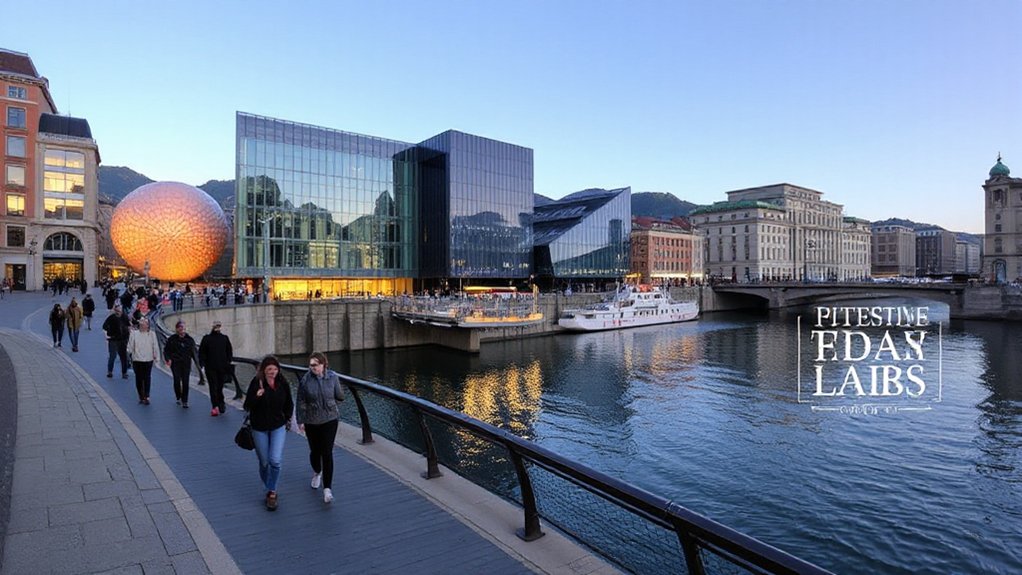
Two days is enough to stitch Bilbao’s highlights into a single, flowing arc, weaving Casco Viejo’s honeyed lanes with Abando’s glass and riverlight. You’ll begin with a morning stroll along the Old Town, pausing at the market stalls to taste jamón and local pastries, then drift toward the Guggenheim’s sunlit curves.
In the afternoon, cross the Nervión for museum-rich energy, basking in contemporary lines and river breeze, then loop back through tiny squares where locals chat. Plan a balanced pace: one landmark-heavy block, one neighborhood-wloom with street life.
Evenings spotlight Cultural festivals when scheduled, or a tapas crawl that highlights Local craftsmanship in galleries and studios. Day two folds in Casco Viejo’s markets, fountains, and quiet arcades, finishing with sunset over the river.
Frequently Asked Questions
How Do I Book Tickets for Guggenheim Bilbao in Advance?
Yes, you can book in advance. Visit the Guggenheim Bilbao site, select tickets, and choose your date and time. You’ll see ticket prices, group discounts, and secure checkout, avoiding lines for a smoother, more immersive experience.
Which Months Are Best for Light-Friendly Architecture Photography?
Spring and fall offer best photography seasons with mild days; you’ll catch ideal daylight hours as sun angles sketch buildings in warm gold and cool shadows, guiding you to light-friendly architecture moments you’ll frame with intent.
Are There Guided Tours Suitable for First-Time Visitors?
Yes, there are guided tours for first-time visitors. You’ll meet local art enthusiasts, wander through architectural styles, and hear stories behind each facade, getting a vivid sense of Bilbao’s pulse and how its galleries and streets breathe.
Where Can I Find Family-Friendly Art Activities in Bilbao?
You can find family-friendly art activities at interactive exhibits and outdoor murals sprinkled around Bilbao’s parks and museums, where kids tug your sleeve toward hands-on stations, and you linger, watching colors bloom as curious eyes widen.
What Should I Know About Bilbao’s Public Transit Accessibility?
Public transit in Bilbao is user-friendly, with accessibility improvements you’ll notice first. You’ll see step-free routes and funds boosting fare options, making trips smoother; you’ll feel confident steering buses and trams as you explore.
Conclusion
You walk away lighter, carrying Bilbao like a lit doorway you can’t stop opening. The river’s hum lingers, the Guggenheim’s titanium kiss still sparking in your memory. You’ve threaded plazas and alleys, tasted pinbones of pintxos, heard architecture breathe in its wings. The city wasn’t a destination, but a living map you wore inside your chest. And now, every casual stroll becomes a quiet invitation to wander again, to follow the light that drew you in. It’s a phoenix you carry home.