
You’ll walk Castilla‑La Mancha’s living tapestry, where windmills turn beside olive groves and towns pulse with markets, plazas, and sacred paths. In Toledo, layered Moorish, Gothic, and Baroque echoes meet murals and lively cafés, while wind-swept plains tell of craft, resilience, and belonging. Follow winding routes to quiet chapels, watch folk music rise from courtyards, and feel the rhythm of festivals and storytelling weaving generations. Stay curious—there’s more to uncover when you keep exploring further.
Key Takeaways
- Discover the region’s cultural heartbeat through its wind-swept plains, olive groves, traditional crafts, and seasonal fairs that embody resilience and community spirit.
- Explore Toledo’s layered architecture, city memory murals, and lively plazas where Moorish, Gothic, and Baroque influences meet daily life.
- Follow sacred routes and winding pilgrimage paths past chalk chapels and bell towers that invite quiet reflection and attentive listening.
- Experience craft hubs—pottery, glassblowing, and loom work—where markets, storytelling, and exchanges bind memory, belonging, and regional identity.
- Listen to folk music and dances from courtyards and markets, linking elders and youth through oral storytelling and shared cultural rituals.
Castilla-La Mancha at a Glance: Culture by Region
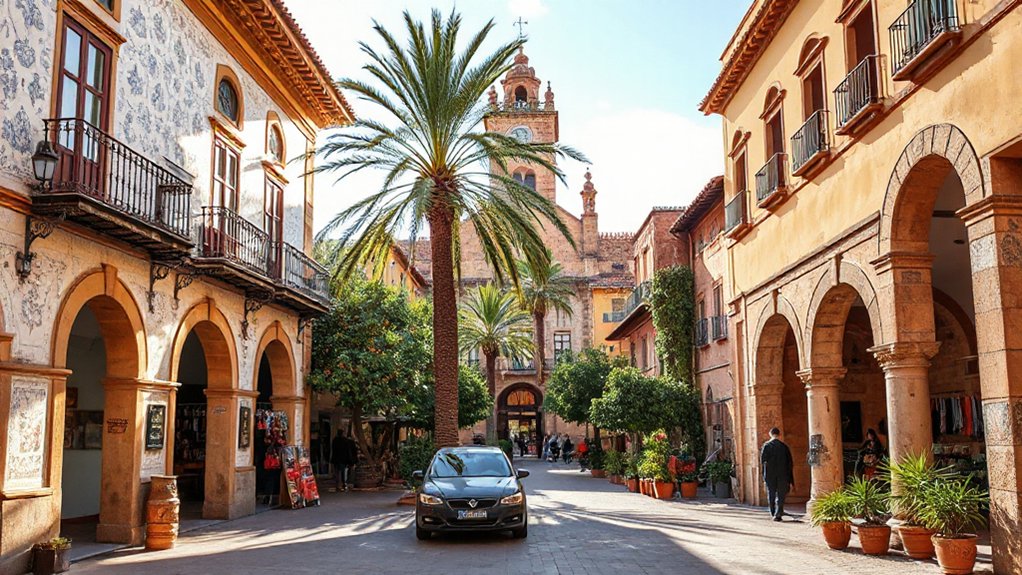
Castilla‑La Mancha unfolds like a mosaic, each region speaking in its own accent of tradition, landscape, and appetite. You notice how, from Castilla la Mancha’s plains to its hill towns, culture threads through daily life, shaping tastes, trades, and gatherings.
In the high plains, Agricultural heritage anchors communities, guiding seasonal rhythms, fairs, and cooperative practices that keep soil and seed in conversation. Across river valleys, traditional crafts endure, handed down in workshops where hands learn by repetition and memory, turning wood, pottery, and textiles into recognizable regional signatures.
You sense a balance between preservation and adaptation, where festivals, markets, and family kitchens translate regional identity into shared experience. The tapestry remains diverse, yet coherent, inviting you to read the whole portrait beyond the foreground.
Toledo’s Living Tapestry: Architecture, Plazas, and Legends
Toledo unfolds as a living tapestry where stone and story braid together. You walk its corridors of arches and plazas, sensing how centuries press close. The city’s architecture speaks in layered voices—Moorish, Gothic, Baroque—each imprint guiding your gaze.
In medieval legends, you glimpse the pact between faith and fortitude, a city motto etched in lime and time. Artistic murals punctuate façades, turning brick into a quiet gallery of memory.
You notice how squares pulse with daily life, where café chatter threads through history and the bells mark rhythm for neighbors and pilgrims alike. The tapestry isn’t static; it invites you to read between the stones, to listen for whispers of embers, prayers, and vanished courtyards.
- Medieval legends and architectural narratives become one
- Artistic murals frame the city’s memory
- Plazas pulse with contemporary life and old echoes
- Toledo’s layers invite ongoing, reflective travel
Windswept Landscapes: Windmills, Olives, and Rural Crafts
You approach the windswept plains and immediately feel the pull of motion—windmills turning like quiet sentinels, their sails tracing slow arcs against a broad, open sky.
You notice how the landscape keeps a steady rhythm, a stubborn resilience forged by sun and season. Windmill symbolism threads through memory and labor, a reminder that effort shapes place as surely as water and wind shape stone.
Olive harvest traditions rise beside the blades, the scent of fruit and dust mingling with diesel and cordage as crates shift along dusty lanes.
Rural crafts emerge in small workshops, where hands repair, bind, and reuse, translating centuries of survival into simple, exact workmanship.
The scene asks you to reflect on continuity, adaptation, belonging.
Festivals and Fairs: Songs, Fireworks, and Local Pride
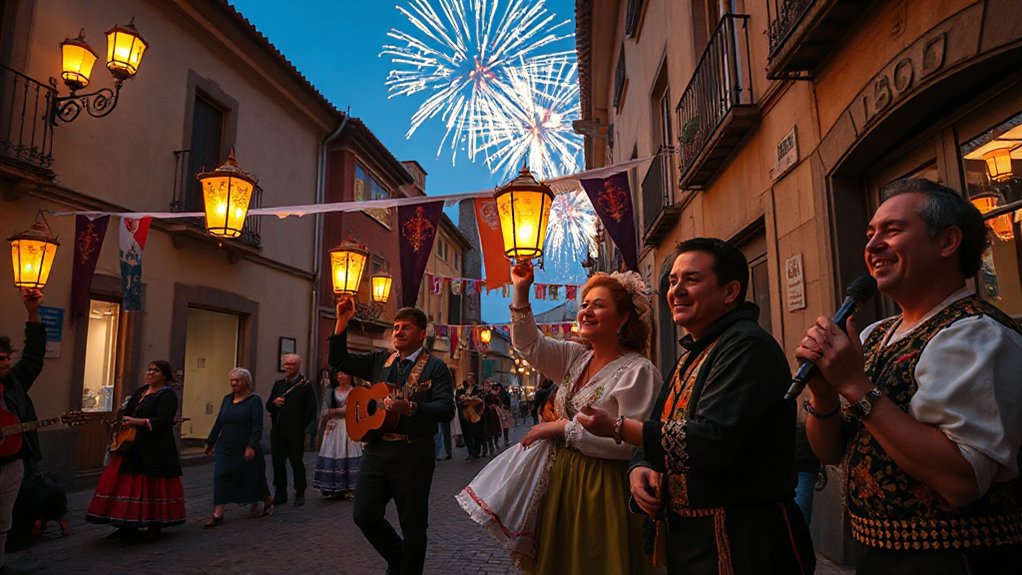
Festivals and fairs burst onto the calendar like a chorus, turning town squares and dusty streets into stages where songs rise with the first spark of fireworks and the hum of laughter threads through every booth. You walk between lantern-lit stalls, tasting the air heavy with roasted peppers, olives, and churros, feeling how regional pride settles on your shoulders.
In these moments you notice the rhythm: parades, drumbeats, and choruses that carry stories from one corner to another. You observe how traditional costumes shimmer under sunset, how conversations drift from football scores to family recipes, and how locals greet strangers with warmth that mirrors the sun-baked courtyards.
- Traditional costumes showcase regional craftsmanship and identity
- Fireworks choreograph the night skies above old plazas
- Regional cuisines mingle in shared meals and late-night tastings
- Pride echoes in voices, dances, and communal rituals
Castilian Folklore and Storytelling: Tales and Traditions
You’ll hear Castilian folklore carried through generations, with traditions that shape everyday life and communal memory. As storytellers pass tales from elders to youngsters, local legends and myths anchor a shared sense of place and identity.
Think about how these narratives, told in homes, squares, and markets, reflect Castilla‑La Mancha’s values, fears, and wonder.
Castilian Folklore Traditions
Castilian folklore travels through village squares and quiet kitchen corners alike, weaving patterns of tale, song, and shared memory that bind communities together. You sense how traditions endure in daily rituals, from celebrations to quiet moments of listening, shaping a living map of identity.
The dances and attire mirror history, inviting you to observe how traditional dance moves weave grace with local rhythm, while folk costumes carry color, craft, and memory into the present.
You notice elders passing motifs to younger hands, preserving sense of place without rigid sameness, and you feel the subtle dialogue between past and now.
- Traditional dance
- Folk costumes
- Local dairy and harvest songs
- Sanctioned seasonal celebrations
Storytelling Through Generations
Storytelling isn’t just a pastime here; it’s a living corridor through time, where elders and youngsters trade words like seasoned keys that open memory.
You notice how the room tightens with attention as voices shift between memories and meanings, a pattern passed down through generations.
In Castilian folklore, oral traditions bind families, neighbors, and distant kin, turning a simple tale into shared belonging.
You observe storytelling techniques that layer tone, pace, and gesture, guiding listeners from joke to caution to history.
The cadence carries seasonal cycles, harvests, and fiestas, revealing how culture survives by listening as much as speaking.
You recognize that each teller tailors a tale, preserving core values while inviting fresh interpretation.
This is living culture, cultivated through listening and re-speaking.
Local Legends And Myths
Across Castilla‑La Mancha, legends rise from stone and wind, weaving the land’s memory into living tales that travelers barely glimpse and locals never misplace. You listen as whispers braid passersby with centuries, noting how ancient legends thread through town squares, taverns, and quiet hills. In this tapestry, mythical creatures surface not as spectacle but as moral weather, shaping choices and memories.
You’ll sense reverence for stories carried by open skies and clay roofs, where fear and wonder meet practicality. The past nods at you, inviting reflection on how belief sustains communities. You observe how storytellers taxonomize fear, celebrate courage, and preserve identity through shared narration.
- Ancient legends echo in stone corridors
- Mythical creatures test everyday courage
- Local lore blends memory and landscape
- Tales travel, shaping present choices
Gastronomy That Tells a Story: Olive Oil, Cheeses, and Tables
Olive oil gleams on a rustic table, its green-scented warmth guiding you through Castilla‑La Mancha’s kitchens and markets. You taste how each bottle carries a season’s memory, from sunlit groves to the stone walls where stories ferment into flavor.
The region’s table is a dialogue between fruit, animal, and craft, where olive harvesting becomes ceremony and patience becomes substance. You notice the subtle notes—peppery, grassy, almond—that signal terroir rather than trend.
Cheeses arrive as companions to the oil, aging quietly in caves and cellars, their textures telling of climate, time, and care. You sense a dialogic table: simple ingredients, deliberate methods, and shared meals that narrate place more than any guidebook ever could.
Handcrafted Traditions: Pottery, Glass, and Weaving Towns
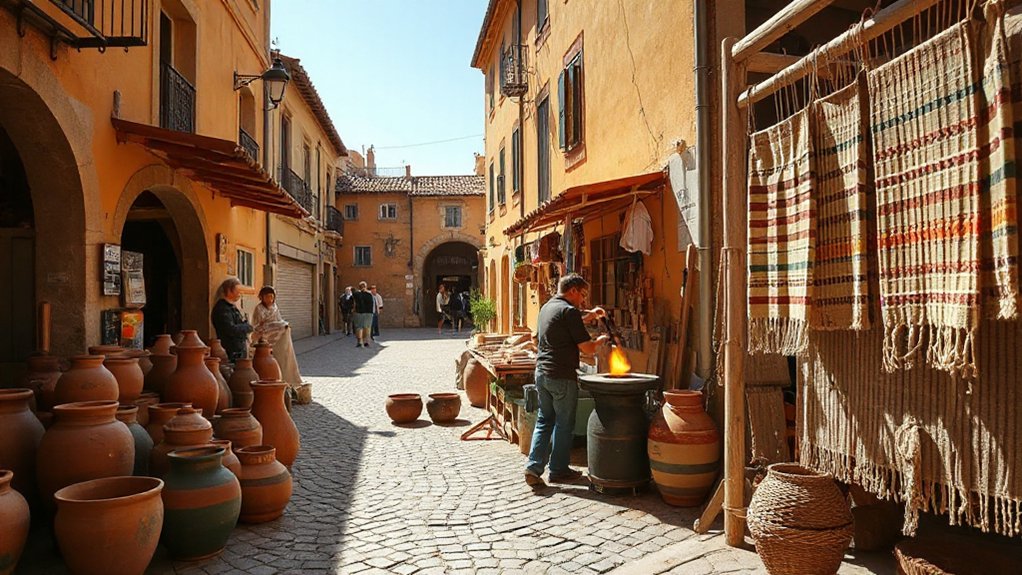
Hands-on craft threads through Castilla-La Mancha’s towns as surely as olive oil threads through a meal. You’ll notice pottery studios shaped by clay red soils, glassblowers shaping light, and loom rooms humming with textile artistry. The towns keep these skills alive by inviting you to watch, touch, and learn, not just buy.
Each piece carries memory—tools, slogans, and patient mentors guiding your hands toward a finished wink of color. You sense the regional rhythm in the glaze, the weave, the repetitive taps of the loom. You leave with conversation stitched into your cargo, a reminder that craft is place and patience.
- Ceramic craftsmanship that tells local stories
- Glass studios where heat meets reflection
- Weaving houses preserving timeless patterns
- Workshops inviting hands-on participation
Sacred Routes and Quiet Chapels: Pilgrimage and Reflection
Along winding routes and chalk-stone chapels, Castilla-La Mancha’s sacred map unfolds as a quiet study in time. You move between small altars and stone paths, feeling the weight of centuries in each step.
Pilgrimage here isn’t about spectacle; it’s a patient rhythm that invites you to slow and listen. You’ll notice how villages keep vigil in the margins, where bell towers mark moments of meditative silence before daily life resumes.
In quiet chapels, you search for a personal pause, a moment of spiritual reflection that arrives without fanfare. The landscape itself becomes a companion—plain, stubborn, generous—shaping your thoughts as you walk, breathe, and observe.
You leave lighter, carrying a treaty with memory and intention.
Castles, Museums, and the Slow-Travel Experience
You’ll notice how castles along time frame our sense of place, each stone telling a story you can pause and read.
Museums and moments invite you to slow down, to linger with artifacts and reflections rather than rush past them.
In this slow-travel approach, you’re invited to connect the past with the present, one deliberate stop at a time.
Castles Along Time
Across Castilla-La Mancha, the slow-glide between stone keeps and quiet museums invites you to trace centuries with your feet, not just your eyes. You’ll feel time shift under you as you walk past weathered battlements, imagining siege drums and whispered strategies. Castles along time become more than walls; they’re clues to daily life, to how protection shaped towns and tales. You notice the rhythm of stone, the way a courtyard holds memory, and the faint echo of castle legends in faded carvings.
Your pace slows, your questions sharpen, and you weigh patience against pasteboard timelines.
- Medieval fortresses rise as keeps of community
- Legends bind stones to storylines
- Quiet courtyards reveal tenure and trade
- Slow-travel breathing guides interpretation
Museums And Moments
Museums in Castilla-La Mancha aren’t just repositories; they’re pauses that invite you to feel history breathe. You wander galleries that blend time and place, noticing how everyday objects carry stories you didn’t expect.
In quiet corners, museum exhibits reveal the textures of daily life, from pottery to pilgrim relics, shaping a region’s shared memory. The pace invites you to linger, to compare eras, to sense continuity rather than rupture.
You learn that cultural preservation isn’t static display but active dialogue—curators, artisans, and locals collaborating to keep meanings alive. As you move between towns, these spaces become moments of reflection, where a castle silhouette at dusk meets a carefully labeled artifact.
The slow-travel experience deepens your gratitude for what endures and why it matters.
Markets and Local Vendors: The Language of Exchange
Markets in Castilla-La Mancha pulse with a practical poetry: stalls crowd the streets, voices rise in a chorus of bargaining, and the scent of fresh olive oil hangs in the air. You observe how exchanges unfold beyond price, how glances and gestures carry meaning, and how local barter sustains more than goods—it sustains relationships.
You’re drawn into vendor stories, where each seller negotiates with rhythm and memory, shaping a shared sense of place.
- Local barter as a social contract, not just commerce
- Vendor stories that reveal neighborhood loyalties
- Negotiation as performance, with humor and restraint
- Fresh produce linking households, markets, and memory
Rural Music and Dance: Everyday Life in Song
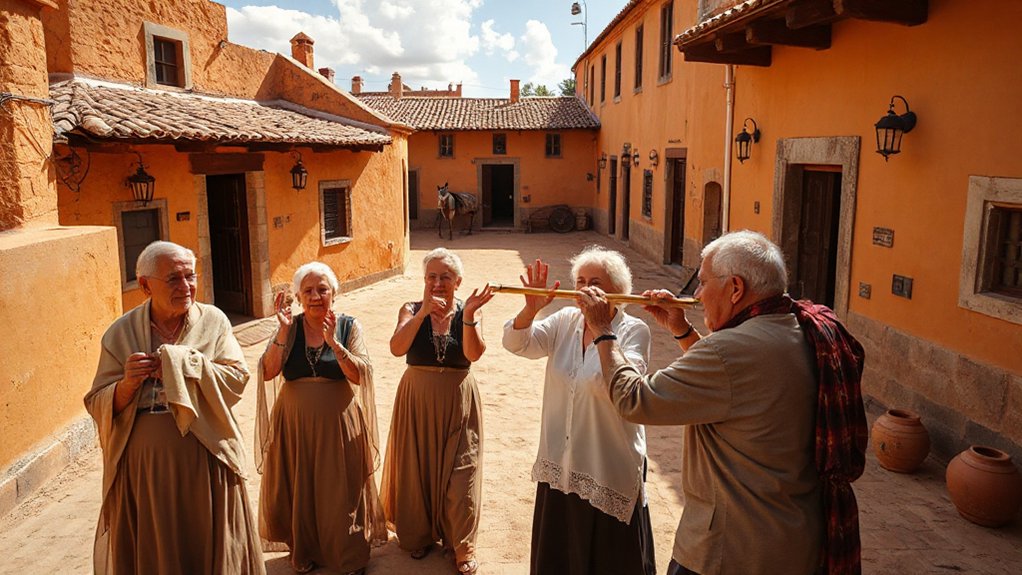
What sounds knit daily life together in the countryside of Castilla-La Mancha is often unsung: rural music and dance carry memory as surely as bread and olive oil. You hear folk melodies rise from courtyards, from whitewashed walls, from the soft edges of dusk.
These tunes accompany chores, markets, and gatherings, threading purpose through ordinary moments. You watch neighbors move to a quiet rhythm, a subtle choreography—hands clapping, shoulders syncing, footsteps counting the day’s breath.
Dance rituals mark seasons, births, and prayers, offering a shared grammar for resilience. In these moments, you sense place shaping voice: improvisation within tradition, nostalgia tempered by practicality.
The countryside speaks in cadence, inviting you to listen, learn, and remember the communal heartbeat.
Plan Your Itinerary: Towns by Interest and Season
To plan your trip, group towns by what you want to experience and by the season that suits them best. You’ll notice how certain places bloom in spring, others glow at harvest, and a few feel timeless year‑round. Plan around local cuisine and traditional festivals to anchor your itinerary with flavor and memory.
- Explore medieval towns in mild springs for courtyard meals and markets
- Seek hilltop views in autumn when vineyards and olive groves shine
- Visit winter towns with cozy taverns and hot soups tied to local traditions
- Combine river towns in summer for swims, snacks, and concerts
Travel Respectfully: Regeneration, Etiquette, and Stories
Regard for place and people should guide every step you take after you’ve mapped out your Castilla‑La Mancha itinerary.
You’ll notice regeneration isn’t just physical—it’s social, too. Respectfully engaging with communities, you contribute to preservation without dampening change.
Cultural respect means listening before you speak, and adapting to local rhythms rather than forcing your pace. Observe local customs, from dining cues to festival timing, and mirror the courtesy you’d want abroad.
When you photograph, ask permission, and share stories that honor people’s perspectives, not stereotypes. Your encounters become part of the tale, a tapestry of voices, landscapes, and memory.
Travel becomes sustainable only if you leave places better, not merely impressed; you return richer, with responsibility toward the next visitor.
Frequently Asked Questions
How Does Castilla-La Mancha Shape Regional Identities Within Spain?
Castilla-La Mancha shapes your regional identities through shared Regional cuisine and Traditional music, guiding how you see yourself within Spain. You notice contrasts and continuity, reflecting history in everyday life, festivals, and rural rhythms that you carry into today.
Where Can I Find Lesser-Known Unesco-Worthy Sites Here?
You’ll find lesser-known UNESCO-worthy sites off the beaten path, with 12% fewer crowds than popular spots. SeekHidden architectural gems and Local culinary traditions, tucked in quiet towns, offering reflective moments as you wander, observe, and connect with Castilla‑La Mancha.
Which Crafts Uniquely Define Each Town’s Heritage?
You’ll uncover crafts defining each town’s heritage through traditional pottery and woven textiles, revealing how heat, clay, and looms shape memory, pride, and daily life, as makers translate history into tangible patterns you can sense and study.
How Does the Season Influence Festival Timings and Access?
Seasonal weather shifts festival timings, affecting access as you plan. You’ll notice earlier openings or later closings, with crowd bursts around peak weekends. Festival scheduling responds to sun, rain, winds, and harvest rhythms shaping your itinerary.
What Are Respectful Ways to Engage With Local Communities?
Trust local customs; join respectfully and observe first, then participate. You’ll show care for community participation, mindful of boundaries and voices. Don’t rush, listen closely, and walk alongside locals, not over them—embrace shared rhythms, and stay curious.
Conclusion
You walk away with a map not just of places, but of pulses—the heartbeat of Castilla‑La Mancha, stitched through Toledo’s stones and windmill shadows. You’ll hear markets hum, legends whisper, dancers drift across terraces, and olives glisten like tiny suns. Pack curiosity, leave haste behind, and let seasons guide you. In this region where old and new chat like neighbors, even a distant emoji can feel ancient—anachronistic, yes, but perfectly playful—a reminder to listen.