
The essential road signs you should know in Spain fall into clear groups: priority and warning signs, speed limits that vary by road type and conditions, and zones with parking, loading, or pedestrian restrictions. At roundabouts, yield to circulating traffic and pedestrians, signal your exits, and maintain lane discipline. Weather, hazard, and animal-crossing signs require quick speed adjustments. Coastal, rural, and urban patterns help you anticipate hazards. Master these cues, and you’ll drive with confidence—more insights await.
Key Takeaways
- Spain uses blue priority signs and triangular red-bordered warning signs; recognize color first, then shape and symbol for quick understanding.
- Understand common zones: urban areas with lower speeds, rural/dual carriageways with higher limits, and temporary work zones with detours.
- Intersections and roundabouts require yielding to circulating traffic, signaling exiting, and maintaining lane discipline.
- Coastal and rural signs alert to tides, ferries, livestock, narrow roads, and grade changes; adjust speed and vigilance accordingly.
- Parking and loading signs (blue for limits, yellow/white for loading zones) dictate where you can stop, park, or load your vehicle.
Know Spain’s Road-Sign Essentials
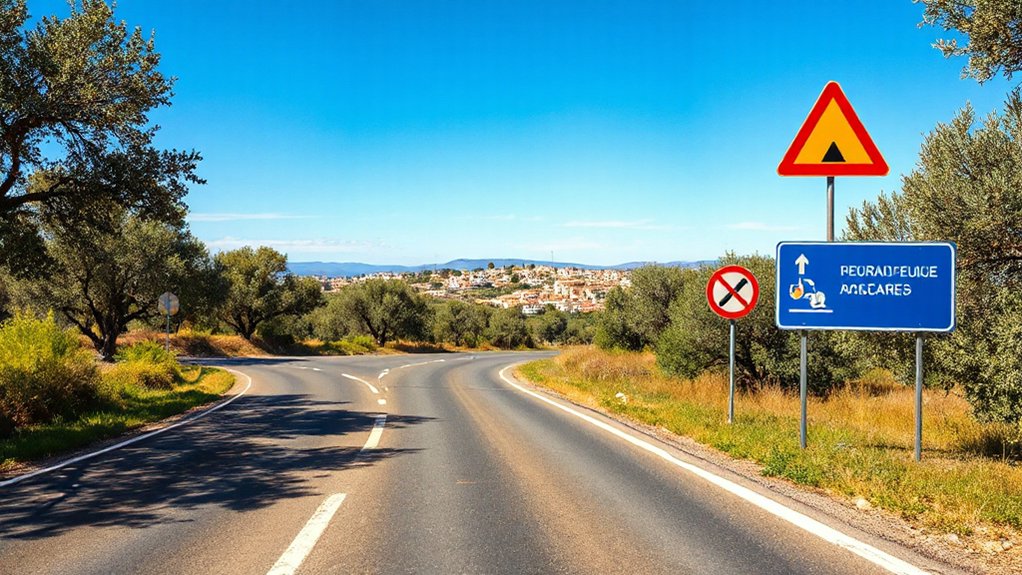
Road signs in Spain follow clear shapes and colors, so you can recognize warnings, prohibitions, and mandatory actions at a glance. You understand how this system reflects Historical sign design, revealing evolution from older motifs to modern standards.
You also learn that Sign maintenance practices keep signs legible, reflective, and correctly mounted, ensuring reliable guidance in all conditions. You’ll notice consistent iconography, with triangles for warnings, circles for prohibitions, and blue squares or rectilinear panels for mandatory actions.
Regular checks—cleaning, repainting, and replacement of worn panels—prevent misinterpretation. If a sign appears damaged or obscured, you know to treat it as guidance requiring cautious driving and report it to authorities.
Mastery comes from observing, citing, and adhering to established sign standards during every journey.
Identify Priority and Warning Signs at a Glance
You’ll identify priority and warning signs at a glance by focusing on shape, color, and iconography. Priority signs are typically blue with white symbols, guiding you to rules you must follow.
Warning signs use a triangular shape with a red border and a white interior, alerting you to potential hazards ahead.
At a glance, you’ll notice arrows indicating right-of-way or yield requirements, and pictograms illustrating curves, junctions, or pedestrian activity.
Remember that historical sign symbolism informs modern designs, so familiar shapes carry consistent meaning across regions.
Consider sign manufacturing standards; durable materials and reflective surfaces guarantee visibility day or night.
Where Speed Limits Apply and Vary in Spain
In Spain, speed limits vary by road type, area, and conditions, so you must adjust as you drive. You’ll find speed limits posted on signs, but they also change with zones and temporary works.
In urban areas, expect lower limits near schools, markets, and dense housing, while rural highways carry higher allowances when visibility and surface conditions are good.
On dual carriageways, limits differ from single-carriageway stretches, and motorways have the highest sanctioned speeds.
Watch for speed limit zones near construction or traffic regulation updates, which can reduce or raise limits temporarily.
Always respect posted signs and local councils’ rules; when in doubt, reduce speed and scan for changes ahead. Adhere to speed limits to maintain safety and compliance.
Read Parking, Stopping, and Loading Signs Clearly
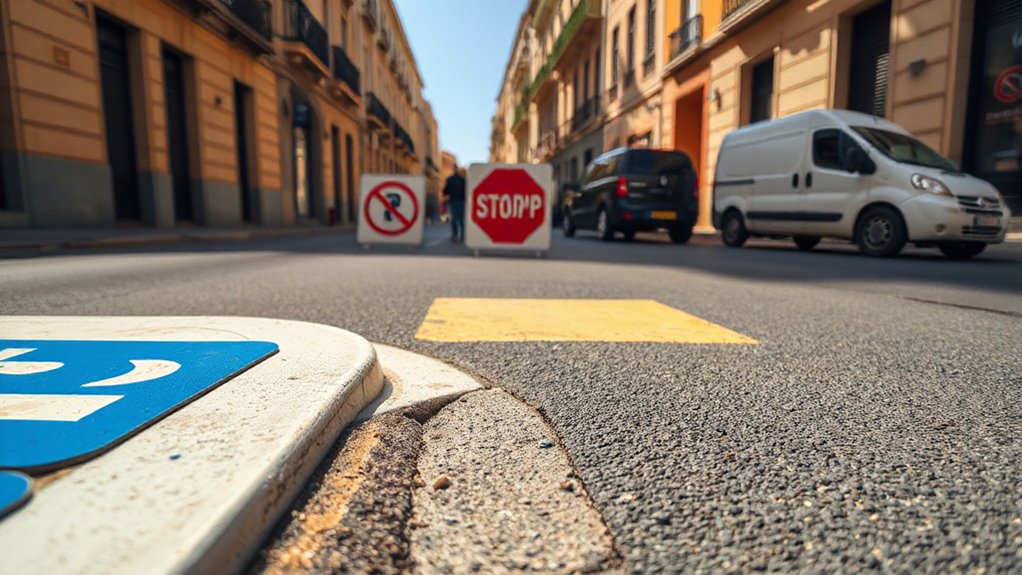
Parking, stopping, and loading signs tell you what you can do where and for how long. You must read them clearly to avoid fines or towing. Look for color, shape, and text cues that differentiate parking regulations from stopping rules.
A blue sign usually designates a parking zone; a white or gray panel adds time limits, days, or resident-only restrictions.
Loading zones use yellow or white lettering and specific hours, often near shops or deliveries—don’t park there outside those times. Always check supplementary panels for exceptions, such as weekends or holidays.
If signs are unclear, err on the side of caution and seek clarification from authorities. Ignorance isn’t a defense, and improper parking can trigger penalties.
Stay informed about parking regulations and loading zones.
How to Handle Roundabouts and Right of Way
Roundabouts in Spain require you to yield to vehicles already circulating and to pedestrians at crosswalks.
At intersections, you must treat entering traffic as secondary to those on the main road, unless signs indicate otherwise.
Stay alert for changing priorities and follow posted road signs to maintain smooth flow.
Roundabout Rules Clarified
Moving through roundabouts in Spain hinges on yielding to traffic already circulating inside the circle. You enter when the way is clear, tracking the lane that suits your exit.
Roundabout etiquette keeps traffic flowing smoothly, so signal intentions and stay in your lane unless you must change. Sign visibility matters, so you read entry signs and lane markings before entering.
- Observe right-of-way: entrants yield to circulating traffic.
- Use signals when exiting, even if you continue around.
- Stay in your lane and prepare for your exit well in advance.
Adopt these practices to reduce surprises, maintain speed, and improve safety.
Yielding At Intersections
At roundabouts, yield to vehicles already circulating and join the flow when there’s a safe gap.
On stops or signs, come to a complete stop, look both ways, and proceed only when the way is clear.
Maintain lane discipline, signals, and predictable movement to uphold intersection etiquette.
Don’t block cross streets or pedestrians; allow space for turning vehicles and bikes.
If a driver has the right of way, don’t challenge it—adjust speed to maintain safety.
Clear communication and anticipation minimize delays and improve overall traffic flow.
Pedestrian Zones and Restricted-Area Signs Explained
Pedestrian zones restrict vehicle access to protect foot traffic, and signs identify where driving is limited or prohibited. You’ll encounter symbols that mark restricted areas, enforced through local ordinances and penalties.
In Spain, you should recognize how Historical sign designations reflect tradition, while Cultural signage variations appear across regions, influencing interpretation for visitors. The following points help you navigate safely:
- Look for white and blue circular signs with pedestrian silhouettes or crossed-out car symbols to confirm limits.
- Note color accents and nearby text that clarify hours, dates, or exceptions, especially near historic centers.
- Respect temporary barriers or curb markings indicating entry isn’t allowed, even if you technically have a right-of-way elsewhere.
Temporary Work-Zone Signs and What They Mean
Temporary work-zone signs alert you to changes in traffic flow due to road repairs, construction, or maintenance. In Spain, you’ll encounter temporary signage that directs detours, lane shifts, speed reductions, and alternating traffic patterns within a defined Work zone.
Follow posted arrows and lane indicators; ignore familiar routes if directed otherwise. Expect reduced speeds, narrowed lanes, and workers present near active machinery. If you see flashing lights or portable barriers, slow down and prepare to stop if required.
Obey flaggers and temporary signals, and stay alert for sudden changes as you approach exits or merge points. This signage protects both you and road crews, clarifying how to navigate safely through the work zone.
Weather, Hazard, and Animal-Crossing Signs Decoded
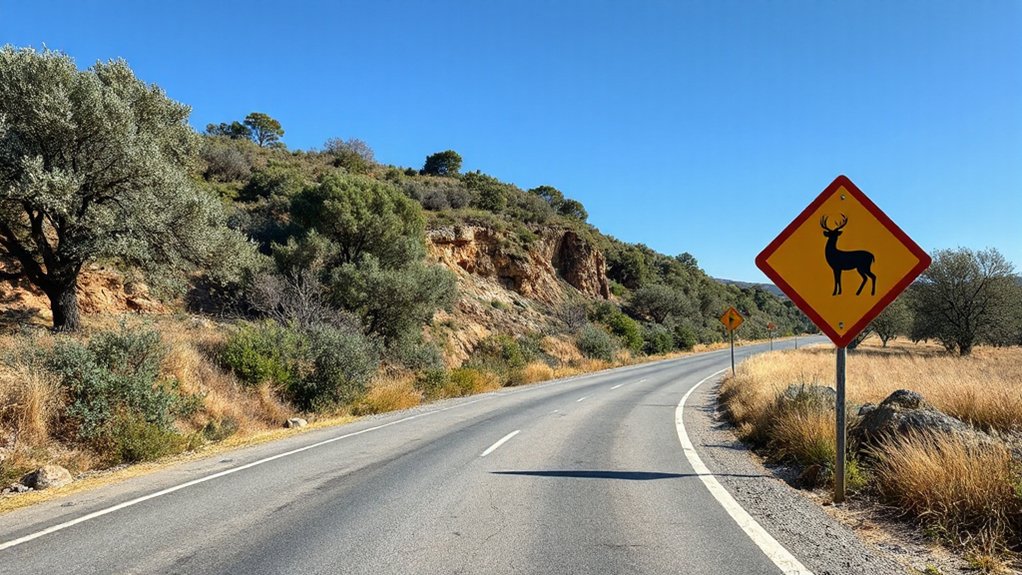
Weather, Hazard, and Animal-C crossing signs alert you to immediate dangers and wildlife activity along Spanish roads. You’ll encounter alerts that warn of sudden weather shifts, slippery surfaces, or reduced visibility, so you brake and adjust speed promptly.
Recognize that animal crossings signal potential swerve risks, especially near rural belts and forests. Stay focused, follow posted distances, and heed flashing beacons when present.
Use weather alerts to anticipate fog, ice, or rain, then adapt your driving plan accordingly. The signs guide your behavior in real time, maintaining safe spacing and alertness.
Here are key takeaways:
- Weather alerts demand proactive speed and route adjustments.
- Hazard signs indicate surface or visibility risks requiring caution.
- Animal crossings require reduced speed and vigilance.
Reading Signs Across Coastal, Rural, and Urban Areas
Coast, countryside, and city lanes each carry distinct sign language you must read quickly and act on decisively.
In coastal areas, you’ll encounter warnings tied to tides, ferry routes, and warning buoys. Look for coastal navigation indicators that designate harbor approach, sea walls, and fishing zones, and adjust speed accordingly.
On rural roads, rural signage prioritizes narrow lanes, livestock alerts, and sudden grade changes; expect fewer lights, more bends, and occasional gravel.
In urban sections, signs emphasize pedestrians, cyclists, angle restrictions, and bus lanes; comply promptly to keep traffic flowing.
The key is recognizing patterns: color, shape, and symbol consistently convey risk, priority, and permitted actions.
Always anticipate changes as you shift among coastal navigation cues, rural signage, and dense city signals.
Stay vigilant.
Quick Tips to Spot Signs in Seconds
To spot road signs in seconds, scan from left to right and top to bottom, prioritizing color and shape first, then symbol. You’ll boost sign recognition by recognizing common color codes and silhouettes, enabling quick identification even at speed. Follow these tips to sharpen your eye:
- Focus on dominant colors first; shapes confirm the category.
- Cross-check the symbol quickly with your mental map of Spain’s signs.
- Move your gaze in a steady pattern to reduce missed cues.
With practice, you’ll identify hazard, regulatory, and information signs faster, improving reaction time and safety. This approach keeps you in command, reducing uncertainty and supporting safer driving decisions.
What to Do If a Sign’s Meaning Isn’t Clear
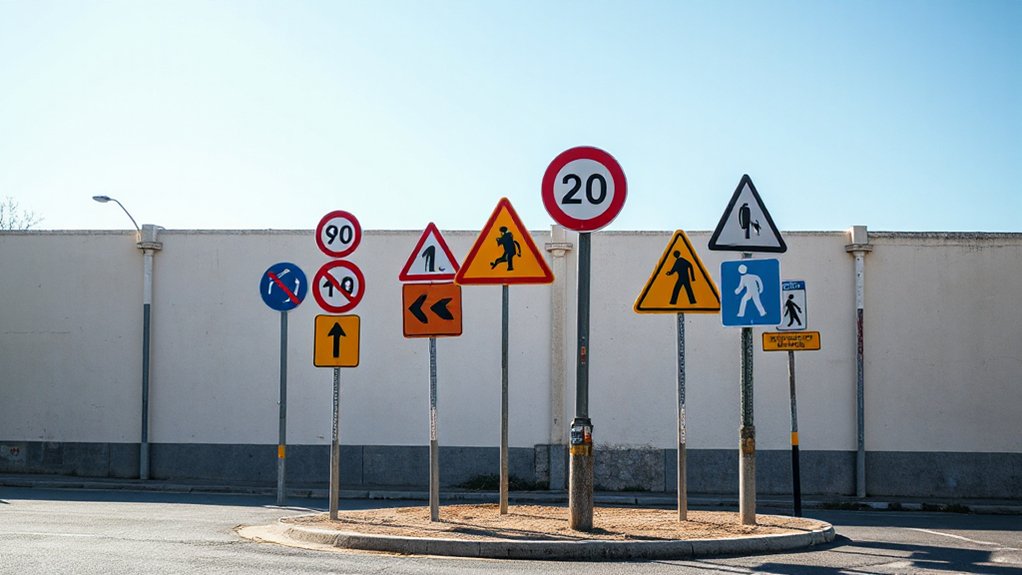
If a sign’s meaning isn’t immediately clear, don’t assume. You should slow down, reduce speed, and prepare to stop if necessary. Assess your surroundings: nearby lanes, arrows, and any accompanying text.
Look for standard symbols or colors that hint at the rule being conveyed. If uncertainty remains, prioritize safety over proceeding; follow road markings and keep a safe distance from other vehicles.
Don’t rely on vague surroundings or memory of prior trips. Use your best sign recognition to interpret the immediate context, then proceed with caution or turn as needed.
If you’re unsure, assume sign obscurity and seek alternate, safer guidance—pull over only where legal and permitted. Report unclear signage to authorities for clarification and improved clarity.
Frequently Asked Questions
Do Signs Differ Between Autonomous Regions in Spain?
Yes, there are regional variations, but core signs remain consistent nationwide. You’ll notice differences in signage enforcement and some regional symbols. Stay alert: regional variations influence local rules, but nationwide standards apply for safety and recognition.
Are There Color Meanings Unique to Spanish Signs?
Allegorically: you’re the compass; color symbolism guides you. There aren’t unique Spanish color meanings—sign design standards apply nationwide. You’ll notice red, blue, and yellow carry shared signals, not region-specific hues governing rules.
How Are Temporary Signs Communicated to Drivers?
Temporary signage is communicated via electronic boards, cones, and portable signs, plus police guidance, so you drive with enhanced driver awareness. You’ll notice changes ahead, adapt speed and lane positions to guarantee safe, compliant navigation through work zones.
Can Signage Differ for Bicycles and Motorcycles?
Yes, signage can differ: Bicycle specific signage and Motorcycle lane markings guide those riders separately, with distinct colors, shapes, and placements. You must observe bicycle routes and motorcycle lanes, anticipate exemptions, and follow posted, vehicle-specific instructions precisely.
What to Do if a Sign Is Faded or Damaged?
If a sign is faded or damaged, you should report it immediately and seek faded sign replacement as soon as possible, ensuring you avoid the area. Your prompt damaged sign reporting helps authorities restore clear, lawful guidance for everyone.
Conclusion
In Spain, signs guide you safely and efficiently—trust them, don’t ignore them. Stay alert for priority, speed, and parking cues, and adapt as you move from urban cores to rural byways or coastlines. On roundabouts, yield correctly; at hazards, slow and scan. A striking stat: about 70% of driving incidents in Spain involve misinterpreting signs or signals. So learn quickly, read consistently, and drive with intention—your awareness is your best safety feature.