
Discover the hidden wonders of Asturias as you wander ancient valleys where craggy vistas lean toward the sea and shepherds share warm cups of tea. Lose yourself in moonlit karst scenery, cave art etched by hands long gone, and slate villages perched like quiet sentinels. Trace secret coves along the Costa Verde, toast cider in rustic taverns, and walk coastal greenways that stitch fishing towns to wild cliffs. Stay curious—more secrets await beyond this page.
Key Takeaways
- Explore hidden valleys and moonlike karst landscapes in Asturias to discover serene vistas and time-carved geology.
- Seek coastal secrets along Costa Verde with secret coves, tide pools, and dawn-rock stairways for photography and exploration.
- Visit slate villages and Picos de Europa to experience alpine wildlife, terraces, and time-worn architecture.
- Immerse in Asturian cider taverns and traditional markets for authentic culture, flavors, and local storytelling.
- Combine night skies and coastal wildlife to witness starry views, seabirds, and quiet coastal towns after dark.
Discover Asturian Valleys and Hidden Vistas
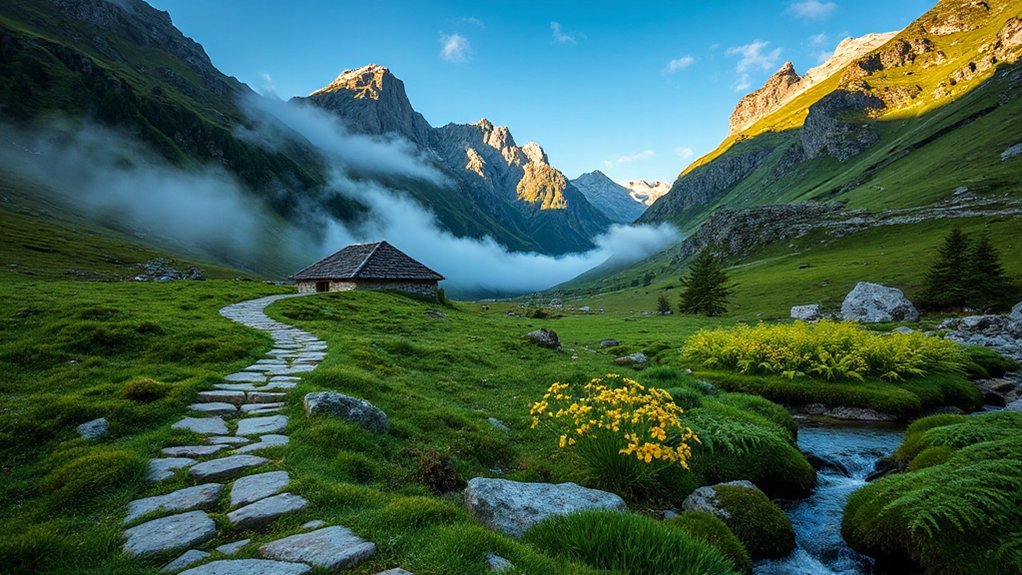
Hidden valleys unfold as you drive the back roads of Asturias, where every switchback reveals a postcard moment tucked between crag and sea. You pull over to listen to wind threading through pines and hear distant bells from hillside farms. The valleys breathe a quiet, stubborn life, and you feel your pace slow to match their rhythm.
You meet shepherds with dogs and hands stained by years of weather, swapping stories over steaming cups. In hamlets, you glimpse Asturian folklore woven into daily work: a carved doorway, a rope bridge, a craftsman shaping wood into keepsakes.
Local artisans invite you to linger, to trace grain, to taste honey, to photograph terraces etched into the slope. You leave with a map of quiet horizons and a memory of belonging.
Secret Coves Along the Costa Verde
It’s you, the coastline, and a handful of safe, tide-smart choices for a memorable, intimate coastal wander.
Hidden Cove Access Tips
As you map your route along the Costa Verde, you’ll discover coves tucked between rugged cliffs and emerald pines, and a few require a careful eye and a steady foot. Access often means stepping over slippery basalt, testing grip on wet rock, and timing your descent with incoming surf.
Bring a compact headlamp for shaded ledges, a breathable layer for chilly mornings, and a towel you can shake free of grit. Look for natural rock stairways carved by centuries of tides, and follow cairns that glow faintly at dawn.
Once you’re in, quiet flushes the air; you breathe easier, and your focus sharpens. Beach activities and coastal photography emerge as your honest companions, not distractions.
Tide-Safe Coastal Explorations
Ever wondered how tide and time align to reveal the Costa Verde’s best-kept nooks? You slip onto slick rock, senses awake to salt and moonlight, and step into a narrow secret.
The tide pools glitter like quiet constellations, each pocket a tiny ecosystem begging for careful, curious hands. You move thoughtfully, avoiding loose scree as coastal erosion has carved steps and shelves, revealing new micro-landscapes with every pull of the sea.
A gull circles, your breath syncs with the surf, and you study tiny crabs scuttling in a sun-warmed crevice. You leave footprints only briefly, then rinse truth from the stones with spray and silence, carrying learned respect for these tide-safe coves.
Asturians’ Cider Taverns: A Local Ritual You Must Try
When you step into an Asturian cider tavern, the air tightens with a brisk song of pouring and clinking—and you suddenly become part of a ritual that feels ancient and living.
The pour comes from a practiced height, the cider foaming as it meets your glass in a wink of bubbles, and you learn to listen for the soft hiss that signals a perfect flow.
You mouth the first swallow, then grin as others cheer, embracing a shared moment of cider tasting and laughter.
Local festivities pulse around you: plates of tortilla, pinchos, and stories spinning like wind.
You feel rooted yet buoyant, a guest who leaves lighter, carrying the warm echo of this communal rite.
Cavern Art and Ancient Echoes: Prehistoric Asturias
You step into the darkness and feel the pulse of ancient cave art guiding you—its origins whisper in every charcoal stroke and ochre smear. You trace the echoes of prehistoric life, noticing how hidden architectural marks tinge the walls with purpose and ritual.
You leave with a sense that these silent galleries are living conversations, inviting you to listen to Ancient Cave Art Origins, Echoes From Prehistoric Asturias, and Hidden Cave Architectural Marks together.
Ancient Cave Art Origins
The earliest whispers of Asturias echo from its caves, where handprints, etched lines, and animal silhouettes glow in the dim, torch-lit walls, inviting you to step back tens of thousands of years. You trace the first flickers of meaning, where Ancient symbolism threads through charcoal and pigment, guiding your gaze along smooth ledges and rough alcoves.
You feel the pulse of early creators, not artists so much as transmitters, shaping cave inscriptions into stories that outlived their makers. The air tastes of mineral ash and rain, of breath and belief converging. You sense ritual, kinship, and memory, preserved in stone.
These origins etch a lineage, a quiet map of human voice rising from darkness.
Echoes From Prehistoric Asturias
Cavern breathes through you as you step into Asturias’s prehistory, where echoes ripple from mineral walls and your own heartbeat seems to synchronize with distant drums of the past. You move carefully, tracing textures that feel like memory pressed into stone, and you sense the land speaking in a language you almost remember.
Prehistoric artifacts rest in dim alcoves, their shapes shaping your questions about daily life, ritual, and endurance. Cave paintings flicker in your imagination, charcoal whispers and ochre silhouettes that carve meaning across time.
You listen, letting the quiet bulk of ages settle into your chest, translating into a personal map of curiosity. The cave keeps your secrets, while awakening yours in return.
Hidden Cave Architectural Marks
Hidden in the dim rhythm of the caves, architectural marks pulse like a map pressed into stone, guiding your steps with a quiet insistence. You feel the rhythm under your fingertips, a language of pressure lines and notch patterns. These ancient carvings tell stories without sound, guiding explorers toward Hidden chambers and silent galleries.
Every groove marks a choice—where to turn, where to pause, where to listen. You sense the pulse of hands long gone, shaping corridors that still breathe with old earth, stone, and breath. The marks connect you to a time when space itself was a script, inviting you to read with your body as well as your eyes.
Ancient carvings endure, beckoning, intimate, enduring.
- Map-like grooves hint at routes
- Notched edges mark thresholds
- Subtle hollows suggest sleeping figures
- Curved lines imply architecture
- Finger-width channels reveal passageways
The Picos De Europa: Silent Peaks, Loud Vistas
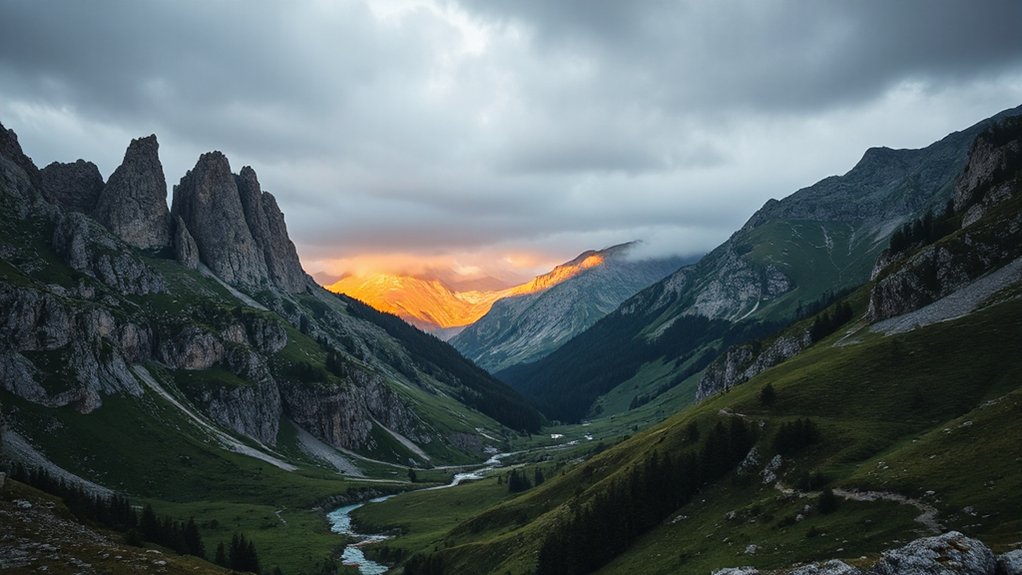
In the Picos de Europa, the mountains rise like ancient sentinels, their silent faces guarding a world of sudden, thunderous views. You breathe in crisp air as jagged silhouettes sharpen against the sky, and you realize every turn invites a new revelation.
Trails wind through abrupt crests where Mountain flora threads emerald through gray, tiny miracles clinging to rock fissures. You pause to listen to alpine wildlife—ibex bells, distant choughs, a marmot’s alarm—each sound a pulse in this high, unhurried cathedral.
A mist curls along a saddle, then parts to reveal a turquoise tarn cradled by basalt stairways. You move with care, savoring the hush between gusts, feeling the land’s ancient patience steady you for what’s ahead.
Slate Villages: Architecture in Dark Grey Light
Slate villages cling to the hillside like weathered coasts, their houses stitched from dark gray slate that catches the light in quiet, intimate shards. You walk the winding lanes, feeling the weight of dark architecture pressing softly over cobbles, listening to slate roofs sigh with the breeze. The texture of stone greets your fingertips, and every doorway invites a memory you almost reach for.
In this light, color is a whisper, and structure is the story.
- Narrow stairways spiraling between slate walls
- Windows framed by charcoal ledges catching sun
- Doorways set low, inviting close conversation
- Beams and lintels wearing time like a badge
- Patience etched into every pitch and corner
Hidden Gorges and Moonlike Karst Landscapes
You wander into Hidden Gorge Formations, where pale stone folds into secret passageways and every echo feels like a whispered invitation.
Moonlike Karst Scenery unfurls above you, limestone skin catching the light in ghostly, surreal halos as you tread softly along narrow ledges.
You sense a dialogue beginning here, between rugged chasms and sky, inviting you to notice—and names—these quiet, startling thresholds.
Hidden Gorge Formations
- Ancient legends whisper through the canyon walls, guiding your steps
- I trace the shadows along slick limestone and listen for distant waters
- Mountain folklore threads its way into every echo you hear
- You slide past ribbed ridges that frame narrow, secret skies
- Your breath slows as silence folds around you like velvet
The air tastes mineral, and you feel the story tighten around your bones, inviting you to linger, to witness how time carves beauty with patient hands.
Moonlike Karst Scenery
Moonlike karst rises from the moonlit map of Asturias, a terrain where pale cliffs glow as if lit from within and shadows pocket secrets along every crevice. You step onto a slick path, feeling the stony pulse of ancient tides beneath your boots. The air tastes mineral, cool, with a whisper of damp earth.
Lunar landscapes unfold as you circle hidden gorges, each bend revealing a new mood: quiet chasms, shallow pools, limestone ribbons that baffle with grace. You press closer to cave formations, constellations carved in stone, stalactites dripping patient stories.
Light negotiates between crags, turning rough surfaces into intimate maps of memory. You leave with a softer boldness, a sense you’ve walked inside a living, breathing geology.
Coastal Greenways: A Hiker’s Coastal Circuit
The Coastal Greenways stretch along Asturias’ edge like a living thread, linking villages and coves with a network that welcomes every footstep. You pace the path, feeling salt on your skin, hearing the surf sketch your itinerary, and tasting wind-sweet air between cliffs. Seaside flora brushes your ankles, and you note how the coast keeps its own rhythm, a quiet companion to your compass.
Coastal navigation becomes instinct—laneways of spray, markers that prove you’re exactly where you should be.
- Salt-sculpted boulders glisten as gulls wheel overhead
- A trail cut into chalk cliffs reveals hidden coves
- Seaside flora brushes your gait with hardy, damp leaves
- Distant lighthouses punctuate the horizon’s blue
- Your breath steadies, step after mindful step
Traditional Markets of Asturias: Food, Crafts, and Conversation
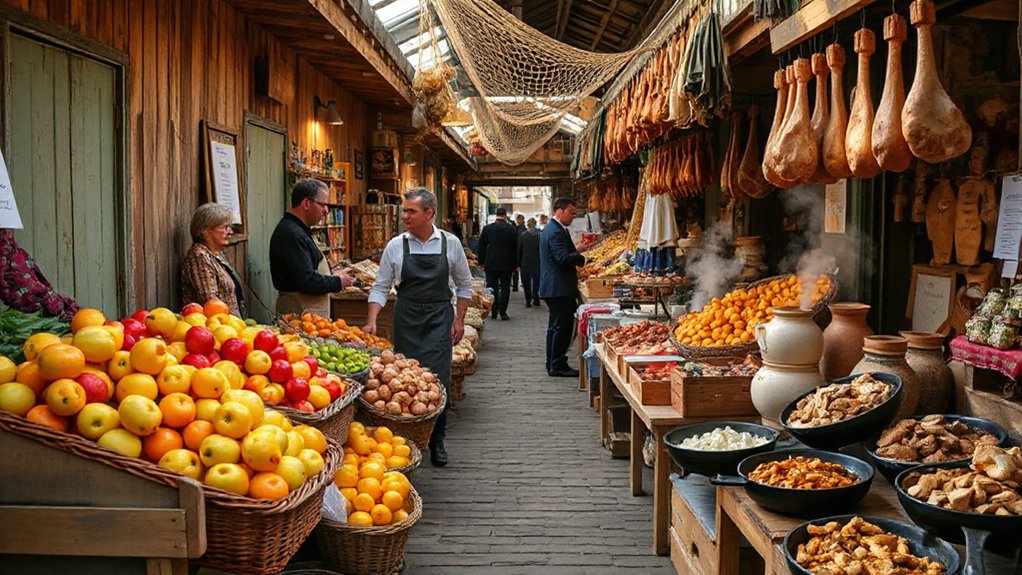
From the swell of the coast you’ve just left, you step into another rhythm: the traditional markets of Asturias, where the air is thick with the scent of grilled peppers, salty air still clinging to your skin, and voices mingling in quick, friendly bursts.
You move between stalls that glow with vibrant produce, catching snippets of local conversations as peppers sizzle and apples sigh with each breeze. You taste octopus, smoke curling from the grill, and you notice the texture of jerky, the silk of honey, the crunch of bread.
Traditional crafts line every corner, from woven baskets to carved spoons, inviting you to touch. You leave with a memory of community, flavor, and the brisk magic of conversation.
Asturias by Night: Starry Skies and Quiet Towns
As night settles over Asturias, the sky unfurls a quilt of stars you feel in your bones, bright trails guiding you through the quiet of small towns.
You notice how the towns glow with a gentle, almost whispered life—streetlamps soft as memory, doors left open to the cool air, and the calm that settles when the last church bell fades.
It’s in this serene hush that you sense the night’s true invitation: to slow, listen, and let the starry expanse reveal the quiet charm of each village.
Night Skies Serenity
Under a velvet Andalusian-like silence, Asturias by night invites you to slow your breath and notice how the stars spill light over quiet villages, each roofline a dark tooth against the glow of the Milky Way. You lean into the hush, feel the cool air, and let Starlit meditation guide your gaze as distant suns wink awake.
The night rehearses Astronomical observations with patient rhythm, teaching you to map constellations on a canvas that breathes.
- Stars spill across velvet skies, inviting a slow, intimate study
- A hush becomes a companion, sharpening perception
- Telescope or naked eye, clarity rewards patient focus
- The Milky Way threads ancient stories through silence
- Night air holds promises of secret, unfolding skies
Quiet Town Charm
Quiet towns cradle the night with a gentle, almost shy charm, where a single streetlamp casts a amber halo over cobblestones and you feel the quiet breathe with you. You wander narrow lanes, stepping into a warm glow that promises small, honest conversations.
A farmer’s porch sighs with Farmhouse hospitality, its wooden chairs inviting you to pause, sip something steeped in memory, and listen to the distant cluck of dusk. In the back rooms, local art scenes spill colors onto worn walls, revealing stories you hadn’t expected from quiet hours.
You notice the rhythm: a church bell, a cat’s soft arc, a baker’s dough-warmed scent. Night settles, and the town keeps your pace, intimate and unhurried.
Coastal Wildlife of Asturias: Puffins, Seabirds, and Seals
From the cliff tops above Asturias’s rugged coast, you’re met with a chorus of seabirds, puffins bobbing on the turquoise swells and seals lounging on sun-warmed rocks below. You feel the salt kiss your cheeks as wind choreographs the birds’ erratic ballet, a living postcard of Marine conservation in motion.
Each puffin announces a stubborn corner of seabird nesting, a fragile rhythm you vow to witness with care.
- Puffin silhouettes sketch the horizon, relentless and brave
- Seabird nesting sites marked by cautious, steady vigilance
- Seals trade sun for shade, watching shifting tides
- Cliff-edge gulls punctuate the air with brassy calls
- Ocean spray stitches the scene into memory, your senses listening
You leave lighter, wiser, connected to the coastline’s wild heartbeat.
Lush Forest Walks: Rivers, Ferns, and Pathways
The forest beckons with a cool hush and a living map of rivers winding beneath a tapestry of ferns, moss, and ancient trunks. You step light, counting the water’s breaths as it slides past slick rocks and crooked roots.
Fern fronds unfurl like quiet applause, guiding you along a moss-carpeted path that threads through shadows and sunbeams. A breeze carries the scent of damp earth, pine, and a distant rain, inviting you deeper.
Wildflower meadows peek between trees, their colors a soft pulse against green canopies. You pause at a bend for a mountain viewpoint, where slate ridges carve the horizon.
The walk returns you lighter, steadier, more present, until you’re listening to the river’s answer in your own heartbeat.
Rural Festivities of Asturias: Timeless Dances and Feasts
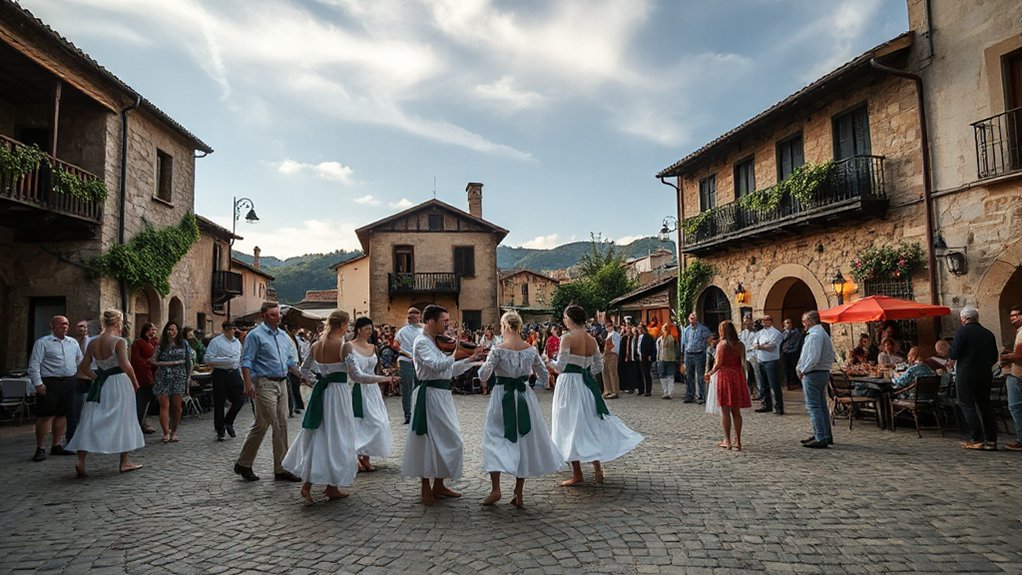
Beyond the rustle of leaves and the river’s soft murmur, Asturias reveals a different kind of heartbeat—folk processions, grain-drying ceremonies, and the bright, insistent clatter of revelry that fills village squares.
You step into dusty streets where folk costumes shimmer, threads catching the sun, and traditional music lifts the air with a pulse you can almost hear in your bones. Each dance tells a memory, each feast a story you taste in bread and cider, shared with strangers who feel like kin.
The evening fog settles as you linger, savoring time that slows, then spins you toward the next chorus.
- folk costumes and embroidery catching sunlight
- traditional music weaving through motion
- drumbeats guiding circle dances
- shared plates, warm breads, and cider
- village elders passing legends to you
Cider Production: From Apple Orchard to Tap
You stroll through sun-warmed orchards, tasting the crisp choice apples that will soon become cider, noticing how each variety whispers a different promise for Fermentation And Cask Aging.
In the tiny Tap Room, you feel the ritual pulse of the day—Apple Selection Techniques guiding a careful blend, the snick of the tap handle, and the stories that linger in the glass.
You sense how these traditions stitch together the journey from orchard to pour, inviting you to linger and compare the seasoned casks with the bright brightness of the finished cider.
Apple Selection Techniques
Apple selection begins long before harvest, when you learn which varieties will sing together in a pint of cider. You walk the rows, noting blush and tart, imagining the final balance you’ll coax from pressed juice and patient time. Your hands nurture a shortlist of partners, aligning sweetness with acidity, aroma with tannin.
You taste memory in each leaf-scented breeze, trusting instinct as much as data. The goal isn’t perfection, but harmony that travels from orchard to tap. Your choices shape texture, depth, and sparkle, guiding every press toward clarity. Your pursuit honors the land and your palate, a quiet conversation with Apple harvesting and cider fermentation.
- Read the orchard’s chorus before picking
- Pair flavors by bloom timing and skin thickness
- Favor varieties with balanced acidity
- Label blocks by anticipated acidity and sugar
- Iterate tasting notes after pressing
Fermentation And Cask Aging
Fermentation begins the moment the pressed juice meets air and intent, a quiet, stubborn shift from orchard arithmetic to living chemistry. You watch it hum in a cool room, where time slows and tiny bubbles insist on their own punctuation.
Fermentation techniques become your map, guiding sweetness toward tartness, turning stubborn sugars into bright, drinkable memory. You taste the evolving cider, noting how patience shapes character as much as temperature and yeast choice.
Then comes Cask aging processes, where oak whispers into the liquid, smoothing edges and coaxing deeper orchard notes from months of quiet conversation. You pour carefully, checking clarity and aroma, savoring the way time deepens complexity without shouting.
The journey from juice to cider feels like a rooted conversation you never want to end.
Tap Room Traditions
When you step into the tap room, the air tastes faintly of apple and anticipation, and the room hums with the honest arithmetic of craft. You sense the lineage of cider in every glow of the jars, the staff’s careful gestures, and the rhythm of tapping, pouring, noting.
Tap room traditions unfold as intimate rituals, where patience meets palate and memory. You learn to listen to the fizz, to watch the swirl, to inhale the orchard’s sum of sweetness and tart.
Cider tasting becomes a conversation with orchards and time, not a rush. You leave with a clear stamp of place, and a story you’ll carry back to your table.
- Orchard-to-glass rhythm
- Temperature and texture cues
- Clean palate, bold finish
- Shared stories, personal bites
- cider tasting as memory creation
Unexplored Caves: Speleology for Curious Travelers
Ever wonder what lies beneath Asturias’s green hills? You slip into a quiet world where breath echoes and your steps measure time differently.
You trace the cool, damp stones with your fingertips, listening for the distant drip of a hidden spring. The cave reveals its own weather: mineral glitter on walls, a phosphorescent glow from tiny critters, and the low hum of underground ecosystems thriving out of sight.
You learn to move slowly, to read the ceiling’s stalactites like a manuscript of ancient water, to respect fragile formations that survived millennia. Each chamber becomes a micro-adventure, a private map sketched in darkness.
You exit with a lighter pack, a heavier sense of wonder, and a story etched in memory. Cave formations, underground ecosystems.
Castles and Fortified Viewpoints: Quiet Strongholds
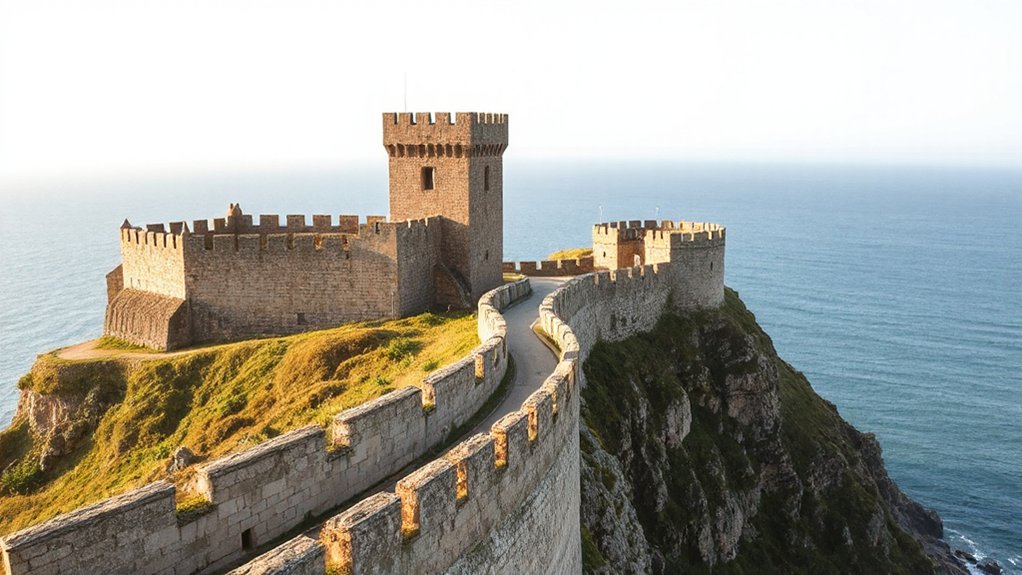
If you pursue quiet strength rather than crowd-pleasing grandiosity, Asturias delivers: castles perched like watchful secrets above winding lanes, fortified viewpoints that feel less like places to pass through than thresholds to memory.
- Medieval fortresses crown hilltops, their stones breathing stories you can almost hear in the wind
- Defensive towers lean into the sea breeze, keeping time with distant storms
- Narrow stairwells invite your footsteps into secret corners and lingering shadows
- Contoured battlements frame valleys, turning horizon and history into a single breath
- Quiet courtyards hold dew, loaves, and echoes of old councils you almost overhear
Archaeological Trails: Celtic Settlements to Roman Roads
You walk along the Archaeological Trails and feel the land loosen under your steps, as Celtic settlements hint at past fires and daily routines just beyond the hedges. You trace faint earthworks, imagining drumbeats, hearth smoke, and the cadence of work in shifting light.
The path threads from prehistoric artifacts toward Roman roads, a braided map of conquest and continuity. You pause where pottery shards catch sun, recognizing Celtic heritage in their shapes, their decorations, their stubborn resilience.
Every stone whispers a story of movement, barter, and kinship, of villages stitched to rivers and hills. You step forward, absorbing the sense that here history isn’t neat; it’s insistently layered, human, and intimate, inviting you to read the land with careful, curious eyes.
Practical Pathways for Visiting Asturias: When to Go and How to Move Safely
Asturias invites you to plan with both practicality and wonder in mind, so you can savor its rugged coast, emerald valleys, and cliffside villages without missing a beat. You’ll feel the pulse of arrival, then breathe easy as you map routes, balance buses with trains, and pick car-free days for hikes.
When to go matters: spring crowds brighten trails, autumn colors glow, winter quiet invites introspection, and summer energy hums along tapas routes.
Travel safety stays close: stay aware of weather shifts, pack light, use licensed taxis, and keep valuables secured.
Local transportation links generously stitch towns together, letting you roam without rushing, while footpaths reward careful pacing.
You’ll leave with memories as steady as the sea.
- Plan shoulder-season visits for milder crowds
- Check schedules the night before travel
- Prefer licensed transport and clear maps
- Pack weather-ready layers and rain gear
- Stay alert, trust local advice, and enjoy the journey
Frequently Asked Questions
What Is the Best Season to Visit Asturias Overall?
Spring and early autumn are best; you’ll enjoy mild weather, fewer crowds, and vibrant scenery. Savor Asturias cuisine as you hike, and catch local festivals, where warm hospitality amplifies the season’s magic. Cozy inns keep you wandering joyfully.
How Can I Travel Between Major Regions Affordably?
You can travel between major regions affordably by using flexible local transportation options, like buses and shared rides, while bundling passes. I share budget travel tips: ride slowly, book ahead, and savor the scenery through local transportation.
Are There Accessible Options for Limited Mobility Travelers?
Yes—accessible transportation exists, and you’ll find wheelchair friendly attractions, weaving your journey into a seamless rhythm where coincidences guide you. You glide coast to coast, discovering comfort, practical routes, and stories that feel personally crafted for you.
Which Asturias Towns Offer Free Public Events or Markets?
Yes—Asturias towns host free public events and markets: you’ll wander through local festival highlights and traditional craft markets, tasting coast air and cider, watching dancers, and feeling the pulse of street musicians as each town invites you closer.
What Safety Tips Should I Know for Adventurous Hiking?
Stay vigilant and pack sturdy gear, because safety gear and the right footwear protect you while you hike. Follow trail markings closely, read weather changes, carry water, and trust your instincts as you navigate steep, slippery, exhilarating paths.
Conclusion
You’ll leave Asturias with your senses rewired, a map tucked behind your ribs like a secret compass. Each valley, coves, and cider-drenched tavern whispers, inviting you closer, until your footsteps become a heartbeat on ancient stone. The coastline sings in green-blue rhythm, caves hum with timeless echoes, and peaks stand like sentinels over your memories. It’s a compass you can’t reset—a river of stories you ride, a rhythm you finally learn to breathe with.