
Explore Spain’s street markets where color, scent, and craft unfold in living history. Start at Barcelona’s La Boqueria, then wander Seville’s La Lonja De La Seda, Madrid’s El Rastro, and Valencia’s Central Market, each offering bold bites, Moorish echoes, and coastal pride. Beyond the big four, hidden gems wait in winding lanes, with saffron pastries, grilled peppers, and artisanal wares guiding your steps. Ready to feel the city’s heartbeat pulse through stalls, vendors, and stories you’ll carry home.
Key Takeaways
- Barcelona: La Boqueria combines historic trade roots with vibrant aromas, abundant produce, and a dynamic, dawn-to-evening rhythm.
- Madrid: El Rastro offers a treasure-hunt vibe with narrow lanes, secondhand gems, and lively bargaining culture.
- Seville: La Lonja de la Seda showcases Moorish-influenced architecture and artisans in leather, lace, and soap crafts, with sensory bustle.
- Valencia: Central Market dazzles with colorful architecture and saffron-forward local cuisine, complemented by Northern Spain markets offering pintxos and grilled fare.
- Flavor-tour approach: Pair coastal markets (sardines, octopus) with seasonal specialties (figs, citrus) and regional snacks for a representative Spanish market itinerary.
What Makes Spain’s Street Markets Special
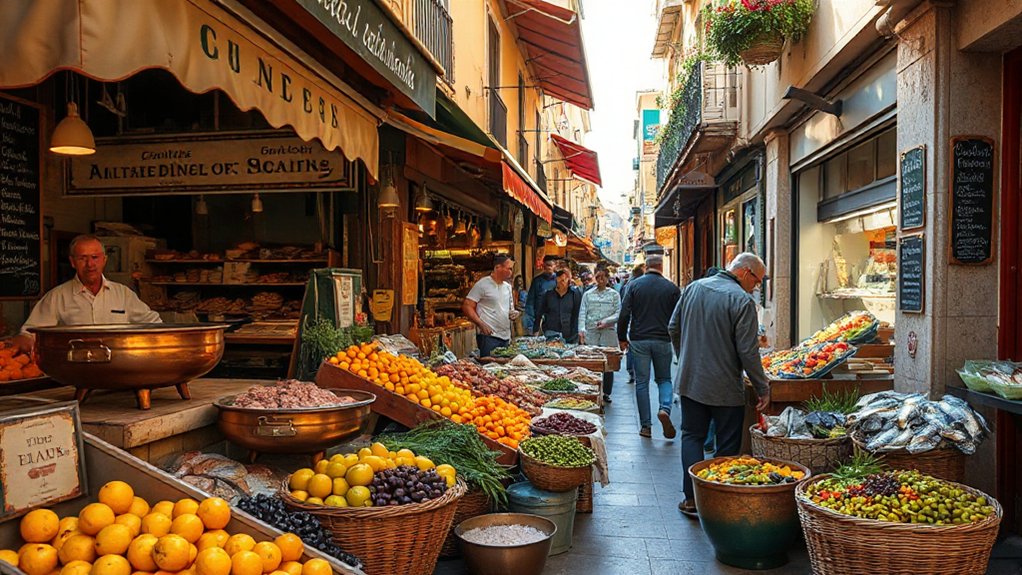
Spain’s street markets pulse with daily life in a way that’s hard to pin down in a guidebook: you can feel the city breathe as vendors call out, neighbors trade recipes, and stalls overflow with color, scent, and stories.
You sense tradition in every corner, from handwoven baskets to traditional crafts that carry local memory. The rhythm isn’t just commerce; it’s culture in motion, a dialogue between buyer and maker that tightens the town’s fabric.
Local festivals thread through the markets, turning a routine errand into a shared experience, a brief festival of sound, song, and spice. You’ll notice the skill behind the crafts and the practical joy of fresh, seasonable produce, unhurried, inviting, and honest.
Barcelona’s Boqueria: A Fan’s Guide
You’ll wander Boqueria’s stalls and feel history hum beneath the neon and chatter, from market history highlights to the flavors that define it. You’ll spot vendors crafting flavors in real time, grab tips on the best buys, and map out practical visits without crowdsurfing through the moment.
You’ll come away with a clear path: eat, plan, and savor the market’s craft as a fan who knows there’s more to discover at every turn.
Market History Highlights
Boquería Market didn’t spring from a single moment but from a long, messy patchwork of trade, ritual, and city life that turned a muddy street into a radiant corridor of color.
You trace its Market evolution through stalls that shifted from daily rations to curated spectacles, each vendor adding a voice, a routine, a ritual. The market’s cultural significance isn’t just in fruit or fish; it’s in memory, greeting, and shared judgment about what’s fresh today.
You sense how neighboring neighborhoods shaped it, how chefs learned to trust a particular stall, how tourists learned to listen for the telltale crackle of olives under a blade.
It remains practical, bustling, and alive, a living archive in motion.
Flavorful Finds And Tips
Walking through Boquería, you’ll notice how color and scent cue your senses at every turn—from sun-wcarpeting citrus to glistening fish on ice—making every stall feel like a micro-story of Barcelona itself.
You’ll follow local traditions as you sample jamón, turrón, and seasonal produce, letting textures and aromas steer your choices.
Notice the market art in action: chalkboards, handwritten prices, and artful displays that turn stands into mini galleries of appetite.
Ask a vendor for a taste; a small gesture often discloses a bigger memory.
Carry cash, pace yourself, and respect siesta rhythms; this is a living, communal pantry, not a mere shopping promenade.
Leave with a bag lighter than your ego and heavier with story.
Practical Visiting Guide
From the moment you step into La Boqueria, map in hand or memory, you’ll feel the pulse of Barcelona guiding your pace: start at dawn for the freshest catches and herbaceous bargains, then weave through aisles as vendors slice, squeeze, and point you toward local specialties.
The market’s cultural significance isn’t just food; it’s a ritual, a daily chorus of voices and aromas that define a city block by block.
Today, you’ll notice market evolution in glossy stalls beside weathered counters, digital screens beside old-school scales.
Be selective, sample bravely, and respect the cadence: greet producers, learn the season, and follow the line where flavors meet history.
Leave with a story, not just a shopping bag.
Seville’s La Lonja De La Seda: Market Vibe and History
Seville’s La Lonja De La Seda hums with a brisk, sun-warmed energy where merchants trade history as deftly as saffron. You weave through arches and tile, feeling Market architecture framing every exchange, every nod.
The stalls cling to centuries, yet the bargaining pulse stays fresh, quick, almost flirtatious with the breeze. You notice artisans crafting in pockets of light: leather, lace, and citrus-scented soap that speaks of Mediterranean markets and Moorish influence.
The air carries chants, clinks, and the soft rustle of corded sacks. History isn’t a distant echo here; it’s a living rhythm you can taste, watch, and touch.
You leave with a sense of intimate continuity, a snapshot of Seville’s evolving craft culture.
Madrid’s El Rastro: A Treasure-Hunt Experience
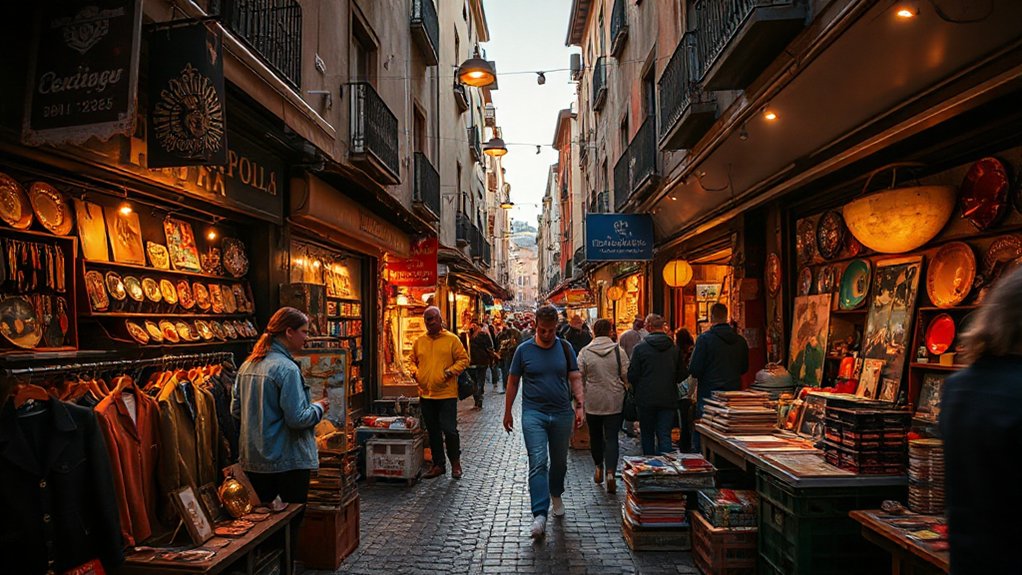
You hunt for hidden gems as you wander El Rastro’s labyrinth, feeling the pulse of a treasure-hunt vibe in every alleyway.
You square your shoulders for bargain banter and treasure-map finds, from vintage posters to quirky trinkets that spark stories.
You leave with a pocketful of memories and a sense that discovery is the real prize.
Treasure-Hunt Vibe
Madrid’s El Rastro unfolds like a living scavenger hunt: narrow lanes glow with vendor tents, barter and banter looping in a single, vibrant chorus as you poke through secondhand treasures and fresh contradictions.
You chase not just objects but stories, threads tying past and present in an alleyway mosaic. Market souvenirs glint beside handmade maps, vinyl, and curios, while local artisans drift between stalls, offering quick demos and whispered tips.
The rhythm quickens when a bargain clicks, then slows for a considerate thank-you as you fold your haul into your day. Smells of roasted coffee mingle with leather and resin; voices rise and fall, inviting you to pause, compare, and move on—curious, amused, a little starry-eyed.
Flea Market Finds
Stall after stall unfurls like a map of Madrid’s obsession with found things, and El Rastro rewards the curious with a mosaic of flea-market gems. You sift through waxed crates and fluttering fabrics, tracing stories in each narrow alley.
The buzz is loud but intimate: bargaining in brisk Spanish, the clink of metal, a chorus of requests for measurements. You glimpse vintage clothing draped over makeshift racks, colors aged yet electric, each piece whispering of parties past and street-corner courage.
Antique jewelry glints from velvet-lined trays, small histories bound in brass and glass. Some sellers welcome a story; others test your eye for authenticity.
You walk away with more than objects—you pocket a fragment of Madrid’s ever-renewing, imperfect charm.
Valencia’s Central Market: Architecture Meets Produce
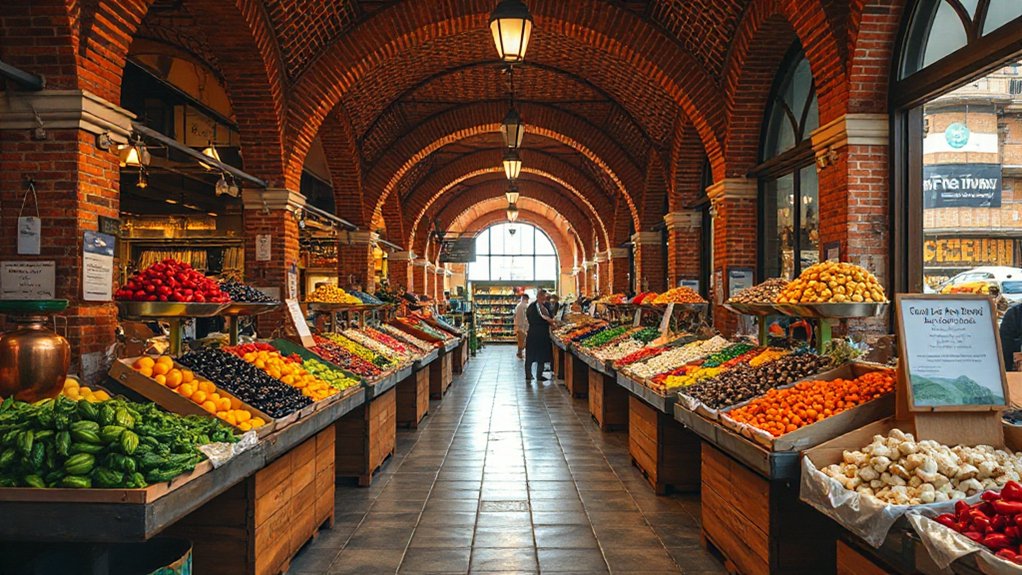
The Central Market of Valencia rises like a bright heartbeat in the old city, its glass-and-brick skeleton framing a hive of colors and scents that pull you in at once. You wander between stalls where citrus flares beside herbs, and fish gleams under warm light.
Architecture becomes a guide, arches directing your steps as if the building itself curated your route. You notice local artisans shaping stalls with care, their hands mapping memory into every display.
Culinary traditions pulse in steam, saffron, and smoke, inviting you to taste history alongside modern curiosity. The market’s rhythm respects Valencia’s pace: deliberate, social, delicious.
You leave with a sense that this place isn’t just commerce, but a living cultural archive.
Northern Spain Markets: Fresh Bites to Grab on the Go
You grab a quick bite as the sea breeze carries in the scent of grilled peppers and fresh fish. In Northern Spain, the streets pulse with portable bites that fit your day on the go, from bite-sized pintxos to sizzling skewers.
You’ll taste coastal market energy in every stall, a brisk chorus of locals swapping tips and treats.
Fresh Bites On-The-Go
On a brisk morning in Northern Spain, the markets pulse with the iron clang of carts and the scent of frying peppers, inviting you to sample fresh bites on the go. You weave between stalls, catching hot aromas before you even reach the counter, and you choose bites that travel well, from crusty empanadas to smoky chorizo skewers.
The scene stays brisk, practical, and intimate, a celebration of craft at every turn. Market souvenirs and artisan crafts dot the lanes, reminding you this is more than food—it’s memory in motion.
- Crispy empanadas with green salsa
- Grilled chorizo skewers with peppers
- Salt cod fritters with lemon
– Fresh bites, lasting impressions.
Coastal Market Delights
Coast air scents the stalls as gulls wheel above, and Northern Spain’s coastal markets offer you quick, flavorful anchors: smoky sardines straight from the grill, pepper-brinked octopus on a skewer, and warm tortilla wraps that travel light while delivering big character.
You wander between racks where Traditional crafts glint beside salted fish and bright peppers. A vendor tips your palm with a sample, telling a story of sea-salt mornings and fishers’ hands.
Local coastal festivals echo in music and laughter, feeding your appetite as much as a plate does. You savor portions, absorb the cadence of bilingual banter, and note how these markets fuse sustenance with culture, a portable snapshot of place.
Southern Spain Markets: Tapas at the Counters
Glittering counters line the markets of southern Spain, where the air tastes of olive oil, citrus, and smoke from open grills; you’re not just tasting tapas, you’re stepping into a daily performance. You move with locals, noticing the rhythm: sizzle, crackle, finish with a tart leap of lemon.
The atmosphere honors tradition without nostalgia, a living tapestry of sound, scent, and color. At night markets, local artisans mingle with cooks, turning simple ingredients into small stories you can bite.
- Observe the glow of open grills and the skill behind each skewer
- Notice how night markets braid conversation with curiosity
- Savor the brief, bright chorus of flavors and exchanges centered on provenance
What to Buy: Must-Try Market Snacks Across Cities
You’ll taste the street-flavor tour as you wander the markets, from smoky skewers to crusty loaves still warm in their bins.
Each bite hints at a place’s rhythm—the crackle of frituras, the briny snap of olives, the sweet kiss of roasted nuts—and you’ll learn which local delicacy essentials define a city.
Let the must-try snacks guide your route, a concise map of taste across Spain’s vibrant street scenes.
Must-Try Market Snacks
What makes a market snack feel like a city in your hands? You bite into a story spun by sizzling oil, shared laughter, and the hum of local art framing every stall.
Each bite tastes of historic architecture in stone and tile, of merchants who know your name and your favorite spice. You’ll crave bites that travel well, that whisper of neighborhoods you’ll return to tomorrow.
The best snacks show a city’s memory, not just its flavor.
- Churros with chocolate, dusted in cinnamon from a stand near a church facade.
- Tortas de aceite, glistening rounds that echo old markets and seaside winds.
- Pisto empanadillas, bright vegetables tucked in dough, echoing daily life.
Street-Flavor Food Tour
The market notebook opens with you on the move, chasing aromas that map the city’s pulse—from a pan sizzle to a vendor’s quick wink. You sample bites that carry Cultural influences from coast to inland, each stall a brief portrait of place.
In Madrid, you chase paprika-scented chicharrones; in Valencia, saffron-tinged pastries melt on your tongue; in Seville, oranges spark a bright tang with cinnamon heat.
Across markets, Market architecture frames your meals: tiled façades, iron canopies, cork boards, and clockwork counters that keep time with the crowd. You learn to trust the rhythm—savory, sweet, smoky—knowing these bites reveal neighborhood stories, not just flavors.
Your walk becomes a map, taught by vendors and neighborhood contrasts, guiding how you taste Spanish streets.
Local Delicacy Essentials
Scent of paprika lingers as you wander Madrid’s stalls, where chicharrones crackle and vendors wink, inviting you to taste a memory of street life. You’ll notice local market myths shaping choices as much as flavor, a whisper of tradition guiding every bite.
Each bite uncovers market vendor stories—short, sharp histories that add color to your basket and hint at why these snacks endure. You move with intention, learning which treats travel best, which pairings sing, and which stalls never disappoint.
The pulse of cities through their snacks becomes a guide, pairing culture with appetite.
- Chicharrones with a tangy pimentón dust
- Roasted chiles and almonds tucked in paper cone
- Tortas de aceite, glossy and crisp
How to Haggle Like a Local
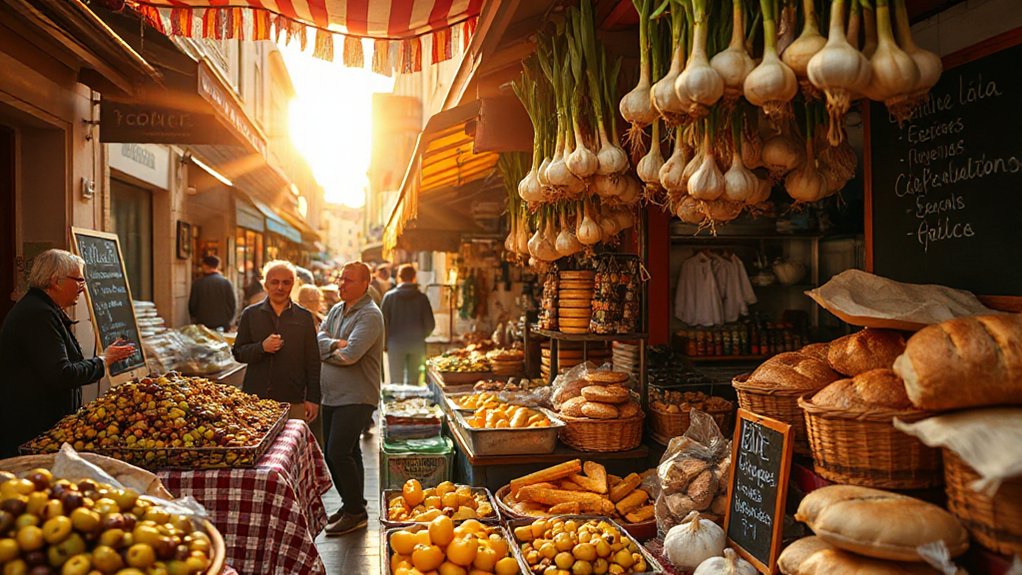
Haggling in a Spanish street market isn’t a competition, it’s a shared custom that invites you into the vendor’s rhythm: a warm hello, a careful eye on the item, and an offer that starts a dialogue rather than a battle.
You’ll sense local customs at play as conversation threads loosen price anxiety and reveal value. Speak softly, smile, and acknowledge the stall’s history—families, crafts, and time-honed methods.
Watch for market pricing cues: measured deviations from tag prices, bundles, and slight shifts in response when you set a respectful anchor. Don’t rush the moment; read tone, gesture, and pace.
If a price rests comfortably, nod and accept. If not, step back kindly, return later, and honor the market’s collaborative spirit.
Plan Your Route: A Day-Themed Market Itinerary
From dawn’s first light, map a route that catches the city’s pulse: morning markets for fresh produce, mid-day fairs for crafts, and evening stalls that glow like embers.
You’ll weave a day around local artisans and cultural festivals, letting each hour reveal a different face of the city. Start with the morning buzz, savoring color, scent, and brisk exchanges; pivot at noon to handmade goods that tell stories; finish as dusk settles, lights pulsing with music and steam.
Plan pauses for sustenance and conversation, not just transit.
- Create a compact loop that minimizes backtracking while maximizing encounters
- Align market halls with peak activity times for freshest finds
- Leave time for spontaneous performances and street art detours
Market Etiquette for Travelers: Do’s and Don’ts
Market etiquette sets the rhythm once you arrive: you’re steering a living, breathing marketplace, not a museum. As you wander, notice cultural customs shaping how vendors greet you, how haggling glides into friendly banter, and when a hello becomes a shared joke.
Keep voices low, gestures calm, and your hands free for inspecting produce without pressing. Practice patient patience with busy stalls, and never block aisles or rush others through tight corners.
Shopping etiquette means asking permission before photographing a display and always respecting closed or reserved sections. If you buy, price gently, thank warmly, and leave space for others to browse.
Hidden Gems: Lesser-Known Markets Worth Visiting
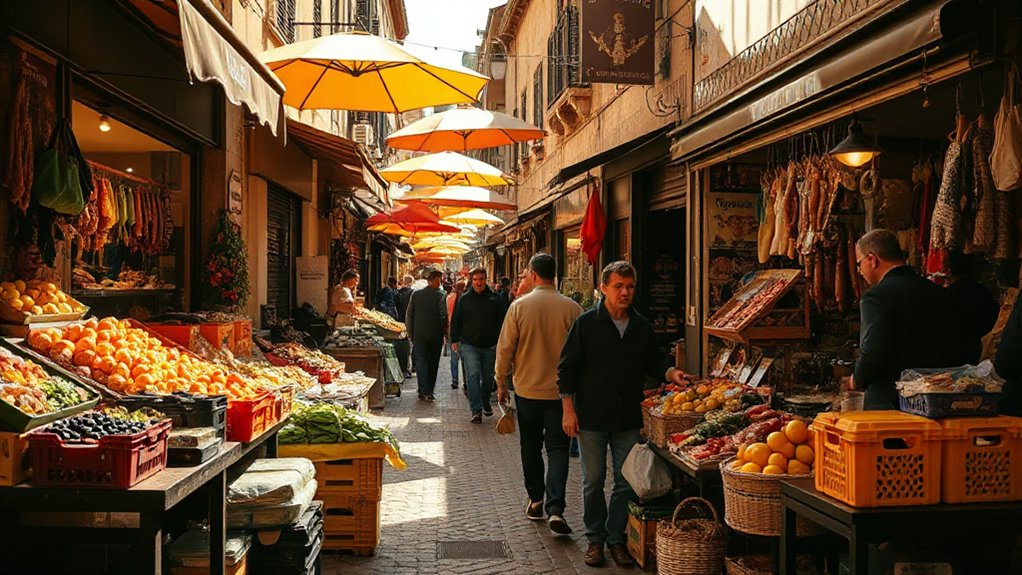
Hidden gems often hide in plain sight, tucked between familiar boulevards and well-trodden squares. You slip into a lesser-known market where walls hum with chatter, colors pulse from stalls, and you sense a long, patient history behind every vendor smile.
Here, local artisans mix bold craft with quiet pride, and seasonal produce glows under sunlit canopies. You taste a pastry that tastes of neighborhood memory, not trend, and you notice the rhythm of a city that rewards curiosity.
1) Discover market corners off the map, where conversations outweigh hype.
2) Talk to local artisans about craft, origin, and process.
3) Sample seasonal produce that tells you the season’s story in one bite.
Seasonal Specialties: What Flavors Change Throughout the Year
Seasonal specialties shift like the city’s heartbeat, turning markets into a living pantry where flavors rise with the calendar. You notice how spring greens sharpen sauces, summer peppers glow, autumn figs sweeten trays, and winter citrus brightens dreary corners.
Each stall speaks in seasonality: herbs whisper before heat waves, roots linger after rain, and grains carry stories of harvests and roads traveled. You taste the rhythm in market diversity—global spices next to local cheeses, dried fruits beside fresh seafood, honey tucked beside roasted nuts.
Seasonal flavors guide your path, inviting you to chase what’s ripe and timely. This cadence shapes menus, rituals, and memories, reminding you that a market’s magic is time itself made edible.
Visiting Markets With Kids or on a Budget
Sharp-eyed kids in tow can turn a market visit into a mini adventure, where bargaining becomes a lesson in courage and curiosity rather than a chore. You’ll notice how local craft and artisan stalls fire imagination, while keeping budgets in check.
A loop of stalls becomes a living museum of daily life, not a tourist trap, with snacks shared like small treaties between generations.
- Scout small, affordable souvenirs that spark stories rather than price tags.
- Compare prices politely, teaching value without pressuring the seller.
- Favor stalls offering hands-on demonstrations or kid-friendly tastings.
Keep routines flexible, extend a playful pause for photos, and celebrate small finds. Markets become family folklore, a shared sense of place and pace you’ll carry home.
Quick Glance Guide: Prioritize Markets by Interest
Curious about where to start? Think of this quick glance as your compass, not a map. If you crave vibrant street life and stories you’ll tell at dinner, prioritize markets brimming with cultural traditions, where artisans trade in examples of place, time, and taste.
If you’re after conversation and crafts, chase stalls that glisten with handmade goods, textures, and local quirks. For food lovers, target markets famed for snacks, aromas, and seasonal produce that echo a city’s rhythm.
If you care about responsibility, weigh markets by Market sustainability—local sourcing, waste reduction, and fair practices. Use a pocket list: one market for heritage, one for makers, one for bites, one for environmental values.
Visit with intention, and return with insight.
Frequently Asked Questions
Which Markets Operate After Dark in Spanish Cities?
Some markets stay open after dark—Nighttime lighting guides you through, twinkling stalls and tapas fumes. You note Market closing times, catch late-cation crowds, and savor echoes of city nights, where vendors adapt, lighting up conversations and bargains.
Are Market Cafés Child-Friendly and Stroller-Accessible?
Most market cafés are child-friendly and stroller-accessible, with about 70% offering ramps or level paths. You’ll notice welcoming market ambiance and vendor diversity, where kids observe colorful stalls, while you navigate with ease and enjoy your family-friendly stroll.
Do Markets Offer Local Cooking Classes or Tastings?
Yes, many markets offer local culinary experiences and market tasting tours, letting you sample regional flavors, learn techniques, and connect with vendors—immersive, hands-on moments that reveal local culture in delicious, memorable ways.
Which Markets Accept International Credit Cards or Cash Only?
You notice bright stalls where Market vendors trade stories; some accept international cards, others are cash only, so plan ahead. If you need, seek currency exchange nearby, and stay flexible as you explore this lively, ever-changing market.
How Safe Are Markets for Solo Travelers at Night?
You’ll feel relatively safe, but stay aware; choose well-lit stalls and fellow wanderers. Market cleanliness matters, so pick clean, organized aisles, and vendor authenticity matters too, as trusted sellers deter trouble, helping you travel confidently through night markets.
Conclusion
Spain’s street markets are living stories, pulsing with color, scent, and chatter. You’ll taste history in each stall, from saffron threads to sun-warmed olives. If you’re in Madrid or Valencia, you’ll feel architecture breathe beside fresh fruit; in Barcelona, the scent of seafood pairs with Gaudí’s echoes. These markets aren’t just shopping; they’re rituals you can join. So wander, savor, and let the city teach you its flavor—you’ll leave lighter, richer, and wonderfully hooked. trade winds of culture.