
To decide between a terraced house and a detached villa in Spain, weigh privacy, space, and shared costs against potential maintenance and long-term value. Terraced homes offer lower upfront costs, stronger community oversight, and efficient layouts, while detached villas provide more privacy, larger plots, and flexible design but higher upkeep. Regional demand, proximity to schools and transport, and price-per-square-meter trends matter. Consider future renovations and extension potential, then see how lifestyle goals align—you’ll uncover key trade-offs as you proceed.
Key Takeaways
- Compare privacy and noise: terraced houses offer community oversight, while detached villas provide greater seclusion and private outdoor spaces.
- Assess maintenance and costs: terraces typically have lower upfront costs and shared fees; villas incur higher maintenance but more control over expenses.
- Consider space and layout flexibility: villas usually offer larger plots and open-plan options; terraces maximize interior efficiency with compact footprints.
- Factor location and market trends in Spain: villas may appreciate faster in prime coastal areas; terraces suit urban or heritage-rich neighborhoods.
- Evaluate planning, expansion, and lifestyle needs: plan for potential renovations, boundary rules, and long-term family or guest accommodation.
How to Decide: Terraced vs Detached in Spain
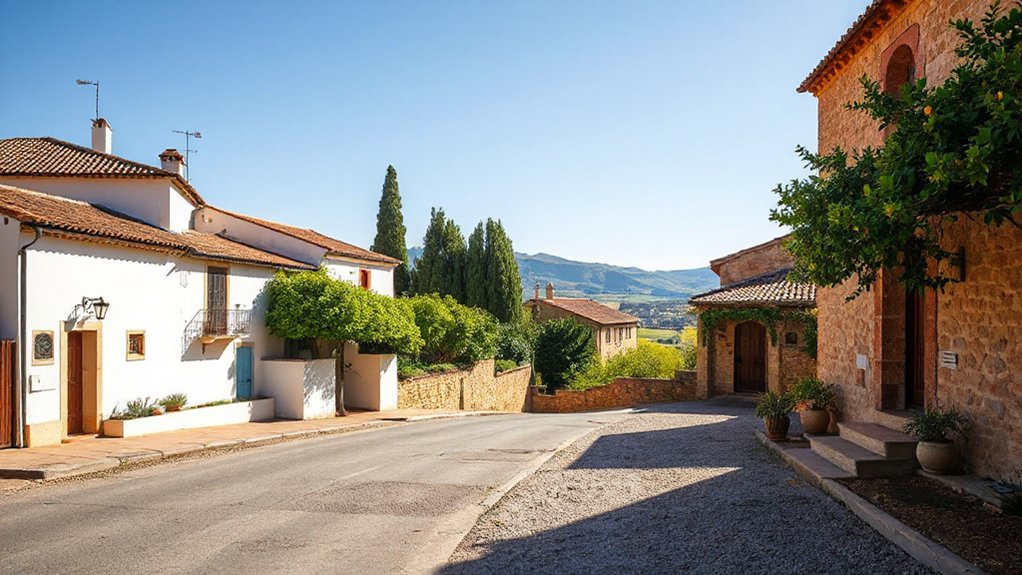
When deciding between a terraced house and a detached villa in Spain, start by mapping how you value privacy, space, and community feel against cost and upkeep.
You’ll weight architectural styles against long-term maintenance, then quantify by local price per square meter and expected annual fees.
Terraced options typically offer lower upfront costs and shared amenities, influencing your interior layouts toward efficient, compact designs.
Detached villas usually deliver greater privacy and scalable spaces, but with higher maintenance and security considerations.
Compare structural flexibility, energy efficiency, and potential resale appeal across regions.
Track data on vacancy rates, tax incentives, and developer warranties to refine your forecast.
What Makes Terraced Living Feel Like Community?
Terraced living shapes stronger shared-space dynamics, where common courtyards and front-facing fronts drive routine interactions and observed social signals.
You’ll see neighborhood interaction patterns emerge from proximity-driven encounters, helping residents build trust and mutual awareness over time.
This pattern data suggests terraced layouts can amplify perceived community through frequent, consistent contact and coordinated activity.
Shared Space Dynamics
What makes terraced living feel communal often comes down to shared space dynamics that foster visibility, interaction, and informal oversight. You’ll gauge how courtyards, walkways, and entry points influence everyday routines, from morning jogs to evening congregations.
Data shows higher incidental contact among neighbours in terraces, driving faster diffusion of information, alerts, and social norms, yet this can come with trade-offs in perceived privacy.
Consider shared amenities such as communal gardens, lighting, and sitting areas; these assets elevate value when well maintained and seasonally managed, but require clear governance to avoid bottlenecks.
Privacy considerations hinge on sightlines, boundary treatments, and noise controls; effective design minimizes intrusion while preserving community benefits, supporting a balanced, market-aligned living experience.
Neighborhood Interaction Patterns
In terraced settings, the close physical proximities shape daily interactions, turning passive proximity into active social cues and information flow. You’ll notice consistent neighbor engagement around shared issues like gardening, security, and local services, driven by visible, frequent contact points.
Data shows higher incidences of informal monitoring and quicker problem reporting in terrace clusters than in standalone layouts. However, garden privacy becomes a trade-off: residents trade visual seclusion for communal oversight, influencing perceived belonging and trust.
Noise levels tend to be higher due to thinner party walls, yet predictable rhythms—morning deliveries, evening gatherings—create routine social windows that boost perceived safety and responsiveness.
Market signals indicate that neighborhoods with deliberate acoustical design and privacy buffers sustain higher resident satisfaction and turnover stability.
Why Detached Villas Feel More Private in Spain
Contrasts in privacy between detached villas and terraced homes in Spain are pronounced, driven by layout, lot size, and boundary structures. You’ll notice that detached designs typically place living spaces and outdoor areas on a wider footprint, reducing sightlines from neighbors and street activity.
Larger plots allow buffer zones, gardens, and private pools that reinforce separation between indoors and outdoors. Architectural styles influence permeability; modern minimalist exteriors often feature solid borders, while traditional finishes use courtyards and recessed facades to discourage casual overlook.
Interior layouts matter, too: open-plan ground floors can feel expansive, yet private retreats—primary suites and auxiliary spaces—remain physically shielded from common areas. On balance, the combination of scale and deliberate separation channels private experiences, sustaining value for buyers prioritizing solitude.
How Location Shapes Value by Region
Regional dynamics shape housing value as much as design or layout, and the shift you feel from privacy contrasts in the previous topic depends on where you’re looking. In Spain’s regions, value moves with demand for architectural styles that signal locality and with interior layouts that maximize light, flow, and practicality.
Coastal markets reward open-plan interiors that suit entertaining and airier spaces, while inland areas favor compact, efficient layouts that reduce maintenance. Location also drives appreciation through infrastructure, schools, and commute times, creating distinct regional premiums or discounts.
When comparing terraced houses and detached villas, you’ll see value anchored not just in footprint but in how well the design aligns with regional expectations. Monitor price-per-square-meter trends by region to refine your architectural styles and interior layouts strategy.
Outdoor Space: Shared Courtyards vs Private Gardens
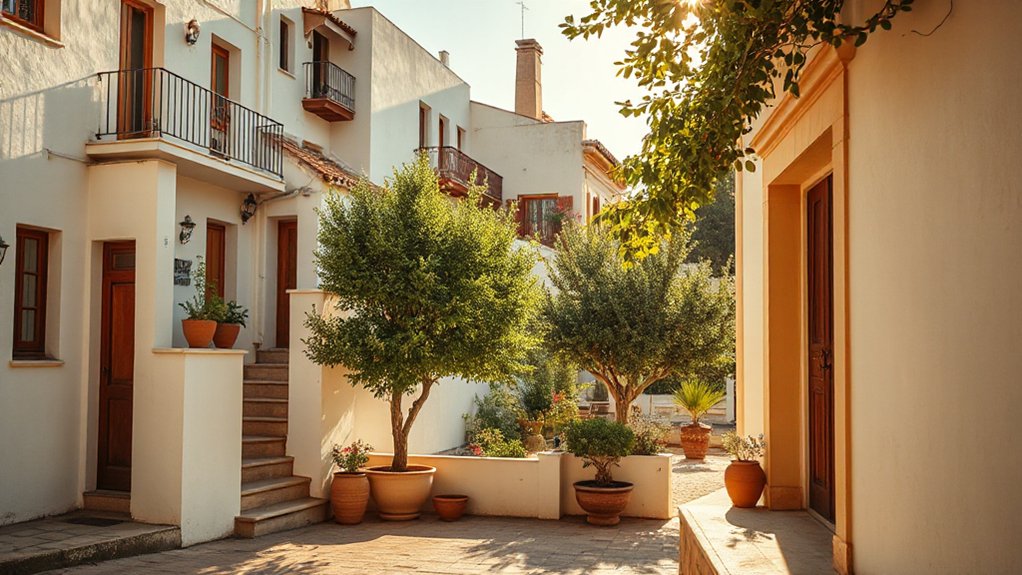
How does outdoor space shape buyer appeal when comparing shared courtyards to private gardens? In Spain, you’ll weigh how garden layouts and outdoor amenities impact usage, maintenance, and value trajectories.
Shared courtyards offer social energy and lower upkeep, but may limit privacy and customization. Private gardens deliver personal retreat and potential for expansion, yet incur higher ongoing costs.
Data suggests buyers value predictable maintenance and clear access rights, influencing price per square meter. Consider how this affects your decision between terraced versus detached formats.
- Maintenance obligations vs autonomy
- Privacy levels and crowding tolerance
- Potential for landscaping customization
- Use-case alignment (entertaining, play, or relaxation)
Who Pays What: Community Fees vs Individual Maintenance
In Spain, you’ll weigh shared community fees against your individual maintenance costs to map total ownership expenses.
We’ll compare typical monthly charges for common areas with expected personal upkeep, using current market data to identify which setup offers better long‑term value.
This framing helps you budget for both parties and spot where costs may shift as property values and regulations change.
Shared Community Fees
- Allocation rules for common areas
- Frequency and size of fee increases
- Reserve fund adequacy vs expected repairs
- Impact of features like home automation and architectural styles
Analyzing these factors helps you forecast long-term costs and investment value.
Individual Maintenance Costs
As we move from evaluating shared fees to expectations for ongoing upkeep, it’s clear that individual maintenance costs vary considerably between a terraced house and a detached villa in Spain.
You’ll find garden maintenance differs: terraced homes often share boundaries and common lawns, pushing some mowing or hedge-work onto a proportional, lower-cost schedule, while a detached villa typically requires larger plots, raising individual gardening expenses.
Utility costs diverge as well; detached villas usually incur higher heating and cooling bills due to greater surface area and insulation needs, whereas terraced houses benefit from adjacent rooms and compact layouts.
In short, expect higher per-property maintenance outlays for detached villas, driven by yard scope and utility intensity, with data-backed variances across regions and energy prices influencing total ownership costs.
Budgeting For Both Parties
When budgeting for a terraced house versus a detached villa, you must distinguish between recurring community fees and your own maintenance costs, then project how each will scale with property size and use.
You’ll find community fees stabilize per unit but rise with shared amenities, while maintenance scales with surface area and materials.
Historical architecture and local festivals can drive seasonal spikes in upkeep and service demand, impacting both sides of the budget.
- Compare annual HOA-like dues against expected exterior maintenance
- Estimate common-area upkeep versus private-only repairs
- Adjust for size-driven material and labor costs
- Factor seasonal fluctuations tied to events and heritage sites
This approach supports data-driven decisions in a market where historical architecture informs pricing and Local festivals influence cash flow.
Energy Efficiency: Heating, Insulation, and Comfort
Energy efficiency in a home choice matters more than curb appeal: heating, insulation, and overall comfort often drive long-term costs and living quality. You compare terraced versus detached layouts by how well they retain heat, manage drafts, and support efficient systems.
In Spain, wall thickness, insulation quality, and window performance translate directly into annual energy bills, indoor climate stability, and maintenance needs. Terraced homes often share heat sources and can benefit from consistent solar exposure, while detached villas may offer superior thermal mass opportunities and sun control.
Focus on potential for energy conservation through airtight construction, heat recovery ventilation, and high-efficiency boilers. Climate adaptation considerations shape insulation standards, reducing seasonal peaks and aligning with market demand for lower operating costs and comfort.
Interiors and Design Flexibility for Each Style
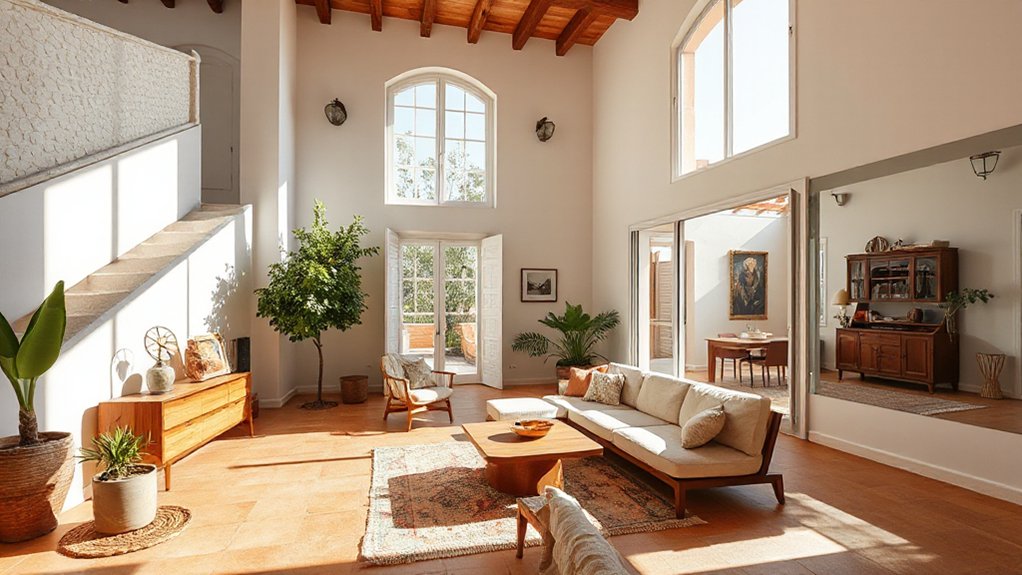
Interiors and design flexibility hinge on how space is distributed and how adaptable each style remains as needs change. You’ll notice that terraced homes favor compact, modular layouts that maximize every square metre, while villas support open-plan aspirations and premium finishes.
Market data show higher variance in interior customization options for villas, with broader scope for room reconfiguration and material choices. Consider how architectural styles influence fixtures, lighting, and acoustics, shaping long-term satisfaction.
- Interior customization options vary by structural flexibility
- Room reconfiguration potential differs between terrace and villa layouts
- Lighting, acoustics, and material choices align with architectural styles
- Long-term value tied to adaptability and design integrity
Resale Value: Demand for Terraces vs Villas
You’ll want to compare demand for terraces against villa resale momentum to gauge where value is, and the latest data shows terraces attracting steady but variable buyer interest in urban cores.
While villas hold stronger appeal in family-oriented markets. Market preferences are shifting as density and maintenance costs influence buyer calculus, so tracking price trajectories and time-on-market helps reveal momentum.
Use these signals to anticipate when terrace stock or villa stock may outperform in resale, and adjust your strategy accordingly.
Demand For Terraces
How strong is demand for terraces in Spain’s resale market, and what does it mean for value compared with villas? You’ll see terraces increasingly valued for outdoor living, but demand varies by location, age of stock, and architectural style.
Price signals show terraces maintain premium in coastal and sunny interiors, yet villas still dominate high-end niches.
To navigate, consider these factors:
1) Balcony privacy effects on desirability and price premiums
2) Architectural style alignment with buyer expectations and resale windows
3) Urban versus rural demand shifts influencing liquidity
4) Seasonal buyer activity and inventory turnover across regions
Villa Resale Momentum
Market data show faster price appreciation for detached villas in prime coastal zones, supported by recent transaction volumes and shorter days-on-market compared to terraces. Architectural styles influence buyer perception, with contemporary and Mediterranean silhouettes attracting premium bids and outperforming traditional terrace offerings in premium tiers.
However, terraces retain resilience in development pipelines and entry-level indices, anchoring overall market stability. In sum, momentum favors villas where lifestyle features and design align with coastal demand drivers.
Market Preference Shifts
The trend favors properties that optimize lifestyle value at a premium, not merely floor area. Expect volatility to hinge on local job centers, transport access, and school quality, rather than blanket type distinctions.
- Location-driven premiums trump generic terrace-villa distinctions
- Older stock competes with newer builds where amenities meet demand
- Quality finishes correlate with faster resale and higher yields
- Marketing narratives shift toward experiential value over raw metrics
Planning for Families and Guests in Spain
When planning for families and guests in Spain, you should start by evaluating how each housing type supports daily life and frequent visits. Terraced houses typically optimize shared outdoor space and easier access to local amenities, which benefits households with frequent hosting needs.
Detached villas offer greater privacy and flexible guest accommodation, allowing separate suites or ground-floor options for elder relatives. From a market perspective, occupancy patterns show longer stays in villas when guest turnover is high.
While terraces attract buyers prioritizing proximity to schools and transit. Architectural styles influence perceived suitability for hosting—modern lines may appeal to younger families, while traditional facades can align with extended-family gatherings.
Interior layouts, including open-plan living and adaptable rooms, drive suitability for frequent guests and evolving family dynamics.
Security and Community Dynamics You Should Know
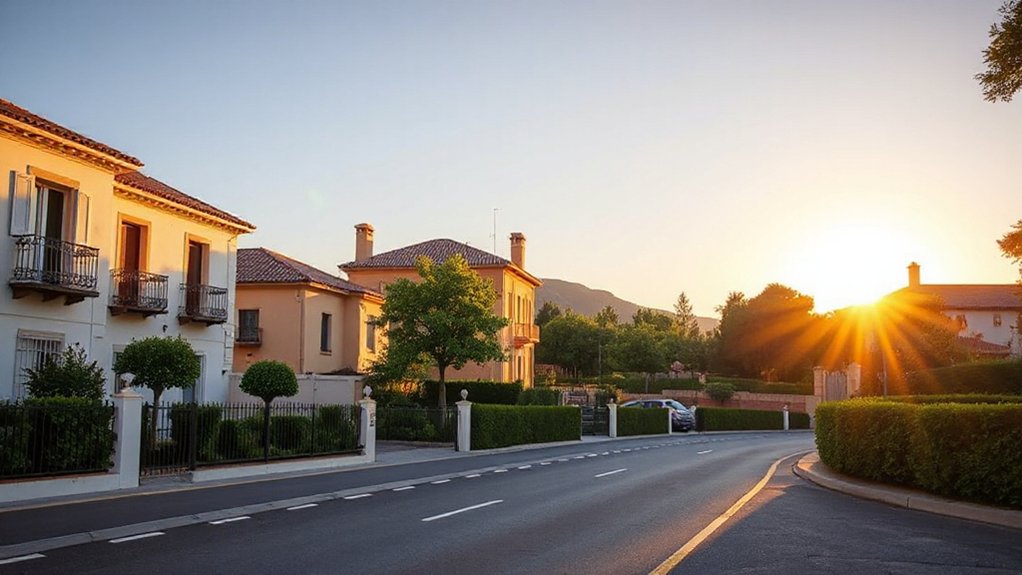
Given Spain’s diverse neighborhoods, security and community dynamics markedly shape resale value and vacant-rate trends.
Detached villas generally offer stronger perimeter privacy and a lower night-time intrusion risk, while terraced homes benefit from higher informal surveillance and built-in social networks that can deter opportunistic crime.
You should evaluate daily patrols, resident associations, and lighting plans alongside landscaping aesthetics and Historical architecture cues that signal maintenance commitment.
- Compare perimeter controls and access measures between property types.
- Assess street activity, visibility, and potential blind spots for security implications.
- Review neighborhood turnover rates and evidence of social cohesion in updates.
- Consider landscaping aesthetics as a proxy for upkeep and deterrence without overinvesting in novelty.
Local Regulations and HOA Realities in Spain
HOA restrictions can dictate exterior aesthetics, shared facility usage, and common-area maintenance, impacting monthly fees and homeowner obligations. Market data show variability by region: coastal municipalities often impose stricter controls to preserve character, while inland areas may offer more flexibility.
You should review the comunidad de propietarios’s minutes, budgets, and rulebooks before committing. Compliance timelines, permitted alterations, and enforcement history affect both risk and costs.
In-depth due diligence on these regulatory layers clarifies which property type aligns with your investment horizon and lifestyle.
Budgeting Now: Purchase Price, Taxes, and Long-Term Costs
Is budgeting for a property in Spain more than just the sticker price? No. You must account for taxes, purchase costs, and long-term obligations that shape value and risk. Consider these elements:
1) Purchase price vs. market value, factoring typical negotiating levers and financing costs.
2) Acquisition taxes and notary/land registry fees, which vary by region and property type.
3) Ongoing costs, including local taxes, community fees for terraced houses, and maintenance for detached villas.
4) Long‑term considerations like insurance, utilities, and potential depreciation or capital gains when selling.
Beyond numbers, Luxury amenities influence resale appeal, while Architectural styles affect maintenance and insurance, shaping total cost of ownership.
Analyze both price drivers and qualitative factors to decide which option aligns with your budget and objectives.
Future-Proofing: Renovation Potential and Extensions
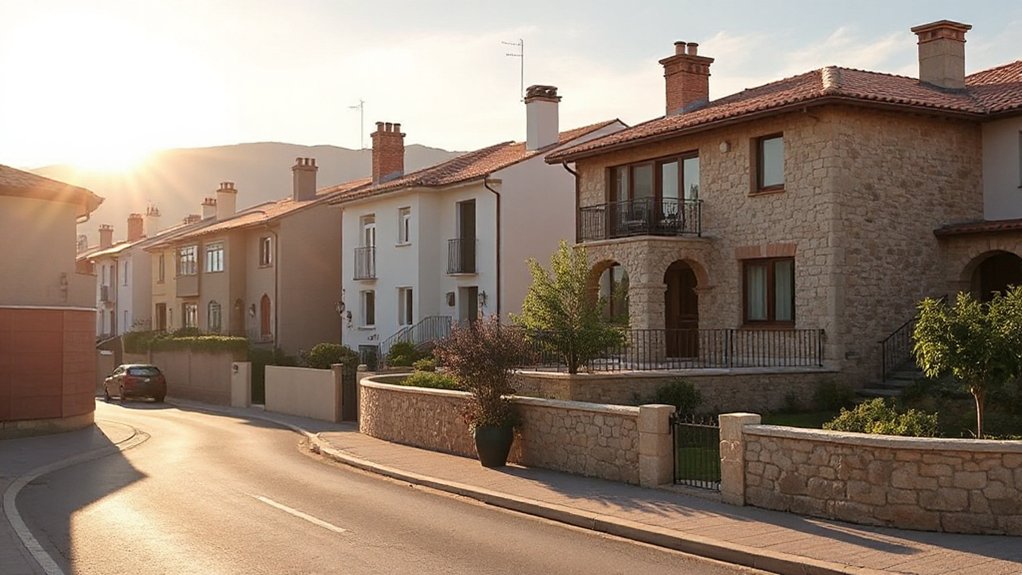
Renovation potential and extensions are key indicators of a property’s long-term value in Spain, influencing resale appeal and usable space before you even buy. You evaluate market signals, zoning rules, and construction costs to gauge how much you can safely expand.
Renovation potential hinges on structural flexibility, ceiling heights, and compliance with regional guidelines, which vary by autonomous community. Extension possibilities depend on plot size, boundary restrictions, and permitted footprint, shaping future livability without triggering overcapitalisation.
Compare current layouts to high-demand configurations—open-plan living, multi-generational suites, and energy-efficient upgrades—to estimate value uplifts. Use recent sale data and developer pipelines to forecast demand shifts.
Your objective is a durable, scalable plan that protects liquidity while maximizing usable space over time.
The 5-Question Quick-Decision Test
- Price per square meter trend and variance
- Resale trajectory projections by district and type
- Ongoing maintenance cost profiles (insurance, HOA, utilities)
- Space versatility and potential for architectural styles and interior decor changes
You’ll weigh data sources, such as recent sales comps and price indices, against your lifestyle needs. Use the lens of architectural styles and interior decor to assess long-term compatibility. Then decide between compact efficiency and expansive, adaptable layouts. Focused, data-driven insight reduces ambiguity and speeds your decision.
Real-World Buyer Scenarios: Which Home Wins?
When real buyers weigh a terraced house against a detached villa in Spain, the outcome hinges on objective metrics plus personal lifestyle fit. You’ll compare price per square meter, maintenance costs, and resale velocity, then align with daily routines.
In urbanized coastal markets, terraced homes often deliver better initial value and faster rental yields. Meanwhile, detached villas dominate in privacy and plot size, attracting long-term capital appreciation.
Luxury amenities—private pools, smart-home systems, and gated community facilities—can shift the math toward villas, but upkeep and insurance rise accordingly.
Architectural styles matter: cohesive streetscapes can support higher demand for terraces in regeneration zones. Conversely, timeless vernaculars appeal to luxury buyers seeking exclusivity.
Your decision hinges on budget realism, lifestyle priorities, and anticipated time horizon.
Frequently Asked Questions
Which Property Type Suits First-Time Buyers in Spain Best?
Yes, a terraced house suits first-time buyers best, you’ll gain affordability and community. Consider Property location and Interior design options, align with market data, and prioritize value-for-money, potential rental demand, and scalable upgrades for future growth.
Are Maintenance Responsibilities Shared in Terraced Houses?
Yes, you share walls and some upkeep, but not everything. Shared walls reduce exterior maintenance, yet you’re responsible for your own systems; anticipate maintenance costs rising with older structures, so budget accordingly and compare local HOA-like fees.
How Does Noise Transfer Differ Between Terraced and Detached Homes?
Sound insulation is better in detached homes, you’ll notice less noise transfer. Terraced houses share walls, so noise travels more via structural design. You’ll see improvements with robust materials and tighter joints, driven by data-driven, market-focused analyses.
What Resale Timelines Favor Terraces Vs Villas in Spain?
You’ll note that terraces in Spain often see faster resale, with an average 8–12% shorter timeline than villas, especially in growing markets. Market value and rental potential drive this, shaping your investment decision and exit strategy.
Do Terraced Homes Offer Better Energy Efficiency Than Detached Villas?
Terraced homes, on average, offer similar or slightly better energy efficiency due to shared walls reducing heat loss. You’ll compare insulation, construction materials, and architectural styles, then quantify savings across seasons with market data and localized energy audits.
Conclusion
You should weigh price signals, demand, and long-term value when choosing. Terraced homes often offer tighter community and lower maintenance, while detached villas usually promise greater privacy and larger outdoor spaces, with regional price differentials shifting value. If data shows rising rents and resale gains in regions with strong tourism, lean into detached options there; otherwise, terraces can win in dense markets. Like a well-calibrated portfolio, diversify by location and future-proof with renovation potential.