
Spain’s high‑speed rail network reshapes how you travel by delivering faster, more reliable links between major cities, with integrated tickets, multi‑city itineraries, and consistent service centered on safety, accessibility, and decarbonization. It speeds Madrid–Barcelona, Madrid–Valencia, and Madrid–Seville while expanding to Galicia and the Basque Country. Expect predictable schedules, reduced travel times, and door‑to‑door efficiency that shifts mode choice toward rail. If you want optimized routes and passes, you’ll gain more actionable guidance ahead.
Key Takeaways
- Spain’s AVE network connects Madrid, Barcelona, Valencia, Seville, and Zaragoza with high-speed, reliable, frequent services and growing extensions to Galicia and the Basque Country.
- Travel times are significantly reduced on major corridors, enabling faster, more predictable multi-city trips and modal shifts from air.
- Core routes drive regional growth through door-to-door efficiency, while scenic or hidden stops broaden access to rural areas and cultural sites.
- Tickets offer flexible fares, passes, and discounts, with clear terms, while fare classes and peak surcharges reflect demand and time of day.
- Onboard experience includes dining options, regional cuisine, WiFi, comfort features, and seat maps guiding space and accessibility choices.
Why Spain’s High‑Speed Rail Reshapes Travel
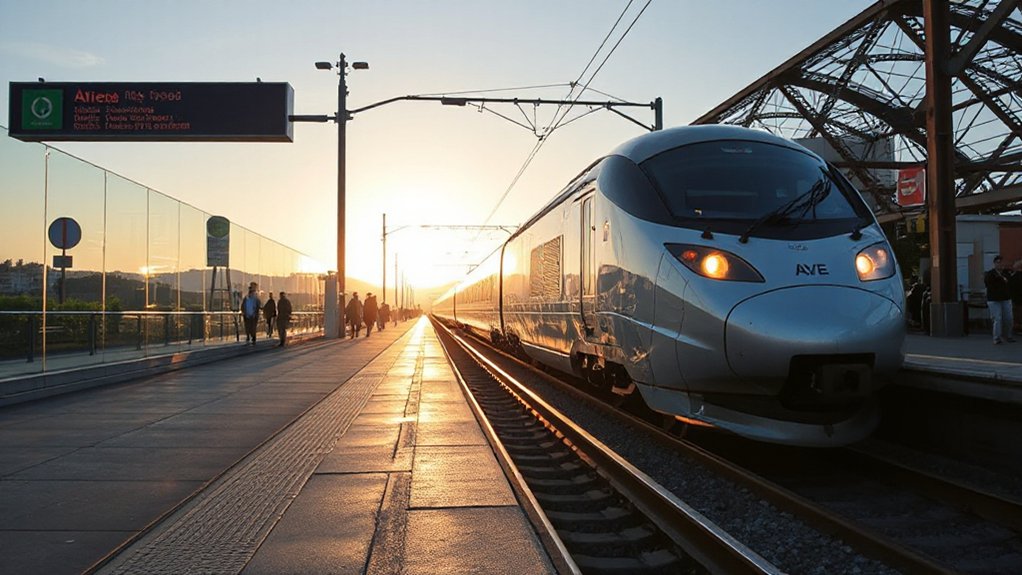
Spain’s high-speed rail network reshapes travel by linking major cities faster, more reliably, and with greater frequency than prior options. You experience shorter trip times, predictable schedules, and reduced transfer uncertainty, enabling better urban-global connectivity.
Data show daily AVE frequency bumps up regional accessibility, supporting commuter, business, and tourism flows with consistent reliability metrics. Policy implications emphasize corridor investment, interoperability, and service standards that sustain punctuality and safety.
You can plan multi-modal journeys around core hubs, minimizing air travel demand and emissions while maximizing social mobility for residents.
Cultural influences surface in station design, service branding, and regional partnerships that reflect local identities. Local cuisine emerges as a mobility signal, guiding short onward trips to traditional markets and eateries, expanding local economic opportunities within a cohesive, data-informed transit strategy.
Quick Glance: A Map of the AVE Network
From a quick glance, the AVE network map highlights high-density corridors connecting Madrid, Barcelona, Valencia, Seville, and Zaragoza, with extensions to Galicia and the Basque Country in progress.
You’ll see dense intercity links optimized for policy goals: reduce regional disparities, shift demand from road to rail, and bolster accessibility.
Data show peak interchanges at major hubs, with trackage additions aimed at reliability and service frequency.
The map prioritizes urban-rim connectivity, airport corridors, and tourism routes, aligning with mobility planning that favors modal shift and regional resilience.
Cultural festivals and culinary experiences emerge as demand signals that inform scheduling, pricing, and rolling stock choices.
In short, the map guides investment toward coherent, passenger-focused corridors that support sustainable mobility outcomes.
How Fast Rail Cuts Travel Times Across Spain
High-speed rails slash the travel time between major nodes by shaving minutes off common routes. You’ll see measurable gains when Madrid–Seville, Madrid–Valencia, and Barcelona–Seville speeds compress schedules, expanding options for commuters and regional visitors alike.
Data show trains consistently outperform cars on peak corridors, with reliability boosts from dedicated tracks and optimized timetables. Policy implications center on shifting mode share through fare integration, station access, and synchronized connections, while maintaining safety and efficiency.
Rail safety protocols reduce incidents and enable higher densities, supporting broader network utilization. Ticket validation systems streamline boarding, minimize dwell times, and improve revenue security.
When you plan trips, you’ll notice shorter layovers, tighter schedules, and greater predictability, underscoring high-speed rail’s role in decarbonizing regional mobility.
A Brief History of Spain’s Fast Trains
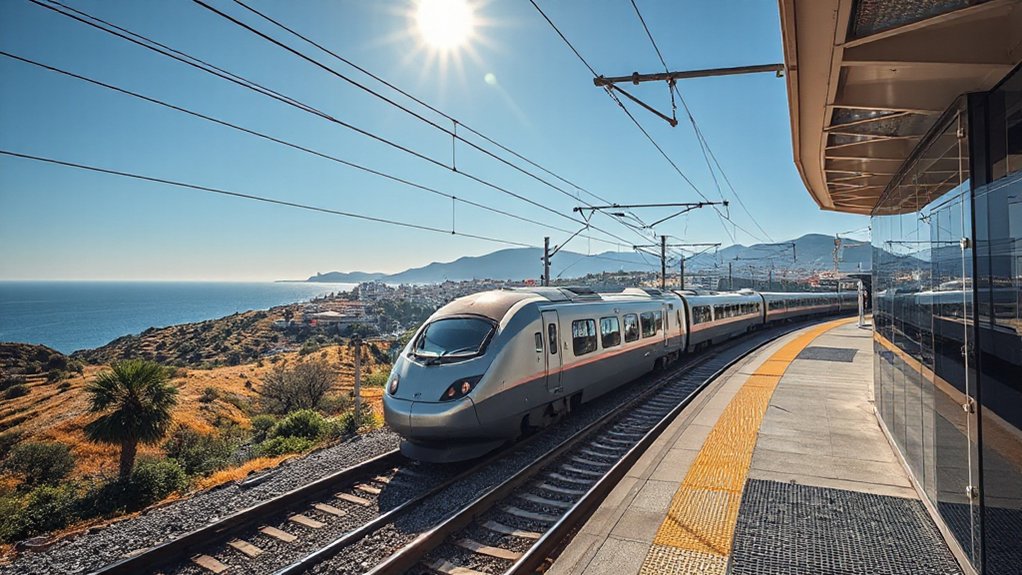
The modern surge in Spain’s fast trains began in the 1990s with the introduction of the first high-speed routes, a strategic shift aimed at reducing regional disparities and boosting economic integration. You’ll see a data‑driven arc: policy decisions, funding cycles, and performance targets shaping rail history and capability.
The network’s evolution prioritized safety, reliability, and interoperability, aligning with Europe’s broader market objectives. Rail technology advances—evolution of signaling, electrification, and streamlined rolling stock—drove efficiency gains and passenger growth.
Government planning emphasized accessibility, corridor optimization, and modal competition, with measurable effects on travel times and regional productivity. You’ll note pilot projects, standardization efforts, and O&M improvements that hardened the system against disruption.
The First Lines You’ll Ride: Essential Routes
What’re the routes that set the pace for Spain’s high-speed network, and why do they matter for travelers and policymakers alike? You’ll focus on core corridors—Madrid–Barcelona, Madrid–Valencia, and Madrid–Seville—that anchor speeds, frequency, and reliability. Data show these lines drive modal shift, shorten travel times, and boost regional growth by connecting economic hubs with mid-size towns. Policy implications include capacity allocation, electrification timelines, and interoperability standards that sustain reliability across operators. You’ll see demand concentration around peak hours, informing timetable optimization and maintenance windows that minimize disruptions. Culinary traditions and regional festivals influence travel peaks, shaping service design and passenger information needs. These essential routes translate mobility goals into measurable outcomes, aligning traveler convenience with strategic regional development.
AVE vs Regional Fast Routes: What You’ll Actually Ride
If you’re planning a trip on Spain’s high-speed network, you’ll notice a clear distinction between AVE services and regional fast routes: AVEs prioritize long-haul expressions of travel time between major hubs, while regional fast routes blend high speeds with greater access for mid-size towns.
In practice, you’ll ride AVEs for door-to-door efficiency across principal corridors, with fewer stops and tighter schedules. Regional fast routes offer convenient city-to-city options, more frequent departures, and improved feeder connections, albeit with modest speed reductions on some legs.
Data show comparable on-board comfort and reliability metrics, but cost structures differ, favoring shorter, mid-distance itineraries on regional lines.
Night trains and scenic routes add value for budget travelers and planners seeking off-peak utilization and tourism potential.
Surprising Towns You Can Reach Fast
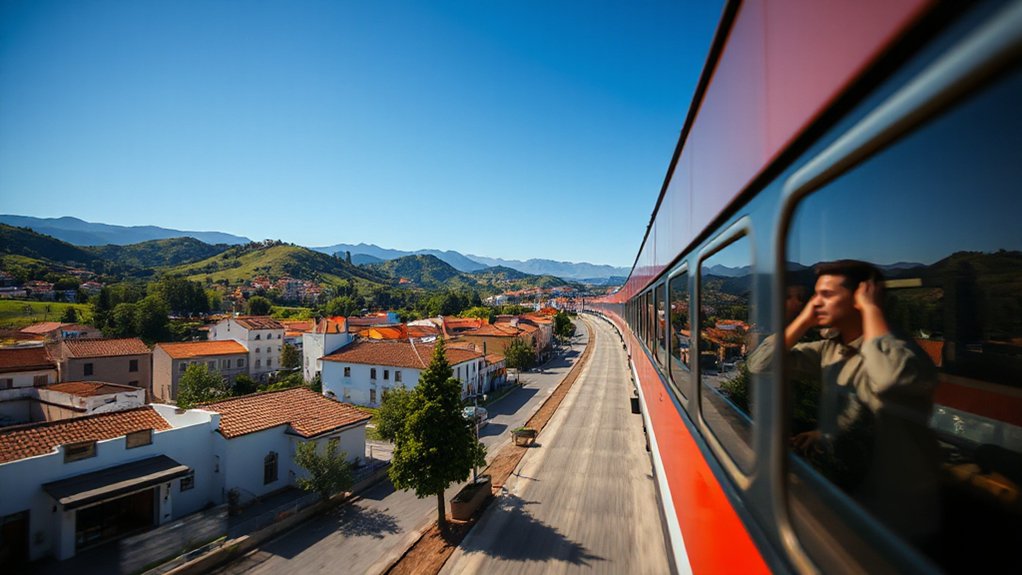
You can map fast town connections that are closer than you think, using recent rail data to compare travel times and frequency.
This focus highlights hidden stop highlights and how quick rail reachability reshapes regional mobility and service planning.
Fast Town Connections
Spain’s high-speed network040; will you be surprised by how quickly you can hop between small towns and major hubs? You observe data-driven scheduling that prioritizes short transfer times, enabling rapid connections without detours.
Policy aims push intermodal efficiency, so you experience reliable frequencies, predictable travel windows, and minimized total journey time. You’ll notice how regional services feed into core corridors, expanding option sets for local residents and visitors alike.
Local cuisine and cultural festivals anchor demand, guiding investment toward stations that serve daily life as much as tourism.
- Seamless transfers between rural stations and city hubs
- Timely service even during off-peak periods
- Clear, multilingual traveler information system
Hidden Stop Highlights
You’ll notice that data-driven scheduling reduces transfer times, with cross-platform coordination improving reliability and dwell optimization minimizing congestion. These hidden gems enable you to bypass crowded corridors, widening access to regional economic centers and cultural sites without sacrificing efficiency.
Policy drivers prioritize last‑mile accessibility, ensuring maintenance cycles keep speeds steady and safety margins tight. Scenic routes emerge as commuters favor shorter, visually engaging trips that still align with national timetables and punctuality standards.
You gain flexibility, better multimodal integration, and predictable travel times, supporting evidence-based planning and equitable mobility. Hidden gems exist along the network, shaping a more inclusive transportation ecosystem.
Quick Rail Reachability
Rail reachability isn’t just about long-haul speed; it’s about which towns you can hit quickly from major hubs. You’ll measure efficiency by travel time, frequent departures, and last‑mile connections, not just top speed. This data‑driven view guides policy toward short‑haul equity and mobility gains, shaping schedules, pricing, and service design.
You’ll see how surprising towns cluster near Madrid, Barcelona, and Valencia, expanding regional access while preserving cultural traditions and revitalizing local commerce. The result? Faster, predictable trips that liberate local opportunities, support tourism strategies, and align with sustainability goals.
Emphasize smart fare structures, multimodal integration, and transparent performance metrics to sustain momentum for residents and travelers alike.
- Quick hops, tight connections, vibrant communities
- Real‑time updates, reliable frequencies, accessible stations
- Cultural traditions, Local cuisine, and economic spillovers
Ticketing Basics: Fares, Passes, and Discounts
Ticketing basics for Spain’s high-speed network cover fares, passes, and discounts in clear, data-driven terms. You’ll see ticket pricing structured by route distance, train category, and time-of-day, with peak surcharges clearly disclosed.
Fare classes vary from flexible to nonrefundable, guiding your purchase according to risk tolerance and travel certainty.
Discount eligibility depends on age, student status, veteran concessions, and group size; eligibility rules are published and subject to periodic updates.
Pass options bundle multiple trips with price-per-journey reductions, though some passes impose usage windows or blackout days.
You should compare per-trip costs across domestic routes and long-distance corridors to identify real savings.
Policies emphasize transparency, customer rights, and clear refund terms, reinforcing the goal of predictable, affordable mobility across Spain’s high-speed network.
Where to Book the Best Deals for Spanish Rail
To get the best deals on Spain’s high-speed rail, start with where you’ll buy and compare options across official and third-party channels. You’ll find price dynamics driven by advance purchase windows, peak demand periods, and loyalty programs, so track—wait, keep it concise.
Compare official Renfe tickets, regional pass blends, and reputable aggregators to balance price and timing. Use data resources and policy briefs from transport authorities to assess rules on refunds and transfers. Consider travel etiquette and luggage handling policies as part of cost and risk assessment.
- Compare fare classes, transfer rules, and cancellation windows across channels
- Monitor seasonality, blackouts, and loyalty perks for meaningful savings
- Verify luggage limits and etiquette expectations to avoid fees
How to Choose the Right Train and Seat
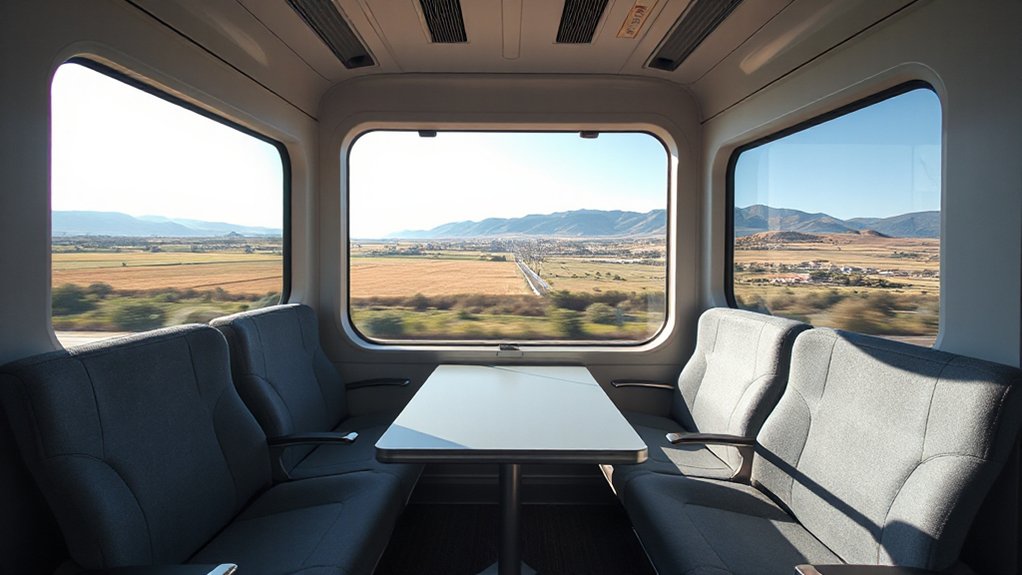
Choosing the right train and seat starts with comparing seat types and their comfort data—think recline range, quiet car options, and aisle vs. window preferences.
Use legroom statistics and travel duration to match your priorities with the best car and berth.
Then, weigh policy-backed features like accessibility and onboard amenities.
This data-driven approach helps you minimize delays, maximize comfort, and align your choice with mobility goals across Spain’s high-speed network.
Seat Type Guide
Seat selection matters when planning a high‑speed trip across Spain, because different seat types influence comfort, speed, and value depending on your itinerary and priorities. You’ll weigh seat comfort against price, schedule, and flexibility, using data from carrier guides and operator dashboards to optimize outcomes.
- Compare seating categories by cabin type, legroom, and recline to align with trip duration and speed targets.
- Check ticket discounts and fare windows; adjust ticket type to maximize savings without sacrificing reliability.
- Use seat maps and occupancy trends to forecast crowding, adjusting selection for reduced transit friction and smoother transfers.
This approach is data‑driven, policy‑oriented, and mobility‑focused, ensuring you balance comfort, cost, and schedule for Spain’s network.
Comfort and Legroom
When selecting a train and seat, prioritize legroom and rider comfort data alongside trip duration and service level, because longer rides and transfers amplify the impact of space and posture.
You should compare Seat comfort metrics—seat pitch, width, cushion quality, and lumbar support—across trains, then assess legroom space as measured by seat-to-aisle clearance and row spacing.
Data-driven choices rely on standardization: consult operator dashboards, passenger surveys, and ISO ergonomics benchmarks to balance comfort with throughput.
Policy considerations include accessibility, priority seating, and crew responsiveness to seat adjustments during peak periods.
Mobility-oriented decisions favor seats offering reclining control, power access, and sufficient aisle width for easy boarding.
Integrate comfort scores with reliability and speed to optimize overall travel experience.
Navigating Spain’s Big Stations: Tips and Tricks
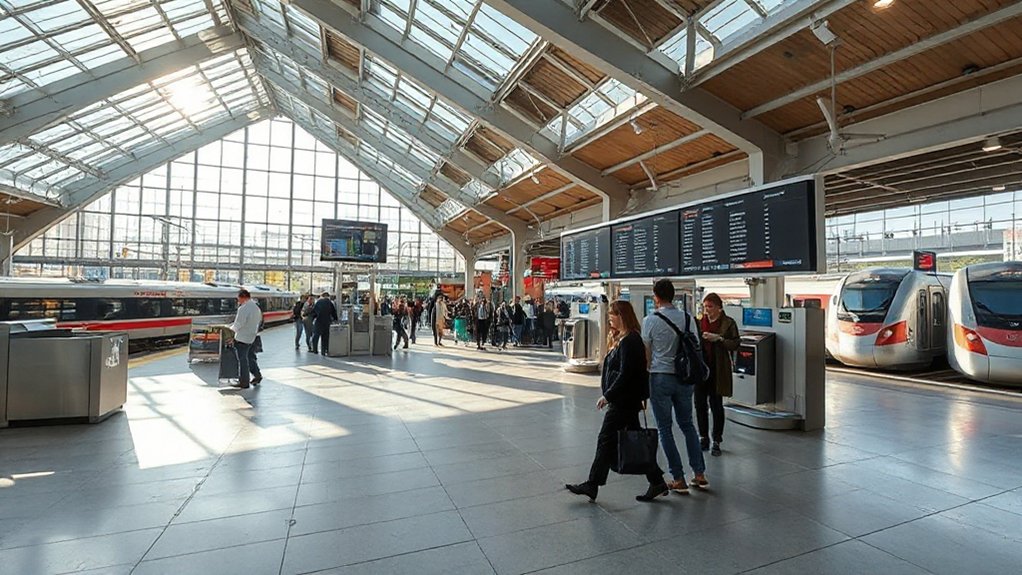
Big stations like Madrid Puerta de Atocha, Barcelona Sants, and Valencia Nord can seem overwhelming, but a strategic approach helps you move quickly and reliably. You’ll optimize transfers by checking app-based platform maps, prioritizing line-of-sight signage, and timing with peak-avoidance data.
Use dedicated corridors for security checks to cut wait times, and align your route with real-time updates to minimize backtracking. Local cuisine and cultural festivals become anchors for efficient planning, guiding you toward nearby kiosks or stops between connections.
- Plan multi-leg legs with minimum transfers
- Follow real-time alerts and platform screens
- Pre-book seats and luggage options when possible
Onboard Experience: Dining, WiFi, and Comfort
You’ll assess how onboard dining options, WiFi quality, and seat dimensions shape rider satisfaction and throughput across Spain’s AVE network.
Data-informed benchmarks will guide policy discussions on service consistency, network utilization, and cost-effective comfort standards.
Consider how dining density, connectivity reliability, and generous seat pitch affect overall mobility experience and service equity.
Dining Onboard Comfort
Onboard dining shapes overall passenger experience and operational efficiency across Spain’s high-speed network. You evaluate how meal timing, menu breadth, and service cadence influence throughput, dwell times, and seat turnover.
Data show premium options improve revenue per passenger while sustaining onboard ambiance and consistency in service standards. Policies prioritizing regional gourmet cuisine foster supply resilience, reduce waste, and support local economies.
You’ll notice that comfort—ambient temperature, seating layout, and quiet car access—affects satisfaction alongside cuisine quality. Movement toward standardized plating and efficient kitchen workflows reduces turnaround, enabling quicker service without compromising presentation or safety.
Gourmet cuisine, onboard ambiance, and predictable service become measurable levers for performance.
- Menu refreshes aligned with seasons and regional producers
- Timely service windows linked to train occupancy
- Ambient design guiding comfort and acoustics
WiFi Connectivity Quality
Across Spain’s high-speed network, WiFi connectivity quality shapes the onboard experience as strongly as dining and comfort. You’ll notice that effective service hinges on stable, enterprise-grade bandwidth delivered to every car.
Data shows peak speeds reach multiple hundred megabits per second in major corridors, yet performance varies with carriage position and tunnel *handoffs*, creating measurable WiFi stability gaps.
Operators should prioritize seamless handover between cell towers and onboard access points, plus robust backhaul to data centers for real-time performance monitoring.
Policy emphasis belongs on mandatory latency targets, predictable uptime, and transparent reporting to operators and passengers.
Addressing connectivity issues requires standardized maintenance windows, proactive fault detection, and investment in spectrum-efficient protocols to sustain consistent user experience during long-distance journeys.
Seat Pitch And Space
Seat pitch and available space directly shape passenger comfort and overall throughput on Spain’s high‑speed trains, influencing dwell times, seating utilization, and perceived value. You evaluate how seat pitch correlates with boarding efficiency, turnover, and customer satisfaction, using data to guide policy discourse on carriage layouts and standardization.
The discussion emphasizes seat comfort and legroom options as core metrics for service design, balancing density with wellness and accessibility. Evidence suggests modest increases in pitch can yield measurable gains in perceived comfort without sacrificing capacity.
Policy focus centers on equitable access, rolling stock modernization, and clear rider information about space variations.
- seat comfort
- legroom options
- throughput implications
Scenery Along the Route: What to Watch For
As the train glides through Spain’s diverse landscapes, you’ll notice scenery that signals distance, elevation, and land use shifts, all of which affect travel experience and service planning. In data terms, you’ll observe corridor segmentation: agricultural plains, peri-urban belts, and mountainous progressions that inform gradient profiles and maintenance windows.
Scenery highlights along routes converge with operations metrics, guiding speed limits, braking zones, and tunnel-daylight sequencing. Policy implications emerge from visual cues: land‑use change affects noise, biodiversity buffers, and right‑of‑way requirements.
For riders, scenic viewpoints offer contextual anchors without delaying services, while planners monitor seasonal visibility to optimize staffing and safety. Maintain focus on sustainable mobility, ensuring scenery supports efficiency, accessibility, and predictable service while preserving regional character.
Accessibility and Family Travel Tips
How can you guarantee a smooth, inclusive journey on Spain’s high-speed network? You’ll prioritize Accessibility improvements and leverage Family friendly amenities to reduce friction from check-in to seating.
Data show wide automatic doors, step-free access, and priority boarding materially cut transfer times and stress. Platforms, elevators, and tactile signage support travelers with mobility or sensory needs, while family helpers aid in navigation and kid-friendly zones ease travel for minors.
To optimize your trip, plan ahead with flexible tickets, seat guarantees, and clear accessibility contacts on the operator’s app.
- Booking and support tailored for accessibility needs
- Clear wayfinding, quiet zones, and family spaces
- Real-time updates on platform changes and boarding
Travel Times You Can Actually Rely On
You can rely on predictable timelines and verified schedules when you plan rail trips, thanks to official timetables, punctuality data, and real-time updates.
We’ll compare actual travel durations against published timelines and translate findings into actionable guidance for travelers and policymakers.
Plan around real-world scheduling tips to minimize delays and maximize on-time performance.
Timelines and Reliability
Travel times on Spain’s high-speed network are among the most reliable in Europe, with frequent, time-stamped schedules and proactive delay mitigation. You’ll notice consistent headways, predictable arrivals, and clear disruption notices, supporting policy-driven reliability goals and mobility planning.
This section tracks timelines, performance dashboards, and service-level commitments that shape traveler confidence. Ticket pricing and station accessibility influence perceived reliability by aligning expectations with actual accessibility and cost reality.
- Timetable adherence metrics, punctuality targets, and variance analyses
- Real-time alerts, alternative routing, and proactive customer communications
- Accessibility of stations, multi-modal connections, and pricing transparency
You’ll leverage these data levers to quantify reliability, inform investment decisions, and ensure equitable access across regions.
Actual Travel Durations
Across Spain’s high-speed corridors, actual travel durations are the metric that matters most for reliability-focused policy and mobility planning. Your focus is on dependable trip times, not advertised schedules, so you can gauge system performance by end-to-end journey length, dwell times, and buffer margins.
Data-driven analyses show variance by corridor, season, and demand, with robust routing reducing exposure to delays. You’ll favor metrics like median door-to-door time and 95th percentile travel duration to capture typical and worst-case reliability.
Policy implications include prioritizing timetable integrity, punctuality incentives, and faster disembarkation processes. While you study performance, you’ll also consider passenger experience cues—local cuisine opportunities during layovers and scenic vistas that reinforce value without sacrificing efficiency.
This clarity sharpens investment justifications and service improvements.
Real-World Scheduling Tips
Real-world scheduling hinges on dependable travel times, not theoretical timetables, so start with robust buffers and fixed transfer windows that reflect actual station dwell and platform readiness.
You align schedules with empirical data, verify congestion patterns, and embed contingency rules for delays, weather, and maintenance. This approach supports reliable traveler flows, policy accountability, and smoother multimodal connections.
Use consistent metrics for on-time performance, transfer success, and disruption recovery, then communicate these transparently to passengers.
Integrate local cuisine and cultural festivals into travel planning notes to anticipate peak periods and service adjustments without compromising reliability.
- Calibrate buffers based on station-specific dwell times and platform availability
- Schedule flexible windows for peak cultural events and local cuisine tours
- Publish real-time alerts and post-trip analytics to sustain trust
Airport and City Connections: How to Link Trips
To connect Spain’s high-speed rail with airports and cities effectively, you should map intermodal options that minimize transfer times, align schedules, and maximize through-ticketing.
You’ll evaluate rail infrastructure to identify ideal station adjacency, shuttle availability, and platform transfer windows, then quantify transfer penalties and wait times.
Prioritize synchronized timetables between AVE services and regional flights, with feeder connections listed by transfer duration categories.
Implement standardized ticketing policies that enable seamless through-ticketing across carriers, reducing fare fragmentation for users and improving cost transparency.
Data-driven decision-making should track on-time performance, connection reliability, and passenger throughput at key hubs.
Policy focus: align infrastructure investment with passenger demand, ensure clear signage, and centralize real-time updates for intermodal journeys.
Making the Most of Passes and Multi‑City Rail Itineraries
Passes for Spain rail can simplify pricing and planning, but you’ll want to compare coverage, blackout rules, and upgrade options to maximize value.
Multi-city itineraries should be structured around efficient routing and time savings, using data on average travel times and connection reliability to choose best sequences.
Start with a clear objective: minimize total cost and total travel time while preserving flexibility for changes.
Passes for Spain Rail
Have you considered how Spain’s rail passes can streamline multi-city itineraries and maximize value across high-speed networks? You’ll evaluate pass structures against travel density, peak pricing, and rural links, prioritizing policy goals like accessibility and efficiency.
Data shows passes reduce per‑trip costs when you mix major corridors with regional hops, while supporting railway preservation and system reliability through steady demand. Guarantee you understand ticket validation rules, eligibility windows, and transfer policies to minimize gaps.
Use your mobility lens to compare regional formats, youth or senior discounts, and seat reservations where required.
- Pass selection aligned with city‑to‑city frequency and peak periods
- Clear ticket validation, transfer windows, and eligibility rules
- Integration with regional services, rural links, and preservation priorities
Multi-City Itinerary Tips
While planning a multi-city trip, you should map high-frequency corridors first and then fit regional hops around peak periods to maximize pass value and minimize gaps. In practice, align your itinerary with reliability data, peak-traffic windows, and maintenance schedules to reduce delays and open flexible travel days.
Use multi-city passes to cover core routes between major hubs, then add targeted regional legs that leverage off-peak pricing and seat availability. Prioritize cities with distinct Local cuisine experiences and timing for Cultural festivals to maximize value without overcrowding trains.
Monitor operator advisories and last-minute seat maps, reserving key legs early while keeping alternate routes ready. Build an evidence-based schedule that balances cost, time, and mobility, ensuring seamless transitions between regions and sustainable travel choices.
Common Pitfalls and How to Avoid Them
Common pitfalls in high-speed rail planning often stem from optimistic ridership estimates, funding gaps, and underestimating construction timelines. These risks can be mitigated with robust data, clear governance, and phased implementation.
- Use precise demand modeling to align capacity with actual travel patterns, and update forecasts regularly to prevent ticketing pitfalls.
- Build transparent funding pipelines and milestone-based reviews to curb budget gaps and keep governance accountable.
- Align procurement and construction schedules with realistic site conditions, reducing booking mistakes and schedule slippage.
You’ll improve policy impact by integrating performance metrics, stakeholder feedback, and cadence of independent reviews. A data-driven approach keeps mobility outcomes central, guiding phased rollouts that adapt to evolving travel behavior and market conditions.
Sample Spain Rail Itinerary: A Day‑By‑Day Plan
Spain’s high-speed rail network offers a practical, data-driven template for a one-day mobility plan that maximizes time on efficient corridors. You start early, selecting a core spine—Madrid–Barcelona or Madrid–Seville—based on current service frequency and seat occupancy data.
Allocate slots for rapid hops, then fill gaps with short regional connections to minimize transfer times. Prioritize predictable timetables, onboard amenities, and predictable travel times to reduce wait risk.
Map the day around a few key cultural experiences and local cuisine stops within compact urban cores to avoid backtracking. Use real-time updates and platform‑level indicators to adjust pacing.
The itinerary should accommodate cultural festivals and local cuisine as optional, data-validated extensions rather than core constraints. Endpoints remain focused on throughput, accessibility, and policy-aligned efficiency targets.
Frequently Asked Questions
Are AVE Trains Wheelchair Accessible Everywhere?
Yes, not everywhere. You’ll encounter varying Accessibility features and wheelchair policies; some AVE trains and stations offer accessible entrances and spaces, while others may require advance notice or assistance. Check official timetables and contact customer service for specifics.
How Early Should I Book High-Speed Tickets?
Book high-speed tickets early to secure the best fares and seat options. Ticket pricing fluctuates with demand, so use flexible dates for travel planning and monitor deals. You’ll optimize mobility and policy-aligned, data-driven decisions.
Do High-Speed Trains Require Seat Reservations Only?
You don’t have to reserve seats on most high-speed trains, but you should check each route. Ticket flexibility varies; onboard amenities differ by service. You’ll benefit from policies that allow changes, upgrades, and clear seat reservation options.
Can I Bring Bikes on AVE Trains?
Yes, you can bring bikes on AVE trains, but check bike storage availability and baggage policies first. Bike storage is limited on many services, and you may need folding bikes or special racks to comply with baggage policies.
Which Cities Have Direct High-Speed Connections?
You’ll find direct high-speed connections between Madrid and Barcelona, illustrating how High speed rail expansion boosts regional connectivity. You see a data-informed growth pattern, with policy emphasis on reliability, capacity, and interoperable networks that support mobility-oriented planning.
Conclusion
Spain’s high‑speed rail network stands as a data‑driven mobility backbone, enabling rapid, policy‑aligned city-to-city movement. You’ll see reduced travel times, modal shifts, and lower emissions when you route intercity trips by AVE. Prioritize sustainable funding, predictable timetables, and seamless airport links to maximize impact. Like a well‑tuned engine, the network accelerates regional cohesion and economic resilience, proving that smart rail investments can be both efficient and transformative for travelers and communities alike.