
On Spain’s motorways, tolls are distance-based and vary by route, so you’ll pay more the farther you go and the lanes you use. You can pay with cash, card, or apps—carry a little cash for older plazas. Use fast lanes that match your payment method and vehicle type, and watch signs for exits and fees. Plan off-peak trips, compare routes, and consider toll-light corridors. Curious how to optimize timing, signs, and disputes even further? You’ll find more tips below.
Key Takeaways
- Spain toll roads are distance-based; charges depend on route, segment length, and regional policies, with occasional peak surcharges on busy corridors.
- Pay at tolls via cash, card, or apps; carry some cash for older plazas and pre-register vehicle data for faster processing.
- Use fast lanes compatible with your payment method and vehicle type; follow lane signals and barrier procedures for a smooth exit.
- Plan toll-light or express routes using navigation tools, balancing time, distance, and toll costs; consider off-peak travel for savings.
- If a toll issue occurs, safely document details, contact the operator promptly, and keep records for disputes.
Why Spain’s Toll Roads Are Different and What It Means for Your Trip
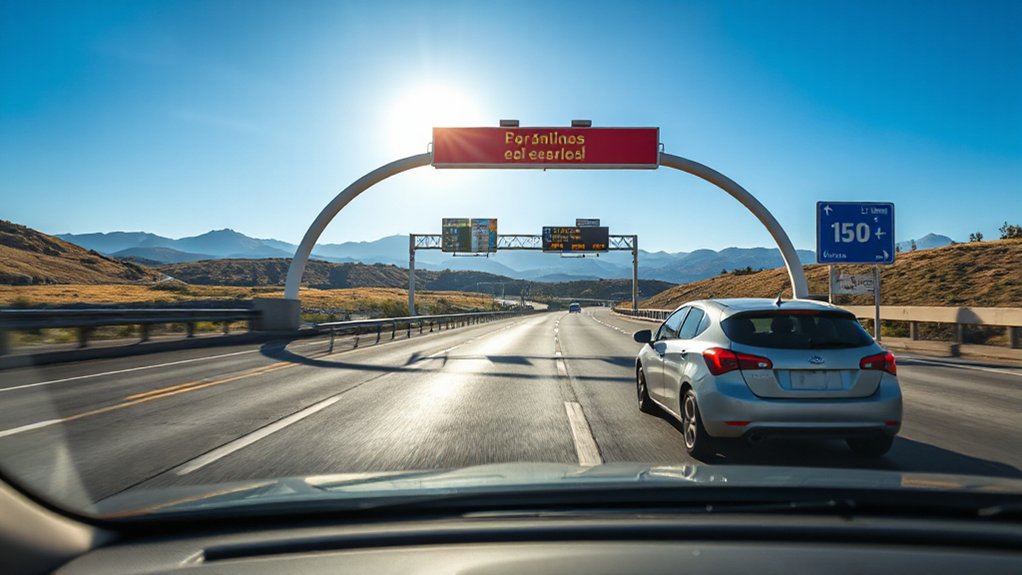
Spain’s toll roads aren’t just an extra expense—they’re a practical feature of the network, priced by distance and route rather than a flat fee. You’ll notice that you pay based on where you enter, where you exit, and the distance traveled. This system rewards actual use, not guessed cost.
Historical toll policies shaped today’s setup, but the core idea remains straightforward: fairness through proportional charges. Regional toll variations mean two identical stretches can cost differently depending on province, road class, and local agreements.
You’ll compare routes quickly, choosing options that balance time, scenery, and price. Expect occasional price surges on peak corridors, but you gain predictable travel times and maintenance-quality highways.
In practice, plan for tolls as part of your route, not an afterthought.
A Quick Map of How Tolls Work on Spanish Highways
Toll roads in Spain aren’t a mystery—you pay for what you actually use, based on where you enter, where you exit, and the distance in between. Think of the system as a simple map: you hop on at a toll plaza, ride the highway, and exit when your destination starts.
Rates are calculated by segment length, and you’re charged accordingly, not by the entire route. You’ll find cars queued at entry barriers, then exit at another booth that tallies your trip.
If you miss an exit, you’ll likely face a higher fare or automatic reroute. Along the way, you’ll notice railway crossings and scenic viewpoints that punctuate the drive, reminding you to stay alert and enjoy the journey without overthinking the toll math.
When to Pay Cash, Card, or Via App (and What to Carry)
When you pay depends on the toll plaza you hit and how you want to ride it: cash, card, or a digital app. You’ll often find signs indicating accepted methods, and lanes labeled for each option.
Carry some small cash for older plazas or machines that reject cards, plus a debit or credit card with you for faster exits.
The app option can save time, especially if you’re on a busy route; just preload your vehicle data and payment method.
Note Toll discounts apply at certain points, so check if your route qualifies.
Vehicle classifications matter: some plazas price by vehicle category or axle count, which can change totals at the gate.
Plan ahead, avoid surprises, and carry an ID for verification.
Using Fast Lanes and Time-Saving Tricks on Toll Routes
Want to shave minutes off your tolls? I’ll show you which fast lanes are worth lining up for, and how to time your approach so you don’t stall at the booth.
With quick tricks for payment paths and smart lane choices, you’ll glide through Spain’s toll routes with less fuss and more road ahead.
Fast Lane Access Tips
Moving through Spain’s toll roads can be smoother when you tap into fast lanes and smart timing. You’ll save minutes by knowing which lanes are for cards, transponders, or cash, and when to switch to lighter traffic routes.
Check your device compatibility before you drive; a quick test bellies up frustration later.
Keep your speed steady, and don’t crowd the space in front of you—premature braking signals slowdowns for everyone.
If you’re unsure, follow the sign patterns and use the central lane choices rather than weaving.
A quick glance at your fuel and tire pressure helps prevent surprises.
And remember, if you need vehicle maintenance or roadside assistance, call ahead and keep emergency numbers handy for seamless support.
Time-Saving Toll Strategies
Fast lanes aren’t just a perk—they’re time-saving tools you can use on Spain’s toll routes. You’ll move quicker by using electronic toll tags or prepaid passes, avoiding queueing at cash booths. Plan your approach with real-time traffic apps, then choose lanes that stay smooth during peak hours.
When a toll plaza carves into your route, scan signs ahead for open lanes, merge early, and keep a steady pace to minimize gaps. If a scenic detour offers faster overall travel or better scenery, weigh the time against distance and fuel.
Seek routes that pass cultural landmarks—brief outside breaks refresh your focus and still shave minutes. Remember: flexibility plus advance prep equals fewer delays and richer travel.
Reading Toll Signs Like a Local: Signs, Lanes, and Fees
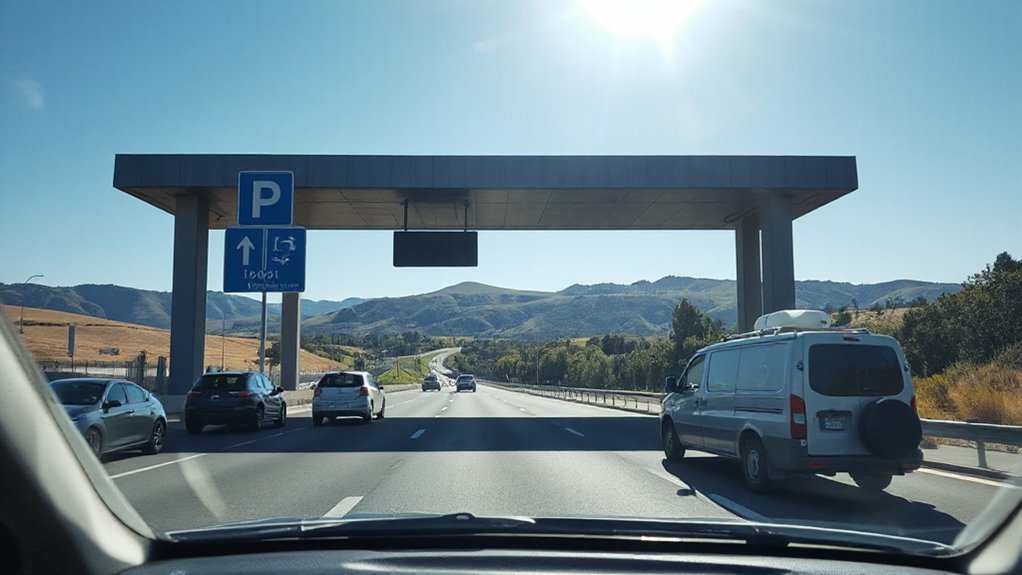
As you roll up to a toll plaza, you’ll read signs quickly for price, lane, and payment method, so you don’t miss a beat. Watch the lane lights and barriers to know when to stop, slow, or switch lanes.
And grab a photo of the fee board if you’re unsure. With the basics of toll sign meanings, lane rules, and payment options, you’ll glide through smoother on every stretch.
Reading Toll Sign Basics
Ever wondered how to read Spain’s toll signs quickly so you don’t slow down the road? You’ll spot color codes, arched symbols, and lane numbers at a glance, then match fees to your ticket or tag. Keep it smooth: scan for the word “Pago” or “Tasa,” then confirm with your tag or cash option. Signs use simple icons you’ll recognize fast, and overhead gantries guide you to exits without drama.
Being deliberate saves time, and you’ll notice rhythms—peak-hour queues, and off-peak flow. Historical architecture and cultural festivals emerge in the scenery around toll plazas, reminding you Spain isn’t just roads.
- Look for Pago, Tasa, and tag icons
- Note lane numbers and payment types
- Watch overhead gantries for exit guidance
- Differentiate cash, card, and tag readers
- Anticipate queues during peak hours
Lane Light and Barrier Rules
Lane lights and barriers tell you where to go and what to pay, so learn the rhythm and you’ll glide through toll plazas.
You’ll notice lane markings guiding entry and exit—stay in the correct lane for your vehicle type and payment method.
When a lane turns green, ease forward; a red X means stop.
Watch for white arrows that indicate which exit to take after clearing the barrier.
Barrier procedures are straightforward: slow, stop, and wait for the gate to lift before proceeding.
If a barrier stays down, look for staff or a help button.
Don’t rush or honk; methodical, calm driving keeps traffic flowing.
With practice, these signs become second nature, and your passage feels seamless.
Fee Structures and Payment Methods
Tocusing on your wallet and the road ahead, you’ll quickly see how Spain’s tolls bill you: prices vary by road type, vehicle category, and payment method, so you’ll want to know the signs and prepare the right option in advance.
- Historical toll systems show how costs evolved with infrastructure and tech.
- Regional toll variations mean you’ll encounter different rates across communities.
- Cash, card, and transponder-like systems often exist; confirm accepted methods at entry.
- Free-flow lanes speed you through, but beware mirror signs for height and vehicle limits.
- In some zones, you pay after using a barrier or at booths, so timing matters.
Keep a small card, check signs, and budget for fluctuations as you drive.
Easy Budget Tips to Minimize Toll Costs
Want to shave toll costs on Spain’s motorways? Here’s a practical, low-stress approach. Plan trips to dodge peak hours when gantry fees spike, and consider overnight drives to spread the cost over fewer charged intervals.
Compare toll routes online before you leave, picking options that balance distance with fewer tolls. If you must use a toll road, use discounted passes or combined tickets where available, then group errands to maximize the value of each payment.
Pack smart—an organized wallet reduces late fees and misreads at booths. Be mindful of Parking regulations and Road safety at all times; obey posted speeds, use designated lanes, and keep exits clear.
Small habits today save bigger bills tomorrow.
Toll-Light Routes That Won’t Slow Your Pace
If you’re hoping to keep momentum on tight timelines, choose toll-light routes that balance speed with cost. You’ll cut overhead while still slicing through scenic Spain, avoiding gridlock and unnecessary stops.
Look for corridors that weave past Historical landmarks without detours, and plan meals around Local cuisine at practical stops.
- Choose toll-light arcs near major interchanges to maximize flow
- Map alternative toll-free connectors for times you’re pressed
- Prioritize express lanes with steady speed limits and clear signage
- Preload app alerts for upcoming tolls to avoid stops
- Schedule quick cultural breaks around Local cuisine hotspots without losing minutes
This approach keeps momentum high, lets you log mileage efficiently, and satisfies curiosity about Spain’s heritage while you drive.
What to Do If You Miss a Toll or Get Charged Twice
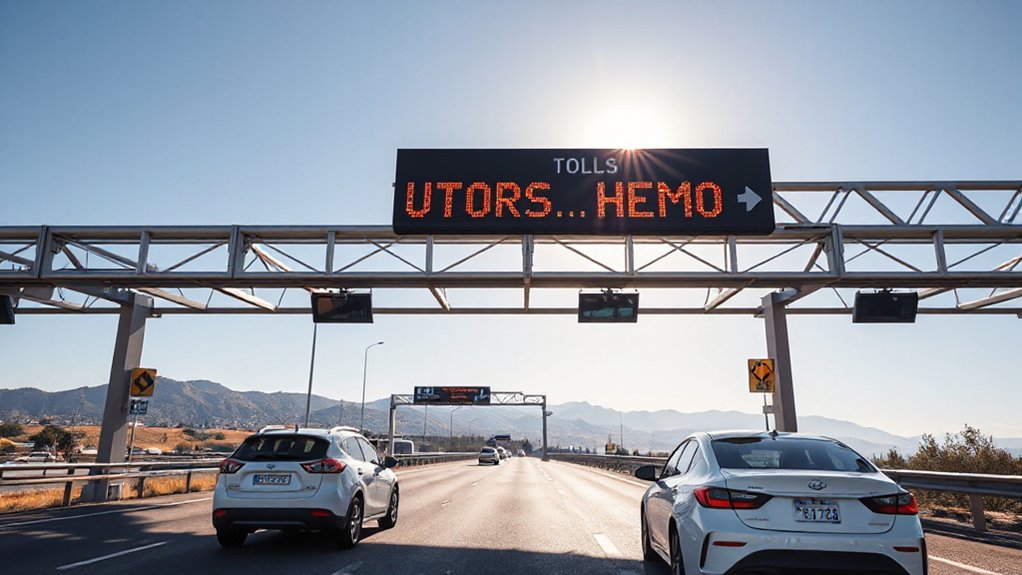
Missing a toll or getting charged twice can throw a wrench in your trip, but you can fix it fast with a calm, methodical approach. First, pull over safely and document details: time, location, toll plaza, vehicle, and any receipts or photo evidence.
If you were charged twice, contact the toll operator or your rental company with clear notes and copies of charges. For missed tolls, you may receive a post-bill; review and dispute only if it’s incorrect.
Use Alternative payment options when possible to avoid repeat issues. Keep a record of conversations and reference numbers.
In future trips, observe toll booth etiquette: slow down, stay in lanes designated for electronic tags, and don’t block exits. Your proactive steps minimize delays and stress.
Frequently Asked Questions
Do Tolls Apply on All Spanish Motorways or Only Major Routes?
Tolls don’t apply on all Spanish motorways—some are free, but major routes use tolls. You’ll encounter electronic payment options and toll signage, so prepare accordingly and choose routes wisely to minimize costs and delays.
Can Rental Cars Be Charged for Tolls, and Who Pays?
Around 90% of tolls are paid via electronic systems, and yes, rental cars can be charged; you pay through the rental company or toll service. Rental regulations vary, Toll payment methods differ; check options before you drive.
Are There Age or Vehicle Restrictions for Toll Lanes?
Toll exemption depends on your vehicle eligibility and driver status. You’ll face age or vehicle restrictions only if the toll lanes specify it; otherwise, you should be fine. Verify Vehicle eligibility and any Toll exemption rules before driving.
How Often Are Toll Barriers Cashless or Card-Only?
Like a well-oiled engine, you’ll find many tolls are cashless. You’ll mostly use electronic payment, though some lanes still accept cards. Cashless lanes speed you up, and check if you qualify for toll exemptions where applicable.
What Happens if I Exit a Toll Road Early or Wrong Exit?
If you exit early or via the wrong exit, you may face Toll refund rules and Wrong exit penalties, so check signs, report promptly, and keep receipts; you’ll usually owe the toll minus refunds, plus possible processing fees.
Conclusion
You’ve got this: steering Spain’s tolls isn’t a drag, it’s a map you can actually read. Start with a quick plan, pick routes with Via or cash only when you must, and stash a spare card just in case. Example: a traveler saves hours by choosing a toll road with a Via app, then hops off at a convenient service area for lunch. Small choices, big in savings and pace—keep that rhythm and you’ll glide through.