
Begin by tracing Galicia’s distinctive Celtic roots through hill forts, megaliths, rock art, and coastal markers, then connect material culture, place-names, and ritual landscapes to see a continuous lineage. Look for inland hill forts, sacred sites atop monasteries, and iconography that ties legends to landscape. Use credible maps, guard against sensational myths, and respect access rules. Plan a circular route that balances sites with weather and local guides. If you keep exploring, you’ll uncover deeper layers of Galicia’s Celtic memory.
Key Takeaways
- Start with authenticated maps and scholarly overlays to locate hill forts, megaliths, rock art, and ancient settlements in Galicia.
- Consult recent excavations, peer-reviewed publications, and local experts to verify inscriptions, symbolism, and site preservation.
- Visit coastal promontories, rock shelters, and ceremonial landscapes where cup-and-ring motifs and solstice alignments occur.
- Engage with local museums and archaeology parks to access artifacts, interpretive trails, and guided tours.
- Experience living culture through Galician music, festivals, and cuisine to contextualize heritage within ongoing traditions.
What Makes Galicia’s Celtic Roots Distinct
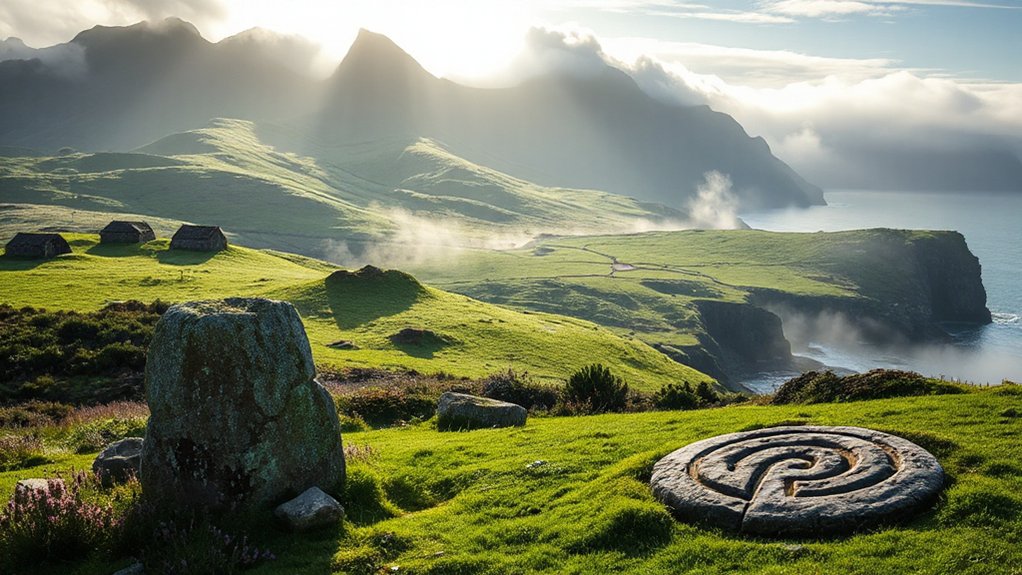
Galicia’s Celtic roots stand out because they blend distinctive material culture with a uniquely preserved linguistic and ritual landscape. You examine how regional craft, metallurgy, and ceremonial objects differ from neighboring traditions, revealing a continuous lineage rather than a sudden revival.
Celtic mythology appears in place-naming, iconography, and seasonal cycles embedded in daily life, helping you infer belief systems without relying on contemporary glosses. The persistence of archaic syntax and vocabulary in local speech, alongside ritual sites and stone monuments, indicates deep roots rather than borrowed affinities.
Ancient artifacts, from weapons to ritual adornments, provide tangible anchors for your analysis, linking excavated traces to reported legends. This evidential approach clarifies what truly distinguishes Galicia within the broader Celtic world.
Galicia’s Celtic Coastline: Where to Start
You’ll notice that Galicia’s coastal Celtic roots reveal themselves most clearly where the land meets the sea, in geology, place-names, and material culture along the shore.
Start with the Galician coast as a framework to test how these signals cluster—from rocky promontories to tidal patterns and ancient trade routes.
This evidential view helps you map where Celtic influence first anchored and why it persists today.
Coastal Celtic Roots
Coastal Galicia preserves a distinct Celtic imprint, visible in the wind-chiseled coastlines, ancient fortifications, and thrumming vocal traditions that cling to maritime life. You’ll sense this heritage most clearly in small harbors, where legends echo in bilingual placenames and fishermen’s chants.
The coastline presents a natural archive: rock shelters carved with cup-and-ring motifs, tidepools that mirror ritual routes, and promontories aligned to solar and lunar cycles. You can trace evidence through archaeological surveys, which link fortifications to defensive networks from the late Iron Age, and through to more recent folk practices that preserve ritual cadence at seaside celebrations.
Ancient legends and Celtic symbolism appear in songs, toponyms, and craft motifs, offering a coherent, testable picture of Galicia’s seaborne identity.
Start With Galician Coast
What marks the starting point for Galicia’s Celtic coast, and why does it matter? You begin at the rugged estuaries of the Rías Baixas, where tidal patterns reveal continuous human occupation and maritime trade.
The coastline’s geology—granite outcrops, estuarine salt marshes, and sheltered coves—supports a mosaic of archaeological sites linked to early Atlantic movement. You’ll note how Celtic symbolism appears in regional art, monuments, and harbor layouts, suggesting cultural circulation rather than isolation.
This context explains why fishermen’s tales and ritual markers persist along the shore, shaping identity. Galician cuisine echoes this continuity: seafood, corn, and dairy blend in ways that reflect river-mouth economies and seasonal migrations.
Start here to trace networks that connect coast, community, and memory, grounding your study in observable, corroborated evidence.
Megaliths and Stone Circles You Can Visit in Galicia
Megaliths and stone circles in Galicia offer tangible links to the region’s ancient inhabitants, with several sites standing as clear evidence of ceremonial or communal activity. You study these monuments to infer purpose, alignment, and social roles, not just aesthetics.
Evidence points to organized labor and shared ritual calendars, where stones mark solstices, lunar cycles, and seasonal gatherings. In places like the granite arcs you can visit, you observe construction techniques, from carefully fitted joints to the deliberate orientation toward celestial events, underscoring intentional planning.
Celtic mythology surfaces in local interpretations, yet the material record remains the strongest guide to function. Stone circle construction reveals a convergent approach across communities: communal effort, ritual function, and landscape integration, yielding durable, navigable markers of Galicia’s ancient cultural landscape.
Ancient Settlements in Galicia: Cliff Forts and Ground Holes
Cliff forts and ground-level habitations in Galicia reveal how ancient groups adapted to challenging environments, using landscape defenses and resource-rich escarpments to sustain communities. You observe that cliff sites concentrate defensible access, while holes and pits indicate storage and domestic reuse, revealing persistent settlement patterns.
The material record shows specialized craft and social ritual, including Ancient pottery that marks trade networks and daily life, and evidence for organized communal activities tied to Celtic festivals.
- Strategic rock faces guided seasonal movements
- Storage voids reveal surplus and reuse
- Pottery styles link sites across networks
- Festive remains hint at seasonal gatherings and feasts
Galicia’s Early Symbols and Rock Art Explained
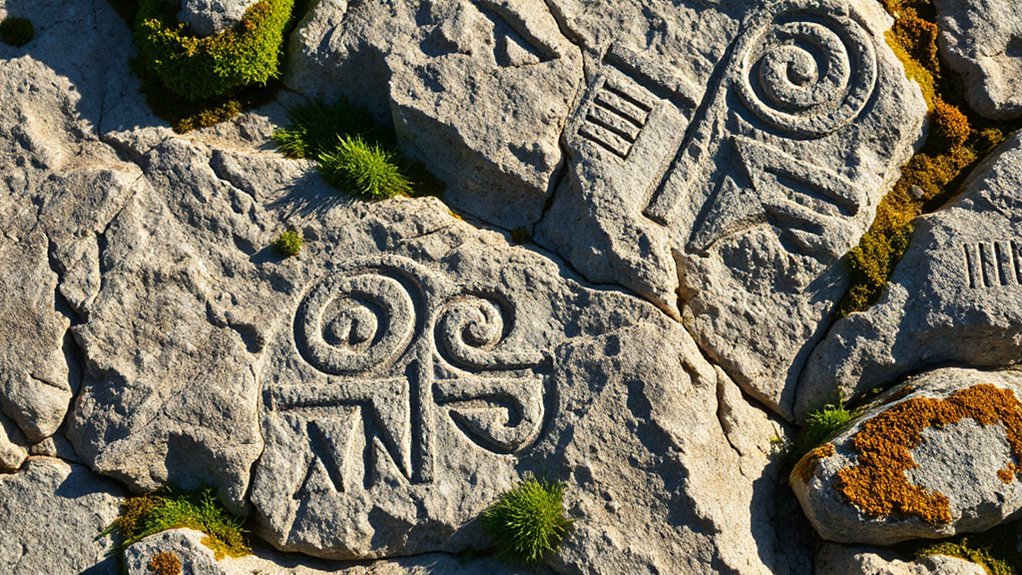
Across Galicia, early symbols and rock art disclose a persistent visual language that traders, ritualists, and travelers shared over generations. You examine engravings and painted panels as external records, seeking chronology in motifs and sites.
Ancient symbols appear as geometric spirals, crescents, and meanders, suggesting shared iconography across coastal and hillside locales. You assess technique—pecked versus carved, pigment matrices, patination—to estimate age and function, from territorial marks to ritual offerings.
Rock art reveals pathways and seasonal cycles, aligning with waterways and mountain passes used for exchange. You cross-reference archaeological finds, ethnographic parallels, and landscape context to interpret meaning without overreaching claims.
Evidence supports diverse uses, with enduring resonance in later cultural memory, rather than a singular, monolithic Celtic narrative.
Folklore and Beliefs in Celtic Galicia
Folklore in Celtic Galicia weaves together ritual practices, seasonal cycles, and place-centered beliefs that persist alongside modern life. You’ll notice how memory anchors daily customs, from harvest celebrations to twilight offerings, revealing a landscape where myths sit beside markets and buses.
Through evidence, you’ll see Celtic mythology shaping local tales, sacred springs, and guardian figures tied to hills and rivers, underscoring a worldview that blends reverence with everyday activity.
Folklore festivals punctuate the year, offering communal spaces for storytelling, music, and dance that validate ancestral codes while inviting inquiry.
To grasp this legacy, consider these touchstones:
1) Seasonal rites
2) Protector spirits
3) River and hill lore
4) Community storytelling
Language Threads: Celtic Roots in Galician Place Names
Galician place names carry a web of Celtic echoes that you can trace through phonology, morphology, and early settlement patterns. You examine toponymic layers for evidence of a Celtic language imprint, distinguishing shared roots from later Latin adaptations.
In many town and river names, consonant clusters, vowel shifts, and suffixes reveal semantic fields tied to landscape, worship, and agrarian life, supporting a Celtic substratum rather than purely Latin or Germanic origins. You assess place name origins by cross-referencing historical maps, linguistic corpora, and archaeology, building a pattern of continuity across centuries.
The contrasts between names ending in -io, -ara, or -eira, and their surrounding geography illuminate linguistic persistence. This method yields a disciplined, evidential argument for a Celtic presence encoded in Galician place name origins.
Traditional Galician Music: A Living Celtic Link
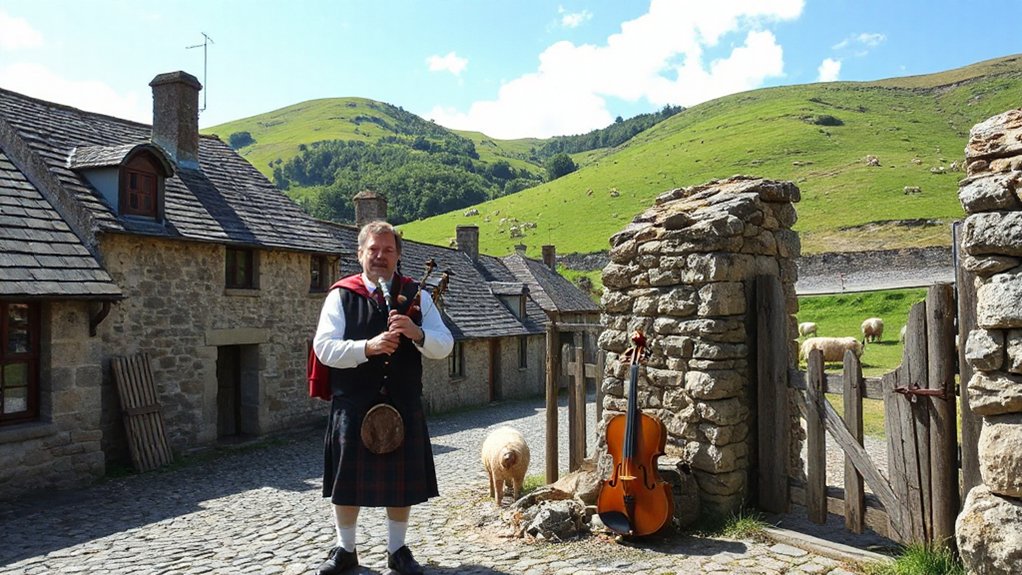
Traditional Galician music preserves a live thread of Celtic heritage through tuned airs, ritual rhythms, and communal repertoire that travelers can hear in tavern corners and festival stages alike. You listen analytically as melodies entwine with social ritual, revealing how Celtic symbolism threads through cadence and form. The repertoire depends on traditional instruments that carry distinctive timbres, enabling a dialog between past and present. Evidence shows regional styles persist through teaching, transmission, and performance, not merely souvenir tunes.
- You encounter bagpipes and gaita timbres shaping mood and identity
- You notice percussion underscoring ritual timing in dances
- You observe stringed voices guiding melodic discourse
- You sense intergenerational learning transmitting repertoire
This living link demonstrates Galician music as a contextual bridge between heritage and contemporary soundscape.
Galicia’s Festivals With Celtic Echoes
Across Galicia’s festival calendar, Celtic echoes surface not as decoration but as structural elements of communal life, shaping rhythms, spaces, and meanings that festivalgoers experience in real time. You observe how processions, wakeful vigils, and dawn bells encode collective memory, aligning participants with seasonal cycles and shared origins.
The evidence points to revived liminal spaces where Celtic mythology informs ritual logic, from protective charms to heroic epics recited around fires. You note that festival origins often blend medieval traditions with folk revival, yielding hybrid forms that endure because they address social needs for belonging, identity, and continuity.
Descriptions of oral transmission, handmade crafts, and reimagined drum patterns support this view, showing how performance practices sustain meaning beyond spectacle. In sum, these festivals function as living archives, translating history into communal action.
Everyday Traces: Galician Cuisine With Celtic Echoes
In Galicia, everyday meals quietly reveal Celtic echoes embedded in taste, technique, and ritual alike. You notice how ingredients and methods trace back to memory, evidence, and shared practice. The evidence is tangible: preserved salt cod, barley breads, and slow stews that mirror ancient hearths.
You taste the influence of Celtic textiles in patterns on table linens; you sense it in the rhythm of preparation and communal eating. Galician wine threads through meals as a social hinge, while herbs align with ritual timing.
Consider these cues:
1) Hearty soups simmered long,
2) fish and maize dishes paired with crisp fermentations,
3) bread shaping by hand,
4) seasonal gathering rituals.
This culinary cadence anchors identity.
Maps, Guides, and Local Experts for Authentic Sites
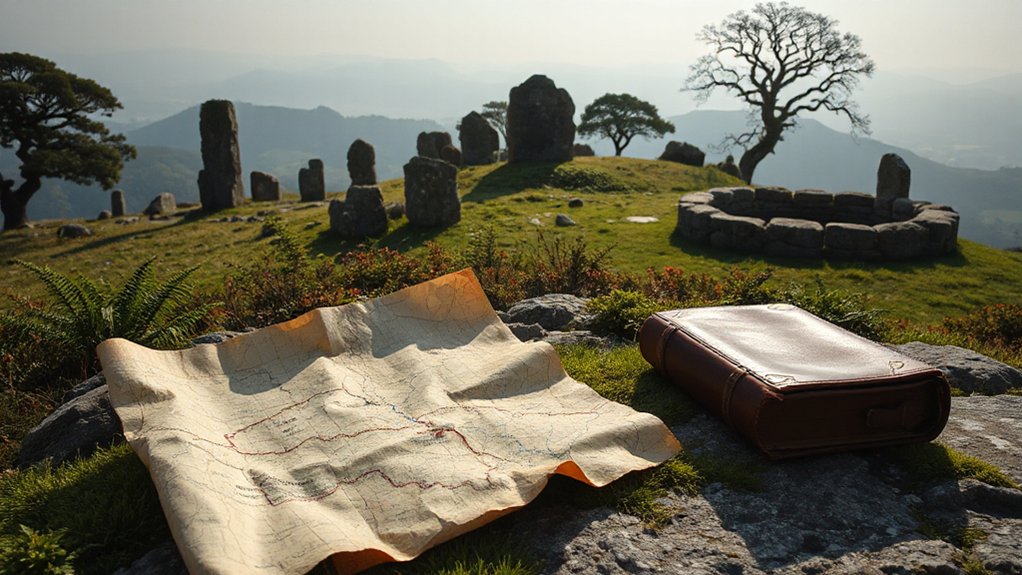
Maps direct you to authentic sites, while guides from local experts translate terrain into reachable, meaningful routes. You’ll see how precise cartography and on-the-ground know-how reveal Celtic markers, ruins, and hotspots that generic guides miss.
This combination—Maps For Authentic Sites plus Guides From Local Experts—builds an evidential, practical framework for credible exploration.
Maps For Authentic Sites
To find authentic Celtic sites in Galicia, start with reliable maps, guides, and local experts who can verify site status and access. You’ll compare sources, note boundaries, and assess preservation levels using concrete evidence rather than folklore alone.
- Map accuracy: cross-reference official datasets with scholarly overlays to confirm coordinates and protection status.
- Guide credibility: prefer historians who cite primary sources and recent excavations over anecdotal tales.
- Local expertise: consult community custodians for access permissions and seasonal constraints.
- Context checks: evaluate inscriptions, Celtic symbolism, and historical myths against peer-reviewed findings.
These components form a transparent framework for authentic discovery, minimizing bias while anchoring sites in demonstrable history and landscape.
Guides From Local Experts
Local guides translate myths into measurable context, linking local legends with site-specific features, such as inscribed symbols, petrography, and alignments visible at dawn or dusk. They assess authenticity through multiple sources—archaeological reports, community histories, and tradition—reducing risk of tourist misinterpretation.
Expect precise itineraries that emphasize safeguarding sensitive areas while permitting meaningful observation. By triangulating oral testimony with tangible markers, you gain a disciplined framework for evaluating authenticity.
This approach clarifies significance without sensationalism, strengthening your understanding of Galicia’s Celtic heritage.
Museums and Archaeological Parks to Visit
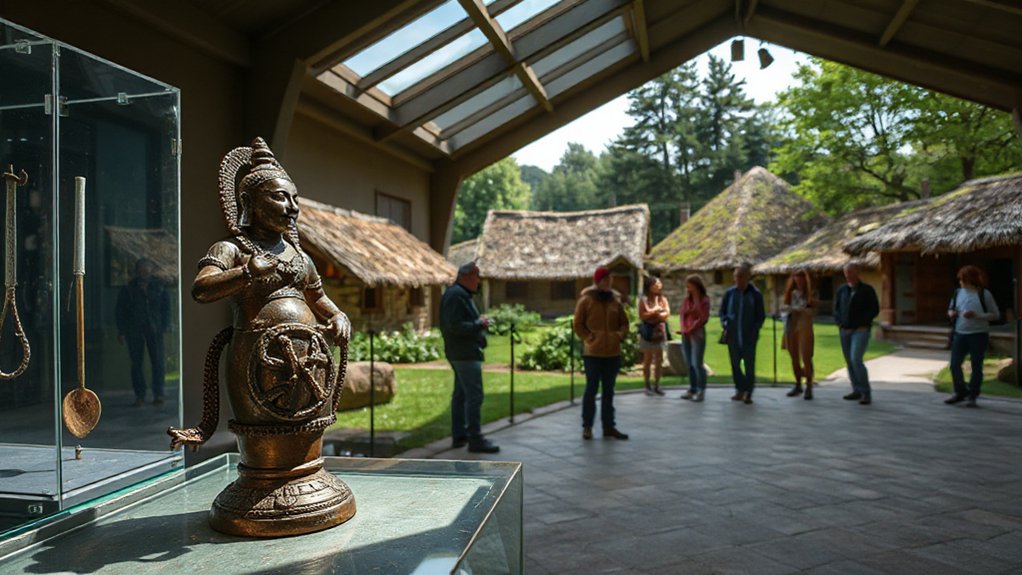
Galicia’s museums and archaeological parks offer a concise, evidence-based snapshot of its Celtic heritage, where artifacts and site reconstructions illuminate daily life, trade, and ritual. You’ll encounter material culture that reveals craft techniques, metalwork, and dietary patterns, while contextual displays connect objects to broader networks.
You observe how ritual spaces and symbolic motifs encode belief, power, and identity, grounding Celtic symbolism in tangible remains. The following sites exemplify this evidential approach:
- Coastal fortifications with preserved fortlets
- Hill-fort reconstructions showing settlement layouts
- Bronze-age workshop replicas with interactive displays
- Sacred enclosures linked to myths and seasonal cycles
These venues enable you to compare artifact contexts, assess dating methods, and interrogate myths through material evidence, including Mythical legends and their persistence in place.
Planning a Celtic Galicia Roadtrip
You’ll map your route by balancing time, distance, and the Celtic sites that anchor Galicia’s heritage. I’ll point to must-visit sites, show how to cluster them regionally, and explain why logistics matter for a smooth pace.
Expect concise practical tips that cover travel contingencies, such as weather, border considerations, and accommodations, so your plan stays focused and actionable.
Planning Your Route
To plan a Celtic Galicia road trip, start by mapping a realistic loop that centers on key historic sites, medieval towns, and coastal fortifications. Then anchor it with a few unfailing weather windows and ferry connections. You’ll assess travel times, lodging options, and seasonal traffic to minimize wasted hours and maximize temple-like silence at dawn viewpoints.
This route should balance evidence-based pacing with cultural immersion, ensuring you can sample local cuisine and observe traditional crafts without overload.
- Outline key stopovers with time estimates and daily goals
- Prioritize ferries and weather buffers to avoid delays
- Schedule restorative daily buffers for lingering at markets and workshops
- Prepare documented notes on site provenance, preservation efforts, and accessibility
Must-Visit Celtic Sites
How can you assemble a must-have lineup of Celtic sites that anchors a Galicia road trip in measurable, tangible signs of the ancient past? You evaluate sites by artifacts, layout, and context, not myth alone. Begin with Castro ruins where stone plans reveal communal life and defensive choices, then move to sanctuaries where standing stones align with solstices, signaling ritual rhythms.
The coastal cairns and dolmens offer burial practices and seafaring connections, while hill forts expose social hierarchies and defences. Include inland monasteries built atop earlier sacred loci, showing syncretism amid conquest.
Celtic mythology surfaces in iconography and inscriptions, while ancient rituals emerge in alignment practices and seasonal markers. Together, these sites form a coherent, evidential narrative of Galicia’s Celtic heritage, guiding a focused, evidence-based itinerary.
Practical Travel Tips
Planning a Celtic Galicia roadtrip hinges on clear logistics, reliable sourcing, and a focused route that pairs sites with efficient travel times. You’ll optimize every mile by mapping routes between archaeological parks, coastal legends, and tavernas offering regional dishes tied to Celtic mythology and ancient rituals.
Expect practical choices: flexible days for weather, layered transit options, and budget buffers for unexpected closures. The following checklist helps you stay on track:
- Plan a circular route that minimizes backtracking and maximizes site-per-day access.
- Reserve accommodations near town centers with easy access to public transit and rental cars.
- Pack weather-ready gear, a printed map, and offline guides to critical sites.
- Confirm opening hours and local events tied to Celtic mythology sites before departure.
Ethical Travel: Respecting History and Preservation
Ethical travel in Galicia means more than ticking sites off a list; it requires deliberate actions that protect fragile heritage while enriching your experience. You assess how visitor behavior shapes preservation, noting that small choices—respecting sacred sites, avoiding litter, and sticking to marked paths—reduce damage and maintain authenticity.
You observe communities’ voices guiding conservation, recognizing that cultural exchange should be reciprocal, not extractive. You verify access policies, supporting local guides and institutions that document oral histories and archaeological context, ensuring funds flow back into preservation.
You adopt a mindfulness mindset, documenting with consent, and sharing knowledge to elevate rather than sensationalize. This approach embodies ethical tourism, turning your journey into a sustainable partnership with Galicia’s living Celtic memory.
Safety, Access, and Best Times for Outdoor Exploration
Outdoor exploration in Galicia hinges on practical safety, reliable access, and timing that respects terrain and weather. You’ll weigh conditions, route difficulty, and local advisories before heading out, using evidence from recent reports and maps to minimize risk. Consider terrain variability, seasonal fog, and coastal winds that shift quickly.
- Check safety precautions, weather alerts, and trail closures the day before your hike.
- Inspect outdoor gear—boots, layers, rain protection, navigation devices, and hydration.
- Confirm access points, permissions, and public transport options for your plan.
- Schedule outings in daylight, with emergency plans and time buffers for abrupt changes.
A mindful approach combines preparation, appropriate outdoor gear, and flexible timing to maximize safety and enjoyment.
Verifying Site Authenticity and Interpretations
To verify site authenticity and interpretations, you should cross-check material culture, topographical claims, and narrative attributions against multiple sources, including peer-reviewed research, local archives, and independent field observations.
Start by evaluating artifacts, inscriptions, and construction techniques for consistency with established Celtic patterns rather than sensational attributions.
Examine landscape context, microtopography, and visibility networks to assess whether claimed sacred or strategic sites fit plausible Celtic practices.
Compare folklore and myths with archaeological dating evidence, identifying any anachronisms or later distortions.
Document uncertainties transparently, noting alternative explanations.
Prioritize corroboration over confirmation, and seek expert consultation when interpretations hinge on fragmentary or contested data.
This disciplined approach strengthens claims about Celtic mythology and archaeological dating without overreaching.
Putting It All Together: Craft Your Celtic Galicia Route
Crafting a Celtic Galicia route starts with organizing what you’ve learned from verifying site authenticity and interpretations into a practical, coherent itinerary. You’ll balance evidence with experience, ensuring each stop supports Ancient rituals and Celts mythology while keeping time and distance reasonable.
- Map verified landmarks to a logical sequence that minimizes backtracking.
- Allocate context-rich stays or guides that illuminate interpretations without overloading.
- Include flexible buffers for weather, local festivals, or new findings.
- Cross-check each site’s primary sources, archaeological notes, and local legends for consistency.
This approach yields a route that’s analytical, immersive, and credible, helping you connect tangible sites to the broader Celtic tapestry. You’ll travel with intention, documenting how Ancient rituals echo through Galicia’s landscapes and how Celts mythology threads into local memory.
Frequently Asked Questions
How Old Are Galicia’s Most Famous Celtic Sites?
You’ll find Galicia’s famous sites range from roughly 2,000 to 3,000 years old, depending on site. You analyze remains, inscriptions, and legends, linking Galician folklore and Celtic music traditions to earlier eras with careful evidential reasoning.
What Tools Help Identify Ancient Galician Symbols?
You can use Celtic symbolism to guide you; archaeologists leverage archaeological tools like ground-penetrating radar, drone surveys, and systematic artifact analysis to identify Galician symbols with careful context, comparisons, and robust evidential reasoning.
Which Seasons Suit Outdoor Celtic Exploration Best?
You should explore in spring and late summer, when mild weather and accessible trails invite you outdoors. Celtic folklore inspires awe, and seasonal festivals highlight ancient routes, festivals, and symbols, guiding you with evidential, descriptive insights about the landscape.
How to Distinguish Myth From History in Legends?
You distinguish myth from history by weighing sources, evidence, and plausibility, you don’t just believe whispers; you analyze. Mythical creatures appear in tales, legendary battles in chronicles, yet corroboration, dates, and archaeology reveal where fantasy ends and fact begins.
Where to Find Authentic, Non-Touristy Celtic Artifacts?
You can’t easily find authentic, non-touristy Celtic artifacts; seek local academies, museums with archival access, and rural markets where collectors trade. You’ll notice Celtic music and Traditional festivals often accompany genuine artifacts, signaling provenance and community care.
Conclusion
You stand at Galicia’s edge, where stone whispers and sea maps collide. Each cairn, each sigil-carved wall, hints at a story older than memory, waiting to reveal its thread. The coast tightens your breath and time slows, urging you to weigh what’s seen against what’s known. Will you trust the footprints of ancients or the hands of modern guides? The trail leans toward doubt, then invites you to confirm—one careful step, one quiet hour, at a frontier of heritage.