
Plan a mindful, multi-sensory La Rioja wine road trip: plot valleys, hill towns, and sunset viewpoints, then weave in handpicked wineries, local bites, and vineyard strolls. Drive or cycle between cellar doors as limestone cellars, whitewashed facades, and olive-braced lanes glow in the evening light. Taste Tempranillo, Graciano, and Crianza with smoky chorizo, aged manchego, and membrillo. Stay curious about terroir, pace yourself, and let quiet courtyards and hidden wineries reveal their stories—more awaits if you keep exploring.
Key Takeaways
- Plan a balanced route that blends winery visits, scenic viewpoints, local bites, and time for tasting notes.
- Map by valley and town, plotting vineyard stops, cellar doors, and meaningful miles for a mindful loop.
- Choose transportation (driving, cycling, or guided tours) and time visits to match spring bloom or autumn harvest.
- Seek offbeat spots and hidden gems like hillside wineries and quiet courtyards for authentic experiences.
- Focus on pairing wines with regional bites, observe tasting etiquette, and confirm tours and schedules in advance.
How to Plan Your La Rioja Wine Route From Start to Finish
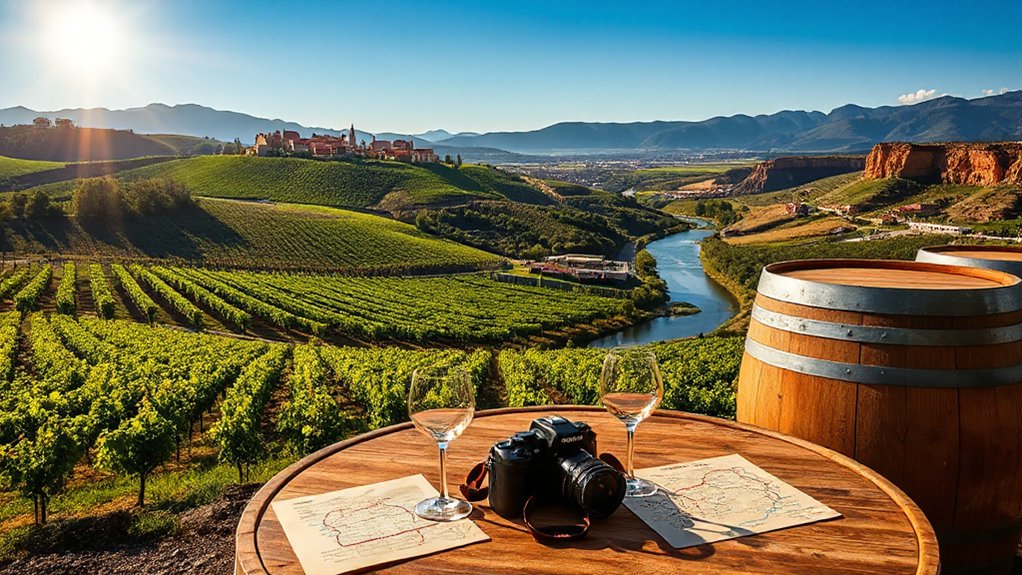
Begin planning your La Rioja wine route by mapping out your priorities: great Rioja wines, scenic villages, and time to savor the moment. You’ll calibrate pace by the rhythm of cellar doors, listening for the soft clink of glasses and a cork release.
Picture your days: vineyard tours that unfold into golden afternoons, rows of vines sighing with summer heat, and a breeze carrying hints of vanilla and berry. You map a loop that balances tasting rooms with cobbled plazas, local bites, and sunset vignettes over terraced hills.
When you arrive, you’ll prioritize Wine tasting moments that reveal character—earth, oak, and mountain air. Keep notes, trust your senses, and let each stop compile into a cohesive, memorable narrative of Rioja.
Why La Rioja’s Wine Routes Are Unique
La Rioja’s wine routes stand out because they braid place and palate into a single, unforgettable experience. You walk from sun-warmed limestone soils to vaulted cellars, where the air tastes faintly of oak and dusty bottles.
You feel the landscape’s line—hills like pages in a book, vines stitching them together—as you trace pathways between villages and bodegas. The routes fuse wine history with modern craft, inviting you to taste stories aged in time.
You’ll notice grape varieties singing in the glass, from delicate whites to bold reds, each bottle telling a unique terroir’s tale. It’s not just sipping; it’s listening to soil, climate, and culture collaborate in every pour.
Best Times of Year for Tastings in La Rioja
As the hills wake with dawn, you’ll taste the season in the air and in the glass, feeling the grapes plump under the sun.
Peak harvest seasons bring a chorus of crush, scent of fresh juice, and warm, earthy trails that guide your steps from cellar to hillside terrace.
In those ideal tasting windows, you’ll catch the wine at its bright, vibrant moment, ready to tell you its story.
Peak Harvest Seasons
Is there a more alive time to savor La Rioja than during peak harvest? You wander sun-warmed rows as baskets swing, the air perfumed with grape stalks and sun-baked earth. You hear the soft thump of ripened fruit metered into crates, a pulse that keeps time with your steps.
Vines bend with generous vigor, vineyard aesthetics at their most evocative, emerald canopies framing copper hills. Hands brush leaves, and you catch the earthy tang of soil mingling with ripe sweetness. A breeze carries wine aroma from nearby fermenting tanks, inviting you closer to the crush and the culture.
You taste the season in every bite of jammy grape and in the crisp bite of cool cellar air.
Ideal Tasting Windows
Peak tasting comes in waves, when the sun-dried days give way to cooler evenings and the winery hums with real-time fermentation and happy chatter.
You’ll find ideal tasting windows align with grape cycles: late spring twinkles with fresh florals; early autumn echoes with ripeness and spice.
Plan weekday visits to dodge crowds, savoring a quiet, attentive nose of oak and fruit.
In spring, the vineyards bloom, and a guided wine tasting feels intimate, almost handwritten, as you compare subtle vintages side by side.
Summer heat fades into slate-green shadows, making cellar temperatures inviting for longer vineyard tours.
Autumn harvest buzz adds energy to the air, with vineyards alive and the palate primed for a finish.
Choose carefully, taste deeply, and remember vineyard tours deepen every note.
Mapping a Wine-Route by Region and Town
As you map your route, you’ll lock in regional arcs, charting the hills and valleys that cradle La Rioja’s character.
You’ll time town-by-town stops around winery availability, so you catch tastings, curbside chats, and chef’s bites without the rush.
Gather your notes on timing, logistics, and road-ready routes, and let the map begin to whisper the wines’ stories.
Regional Route Planning
Winding through La Rioja’s valleys and hills, you sketch a map that tethers vineyards to towns and the stories they hold. Regional route planning becomes a living thread, guiding you by geography, climate, and harvest rhythms. You plot corridors along river folds, across rolling slopes, where terraced vines catch light like liquid copper.
Each region’s character surfaces: soils, grape varieties, and cellar whispers shaping your path. You balance practical constraints with sensory cravings, packing days that flow from vineyard to winery to viewpoint, then back into a cozy inn.
You visualize stops by a simple rule: steady pace, meaningful miles. The plan emphasizes a mindful loop, where a well-designed vineyard layout integrates cellar access, logistically smooth progression, and a comfort-driven rhythm that invites lingering, tasting, and return.
Town-by-Town Stops
You map a wine route by region and town with intent and cadence, letting each stop echo a terroir and a tale. In town-by-town stops, you thread valleys and lanes, unpacking a region’s personality with careful steps.
You pause at a cellar door, inhale whispers of grape and stone, and note how vineyard architecture frames the horizon—lines that tell of sun, rain, and patient hands. You move from village to village, tasting fruit-forward notes, then deeper, mineral-slate breath, tracing routes that feel like listening to a map.
At every stop, you witness wine fermentation in action—foam, aroma, and time, turning juice into character. The route becomes a living chronicle, precise, sensory, and utterly La Rioja.
Winery Availability Timelines
From town to town, you’ve felt how the rhythm of harvest and cellar work colors each stop; now you map how winery availability threads through those same lanes. Winery timelines aren’t mysteries but schedules you can read: seasonal tours, limited-release slots, and quiet weeks when doors stay shut to the public.
You’ll notice peak harvest hours shaping tasting room lines, and midweek tastings offering calmer, more intimate conversations with winemakers. Plan with precision: confirm tasting slots, arrive before the clock’s chime, and pace visits to avoid crowded counters.
In the wine cellar, air carries memories of oak and fruit; in your notes, capture dates, vintages, and reservations. Practice good tasting etiquette, listen to cork-pops, and let discovery unfold with clarity.
Bodegas Offering Candid Tastings and Memorable Tours
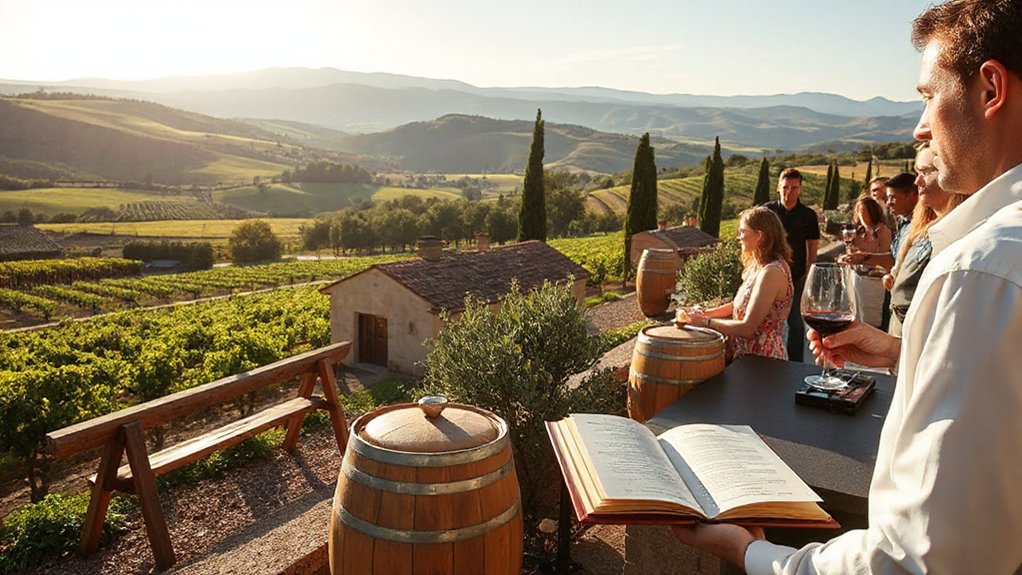
Have you ever tasted a winery’s truth poured directly from the barrel? You walk into a bellowing cellar, torches flickering, and the air turns coppery with history. A guide smiles, inviting you to a candid tasting that feels like a confession, not a show.
The wine cellar exudes quiet confidence: oak spirals, glass gleams, and the pour arrives with just enough gravity to hint at stories you haven’t earned yet. You listen, observe, and taste with restrained awe, noticing how tannins sketch lines on your tongue.
Tasting etiquette matters here—swirl, sniff, sip, swallow, and pause. Tours linger through vaulted rooms, revealing winemaking rituals, fermentation hum, and barrels aging with patient purpose.
Honest, immersive, unforgettable.
Pairing Tapas With Tempranillo and Graciano
You’ll start with Tempranillo’s ruby kiss, its cherry-meets-vanilla finish guiding you toward crusty tapas and smoky chorizo.
Graciano steps in, brightened by olives and peppers, its spice lifting the moment without shouting.
Together, you’ll sense how Tapas And Tempranillo Pairings and Graciano With Tapas Notes map a route from bite to sip, inviting you to taste the landscape of La Rioja.
Tapas And Tempranillo Pairings
What makes a tapas bite sing with Tempranillo or Graciano? You bite in, and the wine meets the plate with a soft, muscular kiss.
Tomato’s brine, olive’s bite, and garlic’s warmth lift Tempranillo’s cherry fruit into velvet, while Graciano adds a peppery sparkle and a breath of spice.
You chase that bashful tannin with a bite of savory cod, then balance it with membrillo’s sweetness to reset the palate.
In wine tasting terms, you’re tracing how acidity carries through the finish, how structure supports each bite, how aroma lingers like roasted pepper and smoke.
Vineyard scenery flanks your table, but the real scenery is the sequence: bite, sip, savor, repeat.
Graciano With Tapas Notes
Graciano’s peppery bite shines brightest when you lift a small plate of tapas that mirrors its spice: smoky chorizo, grilled mushrooms, and a shard of aged manchego. You notice how the wine’s cool depth lifts the heat, then softens into plum, leather, and pepper. This is graciano history in motion, the lineage weaving through your glass as you pace the table and pace your senses.
Tapas pairing becomes a dialogue: each bite asks for a counterpoint, each sip answers with harmony. You don’t rush; you listen to every sizzle of the pan and every sigh of the barrel. Flavor lingers, inviting you back for another round.
- Notes of smoke and cherry
- Textures: oil, meat, and rind
- Temperature contrast enhances aroma
- Finish echoes tapas memories
Getting Around: Driving, Cycling, and Guided Options
Getting around La Rioja is part of the adventure, whether you’re behind the wheel, pedaling along vineyard lanes, or joining a guided tour that reveals hidden viewpoints.
You feel the road hum under tires, scent of dust and sun-warmed grapes filling the cabin, and distant bells from a village wine festival.
Side streets offer vineyard architecture in whitewashed facades and stone arches that glow at sunset.
On a bike, you hear leaves whisper over your tires and taste the metallic tang of wind off the vine rows.
A guide points to shaded patios, cellar doors, and panoramic hills.
Driving or cycling, you’ll savor precise routes, safe speeds, and the confidence of local wisdom.
Insider Tips to Dodge Crowds and Uncover Hidden Gems
Hidden courtyards and quiet hillsides wait for those who know when to slip off the main routes. You tune your pace, breathe deeply, and let the map loosen its grip as you wander toward quieter shoulders of Rioja.
You’ll spot small gems tucked behind olive groves, then linger where the scent of crushed grape and dust rises with the sun. Local wine festivals pulse nearby, but you’ll dodge the crowds by choosing dawn tastings and offbeat bodegas.
Seek vineyard eco tours to feel soil, sun, and stone align in your glass. A few tips:
- Time your visit between weekends and lunch hours
- Follow local guides to hidden wineries
- Respect seasonal footpaths and gates
- Pair discoveries with regional bites and stories
Seasons, Harvests, and Cellar Closures You Should Know
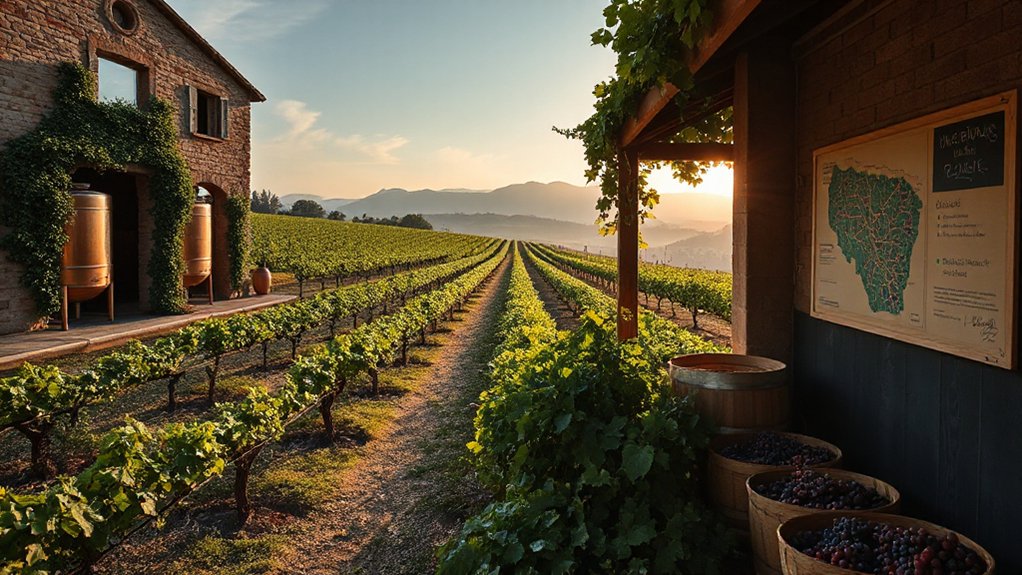
Seasons reshape the Rioja cycle the way wind carves clay, and knowing the calendar helps you taste with purpose. You walk through dawn-scented vines as budbreak tightens into green, each leaf a whispered note in the soil’s chorus.
Harvest time arrives with sun-warmed urgency; you hear a bucket clang, smell ripened fruit, feel nets rustle, and taste the sweetness that follows the squeeze of history. You notice cellar doors swing on damp hinges, chalk marks counting weeks, the air turning leather-soft and mineral-bright.
Seasonal festivals punctuate the rhythm, drawing locals and travelers into village plazas where music and aromas mingle. Throughout vineyard cycles, plan around closures, and you’ll navigate with patience, savoring secrets tucked between vintner hands and bottle glass.
Budgeting Your La Rioja Wine Route: Costs and Value Picks
Wine routes don’t have to break the bank—you can savor Rioja’s depth on a sensible plan. You’ll feel the sun-warmed stone, taste the air, and budget without dulling the story. Track costs before you go: transport, tastings, and meals.
Seek value: choose single-vineyard days, shared flights, and off-peak hours. Prioritize experiences that deliver character over pomp, and you’ll leave with both memory and money saved.
Align choices with Wine tasting etiquette, and you’ll move through corks and conversations with respect. Seek Vineyard sustainability, favoring cooperatives and producers that minimize waste and maximize local charm.
Your smart day travels become richer when you mix free viewpoints, compact bites, and immersive stories.
- Plan multi-site passes for savings
- Sample flights over full-bottle orders
- Eat small plates locally to maximize flavor
- Choose sustainable, smaller producers for authenticity
Frequently Asked Questions
What Are the Most Family-Friendly Bodegas in La Rioja?
You’ll find family-friendly bodegas in La Rioja, where kids marvel at rolling vineyards and you savor sunlight on barrels; some offer gentle tours, then tasting rooms. Vineyard history informs every corner, plus wine making techniques feel alive.
How to Book Private Tours Without Language Barriers?
You book private tours with an agent who translates on the fly, or you bring a bilingual buddy; language barriers vanish as you sip, savor, and laugh, savoring private tours that feel tailor-made for your curious palate.
Which Routes Offer Wine and Art Pairings?
Yes, the Rioja routes with wine and art pairings tempt you: you savor wine tasting amid sculpted halls, then wander galleries, letting art appreciation sharpen aromas, textures, and flavors as you stroll through vineyards and sunlit, oak-scented cellars.
Are There Pet-Friendly Winery Visits in La Rioja?
Yes, many La Rioja wineries welcome furry friends, though pet policies vary. Check ahead; some offer shaded courtyards. You’ll notice winery amenities like water bowls, quiet tasting rooms, and grassy terraces perfect for your companion. Enjoy responsibly, savoring the wine.
What Are Common Age Restrictions for Tastings?
Generally, you must meet the legal drinking age, and some places require proof. Wine tasting regulations vary by cellar, so you’ll encounter age checks, ID requests, and shoulder-to-shoulder crowds that heighten the aroma, color, and anticipation.
Conclusion
You’ll leave with sun-warmed memories, the scent of oak and citrus on your lips, and a palate delighted by velvet reds and crisp whites. If crowds loom in peak season, drift to quieter town winescapes or dawn tastings before the alchemy of the day begins. Don’t worry about planning perfection—let the vines guide you: a winding road, a welcoming bodegas whispering your name, and a sunset glow that seals Rioja into your traveling heart.