
Begin a journey through Extremadura’s iconic landmarks, where stone and light shape your day. Start at Mérida’s Roman Theatre, a time-traveling stage that still frames modern life. Then wander Cáceres Old Town’s fortified lanes, climb to a plaza that breathes history, and admire Trujillo’s castle, plaza, and Renaissance palace. Feel the vast quiet of Las Dehesas Desert and the sacred hush of Monasterio de San Jerónimo. Guide you step by step toward more wonders await beyond the next page.
Key Takeaways
- Mérida’s Roman Theatre: ancient stage set against a hillside offering daylight tours and sunset views of enduring Roman architecture.
- Cáceres Old Town: UNESCO-listed fortress and whitewashed lanes with carved lintels, balconies, and hidden courtyards.
- Alcazaba of Medellín / Riverside Fortress: Moorish fortifications along the Tamu? river (Tame) with thick walls, towers, and strategic corridors.
- Trujillo’s Medieval Mosaic: castle, plaza, and Renaissance-influenced palace reflecting layered medieval to Renaissance history.
- Monfragüe National Park: dramatic cliffs and panoramic vistas ideal for hiking, birdlife, and expansive natural panoramas.
Mérida’s Roman Theatre: Time-Traveling Marble Stage
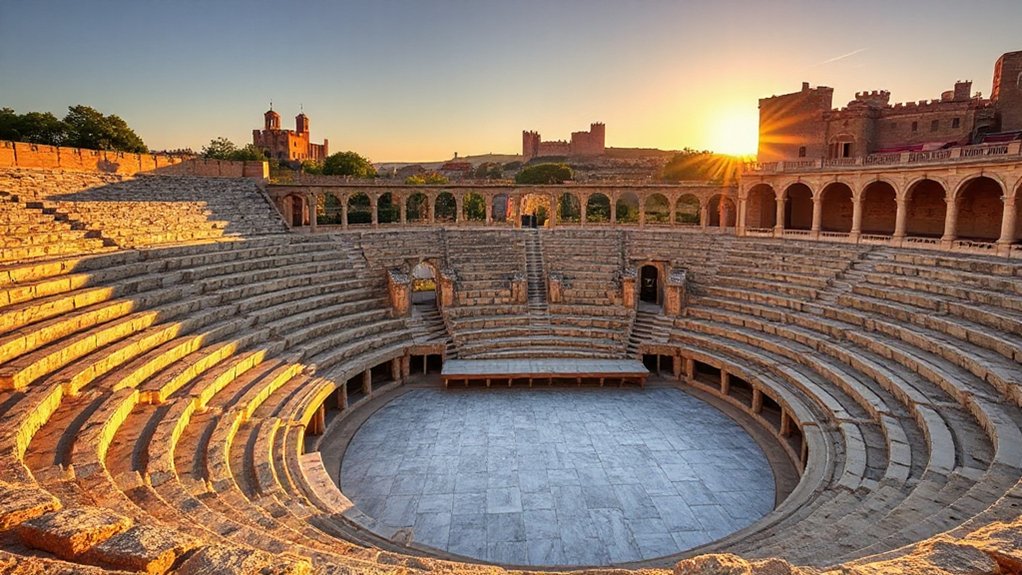
Mérida’s Roman Theatre rises from the hillside like a marble memory you can walk through, its ancient arches framing the modern world with a timeless hush. You step onto the terraced stone and feel gravity pull history forward, as if spectators once filled every seat.
This is Roman architecture you can touch, a compact stage where echoes linger after every performance. You’ll notice the careful layout, sightlines, and stonework that still carries the weight of centuries, proving function and beauty aren’t rivals here.
In season, cultural festivals breathe life into the stones, guiding you through routines that blend myth, music, and pageantry. Plan your visit for daylight explorations, then linger for sunset views as the theatre quietly completes its daily ritual.
Monasterio De San Jerónimo: Sacred Silence and Architecture
You step into Monasterio De San Jerónimo and feel sacred silence settle around you, inviting you to notice how light plays on stone inside.
The Gothic cloister reveals its quiet drama in intricate tracery and shaded arcades, while the architecture speaks of centuries of monastic life and disciplined routine.
Today, you’ll explore the monastic history and how it informs the present, from interior calm to the enduring details that define its atmosphere.
Sacred Silence Interior
Sunlight pools along stone pilasters, revealing the craft of ashlar and quiet arches. You sense a sacred ambiance in every corner, not loud but intentional, inviting reflection rather than noise.
The thick walls mute the outside world, letting your thoughts settle as you move from chapel to corridor. Simple furnishings remain unobtrusive, so the architecture speaks for itself.
Pause at the threshold, listen for distant footfalls, and let the monastery’s discipline shape your awareness of time and place.
Gothic Cloister Details
The Gothic cloister at Monasterio de San Jerónimo unfolds in a measured cadence, where slender arches lean into stone and rhythm guides your steps. You’ll notice how light pools along the colonnade, casting precise, narrow beams that trace the building’s architectural symbolism in every shadow.
The pointed arches rise with a disciplined verticality, directing your gaze upward as if inviting contemplation rather than crowding the space. Vents and tracery patterns knit air and stone, creating a perpetual hush that amplifies footsteps and whispers alike.
Carved bosses and motifs speak in restrained detail, offering tactile cues about medieval craft without shouting. In this corner of Extremadura, the Gothic cloister becomes a quiet workshop for reverence, memory, and lucid appreciation of form.
Monastic History Today
Long after the cloister’s stones cooled, Monasterio de San Jerónimo remains a living record of its past, a place where quiet architecture keeps time. You feel the weight of centuries in its simple arches and orderly chapels, the discipline of monastic life echoing through stone and silence.
Monastic architecture here isn’t showy; it’s practical, designed to support devotion, study, and prayer without distraction. You observe how thick walls regulate heat, how vaulted aisles guide footsteps, how the linear plan reveals a monk’s rhythm.
The site invites reflection on religious traditions that shaped Extremadura’s landscape and values. Visit open courtyards, listen for hushed chants, and let the calm inform your understanding of history, craft, and the enduring peace of sacred spaces.
Cáceres Old Town: Fortified Beauty Unveiled
Cáceres Old Town unfolds as a fortress of stone and memory, where medieval walls rise around narrow lanes and whitewashed houses. You tour the UNESCO district by foot, feeling the weight of centuries in every arch and corner.
The magic lies in the juxtaposition of medieval fortresses and refined Architectural details, from stone balconies to carved lintels. You’ll notice how time hardened the streets yet preserved rhythm and charm, inviting you to pause at lookouts and hidden courtyards.
- Walk the ancient ramparts at sunset for dramatic silhouettes
- Inspect the intricate doorways and lintels for Medieval fortresses character
- Savor a café break in a shaded plaza to absorb the architectural details and atmosphere
Trujillo’s Medieval Mosaic: Castle, Plaza, and Palace
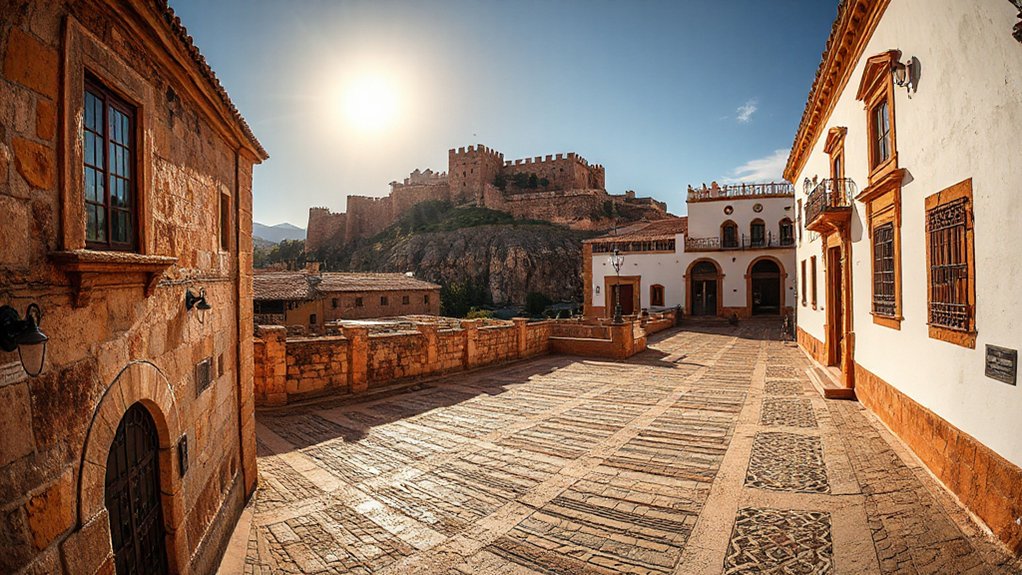
Trujillo unfolds as a compact medieval mosaic where castle, plaza, and palace narrate a single, layered story. You step through thick gates into a town that keeps its centuries close, and you feel the weight of Medieval craftsmanship in every stonework detail.
The castle’s battered towers loom, yet you sense measured defense rather than menace, a utilitarian artistry you can almost touch.
In the Plaza Mayor, daylight spills across arcades, guiding you toward the palace, where Renaissance influence brushes the façade with refined symmetry and subtle curves.
You notice staircases that flow into courtyards, practical paths that invite lingering but demand purpose.
Keep your pace steady, your gaze curious, and let Trujillo’s layered history reveal itself without rushing to conclusions.
The Las Dehesas Desert: Dunes, Light, and Panoramas
The Las Dehesas Desert unfolds like a quiet theater of light, where wind-sculpted dunes glow at dawn and linger under a pale afternoon sun. You’ll notice how Desert flora threads through the sands, conferring color and resilience to the landscape, while Dune formations shape horizons you won’t forget. Walk softly, study the tracks, and let the scale reset your sense of space.
- Observe dune shapes at first light to catch shifting shadows and colors.
- Track resilient Desert flora clinging to the sandy slope, a study in texture.
- Seek expansive panoramas where light stretches, revealing quiet, vast silhouettes.
Extremadura Castles Corridor: A Quick Historical Map
Beyond the city gates lie a corridor stitched with stone—an arc of Extremadura where castles punctuate the horizon like watchful sentinels. You walk this map with purpose, tracing medieval routes that once ferried soldiers, merchants, and poets between watchtowers.
The corridor isn’t just ruins; it’s a living timeline you can read in thick walls, arrow slits, and crown-shaped battlements. Follow the line from fortress to fortress, noting how each stone tells a different chapter of frontier life, from crumbling ramparts to restored keep interiors.
Plan brief, efficient visits that maximize exterior views and minimal steps. If you time it right, you’ll catch medieval festivals and see traditional crafts demonstrated within courtyard corners, blending history with hands-on inspiration along the way.
Alcazaba of Medellín: Moorish Stronghold by the Tame River
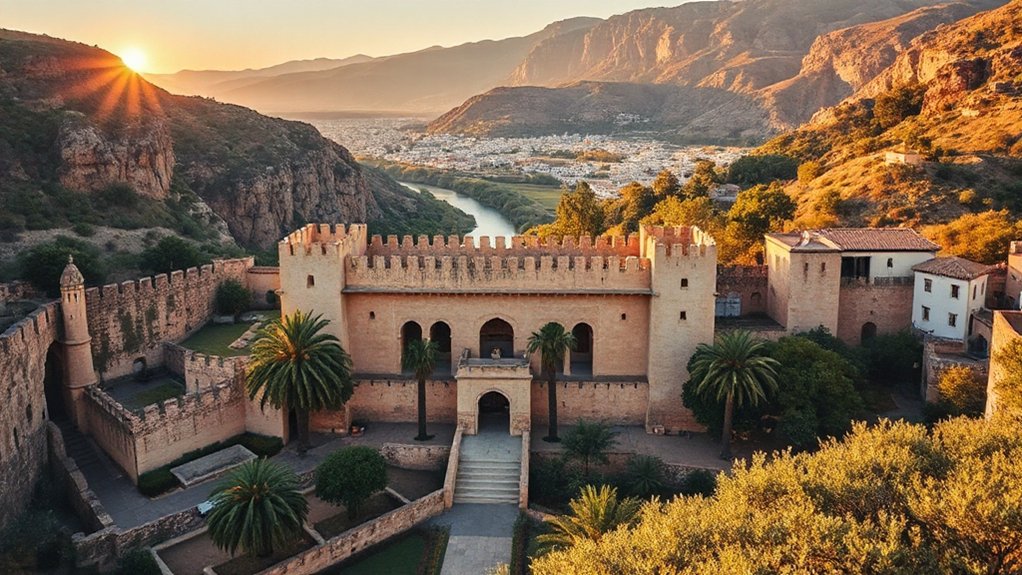
You’ll sense the Moorish Fort Presence as you approach the Alcazaba of Medellín, its walls mounting the riverbank like a quiet guardian. The Riverside Fortress History unfolds with each step along the Tame, where echoes of past sieges meet the river’s steady murmur.
Medellín’s Architectural Influence invites you to compare carved battlements and lilting arches, shaping a vivid sense of place and purpose.
Moorish Fort Presence
Nestled beside the Tame River, the Alcazaba of Medellín rises as a palpable relic of Moorish power, its walls still whispering of sieges and strategy. You sense how Moorish architecture shaped the site, turning limestone into durable fortress remnants that endure today.
The presence feels strategic, guiding your steps through shadowed corridors and sunlit courtyards where watchtowers once commanded horizons.
- Feel the stone’s cool grip in your palm as you trace the fortress remnants and imagine its defensive lines.
- Listen for distant echoes of drums and marching feet that once furnished the fortress with life.
- Visualize water channels and tunnels that connected the stronghold to daily life along the Tame River.
Riverside Fortress History
The Alcazaba of Medellín rises along the Tame River as a stubborn reminder of Moorish strategy, its thick walls telling of sieges faced and endured. You walk the riverbank path and feel the fortress breathe, its silhouette shaping the landscape’s memory.
Riverside defense isn’t just stone; it’s purpose, placement, and protracted vigilance against flash floods and invading forces. Inside, fortress architecture governs every corridor, tower, and battlement, guiding your steps with centuries of engineering instinct.
You notice how the river shapes sightlines, resources, and grit, shaping daily life around defense and renewal. River restoration nearby mirrors the fortress’s resilience, preserving the site’s ecology while sustaining its story.
History here isn’t abstract—it’s embodied, read in stone, water, and intent.
Medellín Architectural Influence
The Alcazaba of Medellín rises along the Tame River as more than a fortress; it marks a sustained dialogue between Moorish design and the landscape it guards. You feel how Medellín influence threads through every stone, shaping an architectural style that favors compact courts, whitewashed walls, and shadowed passageways.
The stronghold’s crenellations mirror the river’s cadence, while the terraces invite you to read the terrain from vantage points carved into the rock. You sense history refracting sunlight into cool interiors, a practical, lived habitat that endured centuries of change.
Medellín influence isn’t just ornament; it’s a method for weaving function, defense, and beauty into one enduring silhouette.
- Moorish grid, water-adjacent cooling, and terrace strategy
- Structural rhythm aligned with river flow and light
- Preservation as dialogue with the surrounding landscape
Monfragüe National Park: Cliffs, Eagles, and Panoramic Vistas
From sheer cliff faces to sweeping river views, Monfragüe National Park delivers a drama that can’t be captured in photos alone. You’ll feel the wind sharpen the air as raptors wheel above the gorge, and you’ll realize why this reserve is a magnet for Birdwatching adventures.
Paths are well-marked, so you can focus on the moment rather than the map. Start with the viewpoints along the river, then hike into the pine and cork oak corridors to spot griffon vultures and nesting black kites.
Scenic hiking routes unfold with every turn, offering panoramas that push the horizon. Bring water, steady shoes, and patience—nature rewards concise, attentive steps with unforgettable, up-close encounters.
Cathedral of Badajoz: Brick Gothic and City Peaks
You’ll notice the Cathedral of Badajoz’s Brick Gothic façades catching the light as you approach, their brickwork telling stories of craft and time.
From street level, the city’s peaks silhouette against the horizon, shaping the skyline into a living compass for your visit.
As you explore, the contrast between ancient stone and urban contour invites you to feel how architecture and topography map Extremadura’s soul.
Brick Gothic Facades
Brick Gothic defines the Cathedral of Badajoz’s façade, where red bricks glow against the surrounding stone and the skyline offers a jagged crown of city peaks. You’ll notice the sturdy, unornamented lines that betray medieval practicality, yet reveal intricate brickwork in the recesses and arches.
The texture invites you to run a hand along the cool, rough Facade Details, appreciating how form follows function without sacrificing character.
- Observe the brick density and mortar joints that emphasize the building’s weight.
- Note the arcades and doorways framed by clean, robust outlines.
- Trace the subtle brick patterns that catch light differently across the day.
Brick Gothic endures as a tangible reminder that monumentality can be quiet, precise, and enduring.
City Peaks Shaped Silhouettes
The Cathedral of Badajoz rises as a hinge between brick Gothic detail and the city’s jagged skyline, where spires puncture the horizon and peaks of red-tile roofs bite into the blue. You stand under a compact silhouette that feels carved by time, letting the built drama guide your gaze.
The city skyline unfolds in sharp angles, brickwork catching light at every notch, while the surrounding hills frame the view like a natural balcony. As day shifts, sunset shadows deepen the outlines, turning dormer windows into quiet beacons.
You map the walk from nave to plaza, noting how the silhouette remains readable from different angles, a practical reminder that beauty can be measured in perspective.
Pórtico De La Atalaya, Alcántara: Stone Through Time
Nestled along the ancient walls of Alcántara, the Pórtico de la Atalaya rises as a quiet proof to time, its stonework worn smooth by centuries of sun and wind. You’ll feel how architectural evolution carried echoes from fortress to gate, a doorway that hints at a layered history. This arch stands not only as sculpture but as evidence of daily life and defense, a beacon of Cultural significance that locals still honor.
You walk its alignment, tracing joints where mortar fuse with triumphal stone.
- Studio of stone: watch the seams reveal engineering choices through the ages.
- Light and shadow: observe how time shapes its silhouette on variable days.
- Portal of memory: sense the continuity between past and present.
Old Cathedral of Coria: Ruins and Revival
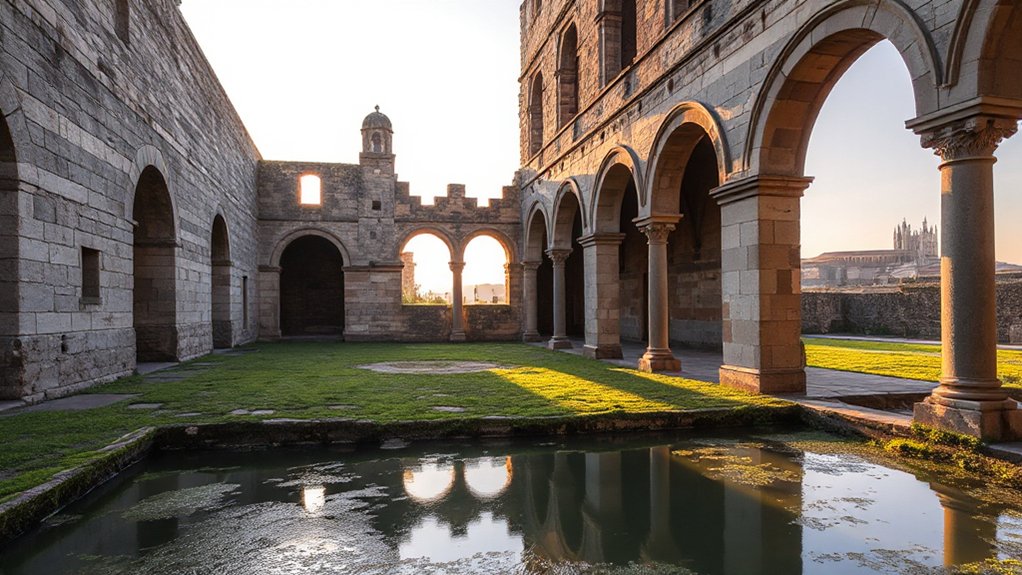
You’ll wander the Old Cathedral of Coria and feel ruins whispering revival, a space where history and renewal collide. Its Catholic heritage echoes through ash-colored arches, hinting at monastic secrets and the lives once housed here.
Use what remains as a guide to what’s next—restoration, memory, and renewed purpose.
Ruins With Revival
In Coria, the Old Cathedral’s ruins tell a story of endurance and renewal, as stones once left to weather now spark a quiet resolve to rise again. You’ll feel history breathe as you walk the chalky paths.
Noticing how Ancient ruins become a canvas for Revival architecture, where gaps in walls hint at future clarity.
- See how sunlight travels through fractured arches, revealing resilience in the stones.
- Notice how reconstruction ideas blend with the original scale, guiding your gaze toward renewed purpose.
- Listen for the echo of distant trades and prayers, a reminder that revival is as much about function as form.
Catholic Heritage Echoes
The Old Cathedral of Coria rises in ruins and revival, a sober ledger of Catholic heritage etched into the chalky avenues and stone fragments. You walk the nave’s echo, noticing how time reuses space: cracked fresco hints, a chapel’s silhouette, and the tremor of stone beneath your steps.
Restoration breathes urgency into reverence, preserving murals while inviting modern reflection. You feel the weight of centuries in every arch, yet the site remains practical: signs guide you, timelines frame context, and safety rails keep access steady.
Modern art finds a quiet resonance here, blending with relics without swamping history. Culinary traditions nearby flavor your visit, offering sturdy, rustic bites that honor regional craft after a sober, enlightening tour.
Monastic Architectural Secrets
Beneath Coria’s ruined nave, monastic secrets unfold in the stones themselves, where thick mortar and weathered arches whisper about cloisters, chapter houses, and the rhythms of daily prayer. You’ll sense how monastic traditions shaped this space, turning rubble into memory and restraint into power.
The ruin hints at sacred rituals once housed here, now echoing through arches and carved capitals. You move with purpose, tracing mortar joints and soft-lit remnants, imagining processions, vows, and the steady cadence of study.
Revival arrives as careful reuse, not mere relic. You gain a sense of continuity, a link between past devotion and present curiosity.
- Ruins reveal cloister geometry and hidden passageways
- Carved capitals narrate monastic traditions and daily routines
- Rebirth emerges through adaptive reuse and respectful restoration
Mérida Amphitheater and Theater Museum: Stones With Stories
Mérida’s Amphitheater and Theater Museum reveal stones that still echo thunderous crowds, where every chipped edge and faded inscription invites you to listen. You stand where ancient spectators once roared, tracing grooves that once guided chariots and footsteps. The amphitheater’s stone walls hold stories in their grain, and you feel the weight of ancient carvings beneath your fingertips as you move from arena to corridor.
In the Theater Museum, the stage lights flicker over marble benches, revealing signs of daily life—perfumes, coins, tools—that once shaped performances. You’ll notice practical details: accessible viewing points, clear signage, preserved corridors.
Ancient carvings whisper from the façade, while underground tunnels hint at secret routes used by performers and slaves—an intimate, tangible bridge to the past.
Villuercas-Ibores-Jara Landscape: Stone Villages and Microclimates
Rugged limestone, sun-warmed slate, and a tapestry of microclimates shape Villuercas-Ibores-Jara’s villages as much as their stone walls do. You’ll feel how narrow lanes climb a hillside, how whitewash glints, and how each village guards a different weather secret.
The landscape rewards slow wandering, where dry stone walls, honeyed doors, and church bells mark time between wind and rain. In Villuercas Ibores, Microclimate Diversity isn’t abstract—it’s daily life, influencing crops, textures, and tones of stone.
You’ll notice potentes, pátinas, and shadows that shift with the sun, inviting repeat visits to trace the changing moods of the valleys and ridges.
- Stone villages perched along fault lines and sunlit gullies
- Paths weaving through cork oaks, pine, and terraced orchards
- Seasonal light shaping colors, textures, and quiet horizons
Cáceres Plaza Mayor: Social Heartbeat and Gateways
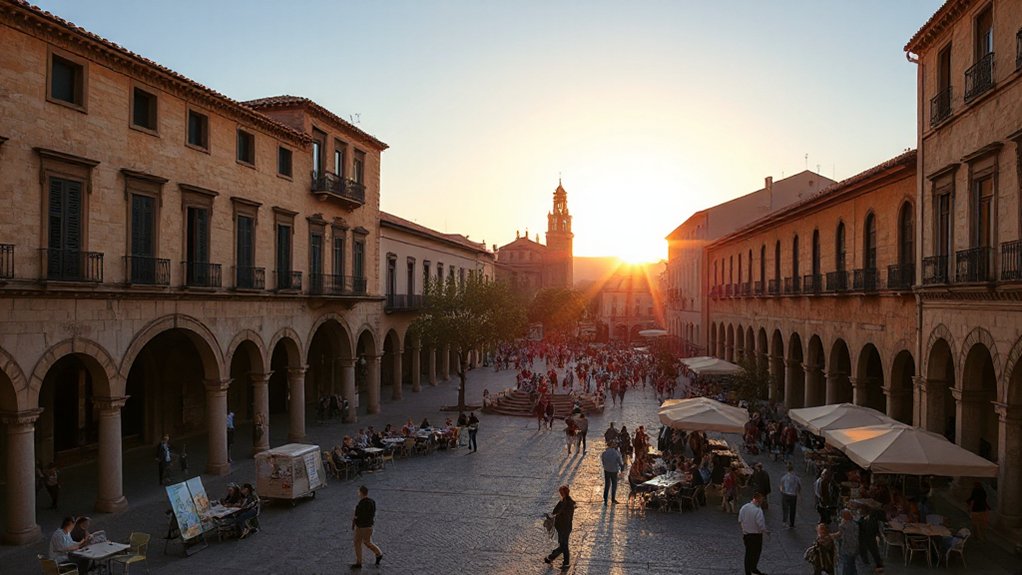
Cáceres Plaza Mayor pulses as the social heart of the city, where stone arches frame lively conversations and the day’s rhythms unfold in real time. You’ll feel the energy rise as locals and visitors mingle, coffee steam curling up from cups, markets unfurling beneath vaulted ceilings.
This plaza acts as a gateway: you navigate from narrow alleys into a wide, sun-warmed square, then step into a seamless loop of cafés, shops, and street performances. Plan a quick coffee break, then watch the plaza’s micro-stories unfold—laughter at a table, a busker’s graphed chords, a child chasing pigeons.
Cáceres plaza isn’t just a place to pass through; it’s where you orient, pause, and connect with the city’s everyday rhythm, a true social hub.
Frequently Asked Questions
Which Landmarks Are Best for Chance Panoramic City Views?
You’ll get the best panoramic views from elevating Historical architecture sites with sweeping cityscapes, where Cultural significance anchors every frame. Choose viewpoints atop towers or hills, and savor dramatic horizons, dramatic sunsets, and memorable, practical, evocative city panoramas.
Where Are the Least Crowds for Sunset Photography?
For crowd free sunset, head to peaceful photography spots along the Guadiana river and lesser-known hilltop towns after golden hour. You’ll capture serene skies, softer silhouettes, and dramatic silhouettes without crowds—perfect for intimate, evocative frames.
Which Sites Are Accessible for Disabled Visitors?
Accessible parking and wheelchair ramps keep you moving, you’ll find sites welcoming you, you’ll savor smooth routes, you’ll glide between arches, you’ll see museums with lifts, you’ll navigate plazas confidently, you’ll explore Extremadura with ease.
Are There Any Kid-Friendly Activities at These Landmarks?
Yes, you’ll find Kids’ playgrounds and family friendly tours, making visits engaging for kids; you’ll roam with ease, discover interactive exhibits, and enjoy shaded paths, gentle climbs, and storytellers that bring Extremadura’s landmarks alive for your family.
What Are the Must-Visit Hidden Gems Among These Sites?
Hidden gems: Alburquerque’s castle echoes history, and Medellín’s fortress reveals architectural styles intertwined with rugged scenery, while Trujillo’s plaza exudes historical significance, and Cáceres’ old town whispers timeless charm—you’ll feel offbeat magic, practical routes, and serene crowd-free moments.
Conclusion
You wander Extremadura and discover your own mirror in its stones, as if the past keeps bumping into your present. Coincidence threads you from Mérida’s marble seats to Cáceres’ sunlit plazas, where doors seem to open just as you need shelter or a view. A desert dusk lines your path, then a chapel’s hush invites you to pause. In these streets, the landmarks aren’t distant monuments—they’re moments you happen to meet, and choose to carry.