
You’ll explore Santa Cruz’s historic districts as a living timeline, starting with Victorian gables and Mission Revival facades that hint at late-19th-century resort origins, then tracing mid-century storefronts and brick industrial accents. Wander courtyards that hide storefront stories, and notice how lintels, cornices, and transoms encode function and aspiration. Plan a 90-minute loop from the Wharf through Westside and Pacific Avenue, timing markets, and seasonal events. Stay curious—there’s more to uncover as you go.
Key Takeaways
- Santa Cruz’s Historic Districts blend late-19th century resort charm with mid-20th century residential patterns, preserving Victorian, Mission Revival, and Art Moderne details.
- Plan efficient loops: start at the Wharf, weave through Westside blocks to Pacific Avenue, noting hours and landmark façade details.
- Explore hidden courtyards and storefronts to glimpse historic life, owner changes, and adaptive reuse that shape current character.
- Attend district festivals and seasonal markets to experience local culture, from spring produce runs to winter lights and carols.
- Use weather, crowds, and transit tips to optimize visits, balancing outdoor exploration with indoor gallery and cafe stops.
What Makes Santa Cruz Historic Districts Special
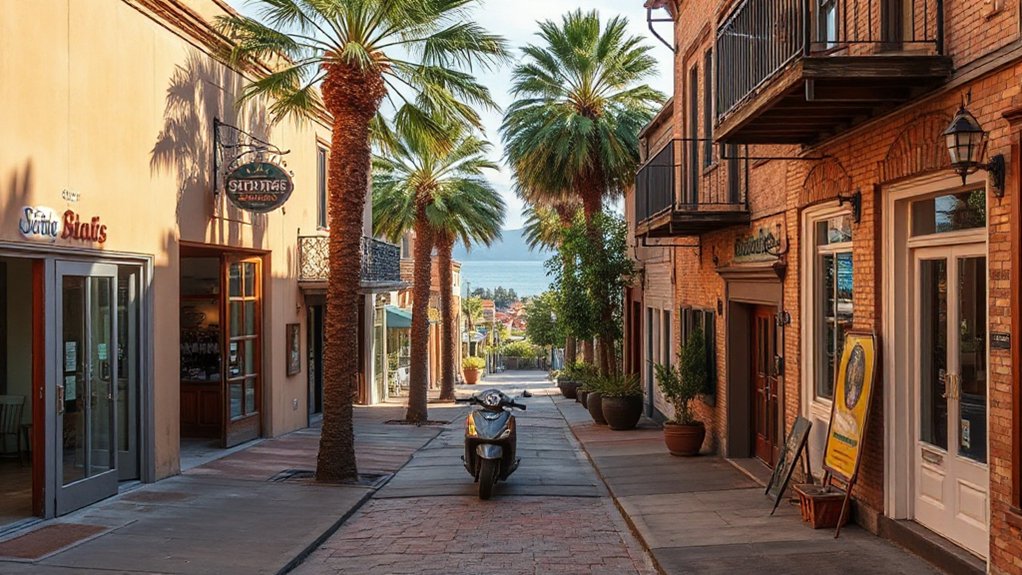
Santa Cruz’s historic districts stand out because they preserve a layered timeline of the city’s growth, from late-19th-century seaside resorts to mid‑20th‑century residential patterns. You trace this chronicle through street-by-street milestones, noting how architectural evolution reflects shifting tastes, materials, and technologies—from creaking boardwalks to brick storefronts and bungalow clusters.
Early resort planning yields grand hotels and promenade layouts, while later iterations introduce subdivision layouts that shape neighborhood character. Preservation efforts are documented in municipal inventories, design guidelines, and landmark designations, which help protect facades, rhythm, and scale during renovations.
You’ll observe consistent patterns: adaptive reuse, careful massing, and the retention of original detailing. The result is a living narrative, where history informs present-day decisions without sacrificing neighborhood identity.
Plan Your 90-Minute Local Loop: Map and Route Tips
To map your 90-minute loop efficiently, start with a precise clockwork plan: outline a clockwise route that panels the Historic Districts in roughly equal time blocks, allowing brief stops for façades, corners, and notable storefronts.
Begin at the eastern edge near the Santa Cruz Clock Tower, then proceed to the Westside blocks, noting architectural styles as you pass brickwork and timber detailing.
Move south along the Cooper Street corridor, recording preservation efforts visible in storefront renovations and plaque placements.
Shift to the downtown triangle, timing façade verifications and corner overlooks before looping back north along Pacific Avenue.
Conclude with a quick pass through the postwar commercial districts, ensuring you’ve captured a chronological sequence of changes, documented sources, and firsthand observations.
Victorian Gems and Mission Revival Facades to Seek
Victorian gems and Mission Revival facades stand out as the most telling architectural memoirs of Santa Cruz’s Historic Districts. You begin at the early storefront blocks, noting Italianate cornices, pressed-metal accents, and tall sash windows that signal Victorian architecture’s influence.
Move along the promenade, where brickwork and decorative brackets mark late 19th‑century prosperity. Then reference specific houses with steep gabled roofs and ornamental trusses that have endured floods of tourists and time.
As you proceed, you’ll encounter Mission Revival style entries: stucco walls, red-tile roofs, and arched doorways that echo California’s early 20th‑century optimism.
Collect details about construction years, builder marks, and neighborhood shifts; you’ll map how these facades frame Santa Cruz’s evolving urban narrative.
Hidden Courtyards and Local Stories Behind Storefronts
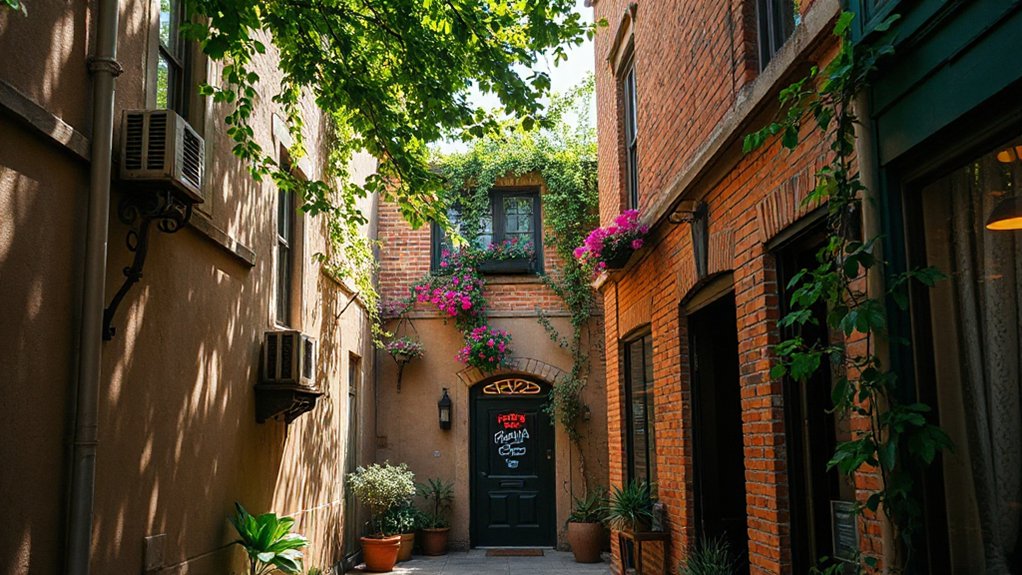
You’ll walk past shuttered storefronts and find hidden courtyards tucked between brick walls, each with a traceable past. Early records note these spaces as private retreats for shopkeepers, later evolving into public nooks where locals swap stories.
As you move along, you’ll hear how storefronts mirror neighborhood changes, from era-specific tiles to salvaged doors that carry whispered Local Stories Behind Storefronts.
Hidden Courtyards Stories
Hidden courtyards in Santa Cruz’s historic districts aren’t mere curiosities; they’re time capsules, each revealing layers of storefront life, shifting ownership, and neighborhood rhythms. You’ll trace entries from early mercantile blocks to mid‑century renovations, noting brickwork, ironwork, and plantings documented in city records and archived photos.
The first courtyard reveals a 1900s grocer’s backroom converted to an informal tea space, later hosting neighborhood gatherings; a nearby lantern sign marks its evolving identity.
In the 1930s, a storefront’s rear alley was tiled into a secret garden, then mapped as a lunch counter by a 1950s remodel.
Across timelines, you’ll hear resident recollections, newspaper blurbs, and permit notes that frame hidden courtyard histories as living memory. These stories connect storefronts to daily life, guiding your local‑history explorations.
secret garden stories.
Storefront Secrets Shared
Where do storefronts tell their best stories? You follow a timeline, starting with early brick-and-mortar fronts from the 1900s, noting modest awnings and pressed tin accents.
In the 1920s, storefront architecture shifts to larger windows and decorative tile, guiding passersby toward goods and gossip alike.
By the 1940s, you see streamlined corner entries and bold signage shaping neighborhood identity.
The 1960s bring vinyl-era displays, while preservationists document hidden storefronts tucked behind newer facades, preserving clues to former tenants and trade routes.
In recent decades, adaptive reuse reveals courtyards and painted murals, linking commerce to community memory.
Your sources trace ownership records, architectural surveys, and oral histories.
The narrative emphasizes careful observation, chronological detail, and how storefront secrets become local lore.
Where Locals Sip, Eat, and Lounge With Character
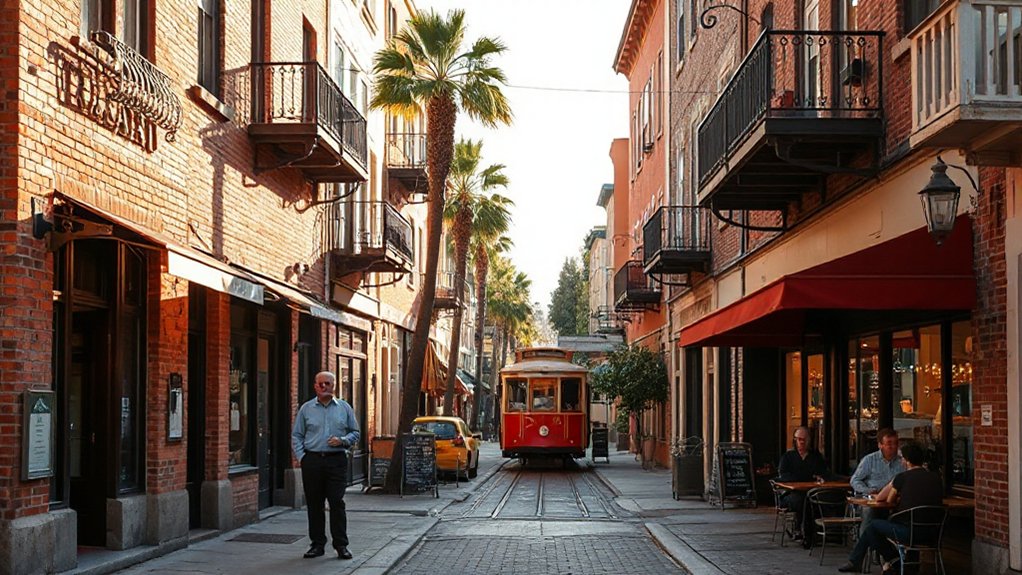
From sunlit mornings to after-dark hours, locals keep Santa Cruz’s historic districts buzzing with intimate spots where character isn’t an afterthought but the main event. You begin with a café tucked into a brick-and-mortar block, its chalkboard menu pairing local art with seasonal bites, a cue to the district’s creative pulse.
By late morning you move to a bakery housed in historic architecture that preserves pressed tin and woodgrain details, where pastry aromas mingle with sea-salted air.
Lunch arrives at a counter-service spot operating since the early era, its walls lined with photos of the original storefronts.
Afternoon turns to lingering at a lounge housed in a former theater, where dim lighting highlights intimate corners.
Night caps follow, echoing the district’s enduring, character-forward rhythm.
Reading the Facades: Era, Style, and Meaning in One Walk
Across the walk, you’ll read the facades as a timelines of Santa Cruz’s districts, noting when a brickwork block nods to early industrial ambitions and when a storefront tilts toward streamlined midcentury optimism. You’ll trace each elevation from ground up: lintels, cornices, storefront glass, and corbeled brick, identifying era-specific cues.
In the Wharf and Downtown faces, you’ll see Italianate classics giving way to Mission Revival hints, then Art Moderne simplifications, each shift signaling economic shifts. Architectural details reveal purposeful choices—eaves, tiling, transoms—that encode function and aspiration.
Documenting these shifts, you’ll appreciate how Heritage preservation efforts protect fragile features while guiding new infill. This is a chronological inventory, sourced from plaque notes, city records, and archival photographs, tying past meanings to present streetscapes.
Practical Tips for Time, Weather, and Crowds
Plan your visit by mapping time blocks for walking the districts, noting peak hours and gaps between tours to maximize efficiency.
Check the morning weather forecast, dress in layers, and bring a light rain shell so you stay comfortable as crowds shift throughout the day.
Start with a quick, source-backed route, then adjust on the fly as conditions and foot traffic change.
Time Management Tips
Even in Santa Cruz’s Historic District, you’ll want a simple plan: map out a realistic pace, check the day’s weather, and mark three must-see stops to avoid bottlenecks. You’ll begin with a precise timeline, then adjust as exhibits unfold, using time efficient touring and priority mapping to stay on schedule without rushing. Chronology guides your movements, and you’ll document each progression for later reference.
- Plot your route from earliest opening to latest close, noting durations and rest breaks.
- Schedule key interiors during off-peak hours to minimize crowds and maximize viewing.
- Align transit miles with feasible walking segments to preserve energy.
- Reserve buffer windows for serendipitous discoveries or delays.
Weather and Crowd Tips
If rain threatens or temperatures swing, check the day’s forecast first thing in the morning and adjust your plan accordingly. Begin by noting early-morning alerts for coastal fog or wind, then map a flexible route through Santa Cruz’s Historic Districts.
In the late morning, observe crowd patterns at key landmarks and plan backups, aiming to visit indoor venues if lines lengthen. By midday, compare shade and sun exposure, choosing pace and hydration breaks to match weather shifts.
After lunch, sample local cuisine nearby, timing stops between popular spots to avoid bottlenecks. For evening strolls, review transportation options—walkable cores, bike lanes, or rideshares—so you avoid delays.
Document changes, and refine your schedule for future visits based on observed crowds.
Seasonal Quirks: District-Centric Festivals and Markets
Seasonal quirks light up Santa Cruz’s Historic Districts as each season brings distinct, district-centered events. You’ll notice a chronological rhythm: spring markets bloom with local market traditions; summer street fairs pulse along Wharf, then autumn crafts pop up; winter windows glow with seasonal festivities. Each district curates its own timeline, guiding you from morning tastings to evening parades.
- Spring farmer’s markets showcase seasonal produce and handmade goods.
- Summer street fairs spotlight music, bites, and neighborhood crafts.
- Autumn harvest festivals feature pumpkin tastings and artisanal gifts.
- Winter celebrations illuminate storefront windows with crafts, carols, and seasonal light displays.
What you observe is deliberate, locally sourced, and time-stamped, offering a clear sequence of district markets and festivities you can follow week by week.
Plan Your Own Local-Inspired Loop Today
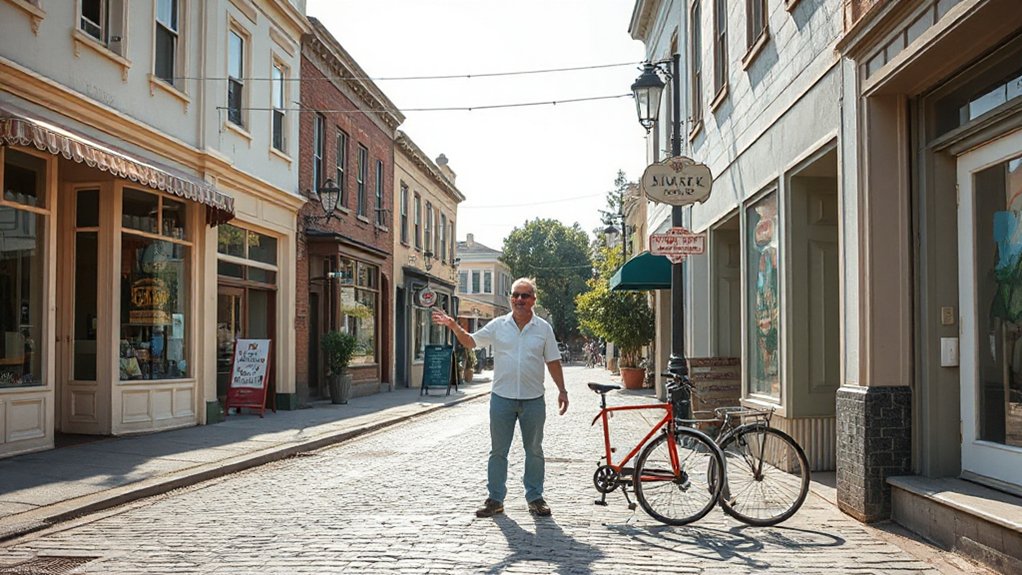
To plan your own local-inspired loop, start by mapping a one-day or weekend itinerary that threads together the Historic Districts’ core highlights: morning tastings, mid-day markets, and evening events.
Begin with a precise, documented route: pick a starting point on the Wharf, then advance to the Westside blocks, weaving in Crescent City styling along Pacific Avenue. Note opening hours from official calendars, then align tasting stops with production dates and complementary snacks.
Record a chronological sequence: early coffee, mid-morning gallery stops, lunch at a farm-to-table counter, and late-afternoon craft demonstrations.
Conclude with a formal, community-led evening activity, citing organizers and venue histories. This plan highlights Local architecture, community stories, and source-backed details to guide an informed, self-directed loop.
Frequently Asked Questions
How Do I Access Private Courtyards in the Historic Districts?
To access private courtyards, you should seek permission first and respect posted rules. Private access isn’t guaranteed; politely ask neighbors or hosts, observe courtyard etiquette, and follow any access schedules or restricted-entry signs you encounter.
Which Districts Are Most Photographed at Golden Hour?
You’ll see the West Cliff, Downtown, and Bee Branch districts shine at golden hour, then Pacific Garden and Laurel Heights glow last. Sunset photography highlights Historic landmarks, guiding you chronologically from shorefront to hillside for best silhouettes.
Are There Guided Tours Specific to Architectural Eras?
Yes, you can join guided tours focused on architectural eras, following chronological narratives of preservation. You’ll explore Architectural preservation milestones and Historical landmarks, learning how styles evolved, restorations occurred, and what each era reveals about Santa Cruz’s built heritage.
How Do Parking and Curbside Rules Work in Historic Zones?
Parking and curbside rules in historic zones require you to follow posted timers and curbside signage; parking regulations vary by block, so you notice daily changes, then move accordingly, respecting loading zones and permit-only areas as you go.
What Are the Best Off-The-Beaten-Path Storefronts to Explore?
Hidden gems await you as you stroll through town, uncovering unique storefronts step by step, from early decades to today, each revealing quirky histories, local artists, and curated wares you won’t find on main drags; you’ll feel discovery unfold.
Conclusion
You’ll walk past centuries like they’re friendly neighbors, timeline in tow, noting every crack in the plaster as if it’s a badge of honor. Irony tags along: the past feels timeless, yet you’re glued to a map, ticking boxes—Victorian here, Mission Revival there—while the present elbows its way into every storefront tale. By the end, you’ve followed a loop that pretends to be simple, but, surprise, it’s a decades-long conversation you’re just now catching up with.