
Palma invites you to wander a living tapestry where Gothic spires meet Moorish courtyards and sunlit lanes. Start at La Seu, its stained glass waking the harbor; drift into the medieval core’s winding streets, where Almudaina’s tapestries whisper royal stories. Santa Maria and La Lonja unfold layers of faith and commerce, while rooftop viewpoints reveal a sea-tinged panorama. Round it out with Valldemossa and Deia, where light, limestone, and tradition linger—and plenty more awaits beyond.
Key Takeaways
- Santa Eulalia Church and Santa Maria Church offer layered Christian and Moorish architecture, with carvings, relics, gilded altarpieces, and centuries of faith.
- La Seu Cathedral dominates the harbor with Gothic spires, stained glass, and interior carvings reflecting centuries of religious artistry.
- Almudaina Palace, Castell de Bellver, La Lonja, and historic city walls/gates showcase Palma’s defensive heritage and mercantile legacy.
- Palma’s medieval core features winding streets, archways, Moorish arches, and panoramic viewpoints from rooftops and bell towers.
- Nearby villages like Valldemossa and Deia provide historic charm, monasteries, cliffside scenery, and quintessential Mallorca culture.
Palma: A Quick Cultural Compass
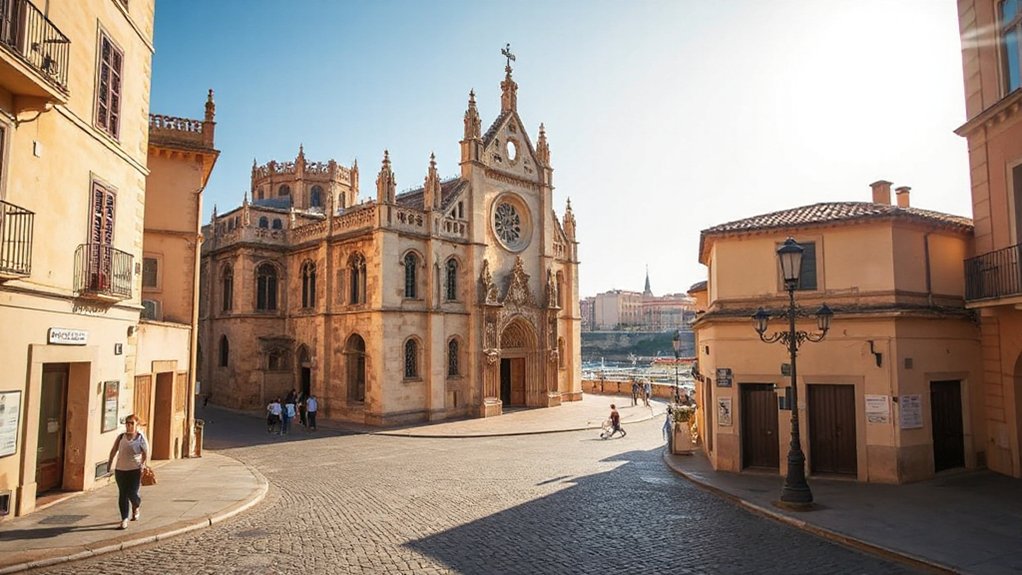
Palma isn’t just a city on the map; it’s a pulse you can feel beneath your shoes. You walk its streets and sense history flicker, a compass drawn in light. The old town narrows into stories you can touch, the cathedral’s spire lifting like a quiet vow.
You sample local festivals, where drums answer footsteps and lanterns drift over cobbles, weaving present with memory. In markets, you hear the whisper of traditional crafts—lanterns, inlays, textiles—each piece carrying a lineage you can see and almost hold.
You move through terraces where palm shadows tilt, then into sunlit courtyards that keep secrets of rulers and poets. Palma guides you with precise detail, leaving room for wonder to land softly in your chest.
What Makes Palma’s Culture Uniquely Mediterranean
The city’s heartbeat thims with a shared sea-salt rhythm: narrow lanes echo with Moorish arcs, Catalan colors, and Balearic light that stains stone amber at noon. You taste the breeze of centuries as markets hum with local festivals, where dancers weave steps with sea-salt precision and stories rise in fragrant air.
Palma’s culture is a braided pulse: Moorish arches meeting Gothic tracery, fishermen’s nets drying beside atelier windows, and candlelit taverns where voices mingle in Catalan, Spanish, and Mallorquín. You notice traditional crafts carried in hands and held to memory—ceramics, wicker, enamel—each piece a sentence in a living saga.
Mediterranean areness isn’t distant; it’s daily, intimate, inviting you to listen, observe, participate.
La Seu Cathedral: Gothic Grandeur in Palma
La Seu rises above the harbor like a sentinel of stone, its Gothic spires pinching the sky and guiding your gaze upward.
You enter a nave of breath and shadow, where light filters through stained glass, painting the stone with shifting color.
Gothic architecture shapes every column, every arch, every quiet hinge of the door.
You feel religious symbolism in the rhythm of chapels and altars, in dedicatory carvings that speak of devotion across centuries.
The vast interior narrows your pace, inviting you to listen to the hush between footfalls.
Tracery and rib vaults weave a language of ascent, a visual prayer you walk through.
Here, time slows, and Palma’s history unfolds in stone, glass, and reverent quiet.
Palma’s Medieval Core: The Winding Old Town
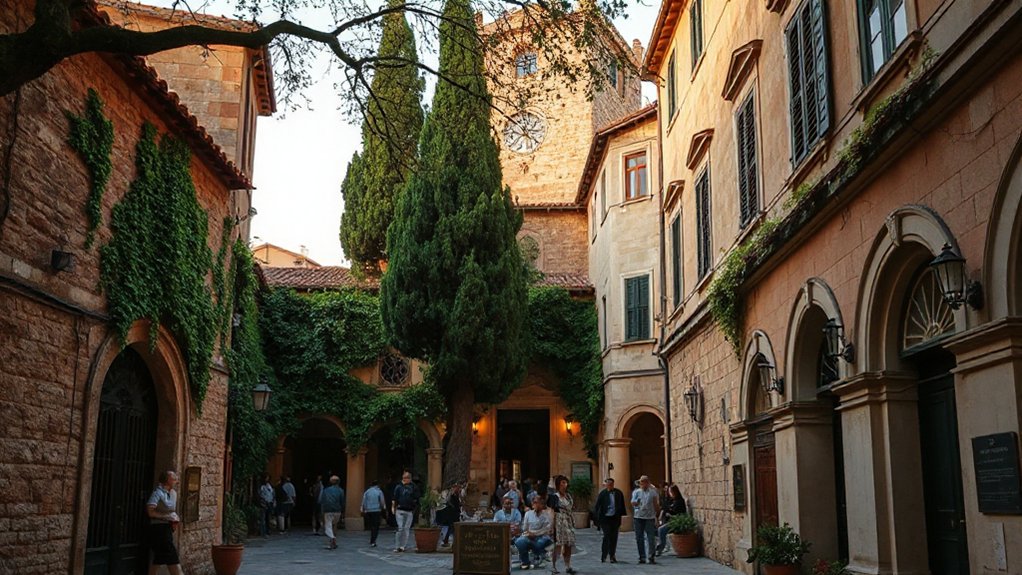
You wander the winding streets you’ve heard about, where every turn hides an alley’s whisper and a shadowed gateway. The old town unfolds in hinges of stone, with historic landmarks standing watch at every bend.
You sense history stitched into the walls, a living map of gates opening to stories you’re just beginning to chase.
Winding Streets and Alleys
Winding through Palma’s medieval core, the old town unfolds like a living map of secrets, each alley gnawed by centuries of footsteps and rumor. You slip between whitewashed walls, feel the rough kiss of time under your fingertips, and hear distant bells murmur from unseen stairwells.
Shadows spill over cobbles as you tilt your gaze to crenellated silhouettes above narrow archways. Hidden courtyards beckon behind wooden doors, quiet as petitions, inviting a pause to breathe the history you’re threading through.
Secret passages tempt curiosity, narrow and cool, offering a breathless shortcut to forgotten corners. You move with purpose, a curious observer, tracing lines of masonry that weave stories into your steps, until the town itself feels intimate, immediate, almost spoken.
Historic Landmarks and Gates
The medieval core reveals its sentinels as you step from the narrow lanes: gates and landmarks anchored in stone, weathered by time and stories. You move through arches that murmur of sieges and centuries, where every stair and parapet hints at who watched from the walls.
Ancient gateways rise like sentries, their ironwork catching light and shadow, inviting you to pause, listen, and imagine court life and market cries. City fortifications curl along the skyline, a stubborn reminder of defence and identity, yet they frame palaces, churches, and homes with a disciplined, enduring rhythm.
You feel the pulse of Palma’s past under your feet, a living map guiding your steps through this storied quarter.
Almudaina Palace: Royal History in Palma’s Walls
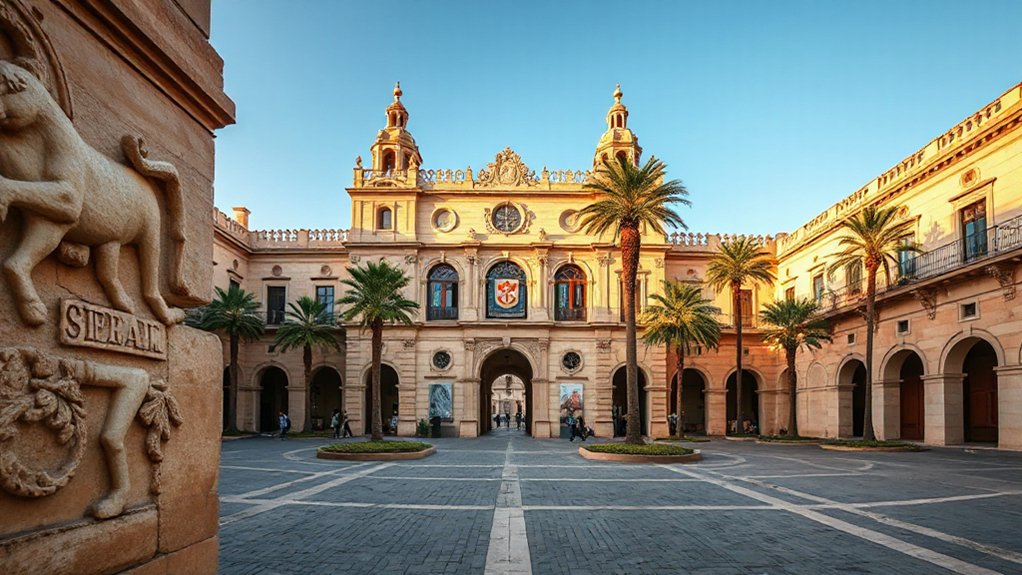
Palma’s Almudaina Palace rises from the hillside like a folded secret, its stone walls whispering centuries of royal footsteps. You wander through echoing halls where ceremonial weight still lingers, and you feel the lineage in every carved doorway.
The Royal chambers reveal quiet opulence: tapestries, gilded furnishings, and the hushed rhythm of history in air that tastes of wax and waxed wood. Sunlight spills across marble floors, guiding your steps toward balconies that overlook Palma’s roofs and sea.
In the powdery light, mural paintings emerge, fragments of a throne-room memory preserved in color and time. You sense how crown, crested emblems, and ritual endure beyond centuries, anchoring the city to a living, ancient lineage.
Castell De Bellver: City Views From a Circular Fortress
From Almudaina’s royal hush, you step into a different rhythm of Palma, where a circular silhouette climbs above the harbor and time itself seems to pause.
Castell de Bellver crowns the skyline, a beacon of castle architecture etched in lime and wind. You walk the stone paths, the spiral of stairs guiding you to sweeping city views framed by pines and sea.
The fortress history hums in the walls, a quiet chronicle of rulers, sieges, and endurance. Light pools on courtyards, shadows drift along battlements, and you feel the city breathe beneath you.
Every turret and arc says resilience, every overlook invites reflection. Here, perspective becomes poetry, and the horizon whispers the story of Palma laid bare.
Es Baluard: Modern and Contemporary Art in Palma
Es Baluard rises like a beacon for modern heartbeat in Palma, where white walls cradle bold strokes and shadows pool along contemporary lines. You enter and feel the pulse of the city slow to listen.
Inside, you navigate a compact dialogue of form and idea, where each gallery hangs a sentence that lingers. Contemporary exhibitions unfold with a crisp rhythm, pairing risk with relevance, inviting you to trace connections between past bastions and current voices.
The museum’s sea-facing terrace pushes memory outward, framing skyline silhouettes against salt air. Public art installations thread through the surrounding streets, turning walks into discoveries.
You leave with a sharpened eye, a fresh curiosity, and the sense that Palma keeps refueling its cultural compass.
Pilar Miró Foundation: Modern Art in a Historic Setting
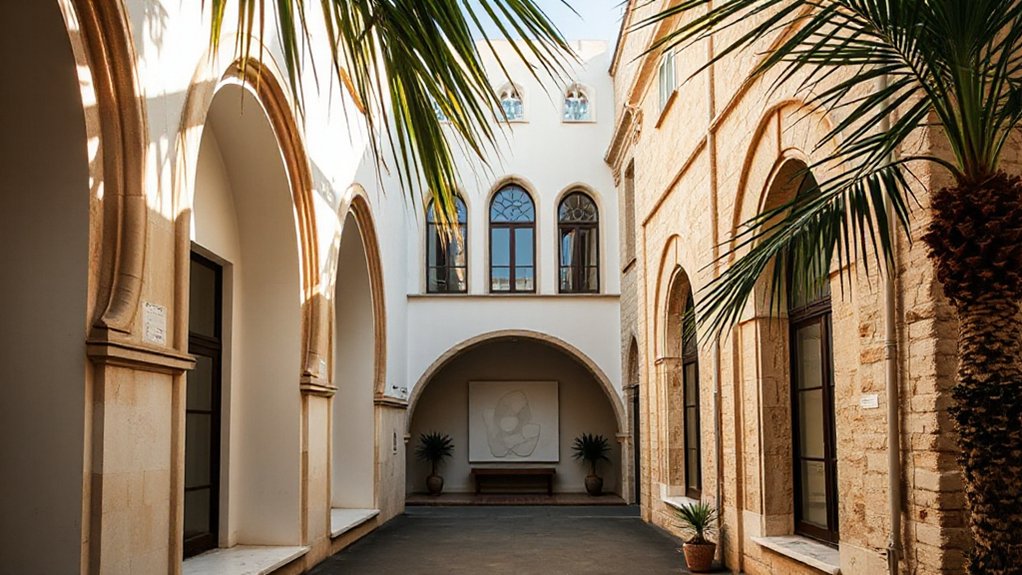
Pilar Miró Foundation unfolds modern art within a historic shell, where limestone walls keep secrets of centuries and still cradle bold ideas. You step inside and feel time soften, galleries breathing with light that curls around contemporary pieces.
The spaces invite quiet attention, then spark sudden dialogue as works awaken through your gaze. You move from austere rooms to intimate alcoves, where texture and color converse with memory and risk.
The foundation curates contemporary exhibitions that feel urgent yet considered, weaving present anxieties with reverence for the past. You sense an energy of collaboration, as curators, artists, and audiences echo in shared rooms.
Artistic collaborations unfold through bold installations, each encounter inviting you to rethink what a historic setting can host.
La Lonja: Palma’s Mercantile Legacy in Stone
La Lonja rises like a carved memory, its stone lungs still breathing with the bustle of trade and the hush of private deals. You walk its arcade, where vaulted ribs echo with merchant whispers and the air tastes of salt and lamp oil.
The façade’s teardrop windows glare like watchful eyes over centuries of bargaining, a ledger printed in stone. Inside, columns march in rhythm, guiding you through rooms that once hummed with exchange, cargoes, and contracts sealed with a breath.
Art galleries now share the space, their quiet glare a modern complement to the building’s enduring spine. Traditional crafts linger in corners, reminding you how Palma traded not only goods but ideas, styles, and memory.
Santa Eulalia: Early Christian Layers of Palma
Santa Eulalia isn’t just a church stacked with stones; it’s a map of Palma’s earliest chapels, stitched into one site. You wander through time as walls murmur Christian layers beneath modern light.
Ancient ruins peek from carved arches, where footprints feel older than the city you know. Each column hints at devotion, each nave holds a memory you weren’t meant to see but can sense.
The layered history unfolds in quiet, almost whispered passages, where Moorish echoes soften into Christian certainty. You trace a path between relics and redearth, feeling how faith built this place stone by careful stone.
The essence isn’t worship alone, but the story of Palma’s layered beginnings, preserved within a single sacred, human pulse.
Palma’s Markets: Santa Catalina Neighborhood Highlights
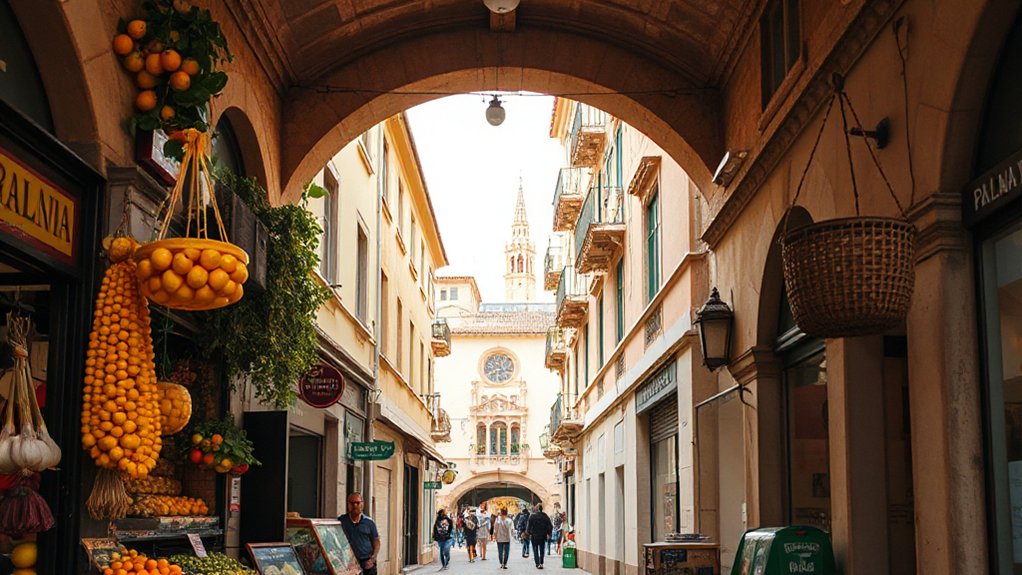
You wander Santa Catalina’s lanes and sense the market’s pulse in every stall, where colors, scents, and sizzling bites fuse into the neighborhood’s heartbeat.
You taste the vendors’ stories in fresh produce, spice, and seafood, each whispering of craft, flavor, and tradition.
You feel the vibe—bold, welcoming, and endlessly evolving—as you move from stall to stall, chasing the next delightful detail.
Santa Catalina Vibe And Flavor
Palma’s Santa Catalina Market district hums with a daybreak pulse: sunlit produce stalls/glow, and locals weaving through as if stepping into a living postcard. You sense a slow-brimming energy, where walls remember decades of chatter and ovens hum softly.
The vibe is intimate, resilient, and delicious, a wink between sea breeze and city grit. You breathe cinnamon, citrus, grilled peppers, and coffee still hot from a late-night roastery.
Santa Catalina invites you to taste local flavors without ceremony: a bite of pa amb oli, a flicker of salt, a splash of olive oil. Neon signs dim as morning grows, but the flavor stays bright in memory, a heartbeat you carry through Palma’s streets.
Return, listen, and savor the neighborhood’s steady, welcoming rhythm.
Market Stalls And Delights
Curious what makes Santa Catalina’s stalls hum? You wander the market corridors, where color bleeds into aroma and time slows to a savory heartbeat. You brush past local market vibes as vendors call softly, inviting you to taste what they’ve poured into the day.
Baskets buckle with sun-warmed citrus, herbs like green ribbons, glossy olives, and peppers that spark a dare. You step closer to traditional food stalls, where steam spirals and saffron threads glitter. A baker offers crust as tan as sand; a fishmonger fingers coral and silver glints.
You buy a bite, then another, savoring the chorus of voices, the clatter of crates, and the intimate pulse of Palma’s neighborhood life.
Arab Baths: Remnants of Moorish Palma
Deep within the old city, the Arab Baths whisper of centuries past, their cool stone corridors nesting in shadow and steam. You step through a threshold where Moorish architecture meets quiet reverence, the air textured with history.
Water channels murmur beneath smooth arches; every alcove hints at former ceremonies, now hushed and reverent. The vaulted ceilings cradle a memory of Islamic heritage, a lattice of light and shadow that guides your breath.
You trace the worn stones, feel the cool damp cling to your fingertips, and imagine distant feet moving in ritual balance. The space speaks in atmosphere rather than noise, inviting contemplation.
Here, remnants endure not as relics but as living echoes of a refined, ancient culture.
Santa Maria Church: Masterpieces in Palma’s Iconic Iglesia
Step inside Santa Maria Church and feel the stone whisper the story of its iconic interior, where light spills over carved details and gilded altarpieces.
You’ll notice the historic artistry in every angle: sculpted capitals, delicate tracery, and paintings that breathe with centuries of devotion.
Let the contrasts guide your gaze as you explore the highlighted features that define Palma’s beloved iglesia.
Iconic Interior Highlights
The Santa Maria Church opens a window into Palma’s soul, its interior a tapestry of light and stone where each chapel whispers a different century. You stand under vaulted arches, feeling cool air mingle with the scent of old wax and history.
Here, masterpieces rise in quiet grandeur, inviting you to trace stone and stain to their quiet sources.
- Observe the arcades and gilded altars that catch sunbeams like folded maps.
- Listen to the hush between arches as whispers of Traditional festivals drift through the nave.
- Savor a fleeting image of Local cuisine echoed in the church’s surrounding courtyards and nearby eateries.
Let the glow guide you deeper, then step into the plaza’s pulse.
Historic Artistry Highlights
In Santa Maria Church, the stones themselves seem to glow with a patient artistry, each chapel a vignette of masterful craft. You wander the nave and feel the air pulse with centuries of devotion, where sculpture and stained glass narrate footsteps of faith.
Every arch frames a story, every column a rhythm of hands shaping light. The altarpiece breathes with gilded echoes, inviting your gaze to follow its meticulous, quiet tempo.
You sense traditional festivals lingering in the air, voices rising in distant processions that the walls never forget.
Local crafts surface in the delicate tracery, the carved roots, and the painted saints, a tribute to hands that endured and created. Palma’s soul reveals itself, precisely, in stone and color.
Royal Palace Gardens: A Tranquil Cultural Escape
Beneath the palms, the Royal Palace Gardens unfold as a quiet heartbeat of Palma, where hedges trim the noise of the city and stone statues seem to listen. You step lightly, inhaling green whispers, noticing botanical gardens tucked between hedges, a quiet choreography of life. The air feels cooler here, a tranquil retreat from street noises, where footsteps slow and time loosens its grip.
- Pathways coil around fountains, inviting you to trace their shimmer.
- Aromas mingle from citrus and flowering shrubs, so you breathe deeper.
- Benches offer brief, intimate conversations with stone guardians and the soft rustle of leaves.
You move with intent, cherishing the hush, absorbing culture without shouting it, and leaving refreshed.
Palma’s Historic Rooftops: Viewpoints and Photo Stops
From Palma’s rooftop edges, you’ll trace rooftop perspectives that frame the old town in a copper-toned glow. The best photo stops nearby wait for you at every edge, each view a postcard you can hold in your hands.
Historic rooflines rise in quiet silhouettes, inviting your camera and curiosity to meet them.
Rooftop Perspectives In Palma
Ever peek at Palma from above and feel the city loosen its map into a pocketful of light? You drift along the roofline, where tiles hold stories and the harbor breathes under a lacquered sky. Skyline reflections braid with steeples, and the wind turns quiet as you listen to history exhale.
- Seek the solar hush at dusk, where silhouettes tilt toward sunset vistas and the old town glows.
- Trace narrow chimneys and cairns of slate, each peak a small beacon against the blue.
- Pause at a parapet, let the city fold into your gaze, and choose your next skyline to chase.
You depart with a memory of roofs, a map of light, and a stubborn, radiant horizon.
Best Photo Stops Nearby
Palma’s historic rooftops unfold into a gallery of vantage points, each a doorway to a moment you’ll want to snap and savor. You’ll find photo stops where the skyline fans out in terracotta, where chimneys dream awake and sea breeze stitches the horizon.
Seek angles from narrow courtyards, where palm shadows sketch patterns on white walls, and from bell towers that mingle bells with distant street chatter. Pause near a rooftop café to catch a bite of local cuisine while the city hums below.
Time a shot at golden hour, when tiles glow and church spires pierce the soft light. If you time it right, you’ll glimpse traditional festivals unfolding in the lanes, frames ready for your memory.
Historic Rooflines And Views
Lacing the city’s skyline with terracotta and tile, Palma’s historic rooflines unfold as a living gallery you can breathe in. Each ascent reveals skyline mosaics stitched with balconies, dormers, and tiled peaks that hint at centuries of craft. You trace architectural silhouettes against pale light, noting how chimneys become punctuation marks in a maritime panorama. The views reward patience, revealing new angles with every turn of your steps.
- Cast-iron balconies catching dawn’s first shimmer
- Rooftop ledges framing cathedral spires against a sapphire sky
- Narrow stairways that open to sunlit courtyards and bell-towers
Let your gaze linger, then move on; the city keeps editing its story in stone and shadow.
Day Trips From Palma: Valldemossa to Deia and Beyond
From Palma, a daytrip unfolds along a thread of limestone—and in a single morning you can wander Valldemossa’s cobbled lanes, pause beneath evergreen shadows, and ride toward Deià where cliffs meet the sea with a quiet, stubborn grace.
You’ll stroll Valldemossa monastery’s stone courtyards, taste a pastry as old as the carts that once creaked along mule paths, then drift into Deia village’s whitewashed charm.
The route threads inland to rocky coves, where salt air meets pine scent and narrow roads tighten to a lover’s grip. Beyond, coastal switchbacks reveal rugged beauty and quiet harbors.
Return with memories stitched by light: a limestone seam, a monastery bell, a village terrace at dusk. Daylight loosens the mind, and you feel whole.
Frequently Asked Questions
Which Sites Are Must-See for First-Time Visitors?
You must-see sites include the Gothic cathedral and Almudaina Palace, where local art glows in quiet halls, and you’ll feel traditional festivals pulse through narrow lanes, inviting conversation and wonder as you wander Palma’s intimate, sunlit streets.
What’s the Best Month to Visit Palma’s Historic Sites?
The best month is spring, when pleasant days invite you to stroll. You’ll savor local festivals and sample traditional cuisine, feeling sun on walls of stone and histories whispering as you wander Palma’s storied paths.
Are Tickets Required for Major Landmarks in Palma?
About 60% of major landmarks offer free entry on select days. You’ll still encounter ticket policies and varying entry fees, so plan ahead. You’ll feel history breathe as you navigate queues, then wander past sunlit arches and plazas.
Which Neighborhoods Offer the Richest Cultural Experiences?
You’ll find the richest cultural experiences in Palma’s neighborhoods where Local cuisine and Traditional festivals mingle, inviting you to wander winding streets, hear distant drums, savor spice-scented bites, and linger in candlelit squares that feel almost timeless.
How Long Should a Palma Cultural Itinerary Take?
You’ll want a full day for a Palma cultural itinerary, roughly 6–8 hours, with slow, vivid pauses. You’ll taste local cuisine, and mix in outdoor activities, weaving in evocative scenes as you wander charming streets.
Conclusion
You’ll leave Palma with more shells than seashells in your pockets and a playlist of cathedrals in your head. Think Gothic grandeur, royal whispers, and sun-scorched courtyards that somehow behave like quiet, opinionated museums. If history had a perfume, Palma would bottle it in orange blossom and rain-soaked stone. So go ahead: wink at the rooftops, pretend you’ve become a local time-traveler, and let tapas fix the memory when the culture finally curtsies back.