
Begin your Spanish market tour where Valencia’s Central Market welcomes you with vaulted ceilings, stained glass, and the scent of saffron and seafood. Then drift to Barcelona’s La Boqueria, a rainbow of produce and spices that hums from dawn to night. In Madrid, El Rastro and Mercado de San Miguel pulse with thrifty finds, tapas, and crowds. This trip paints a living picture of culture, flavor, and craft—and there’s more to discover just ahead.
Key Takeaways
- Valencia Central Market stands out for its vaulted ceilings, tiles, and tapas-filled atmosphere, blending architecture with fresh, local produce.
- La Boqueria (Barcelona) offers a vibrant, year-round mosaic of seafood, produce, and spices with artistic signage and lively aisles.
- Madrid’s Mercado de San Antón combines modern, airy design with a rhythm that reflects daily city life and diverse culinary offerings.
- Catalan markets like Mercat de Sant Josep showcase historic trade layouts, iron railings, frescoes, and open-air stalls rich in tradition.
- Food-focused markets across Spain emphasize seasonal produce, local specialties, and authentic storytelling through vendors, samples, and tastings.
Why Spain’S Street Markets Crackle With Life
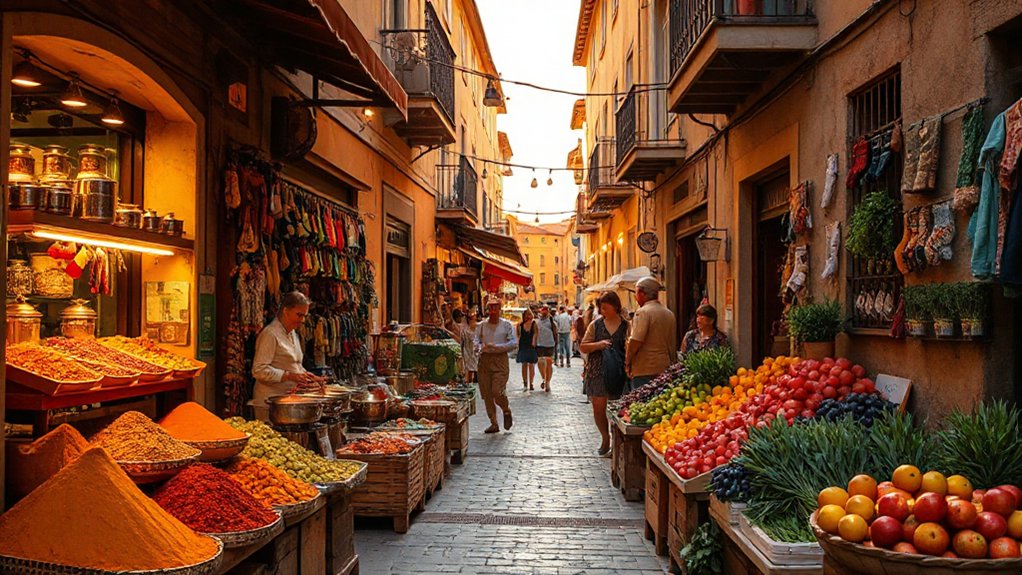
Street markets in Spain crackle with life because they’re living rooms for the city: open, humming with chatter, the scent of grilled peppers and oranges, and the bright spill of color from stalls. You sense cultural traditions braided into every booth—folk songs drifting as vendors barter, families nibbling tapas between purchases, elders recounting market history with pride.
The rhythm isn’t just commerce; it’s ritual: a morning coffee steam, a call-and-response greeting, a child tugging at a grandmother’s sleeve for a sweet, sticky treat. You notice the textures—wool shawls, glossy peppers, tarnished copper, citrus pimples of orange rind.
This is where local identity thrives, where memory meets market day, and life is negotiated anew with each merchant handshake.
Valencia’s Central Market: A Tapas-Filled Gateway
Step into Valencia’s Central Market and taste the rush of a tapas-filled gateway that greets locals and travelers alike. You’ll feel the sizzle, hear the counter chatter, and see crimson peppers glistening beside sea-salted fish as a Market Flavors Tour unfolds in front of you.
From Valencian Oven Delights to bite-sized tapas, this hub invites you to start your journey with a cultural pulse you can almost chew.
Tapas-Filled Gateway
Valencia’s Central Market opens like a culinary cathedral, its glass roof catching noon light as vendors shout over the hiss of pans and the clamor of shoppers. You push through, aroma of olive oil and citrus curling around you, and the day’s first morsels bloom on your tongue.
Stalls overflow with saffron, jamón, and plump olives, each scent telling a neighborhood story. You pause where fried anchovies glitter, then drift toward a counter spilling simmering calderetas.
The air tastes of sea spray and steam, a tactile map of Valencia’s culinary heartbeat. Local art hangs beside counters, while artisanal crafts glint in the corners, reminding you this market is more than food—it’s a cultural crossroads, a shared pulse you’re invited to taste.
Market Flavors Tour
The Market Flavors Tour dives into Valencia’s Central Market like a tasting map, where saffron-scented air and sizzling copper crown the morning bustle. You weave through narrow stalls, catching the shimmer of olives, the bright glint of peppers, and the hum of voices bargaining with practiced hands.
You pause at an open counter, where a local artisan explains how family recipes survive the changing tides of city life, infusing each bite with memory. The market history pulses in the tiles beneath your feet, a mosaic of traders, migrations, and sun-warmed barrels.
Steam curls from seafood rows, herbs perfume the aisles, and you feel the city’s heartbeat in every exchange. This is Valencia, tasted here, shared here, remembered here.
Valencian Oven Delights
Delight greets you the moment you push past the Central Market’s doors, where the oven’s chorus rises with sizzling oil and crackling bread. You’re drawn to small stalls that trade in aroma, steam, and sun-warmed tiles.
In Valencian Oven Delights, you taste stories baked into crusts and crumb: panades, coca, and rustic loaves still warm from traditional baking, their textures a map of craft. The air carries citrus, olive oil, and roasted peppers, mingling with chatter from local vendors who know every farmer by name.
You sample slices sprinkled with sea salt, savoring the bright tang of tomatoes and queso manchego. This gateway to tapas emphasizes Local ingredients, honoring a culture that treats bread as daily celebration.
La Boqueria In Barcelona: Pigments, Produce, And Pulse
La Boqueria hums from dawn, a mosaic of color where pigments spill from stalls and the air tastes of citrus, cumin, and sea salt; you can feel the pulse of Barcelona in every step.
- Local art glimmers in painted fruit skins and handmade signs
- Historic architecture frames the aisles as you weave through
- Fresh fish glisten beside wedges of citrus and peppers
- Voices blend with rickety carts, forming a living chorus
You navigate narrow lanes, tasting saffron and smoky paprika, noticing vendors’ stories etched in their smiles.
The market isn’t just food; it’s a cathedral of local culture, where produce doubles as performance. You sense local art meeting historic architecture in a vivid, daily rhythm, a spicy heartbeat that keeps the city honest.
El Rastro, Madrid: Thrifty Finds And Vibrant Stalls
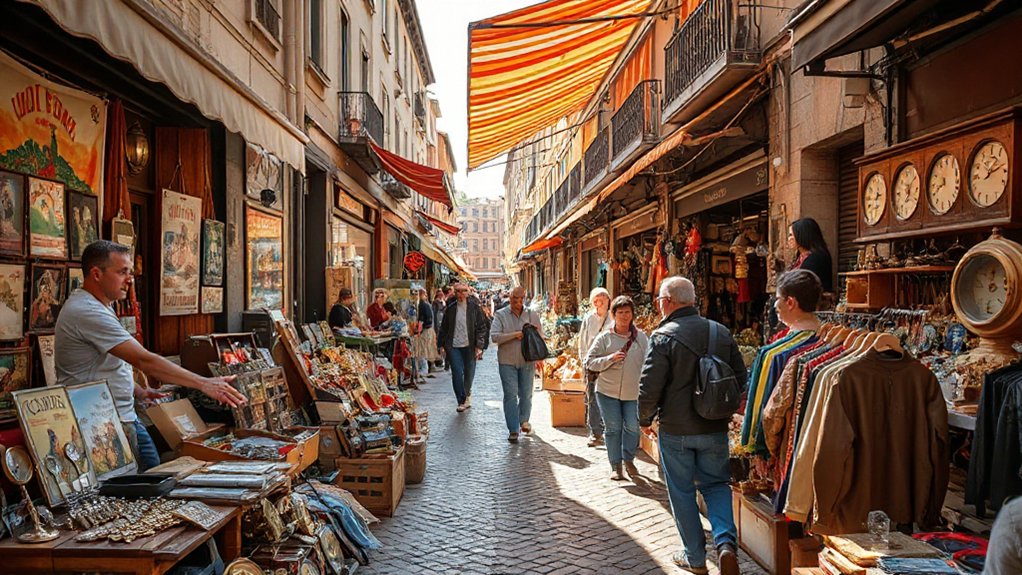
El Rastro threads through Madrid like a living tapestry: a labyrinth of stalls that spill from Calle de la Ribera into sidestreets, each booth a burst of color, sound, and deal. You weave past leather jackets, vintage posters, and handmade sandals, smelling diesel, leather, and street-food smoke.
Neon signs blink over clattering metal, while haggling voices layer into a buzzing chorus. Cultural festivals echo in the crowd’s laughter, and you sense a pulse older than citrus street corners.
Its historical significance isn’t in a plaque but in the market’s metabolism—constantly shifting, rumor-driven, and democratic. You’ll find thrifted treasure, and perhaps a forgotten map or a sun-warmed book, proof that Madrid’s past still negotiates with today’s travelers.
Mercado De San Miguel: Tapas, Wine, And Lively Crowds
You wander Mercado de San Miguel and feel the clink of glasses, the sizzle of tapa pans, and the warm hum of chatter in every corner.
You taste smoky chorizo, briny olives, and sweet wine as the crowd surges, smiling with shared bites and quick, friendly nods.
You sense a cultural heartbeat in this platz, where locals and visitors mingle under bright canopies and live music, all fueling the tapas vibe and lively market energy.
Tapas And Tapas Vibe
Mercado de San Miguel crackles with a windswept energy as you push through the doors and into a mosaic of gleaming stalls, where copper pans glint and the scent of grilled sardines, saffron, and jamón hangs in the air.
You sip bright wine, chase bites with bread, and feel the Tapas vibe pulse through the crowd’s laughter and quick chatter. It’s Market art in motion—plates as mini canvases, colors flashing with paprika and lemon zest, a choreography of cooks and customers.
Local music threads through the chatter, adding rhythm to the clink of glasses and the crackle of charcoal.
- Saffron-lit bites
- Copper, glass, and crowd energy
- Small plates, big flavors
- Toasts to Madrid’s tempo
Lively Market Atmosphere
Cameras click as you weave through Mercado de San Miguel’s copper-and-glass maze, where the air hums with sizzling sardines and citrus zest. You feel the crowd pulse: voices mingle in fast Spanish, clinking glasses, and the snap of fresh bread. Steam fogs the stalls as saffron perfumes the air and a chorus of traditional music threads through conversations.
You sample Manchego, jamón, and rosado, watching vendors pace their counters with practiced care. Local crafts glint beside ceramic tapas platters, reminding you this is more than eating—it’s ritual.
The market’s energy isn’t intimidation; it invites you to linger, trade stories, and toast strangers turned neighbors. You leave lighter, carried by warmth, a shared moment stitched into Madrid’s nocturnal rhythm.
La Merced Market, Málaga: Seafood, Sweets, And Sunlit Aisles
La Merced Market hums with sunlit aisles where the day’s catch glistens beside towers of oranges and jars of honey, inviting you to breathe in a briny breeze mixed with roasted peppers and sizzling churros.
You navigate stalls that pulse with color: fish glinting, sweets tempting, and locals swapping stories as light pours over tiled roofs.
The scene blends historical architecture with living commerce, where ancient arches shelter modern chatter and crafts.
You taste, smell, and hear Málaga’s heartbeat, feeling the city’s coastal soul in every bite and banter.
- Fresh seafood on ice
- Aromatic pastries and honey
- Shaded chatter of regulars
- Handcrafted trinkets for keepsakes
Mercado Central, Valencia: Architecture, Bites, And Must-Try Stalls
València’s Mercado Central rises from the city’s heartbeat like a stained-glass jewel, its vaulted ceilings bathing the stalls in a warm, amber glow as vendors shout prices and locals thread through the aisles.
You’ll notice Spanish market history woven into every tile, from iron railings to Montañés frescoes that whisper older trades. The market design fuses steel, brick, and glass, guiding you along airy lanes toward bright counters.
Fresh fish, vibrant peppers, and cured meats glisten under skylights that filter western light into a daily ritual. You taste it in the air—the tang of olive oil, citrus zest, and sea breeze.
It’s a living classroom, a social hub, and a culinary gateway to Valencia’s daily culture.
Mercado De San Anton, Madrid: Quality Ingredients For Home Cooks
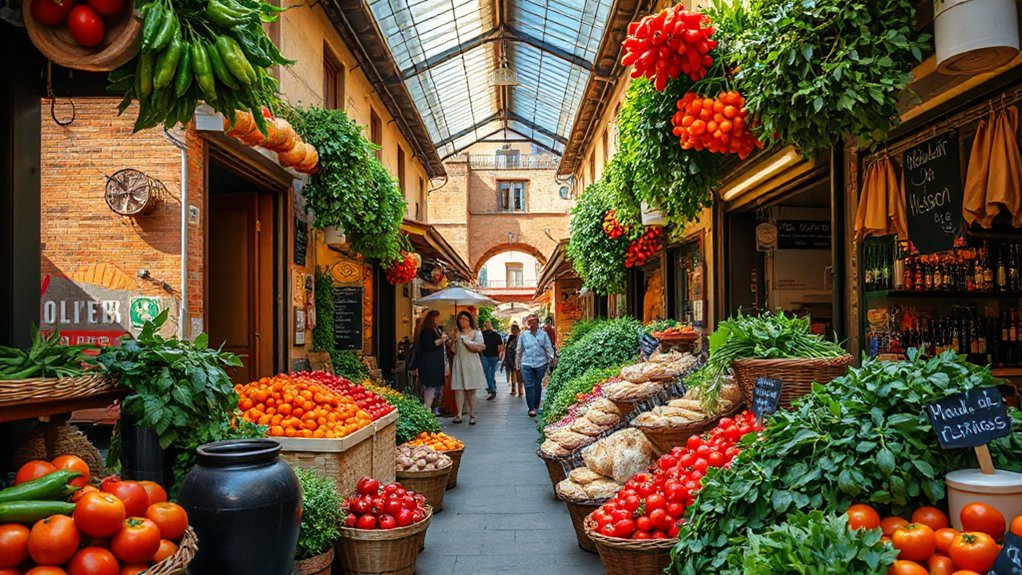
You step into Mercado de San Antón and feel the hum of the crowd as sunlight pools on glossy fruit pavilions, every color shouting freshness. You grab a bright bunch of local greens, catch a whiff of foraged mushrooms, and hear a vendor offer tasting tips that spark ideas for your next meal.
The scene sets the tone for artisan picks and a market vibe that nudges you toward quality ingredients for home cooking.
Fresh Produce Quality
Mercado de San Ildefonso? You step in and scent of soil and sun hits you, tomatoes glossed like rubies, peppers crackling with citrus oil, leaves still damp with dawn. Fresh produce here feels tied to Madrid’s rhythm, local farming pulses in every stall, and you taste the connection. Organic certification tags wink from the crates, a quiet guarantee you’re getting true farm pride.
- Juicy tomatoes, sun-warmed, bursting with sweetness
- Crisp lettuce, freshly rinsed, roots still faintly gripped
- Aromatic herbs, basil and cilantro, bright and punchy
- Seasonal fruits, peaches and figs, velvet and sun-kissed
You navigate with intention, knowing your purchase sustains growers and preserves tradition.
Artisan Ingredient Picks
From the moment you step into Mercado de San Antón, a careful selection of artisan ingredients greets you, each a story stitched into Madrid’s kitchen culture. You’ll notice ribbons of saffron glow beside jars of preserve, and olive oil’s emerald sheen inviting you to taste the Mediterranean sun.
Local craftsmanship shines in hand-hatted quesos, small-batch vermuts, and breads that crackle with tradition. For every product, the stall owner speaks of ingredient origins, tracing fields to pantry with pride, not marketing gloss.
You choose with confidence, savoring the scent of citrus zest, roasted almonds, and smoky paprika. This isn’t just shopping—it’s a dialogue with Madrid’s cooks, a bridge between neighborhood markets and your own stove, a celebration of craft and place.
Market Atmosphere Highlights
Stroll through Mercado de San Antón and you’re wrapped in a buzz of voices, clinking jars, and the hum of conversations that braid mornings with meals. You taste the air, bright with citrus, smoke, and fresh basil, while baskets sway to a rhythm of bargaining and welcome.
Local artisans greet you with eye contact and smiles, offering tips as you sample small bites between aisles. The market breathes with culinary traditions, from smoky paprika to amber olive oil, inviting you to plan imperfectly perfect meals.
You feel Madrid’s heartbeat: communal, seasonal, lively.
- Local artisan demonstrations shape the stall chatter
- Aromas weave through produce and cured meats
- Tasting portions connect you to history
- Fresh, color-saturated displays spark spontaneous menus
Mercat De Sant Josep: Barcelona’s Sibling Market With Bite
Nestled in the heart of Barcelona, Mercat de Sant Josep, better known as La Boqueria, hums with color, scent, and the rush of vendors calling out their wares. You weave through aisles of glossy peppers, sunlit oranges, and glistening seafood, each stall a pulse point of city life.
This market history runs deep, a chronicle of Catalan trade and curiosity, where centuries of traders shaped a lively, open-air kitchen.
You notice local artisans shaping life beyond groceries—handmade jams, pressed olive oils, aromatic herbs. The air carries sizzling pans and citrus zest, a sensory map of the Catalan palate.
You’re confronted with stories of resilience, market memory, and the shared ritual of tasting together, a bite-sized Barcelona autobiography.
Market-By-Market Eating: What To Eat At Each Stop
You’ve tasted Barcelona’s market heartbeat in La Boqueria; now you’ll map your bites to each stop along the way. At each market, you chase authentic flavors, not tourist gloss, so listen for Market traditions like dialects of spice and flame.
You’ll chart bites by technique, noting crisp-fried sings, velvety stews, and charred edges that tell stories of origin.
- Saffron-poached seafood with lemon drizzle, a bright, briny kiss
- Patatas bravas rendered in smoky paprika oil, crisp on the outside
- Grilled, marinated peppers blistering under open flame, sweet and wavy
- Airy almond turrón bites, sweet shadows of regional pastry craft
Let your senses catalog the Culinary techniques that transfer memory into meal.
Best Times To Visit Spain’s Markets For Light Crowds
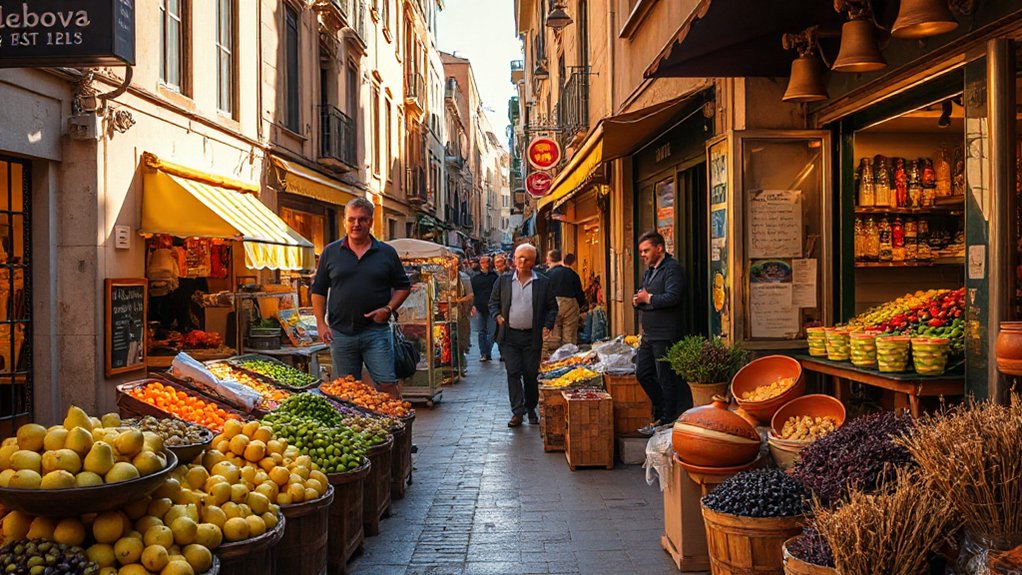
Markets wake steady before sunrise, when the doors still kiss the street with cool air and the scent of citrus and coffee hangs crisp in the breeze. You’ll find the lightest crowds just as stalls open, moments before chatter swells and hands nudge a careful path through aisles.
Plan early visits on weekdays, or during shoulder seasons, when locals sip their cortados and the market hum stays intimate. Savor quiet moments near cultural festivals and glide past historical landmarks that frame the stalls with memory as you browse fresh produce, pastries, and handmade wares.
The air shifts from dawn’s cool to sunlit bustle, but the calm returns after lunch, letting you linger, observe, and absorb local rhythms without rush.
How To Navigate Spanish Markets Like A Local
Master the rhythm of the stalls with a quick handshake of words and smiles, using simple Spanish phrases to ask for prices, sizes, and sample tastes.
Notice how bargaining is a friendly dance—start with a smile, offer a respectful counter, and read the vendor’s tone in the breeze of the market.
Let local etiquette guide you: say gracias, make room for conversation, and keep an eye on freshness, weight, and provenance as you shop.
Language Basics
Ever wondered how to blend in just enough to nab the best price without sounding like a tour guide? You’ll tune your ear to Spanish rhythms, notice locals’ smiles, and feel the market’s pulse in your fingertips.
Language basics aren’t loud flags—they’re soft cues: greetings, numbers, and polite farewells. Your goal is language immersion, not perfection, so listen first, repeat second, smile always.
- Greet warmly, ask for prices softly, and thank vendors with a nod.
- Use concise numbers and simple verbs to compare and decide.
- Mirror local phrases, but avoid overdoing the local slang.
- Respect cultural traditions by pacing conversations and reading the vibe.
This approach keeps you authentic, curious, and connected to the market’s sensory world.
Bargaining Etiquette
Bargaining in Spanish markets isn’t a game of thick wallets and loud boasts; it’s a dance of pace, tone, and read-your-room timing. You’ll sense the rhythm in a vendor’s brows, the cadence of Hola and gracias, and the soft clack of scales.
Approach with a smile, assess the display, and mirror the vendor’s pace—fast during a busy rush, slow when you sense a lull. Use respectful, light bargaining—mention a fair price, but recognize when to fold.
Cultural customs favor warmth over aggression, and shopping etiquette rewards polite curiosity about the goods. Don’t pressure, don’t haggle over every peso; instead, bundle multiple items, ask about origins, and thank the seller for their time.
Leave with appreciation, not bravado.
What To Buy: Essential Market Snacks And Souvenirs
Stalls glow with color and steam as you wander through a Spanish street market, where the scent of roasted peppers and za- z3 tagine-like? actually disregard. You snack on bite-sized treats, grab a flaky pastry, and tuck a jar of smoky pimentón into your bag.
You’ll notice local crafts and vintage collectibles tucked among every stall, tempting you to trade a story for a trinket.
- Pimentón paper-wrapped jars
- Olives, almonds, and miso-like glazes on tiny skewers
- Handmade fans, ceramics, and woven textiles
- Local crafts keepsakes and vintage collectibles for keeps
You leave with a portable memory, a passport-stamped bite, and souvenirs that whisper the city’s heartbeat.
Budget Planning: Street Market Meals On A Shoestring
You sketch a tight food map in your head, chasing Budget-Friendly Bites while the market hums with sizzling pans and fragrant herbs.
You sip a bold café cortado as aromas of roasting peppers and fried empanadas mingle with the chatter of neighbors, feeling the city’s budget-conscious rhythm.
You’re reminded that every plate can tell a story of Saver’s Street Support, turning a simple meal into a shared, affordable moment.
Budget-Friendly Bites
Strolling through a Spanish street market, you’ll taste the rhythm of the city in every bite, where sizzling chorizo bubbles beside crusty pan con tomate and aromas of fry oil mingle with citrusy pop from the stalls. You seek flavors that stretch your budget, not taste sacrifices, so you chase quick, hearty bites that fuel exploration.
Let the vendors guide you toward honest, local delicacies and affordable treats that still feel vibrant and authentic.
- Juicy pinchos on skewers, stacked with peppers and onions
- Patatas bravas with smoky aioli, a shareable, spicy hit
- Fresh-baked panalletas or croquettes for a savory crunch
- A robust coffee shot and a pastry to balance the day
Finish with market souvenirs, tiny mementos that echo the day’s flavor.
Saver’s Street Support
Street markets aren’t just about what you eat; they’re about how you plan to eat well without breaking the bank. You map stalls with a shopper’s instinct, hunting for flavor over flash.
You scout affordable staples from local artisans, then let aromas lead you to clever combos: olives swirled with citrus, smoky chorizo, crusty bread still warm from the oven. You compare prices, ask for samples, and haggle with friendly flair—never stingy, always respectful.
You savor the market history as you walk, noting how generations handed down recipes and techniques. You stash savings in a reusable bag, choosing portions you’ll actually finish.
Seasonal Pivots: What’S Freshest By Month
The markets pivot with the calendar, and each month hands you a fresh palette: citrus in January, greens that gleam in spring, tomatoes and peppers splashing their bright colors in summer, apples and root crops softening into autumn.
- Citrus awakens stalls with zests and sunlit brightness
- Greens flood baskets as fields wake after rain
- Peppers, tomatoes, and herbs flood the air with heat and color
- Apples, root veggies, and nuts ground markets in cozy rhythms
You’ll taste seasonal produce in quick bites, hear vendors haggle with music-tuned accents, and feel the pulse of local festivals that stitch neighborhoods together.
The change of season shapes recipes, markets, and memory, inviting you to savor Spain’s fresh cycles and cultural delights alike.
Family-Friendly Market Experiences In Spain
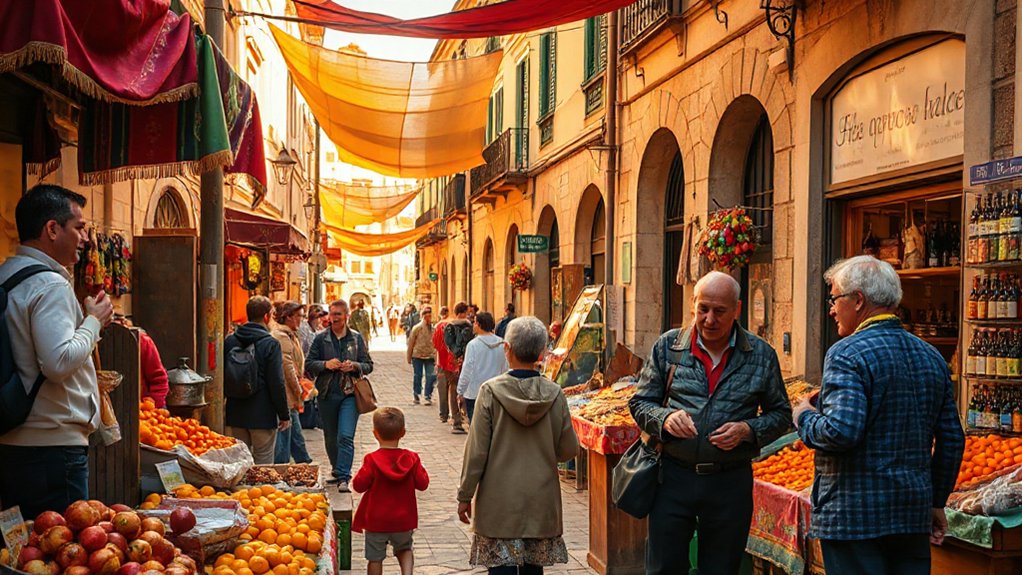
Venture into Spain’s markets as a family, where color, sound, and scent invite curiosity at every stall. You’ll find gentle lanes where kids press noses to glass, marveling at marigold mountains of fruit and handmade toys. Voices mingle in lively chatter as vendors demonstrate quick tricks, turning a visit into a mini show.
You ride the rhythm of local crafts—from woven baskets to painted tiles—that spark questions and pride in workmanship. Parents trade tips about kid-friendly bites, from warm churros to sweet oranges, while elders share Market history through old maps and photographs tucked beside counters.
The experience feels safe, sociable, and inviting, offering cultural context without pressure, so exploration becomes a shared memory your family will carry long after you return home.
Photo-Worthy Stalls And Must-Try Pic Opportunities
But the color and energy you felt at family-friendly markets carry into the photo-worthy moments that await you now. You’ll chase sunlit counters, catching glints on polished market architecture, as vendors brandish bold labels and handwritten prices. Each stall invites a candid, texture-rich frame—crinkled wrappers, glossy peppers, steam halos, and sizzling skewers.
You’ll taste local food in a single bite, then photograph the aroma rising from charred bread and smoky churros. The scene blends urban rhythm with tradition, creating a tangible cultural heartbeat you can almost hear.
- vivid stall fronts and bold signage
- sizzling scents pairing with crisp, fresh produce
- artisan crafts beside steaming pans
- bite-sized tastings to capture on camera
Etiquette And Tipping Tips At Spanish Markets
Exploring Spanish markets means reading the rhythm as much as the stalls: a chorus of chattering vendors, clinking coins, and the aroma of roasting peppers guiding you toward the right moment to buy.
You’ll sense cultural customs shaping exchanges: a nod, a smile, eye contact before you ask for a price, then a quick back-and-forth negotiated with warmth.
When tasting samples, savor the moment, thank the vendor, and keep conversations light—humor helps in crowded lanes.
Tipping practices vary by region, but a small euro in the hand after a generous portion or a friendly service gesture is appreciated, never expected.
Respect the pace, follow the locals’ lead, and you’ll blend into the market’s living tradition rather than standing outside it.
Plan A Three-City Market Itinerary: Madrid • Valencia • Barcelona
From the energy of Madrid’s plazas to Valencia’s citrus-scented stalls and Barcelona’s seaside mosaics, plan A maps a three-city market loop that feels like a living postcard. You’ll chase bites, barter smiles, and witness Local vendor stories unfold with every greeting.
In Madrid, savor jamón aromas and seek traditional market crafts among wooden stalls.
Valencia greets you with orange blossom air and saffron tones, where you’ll hear hands at work shaping ceramics and fabrics.
Barcelona links sea spray with color, inviting you to inspect tilework and listen to stories behind heirloom foods.
- Local vendor stories
- Traditional market crafts
- Fresh produce rituals
- Handcrafted snacks and conversations
Frequently Asked Questions
Are Markets Open on Sundays and Holidays?
Markets often open Sundays and holidays, but hours vary by city, market, and season. You’ll feel Market history and Cultural significance in every stall, aromas, and chants; you’ll notice sometimes closures, special feria days, and local rhythms guiding your visit.
How Do I Bargain Respectfully Here?
Yes, you can bargain respectfully here. You observe cultural etiquette—greet with a smile, small talk, and patience—then begin softly, offer a fair price, listen closely, and thank them; price negotiation becomes a shared, sensory exchange.
Which Markets Are Most Wheelchair Accessible?
Yes — these markets are wheelchair accessible. You’ll find wheelchair friendly pathways guiding you past accessible vendor stalls, where spices, tiled ceramics, and citrus scents mingle with live guitar, bright fabrics, and warm chatter from vendors and locals alike.
Are Photography Rules Enforced Inside Stalls?
Yes, market photography is usually allowed, but stall regulations vary; you’ll feel the pulse of stalls, cameras ready, as vendors watch curiously, then relax. You glimpse colors, aromas, and textures, while fearing a gentle, respectful exception.
What Languages Help When Shopping?
Yes—you’ll get far with basic phrases and a smile. You’ll pick up local dialects quickly, and language apps boost confidence, letting you bargain, laugh, and savor the market’s sounds, smells, and textures alongside helpful phrases.
Conclusion
Step into Spain’s markets and let the colors, aromas, and clatter cue your senses. You’ll taste sun-warmed olives, hear vendors shout, and feel the pulse of tucked-away corners full of local lore. Each stall is a doorway to a new neighborhood, a new story. Remember: where there’s life, there’s a feast. If you’re lucky, you’ll leave with a full belly and a lighter heart—proof that joy travels best on a well-worn market route.