
Grandparents act as steady anchors in the family system, supplying experiential wisdom, routines, and emotional continuity that reduce uncertainty during changes and crises. Their guidance shapes decisions, supports parents, and transmits tacit knowledge through storytelling and shared practices. By modeling cooperative leadership and setting clear boundaries, they foster cohesion, resilience, and moral norms across generations. This elder presence also mediates conflicts and bridges tradition with adaptation, sustaining belonging and cultural continuity. If you explore further, you’ll uncover how this dynamic unfolds in real families.
Key Takeaways
- Elders provide stability and shared norms, guiding intergenerational interactions and reducing crises-driven conflict.
- Grandparents transmit tacit knowledge through stories and practices, shaping values, decision-making, and resource planning.
- They anchor family rituals and traditions, reinforcing collective identity and emotional resilience across generations.
- As trusted mediators, they facilitate respectful conflict resolution and balanced boundaries within the family.
- Their active engagement through small, consistent roles strengthens cohesion, autonomy, and long-term family sustainability.
Grandparents as the Family’s Steady Anchors
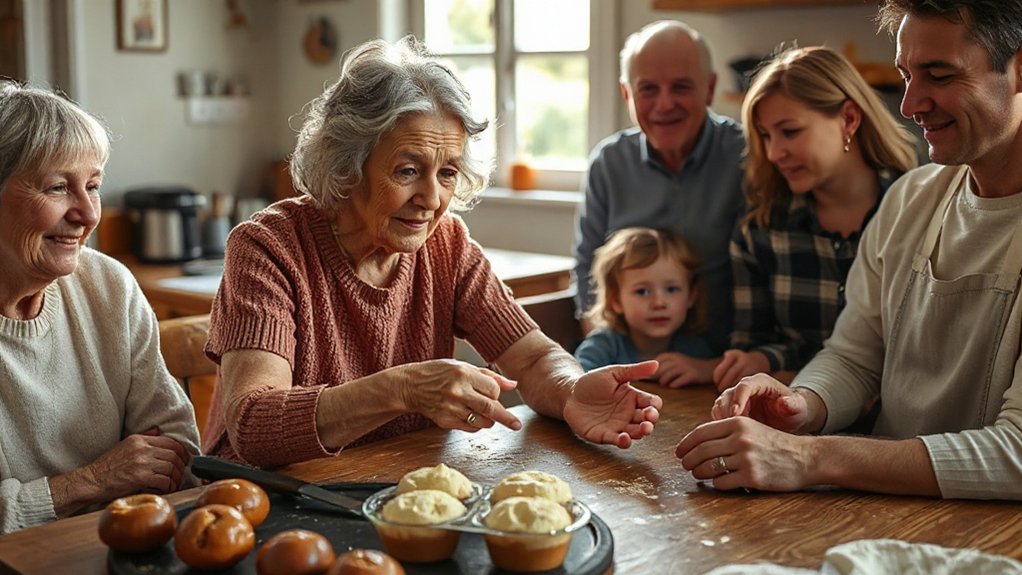
Grandparents provide the family with a stable, experiential core that guides intergenerational dynamics. You observe how their routines establish predictable patterns, reducing uncertainty during shifts and crises.
Empirically, their presence correlates with lower conflict intensity and higher intergenerational cohesion, as stories and practices transmit tacit knowledge across ages.
Theoretically, you can model grandparents as stabilizing agents that socialize younger members into shared norms, while adapting to changing contexts.
Cultural diversity enters as a variable, influencing which memories and practices are reinforced or reinterpreted within the kin group.
You also see Elder entrepreneurship emerge as a functional role, where grandparents contribute economically or socially through small enterprises, mentorship, and resource pooling.
This pragmatic contribution reinforces resilience, signaling a holistic, empirically grounded view of family stability.
How Elder Wisdom Shapes Family Choices
Elder wisdom shapes family choices by providing a reservoir of tested strategies and normative guidance that families routinely draw on when facing uncertainty. You observe how you weigh options, compare risk, and anticipate consequences through the lens of accumulated experience.
This influence manifests in decision making that blends practicality with ethical considerations, creating a stable framework for action in shifting circumstances. You recognize how elders mentor younger generations, shaping preferences, priorities, and problem framing, rather than dictating outcomes.
The process supports adaptive resilience and resource allocation across generations. You see how elder decision making coordinates roles, clarifies responsibilities, and aligns long-term goals with immediate needs.
Grandparents’ Storytelling: Transmitting Core Values
You observe how grandparents’ storytelling acts as a conduit for values, shaping behaviors across generations.
By examining the content and frequency of these narratives, you can assess how values like responsibility, empathy, and community are transmitted and reinforced.
This approach treats storytelling as an observable mechanism for legacy preservation, linking narrative form to downstream family choices.
Storytelling Legacy Transmission
Storytelling acts as a transmission channel for core values, with grandparents frequently shaping moral frameworks through selected narratives, repeated motifs, and situational exemplars observed over time. You observe how stories crystallize norms, reinforce social expectations, and anchor identities within family life.
The mechanism blends cultural preservation and spiritual mentoring, shaping how members interpret duty, reciprocity, and resilience. You can identify patterns where cautionary tales, hero voyages, and ancestor vignettes reduce ambiguity in moral decision-making.
This legacy transmission operates through everyday retellings, ceremonial retellings, and critical reflections after events. You track outcomes by noticing changes in behavior, alignment with shared codes, and the emergence of intergenerational conversations that test and reframe older lessons.
- Continuity of meaning across generations
- Reinforcement of values during rites and routines
- Catalysts for reflective, value-based dialogue
Values Through Generations
Grandparents’ storytelling serves as a deliberate conduit for core values across generations, coordinating memory, emotion, and social norms into a teachable framework. You observe that stories encode cultural traditions and normative expectations, shaping behavior through repeated motifs and consequences.
In empirical terms, grandparental narratives function as socialization markers, aligning younger generations with shared ethics while allowing adaptation to changing contexts. Theoretical models suggest transmission occurs via attention, relevance, and emotional resonance, which anchors values more durably than abstract instruction.
You note that emotional support during storytelling reinforces trust, reducing perceived risk when adopting communal norms. An analytical lens reveals that values persist not as rigid dictates but as adaptable heuristics, enabling intergenerational continuity.
Ultimately, cultural traditions and emotional support emerge as core mechanisms sustaining family cohesion and collective identity across time.
Setting Boundaries: How Grandparents Support Parents
Setting boundaries with grandparents is essential for supporting parents, because clear expectations reduce friction and protect family rhythms. You observe how boundary setting shapes daily routines, caregiving roles, and decision hierarchies, informing a stable environment for children and adults alike.
Empirically, predictable limits correlate with reduced role ambiguity and improved cooperation, especially across generational gaps that can fuel misaligned norms. Theoretical models suggest that explicit boundaries support autonomy while preserving intergenerational exchange, enabling grandparents to contribute without overreach.
Implementing agreed parameters helps you monitor timing, permissible interventions, and communication channels.
- Clarified roles and limits that align with parental goals
- Consistent communication protocols across generations
- Contingency plans for exceptions and renegotiations
Belonging Across Generations: The Emotional Glue
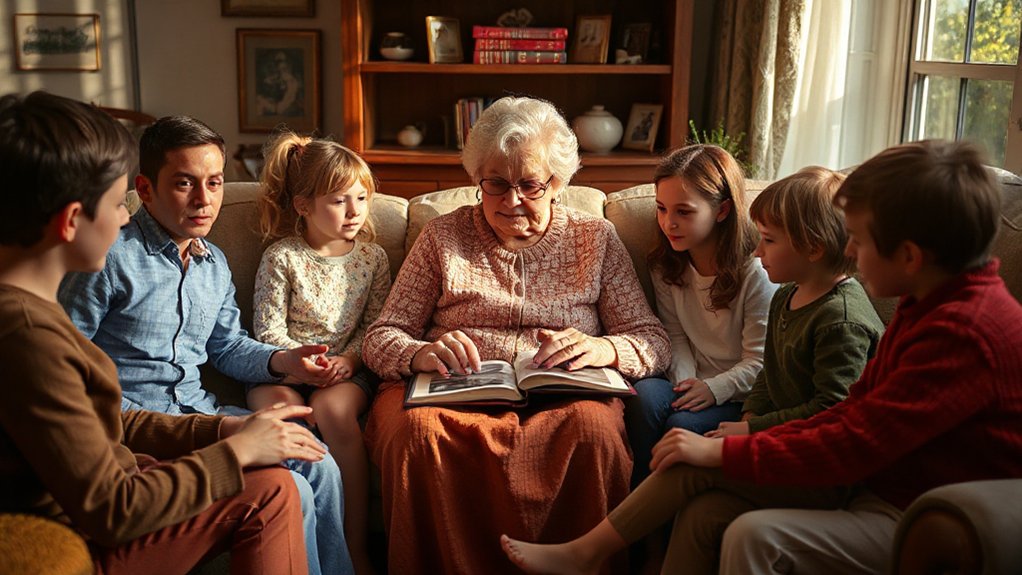
Belonging across generations acts as the social glue that sustains family equilibrium when boundaries are in place. You observe how intergenerational contact reinforces shared norms and collective identity, shaping behavior through consistent expectations and mutual recognition.
Empirically, such belonging fosters emotional resilience by providing secure attachment patterns and predictable support networks, which buffer stressors across life stages. Theoretically, cultural identity emerges from ongoing exchanges—stories, rituals, and meanings—that crystallize group cohesion while allowing individual differentiation.
Practically, you can see how grandparents’ narratives transmit values, shaping grandchildren’s self-concepts and ethical orientations. Analytical models reveal that belonging reduces role ambiguity and enhances cooperative problem-solving within households.
Practical Help That Keeps Families Thriving
- Clear scheduling and delegation
- Resource and information sharing
- Community-based support networks
Traditions Grandparents Keep Alive and Why They Matter
Traditions that grandparents keep alive create a tangible link between generations, shaping how families interpret memory, responsibility, and identity. You observe that ritualized practices—holiday routines, storytelling, ceremonial recipes—operate as repositories of cultural knowledge, not mere sentiment.
Empirically, these activities stabilize household norms, produce shared references, and coordinate intergenerational expectations around care, succession, and moral judgment.
Theoretically, they function as boundary-maintaining devices, delineating in-group membership while signaling legitimacy to younger members.
Cultural preservation emerges when elders codify tacit skills and etiquette into observable performance, enabling transmission through lived demonstration.
Generational identity strengthens as grandchildren internalize roles, duties, and loyalties reflected in elders’ conduct.
In stable families, these traditions sustain cohesion, even amid social change, by anchoring meaning to lineage and continuity.
Intergenerational Learning: What Kids Carry Forward
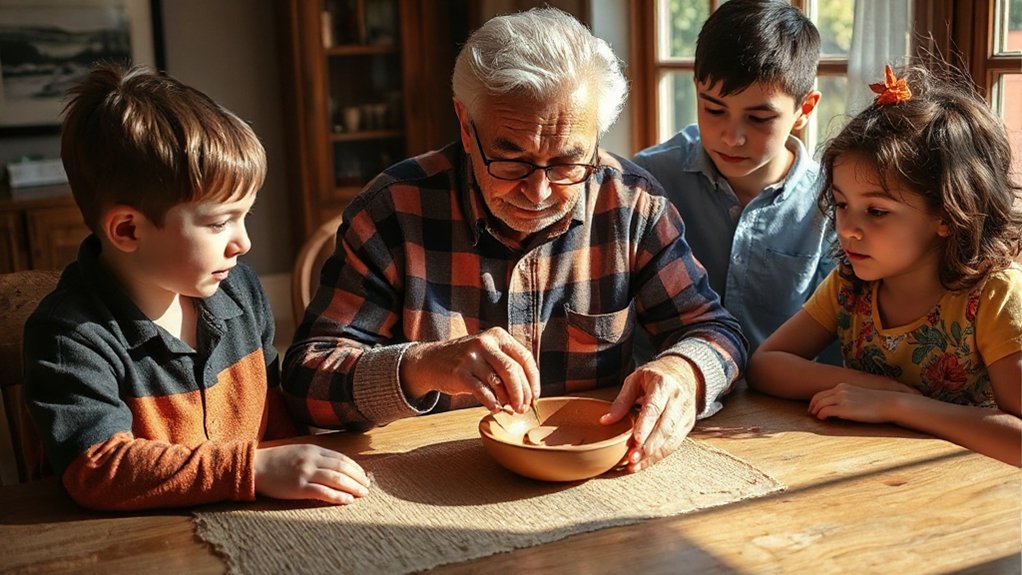
You observe how wisdom travels across generations, shaping what kids learn from elders through everyday interactions.
You analyze how shared life lessons become practical skills, social norms, and problem-solving strategies that kids carry forward.
You consider how values passed down influence current decisions and future behavior, forming a feedback loop between generations.
Wisdom Across Generations
How does intergenerational learning shape what kids carry forward? You observe patterns where knowledge, norms, and problem-solving strategies migrate across ages through everyday interactions. The process is empirical: repeated exchanges reveal which ideas endure, which adapt, and which fade.
Theoretically, kids reconstruct beliefs by testing them against elder memory, narrative, and practice, refining cultural models in real time. You note that cultural diversity surfaces in varying repertoires, while elder communication styles influence interpretation, retention, and application.
The result is a dynamic scaffold that supports resilience and creativity, not rote transmission. As you map these processes, you see that learning is bidirectional and contextual, shaping identities and future decision-making for families and communities.
- Cultural diversity
- Elder communication
- Intergenerational reciprocity
Shared Life Lessons
This isn’t mere folklore; it reflects cognitive scaffolding that accelerates learning across contexts. You note cultural diversity informs problem framing, as kids encounter varied norms, communication styles, and collaboration strategies, refining adaptability and perspective-taking.
You also see elder entrepreneurship influencing resourcefulness: seniors balance opportunity with constraint, model experimentation, and teach iterative refinement. Theoretical frameworks of intergenerational learning predict enduring transfer when mentors align tasks with developmental stages and authentic goals.
Empirically, you measure knowledge retention, transfer to novel problems, and shifts in confidence, highlighting shared life lessons as durable, practical capital.
Values Passed Down
- Cultural rituals frame duties and celebrations, signaling appropriate participation.
- Elder spirituality anchors meaning, tempering ambition with relational responsibility.
- Shared storytelling transmits values, memory, and collective identity.
Respect and Autonomy in Grandparent Roles
Respect and autonomy often intersect in grandparent roles, shaping how elders influence family dynamics without overstepping parental boundaries. You observe that generational respect emerges when grandparents acknowledge evolving parenting norms while offering seasoned guidance.
Autonomy support appears as structured options, transparent rationale, and encouragement of independent choices for youths, balanced with clear safety cues. Theoretically, this balance can reduce coercive expectations and preserve relational trust, promoting internalized values rather than compelled conformity.
Empirically, families with explicit role boundaries show higher satisfaction and lower conflict, suggesting that elders’ contributions are most effective when framed as facilitative rather than directive.
You analyze how grandparental involvement varies by context, culture, and individual temperament, noting that ethically bounded influence sustains both respect and autonomy without eroding parental authority.
This conceptual lens clarifies the grandparent’s central, but carefully delimited, role.
Grandparents as Peacemakers: Mediating Conflicts
Grandparents can play a pivotal role in conflict resolution within families by serving as trusted mediators who facilitate dialogue rather than dictate outcomes. In this role, you observe dynamics, identify root concerns, and propose neutral frameworks that reduce defensiveness.
You apply elder mediation principles to restore trust, not assign blame, and you document agreements to guarantee accountability. Through empirical insight, you evaluate communication patterns, propose equitable compromises, and monitor progress toward durable solutions.
Theoretical grounding supports outcomes where participants feel heard, understood, and respected, enabling sustainable conflict resolution.
- Neutral facilitation strategies that lower barriers to discussion
- Verbal and nonverbal cues that signal safety and openness
- Follow-up measures to sustain peace and verify commitments
Resilience in Tough Times: Elder Role Modeling
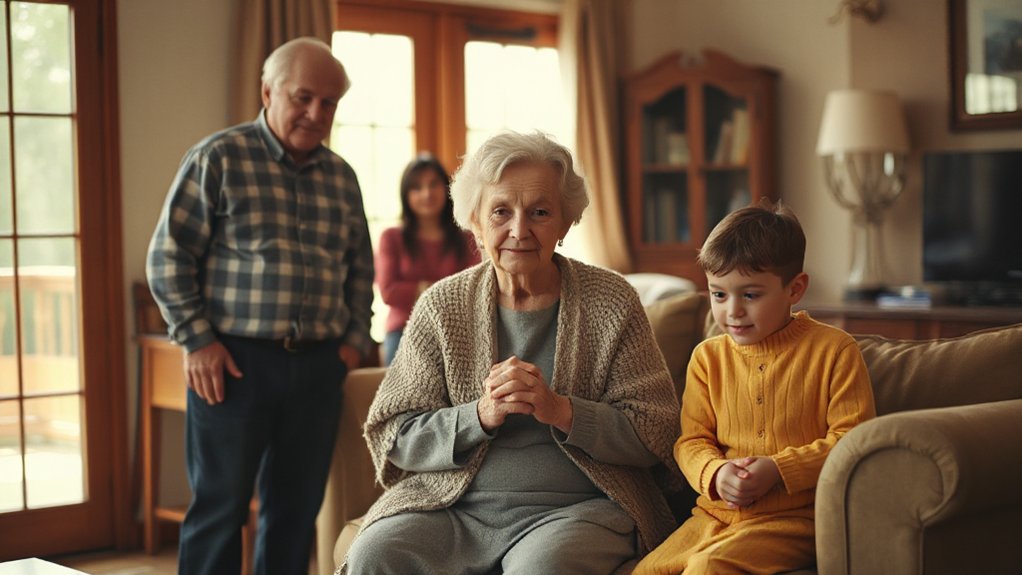
When families face adversity, elders demonstrate resilience through consistent behavior, adaptive coping, and deliberate social modeling that others can imitate. You observe how steady routines, transparent problem framing, and proactive resource seeking shape group responses, reinforcing a sense of control amid ambiguity.
Theoretical insights emphasize role modeling as a mechanism for transmitting coping repertoires across generations, strengthening generational bonds through observable strategies and shared meanings.
Empirically, elder mentorship coordinates intergenerational problem solving, aligning expectations and preserving social cohesion during stress.
You note that resilience isn’t merely endurance but structured practice: reframing threats, mobilizing support, and maintaining adaptive pace.
In this framework, elders function as adaptive instructors, guiding younger members toward constructive attribution, collaborative action, and sustained engagement despite disruption.
Grandparents’ Impact on Family Health and Well-Being
Although grandparents influence family health and well-being in observable ways, their impact hinges on the interactions that shape physical, emotional, and social outcomes: caregiving routines, health literacy, and resource mobilization. You observe how elder health and family dynamics interact to affect overall wellness, caregiving availability, and stress regulation within households.
Theoretical models link grandparent involvement to better chronic condition management, while empirical data emphasize gaps when caregiving competes with work and caregiving burdens. You examine mechanisms, including intergenerational communication, role negotiation, and social support networks.
This analysis highlights measurable effects on health behaviors, access to care, and psychological well-being.
- Caregiving patterns and elder health implications
- Health literacy and practical knowledge transfer
- Resource mobilization within family dynamics
Bridging Technology and Tradition in Modern Families
Technology reshapes how modern families manage intergenerational ties, yet tradition remains a guiding framework for daily expectations and caregiving norms. You observe that Digital literacy becomes a gatekeeper for equitable participation, while elders adapt routines to preserve shared meaning.
In practice, you see Modern communication tools facilitating frequent contact, yet requiring boundary-setting to protect caregiving bandwidth and privacy. Theoretical models suggest technology mediates legitimacy of roles, with elders asserting stewardship through teachable moments and younger members providing scaffolds for access.
Analytically, you compare measures of engagement, satisfaction, and reciprocity, noting that successful bridges align tech use with cultural values rather than override them. Concretely, you advocate deliberate pacing, user-centered design, and reciprocal training to harmonize innovation with familial tradition.
Easy Ways to Involve Grandparents Daily
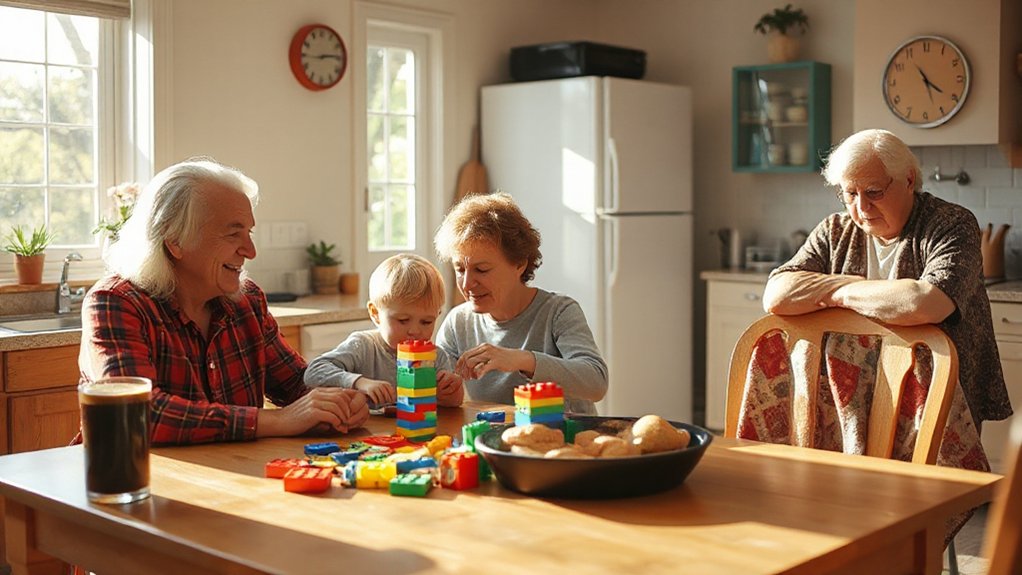
Grandparents can be woven into daily routines through simple, repeatable actions that reinforce engagement without overburdening participants. You observe how small, consistent tasks scale relational value, offering measurable benefits in cohesion and transmission of norms. Daily involvement emerges from routine channels that respect autonomy while leveraging intergenerational knowledge, with each action warranting minimal setup and clear expectations.
Cultural celebrations and Family recipes function as anchor points, aligning affection with shared practice and memory scaffolding. Through structured repetition, you quantify engagement, monitor reciprocity, and adjust participation to fit schedules. The approach is empirical: test small changes, track responses, and refine. You build a sustainable model where grandparents contribute meaningfully without friction.
- Rotate weekly storytelling prompts tied to Family recipes
- Schedule brief, daily check-ins around Cultural celebrations
- Co-create simple, repeatable activities with clear roles
Signs the Elder Role Is Thriving in Your Family
You’ll notice the elder role thriving when participation becomes predictable, reciprocal, and aligned with family rhythms. In practice, you’ll see consistent involvement in decision making, caregiving, and story sharing, not sporadic or token gestures.
Empirically, thriving elders model cooperative leadership, facilitating intergenerational communication that bridges perspectives, values, and needs. Theoretical patterns emerge when grandparents anticipate questions, offer guidance, and invite input, rather than dictate outcomes.
Analyzed dynamics show reduced conflict and greater horizon planning, as elders balance authority with collaborative listening. Indicators of well-being include visible elder self care, balanced workloads, and satisfied tempo across generations.
When care responsibilities are shared, elders maintain energy for mentorship rather than burnout. Ultimately, thriving elders strengthen family resilience by sustaining durable, respectful dialogue across ages.
Frequently Asked Questions
How Do Grandparents Influence Financial Decision-Making in Families?
Grandparents influence financial decision-making by guiding financial planning and inheritance decisions, shaping risk tolerance, and prioritizing intergenerational equity; you observe their empirical patterns, analyze theoretical frameworks, and incorporate practical constraints to explain how familial norms drive budgeting and bequest strategies.
What Motivates Elders to Preserve Family Rituals Across Generations?
Maintaining family storytelling motivates elders to preserve rituals across generations, because they value continuity, communal identity, and shared memory; they study cultural traditions, test outcomes, and adapt practices, so you reaffirm bonds, transmit values, and sustain cohesion.
How Can Teens Connect Respectfully With Aging Grandparents?
You build emotional bonding with your aging grandparent by listening actively and sharing feelings; you’ll use communication strategies like reflective listening and open-ended questions to analyze needs, consequently strengthening trust and social reciprocity between generations.
When Do Boundaries Become Necessary in Grandparent Involvement?
When you see emotional boundaries and personal space encroached, boundaries become necessary to prevent erosion. You navigate like a careful architect, weighing needs, testing limits, and adjusting, using empirical reasoning, allegorical maps, and a steady, analytical rhythm.
What Signs Show Grandparents’ Roles Are Fading or Thriving?
Grandparents’ roles thrive when intergenerational bonding strengthens daily routines, while fading when cultural preservation signals weaken, showing intergenerational gaps. You observe empirical indicators: shared rituals, knowledge transfer, and supportive caregiving, signaling resilience or erosion in family structures.
Conclusion
You see it in the data: grandparents consistently stabilize routines, transmit values, and provide emotional ballast that improves family health metrics. Their storytelling and boundaries create predictable dynamics that let parents make better choices. In modern life, bridging tech and tradition emerges as the key mechanism for ongoing belonging. In short, the elder role isn’t optional—it’s the beating heart of cohesion, a lighthouse that guides multiple generations toward shared well-being and resilient futures, brighter than a thousand suns.