
Drive Spain’s mountain roads with steady control and early braking to prevent heat buildup. Stay alert for tight bends, changing weather, and surprises like wildlife or debris. Use gradual steering, downshift before descents, and avoid hard braking on slopes. Maintain a safe following distance, signal thoughtfully, and yield to slower vehicles. Watch for narrow tunnels, rockfalls, and goats near bends. Prepare your vehicle and emergency kit, and adapt to rain, fog, or wind. Curious for more practical tips? You’ll pick up even more insights ahead.
Key Takeaways
- Recognize hazards: anticipate narrow lanes, sharp bends, sudden drops, wildlife, debris, and rockfalls; use steady steering and controlled braking.
- Plan ahead: check weather and daylight, schedule climbs in clear mornings, descents in afternoons, and book lodging near planned routes.
- Read road cues: watch warning signs, chevrons, rumble strips, surface wear, and edge lines to adjust speed and position early.
- Master braking and gearing: downshift early, brake progressively, and avoid heat buildup on descents; maintain smooth, steady speeds.
- Drive courteously: yield to slower vehicles, use signals, keep safe distances, and respect locals and pedestrians in villages and rural areas.
Recognize Spain’s Mountain-Road Risks
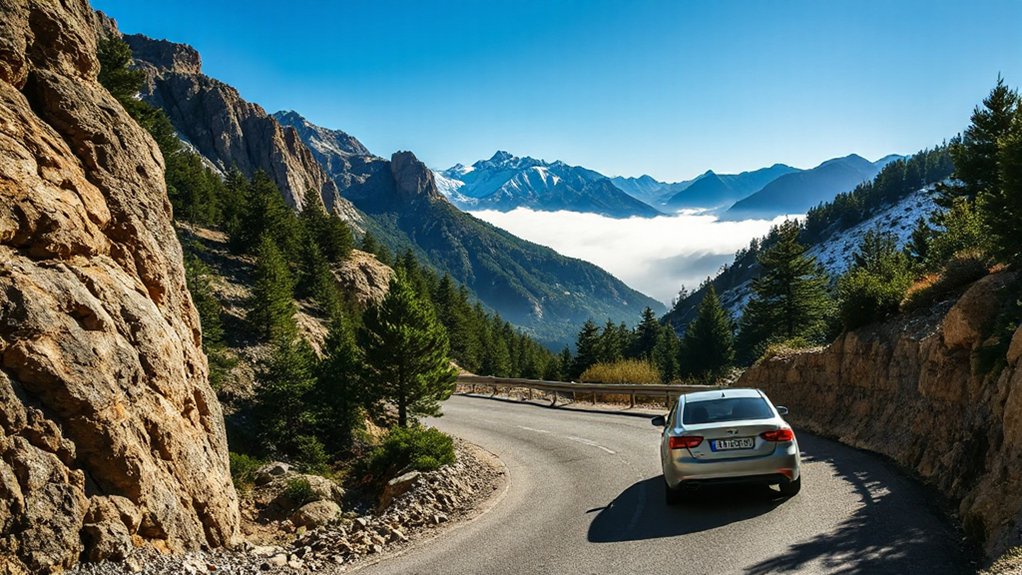
Spain’s mountain roads pose unique hazards you’ll want to anticipate. You’ll encounter narrow lanes, sharp bends, and sudden drops that demand steady steering and restrained speed. Weather shifts quickly, so keep your wipers and lights ready, and reduce speed on wet or icy surfaces.
Runaway grades require careful braking and engine braking to avoid overheating. Watch for wildlife, cyclists, and slow-moving tractors that share the lanes; give them room and anticipate surprises around blind corners.
Prepare for sudden closures and detours that can extend travel time. Cultural landmarks and local cuisine may lure you to pause, but stay focused on the road first.
Plan rest breaks to maintain alertness, and verify maps and signage before entering unfamiliar stretches.
Plan Spain Mountain-Road Routes by Weather and Timing
Plan your Spain mountain-road trips by checking the weather window and timing each segment for safety. Consider Weather Window Planning to avoid sudden storms, fog, or wind that can close passes, and align passages with daylight hours.
Keep Route Safety Considerations in mind as you choose roads and timing to minimize risk and maximize driveability.
Weather Window Planning
Prioritize segments known for rapidly changing conditions, mounting fog, or sudden showers, and plan alternates in case a window closes. Use reliable local sources and apps that update mountain-specific alerts, not just general forecasts.
Note timing for passes, tunnels, and pullouts to minimize stops in narrow sections. Include cultural landmarks and local cuisine stops during longer windows to maintain driver alertness without derailing your route.
Confirm overnight lodging options near the planned window to avoid last-minute scrambles.
Timing For Passages
To time your mountain passages effectively, queue routes by the weather window and the expected traffic flow, then align them with daylight. You’ll maximize visibility, reduce delays, and cut exposure to sudden weather shifts.
Prioritize clear mornings for winding climbs and shade-saving afternoons for exposed descents. Check forecasts for wind gusts and rain chances, adjusting your plan if temps drop or visibility worsens.
Weigh popular routes against lesser-traveled options to balance congestion, especially near scenic pullouts. Schedule stops to appreciate cultural landmarks without derailing pacing, and time meals to fit local cuisine opportunities along the route.
Keep a flexible window for choosing alternate paths if clouds roll in or a pass becomes slippery, ensuring steady progress and safer driving through changing mountain conditions.
Route Safety Considerations
When you map Spain’s mountain routes, safety hinges on how you handle both weather and timing. Plan drives for morning or late afternoon when temperatures are cooler and visibility is best, avoiding midday heat and sudden cloudbursts. Check forecasts for mountain passes, wind shifts, and potential frost.
Use timing to bypass seasonal closures and holiday traffic that can jam narrow lanes. Prioritize routes with guardrails and escape options, and keep your pace steady to react to wildlife or slow trucks. Pause at cultural landmarks for a quick rest, then resume with renewed focus.
Track local cuisine stops to stay energized without long detours. Maintain a charged, reliable navigation system and a paper map as a backup. Stay flexible, vigilant, and prepared.
Read Spain Mountain-Road Signs, Markings, and Cues
In Spain’s mountain roads, signs, markings, and cues guide you through sharp turns, changing grades, and limited visibility—so you can anticipate hazards before you reach them.
You’ll rely on clear mountain signage and road markings to expect hazards, slowdowns, and lane changes. Read the signals early, then adjust speed and position to stay centered in your lane.
1) Watch for warning triangles and reflective panels that flag steep grades and tight corners.
2) Follow directional arrows and chevron markings to gauge the safest line through bends.
3) Note surface cues like paint wear, edge lines, and rumble strips that indicate grip changes and hidden entrances.
Master Braking and Gear for Steep Spain Mountain-Road Descents
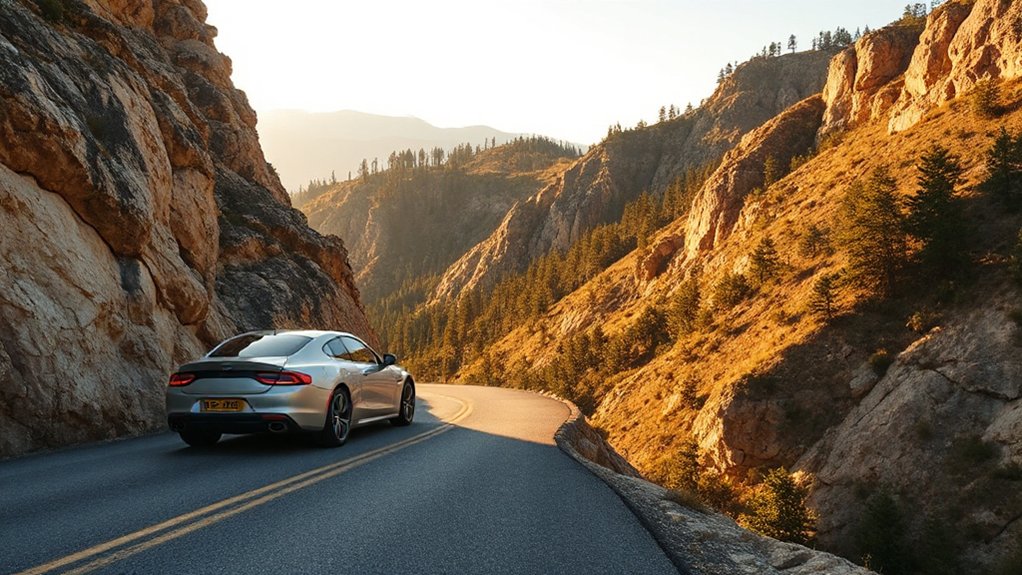
Mastering braking and gearing on steep Spain mountain descents hinges on steady control and smart technique. You’ll brake progressively, use a controlled engine brake, and keep your hands relaxed.
Downshift early to low gears before steep sections, avoiding abrupt torque changes that can lock wheels. Maintain a steady speed, choosing a lower gear to help engine braking, and anticipate turns to minimize braking in curves.
Use controlled braking on straights and short, light releases to prevent heat buildup. Gear selection should align with grade and your vehicle’s weight, not fear.
Listen to the road and observe mountain scenery for cues about grade changes. Respect local customs by yielding to slower vehicles and using pullouts when safe, ensuring a smooth descent for everyone.
Manage Speed and Following Distance on Blind Curves
Blind curves demand disciplined speed and a safe following distance; keep your pace steady, slow early, and use the road to judge what’s ahead. You’ll manage speed and following distance by prioritizing visibility, planning ahead, and reacting smoothly to changing terrain. Stay calm, and don’t overcorrect.
- Use gradual speed control through the curve’s approach, then ease off as you enter.
- Maintain consistent vehicle spacing, leaving room for sudden obstacles.
- Adjust speed with the road’s narrowing lanes and blind exit lines, and recheck distance before accelerating out.
This approach helps you respond promptly to oncoming traffic, reduces rollover risk, and keeps your momentum controlled through mountain turns.
Handle Goats, Rocks, and Narrow Tunnels on Mountain Routes
On mountain routes, stay alert for goats, rocks, and narrow tunnels that can appear suddenly. You’ll encounter goat crossings where animals may dart onto the road; slow smoothly, don’t honk, and give them time to move. Maintain a steady speed that allows you to stop safely if needed.
In sections with rockfalls awareness, scan the cliff faces and debris lines, especially after rain or freeze–thaw cycles. If you spot loose rock, ease off the accelerator and create more space behind you before continuing.
Narrow tunnels demand lights, cautious lane position, and reduced speed. Use the full width of the lane when safe to pass parked vehicles or oncoming traffic. Stay prepared to stop for wildlife, falling debris, or oncoming vehicles.
Prepare Your Vehicle and Emergency Kit for High-Altitude Drives
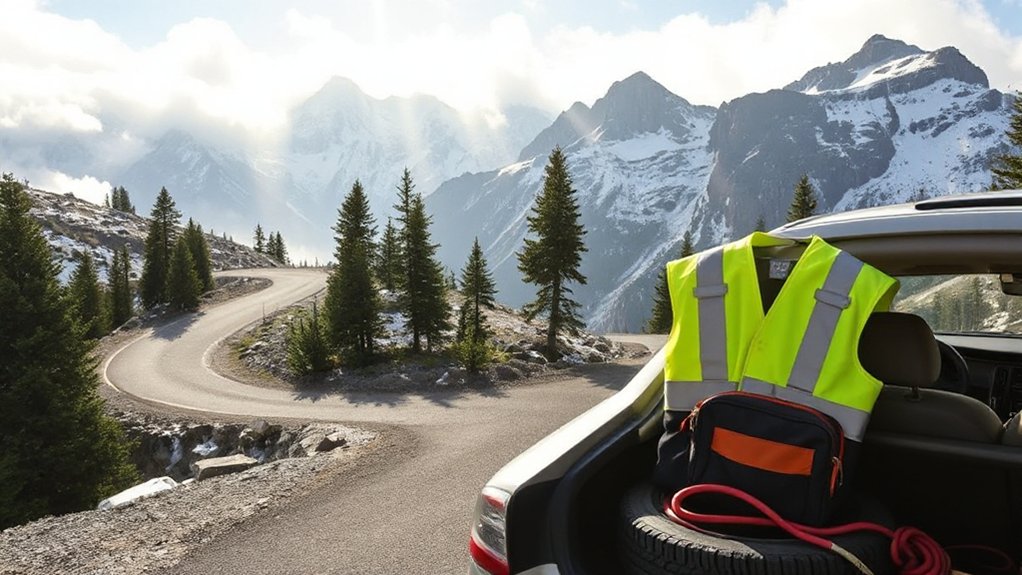
High-altitude drives stress your vehicle more, so start prepared by inspecting and stocking your ride for the climbs ahead. Before you depart, perform a quick vehicle maintenance check and confirm essentials are in place. Top off fluids, verify brakes, test lights, and make certain tires have proper tread and pressure.
Pack sturdy, weather-ready gear and a compact emergency kit that covers basics and winter needs. Your plan should emphasize safety, reliability, and quick fixes if you’re far from help.
1) Carry spare parts and tools tailored to your vehicle
2) Include a reflective warning triangle, flashlight, batteries, and first-aid supplies
3) Pack warm clothing, water, non-perishable snacks, and a charged power bank for emergencies
This approach reinforces emergency preparedness and reliable vehicle performance.
Adapt Driving to Weather Shifts and Reduced Visibility
Weather can shift quickly on Spain’s mountain roads, so be ready for rain, fog, or mist that reduces visibility.
When you notice changes, slow down, increase following distance, and use low beams or fog lights as needed.
Stay alert for gleams on wet pavement and extra debris, adjusting speed and lane position to keep you safe.
Weather Changes Ahead
As you descend into shifting conditions, stay alert for sudden changes in wind, rain, or fog that can reduce visibility and grip on mountain roads. You’ll encounter unpredictable weather, so adjust speed early and keep headlights on in drizzle or mist.
Watch for wildlife crossings and changing road surface conditions that can surprise you near bends.
- Slow gradually before tight corners, and increase following distance on slick patches.
- Test brake strength on damp surface, then apply smoothly to avoid skidding.
- Use lane positioning to maximize visibility, anticipate rockfalls, and adapt to gusts.
Weather shifts demand vigilance; stay ready to reassess traction, adjust your line, and proceed with caution.
Visibility-Oriented Driving Adjustments
When visibility drops, slow your pace and increase following distance to give yourself more time to react to hazards like sudden bends, wildlife, or debris.
In reduced visibility, switch to low beams or fog lights as appropriate, and avoid high-speed drafting behind trucks.
Keep windows and mirrors clean, use defogging to prevent glare, and steadily scan the road ahead in a wide arc.
Adjust your route if possible to avoid high-risk stretches during fog or heavy rain.
Maintain steady steering and smooth braking to prevent surprises.
Stay alert for Nighttime hazards and Wildlife encounters, particularly near bends or forested sections.
If visibility becomes severely limited, pull over to a safe spot and pause until conditions improve.
Drive Safely to Protect Others on Spain’s Mountain Roads
Driving safely on Spain’s mountain roads isn’t optional—it protects everyone sharing the route. When you drive, you support others’ safety, from hikers to cyclists and fellow drivers, especially on blind bends and narrow passes. Your choices matter on steep grades where even small delays can create risk for following vehicles.
Be mindful of cultural customs and local dialects; expect slower speeds near villages and during local market hours, and show patience with locals who navigate these roads daily. Stay predictable, use signals, and keep to designated lanes.
- Slow down at corners and near villages to let pedestrians and livestock pass safely.
- Maintain a steady speed, avoid tailgating, and yield to wider vehicles when necessary.
- Respect local etiquette and adjust behavior to rural road norms.
Frequently Asked Questions
What to Do if a Goat Blocks the Road at Night?
If a goat blocks the road at night, slow gradually, stop safely, and turn on hazard lights. Keep headlights low then high to improve nighttime visibility, and wait for the animal to move, staying patient and avoiding honking.
How to Handle Tire Pressure on Cold Mountain Mornings?
Start with Tire pressure checks, then adjust for Cold mornings by inflating to the vehicle’s recommended cold-psi spec. You’ll feel steadier steering as you monitor tires, avoid pinching flats, and maintain grip on those alpine grades.
Are Dashcams Useful on Remote Spain Routes?
Yes, dashcams are useful on remote Spain routes. You’ll capture evidence for accidents, and you’ll monitor traffic regulations compliance. Camera benefits include continuous recording and potential insurance support, helping you stay prepared for unexpected remote-road conditions.
Can Winter Tires Be Legally Required on Certain Passes?
Winter tire regulations vary by pass; some require them during winter months. You should check each mountain pass’s requirements before you go, because enforcement can be strict. Winter tire regulations may apply, affecting mountain pass regulations and safety.
What Is the Safest Coping Strategy for Sudden Road Closures?
If you face sudden road closures, stay calm, turn on hazard lights, and use emergency preparedness to guide you. Rely on navigation tools, follow detours, communicate your status, and keep fuel, water, and warm clothes accessible for safety.
Conclusion
Stay alert and drive for the mountain, not the moment. With goats, rocks, tight tunnels, and blind bends, anticipation beats adrenaline every time. Check weather, plan routes, and read signs before you roll. Brake early, downshift, and increase following distance on steep descents. Keep your speed steady, elbows relaxed, and your mind on the road ahead. Prepare your car and emergency kit, and adjust for visibility shifts. Safe driving protects everyone sharing Spain’s majestic mountain roads.