
The best road trips across mainland Spain weave dramatic coastlines with inland hill towns, markets buzzing with chorizo, Manchego, and olives, and centuries‑old plazas that invite lingering. Start with a flexible framework: anchor cities, 1–2 day pockets for spontaneous stops, and buffer days for weather or crowds. Enjoy Moorish trails, medieval festivals, and tapas trails as you drift from coves to cork‑oak shaded plains. Ready to stitch your own loop? You’ll uncover more with each new detour.
Key Takeaways
- Start with flexible core itineraries linking anchor cities, allowing 1–2 day pockets for spontaneous stops and exploration.
- Combine coastal drives in May/late September with inland routes in spring for wildflowers and panoramic passes.
- Explore Costa-to-Countryside routes: Moorish heritage trails, green Galicia-to-Castilla y León landscapes, and hilltop medieval towns.
- Integrate food, markets, tapas trails, and winery visits to showcase regional specialties like chorizo, Manchego, olives, and tomatoes.
- Prioritize practical planning: vehicle checks, emergency planning, accessible family-friendly stops, and nightly plan reviews for momentum.
Why Mainland Spain Road Trips Are Uniquely Rewarding
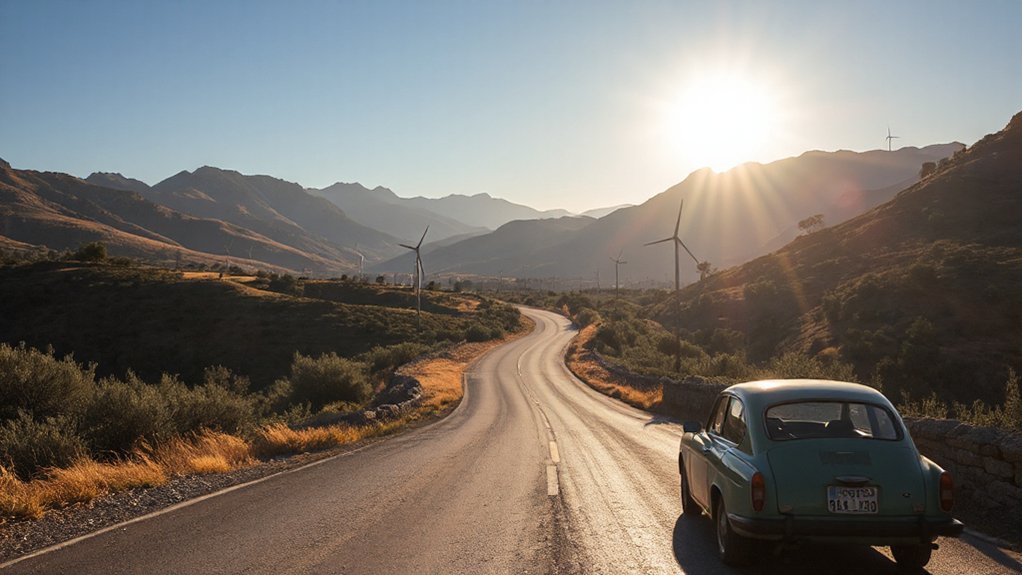
The best thing about road trips in mainland Spain is how every turn sparks a new scene—crumbled mountain passes, sunlit olive groves, and towns that feel like secret discoveries. You roll through changing landscapes, stop for coffee in a courtyard chat, and hear locals greet you with a wink and a recommendation.
What sets these journeys apart is you don’t just observe; you participate—joining Cultural festivals that pulse with drum, song, and color, or tracing a maker’s bench to see local crafts come to life. You taste regional bites, learn a few phrases, and map shortcuts by instinct.
Each detour reveals authentic rhythms, a sense of place, and the confidence that rewards patient curiosity more than speed.
Plan a Flexible Spain Road-Trip: Framework, Pacing, and Contingencies
You start with a flexible itinerary framework that maps your must-sees but leaves room for the road.
Build in a pacing plan that mixes long drives with short explorations, and keep a light contingency list for weather, crowds, or a town you just want to linger in.
With practical tweaks like buffer days and real-time adjustments, you’ll stay spontaneous without losing momentum.
Flexible Itinerary Framework
To keep a Spain road trip flexible, start with a frame that can bend without breaking: map a rough loop and choose a few nonnegotiables, then leave wide swaths of freedom for pace shifts, weather, and instinct.
Your Flexible Itinerary Framework centers on a core route, plus 2–3 anchor cities, and 1-2 day pockets for spontaneous stops.
Schedule pragmatic pacing: one long travel day, one lighter day, one cultural day.
Build density around regional highlights—local cuisine, historical landmarks—yet reserve time for detours to scenic overlooks, a seaside village, or a museum you discover en route.
Use a boundary envelope: max 1 overnight per 2–3 days, cancel only if weather or mood forces it.
Review nightly, adjust for momentum, and keep notes.
Contingency and Pacing Plan
If plans go awry, roll with it: a flexible pacing and contingency plan keeps you moving rather than stuck. You map guardrails: early starts, buffer days, and a short-list of alternate routes or detours.
When a weather front blocks the coast, you switch inland to vineyards or hill towns, keeping momentum and mood intact. Build in emergency preparedness basics—a compact kit, copies of essential documents, and a charged power bank—so hiccups don’t derail the day.
Travel insurance backs you up on sudden cancellations or medical needs, smoothing disruption. Maintain a digital, shared itinerary with fallback dates so your group stays aligned.
The goal isn’t perfection, but progression, with intentional rest, reflection, and local discoveries still within reach.
Costa-to-Countryside Routes: Coastal Binge and Inland Gems
Sun-drenched coastlines spill into rolling inland hills as you trace Spain’s Costa-to-Country lanes, weaving from sun-washed beaches to sleepy villages where olives glint in the afternoon light. You’ll hop from coastal villages to inland vantage points in a single day, trading sea breeze for pine-scented air.
Pack a lightweight map, a bottle of water, and a snack that travels well; you’ll want to stop often. Coastal roads thread through coves, then climb toward vineyards and almond groves, revealing inland vineyards tucked beside compact towns.
Expect practical detours: windier stretches, tolls, and sudden shade from cork oaks. You’ll taste salt, dust, and dry earth in equal measure, collecting moments as the landscape shifts from turquoise to clay. Your plan stays flexible, your drive rewarding.
Castile and Levante Classics: Castles, Plazas, and Tastings
You’ll weave through Castles and Courtyards, where time-worn walls whisper about centuries past and secret staircases invite a quiet explore.
You’ll pause in Plazas and Palates, sipping regional wines and tasting bites that mirror the surrounding architecture—bold, balanced, and just a bit theatrical.
You’ll map Castile Levante Scenic Routes, plotting easy detours to chocolate-tinted towns, hilltop fortresses, and viewpoints that coax you to slow down and savor the journey.
Castles and Courtyards
Why settle for a postcard view when you can step into the living history of Castile and Levante? You travel where stone still breathes, tracing medieval architecture along sun-warmed courtyards.
You’ll pace around Moorish-influenced walls, then circle to a courtyard ringed by arches, where silence holds your footsteps. In royal residences, the air shifts—dusty banners, faded tapestries, and a scent of old citrus.
You pause at a tower stair, counting the centuries as you ascend, then glimpse distant hills through lancet windows. You note practical details: routes in the shade, ticket desks near shaded benches, and what hours linger for photos.
This isn’t tourism; it’s a direct line to the past, a walk through stone stories you can touch and remember.
Plazas and Palates Tastings
From marble plazas to savory bites, Castile and Levante’s heart beats in steps you can taste as you wander. You’ll pause in sun-warmed squares, sipping vermouth or local wine while watching street musicians weave through local art banners.
In Seville’s echoes you sense a tiny festival energy, even if it isn’t the peak season, because every plaza hosts a rhythm you can feel in your bones. Follow a chalk-marked route to tapas, where olives crackle and peppers glow on griddles, then descend into taverns that keep family recipes close.
Schedule visits around traditional festivals so you hear bells and clatter, not just menus. Let the flavors guide you, and the story will texture your road trip.
Castile Levante Scenic Routes
Castile and Levante reveals its best-kept routes through a tapestry of castles, plazas, and tastings that beg to be explored by road. You’ll wind through ancient hill towns where whitewashed walls gleam, then pause at scenic overlooks that crown blistering panoramas over olive groves and limestone ranges.
Set your playlist to local festivals drifting from village squares, letting you time sips of local wine with the cadence of drums and laughter. Drive along citrus-scented lanes toward fortress towers that guard centuries of stories, then descend to markets where plazas pulse with seasonal produce and tapas.
Pack light, map a few chosen stops, and let the route reveal itself—an intimate, practical adventure with tangible rewards at every turn.
Meseta to Mountains: Scenic Highland Drives in Central Spain
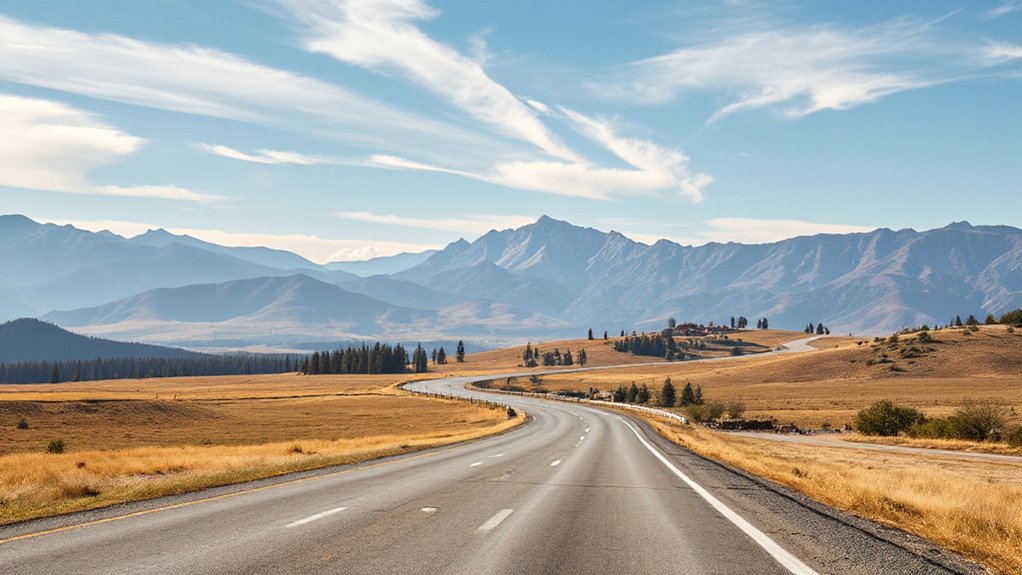
Stretching from the pale plains of the Meseta to the forested highlands, these scenic drives rise with every switchback, turning your road trip into a slow-motion panorama. You roll along ribbed hills where stone walls cradle fields, and the air grows cooler as pines crowd the shoulders.
Keep an eye on the map’s tiny towns, where coffee is hot and the chatter is genuine. You’ll pass through highland plateaus that tease with sudden forests and curving horizons.
Stop for Mountain flora along a rocky bend, then press on toward cooler breezes and open skies. If you time it right, you’ll catch Highland festivals with music and laughter echoing off church towers and village squares.
The Andalusian Loop: Deserts, Hills, and Moorish Heritage
The Andalusian Loop sweeps you from sun-baked plains into desert-carved horizons, where the landscape shifts as quickly as your itinerary. You cut through arid scrub and sudden mesas, stopping at windblown ridges for a breath of cool air.
Desert landscapes unfold like pages in a travel diary, each bend revealing a new color—terracotta, ochre, slate. You pace a Moorish heritage trail, tracing whitewashed walls and intricate tilework that hint at centuries of trade and conquest.
In tiny towns, you park, sip strong coffee, and note the rhythm of life. When you reach ancient hilltop villages, your camera isn’t enough; you feel the pulse of history.
Practical routes, fresh viewpoints, and preserved monuments keep your drive precise and memorable.
Galicia to Castilla Y León Detours: Green Rivers to Medieval Towns
From Galicia’s misty valleys, you roll toward Castilla y León along ribbons of green rivers that carve through lush, rolling hills. You follow quiet byways where hedges drip with damp moss, then a sudden hilltop view reveals a river valley sparkling below. You pull over at a bend to dip a toe, note the current, and imagine kayak routes for River adventures tomorrow.
In towns that crumble gracefully from medieval eras, you park, stretch, and trace stone lanes that crumble into plazas. Castles punctuate the skyline, bell towers ringing in your ears as you circle a medieval festival crowd, savoring the feel of history in the air. Your route stitches two regions, one constant: curiosity.
Top Food and Wine Stops: Mercados, Tapas Trails, and Winery Visits
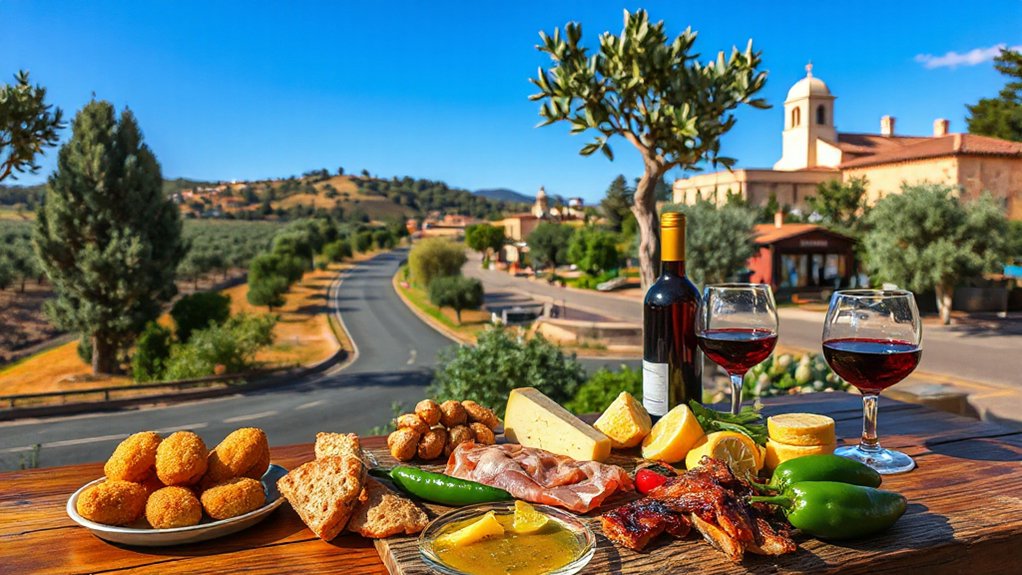
You’ll savor Spain’s flavors as you roll through markets, tapas bars, and sunlit vineyards, starting with a morning at a bustling mercadillo where ribbons of chorizo and wedges of Manchego tempt your hands before you even read the chalkboard specials.
You’ll follow local markets rhythms, sampling olives, tomatoes, and aged cheese as vendors trade stories between bites.
In the afternoon, a tapas trail unfolds: narrow streets, shining counters, and traditional tapas paired with a crisp sherry or a cold beer.
Every stop teaches balance—savory bites with bright wines, gentle sea breeze, and friendly chatter.
End at a winery, where grapes glow in the sun and the tour closes with a tasting that seals the memory.
Practical Tips for a Safe, Smooth Road Trip in Spain
If you want a safe, smooth road trip through Spain, start with quick, practical checks: tire pressure, spare tire, and a triangle or beacon in the trunk; the last thing you need is a roadside surprise halfway to your next market stop. Travel safety and vehicle maintenance aren’t afterthoughts; they’re your confidence on the road.
- Check tire pressure and tread, including the spare, before every long day.
- Pack a compact tool kit, a flashlight, and basic fuses; know your jack points.
- Verify fluids (oil, coolant, washer) and keep an emergency contact plan handy.
With these routines, you’ll glide through humming highways and narrow backroads, focused on scenery, not surprises.
Family-Friendly Routes and Accessibility on the Mainland
You’ll find that accessibility shapes every leg of your trip, from easy-park parking and level sidewalks to clear signage along the routes.
Family-friendly stops line up a pace that keeps kids engaged—playgrounds, kid-friendly museums, and cafes with high chairs and quick service.
When you book, look for easy-access accommodations with elevators, grab-and-go breakfast, and quiet rooms so you can reset between drives.
Accessibility Across Routes
Across the mainland routes, accessibility isn’t an afterthought but a guiding principle you’ll notice from the moment you map a trip to the way signs, ramps, and rest stops fit into your day. You’ll feel the difference as you roll along: clear paths, well-marked detours, and parking that respects you.
Accessible parking spots line visitor lots near elevators and curb cuts, so loading and unloading stays smooth. Wheelchair friendly routes weave through towns with tactile guidance, gentle gradients, and seating every few blocks.
- Clear signage and curb ramps that connect you to the core sights
- Parking near entrances with level access and drop-off zones
- Rest areas with shade, seating, and accessible toilets
Family-Friendly Stops
You’ll notice super-simple find-and-go breaks: shade, restrooms, and playgrounds tucked near midpoints so you don’t lose momentum. In towns with kid-friendly museums, you’ll pause for hands-on exhibits that spark curiosity without derailing plans.
Expect clear signage, smooth pavements, and quiet lanes near scenic viewpoints, so your little explorers can stretch their legs safely.
Pack snacks inspired by local cuisine to keep energy up without long detours. When you pull over, you’ll savor the view together, then hop back in for the next stretch, confident accessibility keeps pace with your curiosity.
Easy-Access Accommodations
Finding easy-access stays along your mainland Spain route means choosing hotels and towns that aren’t just comfortable but thoughtfully navigable—level entrances, wide doorways, and lifts that actually work. You’ll notice how simple it’s to roll from lobby to room, and how nearby plazas invite you to sample local cuisine without hunting for stairs.
- Accessible hotel features: level floors, automatic doors, and elevators that reliably respond to call buttons.
- Friendly neighborhoods with smooth sidewalks, parking close by, and ramps to scenic viewpoints.
- On-site dining and nearby eateries offering gluten-free or kid-friendly dishes, so you can pace meals with naps and adventures.
These choices keep travel calm, let you savor scenery, and make family stops genuinely memorable.
Seasonal Spin-Offs: Best Times to Drive Each Route
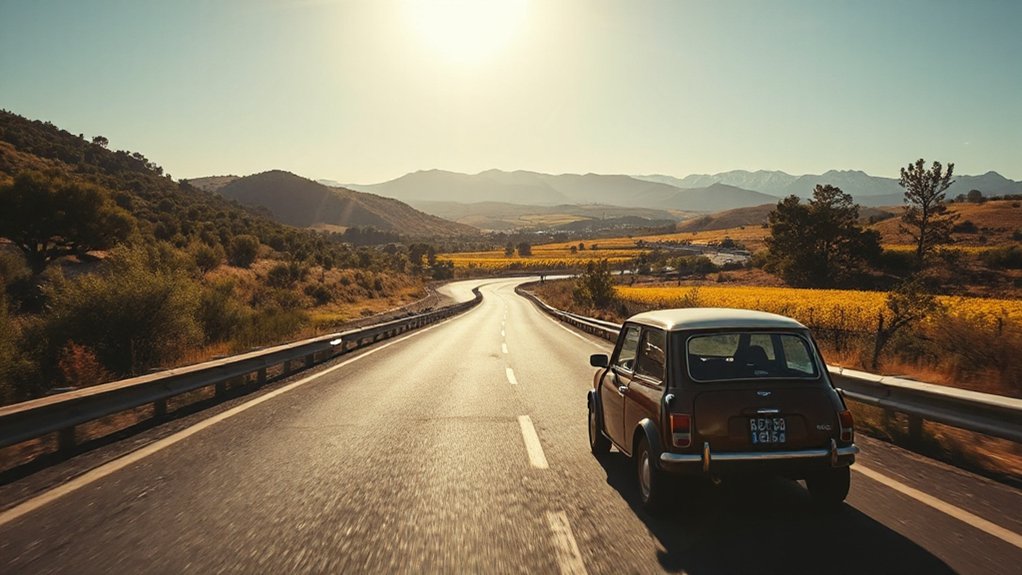
Spring and autumn aren’t just shoulder seasons—they’re where road trips through mainland Spain hit their best weather and lighter crowds. You’ll time routes to catch mild mornings and crisp evenings, letting windows down as you roll past olive groves and whitewashed villages.
For coastal drives, aim for May and late September when sea breeze is gentle and crowds aren’t at peak, so you can linger at scenic viewpoints without jockeying for space.
Inland routes thrive in spring, when wildflowers bloom between red-rock escarpments and terraced vineyards. Seasonal travel guides you to ideal windows—early hours for fog-draped passes, late afternoon for sunset panoramas.
Pack light layers, a sturdy map app, and patience; savor each moment as the landscape unfolds.
Crafting Your Own Extended Spain Road-Trip Itinerary
From those ideal windows you’ve already recognized, you can stitch together an extended Spain road-trip that fits your pace, interests, and time. You’ll map a logical loop, add flexible buffer days, and reserve time for detours to savor Cultural festivals and Local crafts as they arise. Pack light, but leave room for discoveries you didn’t expect.
1) Plot a core corridor first, then branch toward coast, mountains, and hinterlands, balancing city icons with small-town charm.
2) Pair driving days with themed stops—artisan markets, heritage museums, and outdoor scenery—to keep momentum without burnout.
3) Build repeatable modules: chapter, hinge, and return leg, so you can adjust length and timing on the fly.
Frequently Asked Questions
Which Routes Are Best for Autumn Scenery in Spain?
Autumn foliage paints your drive through northern Spain, with dramatic rías and golden valleys. Choose the A6 to Galicia or the N-634 along Cantabrian coast, and savor scenic vistas, winding roads, crisp air, and practical, unforgettable routes.
How Can I Maximize Train-Days With Road Trips?
You maximize train-days by pairing road trips with train travel, prioritizing scenic railways and efficient hops: book early, use overnight routes when possible, mix car segments for flexibility, and plan buffer days for weather changes and stunning scenery.
Are There Safe Driving Practices for Mountain Passes?
Yes—drive cautiously on mountain passes. Stay alert, gradually brake, and use low gears. Winter safety and vehicle preparation matter; check tires, brakes, lights, fluids, and chains. Keep safe distances, don’t rush, and reduce speed for curves.
What Are Hidden Gems off Major Highways?
Hidden beaches and quaint villages await off the highways; you’ll discover secluded coves and winding lanes, where locals share tips, tides lap softly, and you pause to sketch sunlit rocks, taste salt, and savor untouched Iberian charm.
How Do I Balance Driving With Local Festivals?
You’ll time it like clockwork, watchful of festival timings and traffic. You balance driving with Local customs by planning routes around parades, tasting stalls, and rest stops, keeping patience, hydration, and safety your steadfast co-pilots, festival-ready and flexible.
Conclusion
Spain’s mainland road trips aren’t just routes—they’re living stories you drive into. Picture sunlit coasts, medieval plazas, and wind-streaked high plains unfolding with every turn. One bite-sized stat to spark your planning: Spain’s highways carry about 8,000 kilometers of scenic routes just on the mainland, enough to loop you from coast to mountains and back again. Pack light, stay flexible, and let the sound of the road guide you toward unforgettable discoveries. Your adventure starts the moment you steer away.