
You’ll see distinct lifeways: sun-drenched Andalusia centers on communal meals, flexible social time, and intimate patios, while the Basque Country emphasizes disciplined rituals, precise choreography, and robust language culture. Architecture, dress, and light encode work histories and climate; flamenco’s improvisation contrasts with Basque dantzaris’ ritual precision. Music, instruments, and festivals mark memory and resilience in both regions, yet regional trades and myths shape everyday life differently. If you keep exploring, you’ll uncover how place continually reshapes these traditions.
Key Takeaways
- Andalusia emphasizes communal meals, late dining, and vibrant dress, reflecting warm sociality, hospitality, and outdoor, sun-lit aesthetics.
- Basque culture prioritizes ritual precision in dance, formal festival choreography, and structured, durable attire signaling climate and industry.
- Language contrasts: Basque maintains daily life and regional pride with revival efforts, while Spanish influence shapes dialects and hybrid speech.
- Architecture and light: Andalusian patios and arches maximize brightness; Basque interiors favor cooler, wind- and rain-resilient spaces with timber and stone.
- Music and festivals: Flamenco in Andalusia centers on private catharsis and solo presence; Basque festivals emphasize synchronized group performance and communal identity.
Geography Shapes Andalusian and Basque Identity
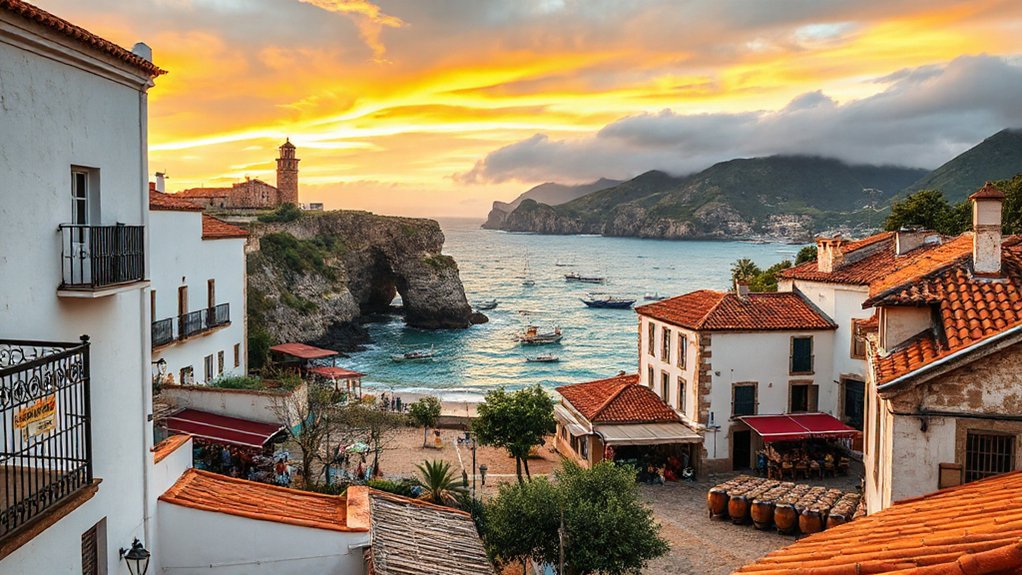
Geography quietly scaffolds both Andalusian and Basque identities, but it does so in distinct registers. You observe the plains and coast shaping outward livelihoods in Andalusia, where agricultural practices mold daily rhythms, seasonal cycles, and social networks around fields, markets, and harvests.
In contrast, the Basque country’s rugged mountains and river valleys channel practices toward vertical terraces, flood management, and small-hold farming, highlighting resilience and adaptation.
You compare how environmental conservation becomes a shared concern yet framed differently: Andalusia emphasizes water use and soil preservation amid irrigation demands, while Basque communities foreground forest stewardship and watershed protection.
Across both regions, geography imposes constraints, but you notice how local knowledge imagines sustainable futures, balancing productivity with ecological limits and intergenerational care.
Language and Dialects: Spanish, Basque, and Beyond
You notice how the Basque language asserts a distinctive foothold in daily life, shaping communal rituals, education, and local governance.
You compare its importance and isolation to the broader Spanish variants, noting how dialect diversity reflects regional histories and social networks.
You also consider how Spanish influence intersects with Basque reaffirmation, hinting at layered multilingual practices beyond a simple binary.
Basque Language Role
What role does language play in shaping Basque identity across Andalusia and the Basque Country itself? You observe how Basque language harmonizes with daily life, education, and regional pride, yet also confronts linguistic spread and policy pressures.
The Basque language persists amid Spanish dominance, while dialect diversity reveals local textures of meaning, memory, and belonging. You compare communities where Basque remains strong to others where it’s a minority, noting how transmission shapes intergenerational identity and social cohesion.
In this analysis, language functions as a cultural index, negotiating modernity with tradition, and signaling regional distinctiveness within a shared national frame.
- Basque language revival efforts link schools, media, and museums
- Dialect diversity shapes local storytelling and communal memory
- Policy debates reveal tensions between standardization and regional variation
- Urbanization tests transmission to younger speakers
Dialect Diversity Notes
Across Andalusia and the Basque Country, dialect diversity braids everyday speech with social belonging, shaping how people sense place, memory, and difference. You observe how everyday talk carries local cues—rhythms, hesitations, and emphases—that signal regional affiliation beyond content.
Dialect nuances reveal how communities curate sound worlds, balancing prestige, solidarity, and mobility. You compare pronunciation variations as living archives: vowels stretched or shortened, consonants softened or affirmed, melody bending to locality.
In markets, schools, and gatherings, speakers switch registers to align with peers or elders, not merely to be correct. You note that even within Spanish and Basque clusters, subregional flares persist, defying uniform categories.
The result is a layered soundscape where identity is performed through voice, tempo, and incremental place-making.
Spanish Influence Variants
Spanish influence leaves its mark not just in vocabulary but in cadence, intonation, and morphosyntax across both Andalusian and Basque-speaking milieus. Where contact zones blur boundaries, speakers borrow patterns, fuse rhythms, and recalibrate prestige. You observe how Spanish influence variants emerge from daily exchange, media, and migration, shaping regional dialects without erasing core identities.
In Andalusia, clipped vowels and lilting syllables contrast with Basque-influenced intonation, yet both reflect hybridized syntax and code-switching that signals belonging. You compare strategies, noting prestige shifts, lexical loans, and phonetic recalibrations as indicators of social positioning.
Spanish influence variants therefore illuminate broader cultural negotiation, linking language, memory, and place within regional dialects.
- Contact-driven phonetic shifts
- Lexical borrowing patterns
- Code-switching as social signal
- Prestige and identity recalibration
Daily Life Across Regions: Food, Dress, and Etiquette
In Andalusia, communal meals often hinge on shared platters and late-taking, while Basque gatherings emphasize precise courses and timed hospitality.
You’ll notice how daily food, dress, and etiquette reveal regional rhythms—open, festive sociality here, formal, structured etiquette there.
Comparing dress codes and dining cues, you’ll see how everyday life encodes deeper values about hospitality, autonomy, and regional identity.
Daily Food Etiquette
- Differences in serving order and rhythm
- Roles at the table and guest inclusion
- Plate presentation and shared dishes
- Contexts for formal versus informal meals
Regional Dress Differences
Across Andalusian and Basque contexts, dress functions as a signal of place, identity, and daily routines, shaping how people are seen and how they see themselves in ordinary settings. You observe regional dress differences as outward markers of regional history, climate, and labor, not mere decoration.
In Andalusia, you note lighter fabrics, flowing silhouettes, and vibrant, sun-soaked patterns that align with social warmth and outdoor work rhythms. In contrast, Basque ensembles emphasize structured garments, durable textiles, and muted tones that reflect mountainous weather and industrial legacies.
You consider traditional textiles as repositories of technique and memory, linking craft communities to prestige and transmission across generations. The comparison reveals dress as a practical, symbolic language, mediating etiquette, gendered expectations, and everyday interactions.
Flamenco and Basque Dantzaris: Distinct Dance Traditions
Flamenco and Basque dantzaris illustrate two regional dance identities that diverge in form, function, and social meaning, yet share a history of collective memory and community performance.
You observe how flamenco uses improvisation, seasoned with intense emotion, while Basque dance emphasizes ritual precision and choreography aligned to communal cycles.
The contrast reveals distinct social roles: intimate, venues-centered expression versus public, festival-facing display.
You note how Flamenco costumes heighten solo presence, color, and stance, whereas Basque festivals frame group cohesion through synchronized movements and communal timing.
Both traditions enact memory, but in different social registers—private catharsis versus public affirmation.
- Compare performance contexts and audience relationships
- Analyze embodied technique and tempo choices
- Link costume signaling to gender and status
- Connect festival timing to regional identity narratives
Regional Music and Instruments Beyond Flamenco
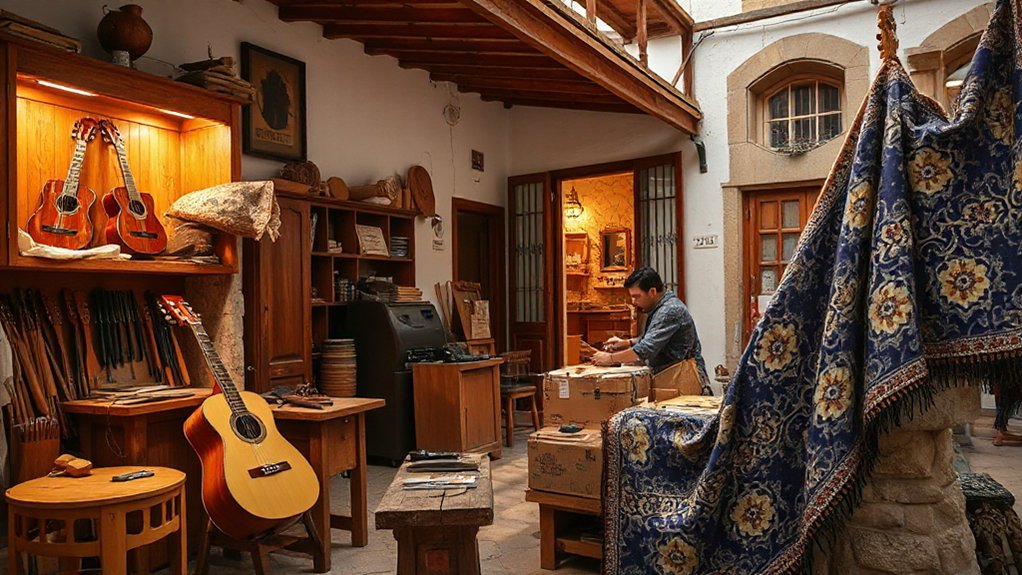
You observe how Andalusia and the Basque Country showcase regional instruments that extend beyond flamenco, highlighting distinct soundscapes and local practices.
In Andalusia, you hear olive-wood flutes and traditional cantú, while Basque traditions foreground txistu and alboka, each shaping social gatherings and ritual moments differently.
Comparing these, you can see how regional contexts—civic spaces, fields, festivals—mediate instrument use, repertoire, and meanings, underscoring broader cultural contrasts.
Regional Instruments Spotlight
Beyond the well-known flamenco repertoire, regional instruments reveal distinct cultural textures in Andalusia and the Basque Country. You observe how, beyond guitars and cantos, wind and string voices encode local histories, economies, and rituals, guiding daily life and communal memory.
In Andalusia, you hear lute-like strums and hand percussion weaving Traditional music with culinary fusion motifs from markets and festivals.
In the Basque Country, brass-driven ensembles and reed tones shape a tighter, sea- and mine-linked soundscape.
You compare functions—ceremonial, festive, work-based—finding contrasting social roles that reveal identity through sound, not stereotype.
1) Andalusian choline-like plucked strings and palm-beaten rhythms
2) Basque txistu and txirula with accompanying tambourine
3) Percussive woodwinds signaling communal work
4) Brass-led bands at festivals and markets
Beyond Flamenco Traditions
Across Andalusia and the Basque Country, music extends beyond flamenco to reveal distinct regional ecologies of sound, labor, and ritual. You listen for how traditional festivals structure time, with drums and chant marking seasonal rounds in Andalusia, and polyphonic song shaping communal memory in the Basque lands.
You compare contexts: in Andalusia, street and plaza performances blend stubborn resistance with festive pragmatism, while Basque ensembles foreground communal ownership and intergenerational transmission. You note the labor embedded in craft—instrument makers, dancers, and teachers—as essential to sound economies.
Folk storytelling threads through both regions, yet follows different routes: Andalusian improvisation and micro-dramas of gypsy life versus Basque sagas embedded in bertsolaritza practice. The contrast clarifies how regional identities persist through sonic practice beyond flamenco.
Tapas to Pintxos: Culinary Profiles by Region
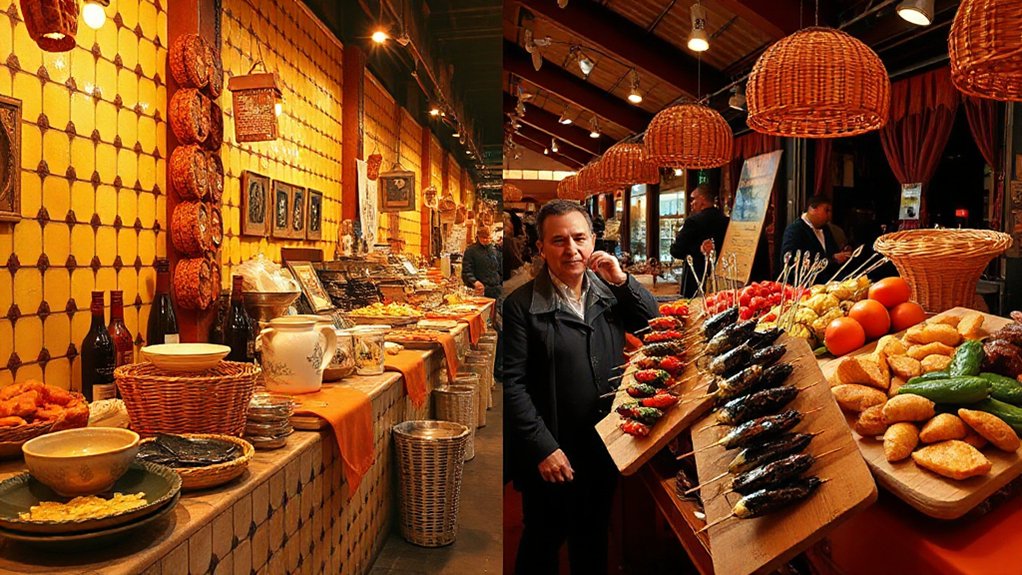
Tapas and pintxos mark a culinary spectrum that mirrors regional identity: tapas reflect social, sunlit Iberia, while pintxos encode urban precision and Basque innovation.
You compare kitchens as mirrors of history, noting how culinary evolution shapes daily meals and how regional flavors shift with markets, migrations, and seasons.
You observe communal eating as an ethnographic clue, where bites reveal values, constraints, and experimentation.
Your analysis stays concise, yet you map differences without judgment, highlighting how tapas prioritize shared plates and accessibility, while pintxos emphasize individual choice and presentation.
The contrast becomes a method for understanding place, not just taste.
- Shared plates versus individualized bites
- Market-driven ingredients and improvisation
- Texture, balance, and spatial display
- Time of day and social function
Festivities and Local Pride in Andalusia and the Basque Country
Festivals in Andalusia and the Basque Country reveal how pride crafts seasonal rhythms, social rituals, and regional identities after mapping distinct culinary paths from tapas to pintxos.
You observe Festive parades weaving through streets, where sound, color, and choreography encode communal memory. In Andalusia, you feel caliente tempos and flamenco-inflected processions that fuse devotion with sociability, creating a shared cadence you can almost taste.
In the Basque Country, you notice disciplined, time-tuned marches and drum lines that frame collective identity around heritage and resilience. You compare how regional pride converts public space into a stage for memory, aspiration, and belonging.
Your analysis highlights divergent modalities of celebration, yet a common drive: culture as ongoing, negotiated performance.
Architecture and Patios: Light, Space, and Industry
You notice how light shapes space differently in Andalusian courtyards and Basque galleries, guiding movement and perception in distinct ways.
Patios act as cultural vessels, hosting social rituals while reflecting regional priorities for shade, airflow, and privacy.
Across these forms, industrial echoes surface in architecture, revealing how material choices and labor histories sculpt both function and identity.
Light and Spatial Dynamics
In Andalusian and Basque settings, light and space shape daily life as much as material form does, but they do so through distinct architectural logics: Andalusian patios amplify interior brightness with shaded courtyards and whitewashed walls that bounce sun inward, while Basque interiors emphasize crisp, vertical light filtered through timber and stone to create cooler, more regulated ambiences.
1) Light contrast governs mood, guiding movement through rooms and courtyards.
2) Spatial perception emerges from proportional cues—heightened arches in the south, narrowing corridors in the north.
3) Material choices modulate visibility, with plaster diffusing glare and slate absorbing excess glare.
4) Thresholds reorganize activity, where outdoor thresholds open to brightness yet preserve introspective space.
This comparison yields nuanced, culturally embedded criteria for evaluating everyday environments.
Patios as Cultural Vessels
Patios in Andalusian and Basque contexts function as cultural vessels where light, space, and labor converge to encode social meaning. You observe how shaded courtyards channel heat and illuminate conversations, shaping daily rituals around doors and wells.
In Andalusian patios, you perceive patio gardens that center seasonal growth, inviting communal care and aesthetic display as a social performance.
By contrast, Basque interiors emphasize compact, enclosed courtyards where wind and rain are tempered by thick walls, signaling resilience and shared provisioning.
You note the materials—Traditional ceramics—used to tile surfaces, reflect regional sensibilities about durability and beauty.
Across both traditions, you detect how architectural choices discipline labor, status, and hospitality, turning intimate spaces into public signs of belonging through sensory and relational tact.
Industrial Echoes in Architecture
Industrial echoes reverberate through architectural practice when patios meet the drumbeat of industrial history: light is harnessed not just for comfort but for throughput, and space is organized to choreograph labor as efficiently as it’s aesthetically legible.
You observe how Andalusian and Basque environments translate industrial heritage into built form, revealing distinct logics of work, care, and containment. The contrast isn’t merely stylistic; it maps governance of time, routine, and material economies.
- Comparative light strategies reveal how windows and skylights signal shifts between production and pause.
- Materiality encodes labor regimes, from clay and tile to steel and concrete.
- Spatial choreography aligns with factory-era efficiency without erasing courtyard memory.
- Patios negotiate visibility, control, and memorialization within industrial echoes.
Religious Life, Rituals, and Seasonal Observances
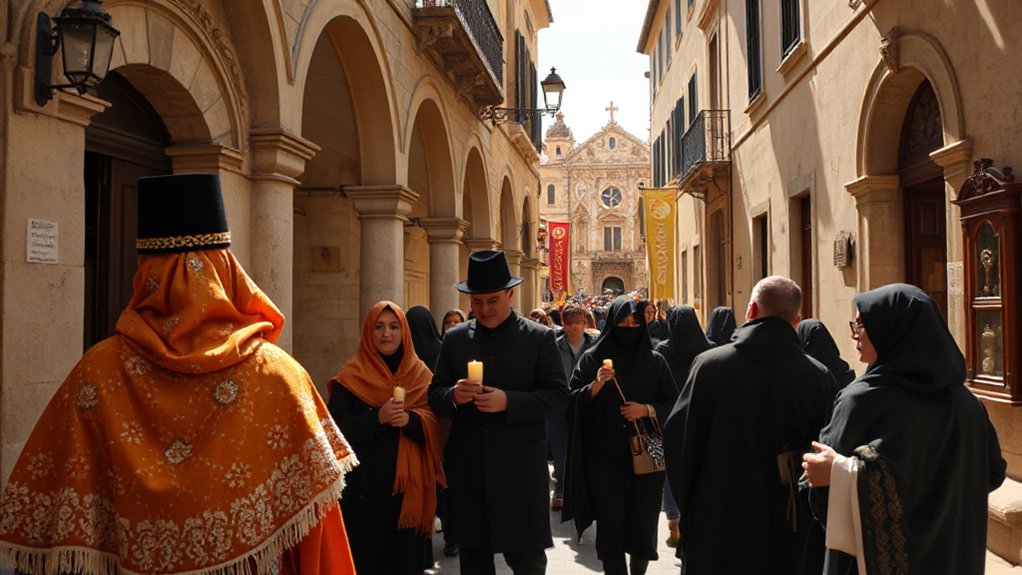
Religious life in Andalusia and the Basque Country reveals sharp contrasts in practice, symbolism, and festival rhythms that illuminate broader regional identities. You observe how Andalusian rituals fuse Catholic devotion with local fiestas, layering processions, flamenco-inflected hymns, and vibrant street altars as community theater.
By contrast, Basque observances emphasize penitential rites, sacred music, and calendar-driven cycles that reinforce linguistic and regional pride. You compare spaces of worship: azulejo-rich churches versus hillside hermitages, noting how architecture frames ritual posture and social belonging.
Religious festivals reveal divergent tempos—improvised street collaborations in Andalusia versus tightly organized, seasonally anchored events in the Basque Country. In both regions, Seasonal prayers anchor yearly calendars, shaping memory, identity, and shared obligation across generations.
Basque Pelota and Regional Games: Traditional Sports
Basque pelota and regional games reveal how sport functions as social ritual and regional signage, weaving collective memory with everyday practice. You observe Basque pelotas shaping communal identity through court rules, players’ routines, and spectators’ chants, revealing how traditional sports encode place and lineage.
The contrast with Andalusian leisure highlights regional games as both competition and dialogue across generations, where practice paths map social status, kinship, and memory. You note that these sports translate history into embodied habit, sustaining continuity while allowing innovation.
The games function as mechanisms of belonging, tension, and negotiation within communities.
- Traditional sports as living archives of regional memory
- Everyday practice structuring social roles in regional games
- Comparative dynamics of rules, spaces, and spectatorship
- Ethnographic insight into sport as cultural signaling
Craftsmanship and Material Culture: From Leather to Iron
Craftsmanship and material culture shape how Andalusian leisure and Basque traditional sports materialize in everyday life, moving beyond the surface of objects to reveal social meaning. You compare leatherworking motifs and ironwork techniques across regions, noting how craft choices encode status, mobility, and gendered labor.
In Andalusia, leather saddles and harnesses blend functional design with aesthetic flourish, signaling cosmopolitan trade routes and leisure alongside pastoral heritage.
In Basque contexts, iron implements, tools, and balling gear emphasize strength, precision, and communal discipline, reflecting industrial proximity and collective practice.
Contemporary fashion and urban graffiti surface these histories, translating old materials into new symbols of belonging and rebellion.
You observe how material constraints shape practice, then ask where tradition ends and innovation begins in everyday play and display.
Folklore, Myth, and Storytelling Traditions
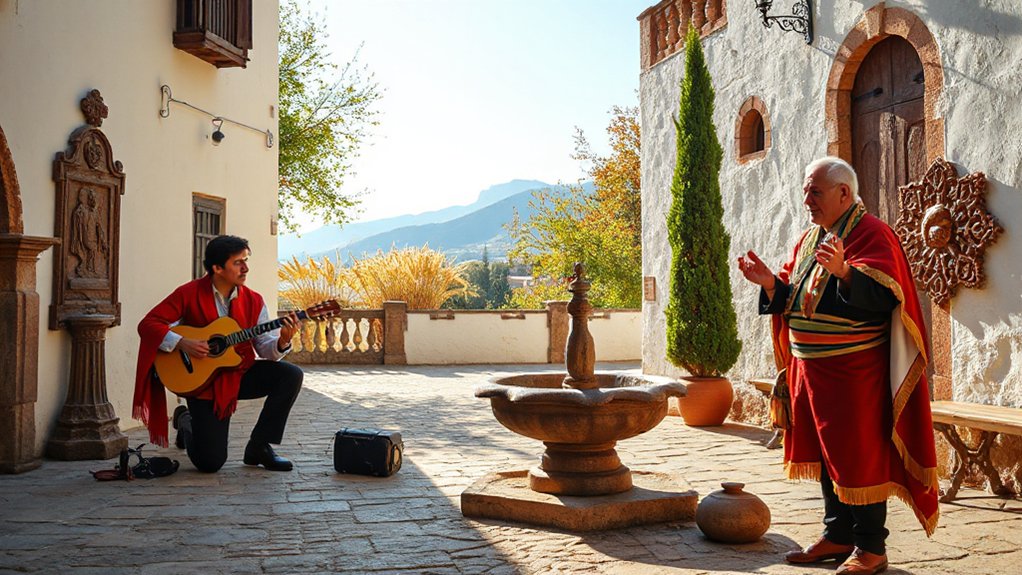
You observe how folklore travels between regions, shaping shared motifs yet bending to local tastes in Andalusia and the Basque Country. Mythic heroes and legends surface differently—regionalized mentors and adversaries that reflect coastal trade routes, mountain refuges, and communal memory.
In storytelling styles, you’ll compare performance, variation, and audience engagement to reveal how both regions cultivate distinctive narratives while remaining legible to each other.
Folklore Exchange Between Regions
While Andalusian and Basque communities have distinct mythologies and storytelling formats, exchanges across regions have shaped a shared repertoire that travels beyond borders. You observe how travelers, traders, and performers carry motifs—songs, rhythms, and motifs—between coastal markets and inland villages, weaving a transregional memory.
Folklore exchange emerges as a dynamic process, not mere reproduction, shaping identities through selective adoption and adaptation. You note how cultural storytelling becomes a dialogue, revealing common concerns about nature, fate, and community cohesion, while preserving local flavor.
The comparison highlights permeability rather than hierarchy, suggesting regional specificity can coexist with mutual influence.
- Motif adaptation across borders and its narrative consequences
- Performance spaces as hubs for intercultural transmission
- Oral archives and traveler-led recollections shaping memory
- Gatekeeping and negotiation in selecting which tales travel
Mythic Heroes And Legends
Across Andalusian and Basque landscapes, mythic heroes and legendary figures function as vivo membranes between local memory and wider storytelling circuits. You map how mythic heroes anchor regional values: Andalusian figures blend Romance-era valor with agricultural pragmatism, while Basque legends center seafaring, wrestling, and geohistorical resilience.
You compare how legendary tales circulate—in plazas, taverns, and festival processions—shaping behavior, obligation, and reciprocal exchange. You note the differential tone: Andalusian narrators emphasize communal harmony and miraculous fortune, Basque storytellers foreground autonomy, endurance, and boundary-pending cunning.
You observe performance as a comparative instrument, tracing how epic motifs migrate, mutate, or resist translation. You conclude that these myths operate less as relics than as living frameworks guiding ethical choices, memory work, and interregional dialogue.
Mythic heroes crystallize regional identities while sustaining transregional resonance.
Storytelling Traditions And Styles
Storytelling in Andalusian and Basque communities operates as a living technique for shaping norms, memory, and identity, not merely a repository of tales. You observe distinct storytelling techniques that encode social expectations, gendered roles, and regional histories, while oral traditions migrate between family circles and public arenas.
In Andalusia, performance emphasizes rhythm, song, and improvisation, aligning with festivals and flamenco-inflected narration.
In the Basque Country, succinct structure and prosaic cadence reinforce collective memory and civic values, often anchored to landscape and past struggles.
You compare contexts, noting how audience participation redirects content toward communal healing or moral reproof.
The contrasts reveal how storytelling styles serve as instruments of identity formation within differing social ecologies.
- Methods and settings shaping récit delivery
- Role of audience interaction in meaning-making
- Interplay of music, voice, and tempo
- Transmission pathways, from family to public memory
Storytelling techniques, Oral traditions
Attire and Garb: Everyday Wear and Festivals
In everyday wear and festival garb, Andalusian and Basque communities present distinct sartorial logics that reveal social values and regional histories; you can see this in how color, cut, and adornment signal belonging and identity.
You move through markets and fields, noting that Andalusian traditional attire leans toward flowing silhouettes and warm palettes, while Basque styles foreground robust cuts and pragmatic layers.
Festival costumes crystallize these contrasts: flamenco-inflected ruffles and mantóns versus danbo-inspired vests and waisted jackets.
Accessories act as social markers, from fans and shawls to berets and belt motifs.
You observe how everyday dress encodes community memory, with color and fabric choices guiding perceptions of authenticity, gender, and regional pride.
The contrast highlights distinct cultural logics behind Traditional attire and Festival costumes.
Social Etiquette and Hospitality Norms
You’ll notice shared hospitality hinges on reciprocity—offspring, elders, and guests fold into a cadence of tea, pinchos, and conversation. Regional cuisine anchors rituals, while Traditional crafts appear in created spaces where hosts curate atmosphere, music, and seating.
You compare how gestures convey respect across contexts, noting how kitchen provenance marks authenticity. You sense how space, time, and ritual converge to sustain belonging in both regions, yet diverge in emphasis: Andalusian sociability versus Basque restraint.
- Greetings and pacing
- Meal timing and offerings
- Space allocation
- Gift exchange
Rural Life to Urban Evolution in Two Regions
Across the two regions, rural lifeways and urban shifts unfold along parallel arcs of constraint and adaptation, revealing how agriculture, craft, and kinship reshape as towns swell and mobility intensifies.
You trace how agricultural practices anchor seasonal cycles in Andalusia’s fields and Basque hinterlands, yet signals of urban demand pull you toward market towns and port economies.
In both regions, traditional crafts migrate from household to workshop, redefining labor division as migration accelerates.
Kinship networks recalibrate—fathers and daughters navigate land tenure, apprenticeships, and cooperative labor—while local knowledge interfaces with formalized trade.
You compare governance, service access, and schooling to assess how rural viability sustains or undermines urban growth.
The contrast illuminates regional strategies for sustaining cultural continuity amid rapid change.
Economic Influences on Cultural Practice
Economic forces shape cultural practice in both Andalusia and the Basque Country by linking everyday work to market pressures, state policy, and transregional networks.
You observe how Cultural festivals and Traditional crafts respond to demand, subsidies, and tourism cycles, revealing divergent adaptations without erasing shared pressures.
In Andalusia, you notice improvisation around seasonal work and regional pride shaping festive forms; in the Basque Country, you see formal guilds, protected crafts, and investment in branding guiding practice.
The comparison highlights how economic constraints privilege certain repertoires while marginalizing others, producing distinctive aesthetics and rhythms.
- Market-driven timing reshapes festival calendars and craft production.
- Public support prioritizes emblematic traditions over experimental forms.
- Tourism economies alter performance spaces and labor practices.
- Cross-border networks diffuse techniques while reinforcing local identities.
Interregional Exchange: Trade, Migration, and Blends
Trade networks and migrant movements knit Andalusia and the Basque Country into a shared web of exchange, yet they arrive with distinct textures that shape daily practice. You trace how merchants, sailors, and artisans cross borders, linking markets, kitchens, and workshops.
Interregional cuisine emerges as a conversation rather than a catalog, blending olive oil with pimentón and anchovy, yet preserving signature techniques that signal belonging. Migration patterns reveal shifting loyalties and dependencies: seasonal labor, urban circuits, and rural persistence.
You compare how culinary repertoires travel, season, and settle, highlighting selective adoption over wholesale replacement. Although both regions trade crafts, you note divergent governance of space and ritual—markets, ports, and feasts—that condition reciprocity, memory, and taste.
The exchange is continuous, textured, and, at times, uneven.
Modern Expressions: How Andalusia and the Basque Country Adapt Today
In the present moment, Andalusia and the Basque Country embody living contrasts and shared adaptations as they respond to contemporary pressures—economic shifts, migration, tourism, and cultural policy—without losing distinctive textures of place.
You observe how contemporary art and Modern architecture become venues for documenting and shaping these changes, while keeping regional sensibilities intact. The Basque scene foregrounds innovation within identity, blending industrial memory with experimental forms.
Andalusia leverages light, heat, and craft to reframe public spaces. You compare how communities curate repertoires that are both global and local, negotiating heritage, regulation, and community needs.
The result is a dual logic: export-ready modernity anchored in place, and a cultivated pluralism that resists homogenization.
- Contested urban spaces and new galleries
- Public commissions integrating vernacular motifs
- Heritage adaptation in housing and studios
- Cross-border collaborations in festivals and residencies
Travel Tips: Best Times to Experience Each Tradition
If you’re planning to experience Andalusian and Basque traditions at their freshest, aim for distinct seasonal windows that reveal how place and practice breathe together. In Andalusia, spring fairs pulse with cooking techniques that highlight citrus, olive oil, and open-fire methods, while Basque towns glow in late autumn, when markets stock peak produce and communal cooking links families to coast and hillside.
You’ll notice contrasts in pace: Andalusian outdoor gatherings feel sun-warmed and expansive; Basque celebrations are tighter, ritualized, and rhythm-driven. For crafts, seek Basque trinkets during festival weeks, and Andalusian ceramic studios opening to the public in spring.
Travel tips center on timing: join harvests, watch performances, and participate briefly in workshops. Cooking techniques, traditional crafts illuminate each tradition’s core when experienced seasonally.
Preserving Heritage: Challenges and Opportunities
Preserving heritage in both Andalusian and Basque communities faces a shared tension: the pull of modernization versus the need to safeguard traditional practices. You observe how communities negotiate identity with institutions, markets, and migration, revealing everyday strategies for cultural continuity.
In Andalusia, craft guilds, oral storytelling, and festivals anchor memory; in the Basque Country, language revival and museumization frame preservation as pride and policy. The challenge is balancing access, funding, and authenticity, while opportunities emerge through participatory stewardship and intercultural exchange.
You compare outcomes, noting that heritage conservation relies on local agency and supportive governance. Cultural heritage preservation becomes a collaborative project, not a static archive, as both regions adapt to global flows without erasing difference.
- Community-led planning
- Public–private partnerships
- Documentation and digitization
- Cross-regional exchange
Frequently Asked Questions
How Do Andalusian and Basque Festivals Differ Culturally?
Andalusian and Basque festivals differ culturally in attire and influences: you’ll notice Traditional attire shaping celebrations, while Religious influences guide rituals. You compare regional rites, noting flamenco spontaneity versus Basque communal dances, highlighting social values and festival governance.
Which Regional Dances Symbolize Each Area’s Identity?
Indeed, you’ll see flamenco-inspired dances and jota-influenced steps symbolize Andalusia, while Basque dances mirror identity through bertsolari-led, ezpata-adarrak movements; Folk costumes and Traditional music anchor both, yet differ in rhythm, formality, and community participation.
How Do Language Policies Shape Regional Traditions?
Language policies shape regional traditions by shaping language use in schooling, media, and festivals, influencing symbols and expressions you encounter. You observe language preservation efforts, policy impacts, and compare how communities negotiate identity through spoken and performative practices.
What Role Does Gastronomy Play in Regional Pride?
You recognize gastronomy as a source of regional pride, aligning culinary heritage with community memory, and you compare how Food symbolism shapes identity, ritual, and belonging across Andalusian and Basque cuisines, revealing nuanced cultural loyalties through everyday eating.
How Have Migration and Exchange Influenced Current Practices?
Migration patterns shape today’s practices as you compare communities, and you feel cultural exchange weaving shared tastes and methods like threads in a tapestry, guiding you to analyze similarities and differences across Andalusian and Basque scenes.
Conclusion
You witness both sunlit courtyards and misty mountains, where Andalusia’s warmth meets the Basque country’s reserve. You compare flamenco’s crimson passion with dantzaris’ stoic precision, noticing how language shapes memory—castilian ease against Basque persistence. You feel daily life braided with food, dress, and etiquette, yet you sense modern currents tugging at tradition. In juxtaposition, heritage thrives not as uniformity but as dialogue, blending and clashing, teaching you that identity persists through difference and adaptation.