
Tapas hopping isn’t just bar-hopping; it’s a rhythm of shared plates, quick sips, and lively convo that pulls you into a neighborhood’s heartbeat. Start with small bites to gauge energy, pace rounds, and let plates cue pauses for chats. Seek bars with regulars and chalkboard menus, steer clear of glossy traps, and mingle with locals. Read the room: listen more, speak warmly, and signal endings with a last, communal bite. Stay curious, and you’ll uncover deeper local vibes as you go.
Key Takeaways
- Tapas hopping is about mingling over small plates; focus on textures, aromas, and shared conversations, not just drinks.
- Pace your night: order nearby, share openly, and let plates cue pauses for stories to unfold.
- Seek authentic bars with regulars and rotating tapas; avoid glossy fronts and scripted menus.
- Use last bites and smart drink pairings to signal the table you’re winding down with grace.
- Plan routes, compare value (pint sizes, happy hours, combos), and learn a few local phrases to navigate like a local.
Understand What Tapas Hopping Means to Locals
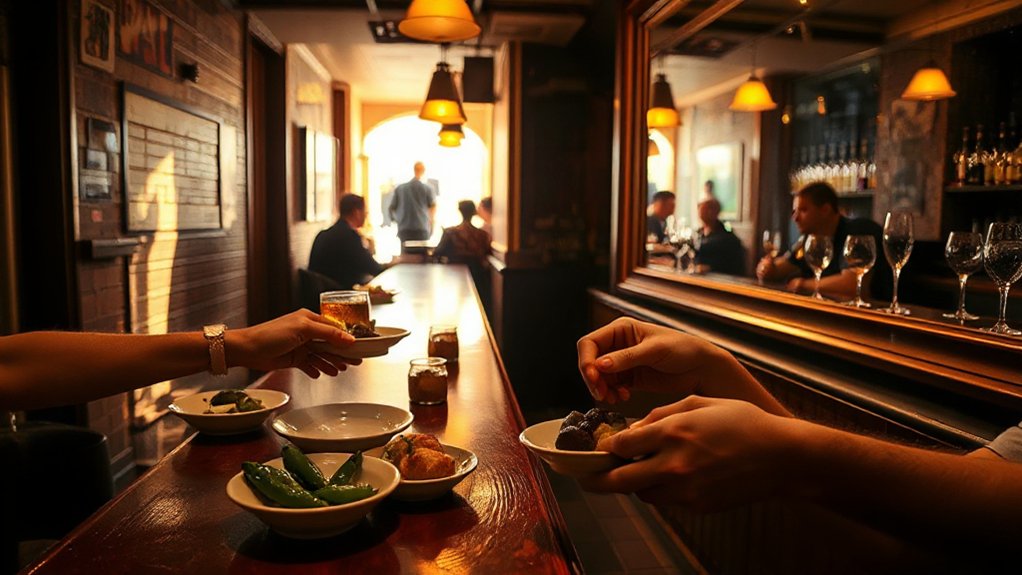
Tapas hopping isn’t just bar-hopping; it’s a rhythm locals feel—the sequence of small plates, quick sips, and conversations that ping from one spot to the next.
You discover what it means by watching how locals mingle, share bites, and drift between bars before the night settles. Focus on the texture of each plate, the way aromas rise, the clink of glasses, and the halting laughter that marks a moment of connection.
This isn’t only about food; it’s about local traditions shaping how people move, unwind, and belong. The cultural significance lives in the timing, in choosing where to linger, and in the stories traded with every bite.
Embrace the cadence, respect the rituals, and you’ll read the city’s heartbeat.
Pace Your Night: Order, Share, and Time It Well
If you want to keep the night flowing, pace matters as much as place. You’ll read the room, not just the menu, balancing bites with conversation. Order nearby, share openly, and let plates cue pauses—not a sprint.
Start with small items to gauge portions and energy, then ride the rhythm of the table: pass, taste, and pair drinks to extend the experience. Timing matters: allow a moment between rounds, so flavors settle and stories start.
Cultural origins influence how generously hosts behave and how much you’re expected to contribute; embrace the generous spirit. Regional variations show up in pacing and plate size, so adapt: quick sips in one city, lingering in another.
Be observant, purposeful, and respectful of the table’s tempo.
Find Friendly Bars and Avoid Tourist Traps
To find bars that feel genuinely local, wander beyond the glossy fronts and listen for the hum of regulars: a chalkboard menu, a crowded counter, or a host who flashes a confident smile.
You’ll spot the telltale signs of local pride in the way staff greet people, not just tourists. Choose places with steady chatter, a rotating tapas board, and a quick, friendly bar vibe.
Ignore glossy photos and scripted menus; seek authenticity in conversations, not kismet drink asks.
Embrace local bar customs: share plates, time your order with the table’s pace, and mingle with neighbors. You’ll get true flavors and a sense of place, not a staged scene.
Authentic tapas tastes sharper when earned, not bought.
Master Tapas Etiquette: Last Bites, Drinks, and Conversation
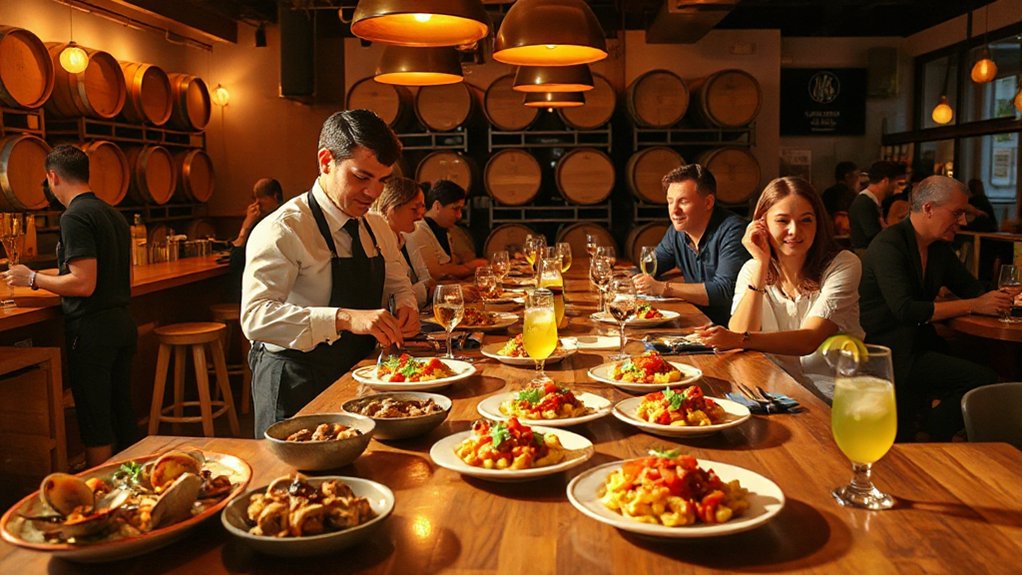
As you pace the bar, nail the last bites by choosing small plates that invite sharing, and keep your plate near your hand so you can signal when you’re done.
Pair drinks with bites that complement and, when in doubt, ask the server for a quick cue—tart, smoky, or crisp—that keeps the rhythm of the table.
Read the room in conversation: listen more, speak with warmth, and steer chatter to topics that keep the group moving, not clashing.
Last Bite Etiquette
Last bites cap the night with intention: you dip in when the table settles into a comfortable rhythm, and read the room for cues—shared plates slowing, murmurs softening, eyes lingering on the remaining tapas.
The last bite isn’t victory, it’s curation. Pick one dish that feels like a finishing touch, ideally something communal to signal closeness without hogging flavors. If you’re hosting, offer a brief invite: “Shall we share one more?” If you’re joining, read the table’s tempo and decline or agree with a light nod.
Use utensil etiquette to prevent clutter—return forks to the center, plates to the edge. End with a smile, a toast, and a plan for the next visit. Last bite signals conclusion, not fatigue, a graceful finish.
Drink Pairing Cues
Drinks cue up the mood as deftly as bites do, so read the room before you pour. You’ll notice how a crisp white freshens a sardine-tanned bite, or how a mellow red steadies the smoky edge of chorizo.
When you pair, aim for flavor harmony: balance acidity with citrusy notes, or mirror spice with a touch of sweetness. In practice, offer one wine option per round, then a second pairing for the house specialties so guests can compare.
Consider regional pairings if the tapas lean traditional, steering toward crowd-pleasing contrasts rather than overpowering profiles. Remember: pairing wines isn’t about a perfect match, it’s about elevating flavors and mood, guiding pauses, and inviting shared bites to linger.
Conversation Etiquette Tips
Conversation etiquette at a tapas bar is about reading the room and guiding the tempo, not hogging attention. You keep pace with the table, letting voices rise and fall naturally as plates arrive.
Favor short, vivid remarks over long monologues, and listen for pauses that invite others in. Mix casual conversation with attentive nods, so everyone feels included, and steer away from topics that shut down discussion.
When you joke, keep it light and warm to invite friendly banter without crossing lines. You’ll notice the rhythm shifts with shared bites, and that’s your cue to rotate stories and cheers with the group.
- Read the room and match tempo for inclusive dialogue
- Share brief, sensory observations to spark casual conversation
- Favor light, friendly banter over heated topics
- Invite others in with open-ended questions and smiles
Navigate Neighborhoods: Routes, Prices, and Phrases
Exploring tapas neighborhoods isn’t about wandering aimlessly; it’s about mapping lively routes, spotting smart price points, and learning quick phrases that open doors to bars with real character. You’ll chart main corridors first, then detour toward streets where locals linger—the heartbeat of any quarter.
Compare pint sizes, happy-hour windows, and tapa combos to gauge value without chasing hype. Dress codes, opening times, and payment quirks vary by block, so stay adaptable.
Learn short phrases to ask for recommendations, nearby specials, or a seat at the bar; it earns trust fast. Local customs matter: nods, small talk, and quiet confidence unlock neighborhood secrets.
With practiced routes and mindful bargaining, you navigate like a local, not a tourist.
Draft a Practical Tapas Night Plan: Sample Itineraries
Plan a practical tapas night by mapping a short, looping route that hits a couple of neighborhoods and a couple of bars with strong value. You’ll sample Tapas traditions while chasing regional flavors, keeping pace steady and savoring each bite, sip, and street sound. Move with purpose: small plates, shared plates, and smart timings to avoid fatigue.
Choose routes that minimize backtracking, and pick bars that plate fast, refresh at the curb, and invite conversation. Let sensory cues guide you—smoke, citrus, olive oil, chalky wine—so the night feels alive, not predictable.
End with a light dessert or coffee to reset your palate and recall the highlights.
- Plan a tight loop: two neighborhoods, two bars, one stop for a signature bite
- Balance value and quality with quick servings and friendly staff
- Time it to catch happy hours for better pricing
- Note flavors you loved to guide future tapas nights
Frequently Asked Questions
What Should I Tip at Tapas Bars in Spain?
In Spain, tip about 5-10% if service isn’t included, or round up your bill. Consider Tapas presentation and Tapas pairing, praising standout bites. You’ll share tips gracefully, tasting textures, aromas, and optimizing your sensory, practical guidance.
How Do I Judge if a Bar Serves Truly Local Tapas?
Like a window into a kitchen, you can tell a bar serves true local tapas by sniffing and tasting: Authentic flavors, Local ingredients, seasonal prep, and menus that spotlight nearby producers. You’ll notice honest, simple, savored craftsmanship.
Are There Regional Differences in Tapas Etiquette?
Yes, there are regional differences in tapas etiquette. You’ll notice regional flavor shaping portions and pacing; expect tapas variations in sharing, ordering, and seating etiquette, plus surprises in ingredients, portions, and wine pairings, guiding you through lively local rituals.
How Late Do Tapas Bars Typically Stay Open?
Tapas bars stay open late, often past midnight in cities, with late night traditions shaping the bar crowd dynamics you’ll notice. You’ll sense sizzling plates, mingling chatter, and practical guidance as you gauge when crowds thin and doors close.
Is Drinking Wine or Beer Better for Tapas Hopping?
Wine pairing shines for richer tapas, while beer selection boosts briny bites; you’ll savor more contrast with wine, but opt for beer on bar-hopping nights when you crave refreshment and easy matches.
Conclusion
You learn to savor a night, not rush it. Let the aroma pull you from bar to bar, pausing to share bites and stories. A good stat to drop: in Madrid, over 60% of tapas meals are shared, not eaten solo, which keeps conversations flowing and prices honest. Track time, read the room, and follow local pace—sip, nibble, repeat. Skip the tourist traps, chase the real hum, and walk away with a flavor you can’t Uber, you’ll remember.