
Discover the best cultural experiences across the Spanish islands by wandering old towns that feel like living museums, where Castilian stone, Moorish rhythm, and Catalan brightness shape every corner. Let volcanic art in Lanzarote ignite your senses, sip sea-salted wines from Canary vineyards, and chase Sant Joan fires into intimate local fiests. Slow down with island trails, markets, and craft workshops that fuse history with daily life. There’s more to uncover if you keep exploring beyond the surface.
Key Takeaways
- Explore layered architectural heritage across Castilian, Moorish, and Catalan influences, from whitewashed walls to tiled facades and blue alcoves.
- Follow archaeology walks and coastal ruins revealing Phoenician, Roman, and medieval histories along ship-wharves and terraces.
- Experience coastal fortifications and watchtowers, blending landscape, memory, and seasonal defense heritage.
- Immerse in island music and folk traditions, from ancient chants to modern fusions, with markets, festivals, and community dances.
- Engage in art and creative spaces, from volcanic-inspired crafts and street murals to literary salons and coastal gallery tours.
Mallorca’s Old Town: A Living Open‑Air Museum
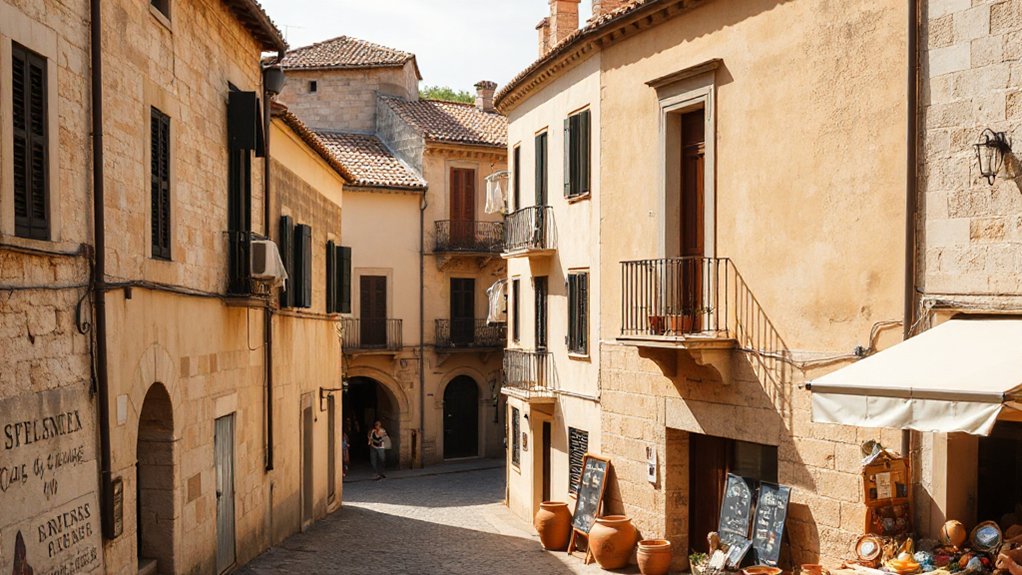
Wandering Mallorca’s Old Town feels like stepping into a living open‑air museum, where stone walls remember centuries of footsteps and café scents drift through narrow lanes. You drift between sunlit courtyards and shuttered balconies, noting how the air tastes of lemon, smoke, and roasted almonds.
In its heartbeat, contemporary dance threads through modern storefronts and intimate galleries, inviting you to witness movement bloom from a centuries‑old backdrop. The architecture hums with a layered history, from gothic arches to Moorish patterns, while street musicians punctuate the day with bright, improvised melodies.
Food stalls whisper of culinary fusion, marrying olive oil and peppers with bold spices. You absorb the blend—timeless stones, fresh energy—and feel the town’s quiet, confident invitation to explore.
Gran Canaria’s Hidden Flamenco Taverns and Music Rooms
Gran Canaria’s backstreets hide intimate flamenco havens where the clink of glasses and the heel-stomp of a dancer echo softly against whitewashed walls. You slip into a dusk-lit room, a guitar sighing while voices weave a Flamenco history that feels centuries old yet urgent tonight.
The air tastes of imported coffee, citrus, and smoky wood; a candle flickers, silhouettes tightening around the dancer’s rapid boots. Small tables cradle shared tapas as you listen to the pulsating rhythm rise and fall, inviting you to feel every ache and joy encoded in the zapateo.
These music venues carry memory as much as sound, offering rare, unpolished moments where culture breathes, confiding, and endures.
Lanzarote’s Volcanic Art and Timeless Traditions
You feel the island’s heartbeat in the scarred lava fields, where volcanic artistry colors everyday life with ember-bright crafts and carved stones.
You sense timeless Lanzarote practices in the rhythm of markets, in handmade pottery, and in the stories stitched into every doorway.
You’ll discover how these traditions fuse with the landscape, shaping a cultural memory you can touch, taste, and carry with you.
Volcanic Artistry Traditions
Lanzarote’s volcanic art emerges where lava once cooled into blackened ribs of the island, shaping a living gallery that invites touch as much as view. You wander into studios where heat memory lingers in the air, and every surface wears a story of eruption and resilience.
The craft blends Volcanic craftsmanship with modern rhythm: you’ll notice textures that echo basalt and ash, surfaces carved by centuries of tides and trade. Local artisans weave Lava inspired textiles, stitching color and restraint into garments, scarves, and wall hangings that feel sun-warmed and sturdy.
Fragrances of mineral dust mingle with resin and citrus, guiding your gaze toward forms inspired by cinder cones and lava tubes. Here, artistry and landscape fuse, teaching reverence through hands-on discovery.
Timeless Lanzarote Practices
From the moment you arrive, timeless Lanzarote reveals itself in the quiet routines that anchor daily life: clay for pottery still pressed by hands that remember wind-carved terraces, nets mended at dawn, and peppers hung to dry against sun-warmed stone.
You sense the island’s rhythm in the scent of mineral earth and salt, in the soft rasp of a potter’s wheel, in the hush between fishermen’s talks.
Lanzarote pottery carries ash-gray memories from lava fields into bright bowls, while Timeless Lanzarote practices bind crafts to daily chores, seasons, and windward skies.
You taste the salt on your lips, feel grit under your nails, and witness a culture that sustains itself through patient repetition and shared, practical artistry.
The island speaks in steady, practiced silence.
Canary Island Wines: From Volcano to Glass
You trace the path from volcanic soil to your glass, tasting how Canary terroir shapes every sip. Breathe in notes of mineral spark and sun-warmed fruit, and sense how the island’s lava fields whisper through each grape.
This is where Volcano to Glass becomes a story of land, climate, and craft, inviting you to explore what makes Canary wines uniquely vibrant.
Volcano to Glass
Beneath Lanzarote’s blackened lava fields, the vineyards wake with steam and salt, where sturdy vines cling to mineral-rich soils forged by ancient eruptions. You stroll between trellises, tasting minerals as ash-buttery droplets cling to your tongue, sensing how volcanic ash shapes flavor, not just scenery.
The winemakers speak softly about patience, about moisture, about time; you listen, absorbing a philosophy born of ash and wind. Cultural misunderstandings melt when you share bread and local blanco, and tourist etiquette—the quiet respect for tiny plots, the pause to sniff, the handover of bottles with two hands—becomes part of the ritual.
You leave with a memory of heat, sea spray, and a glass that speaks of resilience, of volcanic origins becoming everyday sustenance.
Canary Wine Terroir
The Canary wine terroir is a map of contrasts: volcanic ash, limestone, and saline breeze shaping vines that cling to sun-baked slopes. You taste how volcanic terroir infuses you with mineral brightness, a breeze-salted finish that lingers on your tongue.
You wander through terraces where lava rock cradles roots, and you hear the distant hiss of steam still, faintly, in the air. The climate rewards resilience: crisp acidity, delicate aromatic lift, and a surprising depth in each glass.
You learn that Canary wine isn’t just a flavor; it’s a coastline in a bottle—sun, wind, and seed meeting in balance. Here, terroir tells stories of ancient eruptions, modern vineyards, and the people who steward them.
Balearic Festivals: Sant Joan to Local Fiestas
Sant Joan on the Balearic Islands lights up with a crackle of fire and a sense of communal breath, as townsfolk and visitors chase the scent of grilled sardines and the glow of bonfires that echo through narrow streets.
You step into the heat, hear percussion from drums, and feel the night lift with salt and smoke. Sant Joan becomes a map of scent and sound, where old songs rise with the flames and new voices braid into local fiestas.
You sample midnight bites, watch children dart between spark showers, and notice how neighbors greet strangers like kin. These festivals tether tradition to summer, offering intimate rituals, shared prayers for good fortune, and a pulse that smooths the island’s restless edges.
Traditional Markets and Handicrafts Across the Islands
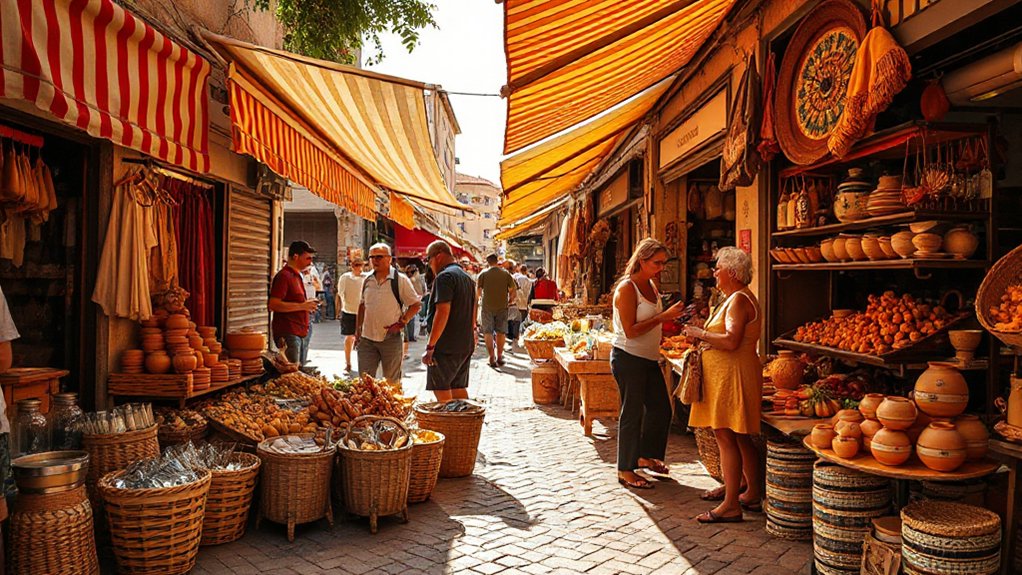
Traditional markets spill color and scent into the streets, where stalls lean into each other like a chorus of colors and voices. You’re invited to touch the textures of an island’s memory—woven baskets, olive oil warm on your skin, citrus bright as a sunrise.
You wander through Local craft markets, where every booth narrates a place, a family, a technique handed down with pride. The sound of looms backstage, the rasp of thread, and the fragrance of saffron mingle with sea spray, inviting curiosity.
You learn Traditional weaving patterns from artisans who measure time in passes of yarn rather than minutes, and you buy keepsakes that carry island heritage, practical yet poetic. Your hands carry stories home.
Architecture Across the Islands: Castilian and Catalan Influences
You wander the island streets and feel Castilian stone meeting Catalan tile in a single breath, a dialogue etched in brick and sun-warmed façades.
You notice how Castilian marks—thick cornices, robust arches—anchor space while Catalan threads—curved balconies, vibrant ceramic accents—soften the skyline into a humming conversation.
You sense an evolving island aesthetic where every corner tells a story of shared histories and living memory.
Castilian Architectural Marks
Across the islands, Castilian architectural marks land like quiet signatures—stone corners worn smooth by centuries, arches that frame light with deliberate restraint, and tiled facades that carry a hushed, sovereign rhythm.
You’ll notice how plain walls hold quiet stories: a doorway carved with simple line, a balcony that trembles with the weight of sun-drenched mornings.
Castilian architecture speaks softly, yet its order compels you to walk slower, to study the textures where plaster meets stone.
Moorish influences linger in rhythm and color—cool courtyards, intricate tile hints, and a preference for shade that cools, even in heat.
This isn’t showiness, but a disciplined lineage you can feel beneath every street crossing and threshold.
Catalan Influence Threads
Catalan threads weave through the islands with a different cadence: brighter plaster, stepped gables catching the light, and a lattice of ironwork that invites a breeze rather than shuts it in.
You’ll notice Catalan architecture shaping corners where sun-warmed walls lean into crooked lanes, and balconies frame sea spray with delicate filigree. Stonework bears smoother curves, and courtyards glow with warm tiles that echo Mediterranean evenings.
The influence crosses into daily life as Catalan cuisine aromas mingle with salt and citrus, offering comforting pairings of almond, olive, and pork.
In markets, you sense a shared craft: precise masonry, measured proportions, and a respect for shade and airflow. You’re tasting culture through texture, geometry, and the quiet persistence of a regional identity.
Island Aesthetic Dialogues
Lantern-lit corners catch the sun and spring to life as Castilian square tiles meet Catalan filigree, a dialogue written in stone and light across the islands.
You walk through courtyards where arches curve like seashells, catching a breeze that mingles salt with citrus.
The architecture speaks in contrasts: robust masonry beside delicate lattice, blunt shadows against luminous courtyards.
You notice how whitewashed walls reflect heat, then reveal cool blue alcoves tucked beneath timber balconies.
Contemporary fashion brushes the scene as locals dress in crisp lines and textured fabrics that echo stone and wood.
Culinary fusion leaks from street markets into plazas, aromas of olives, almond, and saffron pairing with modern bites.
The dialogue persists, shaping a living memory you become part of.
Archaeology Walks: Phoenician to Roman Remains
Beneath the sun-warmed stones along the coastline, Phoenician harbors rumor of traders and routes you can almost hear under your boots; then Roman aqueducts and mosaics rise like memory, telling you how people moved, traded, and claimed these islands as crossroads.
You walk in stepped shadows, smelling salt and old stone, tracing ship-wharf grooves where anchors bit into time.
Archaeology walks thread Ancient crafts with daily life: pottery wheel echoes, bronze fragments, loom weights that stitched community together.
You notice mythical legends etched in terrace walls, as if tides whispered fables to curious minds.
The landscape answers with stratified stories—colonial layers, aims, and losses—guiding you to imagine markets, gods, and the relentless impulse to leave a mark.
Island Music Scenes Through Time
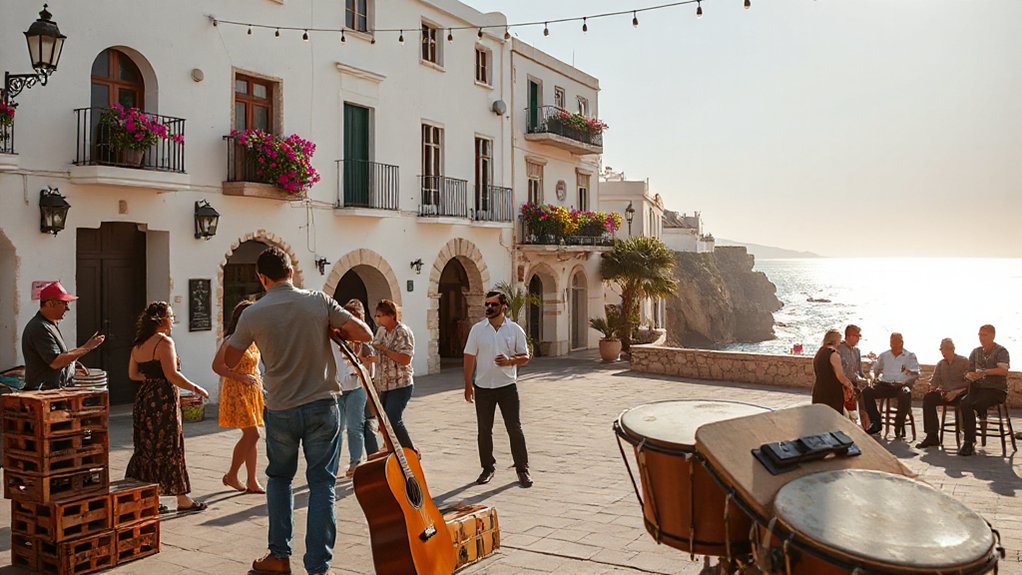
You step from the echo of Phoenician and Roman footsteps into a different rhythm—the island’s music that has carried across centuries like a tide, shaping memory as surely as salt winds shape skin.
You listen as guitars mingle with wind and waves, a lineage threaded through tavern cantos, church choirs, and jubilant street parades.
The scenes shift from ancient chants to modern fusions, yet the pulse remains recognizably local, tethered to place, season, and harvest.
Island music isn’t just sound; it’s cultural preservation in motion, signaling shared stories and trades, rivalries softened by chorus.
You feel the taste of oleander, hear the footwork of dancers, and sense how communities keep time with tradition while inviting new voices into the chorus.
Castles and Fortified Town Trails on the Canary Islands
Medieval fortresses rise with volcanic sturdiness, their towers surveying coastlines where trade routes once sparked and silted. Coastal watchtowers punctuate cliff edges, blinking signals of seasons, storms, and alerts. You sense layers of occupation in the mortar’s rough kiss and in engravings worn soft by time.
The experience blends landscape, legend, and lived memory into a compact, gripping panorama.
Culinary Traditions: Olive Oil, Saffron, and Sea Bounties
Sun-warmed olive groves spill their green gold into every kitchen, where oil is more than a pantry staple—it’s a signal of history, trade winds, and patient hands. You taste olive oil as a memory: sunlit fruit, peppery bite, and a whisper of the earth’s limestone.
In markets, saffron threads shimmer like sunset dust, coaxing aroma into stews and rice with slow, deliberate patience. You sense sea bounty in grilled fish brushed with citrus, a nod to island tides and fishermen’s routines.
The cuisine binds neighbors, legends, and harvests, offering a map of regional pride. You move from stall to stove, savoring lineage in every plate, recognizing how simple ingredients carry centuries of exchange and sea-salted storytelling.
Craft Workshops You Can Join Today
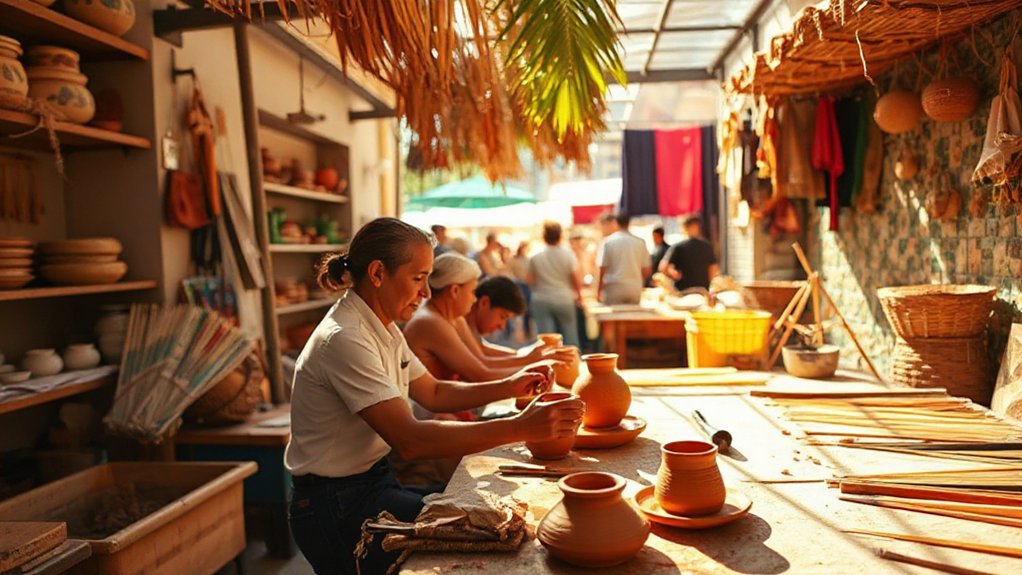
From the scent of citrus zest and grilled fish still lingering in the air, hands-on workshops invite you to swap market chatter for mindful making. You’ll feel the warmth of a kiln, hear the tapping of beads, and notice how textures tell stories of place.
In one studio, you’ll sketch a pattern, then twist fibers into traditional weaving that breathes color and memory. In another, delicate fingers shape tiny bowls or create handmade jewelry, each piece carrying citrus, sea salt, and sun-dried air.
Local artisans share shortcuts and stories, guiding you without rushing you. You leave with more than a souvenir: a skill, a taste of the island’s rhythm, and artifacts that connect you to generations of craft.
Sacred Sites and Pilgrimage Paths on the Islands
Echoes of devotion thread through the islands as you follow winding paths toward ancient shrines and cliffside chapels, where the sea’s breath and the scent of incense mingle in the salt-kissed air.
Sacred sites reveal a layered faith, from hillside hermitages to coastal churches perched above spray. You move along pilgrimage paths carved by generations, markers etched with legends that map inland routes and sea-facing altars.
The rituals are intimate, often communal, with songs, bells, and offerings that temper the rugged landscape. You learn the rhythms of devotion—quiet mornings, shared groans of effort on steep steps, sudden views that reset your pace.
These sacred sites invite reverent reflection as you traverse the islands’ timeless spiritual map.
Island Writers and Their Haunts
You wander Ibiza’s quiet lanes where literary trails whisper of sunlit evenings and ink-stained notebooks.
In the Canary Islands, poets haunt parlors still warm with conversation, chalky walls echoing new verses as fruit and citrus drift through the air.
Mallorca’s writerly hotspots pull you into café corners and cliffside viewpoints, where ideas spark like sea spray and the page keeps pace with the tide.
Literary Trails Of Ibiza
Ibiza’s writers didn’t just stage their scenes among stone walls and salt air; they walked them, letting the island’s pulse—the clang of ferry bells, the hush of coves at dusk—shape every sentence.
- Literary landscapes you can trace along sunlit lanes
- Island narratives whispered in wind-carved doorways
- Cliffside taverns where plots unfolded at twilight
- Hidden courtyards that birthed character and memory
You feel the cadence in every step: a cadence of salt, pine, and sea spray, a memory stitched into cadence. The trails connect page to place, inviting you to listen as if you were part of the story.
You’ll sense how Ibiza’s coastline mediates voice, how harbor squalls sharpen observation, how legend travels from stone to sentence, anchoring memories in present breath.
Canary Island Poets’ Parlors
Can you hear the soft clink of teacups and the murmur of poets gathered where old walls remember centuries of conversations? You step into Canary Island Poets’ Parlors, where candle-glow flickers over ink-stained tables and citrus-scented air laces through open windows.
You sense a living archive in poetry salons, where locals and travelers test lines against warm applause and careful critique. Conversations drift from volcanic landscapes to migrant memories, then settle on modern soundscapes and quiet rebellion.
You notice the rhythm of creaking floorboards aligning with distant waves, the taste of strong coffee, and the hush before a new stanza. These rooms sustain cultural dialogues, turning ramble into resonance and memory into craft.
Mallorca’s Writerly Hotspots
When you wander Mallorca’s writerly hot spots, you’ll feel the island’s pulse in cafés where lemon zest airs mingle with espresso steam and notebooks lie open like unspoken conversations. Here, island writers trade drafts as sea-salt notes drift through the windows.
- Literary cafes that host impromptu readings after sunset
- Quiet courtyards where writers refine prose between waves and wind
- Shared desks at co-working nooks swapping ideas with locals
- Formal writer residencies that shape voices and publishable chapters
These spaces fuse craft with place, offering sensory snapshots of island life. You’ll sense the sea’s rhythm guiding characters, and you’ll notice how writer residencies cultivate discipline. Mallorca’s scenes invite disciplined, intimate sessions, where draft becomes voice and voice becomes memory.
Coastal Folklore and Legend Trails
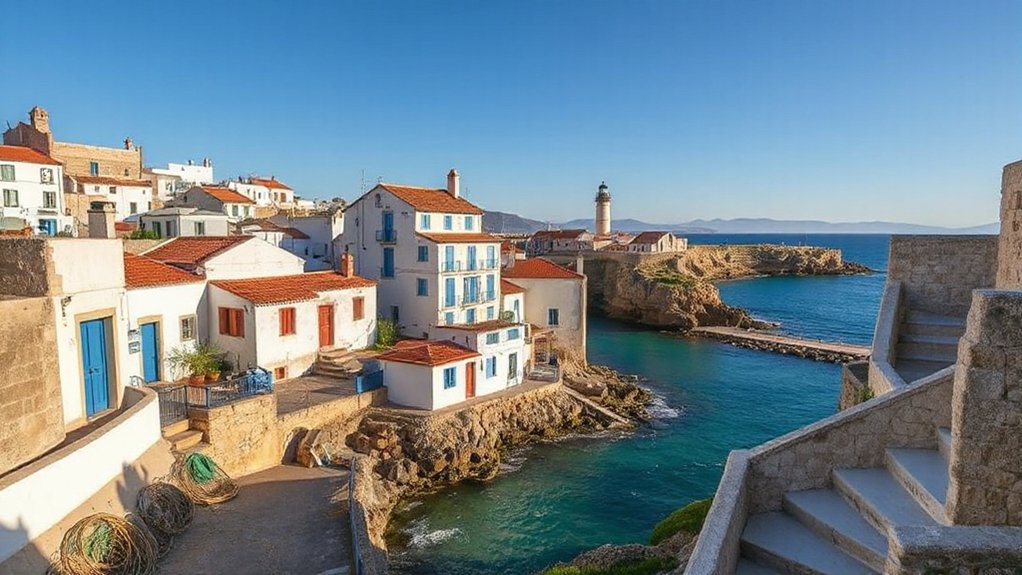
Beneath the salt-kissed breeze, coastal folklore unfurls along the cliffs and coves, where legends rise with the gulls and the tide leaves its imprints on the shoreline. You walk paths where the spray clings to your skin and the air tastes of brine and old tales.
Seaside storytelling threads through rock shelters and lighthouse courtyards, turning weathered legends into living guides. You’ll hear voices in wind-worn inscriptions and shore-swept murals, hinting at ships that vanished and reefs that kept secrets.
Mythical mariners haunt fog-washed coves, guiding you to hidden coves and quiet groves. The coast becomes a classroom: memory, craft, and salt-sweet imagination teaching you to listen beyond the roar of waves.
Island-Style Galleries and Street Art Tours
You’ll be wandering through sun-warmed galleries that capture the island vibe, where white-washed walls glow with color and coastal light paints every stroke.
Guided street-art tours thread you from tucked alleys to harborfront murals, each piece telling a story of community and risk-taking.
From coastal murals to intimate museums, you’ll feel the pulse of the island’s creative heartbeat.
Gallery-Focused Island Vibes
The island’s galleries pulse with a sun-warmed rhythm, where white-washed walls spill into breezy courtyards and street art threads between storefronts like a live map. You step inside, inhale enamel and resin, and feel the solar glow of canvases telling stories you can touch.
Local cuisine colors the air between exhibits, while a nearby window spills coffee steam you chase with your eyes. Traditional dance echoes from a plaza, reminding you that art and ritual share the same heartbeat.
- Walk-and-skim gallery alleys to catch bold murals and intimate studios
- Sip regional coffee as you compare texture, tone, and technique
- Sketch quick studies, then trade feedback with local artists
- Join a pop-up critique mingling with creators, chefs, dancers
Street-Art Guided Journeys
Contemporary murals rise above storefronts, blending salt-wind grit with bright, deliberate shapes that tell centuries of seafaring tales in fresh syntax. You sense the city’s pulse in each alley, from hidden courtyards to sunlit staircases, as you learn which walls welcomed pioneers and which hid in the shadows for safety.
Graffiti workshops invite you to try a tag or stencil, translating vibe into your own visual souvenir without erasing the neighborhood’s grit.
Coastal Murals & Museums
Salt-salted sunlight slides over brick and limestone as you move from alleyways of painted rebellion to the open-air galleries that line the coast. Coastal Murals & Museums invites you to trace stories sprayed in color, feel the spray’s mist, and hear the surf rhythm below.
You’ll compare coastal murals with quiet museum exhibits, tasting sea breeze as you listen to guides weave local memory into every stroke.
- Follow a coastal mural circuit that doubles as a museum exhibit map
- Hear curators describe spray techniques and island history
- Stop at cliff-edge viewpoints that frame murals with the sea
- Return to galleries for intimate, ashore conversations about artists
This blend of street art and museum culture anchors your senses in place.
Slow Travel Itineraries for Immersive Culture
Slow travel through the Spanish islands invites you to linger where time softens: a morning chalky light on a quarry-blue sea, a market stall perfumed with citrus and grilled sardines, a conversation that unfurls over a cerulean cup of coffee. You chart a rhythm of days that blends hillside markets, quiet coves, and sunset tapas, letting local life unfold without hurry.
Each stop reveals local culinary traditions that’s less about hurry and more about listening: the sizzle of paella, the hush of a baker’s oven, the crackle of shellfish on a grill. You’ll join artisan craft workshops, learning hands-on patience as you shape clay, weave wicker, or carve wood, leaving with a memory you carried home.
Practical Guide: Planning Cultural Events and Local Etiquette
Planning a cultural event on the Spanish islands means reading the room—from the sea breeze that nudges banners to the way locals pause for a mid-day coffee. You’ll sense rhythms before schedules, shaping details with respect and intention. Let the moment guide your plan and you’ll earn trust.
1) Scout venues at dawn, noting acoustics, air, and nearby aroma of local cuisine.
2) Align performances with community calendars, weaving traditional dances into the program.
3) Respect meal times and quiet hours, signaling with a simple, local greeting.
4) Invite local organizers for co-curation, ensuring authenticity and shared ownership.
A well-timed invitation becomes a memory, a sensory thread tying guests to place.
Language and Daily Life: Building a Deeper Connection
Language and daily life on the Spanish islands isn’t just about words; it’s about how people listen, respond, and pace their days. You’ll feel conversations bloom over coffee, a warm pause before a decision, a nod that invites trust.
You navigate language barriers by watching gestures, timing, and the unspoken wink that seals understanding. In markets and plazas, you tune your pace to the rhythm of locals, letting errands unfold with subtle breaks for laughter and light.
Daily routines reveal culture in small rituals: a doorstep hello, a door-left-open moment for generosity, a street-side chat that stretches into memory. With sensitivity, you gather meaning beyond vocabulary, translating tone, intent, and warmth into connection.
Why These Islands Are Worth Slowing Down For
These islands invite you to press pause and feel the pace shift from rush to rhythm, where every corner hums with a quiet invitation to linger. You’ll sense time slow as landscapes, flavors, and voices blend, inviting you to notice what sustains them: people, land, and watchful wildlife. The appeal isn’t merely scenery; it’s a curriculum of presence, where small moments teach big truths about life here.
- Wildlife conservation meets local life in shared, patient efforts that shape protected coastlines and thriving seabird colonies.
- Culinary fusion tastes that bridge generations, from sea-salted tapas to saffron-scented bites, echoing centuries of exchange.
- Slow travel rituals—siestas, markets, and twilight walks—lengthen your attention and deepen memory.
- Craft traditions remind you to value skills woven through generations, not rushed, flashy experiences.
Frequently Asked Questions
How to Time Visits for Regional Festivals Across the Islands?
Trust the cultural calendar and plan around seasonal rhythms; you’ll catch Festivals timing peaks, savoring local flavors, music, and parades. Track museum notices, ask locals, and pace your island visits to rhythm with festival pulses.
Which Neighborhoods Preserve Authentic Cultural Vibes Today?
You’ll find neighborhoods preserving authentic vibes, where Historical landmarks loom and Traditional music drifts through narrow lanes, inviting you to taste local life, hear distant drums, touch sun-warmed stones, and feel generations whispering stories in your ears.
What Local Etiquette Surprises Travelers Most?
You’ll be surprised when etiquette appears as you least expect, a coincidence guiding you toward respect for local dress codes and traditional music. You sense the rhythm, adjust your steps, and let hospitality wrap you in its warmth.
Where to Find Hidden Craft Markets and Workshops?
You’ll find hidden markets tucked into old barrios and coastal alleys, where a local artisan greets you with warm glass and warm bread. Follow faded signs, listen for distant drums, and let the fragrance guide your wandering feet.
How to Sample Authentic Island Cuisine Responsibly?
To sample authentic island cuisine responsibly, you prioritize traditional cooking and sustainable dining by choosing seasonal ingredients, supporting local farms, and dining with mindful portions; savor aromas, textures, and stories while reducing waste and respecting island heritage.
Conclusion
You’ll find culture not as a checklist, but as a heartbeat pulsing beneath stone, sun, and salt. Let the old town’s alleys whisper ancient stories, the flamenco’s heat braid with the wind, volcanic art hum with the island’s pulse, and every glass of wine map a journey from lava to life. Slow your steps, listen for the unspoken rituals, and you’ll realize the islands don’t just exist—they invite you to belong, even if only for a breath.