
Plan kid-friendly goals before you go, pack a ready-onboard toolkit, and mix learning with play and quiet time. Use age-appropriate aims like spotting landmarks, doodling, or solving puzzles, tied to calm routines and snacks in easy-to-reach containers. Create a flexible travel rhythm with short bursts of activity, hands-on crafts, and memory-keeping journals. Turn Spanish scenery into mini-lessons, keep safety and etiquette in mind, and finish with a cozy post-trip recap—you’ll uncover more tricks as you continue.
Key Takeaways
- Plan age-appropriate goals and snacks to maintain mood and reduce fuss during long Spanish train journeys.
- Create flexible routines with calm activities like naming landmarks, quick puzzles, and gentle stretches between stops.
- Use quiet time corners with soft lighting, soothing music, and breathing exercises for resets during travel.
- Pack engaging, screen-free activities: train puzzles, mini games, field journals, and memory-keeping crafts.
- Prepare maps, clocks, and simple Spanish phrases to aid navigation, timing, and communication on longer routes.
Set Age-Driven Goals for Your Train Trip
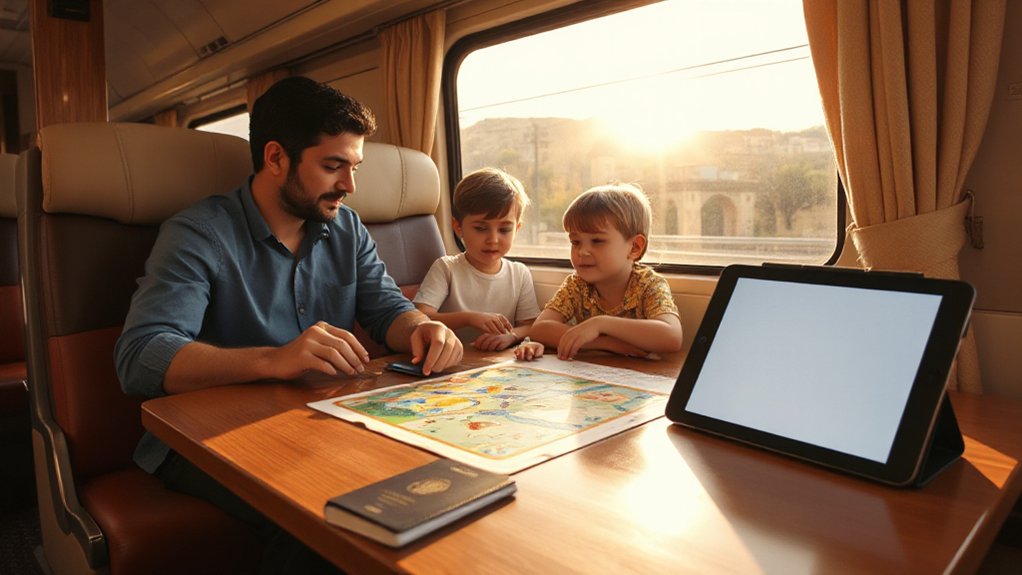
Before you board, set clear, age-appropriate goals for the trip. Start with simple tasks for younger kids and more complex challenges for older travelers.
For every age group, tie goals to practical outcomes: minimal fuss at boarding, steady attention for activities, and safe, polite behavior on trains.
Use measurable targets like finishing a short puzzle, naming three landmarks, or completing a quick drawing.
Plan travel snacks to support energy and mood without constant requests, and arrange them in easy-to-access containers.
Consider seat comfort too: seat cushions, a small pillow, and a footrest can keep kids settled longer.
Review goals with your passengers, adjust as needed, and celebrate progress to keep momentum and reduce stress.
Create a Kid-Friendly On-Board Toolkit
You’ll want a Kid-Friendly On-Board Toolkit ready before you depart, packed with quick, mess-free activities for a long train ride. Think compact drawing pads, sticker books, magnetic games, and a small travel kit of essentials to handle boredom on the move.
This toolkit ties into Long Train Journey Activities by giving you ready-to-use options that fit your child’s pace and your travel schedule.
Kid-Friendly On-Board Toolkit
A kid-friendly on-board toolkit keeps long train journeys smooth by putting engaging, quick-access activities within reach. You’ll curate a compact set that travels light but delivers big engagement, pairing quiet time with shared moments.
Include options that spark Interactive storytelling and musical activities, so imagination can ride along the rails. Think foldable maps, mini notebooks, dice, and a small puzzle book tucked in a travel sleeve.
Label a dedicated section for silence-friendly tasks and a separate one for collaborative games to suit different carriage moods. Use resealable bags to keep items organized and easy to fetch.
Rotate contents after each trip to keep it fresh and prevent boredom.
- Compact drawing set and story prompts
- Quiet puzzle book and geometric tangrams
- Reusable noise-friendly musical toys
- Card games and conversation starters
Long Train Journey Activities
Long train journeys demand a compact toolkit that stays within easy reach and sparks both quiet focus and shared fun. In this section, you’ll assemble practical activities that suit kids of different ages without fuss.
Include Train car puzzles to challenge logic on the move, with simple printables or mini magnetic games that resist crumpling. Add Scenic photo prompts to spark curiosity about landscapes, architecture, and stations, encouraging short discussions during slower stretches.
Pack a small notebook for doodling, jotting new words, or captioning photos you’ve snapped. Bring a compact set of colored pencils and erasers, plus a reusable water bottle to stay hydrated.
Label everything, curb screen time by design, and rotate activities every few carriages to maintain momentum.
Turn Spanish Scenery Into Learning Moments
- Galicia’s coastlines and rías
- Castile’s mesas and wind patterns
- Andalusia’s white villages and flamenco heritage
- Valencia’s citrus farms and festival traditions
Build a Flexible Carry-On Routine for Long Hauls
A flexible carry-on routine isn’t about rigid schedules; it’s about having an adaptable toolkit you can tweak on the fly. First, pack a core set of essentials: a small tray or mat, a few compact activities, and quick-access snacks.
Build in predictable touchpoints, like every two hours, to stretch legs or switch tasks. Stay ready to swap activities if mood shifts; variety prevents restlessness.
Keep Travel snacks within easy reach and portion them to avoid mess, then offer the next small bite when energy dips. When the train slows for Rest stops, use the pause to reset expectations, rehydrate, and rotate seats or snacks.
Document a simple, reusable routine outline so caregivers can quickly adjust on future journeys.
Quick, Quiet Activities for Early-Morning Chatter
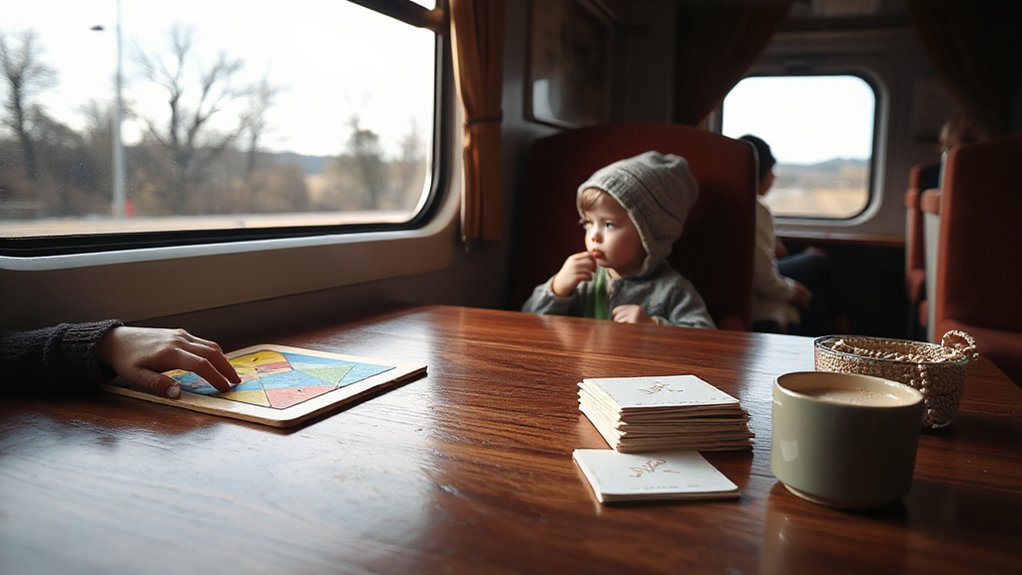
Mornings on the train wake you up with energy, so start with quiet, short tasks that your kids can finish before they’re fully awake.
Try simple, engaging challenges like naming things you see in a window panorama or solving tiny puzzles that fit on a single card. These quick activities keep chatter calm, focused, and ready for the day ahead.
Quiet Morning Activities
Quiet morning hours on a train are perfect for calm, focused activities that ease everyone into the day. You’ll find simple, quiet options that still engage curious minds. Start with gentle routines to prepare bodies and brains, then shift to reflective moments that suit all ages.
Focus on practicality: tasks that require little setup, travel-friendly materials, and minimal mess. Use subtle pacing so chatter stays in check while curiosity stays alive. Pair activities with light, soothing cues like soft music or breathing prompts to maintain a relaxed atmosphere.
By choosing short, repeatable tasks, you create a dependable rhythm for the morning.
- Morning stretches
- Gentle music
- Quiet sketching
- Book-led journeys
Short, Engaging Tasks
Prioritize activities you can do in small bursts: quick word games, spotting contrasts, or mini trivia tied to your destination. Provide clear, single-step prompts and a visible timer to create a sense of progress.
Use music playlists as a gentle backdrop to stimulate focus without crowding conversation. Rotate tasks so no one feels stuck, and keep snack options handy to reset attention between rounds.
End with a quick recap to reinforce learning, then slide into the next activity smoothly.
Short, Reusable Games for Toddlers and Preschoolers
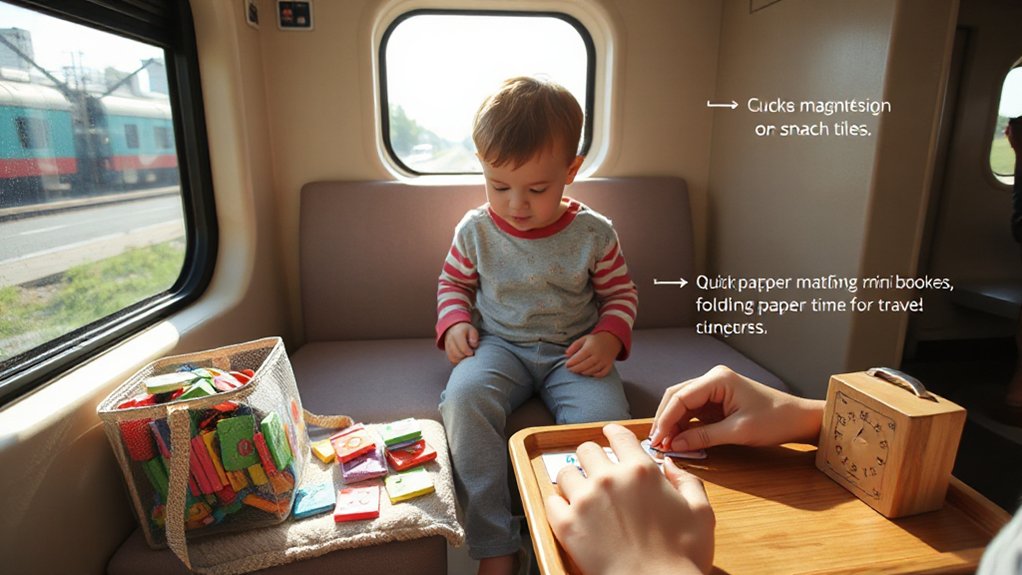
On long train trips, you’ll want quick, repeatable games that spark curiosity without needing a new setup each time. Short, reusable games for toddlers and preschoolers are perfect: they recycle simple ideas with new twists, keeping little minds engaged. Focus on portability and minimal prep, so you can pull them out between meals or while waiting for a stretch of scenery.
Include reusable puzzles and quick songs so you have familiar anchors that still feel fresh. These activities support language, memory, and attention without clutter. Toddler sing alongs, shape hunts, and color calls work well across ages when you adjust difficulty.
- Reusable puzzles for on-the-go play
- Toddler sing alongs that evolve
- Quick mime and sound games
- Color and shape scavenger rounds
Hands-On Projects for School-Age Travelers
School-age travelers can safely switch from quick, repeatable activities to more involved, hands-on projects that fit into travel days. You’ll thrive with projects that blend learning and fun, keeping attention focused without slowing the trip.
Start simple: create a field journal to document sights, sounds, and smells of each stop, then summarize in your own words.
Try interactive storytelling by crafting a short, shared radio-style narration, taking turns with family members to advance the plot.
For cultural immersion, build a photo scavenger hunt featuring local architecture, foods, and crafts, jotting quick notes about significance.
Use materials you already have—paper, pencils, a magnifier, and a small booklet.
Finish with a quick reflection: what surprised you, what would you tell a younger traveler, and why it mattered.
Pre-Trip Planning: Maps, Clocks, and Language Basics
Before you set out, grab a simple map for guiding and mark your key stops to save time on the move.
Use a reliable clock or timer to pace activities and shifts so you stay on schedule.
Learn basic phrases for quick questions and directions to keep the journey smooth and confident for everyone.
Maps For Navigation
Maps are essential for smooth, stress-free travel, so sketch out a simple navigation plan before you depart and keep it handy during the trip. You’ll feel more confident if you know where you’re headed, even when the scenery changes. Use clear Navigation charts and mark Route markers on the map to stay oriented between stations.
- Carry a compact map with major stops, transfer points, and platforms.
- Note exits, stairs, and escalators near each station.
- Highlight fastest routes and backup options.
- Create a kid-friendly labeling system to track progress.
Keep a small, laminated version in a pocket or bag. Refer to it often to minimize questions and keep everyone focused on the journey ahead.
Clocks For Timing
Use clock puzzles to make time-telling a game, not a chore—colored hands or sticker goals help kids stay engaged during progressions.
Timer apps provide quick visual or audible cues for activities, snacks, and quiet reading, so you’re not chasing minutes.
Set clear expectations at the start of each leg, and reuse the same sequence to build rhythm.
Pack a compact analog watch for each seat, plus a digital option for quick checks.
Practice a few timings before departure to avoid last-minute surprises and keep everyone moving smoothly.
Language Basics Prep
You’ve got the travel gears ready, and now it’s time to add language basics that keep conversations smooth on the move. Before you depart, map key phrases to common situations, so you can navigate tickets, meals, and help desks without fuss. A small phrasebook or app saves time, and you’ll gain confidence with practice pauses.
Clocks and time cues help you anticipate schedules across borders, reducing battles over timing. Focus on Language immersion tips you can use on the train, like repeating heard phrases and asking for translations. This boosts Cultural exchange and returns with curious, brave kids who plunge into conversations.
- Essential phrases for dining, boarding, and emergencies
- Simple pronunciation hacks that avoid miscommunication
- Quick questions to clarify schedules and transfers
- Apps and offline backups for on-train usage
Snack Strategies That Delight and Last
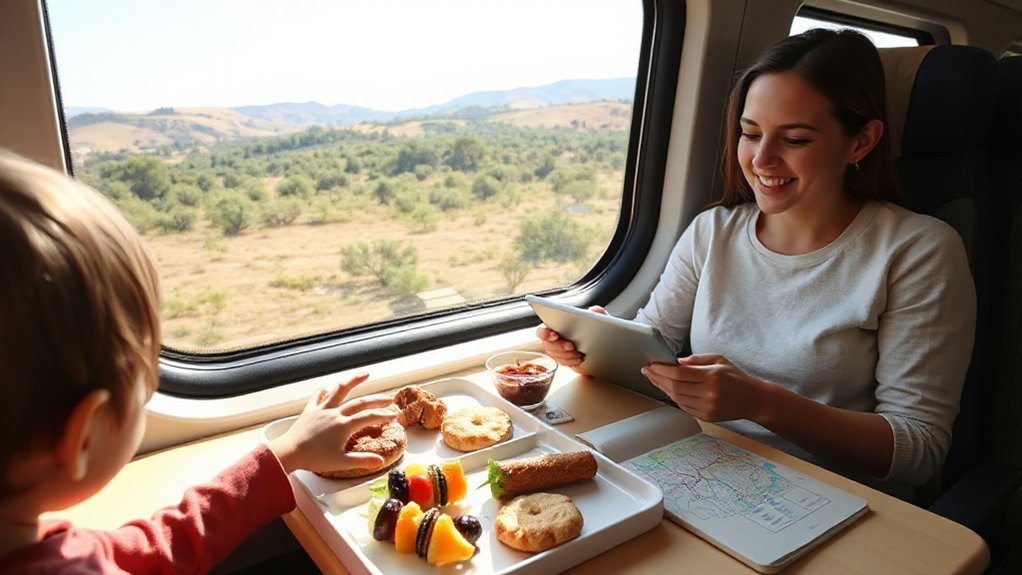
Snack time on long trains doesn’t have to be chaotic. You’ll keep kids focused with simple, well-portioned snacks that travel well and stay fresh.
Aim for Healthy options that satisfy hunger without wrappers everywhere. Pack a small insulated bag with fruit, yogurt tubes, cheese slices, and whole-grain crackers.
Include savory treats like mini sandwiches, hummus cups, and veggie sticks to balance sweeter options.
Plan portions to avoid waste: pair a protein with a fruit, or a carb with a dip.
Reusable containers cut clutter and speed your snack breaks.
Keep a spare napkin, a resealable bag for crumbs, and a small trash bag for cleanup.
Rotate snacks daily to maintain interest and minimize complaints.
Tech Tips to Minimize Screen Fatigue on Rail
To cut screen fatigue on long rail trips, start by balancing device use with outdoor breaks and passive activities. You’ll reduce eye strain by following the 20-20-20 rule: every 20 minutes, look at something 20 feet away for 20 seconds. Dim brightness and enable blue-light filters in the evening to ease your eyes.
Schedule short “digital detox” moments, letting kids focus on conversation, snacks, or a puzzle instead of scrolling. Create “screen free zones” at the table by designating the tray as a non-screen space during meals and games.
- Alternate activities: quick stretches during snack breaks
- Use offline games or e-books to swap in
- Rotate screen time between siblings to share
- Set a family mode for quiet reading and conversation
Conversation Starters Linked to Spanish Regions
Spain’s regions offer a treasure trove of conversation starters that bring the journey to life. You’ll spark curiosity by tying quick prompts to where you’re traveling, making pauses feel natural rather than forced.
Ask about regional cuisine, inviting kids to guess flavors or ingredients from a map. Mention a dish you’re likely to encounter and invite a quick home comparison—what’s similar or different to theirs.
Point out historical landmarks you pass, then invite a kid-friendly mini-quiz: what date or figure is tied to that site?
Use simple comparisons to everyday life, like festivals or sports. Keep questions short and open-ended to avoid dead ends.
These regional prompts keep chatter lively, focused, and fun without getting tedious.
Audio Stories and Narration for Steady Pacing
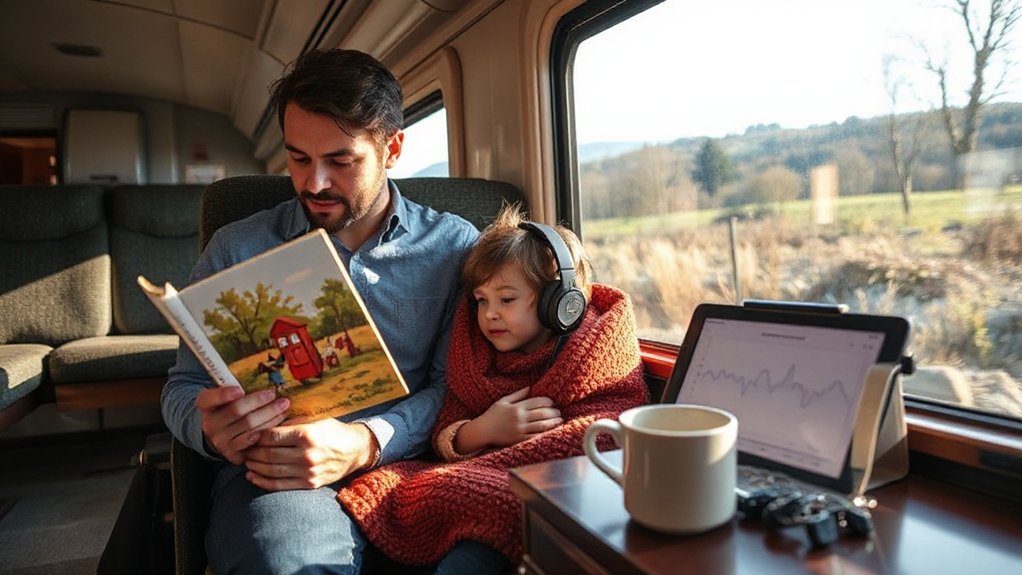
You’ll keep kids engaged by pairing steady pacing with engaging audio narration that guides attention without rushing.
Use voice variety and tone to cue mood shifts, moments of suspense, and calm pauses that help listeners process details.
Add immersive sound design sparingly—ambient sounds or subtle effects can enhance setting without overwhelming the story.
Engaging Audio Narration Pacing
Engaging audio narration keeps kids focused and comfortable during long rides by pacing stories to match the journey. You’ll blend calm narration with gentle rises in tempo during exciting moments, then ease back for shifts. Use short, clear sentences to maintain momentum without overloading attention.
Align pauses with scenery changes—cities, fields, tunnels—so the listening feels like a companion to the bike rack and rails. Practice interactive storytelling by asking questions and inviting kids to predict outcomes, which heightens engagement without rushing the plot.
Employ pacing techniques that balance tension with relief, ensuring steady momentum from start to finish.
- Interactive storytelling prompts that invite listener input
- Varied but controlled tempo to mirror landscape changes
- Short segments with natural, brief pauses
- Clear cues for shifts and climaxes
Voice Variety And Tone
Keep sentences short enough for easy processing while varying emphasis to highlight key moments. Practice tone variation by slightly lifting or lowering your pitch for excitement, curiosity, or suspense, then ease back for calm changes.
Draw listeners in with a steady cadence, avoiding choppy delivery that disrupts flow. Use pauses strategically—short gaps between scenes, longer breaths before a reveal—so attention remains centered.
Align your pacing with the story’s rhythm, not your clock. Consistency matters: maintain clear pronunciation, natural breaths, and authentic emotion to sustain engagement across hours.
Immersive Sound Design Techniques
Immersive sound design transports young listeners into the journey, shaping mood and pacing without stealing focus from the story. You’ll blend soundscape storytelling with clear narration, using ambient cues to signal progression and keep tempo steady.
Practically, choose consistent sound motifs for routines (arrival, meals, station stops) and layer gentle footsteps, train wheels, and distant chatter to ground scenes. Use volume control to guarantee narration remains front and center, while effects add texture rather than distraction.
Test pacing by timing narration to moments of quiet and action, so kids stay engaged without rushing ahead.
- Use repeating auditory motifs to signal transitions
- Balance voice and effects for steady pacing
- Place ambient layers under narration for immersion
- Guarantee clarity of dialogue within the soundscape
Sleep-Friendly Routines on Moving Trains
Sleeping on a moving train can be tricky, but with a simple routine you can help kids settle faster and stay rested. You’ll want a consistent wind-down sequence that travels with you.
Begin with a low-light routine: dim the carriage lights, soften noises, and offer a warm drink.
Establish clear Sleep routines by setting a predictable sequence: tooth brushing, cozy clothing, and a brief quiet story or lullaby to signal bedtime.
Keep it practical: use a travel pillow, blanket, and a familiar stuffed toy to create a familiar sleep cue.
Maintain a regular bedtime within reason, and explain the routine so kids feel secure.
Avoid screens during the final 30 minutes; focus on calm, predictable bedtime rituals to help everyone dream through the journey.
Map-Based Scavenger Hunts Along the Route
As you ride, try Route-Based Clue Spottings to spark curiosity and keep little eyes scanning the scenery.
Use Map Pins And Puzzles to mark landmarks, timing hints with fun challenges along the way.
Look for Scenic Stop Opportunities to turn each halt into a mini-adventure, fueling engagement without slowing you down.
Route-Based Clue Spottings
- Spot a landmark and describe it in two vivid words
- Listen for a nearby sound clue, then sketch it quickly
- Match a feature to a postcard-style prompt
- Trade turns, updating the clue board together
Map Pins And Puzzles
Bring along a small booklet of clues and a pencil, and let your child mark each pin they find. Digital maps can serve as a backup, guiding you between stations without overwhelming curiosity.
When a pin is found, you’ll present a quick puzzle challenge—spot the symbol, solve a riddle, or answer a local trivia question. Keep clues short, varied, and age-appropriate to sustain momentum.
This approach blends exploration with learning, turning steady travel into purposeful play that every passenger can enjoy.
Scenic Stop Opportunities
- Map-based scavenger hunt prompts
- Quick nature and architecture checks
- Photo-and-note logging checkpoints
- Short, safe, kid-friendly stopouts
Quiet Time Corners: Calming Spaces on Board
Quiet Time Corners on board are your go-to calm havens during long train rides. You’ll spot these zones tucked between carriages or near windows, designed for quiet focus.
Choose a spot with soft lighting, comfy seating, and low noise levels to keep little voices gentle. Bring lightweight activities—noise-dampening headphones, a small book, or a tablet for short, guided meditations.
Establish a simple routine: five minutes of breathing, then a quick reading or puzzle, followed by a stretch break.
Keep a dedicated tote with soothing items—soft blanket, plush toy, and a water bottle.
Encourage respectful use of space, so everyone gets a moment of calm. Quiet corners, calming spaces, help kids reset and travel more smoothly.
Travel-Sized Crafts That Travel Well
Travel-ready crafts come in at shoulder height when you’re already setting up Quiet Time Corners. You’ll want projects that pack small, work with limited light, and wash easily, so you don’t derail the trip with mess.
Choose simple, engaging activities that kids can finish in one sitting or in short bursts between meals and naps. Keep a few sturdy, reusable containers for pieces, and pre-cut materials to avoid loose bits roaming the carriage.
Add creative snacks and comfy travel accessories to keep energy up and attention steady. Favor sticker sheets, weaving cards, and mini origami that require minimal space and no sharp tools.
- Sticker sheets and reusable sticker glue
- Mini origami with pre-cut papers
- Weaving cards with yarn and cardboard loom
- Magnetic corkboard with tiny magnets
Travel Journaling: Engaging Memory-Keeping
Travel journaling turns a long ride into a series of small, meaningful moments kids can document and reflect on later. You’ll keep a compact notebook, pencil, and a few stickers handy, and encourage kids to note the moment they spot a landscape or hear a new word.
Use prompts like “Today I learned,” “My favorite view,” and “A funny thing that happened.” Dedicate a page to travel traditions—little rituals you repeat on each journey, which become warm memories.
Include quick sketches, a doodled map, or pressed leaf inserts when possible. This habit supports memory preservation by turning fleeting scenes into tangible records kids can revisit.
Keep entries short, direct, and fun, so journaling stays a breezy, rewarding part of the trip.
Safety and Etiquette for Cozy Car Compartments
Even in cozy car compartments, safety comes first: keep aisles clear, secure loose items, and remind kids to sit and buckle up whenever the train is moving. You’ll set simple seating arrangements that minimize motion sickness and keep conversations comfy, with everyone facing forward when possible.
Know the emergency procedures, and point them out in plain language so kids remember where to go and what to do if the car stops suddenly or the PA announces a drill. Practice a quick drill at quiet moments to reduce alarm.
Stay courteous to fellow passengers, keep voices calm, and store backpacks under seats.
- Seating arrangements that promote stability and smooth movement
- Clear labeling of exit routes and handholds
- Pre-discussed cues for quiet and distraction-free zones
- Quick-reference Emergency procedures card for kids
Post-Trip Recap Activities to Extend the Journey
Post-trip recap activities extend the journey by turning what you’ve experienced into lasting memories and learning moments. After the last leg, you’ll gather bits of the trip into simple, concrete activities that kids can handle.
Start with a quick “Post trip reflections” chat: ask what surprised them, what they’d do differently, and which moment was their favorite. Then draft a tiny scrapbook page or a photo collage together, emphasizing dates, places, and feelings.
For souvenirs, choose a few simple keepsakes and turn them into easy crafts—decorate a ticket stub, press a leaf, or weave a lightweight paper bookmark.
End with a short, shared plan for next trip goals, like trying a new snack or learning a few Spanish travel words, so curiosity stays alive.
When to Adapt Strategies Mid-Journey
Kids’ needs and the trip’s pace can change on a dime, so be ready to tweak activities as you ride. When mid-journey moments pop up, you’ll benefit from mid journey adjustments and strategy flexibility.
Observe boredom, fatigue, or rising curiosity, then pivot quickly to a shorter game, a quieter break, or a snack remix. If you sense impatience during a station stop, switch to a calm activity that still engages, then return to the plan later.
Regular check-ins help you stay tuned to everyone’s mood. Keep a small toolbox of quick options and be willing to drop or reorder tasks as needed.
- Reassess every 90 minutes and adjust
- Swap active tasks for quieter ones if restlessness spikes
- Introduce a surprise element to re-engage attention
- Note what resonated for future legs of the journey
Frequently Asked Questions
How Can I Balance Rest and Activity on Long Trips?
Balance rest and activity by alternating short stretches of quiet sitting with quick movement breaks. Pack compact Travel gear and Travel games to keep minds engaged, and set gentle activity goals—wiggle, stretch, nap, read—after every 30–40 minutes.
What Snacks Best Sustain Energy Without Mess?
Healthy treats that sustain energy are portable munchies like fruit cups, trail mix, yogurt pouches, and whole-grain crackers. You’ll stay fueled, minimize mess, and keep little hands busy with practical, tasty options during your train ride.
Which Quiet Activities Work for Mixed-Age Kids?
Surely quiet reading or puzzle games are enough, right? You’ll notice you can calm mixed-age kids with quiet reading and puzzle games, you’ll adapt quickly, you’ll keep them engaged, you’ll plan flexible breaks, you’ll stay practical, engaging.
How Do We Pace Learning Without Stressing Children?
To pace learning without stressing kids, you mix short bursts with rest, and adjust to cues. Use Creative storytelling and Musical games to reinforce concepts, keeping sessions 5–15 minutes, recognizing fatigue, and praising progress without pressure.
What Safety Reminders Help During Frequent Stops?
Seat belts clicked as doors slide shut; during frequent stops, you remind them to stay calm, listen for announcements, and know emergency exits. You keep jackets handy, seat belts fastened, and emergency exits clear for quick evacuations.
Conclusion
You’ve got this: with age-driven goals, a kid-friendly toolkit, and quick, quiet activities, long Spanish train rides become doable, even enjoyable. Let those scenery moments spark tiny lessons, keep a flexible routine, and jot memories in a travel journal. Cozy car etiquette and safety stay simple with clear rules. Afterward, recap what you learned and plan the next trip. Ready to turn every carriage into a mini classroom and every window view into a memory? You are.