
The Best Family Beaches in the Canary Islands give you safe shores with soft sand, calm coves, and shallow waters near sturdy breakwaters, ideal for little explorers. You’ll find shaded spots, restrooms, and lifeguards on peak days, plus kid-friendly eateries and markets nearby for quick snacks. Arrive early to beat crowds, map parking, and choose beaches with visible lifeguard posts and clear signage. Ready for practical tips and hidden gems that will elevate your family day out, stay tuned.
Key Takeaways
- Canary Islands beaches offer shallow, calm coves with soft sand, gentle slopes, and proximity to lifeguards and restrooms, ideal for families.
- Gran Canaria’s calm east coast and Las Galletas provide toddler-friendly sands, dunes, and accessible promenades.
- Tenerife features wide promenades, visible lifeguard posts, and designated child zones with tide schedules for safe visits.
- Lanzarote offers low-tide lagoons and protected coves in marine reserves, suitable for calm-water family exploration.
- Fuerteventura and La Palma/La Gomera provide long flat beaches, sheltered coves, and family-friendly towns with kid-friendly dining and amenities.
Why the Canary Islands Are Ideal for Family Beaches
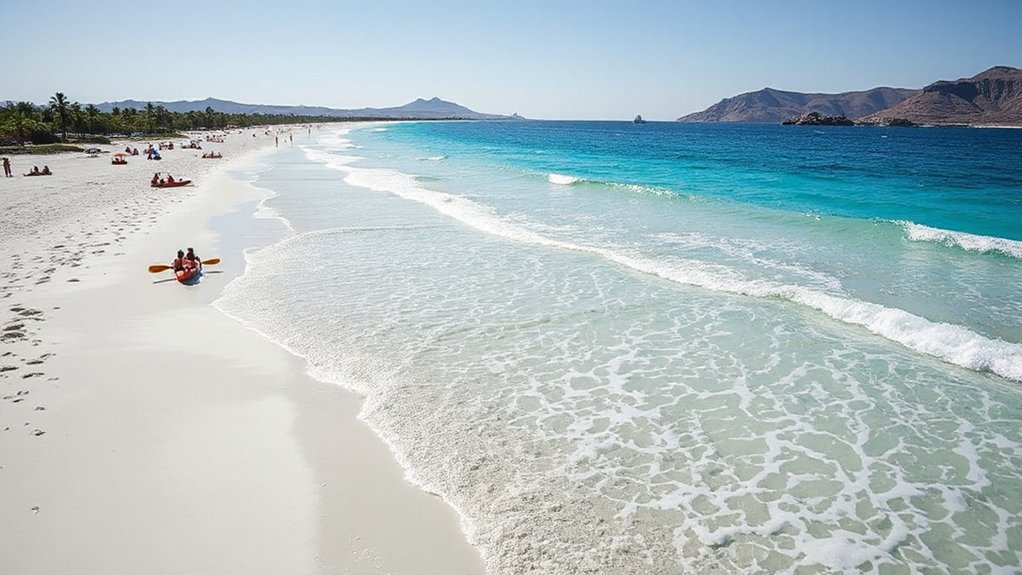
Choosing a family-friendly beach vacation in the Canary Islands is all about safe shores, gentle surf, and easy access to facilities, and you’ll find all three across the archipelago.
You’ll notice soft sands and calm bays that invite pint-sized swimmers, plus lifeguards on peak days. Beach safety is practical here: shaded spots, clear signs, and shallow waters near breakwaters let you relax without watching every splash.
Family amenities shine too—easy-to-find restrooms, kid-friendly eateries, and snack vendors within reach of sun umbrellas. Off-peak mornings mean fewer crowds, while local markets nearby offer fresh fruit and picnic fixes.
Local lifeguards train with families in mind, and the calmer waters near lagoons turn beach time into safe, memorable play. Pack sunscreen, a hat, and a sun-safe attitude.
How We Picked the Best Family Beaches
We picked beaches by looking for solid beach guardrails, clear lifeguard presence, and well-marked entry points so you can relax with kids.
We prize calm waters and gentle, slope-free sand that lets little ones splash without surprises.
Expect practical tips right up front, like checking local signage and choosing coves with easy exit routes for a stress-free day.
Beach Guardrails and Safety
To decide which Canary Island beaches are best for families, we looked beyond beauty to safety, signs, and kid-friendly features. You’ll notice how guardrails frame boardwalks, guiding little feet from sand to paths without a stumble. I’m talking about practical cues you can spot at a glance: bright safety signage, clear lifeguard posts, gentle entry points, and shaded rest areas that invite break times.
- Scan for beach guardrails along ramps and promenades to keep toddlers close.
- Read safety signage near entrances for flag colors and ply-by-ply beach rules.
- Check lifeguard post visibility and hours before you swim.
- Note protected zones and marked swim areas to avoid surprises.
With these checks, you’ll feel prepared and feel the shore’s pulse.
Calm Waters and Slope-Free Sand
You’ll want beaches that feel almost flat underfoot and shrug off bigger waves, so we favor calm coves and sturdy, slope-free sands where kids can scooter to the water’s edge without hauling a beach-wide negotiating session with the tide. In the Canary Islands, a gentle coastline means predictable play zones, not astonished parents chasing a runaway bucket.
Look for gradual entrances, shallow lagoons, and sand that stays put under small feet. Local life clinics you’ll notice: lifeguard presence, posted Beach safety tips, and clean restrooms nearby.
Check tide schedules before you go, because a quiet morning can shift by a few meters at noon. Pack SPF, snacks, and a light towel; return visits reward your family with safer, carefree shore time.
Canary Islands Beach Basics for Families
You’ll find family-friendly essentials like shaded nooks, easy-to-reach restrooms, and gentle sand that won’t sting tiny toes.
Check the water before you swim, since many beaches have lifeguards on peak days and calm coves on others.
For kid-approved fun, pack simple favorites—bucket, spade, and a quick snack break—so you can swap sandcastle builds with short, safe swims.
Family-Friendly Beach Essentials
If you’re heading to the Canary Islands with kids, pack a compact kit that covers water, sun, and safety, plus a few surprises to keep little ones engaged. You’ll find a simple balance of gear that feels right on sandy days.
- Sunscreen sticks and a wide-brim hat for easy, quick reapplication
- Lightweight towels, a small first-aid kit, and extra zip bags
- A snorkel mask, fins, and a scoop for seashell collecting
- A portable shade pop-up and a compact ball for beach volleyball drills
Tip: choose beaches with gentle slopes and calm water for safer exploration. Keep snacks handy, and rotate games—kids stay happy, and you stay relaxed while you soak in island vibes.
Safe Swimming Conditions
The Canary Islands offer family-friendly beaches, but safe swimming starts with key conditions you can read at a glance: riptides and undertows aren’t common, yet local currents can shift with tides and wind. You’ll notice calm mornings, then a push of swells later; check lifeguard flags and posted warnings before you wade in.
Stay close to shore, keep kids within arm’s reach, and avoid rocky or weed-choked zones after rain. Respect beach safety signs, swim with a buddy, and don’t turn your back on the sea.
If surf or rip signs appear, exit calmly and choose a sheltered spot. Know your limits, stay hydrated, and monitor children at all times—swimming hazards don’t announce themselves.
Kid-Approved Activities
Sun, sand, and sea spark kid-friendly adventures, from building intricate dune forts to hunting for rainbow-colored jellyfish in tide pools along the Canary Islands’ beaches. You’ll tap into Island flavor with simple, safe activities that keep little ones engaged and curious.
- Channel their energy with short beach hikes, then rain-test-safe sandcastles near camber lines of surf.
- Scoop shallow pools for mini creatures, logging findings in a waterproof notebook—great for science-y curves and beach safety habits.
- Chase wind-kite ribbons and frisbees, practicing gentle throws away from crowds.
- End with tide-safe shell hunts, washing findings in fresh water and drying them before packing fishy-smelling gear.
Pro tips: pack extra snacks, a wide-brim hat, and family gear like a quick-dry towel; always supervise.
Gran Canaria: Calm East Coast Family Beaches
Gran Canaria’s calm east coast feels tailor-made for families: shallow bays, gentle lapping waves, and beaches trimmed with golden sand that stay welcoming even during midday crowds. You’ll notice lifeguards on sunny afternoons and dunes perfect for a quick hatch-and-restore snack break.
Park near you, then stroll the promenade for shade and kiosks with cold drinks. Choose calm coves like Playa de Las Galletas for toddlers, or a wider stretch where you can build sandcastles without stepping on pebbles.
For cultural festivals, local cuisine shines—try papas arrugadas with mojo and fresh grilled fish after the beach. Pack water, sun hats, and a compact umbrella; heat eases earlier, so you can linger before siesta crowds rise.
Gran Canaria for Active Kids: Wider-Shore Play
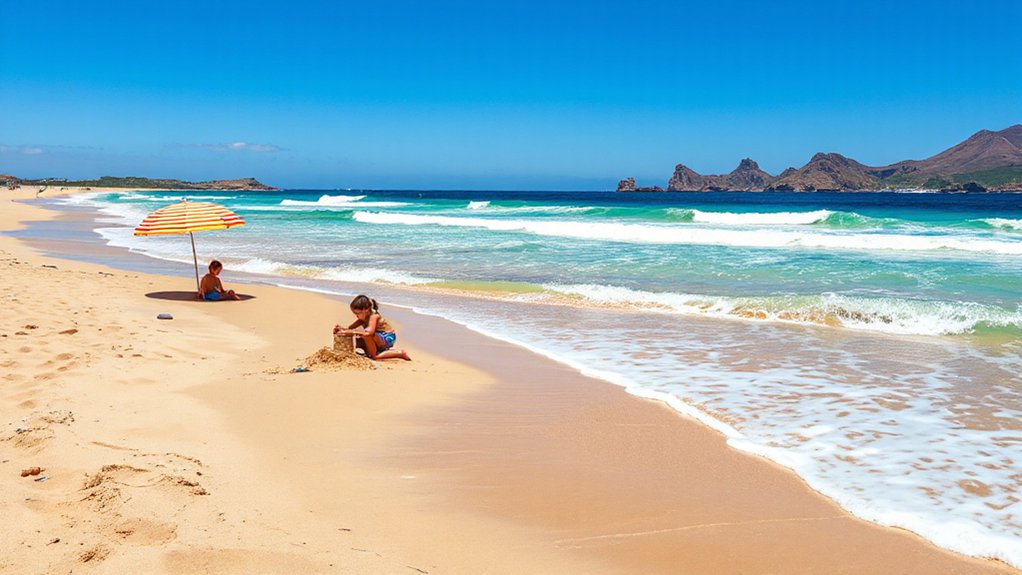
You’ll love Gran Canaria’s shore where kids can sprint along wider sands and splash in shallow, safe zones.
Pick family-friendly spots with gentle waves, bring floats and snacks, and keep an eye on lifeguard flags for a calm day of safe water activities.
For active play, rotate between tide-pool hunts, sandcastle challenges, and quick breaks at shaded areas to recharge.
Wider Shore Play
The best way to start a day with kids on Gran Canaria’s coast is to head to the wider shore where gentle waves lap at golden sand and the horizon stretches wide enough for big imaginations. Beach safety and tide schedules matter, so check locally before you play. Here’s how to maximize the stretch:
1) Scout safe water edges early, watch for ripples, and pick a shallow cove for first dips.
2) Pack a lightweight shade tent, snacks, and a small bucket for shoreline treasure hunts.
3) Map a short loop along the firm wet sand—great for scooters and barefoot races.
4) Bring a lightweight towel, sun cream, and reapply after every warm-down break.
Safe Water Activities
Keep water safety nearby: check flags, wear coast-appropriate gear, and stay within marked zones. If you’re teaching kids, review breath through snorkel or mask breaks, and model patient turns before you push for speed.
Respect beach etiquette: share access paths, avoid overcrowded patches, and rinse gear before stowing it. Bring a sun hat, water, and a whistle for quick reminders. Preparedness keeps the day fun and safe for active kids on Gran Canaria.
Family-Friendly Spots
Gran Canaria’s wider shore unfolds as a playground that blends coastline character with kid-friendly comfort, from sheltered coves to long, grassy picnicking nooks. You’ll find spots where calm shallows invite wading, and soft sand keeps scents of pine and salt in the air.
Beach safety matters here, so set a quick rule: stay within marked zones and keep a close eye on little splashers near rocks. For family picnics, shade a foldable tent, pack water, and bring a compact fan for overheated afternoons.
- Maspalomas dunes forecourt for open flight and sand sculpting.
- Amadores calm-water cove with easy access.
- Puerto de Mogán sandy pier stalls and safe currents.
- Playa del Inglés grassy verges for lunch breaks and rest.
Tenerife: Safe Sands and Pedestrian Promenades
Ever wondered where you can stroll along a beach without worrying about the tide turning the boardwalk into a slip‑and‑slide? Tenerife delivers safe sands beside wide promenades that hug the coastline, so you can keep little feet dry and curious eyes bright.
You’ll notice sturdy pathways, even along sheltered coves, with railings and shaded benches that invite a relaxed pace. Practical tip: time beach strolls with tide schedules to avoid lingering near foreshore work or wet steps after surfers arrive.
Beach erosion is monitored locally, so you’ll often see newly reinforced stretches and clear signage. Bring lightweight water, a hat, and a quick snack, then savor the rhythmic sounds of waves, palm silhouettes, and the island breeze guiding your family adventure.
Tenerife: Shallow, First-Swim Beaches
Tenerife’s first-swim beaches are the gentle entry points you want for little swimmers and cautious newcomers: shallow turquoise water, soft golden sand, and a gradual slope that makes wading feel almost effortless.
- Check tide schedules early, so you pick a calm window and avoid surprise waves.
- Choose beaches with visible lifeguard posts and clearly marked zones for kids.
- Arrive at low-traffic times to minimize crowds and maximize shallow-water play.
- Watch for beach erosion indicators like exposed rocks or eroded edges after seasonal storms.
Local tip: bring a small umbrella, spray sunblock, and a shade mat; shade helps when little eyes grow tired.
Remember to respect signage and stay within safe zones.
Lanzarote: Low-Tide Lagoons and Protected Coves
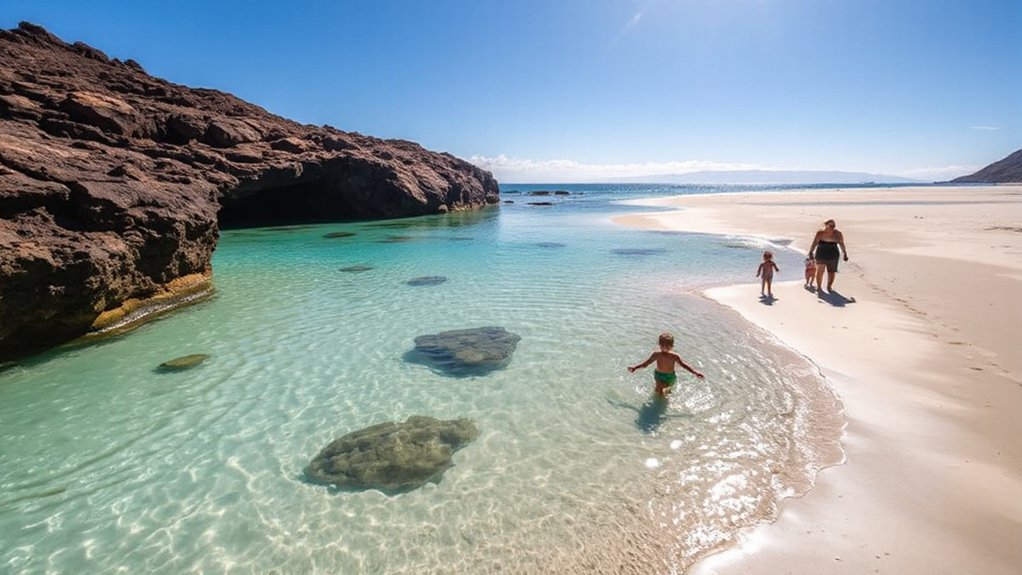
Lanzarote’s low-tide lagoons invite you to stroll along glassy pools that appear and vanish with the waterline, revealing calm mirrors between sandbars. You’ll notice protected coves tucked into volcanic coastlines, where glassy shores and sheltered alcoves make for easy beach days with kids or quiet swims.
Pack water, a hat, and a map—these spots shift with the tides, so time your visit to low tide for the best lagoons and the gentlest seas.
Low-Tide Lagoons
- Tide pools reveal life, so tread softly and bend with care.
- Check the tide timetable before you go, timing your visit for calm, low water.
- Wear sandals on rocks and bring a small bucket for curious finds.
- Respect local rules about access and litter to keep the coves pristine.
Tide pools invite curious hands and calm eyes, while Beach safety means watching for sudden surges, and watching every step where sand meets rock.
Protected Coves
Protected Coves offer a quieter, more intimate side of Lanzarote’s coastline, where low-tide lagoons’ glassy pools give way to sheltered inlets carved by wind and surf. You stroll rocky headlands to reach Secluded coves tucked behind lava shelves, where turquoise water hugs shaded creeks and the air smells of salt and chalk.
Pack reef-safe sunscreen, water, and a lightweight umbrella for shade during midday rests. Start early to catch calm water and avoid crowds, then explore small caves carved by glassy waves.
Respect Marine reserves by keeping voices low and leaving no trace, especially near nesting seabirds. If you’re visiting with kids, bring a lightweight snorkel set for the sheltered pools, but stay within marked zones for safety.
Lanzarote: Beach Activities Kids Love
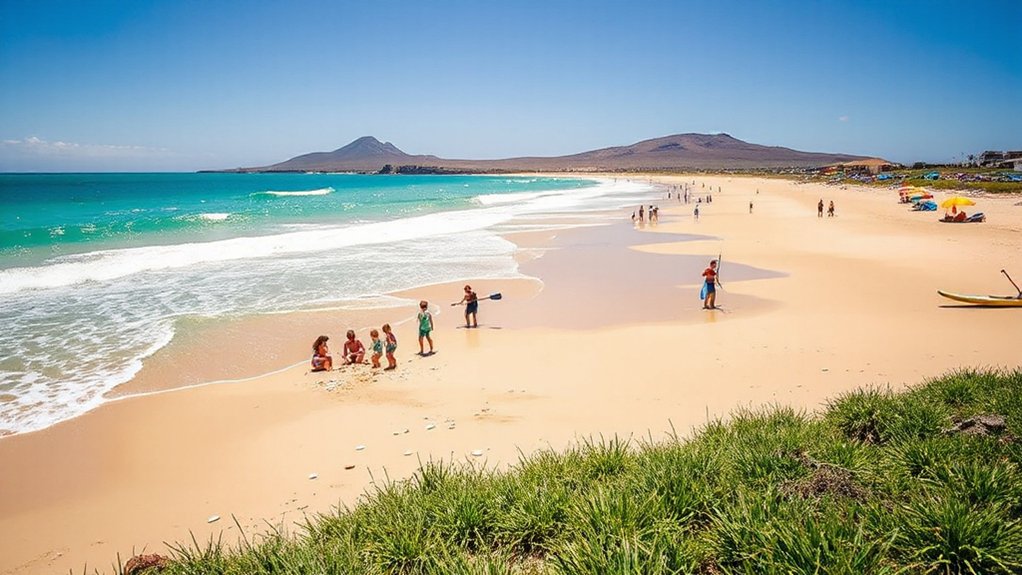
What makes Lanzarote a kid-friendly playground? You’ll feel the sun kiss the lava-black sand as waves hiss softly, inviting little explorers to test tide pools and splash-friendly shores. Beachcomber treasures line your day: crystal-pearl shells, glassy pebbles, and tiny crabs skittering in furrows.
You’ll map out vacation planning with calm, practical steps that keep little hands busy and eyes bright.
- Create a shaded snack stop near the shoreline so energy never dips.
- Pack a lightweight net, bucket, and magnifier for tide-pool discoveries.
- Choose beaches with gentle slopes and lifeguards on duty.
- End with a quiet dune walk to spot migrating birds.
Tip: arrive early, savor quieter mornings, and rinse sandy clothes at day’s end.
Fuerteventura: Long Sands for Family Bike Rides
Fuerteventura’s Long Sands stretch is made for family riders, with miles of flat, sun-washed pavement that feel like they were paved just for bike-and-go adventures. You roll along a postcard coastline, wind brushing your helmets as you coast past dunes and low-rise hotels.
Pack plenty of water, a quick snack, and a small first-aid kit; shade can be brief between breaks. Choose early morning or late afternoon to avoid heat and crowds, and keep to the designated bike lanes for beach safety.
Kids learn balance with gentle grade, while you savor uninterrupted ocean views and the scent of salt and pine. Afterward, return to your hotel with relaxed shoulders and true family relaxation, memories ready to ride again.
Fuerteventura: Soft-Surf Beaches for Beginners
Soft-sand mornings greet beginners on Fuerteventura’s gentle shorelines, where small waves roll in at a forgiving pace and the water stays comfortably warm. You’ll find sandy crescents ideal for wading, with soft surf that still teaches balance.
Beach safety comes first, so pick lifeguarded spots and watch for kite strings near popular dunes. Tide schedules matter: low tides widen the sand, high tides hug the shoreline, and you’ll avoid crowded edges at peak times.
Here are essentials to start with:
1) Check flags and lifeguard tips before entering water
2) Wear a well-fitted leash and sun protection
3) Practice small, controlled pops to build feel
4) Pause between sessions to rehydrate and assess conditions
La Palma and La Gomera: Quieter Family Beach Options
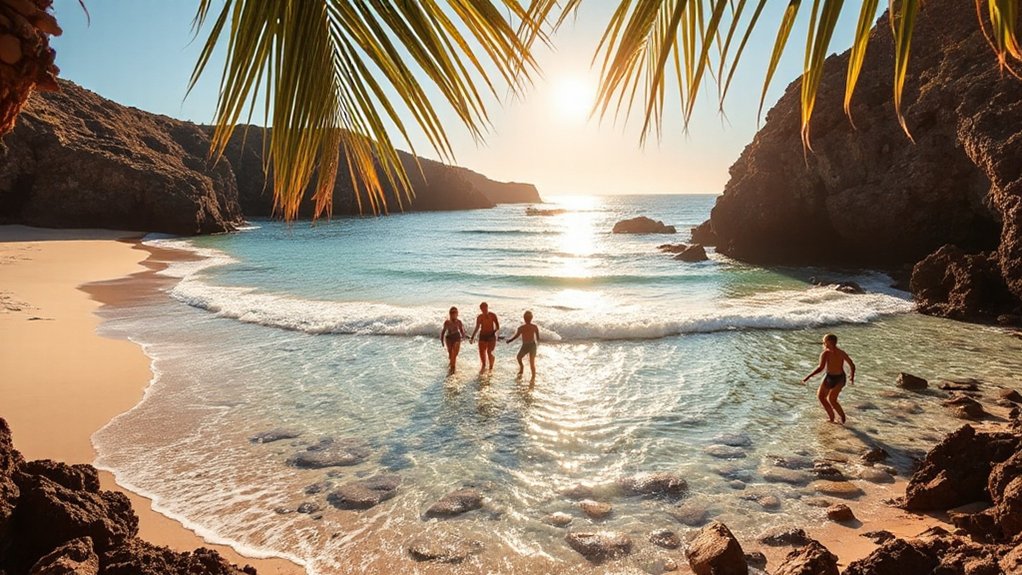
La Palma and La Gomera offer a gentler pace for families seeking calmer beaches after the breezier sands of Fuerteventura, where you’ll find sheltered coves and shorelines that stay welcoming even with a breeze in the air.
On La Palma, you’ll uncover Secluded coves tucked between basalt cliffs, where gentle surf laps a shallow edge—perfect for toddlers and curious toes.
On La Gomera, the quieter bays shield you from crowds, and calm waters invite easy snorkel explorations with kids.
Pack a small tote for family picnics, keep sun coverage handy, and time your visits around late afternoon golden light.
Expect sleepy beach towns, friendly locals, and a sense you’ve discovered a private slice of Canarian coast.
Parking, Access, and Facilities: Practical Tips
Finding a place to park near the coast can be half the battle, but it’s usually smoother than you fear—start with the smaller towns first, where streets funnel to the correct beach access and meters are fewer or free. You’ll notice clear signage, easy paths, and quick escape routes if crowds surge.
Use these practical tips:
1) Arrive early, map nearby parking zones, and budget for paid lots or free slots on side streets.
2) Check beach-access etiquette, stairs, and ramp availability before you haul gear.
3) Bring lightweight essentials: a small mat, sunshade, and a compact cooler for snacks.
4) Pack Beach accessories and sunscreen tips together in a dry bag for swift, shade-ready sessions.
Gear for Canary Island Beach Days
If you want a smooth beach day in the Canaries, start with the right gear in your pack: a lightweight tote, a compact umbrella or sunshade, and a dry bag to keep phones, keys, and snacks sand-free.
You’ll also want a small first-aid kit, reef-safe sunscreen, and a microfiber towel that dries fast. Pack a reusable water bottle and a light snack, plus a portable charger for photos at golden hour.
For safety, sling a whistle and know tide charts; local lifeguards often post warnings on gray-sand days.
If you plan water sports, bring a quick-drying rash guard and snorkel set, plus a waterproof bag for valuables.
Beach safety and water sports blend into your day with smart, simple gear choices.
Kid-Friendly Eateries Nearby: Food and Ice Cream
Tainlessly, you’ll find kid-friendly eateries within easy strolls from the beach, where menus balance local flavor with kid-approved favorites. You’ll notice local cuisine shines in every bite, with simple twists on traditional recipes that kids actually crave.
- Tap into fresh seafood bowls served mild and approachable for little palates.
- Try a plato with peppers, potatoes, and soft fish, a classic Canary Islands combo.
- Squeeze in scoops of island ice cream in tropical flavors the kids love.
- End with a milky crema, lightly sweetened, perfect for cooling down after play.
Practical tip: ask servers for halves or kids’ portions, and request mild spice. Look for shaded courtyards and riverside stalls for longer, calmer meals.
Best Time to Visit for Family-Friendly Conditions
For a family-friendly trip, the Canary Islands shine from late spring through early autumn, when mornings are bright and the beaches aren’t crowded, making it easier to corrall kids for sandcastle sessions and dune adventures. You’ll find calm seas on many shores, especially during sea breezes that temper the heat.
Plan for modest mid-mday sun by seeking shady spots and frequent water breaks. Weekday mornings often mean softer sands and shorter lines at hardware-free rentals or snack carts.
Sun protection matters: hats, reef-safe sunscreen, and UV sleeves travel with you. Travel tips include timing visits to pushchair-friendly promenades and choosing beaches with lifeguards.
Packing essentials should cover towels, extra swimsuits, and a compact first-aid kit.
Quick Planner: Nearby Towns and Stay Options Then and Now
Bringing the Canary Islands into focus, this quick planner maps nearby towns and stay options with today’s realities in mind: a mix of century-old charm and modern conveniences, easy beach access, and practical tips for families.
1) You’ll find family-friendly stays just steps from golden sands, with options ranging from small inns to apartment complexes that feel like home.
2) Towns offer quick access to tide schedules and tidal beaches, so you can plan morning dips or sunset walks without drama.
3) Pack Beach equipment in advance; lightweight chairs and umbrellas go a long way when you’re chasing shade and comfort.
4) Check local gear rentals and kid-friendly amenities before you arrive to avoid last-minute surprises.
Frequently Asked Questions
Which Canary Island Beaches Are Most Stroller-Friendly?
You’ll find the most stroller-friendly Canary Island beaches where parking’s easy, paths are firm, and sand stays level. Look for boards, ramps, and shaded family-friendly amenities; beach accessibility improves with calm coves and well-staffed lifeguard towers.
Are Pets Allowed on Family Beaches?
Not usually; pets aren’t allowed on most family beaches. Check pet policies and posted Beach regulations before you go, because some islands permit leashed dogs in designated zones. Bring water, waste bags, and plan alternative coastal walks if needed.
How Safe Are Jellyfish in These Areas?
Jellyfish season peaks in warmer months, so beach safety tips matter. You’ll see occasional stings, but nonstings are rare with quick rinse and poison‑free gel packs. Stay alert, wear water shoes, and follow lifeguard instructions for safer swims.
Do Beaches Offer Lifeguards Year-Round?
Lifeguard availability varies, mostly seasonal but some beaches offer year-round coverage. Check signage daily, notice seasonal safety measures, and stay close to lifeguard stations. Bring water, shade, and kids’ flotation aids when crowds peak. Stay alert, beachgoer.
Which Beaches Have Shaded Picnic Areas?
Yes—many beaches offer shaded beach spots and picnic area amenities. You’ll find palm-fringed picnics under umbrellas, cool shade near kiosks, and grassy patches with tables. Bring sunscreen, towels, and a lightweight canopy for comfort.
Conclusion
You’ll walk away with sand-streaked shorts and sunsets you’ll brag about for years. Picture a day playing at calm Fosforito-like coves, or chasing foam on wider Gran Canaria shores after a recommended locals’ lunch. Case in point: Ana, traveling with twins, swapped a crowded resort for a beach near Las Palmas, found calmer mornings, ice cream twice, and a shaded spot by a lifeguard. Pro tip: pack sunscreen, a parasol, and quick snacks for a smooth family day.