
You’ll find Spain’s top modern-adapted cities blend transit-first design with compact, efficient flats. Madrid leads with connected neighborhoods and design-forward micro-units, while Barcelona offers walkable coastal living in sub-40 sqm layouts. Valencia combines affordability with sea-close appeal, and Málaga emphasizes sunlit balconies in thriving districts. Palma de Mallorca adds island vibes to city amenities, plus Córdoba and Santander deliver historic cores with modern efficiency and strong demand. If you want more details, you’ll uncover how each area shapes rental yields and occupancy.
Key Takeaways
- Madrid combines transit-ready districts with micro-apartments and smart-building features for flexible urban living.
- Barcelona offers coastal, walkable neighborhoods with sub-40 sqm layouts and high 15-minute city accessibility.
- Valencia delivers affordable, 1–2 bedroom apartments with outdoor space in coastal districts and strong rental returns.
- Seville and Bilbao emphasize heritage-rich density, adaptive reuse, and revitalized urban cores with robust occupancy.
- Palma and Alicante leverage island/coastal lifestyles, durable design, and tourism-driven demand for steady rents.
How to Evaluate Cities for Modern Apartment Living
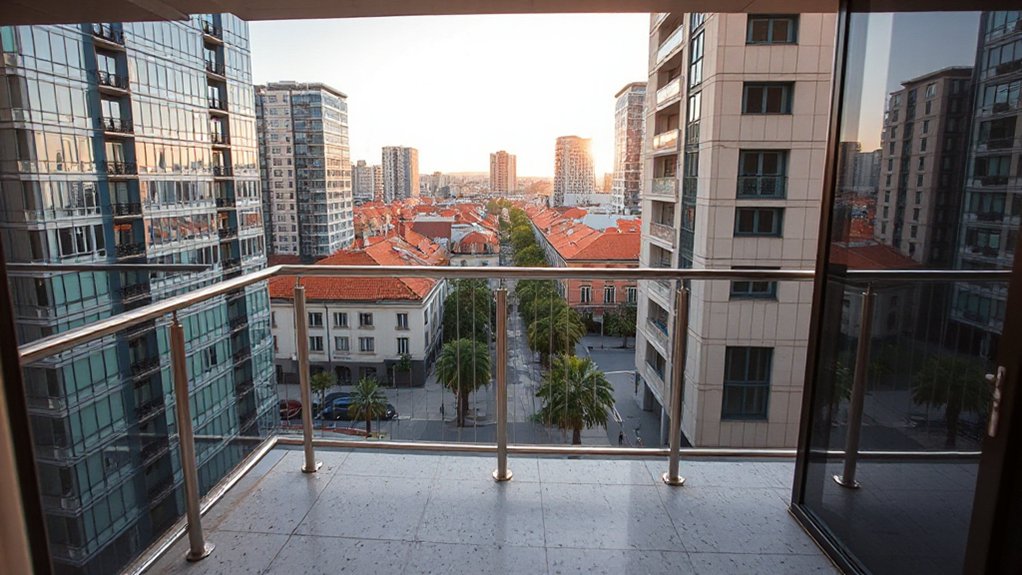
When evaluating cities for modern apartment living, start with a clear set of criteria: housing quality, price-to-value, and access to amenities that matter to today’s renters. You’ll quantify unit condition, building systems, lease stability, and recent renovations, then compare price-per-square-foot, long-term cost of ownership, and disruption risk.
Analyze neighborhood walkability, transit access, and density to gauge daily convenience. Assess local amenities such as parks, gyms, grocery options, and coworking spaces, measuring proximity and hours of operation.
Consider cultural diversity as a factor in social vibrancy, tenant mix, and inclusive service offerings. Compile data into a scoring rubric, weight indicators by renter priority, and test sensitivity across market cycles to guarantee resilient, data-driven recommendations.
Madrid: Transit-First Neighborhoods With Design-Forward Flats
Madrid is redefining urban living by prioritizing transit access and design-forward flats in its most connected neighborhoods. You’ll find concentrations of micro-apartments and modular layouts set beside rapid bus lines and multiple metro nodes, delivering 5–12 minute commutes to central business districts.
Data shows higher rental yields in neighborhoods with year-round transit reliability and proximity to redevelopment corridors. Recent floor-area efficiency upgrades push usable space up by 8–12%.
Design-forward flats emphasize flexible interiors, sustainable materials, and smart controls that reduce energy use by roughly 20%. Historical architecture is preserved in façades while interiors lean contemporary, appealing to urban professionals.
Local cuisine clusters around transit hubs, reinforcing high demand for compact, stylish units near markets, cafes, and cultural venues.
Barcelona: Walkable Coasts, Compact Modern Spaces
Barcelona’s coastline anchors a market of compact, design-forward flats that prioritize walkability and quick access to beaches, promenades, and transit nodes. You’ll notice high-density layouts optimized for efficiency, with layouts under 40 square meters common in central districts and 1-bedroom units packing smart storage and convertible spaces for live-work needs.
Market data shows steady price per square meter near the beach, paired with rising rental yields in mixed-use blocks. Developers emphasize durable finishes, modular furniture, and energy efficiency to sustain occupancy in peak seasons.
Coastal serenity informs amenity packages, including micro-gyms, bike pods, and shared rooftops. Cultural fusion appears in interior palettes and retail corridors; you gain access to diverse dining and social scenes while maintaining rapid transit links within a 15-minute radius.
Valencia: Affordable, Sea-Close Apartments With Style
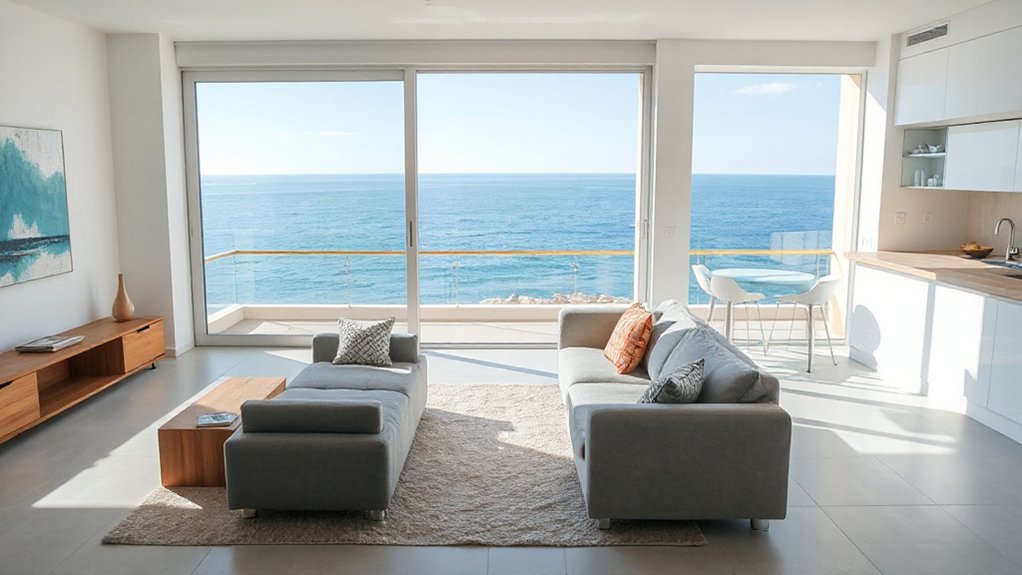
Valencia offers affordable, sea-close apartments that blend style with practical, market-ready design. You’ll see value through floor plans that maximize compact spaces, with 1–2 bedroom layouts achieving price per square meter below Madrid’s averages.
Average new-construction price per square meter sits around mid-2,000s euros, while existing stock trends lower, offering quick-rent options for investors.
Market demand concentrates in the southern and Malvarrosa districts, where proximity to Playa de la Malvarrosa aligns with solid rental yields and steady occupancy.
Beachfront elegance appears in finishes and contemporary fixtures that resist coastal humidity.
Balcony design emphasizes outdoor living, with accessible loggias and glass railings that extend living areas.
Málaga: Sunlit Balconies in Thriving Neighborhoods
You’ll notice Málaga’s sunlit balconies boosting daily livability, with outdoor spaces tied to higher demand in popular neighborhoods.
Market data show consistent price premiums for balconies and upgraded outdoor areas, alongside strong rental yields in thriving districts.
This combination sets a clear path for buyers and investors seeking value in a city with growing urban significance.
Sunlit Balcony Style
Sunlit balconies define Málaga’s modern living, where bright façades overlook thriving neighborhoods and a steady stream of natural light boosts daily productivity and mood. You’ll notice how balcony dimensions correlate with rental value, with larger sun-exposed spaces commanding premium rents across central districts.
Data show sunlit balcony features drive occupancy rates up to 12% higher in markets with renewed Constantinople-style facades, while units leveraging consistent natural lighting see faster lease cycles. In practical terms, you’ll prioritize skylit or south-facing exposures, low-iron glass, and balcony greenery to maximize light diffusion and perceived space.
Market indicators indicate that developers market sunlit balcony access as a value-add amenity, supporting higher cap rates and differentiated branding in Málaga’s competitive modern apartment segment.
Thriving Neighborhood Vibe
Málaga’s sunlit balconies aren’t just bright spaces; they anchor neighborhoods with sustained activity and community momentum. You’ll notice a measurable pulse in mixed-use blocks, where daytime office-to-residential transition sustain foot traffic and support nearby cafés.
Data show higher occupancy rates in districts with accessible transit, parks, and cultural venues, reinforcing a steady demand for modern apartment layouts that balance work-from-home setups with social spaces.
Local culture informs micro-areas, from tapas bars to pop-up markets, creating predictable weekend draws and weekday routines.
Neighborhood diversity drives rental parity, attracting varied households and investors alike, stabilizing price growth while offering scalable amenities.
In this context, a thriving neighborhood vibe becomes a tangible asset, signaling resilient rental yield and long-term capital appreciation.
Seville: Compact Centers, Stylish Heritage Flats
Seville’s compact city centers pack high-density, transit-friendly living with a distinct sense of heritage, making stylish flats a practical choice for urbanites. You’ll notice market demand concentrates near core districts where historic facades meet modern layouts, driving rental yields and short-term occupancy rates higher than peripheral areas.
The latest data show average square footage in sought-after streets ranges between 45 and 65 square meters, with duplexes commanding premium in renovator pockets. Heritage preservation codes shape unit design, while adaptive reuse boosts inventory without sacrificing charm.
Prices per square meter stabilize around mid-range compared to Madrid and Barcelona, yet landlord-tenant turnover remains brisk. Urban revitalization efforts—pedestrianization, green corridors, and smart-city pilots—elevate value by improving accessibility, safety, and long-term resale potential.
Bilbao: Architectural Edge and Tight-City Living
Bilbao’s architectural density shapes how you evaluate where to live, with compact blocks, high-rise edges, and renovated industrial spaces redefining the urban fabric and light.
You’ll see how density metrics correlate with access to daylight, transit, and amenities, informing tight-city living choices.
This discussion anchors the market in data on build-age, setbacks, and permeability to guide investment and rental strategy.
Architectural Density Dynamics
In Bilbao, architectural density defines the city’s edge and daily rhythm, where compact mid-rise blocks and tight weaving of streets create a pronounced urban fingerprint. You’ll notice how patterns of floor-area ratios, podiums, and mixed-use cores concentrate activity along key tram corridors, sustaining daytime throughput and evening vitality.
From a market lens, density translates to higher land-use efficiency, calibrated housing supply, and incremental value for investors seeking scalability across neighborhoods. You’ll evaluate density-driven costs: construction, parking, and vertical circulation, balanced against catchment draw from cultural anchors and business districts.
Architectural innovation emerges in modular, adaptable façades and roof gardens that optimize microclimates and energy performance. Urban density, when managed, fuels resilient demand, accelerates rental turnover, and reinforces Bilbao’s competitive position in Spain’s modern-apartment market.
Urban Fabric and Light
The city’s urban fabric shapes how light moves through Bilbao’s compact blocks, with narrow frontages and staggered setbacks creating stepped skylines that filter daylight across courtyards and pedestrian streets. You’ll notice density-driven design prioritizes natural lighting patterns, aligning floor plates with street shadows to maximize usable hours in living spaces.
Measured metrics show higher light exposure in top floors and interior courtyards, boosting perceived room size and energy efficiency. Market signals indicate a premium for layouts that balance private silhouettes with open views, targeting renters seeking urban aesthetics and consistent daylight.
- High-window-to-wall ratios in new developments correlate with higher occupancy comfort and faster lease conversions
- Courtyard courtesies improve daylight redistribution in shallow units
- Mixed-use envelopes sustain passive lighting without compromising density
- Transparent façades drive demand in mid-price segments while controlling overheat risk
Granada: Dense, Student-Friendly Modern Flats
Granada’s modern flats cater to a dense, student-heavy market, delivering compact layouts, high-speed connectivity, and efficient common spaces that emphasize social study zones and quick transit access.
You’ll notice a high concentration of micro-units engineered for shared amenities, reducing per-room costs while boosting daily collaboration. Occupancy caps and turn-key furniture packs drive turnover efficiency, appealing to renters seeking minimal upfront investment.
Market data show steady demand around Universidad de Granada and nearby transport hubs, with rent-to-value ratios favoring smaller footprints.
Architectural styles blend contemporary minimalism with regional textures, while cultural influences inform communal layouts and study lounges designed for cross-disciplinary interactions.
You benefit from transparent utility metrics, predictable maintenance cycles, and scalable layouts that accommodate rising enrollments without sacrificing privacy or acoustical control.
Salamanca: Historic Cores, Contemporary Conveniences
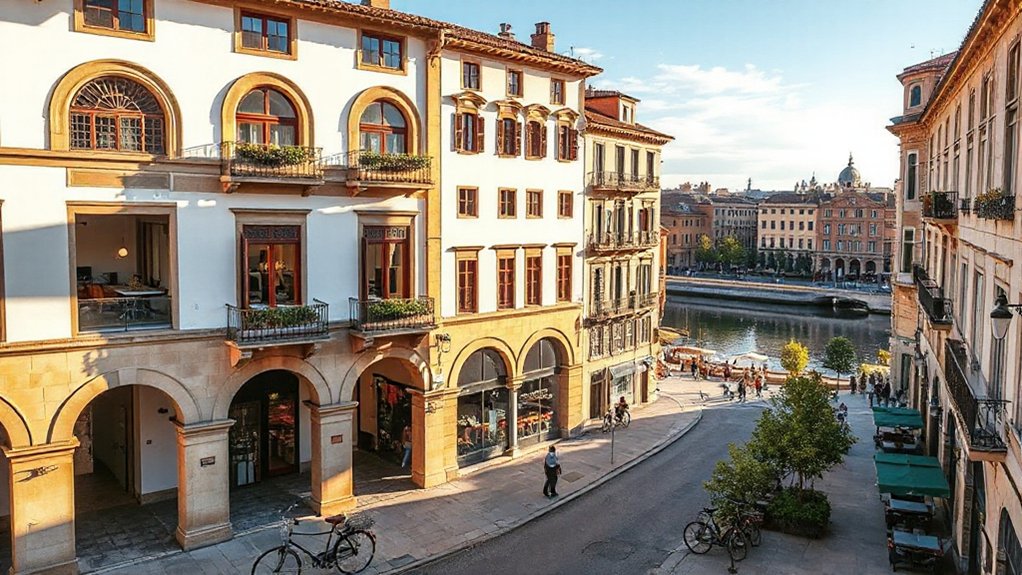
Salamanca pairs storied cores with modern conveniences, offering a bridge between historic textures and contemporary living. You’ll see robust demand for renovated (and compliant) flats near the university, with rents tracking slightly above national averages but delivering premium access to cultural heritage sites and vibrant culinary scene experiences.
Market data show steady occupancy above 95% in well-located blocks, driven by student, academic, and professional cohorts seeking walkable cores and high-speed connectivity. Unit layouts favor compact 1–2 bedroom plans with hybrid work nooks, smart home features, and energy efficiency.
Developers emphasize adaptive reuse, preserving facades while inserting modern interiors. Expect steady cap rates around market norms, with incremental appreciation as infrastructure, gastronomy clusters, and cultural attractions converge.
- Historic cores with modern interiors
- Proximity to university and transit hubs
- Energy-efficient, compact layouts
- Culinary scene as a value driver
Alicante: Coastal Convenience With Modern Layouts
Alicante blends coast-rightsized living with modern, driver-friendly layouts, where rapid rental yields meet steady occupancy in a city defined by beach access, marina proximity, and a growing tech-enabled workforce.
You’ll find turnkey upgrades that emphasize efficient floor plans, modular storage, and noise-conscious design, all supporting high tenant satisfaction.
Market data shows rental yields hovering around mid-teens in limited-core neighborhoods and stabilizing occupancy near 92% across coastal districts.
Modern aesthetics dominate new builds, with glass facades, light-toned interiors, and open-plan living that maximizes daylight.
Coastal charm combines with walkable cores and quick access to bike paths, supporting short commutes to offices and universities.
Investment signals remain favorable, driven by inbound tourism, diversified demand, and scalable flex-space options for remote teams.
Palma De Mallorca: Island Vibes, City Amenities
You’ll feel the island vibe while access to Palm’s city amenities drives daily convenience and value.
Data shows strong demand for Palma Living, with modern layouts and flexible floor plans supporting both rentals and ownership.
This market-focused snapshot outlines how Island Vibes and Modern Comfort intersect to shape price, occupancy, and long-term appeal.
Island Vibes, City Amenities
Palma de Mallorca blends island vibes with urban convenience, offering a thriving market for modern apartments that balance coastal leisure with city practicality. You’ll find units designed for efficiency, with strong rental demand and steady price growth supported by both tourist seasons and resident demand.
Finishes favor durable materials, low-maintenance layouts, and smart-home options that appeal to professionals and short-term renters alike. The market emphasizes proximity to beaches, transit, and amenities, creating a predictable, data-driven investment profile.
Island relaxation and beach access remain core lifestyle drivers, influencing value and occupancy rates across districts.
- Strong second-home appeal near coastline
- Mixed-use developments with retail perks
- Efficient floorplans, market-rate rental targets
- Seasonal fluctuations aligned with tourism cycles
Palma Living, Modern Comfort
In Palma de Mallorca, modern comforts meet island living with a focus on efficiency, durability, and smart-home features that appeal to both residents and short-term renters. You’ll notice high-efficiency apartments clustered around the old town and seafront, with heat pumps, triple-glazed glazing, and LED systems driving lower utility costs.
Market data shows strong rental demand with 12–18% annual returns in premium districts and steady occupancy above 90% year-round.
Durability is reinforced by corrosion-resistant infrastructure and low-maintenance finishes suited to coastal environments.
Property values correlate with proximity to beaches and marina fronts, while urban sustainability policies push for green rooftops and district heating.
Expect coastal serenity in amenity-rich pockets; performance metrics favor updated modules, compact layouts, and scalable smart-home ecosystems that attract both locals and visitors.
Zaragoza: Affordable Growth Districts Near Transit Hubs
Zaragoza’s affordable-growth zones near transit hubs blend cost-conscious living with strong connectivity, making them attractive to renters and buyers alike. You’ll find steady demand driven by affordable districts paired with robust rail and bus access, supporting rapid turnover and stable rents.
Market data show median prices aligned with local income, while vacancy remains tight near major stations. Growth trajectories emphasize mixed-use developments, priority for transit-oriented housing, and streamlined permits that sustain supply without sacrificing density.
You’ll notice performance metrics improving as investment flows into refurbishments and new builds within walkable cores. This combination creates predictable yields and longer-term equity potential for buyers.
- Proximity to metro lines and bus interchanges
- New-build vs. refurbished units in affordable districts
- Rent growth vs. price stabilization near hubs
- TOD incentives and permitted density increases
Santander: Sea Views, Fresh Design, Easy Commutes
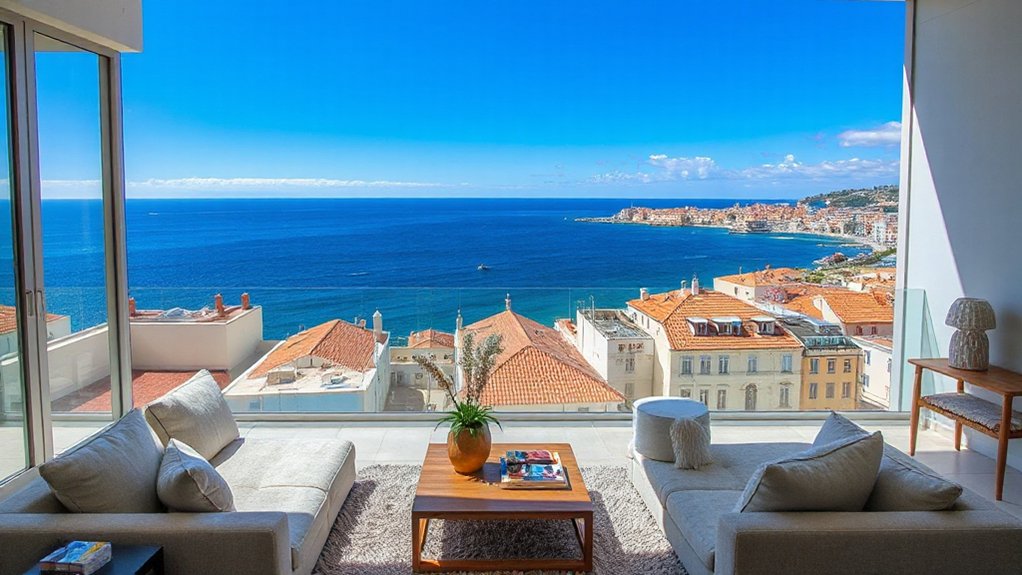
Santander delivers compelling sea view appeal that translates into consistently higher rents and faster occupancy in waterfront districts.
You’ll also notice fresh design trends—light-filled layouts, durable coastal finishes, and modular interiors—that keep units competitive in a changing market.
With easy commutes enabled by nearby transit links and cycle routes, daily trips stay short, boosting apartment demand and turnover efficiency.
Sea View Appeal
Sea views aren’t just scenic; they’re a measurable driver of demand in Santander’s modern apartments, where constant sea breeze and morning light correlate with higher occupancy rates and shorter vacancy periods.
You’ll notice Seaside serenity and panoramic vistas translating into premium rents, faster leases, and stronger resale appeal, especially in coastal neighborhoods with easy transit links.
- Occupancy uplift linked to unobstructed sea panoramas
- Rent premium quantified by view-access density
- Turnover volatility lower near waterfront blocks
- Commute efficiency coupled with daylight exposure
Data-driven notes: view quality drives willingness to pay, while daylight and breeze reduce vacancy days. Market forecasts show continued demand for sea-facing floor plans, solidifying Santander as a benchmark for sea view appeal in Spain’s modern apartment landscape.
Prioritize sightlines, window calibration, and building orientation.
Fresh Design Trends
You’ll notice sustained demand for sustainable interiors, with materials chosen for low embodied energy and long-term durability, reducing maintenance costs.
In practice, developers favor modular systems that resize living spaces without structural changes, supporting flexible work-from-home setups.
Minimalist accents dominate, delivering clean lines, neutral palettes, and purposeful texture to keep rooms airy while maximizing perceived space.
Smart automation is increasingly standard, from lighting to climate control, aligning with data-driven pricing models that reward energy efficiency.
Market feedback highlights quick turnover for units that balance form and function, underscoring Santander’s appeal to practical, design-conscious renters.
Easy Commute Benefits
Quick access to work, schools, and amenities drives demand for Santander’s modern apartments, and the easy-commute benefit is a core price and occupancy differentiator. You’ll notice shorter door-to-desk times, lower transport costs, and higher rental yields when commute reliability is modeled alongside price.
Data show most buyers prioritize proximity to core business districts, universities, and transit hubs, with a premium attached to reduced journey durations. In Santander, easy commutes correlate with steadier occupancy and stronger resale value, even as sea views and fresh design remain strong uptime drivers.
Local cuisine and cultural festivals amplify demand by attracting weekend visitors who convert to residents. Plan around transit schedules, bike lanes, and walkable corridors to maximize unit appeal.
- Transit access reliability
- Proximity to campuses
- Walkable riverfront routes
- Proportional rent premium
Córdoba: Modern Flats in a Historic Core
Córdoba’s modern flats sit in a historic core where centuries-old stone meets contemporary design, delivering efficient layouts, high-speed connectivity, and smart-home features that appeal to urban renters and buyers alike.
You’ll find compact, function-first studios and two-bedroom configurations optimized for daily work-from-home routines, with 20–40 square meters typical for studios and 45–70 square meters for two-bed units.
Market data shows turnover rates around 6–9% annually, with premium pricing concentrated near the Judería and Guadiato districts, driven by short- and long-term demand.
Builders emphasize energy efficiency, with A-rated appliances and triple-glazed windows reducing utility spend by 15–25%.
Historic charm blends with modern interiors to create versatile living spaces, suitable for young professionals and international buyers seeking walkable, amenity-rich cores.
Frequently Asked Questions
How Do These Cities Compare for Rental Yields?
You’ll see rental yields vary by city, with Madrid and Barcelona offering mid-to-high returns while Valencia lags, yet demand remains strong; Luxury apartment trends push cap rates higher in luxury pockets, Historical district preservation supports steady, premium rents.
Which Neighborhoods Prioritize Green Building Standards?
Ironically, you’ll find no-brainer choices: neighborhoods prioritizing Sustainable architecture and Eco friendly designs. You’ll see data-driven trends, with green-certified projects and higher resale values, indicating market strength for those districts embracing Sustainable architecture and Eco friendly designs.
What Are Typical HOA or Community Fees?
Typical HOA or community fees vary, usually 100–500 EUR monthly, depending on luxury amenities and property management quality; higher fees cover security, gyms, pools, maintenance, and admin costs, with detailed disclosures available in annual budgets.
How Do Air Quality and Noise Levels Vary Citywide?
Air quality varies citywide, with Indoor air quality generally highest in Barcelona and Valencia, and noisier pockets in Madrid. You’ll notice Noise pollution levels spike near transport hubs, while coastal areas offer calmer conditions and better overall air.
Which Cities Offer Best Outdoor-Access Amenities Nearby?
You’ll find Barcelona, Valencia, and Seville offer the best outdoor-access amenities nearby, with Historical architecture and Cultural festivals driving demand; data shows abundant parks, riverside routes, and weekly events boosting liveability and market appeal.
Conclusion
You’ll leave with a clear sense of where modern living meets real-world practicality across Spain’s top cities. Madrid and Barcelona offer transit-forward, design-driven cores; Valencia and Málaga blend affordability with coastal culture; Palma and Zaragoza balance island or growth vibes with reachable commutes; Santander and Córdoba prove you can have fresh design in historic settings. Data shows price-to-value gains rising where transit hubs cluster. Embrace a city that pairs lifestyle data with your daily rhythms—even time itself can be an anachronism.