
The most popular property types along Spain’s coast span budget flats for sun holidays, marina district apartments, sea-view townhomes, cliff-top villas, and luxury coastal estates. Demand centers on affordability, beach access, marina proximity, and panoramic views, with higher cap rates for affordable units and stronger long-term upside for premium assets. Investors track occupancy, rents, and maintenance costs, while regulatory steps for foreign buyers shape timelines. If you keep exploring, you’ll uncover specific markets, pricing signals, and strategy nuances.
Key Takeaways
- Waterfront-centric living dominates, including marina district apartments and sea-view townhomes, driven by lifestyle appeal and boating access.
- Cliff-top villas and luxury coastal homes attract premium buyers with expansive plots, panoramic views, and high-end finishes.
- Budget flats near beaches cater to sun holidays, offering lower entry costs and strong seasonal occupancy.
- Sea-view townhomes emphasize outdoor living spaces, efficient utilities, and scalable layouts for urban coastal growth.
- Market dynamics favor asset diversification across affordable, premium, and mixed-use properties to balance occupancy and yield.
Spain’s Coastal Property Landscape: Prices, Regions, and Buyers
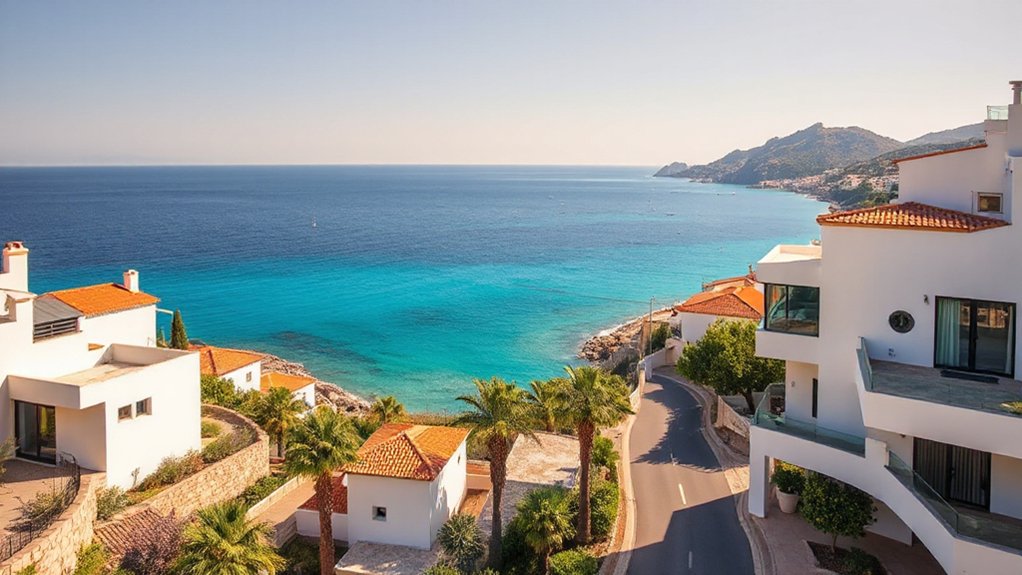
Spain’s coastal property market blends strong demand with regional diversity. You’ll notice price layers tied to location, seafront frontage, and accessibility, with averages shifting by autonomous community and coastal submarket.
Data show standout corridors around Costa del Sol, Costa Blanca, and Galicia’s Atlantic coast, where demand tracks tourism cycles and rental yields.
Regionally, buyers span domestic investors, second-home buyers, and international entrants, each guided by macro indicators like GDP growth, mortgage rates, and planning constraints.
Cultural influences shape purchase patterns, from architectural styles to local services, while Environmental impacts drive valuation, shoreline preservation, and risk assessments.
You’ll find transparency improving through standardized disclosures and market data aggregators, enabling sharper benchmarking for comparing cap rates, occupancy, and capitalization across segments.
Budget Flats for Sun Holidays on the Coast
Across Spain’s coastal markets, budget flats offer high-season appeal with lower entry costs, appealing to sun-seeking travelers and value-driven investors alike. You’ll find compact units concentrated in tourist hubs with strong seasonal occupancy, translating to steady short-term returns and scalable ownership.
Price dispersion remains sharp: entry-level flats cluster near beaches, while renovations or micro-areas lift rents in shoulder months. Local demand weighs on upkeep, so practical layouts and efficient appliances dominate listings.
Seasonal occupancy often tracks weather patterns and festival calendars, underscoring the role of local cuisine and cultural festivals in attracting repeat guests.
Cap rates sit modestly higher than hinterland markets, yet purchase economics improve with long-term rental licenses and favorable financing.
Data suggests continued volume growth through mid-year, driven by affordability, proximity, and turnkey management potential.
Marina District Apartments: Features, Prices, and Access
Marina District apartments offer a compelling blend of waterfront access and modern amenities, with prices that reflect premium location and high demand. You’ll notice strong rent growth driven by proximity to marina services and frequent boaters seeking turnkey homes.
Typical layouts emphasize open-plan living, compact terraces, and secure, on-site facilities.
Marina amenities include concierge, landscaped promenades, and dedicated storage, while residents benefit from gated access and 24/7 security.
Price bands vary by slip availability, vessel size, and lease terms, but cap rates remain competitive in coastal markets, signaling resilient demand.
Access is streamlined via pedestrian bridges and dedicated parking; walkable to restaurants, markets, and service providers.
Boat access remains a key differentiator, supporting both rental yields and owner-use flexibility.
Sea-View Townhomes: Maintenance, Space, and Value

Sea-view townhomes offer distinct maintenance patterns, with exterior upkeep and shared-area costs weighing on ongoing budgets. You’ll want to weigh space per unit against HOA dues, storage options, and potential resale lag or growth driven by coastal demand.
In this market, maintenance certainty and efficient use of square footage can shift value more than location alone.
Maintenance Considerations
Maintenance for sea-view townhomes hinges on durability, cost predictability, and access to efficient services. You’ll see that long-term upkeep hinges on concrete structures, corrosion-resistant finishes, and proactive seasonal contracts with local utilities and trusted landscapers.
Data shows steady maintenance budgets correlate with higher resale premiums in coastal markets, thanks to predictable capex and faster occupancy cycles. Typical costs cluster around exterior sealing, window treatments, and drainage maintenance, with regional variance driven by climate exposure and salt air.
Expect more frequent corrosion control and façade inspections in exposed beachfront spots. Landscaping challenges, when not managed, can accelerate depreciation—sustainable plantings reduce watering and pest risk. Pest control remains essential, especially near dense vegetation and older units, to preserve tenant satisfaction and green compliance.
Space and Value Dynamics
You’ll notice that compact footprints with modular spaces deliver more value as urban expansion presses land costs higher, making efficient design a buyer priority.
Space isn’t merely square footage; it’s flow, daylight, and access to outdoor living, all reinforcing resale appeal.
Maintenance costs cluster around rooflines, coastal corrosion, and joint seals, so selecting durable materials matters.
Market signals show stable appreciation when layouts optimize cross-ventilation and private terraces for leisure.
Environmental impact remains a key differentiator, driving demand toward sustainable systems and low-energy operation.
Cliff-Top Villas: Space, Privacy, and Practical Living
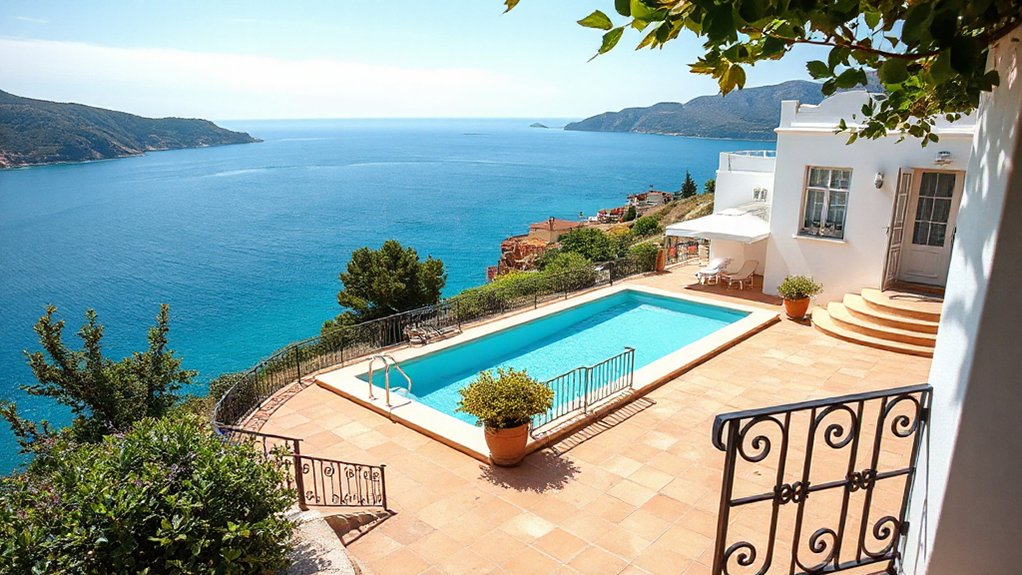
Cliff-top villas offer unparalleled space and privacy, delivering panoramic views without sacrificing practicality for everyday living. You gain generous plots, multi-level layouts, and flexible use of outdoor terraces, all tailored to coastal markets where demand remains stable.
Data shows higher premium per square meter when cliff-top conservation standards are active, signaling long-term value and risk balance.
You’ll notice durable, low-maintenance materials paired with low-density planning, supporting predictable upkeep and resale appeal.
Historical architecture cues influence design choices, appealing to buyers seeking heritage context without compromising modern efficiency.
Cliff-top conservation helps protect views and resources, reinforcing market trust and sustainable development.
- Spacious layouts with private terraces
- Heritage-informed, durable finishes
- Conservation-aligned, low-maintenance exteriors
Luxury Coastal Homes With Panoramic Sea Views
You’ll find resale values outperforming regional averages, supported by scarce supply and high-end finishes. In coastal hotspots, pricing correlates with view breadth, terrace size, and night-sky accessibility, with developers prioritizing energy efficiency and smart-home integration.
Buyer intent centers on lifestyle differentiation and short commutes to Seaside gastronomy hubs and cultural festivals, fueling convertibility into luxury vacation use.
Market data shows stronger year-over-year growth in premium coastal segments than mass-market equivalents. Vacancy rates stay low even during seasonal shifts, as targeted marketing emphasizes exclusive access, private pools, and panoramic exposure.
Strategic positioning hinges on ongoing staging of lifestyle narratives aligned with regional gastronomy and events.
Coastal Investment: Affordable vs. Premium Opportunities
You’ll see that affordable coastal yields offer steadier cash flow, even as premium markets command higher capitalization and upside.
Market dynamics show premium assets outperform in leverage and exit strategies, but arrive with greater entry costs and longer hold periods.
Understand the risk profiles across tiers so you can align your investment with your target return and time horizon.
Affordable Coastal Yields
Across Spain’s coastal markets, affordable yields hinge on properties with solid rental demand, manageable upkeep, and proximity to amenities that attract short- and mid-term tenants. You’ll find that tight pricing, steady occupancy, and predictable cap rates drive coastal affordability, even as markets heat up.
Demand concentrates around metros, beaches, and transport links, supporting stable cash flow without overextended investments.
- High-return neighborhoods with walkable services and flexible rental terms
- Selection criteria balancing price, renovation needs, and monthly carrying costs
- Tenant mix trends, from vacation-seekers to long-stay workers, stabilizing yields
In practical terms, you prioritize entry costs, predictable expenses, and occupancy patterns to maintain solid, repeatable returns in affordable coastal windows.
Premium Market Dynamics
Market segmentation concentrates on asset class, geography, and target profiles, enabling sharper yield dispersion and risk pricing. Demand concentrates around prime coastal submarkets with superior amenities, marina access, and schools, while capex cycles align with asset enhancements that sustain prestige.
You measure performance via NOI growth, occupancy stability, and residual value, not just rents. Investors increasingly favor data-driven underwriting, scenario planning, and portfolio clustering to optimize capital allocation between premium assets and adjacent growth corridors.
Investment Risk Profiles
Investment risk in Spain’s coastal markets splits along the affordable versus premium spectrum: affordable assets carry higher occupancy volatility but offer stronger yield stability through tenant turnover, while premium assets command premium pricing yet hinge on macro-tourism cycles, discretionary spend, and capital access.
- Market volatility signals: occupancy swings matter more at affordable properties, while premium holdings ride macro trends and funding cycles.
- Risk diversification: combining modest-yield, high-occupancy assets with selective premium acquisitions broadens exposure across demand drivers.
- Capital access effects: affordable deals rely on rapid refinancing with steady cash flow; premium assets depend on longer-horizon cycles and liquidity in credit markets.
Legal Essentials for Foreign Buyers in Spain
Steering Spain’s real estate laws is essential for foreign buyers, especially since non-residents must meet specific due diligence, tax, and financing requirements.
You’ll face property taxation rules that vary by region, with transfer taxes, added VAT on new builds, and ongoing annual property fees, so map costs before you bid.
The legal procedures demand a NIE (foreign identification number) for many transactions, verified banking links, and robust title checks to confirm free ownership and encumbrance status.
Expect notary public involvement and registration at the Property Registry, plus potential Tax Agency filings for non-residents.
Work with a local lawyer who specializes in cross-border deals to ensure compliant contracts, mortgage eligibility, and timely closing.
A disciplined, data-driven approach minimizes delays and protects investment outcomes.
Rental Income on the Coast: Short-Term vs. Long-Term
For coastal rentals, you’ll balance short-term demand flexibility with the steadier yields of long-term leases, leveraging regional tourism trends and local regulations to optimize occupancy and income.
You’ll compare occupancy rates, seasonality, and operating costs to decide alignment with market demand, optimizing pricing via data-driven insights.
- Short-term seasonal rental margins improve with shorter turnover times but require active rental management to sustain high occupancy.
- Long-term leases deliver stable cash flow, lower management workload, and reduced vacancy risk.
- Mixed models can maximize occupancy by shifting inventory between seasons and tenant types.
Data points to monitor: occupancy by month, average daily rate, and cost per acquisition.
Tie pricing to demand cycles, regulatory constraints, and maintenance cycles for consistent results.
Trends Shaping Spain’s Coastal Property Market
Coastal Spain is experiencing a shifting mix of demand drivers, with tourism normalization, urban-to-coastal migration, and policy signals reshaping where and how people invest.
You’ll notice project pipelines prioritizing mixed-use developments near transport hubs, capturing more value from amenity clusters, and pushing density targets where markets show strongest absorption.
Demand data point to rising secondary-home purchases in regional hubs, while year-over-year price growth narrows in some premium locales as supply expands.
Financing conditions remain supportive but selective, favoring vetted developers and yield profiles aligned with longer-term rental performance.
Cultural influences shape product design, marketing, and amenity sets, influencing buyer preference beyond pure metric returns.
Environmental impact considerations are increasingly embedded in permitting and sustainability disclosures, aligning investor risk with coastal resilience and operational efficiency.
Frequently Asked Questions
What Coastal Property Types Are Most Resilient to Price Declines?
You’ll find luxury apartments and beachfront villas most resilient to price declines, based on demand and liquidity data. In downturns, these segments attract international buyers, maintain rental yields, and recover faster, supporting stable resale values and diversified coastal portfolios.
Which Regions Offer the Best Rental Yield Along the Coast?
You’ll find the best coastal rental yields in the Costa del Sol and Barcelona coast, driven by Luxury apartments and beachfront villas; you’ll see higher occupancy, shorter vacancies, and steady demand from international and domestic travelers.
How Do Maintenance Costs Differ by Sea-View vs. Cliff-Top Homes?
Sea view homes incur higher maintenance due to salt corrosion and UV wear, while cliff top residences face greater access challenges and insurance costs; you’ll see these differences reflected in ongoing upkeep, insurance, and professional monitoring for both.
What Are Typical Property Tax Obligations for Non-Residents?
Non-resident taxes vary, and you should budget carefully; you’ll typically face property tax, plus income or wealth taxes on rental income. One interesting stat: non-residents own about 10% of coastal Spain properties. This impacts property ownership costs.
How Does Seasonality Affect Coastal Property Demand Nationwide?
You’ll notice seasonal tourism fluctuations drive demand up during holiday rental seasons, boosting coastal property values nationwide; you spot spikes in occupancy, higher yields, and more competitive pricing as traveler influx peaks and tapers through each year.
Conclusion
In Spain’s coastal market, buyer demand clusters around flats, marina-area apartments, and sea-view townhomes, with cliff-top villas drafting premium spectra. In 2023–2024, average coastal prices rose by roughly 6–8% year over year, while rental yields hovered 3–5% for long-lets and 6–9% for short-term. Picture a cliff-edge trail: steady pressure, rewarding views, but a vigilant eye on maintenance. If you buy wisely, you’ll ride the waves toward solid capital and cash flow.