
When moving to Spain, start by clarifying your move-in goals, budget, and daily needs, then map them to property types like apartments, townhouses, or casas. Consider regional lifestyle tradeoffs, from coast to inland, and how commute times, services, and expat networks affect long‑term fit. Align timing with market cycles and assess neighborhood safety, amenities, and liquidity. Use a structured due diligence checklist to compare ownership costs and potential appreciation. If you keep exploring, you’ll uncover decision details you won’t want to miss.
Key Takeaways
- Assess your budget, preferred location, and long-term plans to match property type with cash flow and ownership costs.
- Consider lifestyle needs (space, outdoor access, urban amenities) when choosing between apartments, townhouses, casas, or rural properties.
- Evaluate regional nuances (coastal vs inland vs city) and future development plans that affect value and liquidity.
- Factor maintenance, fees, and regulatory constraints (habitat protection, renovations) for historical or agricultural properties.
- Analyze rental demand and resale potential to align type with financing options and tax implications.
Define Your Spain Property Move-In Goals

Your move-in goals should anchor every property decision. You’ll map outcomes across budget, neighborhood vibrancy, and daily practicality, ensuring choices support long-term stability.
Define your target timeline, then align it with market cycles—seasonal rents, price trends, and resale liquidity—to avoid overpaying or underusing space.
Clarify social priorities: Cultural integration matters as you plan routines, schools, and community activities; language barriers influence need for multilingual services, proximity to language schools, and access to supportive networks.
Assess space configuration for work, family, and hosts or guests, weighting future growth.
Prepare a decision framework: must-haves, nice-to-haves, and non-negotiables.
Property Types in Spain: Apartments, Townhouses, Casas, and More
Spain offers a diverse property landscape beyond the familiar apartment, from compact townhouses to spacious casas and beyond. You’re evaluating options not just by size, but by lifestyle fit, maintenance needs, and market momentum.
Apartments typically offer lower entry costs and shared facilities, appealing if you prioritize location and security.
Townhouses strike a balance between indoor comfort and outdoor space, often with modest communal rules.
Casas, especially in rural zones, can deliver character, larger plots, and potential for renovation, though they may demand ongoing refurbishments.
Historical architecture adds value when it aligns with location and regulatory constraints.
Agricultural properties open possibilities for agritourism or farming ventures but require careful due diligence on water rights, zoning, and incentives.
Your objective should be aligning property type with long-term capital and personal use.
Budget Framework: Matching Funds to Property Type and Location
Allocating your budget by location and property type helps you see where funds yield the strongest return and livability.
By evaluating cost fit, you’ll pinpoint which formats—apartment, townhouse, or casa—align with your timeline and risk tolerance.
A clear funds-alignment strategy keeps you prepared for market shifts while safeguarding your buying power.
Budget Allocation By Location
How should you prioritize spending across locations to align with property type choices? You’ll allocate budgets by location based on market signals, cost of ownership, and long‑term value, not just sticker price.
Begin with occupancy plans: necesitas ensuring cash flow supports ongoing costs in coastal, urban, and inland markets. Reserve a higher share for areas with stronger rental demand or higher maintenance needs, while parks and new builds may require lighter upkeep upfront.
Factor tax implications, insurance, and local permit timelines into the allocation matrix.
When considering property maintenance, set aside a predictable reserve for essential upkeep; for Renovation costs, front‑load only what’s necessary to reach livable standards, then stage improvements by location with expected appreciation in mind.
Align budgeting with your target property type and market trajectory.
Property Type Cost Fit
To align your budget with property type and location, start by mapping your funds to the expected cash flow and ownership costs for each market. You’ll compare up-front prices, ongoing carrying costs, and potential tax implications to determine affordability and risk.
The goal is a clear fit between cash available and property-specific commitments, including ongoing taxes and financing choices.
- Property taxes and maintenance costs by location, and how they affect monthly cash flow.
- Mortgage options: fixed vs. variable rates, required deposits, and repayment timelines.
- Ownership scenarios: resale value, rental income, and long-term cost of ownership across property types.
Use this framework to stress-test your budget against market volatility, ensuring sustainable, informed decisions.
Funds Alignment Strategy
A clear funds alignment strategy ties your budget to the realities of property type and location, balancing upfront costs, ongoing expenses, and financing options to maximize cash flow and long-term value. You’ll map capital allocation to each option, weighing purchase price, taxes, maintenance, and local fees against expected rent or appreciation.
Align funds with property type by evaluating cap rates, vacancy risks, and management needs, then adjust for location factors like regional demand, infrastructure, and regulatory costs. Include tax planning to optimize deductions, depreciation, and incentives, while reserving for contingencies.
Incorporate cultural adaptation into budgeting for renovations, service levels, and local supplier relationships. This approach sharpens decision-making, improves affordability transparency, and supports sustainable returns in Spain’s evolving market.
Regional Lifestyles: Which Areas Fit Your Way of Life?

If you’re weighing regional lifestyles, you’ll weigh coastal community rhythms against inland quiet and city-centric vibes to see which fits your pace and priorities.
Coastal towns offer active social scenes and marina access, while inland areas emphasize space, affordability, and slower routines.
City regions deliver cadence and services, yet demand higher costs and bustle—so your choice hinges on how you trade pace for predictability.
Coastal Community Lifestyles
Coastal communities in Spain offer a distinct rhythm of life that blends access to beaches, marinas, and seafood markets with strong local networks and a service-driven economy. You’ll notice how daily routines align with tides, festivals, and market days, shaping predictable yet varied opportunities for work and leisure.
To navigate lifestyles effectively, consider these factors:
1) Proximity to amenities like gyms, schools, and healthcare, which supports long-term residency.
2) Community engagement, which enhances safety, support networks, and local knowledge.
3) Property types suited to seasonal cycles, from holiday lets to year-round homes, affecting income stability.
In choosing, prioritize Beachfront serenity for steady tourism demand and Coastal cuisine for vibrant social appeal. Aligning location and property type around these drivers improves overall quality of life.
Inland Quiet Living
Have you considered how inland, quiet living can align with your lifestyle goals and budget while still offering strong long-term value? In this inland tier, you’ll find steadier price growth and lower entry costs than coastal markets, plus predictable rental demand from short- and long-term stays.
Look for towns with consistent infrastructure, reliable utilities, and proximity to nature without sacrificing essential services. Interior design decisions should favor low-maintenance finishes and timeless palettes that traverse market cycles, enhancing resale appeal.
For property management, establish a clear maintenance schedule, transparent vendor sourcing, and responsive communication to protect value and occupancy. Evaluate energy efficiency upgrades and potential tax incentives, ensuring your ownership remains practical, scalable, and aligned with your long-range financial and lifestyle priorities.
City-Centric Vibes Regionally
City-centric regions combine the energy and services you expect with practical price dynamics, so you can balance lifestyle preferences with long-term value.
When you compare city-adjacent areas, consider how cultural integration and language barriers affect daily life, networking, and property value. You’ll want clarity on commute times, local amenities, and potential market shifts.
To evaluate regional vibes quickly, focus on these aspects:
1) Accessibility and services: hospitals, schools, transit, entertainment
2) Community fit: cultural events, expat networks, neighborhood cohesion
3) Language considerations: local integration support, language-friendly institutions, learning opportunities
This approach keeps you market-aware, client-focused, and prepared to align property type with your preferred pace, social integration, and long-term investment logic.
Daily Living: Commute, Amenities, and Local Vibes
When evaluating daily living, you’ll weigh commute times, nearby amenities, and the neighborhood’s vibe to determine how smoothly life fits your routine. You’ll analyze transit reliability, walking distance to shops, and access to healthcare, while considering how peak-hour crowds affect your day.
Local cuisine and cultural festivals shape the social calendar, so you’ll assess whether an area offers dining variety and event frequency that match your interests. You’ll compare neighborhoods by cost, safety, and mood, then map a practical routine: work, errands, and downtime.
Market-aware insights help you forecast long-term value alongside quality of life. In your review, prioritize proximity to essential services, predictability of services, and the feel of community, ensuring your chosen property supports consistent, effortless living.
Legal Ownership by Property Type: What Changes by Category?
Legal ownership by property type varies in Spain, and understanding those differences helps you make informed, risk-aware choices. You’ll notice that ownership transfer and legal documentation requirements shift by category, influencing risk, costs, and timelines.
In practice, this means you should map who signs, what records are needed, and when title insurance matters for you.
Consider these essentials:
1) Seized or debt-encumbered properties require extra due diligence during ownership transfer.
2) Freehold units often streamline transfers but may demand stricter documentation of use rights.
3) New builds mandate robust occupancy certificates and registration updates to reflect ownership.
Financing by Property Type: What Lenders Prefer

Financing by property type shapes lender appetite and loan terms, so you’ll see meaningful differences in interest rates, down payments, and approval timelines across categories.
Lenders weigh risk differently for vacation lets, long-term rentals, and owner-occupier flats, so your intended use drives eligibility.
Property investment typically commands higher down payments and stricter income verification, but can yield lower loan-to-value caps if rental income isn’t proven.
For rental potential, banks scrutinize occupancy rates, local demand, and rent coverage to assess cash flow.
In Spain, you’ll encounter product tiers that reward stable, year-round occupancy with more favorable terms, while high-turnover assets face tighter criteria.
You’ll improve negotiations by presenting solid market data, a credible business plan, and realistic rental forecasts.
Taxes When Buying and Owning by Property Type
As you compare property types, taxes in Spain shift with ownership structure and use, so you’ll need to map tax implications to your plans. Understanding how purchase taxes, ongoing levies, and potential tax incentives differ by type helps you estimate total cost and cash flow more accurately.
- Property investment often benefits from favorable capital gains treatment on exit, but you’ll face transfer taxes or VAT depending on new vs. resale.
- Primary residences may qualify for reduced stamp duties and residency-linked incentives, yet local surcharges can vary by region.
- Rental properties incur income tax on net rents, plus regional taxes; depreciation rules can boost deductions and long-term returns.
Keep tax incentives in mind as you model scenarios to preserve profitability and navigate compliance.
HOA and Maintenance for Shared Buildings
Managing HOA and maintenance in shared buildings is a core cost and risk area you can’t overlook; clear governance and predictable budgeting help protect value and keep residents satisfied.
In Spain, consider how HOA fees align with property value, location, and service levels. You’ll want transparent rules for common-area upkeep, insurance, and emergency reserves, plus clear escalation paths for disputes.
Assess maintenance schedules for shared amenities, from elevators to outdoor spaces, and verify contractor reliability and local compliance. Understand what’s included in dues and what counts as extraordinary assessments.
Market-aware guidance suggests comparing similarly sized developments to benchmark fees and service quality.
Finally, ensure governance documents reflect decision-making authority, voting rights, and budget approval timelines to minimize friction as market conditions evolve.
Rural Casas vs Urban Apartments: Pros, Cons, and Tradeoffs
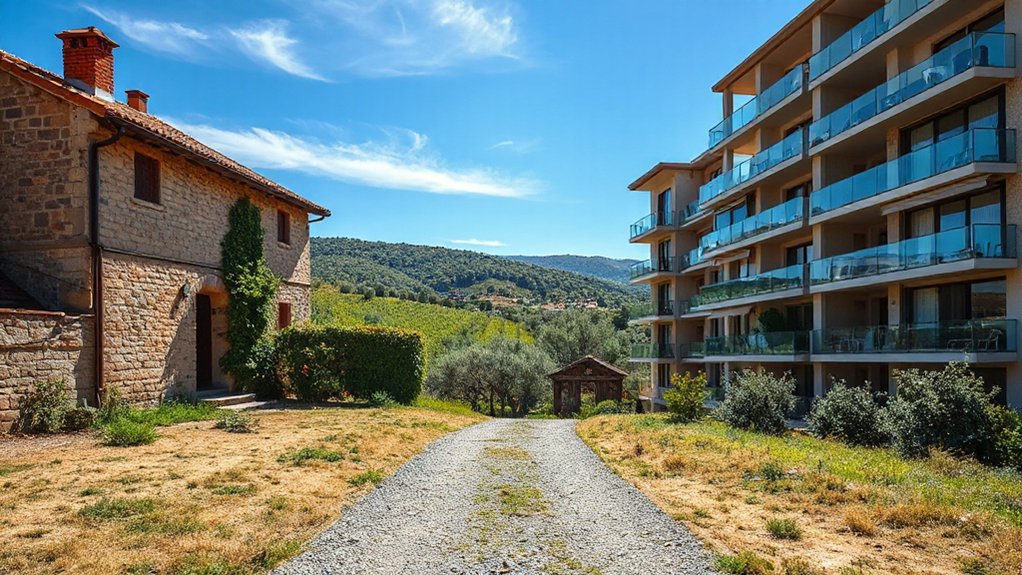
Rural casas offer space, privacy, and a slower pace, but they come with tradeoffs in accessibility, services, and value resilience. You’ll weigh rural serenity against the pull of urban convenience, considering daily needs, commute time, and resale demand. The market shows you trade density for land value, and risk-adjusted returns may favor mixed-use pockets over isolated farms.
- Accessibility and services: groceries, healthcare, and schools are less centralized than in cities.
- Infrastructure and maintenance: private wells, septic systems, and longer repair timelines apply.
- Value resilience: market cycles can swing with tourism, commodity prices, or migration patterns.
Evaluate lifestyle fit, funding limits, and long-term liquidity to choose confidently.
New Builds vs Resale: Timing, Costs, and Value
If you’re deciding between new builds and resale homes, timing matters as much as price. In Spain’s current market, you’ll weigh construction timelines, permit delays, and delivery certainty against immediate occupancy and historical architecture that older stock offers.
New builds promise predictable costs, modern layouts, and often luxury amenities, but they can carry premium pricing and slower resale liquidity if demand shifts.
Resale homes may present immediate value, potential for negotiation, and neighborhood maturity, yet they come with upkeep, legacy repairs, and sometimes higher ongoing maintenance.
Analyze total cost of ownership over your horizon: upfront price, financing terms, and renovation needs.
Consider value drivers like location, future development plans, and resale risk.
Your goal: align timing, budget, and lifestyle trajectory to maximize long‑term value.
Common Pitfalls by Property Type to Avoid
Buying property in Spain comes with type-specific traps you’ll want to anticipate, from financing quirks on new builds to hidden maintenance costs on resale homes. You’ll want to stay disciplined about these pitfalls, tailored to property type, so your decision remains grounded in value and risk.
1) Historic or listed properties: renovation costs spike, permits lag, and structural constraints can limit modernization.
2) Modern apartments: community fees and service charges may surprise you; check governance rules and upcoming upgrades.
3) Detached houses in traditional towns: maintenance is ongoing, and utility access or zoning changes can impact long-term flexibility.
Historical architecture, local cuisine, and market volatility shape outcomes, so assess preservation requirements, intense planning, and regional demand before committing.
Coastal, Inland, and Island Spain: Regional Nuances

Coastal property dynamics shape seasonal demand, pricing cycles, and access to services, so you’ll want to weigh beachfront versus port-front options and their maintenance considerations.
Inland lifestyle tradeoffs hinge on commute times, land use, and evolving amenities, helping you assess long-term value against daily convenience.
Island real estate nuances bring dispersion costs, regulatory quirks, and seasonal markets into tighter focus, guiding you to balance novelty with practicality.
Coastal Property Dynamics
1) Coastal value drivers: proximity to beaches, harbor activity, and transport links shape liquidity and resale potential.
2) Risk assessment: seasonal demand spikes, flood exposure, and maintenance costs affect total cost of ownership.
3) Market tailoring: align property type with micro-regional trends, from rugged cliffside villas to flat-fronted seaside flats, maximizing rental income and personal use.
Stay data-driven, consult local experts, and calibrate expectations to coastline-specific dynamics rather than generic coastal hype.
Inland Lifestyle Tradeoffs
Are you weighing the tradeoffs between inland living and coastline or island options in Spain, and seeking a clear read on lifestyle implications? You’ll find inland life tends toward steadier costs, seasonality less pronounced, and closer ties to agrarian rhythms, with practical access to services that scale with town size.
Cultural nuances shape daily routines, from fiestas to markets, influencing social momentum and neighborly networks. Inland living often means more space, lower congestion, and cost advantages, but you’ll trade some coastal leisure, maritime vistas, and direct beach access.
Local cuisine shifts toward regional staples—ots, pulses, roast meats—and seasonal produce that rewards planning. Weigh your priorities: quiet consistency versus coastal vibrancy, and how your routines align with work, family, and long-term residency goals.
Island Real Estate Nuances
- Assess access windows: ferries, flights, and road links for year-round viability.
- Compare price momentum: rental yield, resale appetite, and redevelopment constraints.
- Gauge quality of life: services, safety, and environmental policies.
This helps you align investment with lifestyle and risk tolerance.
Vetting Neighborhoods Before You Buy
You’ll assess market factors like price trajectory, rental demand, and liquidity to gauge long-term viability.
Focus on Neighborhood safety to understand crime patterns, mitigation measures, and community cohesion.
Review local amenities—grocery stores, healthcare, parks, and transit options—and how they align with daily routines.
Consider future development plans and environmental risks that could affect value.
Use data from official sources, resident surveys, and recent sales to triangulate your impression.
Due Diligence Checklist: What to Verify
When you’re evaluating a property, start with a focused due diligence checklist that covers legal, financial, and physical aspects; this approach helps you identify risks before you commit. You’ll verify title clarity, encumbrances, and ownership rights to avoid surprises.
Assess permits, licenses, and building compliance, ensuring no pending disputes. Inspect structure, systems, and tenant liabilities, so maintenance costs are predictable.
Stay mindful of market trends and how they affect value and liquidity.
- Confirm title and encumbrances, and obtain a recent nota simple or equivalent
- Review fiscal status, tax obligations, community fees, and potential liabilities
- Conduct a physical audit of construction integrity, utilities, and environmental risks
Property investment discipline reduces exposure; market trends guide timing and potential returns.
Quick Scoring Guide: How to Decide Fast
To decide fast, use a concise scoring framework that weighs the most critical factors—title clarity, encumbrances, fiscal obligations, and property condition—so you can compare options at a glance.
You’ll assign scores to each category, then tally for a quick rank. Prioritize title clarity to avoid misrepresentation or future disputes. Check encumbrances to prevent hidden liens. Assess fiscal obligations like taxes and ongoing costs, and evaluate property condition for anticipated upkeep.
Use transparent thresholds so results are repeatable across neighborhoods. Factor in contextual elements, such as Historical architecture appeal and how Local cuisine could influence neighborhood demand and resale.
This method keeps you market-aware and client-focused, enabling you to act decisively when opportunities align with your strategic priorities and risk tolerance.
Next Steps: From Offer to Ownership in Spain
Securing ownership in Spain after you’ve made an offer hinges on timely, structured steps that protect your interest and align with local practice. You’ll move from negotiation to due diligence, guided by your legal and fiscal advisors, to verify title, encumbrances, and compliance.
Success depends on clear timelines, accurate documentation, and prompt lender interactions, minimizing risk and surprise. Cultural integration and language barriers shape communication with sellers and authorities, so plan bilingual support and translated records from day one.
- Finalize the contract terms and secure an earnest payment within agreed conditions.
- Complete due diligence, obtain a favorable mortgage, and verify land registry entries.
- Sign the public deed of purchase (escritura) before a notary and register ownership.
This approach keeps you market-aware and client-centered throughout.
Frequently Asked Questions
How Do Property Types Influence Long-Term Resale Value in Spain?
Property types influence long-term resale value: luxury apartments often hold premium appeal in coastal cities, while rural estates can stabilize value through scarcity; you’ll benefit from diversified demand, especially if you balance maintenance costs with market trends.
What Hidden Costs Are Unique to Each Property Type?
Hidden costs vary by property type: you’ll face structural inspeсtions and maintenance for houses, or community fees and potential service charges for flats. Consider legal considerations and tax implications before choosing, so you stay market-aware and protected.
Which Property Type Suits Seasonal vs. Year-Round Living?
You’ll want a property for seasonal living that’s flexible and low-maintenance, like a compact apartment, while year-round needs lean toward a spacious villa; weigh furnishing styles and local amenities to optimize lifestyle and resale value.
Do Permits Differ by Property Type for Renovations or Expansions?
Permits do vary by property type, and zoning rules shape renovation restrictions. You’ll face stricter limits in sensitive zones, so check property zoning before planning expansions; otherwise, future-proof decisions save time, costs, and investor confidence.
How Does Property Type Affect Maintenance and HOA Responsibilities?
Yes, property type affects maintenance and HOA responsibilities: you’ll face varying community fees and stricter rules, so track maintenance schedules, compare what’s included, and plan for quarterly dues, reserve funds, and potential special assessments.
Conclusion
In short, you’ve mapped your goals, tested options, and priced realities against locations that fit your lifestyle. As you compare apartments, townhouses, or casas, you’ll prioritize daily rhythms, commute, and local vibes—then vet neighborhoods with a rigorous due diligence checklist. The market’s nuances matter, but your clarity matters even more. Are you ready to turn informed choices into confident ownership, leveraging data, timing, and neighborhood insight to secure value that aligns with how you want to live in Spain?