
A practical guide to Spain’s metros helps you navigate dense city cores, frequent central services, and integrated fare zones with confidence. You’ll rely on clear multilingual maps, real-time updates, and smart cards in Madrid, Barcelona, Sevilla, and Valencia, plus seamless transfers across networks. Plan around predictable headways, optimize intercity hops, and use data to select fastest routes. Prioritize accessibility, safety, and signage while balancing sightseeing with transit efficiency. Stay alert to disruptions, and you’ll uncover smoother multi-city journeys as you continue.
Key Takeaways
- Understand metro structure and navigation: dense core services, clear signage, multilingual maps, and key interchange hubs to plan efficient routes.
- Use smart cards and integrated fares: zone-based discounts, seamless transfers, and online reloading for Madrid, Barcelona, Valencia, and Sevilla.
- Plan routes strategically: favor cross-city through services, minimize backtracking, and align activities with reliable peak intervals.
- Prioritize safety and accessibility: follow announcements, use elevators and ramps where available, and stay aware of platform rules and belongings.
- Leverage data and real-time updates: monitor delays, construction notes, and buffer times to maximize time, cost efficiency, and experience.
Metro Basics for Spain’s Cities: Quick Start Guide
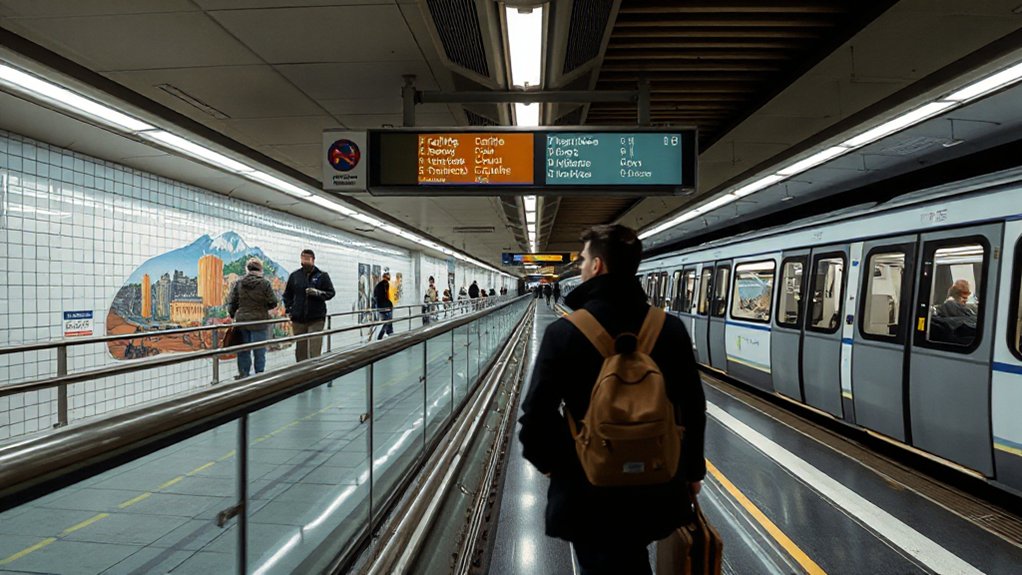
Metro basics for Spain’s cities are straightforward: most systems rely on dense urban cores with frequent services, fare integration across zones, and a mix of metro, commuter rail, and bus links that coordinate with a city’s core mobility plan.
You map typical peak-and-off-peak intervals, noting 3–7 minute headways in central lines and longer spans outward. Data show zone-based pricing often overlaps with transit apps, simplifying transfers.
Cultural landmarks anchor congestion patterns, shaping station placement and pedestrian access. You’ll leverage clear signage, multilingual maps, and real-time updates to plan trips, minimizing wasted time.
Local dining scenes influence travel timing and station-area flows, especially around lunch hours and evening services.
Model rider behavior through ridership dashboards to optimize feeder networks and reduce bottlenecks across the urban transit ecosystem.
Buy Tickets and Top Up Smart Cards (Madrid, Barcelona, Sevilla, Valencia)
Madrid, Barcelona, Sevilla, and Valencia all use smart cards or mobile-ticketing tied to integrated fare zones, making it straightforward to buy and top up as part of your city-wide travel plan.
You’ll find single-journey and multi-ride options, with discounts layered by zone, time, and travel duration. Ticket discounts exist for frequent riders and students, so compare cards before committing to maximize value.
Smart card maintenance is simple: top up online, at machines, or kiosks, and validate before each ride. In Madrid and Barcelona, reloads apply across affiliated networks, reducing wallet churn.
Valencia and Sevilla offer seamless transfers when you stay within the same smart-card ecosystem. Track balance and expiration to avoid service gaps during peak schedules.
Read Maps and Transfers: City-by-City Guide
To understand how to navigate efficiently, start with maps and transfer rules city by city. You’ll find that each metro system presents its own transfer windows, fare zones, and interchange stations.
In Madrid, use the grid-style map to identify Zona A cores and key interchanges like Sol and Chamartín; Barcelona centers transfers around Passeig de Gràcia and Sants, with the L9 line bridging satellites.
Sevilla prioritizes a compact network where name-labels guide transfers, while Valencia’s maps emphasize the RN and core hubs like Xàtiva.
Read maps before boarding, noting interchange times and platform changes. Cultural landmarks cluster around central stations, so plan paths that minimize backtracking.
Respect local customs on escalators and queueing to keep flows smooth.
Move Between Madrid, Barcelona, Sevilla, and Valencia Efficiently
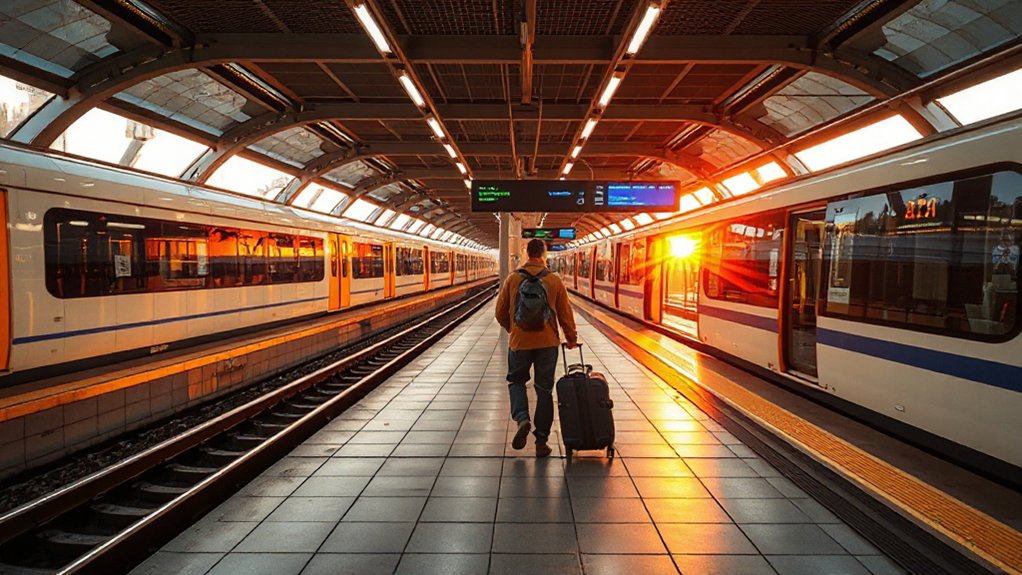
Efficiently moving between Madrid, Barcelona, Sevilla, and Valencia hinges on aligned ticketing, strategic interchanges, and time-aware planning. You’ll maximize value by using a unified regional pass or Iberian rail combo when available, reducing need for multiple tickets.
Compare high-speed links (Madrid–Barcelona; Valencia–Madrid) against mid-length routes (Sevilla–Madrid; Barcelona–Valencia) for fastest times and seat availability. Schedule trips to minimize transfers; prioritize hubs with efficient metro-to-rail connections and predictable intervals.
Expect peak-day surges near business hours, so buffer for delays. Track real-time updates via official apps, and consider night-owl options if you crave cultural highlights or late-evening performances.
For meals between legs, seek Local dining options at station districts to maintain momentum without long detours.
Safety, Accessibility, and Real-World Travel Tips
You’ll see that safe transit hinges on consistent platform announcements, visible security presence, and clear wayfinding at major stations.
Data shows accessibility features—elevators, ramps, tactile tiles, and priority seating—vary by city, so plan around Madrid, Barcelona, Sevilla, and Valencia’s specifics.
Real-world tips emphasize gap-awareness, peak-hour crowding, and keeping valuables secure, with local app alerts guiding every trip.
Safe Transit Practices
Metro systems in major Spanish cities prioritize safety, accessibility, and practical travel tips, with real-time alerts, clear platform signage, and dedicated staff helping riders navigate peak hours and crowded stations. You should follow established protocols for ticket validation and know emergency procedures to minimize delays and risks.
Data shows timely ticket checks curb fare evasion and speed up queues, while visible staff guidance reduces confusion during disruptions. In practice, stay behind line markers, listen to announcements, and keep belongings secure in crowded cars.
When an incident occurs, report it promptly and follow emergency procedures to exit safely. Preparedness translates to smoother commutes and lower incident rates for all riders.
- Real-time alerts guide decisions during delays
- Ticket validation should be completed before boarding
- Stand clear of doors and rush areas
- Know where to find staff for assistance
Accessible Metro Features
Wheelchair accessibility is mapped in station layouts and fare-area design, reducing wait times during peak periods.
Real-time updates and clearly timed service intervals minimize uncertainty, and you can rely on digital boards to reflect temporary changes caused by maintenance.
Audio announcements clearly identify lines, stations, and transfers, aiding riders with visual impairments and multilingual travelers.
Safety features include widely distributed tactile paving and visible security presence, plus well-lit corridors guiding you toward exits.
Data shows higher rider satisfaction in cities investing in universal design, prioritizing uninterrupted navigation and inclusive signage across the metro network.
Real-World Travel Tips
Real-world travel in Spain’s metro systems blends practical safety measures with everyday accessibility. You’ll move efficiently through dense networks when you respect peak-hour crowding, validate tickets, and follow platform announcements.
Data shows incident rates drop where you plan routes in advance and use map apps to avoid transfers during congestion. Accessibility remains strongest for designated priority seating and tactile cues near station exits, though some older lines require extra care.
As you explore, balance quick hops with opportunities to sample local dining and visit cultural landmarks nearby, enriching transit with regional flavor and history. Stay aware of station layouts, elevator availability, and signage in multiple languages to minimize delays.
- Check peak-hour patterns to optimize travel
- Validate tickets before boarding and keep them accessible
- Use accessibility features and plan alternative routes
- Merge transit with local dining and cultural landmarks for richer trips
Plan Multi-City Itineraries to Maximize Your Time
You’ll optimize your route with efficient multi-city planning that reduces backtracking and saves transit time.
Data-driven picks favor high-density hubs, synchronized timetables, and logical sequencing for tight schedules.
Balance city stopovers to maximize experience—short, purposeful stays with time-saving transit strategies and clear routing priorities.
Efficient Multi-City Routing
- Sequence cities by proximity and peak transit reliability to reduce idle periods.
- Use a mix of metro and high-speed options to slash travel time while preserving comfort.
- Allocate dwell time around key experiences like Historical landmarks and local cuisine for balanced days.
- Pre-plan transfers and baggage handling to maintain momentum and avoid delays.
This approach yields data-backed gains in throughput, location relevance, and overall itinerary cohesion.
Time-Saving Transit Strategies
Approach each city as a data set: peak-hour frequencies, headways, and platform layouts shape your plan. Favor routes with cross-city through services or simple interchanges, then backstop with predictable intervals to protect your tight schedules.
When feasible, cluster activities by neighborhood blocks to cut backtracking. Use mobile alerts for construction or service changes to preserve time.
In your spare moments, seek artistic murals as quick visual anchors to verify routes, and sample local cuisine near expedited corridors to maximize efficiency without sacrificing experience.
Balanced City Stopovers
- Optimize stay length around landmark density
- Align routes with peak metro reliability windows
- Pair meals with Local cuisine clusters for efficiency
- Track time, cost, and experiential satisfaction continuously
Frequently Asked Questions
How Do I Use Contactless Payments on Metro Turnstiles in Spain?
You can use contactless payment methods at Madrid, Barcelona, and other metros, simply tapping your card or mobile wallet at turnstiles. Metro card options exist, but contactless payments often work faster across most lines and zones.
Are There Night-Only Metro Lines or Services in Major Cities?
Night service exists in some cities, but not every line runs all night—your ride might be limited. Check exclusive routes and schedules, because you’ll rely on night service only on select lines, with gaps between late trains.
Can I Transfer Between Metro and Regional Rail Within One Ticket?
Yes, you can, but it depends on the city and ticket type. You’ll need a ticket transfer accepted by both systems, and expect fare validation at transfer points to confirm eligibility and prevent overcharges in your journey.
What Safety Protocols Are Unique to Madrid, Barcelona, Sevilla, Valencia?
Madrid safety measures differ: you’ll notice heightened platform vigilance and clear crowd control. Barcelona security emphasizes tunnel surveillance and streamlined queueing, while Sevilla and Valencia rely on robust station staff presence and emergency response drills. Stay aware, follow posted guidance.
Do Metro Apps Work Offline for Offline Maps and Schedules?
Yes, some metro apps offer offline navigation and maps, but features vary; you’ll still want online updates for schedules. Metro app features matter, yet rely on connectivity, while offline navigation helps you plot routes without data access.
Conclusion
You are the conductor of a grand urban orchestra, and Madrid, Barcelona, Sevilla, Valencia are your four instruments. Each line on a metro map hums like a different tempo; tickets and cards are the sheet music you carry. When you weave transfers, you choreograph tempo changes to maximize time. Read the maps like a compass, heed safety like a steady metronome, and you’ll performance-build a seamless, data-driven journey across Spain’s city-scaled heartbeat.