
Renting a car in Spain is your fastest lane to coastlines and hidden towns. Start by comparing rates, snagging discounts, and choosing a trusted provider with clear terms. Bring your license, ID, and a valid card; inspect the ride and photograph any dings. Pick a compact for tight streets or a wagon for gear, and mind tolls, zones, and parking rules. Budget for fuel, insurance, and surprises—soon you’ll uncover routes and tips that keep you cruising smoothly.
Key Takeaways
- Compare rental options online, choose transparent terms, and book a vehicle suited to your route with proper documentation ready at pickup.
- Inspect the car on pickup, photograph existing damage, note fuel level, and ensure insurance and extras are confirmed.
- Choose a compact car for city driving or a fuel-efficient wagon for coastal trips; consider luggage space and regional route plans.
- Understand Spain’s driving rules, speed limits, tolls, parking zones, and low-emission or restricted-traffic days that may affect routes.
- Carry zero-excess insurance if possible, document everything for claims, and keep records of reports, receipts, and communications.
Seven Steps to Renting a Car in Spain
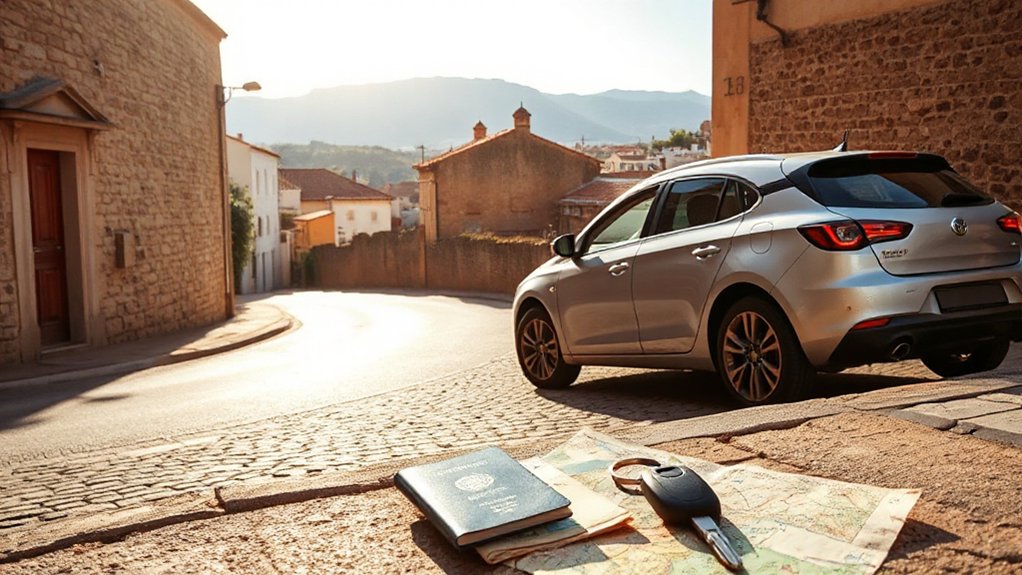
Renting a car in Spain isn’t just about snagging wheels; it’s your passport to canyon roads, coastlines, and village squares. You’ll map a plan in seven steps, keeping it tight and practical.
First, compare rates online, chase Car rental discounts, and pick a trusted provider with transparent terms.
Next, verify insurance, fuel policy, mileage limits, and roadside assistance so you’re not surprised later.
Third, book a car suited to your route: compact for city lanes, larger for coastal drives.
Fourth, assemble required documents: license, ID, and a valid credit card.
Fifth, inspect the vehicle on pickup—photograph dents, lights, tires.
Sixth, learn driving etiquette: roundabouts, speed limits, and parking quirks.
Finally, download offline maps and set a backup plan for lodging if roads close.
Stay flexible and enjoy.
Choosing the Right Car for Your Spain Trip
If you’ll linger in towns with narrow lanes, a compact or hatchback handles streets and parking easier than a bulky SUV.
Planning coastal routes? A fuel-efficient wagon brings extra range without breaking the budget.
Consider luggage space if you’re packing gear for outdoor days.
When you book, factor in Car rental insurance for peace of mind on twisty hills and busy beaches.
Learn the basics of Spanish traffic signs before you hit the road, so you catch speed limits and roundabouts without hesitation.
Choose practical comfort, reliability, and accessibility for a smoother Spanish adventure.
Spain Driving Rules, Tolls, and Parking
In Spain, you’ll want to skim the essentials fast: speeding limits, seat belts, and local signage as you roll.
Tolls can pop up on highways and city outskirts, so have cash or a card ready and check apps for real-time fees.
Parking rules vary by city, but red zones and blue zona azul meters are common—watch the clock and stay within the hours.
Spain Driving Rules
Driving in Spain comes with a clear set of rules you’ll want to know before you hit the road: seat belts are mandatory for all passengers, hands-free phone use is required, and you must carry your license, vehicle registration, and proof of insurance at all times.
You’ll notice Spanish road signs guide with clarity, from roundabouts to speed limits that shift by zone. In city centers, low emissions zones and restricted traffic days shape your route, so plan ahead.
Driving culture blends courtesy with efficiency: yield to pedestrians at crossings, use indicators, and stay patient in narrow streets. Remember, fines hit hard for infractions, so respect signals, speed limits, and park only where allowed.
Tolls and Fees
- Identify routes with electronic tolls before you go, and check if your rental car includes the transponder or if you’ll pay at booths.
- Use toll payment methods you’re comfortable with—credit card, cash, or a rental company account—and keep a small bill wallet handy.
- Track your receipts or digital charges in your rental app to reconcile costs after your trip.
Electronic tolls simplify long hauls; stay flexible, and you’ll glide through.
Parking Regulations
Curious how to park like a local in Spain? Here’s the practical playbook.
In cities, read the signs carefully for parking zones and time limits. Blue zones (Zona Azul) are pay-by-machine and often require a resident permit in peak hours, so have coins or a card ready. Check meters before you leave; a flick of a dingy ticket can save you from a tow.
In residential areas, avoid blocking driveways and double-parking, which trigger quick fines. Always display a permit when required and respect 2–3 hour limits in busy streets.
If you get a ticket, document it and pay promptly to minimize parking fines. Remember, enforcement is strict near tourist hubs—plan ahead to avoid headaches.
Insurance, Fuel, and Budgeting for Your Road Trip
Insurance, fuel, and budgeting aren’t afterthoughts on a Spanish road trip—they’re the backbone that keeps your plans intact and your wallet sane. You’ll want clear coverage, smart fuel choices, and a realistic daily cap to steer your decisions as you roam from coast to coast.
- Compare Insurance options before you rent; look for zero-excess options and roadside assist that covers abroad.
- Favor Fuel efficiency by choosing a compact or hybrid and planning routes that minimize backtracking.
- Budget with a daily cap, include tolls, parking, and unexpected detours so you don’t spike your total.
Tip: read the rental’s terms, note fuel policies, and track mileage to avoid hidden charges. You’re in charge of the ride.
Pickup, Documents, and Return: The 7-Step Process
Pickup is where the rubber meets the road: you’ll drop your bags, grab your keys, and line up the seven-step routine that keeps surprises off the itinerary.
First, present your rental paperwork clearly—license, credit card, and reservation. Verify names match and dates align with your itinerary.
Next, inspect the vehicle with care: note dings, scratches, lights, tires, and fuel level, and photograph them if possible.
Confirm insurance coverage and roadside assistance, plus any added extras.
Return timing matters: fuel up to the specified level, remove personal items, and request a return receipt.
Throughout, communicate any discrepancies immediately to avoid post-trip charges.
Keep your documents handy for the rental desk and the vehicle inspection, so you glide through pickup and return with confidence.
Regional Driving Considerations and Itineraries
Spain’s regions aren’t just borders on a map—they’re road-trip personas, each with its own pace, scenery, and quirks. You’ll fine-tune routes to savor regional cuisine and catch cultural festivals, turning drives into memories rather than errands.
- Plan short hops between cities during shoulder seasons to enjoy calmer roads and tastings.
- Schedule inland detours to taste rustic regional cuisine, avoiding highway crowds but catching hidden gems.
- Save time for coastal routes at dusk, when landscapes glow and festival lights begin.
Keep tactile notes: road quality varies, from smooth highways to winding mountain lanes. Pack a flexible itinerary, a trustworthy map, and a sense of timing to maximize authentic experiences while staying efficient and safe.
Contingencies and Safety on Spanish Roads
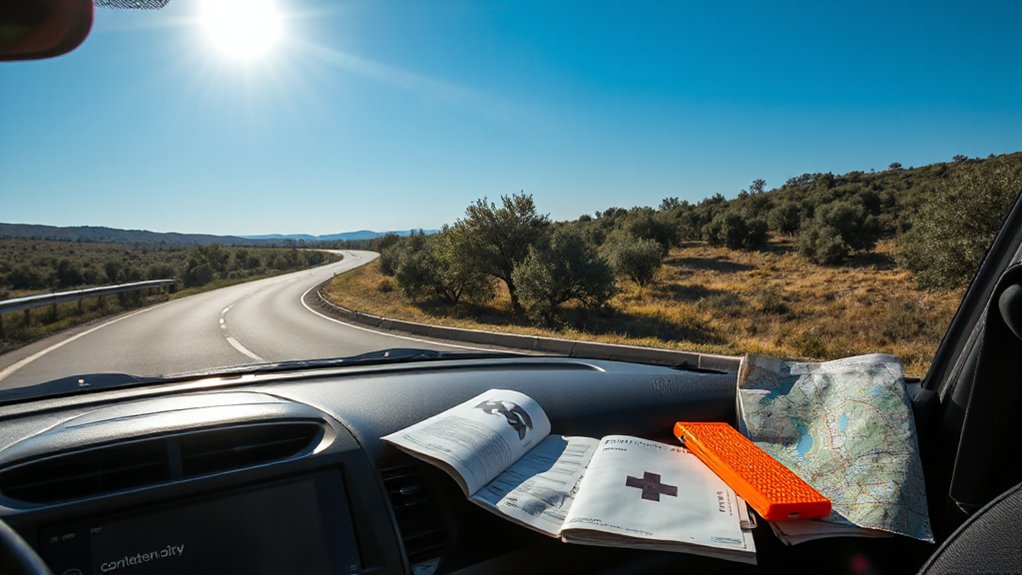
Pack a roadside emergency kit and know where it lives in your car so you’re ready for any snag on Spanish roads.
Understand how insurance and liability shifts work before you hit the highway, so you’re not caught off guard this side of the autopista.
A quick glance at common contingencies—flat tires, detours, weather—lets you stay calm, act fast, and keep your trip moving.
Roadside Emergency Kit
When you’re cruising Spain’s highways, a roadside emergency kit isn’t optional—it’s a smart, practical safeguard you’ll thank yourself for later. Pack essentials that echo emergency preparedness and support quick vehicle maintenance fixes, so you stay moving rather than stranded.
A well-chosen kit reflects local roads, weather, and long stretches between towns.
1) Reflective vest, warning triangles, and a flashlight for visibility at dawn or dusk.
2) Basic tools, spare fuses, and duct tape to handle minor hiccups on the fly.
3) Water, non-perishable snacks, and a small blanket to weather delays or a chilly night.
Keep it in the boot, check expiry dates, and rotate supplies with the seasons. Smart planning saves time and avoids pricey detours.
Insurance and Liability Shifts
As you swap the roadside kit for paperwork, you’ll see how insurance and liability work on Spain’s roads can shift with the situation—accidents, rental terms, and local rules all tug at who pays and how.
In Spain, liability coverage is mandatory, but limits vary by insurer and car class, so know yours before trouble hits. If you’re at fault, expect your liability to cover others’ injuries and damage, while extensive options handle the vehicle itself.
Uninsured or disputed fault can complicate things, so document everything with photos and clear third-party details. When you file insurance claims, act quickly, report to authorities if required, and keep receipts.
Clear records speed settlements, protecting you from surprise costs in a tense moment.
Frequently Asked Questions
Can I Rent a Car With an International Driver’s License in Spain?
Yes, you can rent with an international driver’s license in Spain, but verify with the rental company. You’ll need driver licensing recognition, and consider rental insurance options to stay protected on busy roads.
Do Car Rental Companies Allow One-Way Returns Between Regions?
Most rental firms allow regional drop-off, but watch one-way rental fees that vary; about 25% impose surcharges. You’ll want to check Regional drop off policies and plan ahead, because locations differ, and fees can surprise your itinerary.
Are Toll Transponders or Credit Card Charges Required for Highway Tolls?
Toll transponders aren’t required everywhere; some roads bill you later. Credit card charges often apply, especially for non-ELV routes. You’ll fare better if you confirm local rules at each toll plaza, avoiding surprises with receipts and apps.
Is It Cheaper to Rent Manually or Automatically in Rural Areas?
Manual is cheaper in rural areas, you’ll save fuel and grunt through tiny lanes; automatic costs more, yet eases parking. Think fuel efficiency and parking availability as you drive, satire on bureaucracy aside, you’ll still smile.
What Happens if a Rental Car Is Damaged in Off-Road Areas?
If you damage a rental on off-road terrain, you’ll likely trigger off road insurance and must file damage claims with your insurer and the rental company, documenting pics, timing, and exact location for quick, fair settlement.
Conclusion
You’ll own the road for a blink, then vanish into memory like a sunlit olive grove. With the keys in your hand, you’re not just circling Spain—you’re threading its rhythms: plazas,海, coastlines, and cliffside bends that push you to trust your steering. Pack smart, plan loose, and let detours become discoveries. The car is a doorway; your choices are the map. Drive with curiosity, respect the rules, and return wiser, pockets lighter only in stories.