
To explore Aragón’s historic villages, pick a base in a hub village and set out along quiet back roads, arcaded streets, and sun-washed lanes where whitewashed walls glow and terracotta roofs warm the horizon. Stroll through carved doorways, hidden courtyards, and markets that hum with craft, then pause at bakeries, plazas, and museums that slow time. Seek offbeat paths, meet local artisans, and photograph dusk-lit silhouettes. If you keep exploring, more scenery and stories await beyond each bend.
Key Takeaways
- Choose base villages near trails and towns to minimize travel and maximize access to sights, markets, and riverside paths.
- Group villages into clusters to reduce logistics, enable regional comparisons, and immerse in Aragón’s layered history.
- Explore offbeat paths and hidden alleys, looking for mills, frescoes, arcades, carved doorways, and hidden courtyards.
- Plan for accessibility and amenities: level entrances, signage, ramps, accessible toilets, and nearby transport hubs.
- Capture the experience with photography tips (leading lines, blue hour, RAW) while engaging with artisans and local markets.
What Makes Aragón’s Historic Villages Special
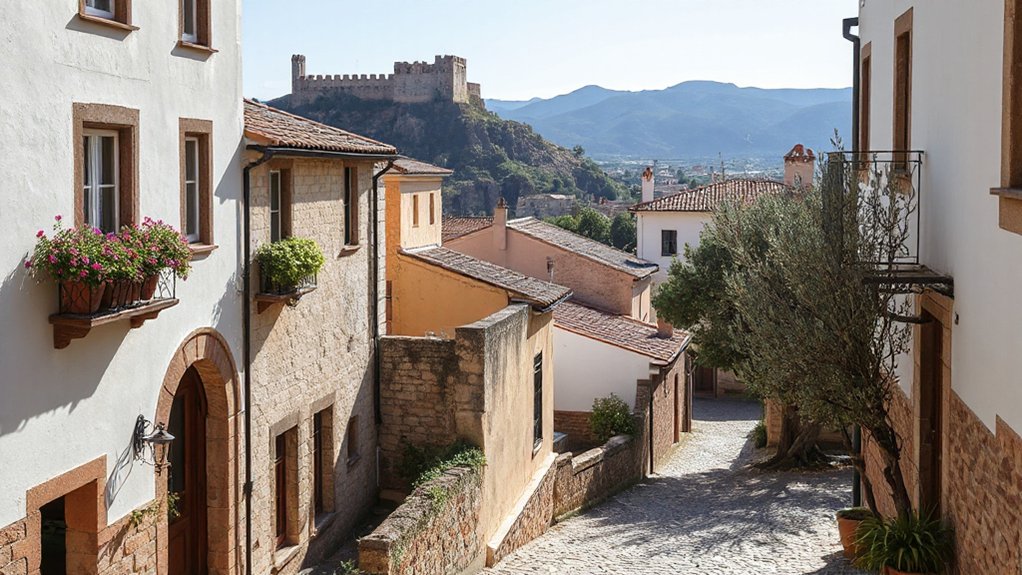
Aragón’s historic villages aren’t just places to pass through; they’re living postcards, where stone lanes wind between whitewashed walls and terracotta roofs, and every corner whispers a story. You feel the weight of time in arches, balconies, and narrow stairways that invite you to linger.
The architectural charm reveals itself in courtyards lined with zócalos, carved lintels, and sun-warmed stone that holds centuries of sun and rain. Local craftsmanship threads through daily life—from cedar-beamed ceilings to ceramic tiles that glow after rain.
You sense traditions handed down in steady hands: a mason’s careful bevel, a potter’s glaze catching light, a craftsman’s patient restoration. In these villages, culture isn’t museum-ready; it’s breath, lived in every doorway you cross.
Choose Your Base: Best Hub Villages for Aragón
You’ll feel the pull of a hub village where proximity keeps you close to both towns and trails, cutting travel time without sacrificing charm. From airy streets to reliable transport links, you’ll notice how easy it’s to hop between sights, markets, and riverside paths.
With sturdy local amenities and services, you’ll have what you need at hand as you map your Aragón base.
Base Village Proximity
From here, you’ll map your foothold around a few natural hubs—villages that pulse with reach, not crowds, letting you hop to food markets, county fairs, and dawn patrols with the simplest of strides.
Base village proximity is your compass: choosing hub villages lets you weave between village clusters and nearby hamlets, reducing travel friction while preserving a sense of place. You’ll feel the pull of intimate lanes, quiet plazas, and morning aromas from ovens and cafés, all within easy reach.
This approach keeps your days elastic—more chances to pause, listen, and compare regional character. By anchoring yourself, you’ll enjoy efficient loops, authentic encounters, and a steady rhythm that honors Aragón’s layered history and ongoing crafts.
Transport And Access
What makes a base truly work in Aragón is how you move from it—how the roads, trains, and rhythms align so your days feel spontaneous yet seamless.
You’ll notice that chosen hub villages place local transportation at the heart of daily life, with bus lines threading between hill towns and rail stations just outside historic cores.
From your base, doors open to quiet back roads and easy trail starts, not detours.
Accessibility options blend into the landscape: level entrances, clear signage, and gentle ramps near plazas.
You navigate with confidence, swapping dread of logistics for the pleasure of serendipity—a coffee stop, a sunset overlook, a conversation with a craftsman.
In Aragón, movement becomes the memory you keep.
Amenities And Services
You’ll notice community services quietly stitching the day together—libraries hosting talks, plazas hosting markets, and small clinics that respect pace over urgency. Public transport hubs pulse with commuter rhythm, while bike racks invite sunlit sidetracks to hidden chapels and viewpoints.
Local authorities maintain clear signage, accessible toilets, and inviting information points that welcome wanderers and locals alike. You’ll feel the heartbeat of everyday Aragón, where practical comforts meet cultural texture, enabling longer, richer explorations.
Best Seasons for Quiet, Walkable Aragón Villages
When the crowds thin, Aragón’s villages reveal their best seasons for quiet strolls and easy, walkable days: late spring when almond boughs bloom along narrow lanes, and autumn when mellow light gilds stone courtyards.
You’ll feel seasonal serenity in every footstep, savoring village tranquility as you move at your own pace, pausing at whitewashed facades and small plazas. The air stays fresh, and local rhythms slow to a welcoming pulse, inviting you to linger rather than rush.
- Late-spring bloom walks
- Autumn amber light meanders
- Off-peak, clear, sunlit routes
Walk the Medieval Core: Must-See Street Walks
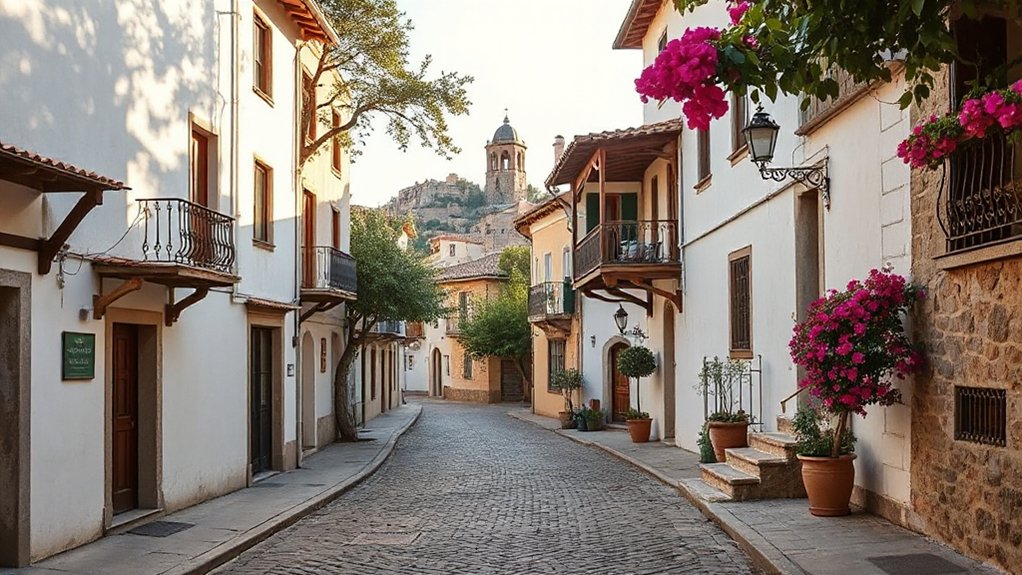
From the quiet pace of late-spring and autumn strolls, you step into Aragón’s medieval core, where streets tighten into stories and every corner holds a whispered echo of centuries past. You move with deliberate cadence, letting storefronts glow under timber-framed facades while chalk-white walls keep secrets of guilds and markets.
Narrow lanes open to sunlit courtyards, and you follow the rhythm of footfalls that belong to centuries of repair, reuse, and revival. Along the way, you glimpse local artisan crafts—the scent of resin, the shimmer of kiln-fired pottery, the hum of loom and needle—then pause to drink in scenic village views that turn alleyways into living murals.
The core invites you to walk, observe, and listen.
Layer in History: Key Landmarks by Village
Let the Historic Landmark Map be your compass, guiding you through the village whispers and stone contrasts that shape Aragón’s story.
You’ll read the Village Landmarks Spotlight as if tracing a heartbeat—each site a chapter, each tower and plaza a memory waiting to be named.
Together, they set the stage for conversations about place, time, and the people who lived them.
Historic Landmark Map
Ever wondered which stones tell the story of Aragón’s villages? The Historic Landmark Map guides your steps, turning maps into echoing paths. You’ll trace sacred sites, monasteries, plazas, and bridges where time hums beneath your boots.
Each pin links to a tale, a habit, a craft, inviting you to listen with your eyes as well as your feet. The map highlights where local legends linger and where artisan crafts once shaped daily life, offering a tactile sense of place.
Use it to plan slow explorations, not rushes, letting the air, stone, and weather teach you.
1) Follow a single village thread from gate to church.
2) Compare two landmarks’ architectural voices.
3) Pause at intervals to absorb the craft-centric memory.
Village Landmarks Spotlight
In each village, key landmarks tell a disciplined, intimate story: a doorway that once welcomed pilgrims, a fountain where neighbors traded gossip, a church whose bells measured the day. You walk these markers as living coordinates, tracing how time folded into stone and timber.
Local legends surface in shadowed alleys, where a baker whispers of saints baked into crust, and a miller remembers storms that altered maps. You sense craft as a dialogue: artisan crafts etched in wrought iron, glazed tiles that catch dawn, carved balconies that speak of family trades passed down.
The landmarks aren’t monuments alone but conversations—familiar routes that teach you to read a village’s rhythm, to listen for tacit histories threaded through daily life.
Food and Drink Pauses: Local Flavors to Try
Bite into Aragón’s rhythm with a string of small, savory pauses: a sip of local wine beside a brick oven, a plate of grilled anchoa warmed by sunlit days, and a croqueta that carries yesterday’s harvest in its creamy center. You’ll taste the land in each bite, where local wines cradle rustic evenings and traditional tapas tempt with resilient flavors.
Let the village pace slow your breath as steel-grey skies meet terracotta rooftops, inviting you to linger.
- local wines that carry cherry-mloomed heat and hillside brightness
- traditional tapas—simple, bright, and deeply regional
- sun-warmed croquetas and anchovy bites that bridge field to table
Hidden Corners: Offbeat Alleys and Mills
You wander through hidden alleys where sunlight slips between stone and ivy, and you feel the old paths whispering about the people who lived here.
Along the mills, water still keeps time with your footsteps, turning memory into current as you trace their quiet echo.
These offbeat Aragon routes invite you to slow down, listen, and map the region’s lived textures for yourself.
Hidden Alleys, Mills
Hidden alleys thread between sun-washed walls, where shutters narrow the light into gold and the air tastes faintly of flour and time. These forgotten paths aren’t just passageways but stories, each bend revealing a mill’s last creak or a doorway peeled by decades of sun.
You walk with purpose, listening for water wheels and memory, letting old stones guide you toward hidden corners and whispered histories. Hidden alleys, ancient mills.
- Whispers along narrow lanes reveal former grain trades and daily rituals.
- Wooden doors pivot on history, showing millstones worn smooth by hands you’ll never meet.
- Shadows lengthen as you trace routes that locals still prize, preserving flavor, craft, and kinship.
Offbeat Aragon Paths
Where do offbeat paths in Aragon lead if not to corners locals keep secret, where plaster catches the sun just right and a gate sighs open onto a lane that never shows up on the map? You slip along these hidden routes, feeling centuries in the textures: stones worn smooth by countless footsteps, laundry fluttering like flags of memory, and a mill wheel murmuring beyond a bend.
You pause at a doorway scented with garlic and smoke, catching snippets of local cuisine threaded through conversation. Small towns spill stories during village festivals, not on tourist trails, where voices blend with church bells and clinking glasses.
These offbeat paths invite you to breathe slower, to discover the quiet pulse behind Aragon’s well-trodden routes.
Frescoes, Castles, and Fortifications: Visual Highlights
Across Aragón’s aging stone, frescoes whisper the lives of seasons and saints, so you wander through painted walls as if stepping into a memory you can touch. You notice how every shade is a translated moment, a dialogue between fresco techniques and weathered plaster.
Castles crown hilltops, their silhouettes narrating siege and solace, their stones insisting on durable castle architecture even as banners flutter.
1) Observe the armor of color and the way lime dust clings to fingertips.
2) Trace the way battlements meet the horizon, a study in geometry and grit.
3) Listen for wind through narrow passages, a reminder that fortifications once controlled every breath.
Family-Friendly Itineraries: Pace and Practicality

You’ll map out days that feel unhurried, where a bakery stop, a plaza fountain, and a kid-friendly museum pace yourselves without squeezing the joy.
Think family-friendly routes that nod to local rhythms—short strolls between shaded courtyards, hands-on workshops, and cafés where stories spill from the shelves.
Practical tips—timed entry, kid-friendly transport, and snack-ready stops—keep the journey smooth, so you all arrive enthusiastic for the next village moment.
Pace-Friendly Itineraries
Travel with pace that respects little feet and big curiosity alike, choreographing days so families linger where they truly matter. You’ll feel how pace becomes a passport, letting you savor textures, scents, and stories etched into local walls and markets.
Let the rhythm of village life guide you: slow mornings, generous pauses, and evenings gathered under lantern light. You’ll notice how local craftsmanship threads through every doorway, each window telling a tale, each plaza humming with memory.
The day rewards you with simple rituals—sharing bread, tracing stonework, listening to elders’ recounts—and you depart full, not tired.
1) Map slow-start routes that honor naps and snacks
2) Pair shaded strolls with hands-on craft encounters
3) Reserve sculpture-admiring windows of time for village architecture
Practical Travel Tips
Plan daylight gaps for rest, so little feet aren’t rushed, and grownups stay curious. Let village architecture reveal its secrets in layers: timbered balconies, whitewashed walls, carved doorways, shutters that sigh with the breeze.
Use buffers for unpredictable moments—a bakery stop, a playground, a climb to a hillside view. Ready-made schedules crumble; thoughtful pacing makes memories stay.
The Photography Spots: Timeless Aragonese Vistas
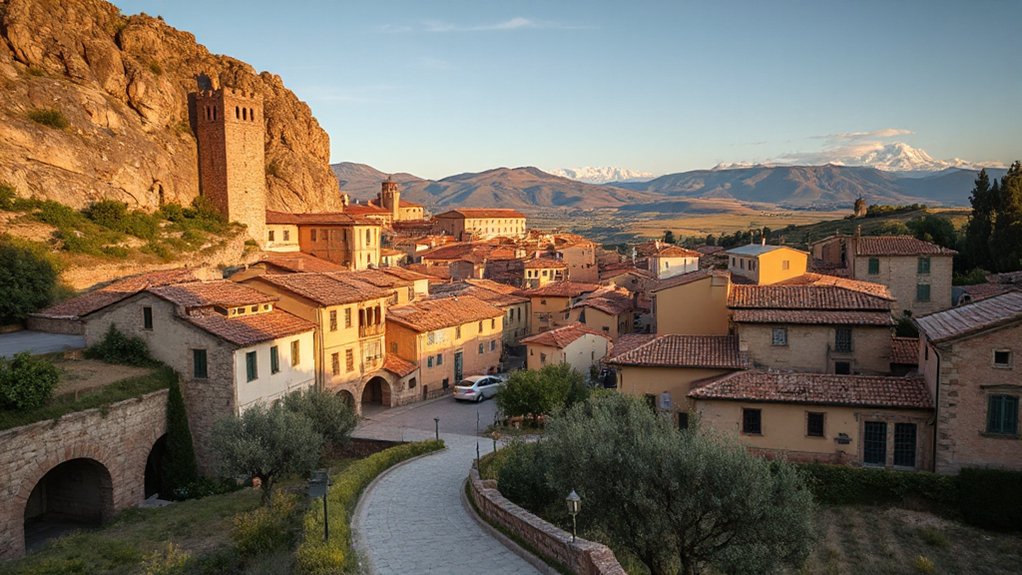
From sunlit plains to limestone ridges, the photography spots in Aragon unfold like a well-kept album, inviting you to press the shutter as history and horizon meet. You’ll find timeless scenes that reward patience, light, and a knowing eye. To capture the soul of each village, lean into the lines of stone, the curve of terraces, and the glow at dawn.
- photograph tips: frame silhouettes against distant peaks, use leading lines of streets, and wait for the blue hour.
- scenic viewpoints: overlook river folds, castle silhouettes on hilltops, and orchard orchards spilling across valleys.
- practical notes: bring a tripod, shoot RAW, vary angles for texture, and respect local life.
Let the land narrate its quiet drama through your lens.
Festivals, Markets, and Traditions: Cultural Moments
In Aragon, the rhythms of village life spill from markets and festival squares into every step you take, turning stone and adobe into a living calendar. You sense it as you wander, a pulse carried in drumbeats, handclaps, and the clink of copper bowls.
Local festivals bloom with color and memory, elders recounting legends while children chase ribbons through narrow lanes. Traditional markets lure you with wicker baskets bursting with almonds, honey, and cheese, each stall a story, each vendor a guide.
Firelight flickers in plaza corners, and songs rise with the evening air, inviting you to listen, taste, and remember. You leave feeling stitched to a culture that refuses to fade, inviting return.
Practical Planning: Getting There and Getting Around Aragón
Arriving in Aragón, you’ll notice how the lanes bend like stories waiting to be told, and how the train’s whistle carries you toward barley fields and whitewashed villages.
To move smoothly, pick a base in a central town, rent a compact car, and map scenic overlooks before dawn. Local transit is practical between towns, but a car gives you flexibility for quick chocs of scenery and kitchen stops.
- Plan routes at first light
- Reserve seats on popular trains in advance
- Stop for local cuisine at village cafés
You’ll feel the pace slow, the air carry hints of rosemary, and the landscape unfold with small-town charm.
Use overlooks to frame skylines, valleys, and sunsets, and savor every spontaneous detour.
Respectful Travel: Etiquette and Conservation
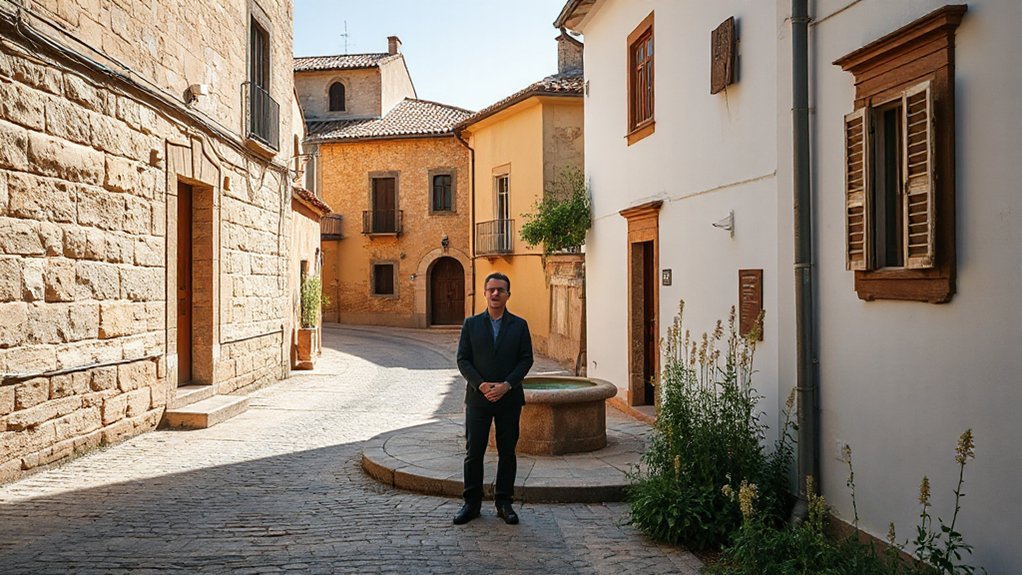
Respectful travel begins the moment you step onto a village street. You observe how doors creak with memory, and you listen for the cadence of greetings in the air. You learn to move softly, to respect space, and to linger where a vista invites you to pause rather than push forward.
You follow local customs with humility, offering a smile before a question, and you leave no trace when you depart. You choose eco-friendly practices: carry a refillable bottle, pack out what you bring in, and minimize energy use in accommodations.
You photograph with consent, never crowd a doorway, and you bless quiet corners that keep stories intact. By honoring these habits, you protect heritage and invite others to share in its quiet, living pulse.
A Curated 3-Day Route Through Aragón’s Villages
Begin your three-day sojourn with a loop through Aragón’s hill towns, where every cobble tells a story and every vista folds into the next. You’ll weave between whitewashed walls and terraced vineyards, meeting a local artisan who shapes memory into clay and copper, and hearing village legends whispered at dusk. Each day stitches two towns with a culinary cue, a carved doorway, and a hidden courtyard.
- Arcades to churches: pace the route, savor history in minute details.
- Workshops to markets: trade craft for conversation, collect signatures of place.
- Sunset climbs to starlight: conclude with light-washed walls and quiet reflections.
This itinerary respects time, texture, and taste, offering authentic Aragón.
Frequently Asked Questions
Are There Any Village-Specific Legends or Myths Worth Knowing?
Yes, you’ll encounter village folklore and mythical legends that linger on stone lanes, from shepherds’ whispers to chapel echoes. You’ll sense haunted winds, secret caves, and ancient pact stories, weaving immersive cultural insight into your Aragón wanderings.
Which Villages Have the Best Sunset Viewpoints?
“Time and tide wait for no one.” You’ll find the best sunset viewpoints in Albarracín, Calaceite, and Aínsa, where sunset photography glows over terracotta roofs, winding lanes, and dramatic cliffs, offering immersive, scenic viewpoints and cultural-saturated twilight.
Can I Visit Multiple Villages by Bike in a Day?
Yes, you can visit multiple villages by bike in a day, but pace yourself; prioritize cycling safety and village transportation nuances, plan routes, and savor landscapes, local rhythms, and meals between climbs.
Do Villages Host Free or Pay-Per-Entry Historic Sites?
Some villages charge, some’re free; you’ll discover varied access to historic sites as you wander. Village architecture surrounds you, and Local festivals pulse nearby, inviting you to linger, absorb color, sound, and the rhythm of centuries.
Are Local Markets Open on Sundays in All Villages?
Markets vary; not all villages keep Sundays alive. You’ll find Market schedules shaped by tradition, with some openings and others resting. You, wandering, meet Local vendors weaving color, scent, and craft into an unforgettable, sunlit Sunday temptation.
Conclusion
You wander Aragón’s villages not to conquer them, but to listen. Each stone speaks in a soft, older voice, inviting you to slow, breathe, notice. Imagine a traveler pausing under a ochre wall as bells toll, or sharing tapas in a shaded plaza while history hums around you. Like a case study, suppose you trace a single day from fortress to fountain, letting time stitch you into the landscape. You’ll leave richer, lighter, forever tasting the road.