
The must‑try Basque dishes fuse coastal brightness with inland depth, inviting you to taste both quick-fire precision and patient refinement. Start with txuleta for a disciplined sear and minerals from salt, then explore pintxos that pair texture and contrast in portable bites. Don’t miss bacalao pil-pil’s silky emulsion and cider‑softened sweets for balance. Pair with Bordelaise‑influenced sauces and lively cider to sharpen the sense of terroir. There’s more to uncover as you explore further.
Key Takeaways
- Txuleta (Basque steak) showcases perfect sear, crust, and precise resting for intense beef flavor.
- Bacalao Pil-Pil highlights a glossy emulsion of garlic oil and salt-balanced cod.
- Pintxos offer vivid, bite-sized flavor contrasts presented at standing taverns and markets.
- Basque cider and wine-driven sauces pair seafood and pork with bright, mineral-laced acidity.
- Seasonal specialties—pepper-forward summers, mushroom and cured meat autumns, and root vegetables in winter—define regional must-tries.
What Makes Basque Cuisine Distinct
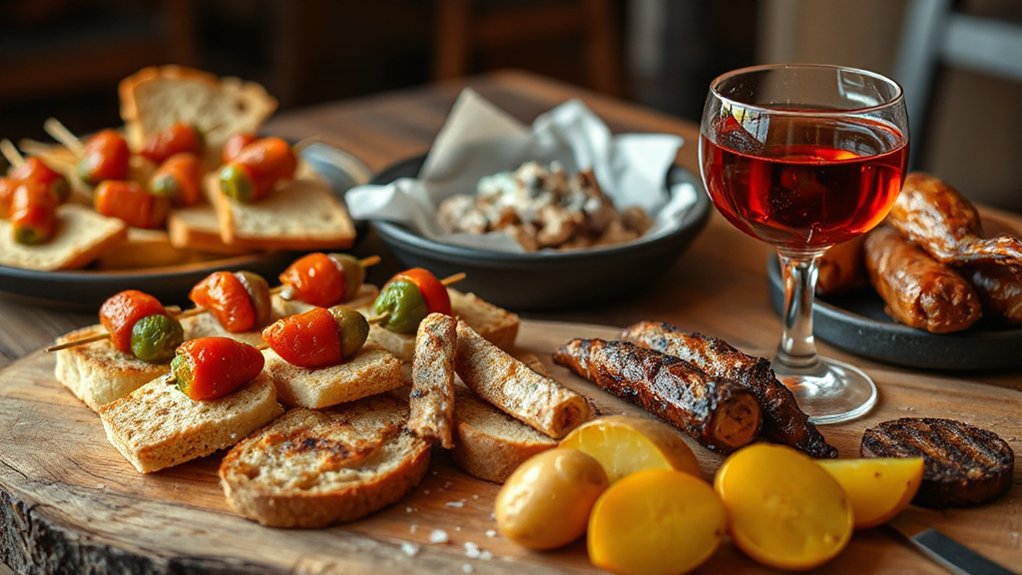
Basque cuisine stands apart because it blends coastal abundance with inland farmers’ pride, pairing sea-salt brightness with smoky, hearty comforts. You taste how Basque food balances restraint and ambition, a disciplined arc from harbor nets to hillside plots.
The region earns its distinction through a disciplined sourcing ethic: Basque wine anchors meals with mineral nuance, while Coastal agriculture yields vegetables and grains that retain oceanic honesty in every bite.
You’ll notice how recipes favor concise technique, letting terroir speak rather than flashy theatrics. Compared with other traditions, the clarity is strategic, not sparse; the flavor profile emphasizes umami, smoke, and brine with measured restraint.
This discipline creates cohesion across courses, guiding appetite toward a confident, memorable regional palate.
Signature Basque Techniques: Grilling, Salt, and Smoke
Grilling, salt, and smoke are the trio that defines Basque technique, each element sharpening the others into a cohesive, tasting-centric method. You’ll taste how charcoal heat accretes depth, salt draws out umami, and smoke threads aroma into fatigue-resistant layers.
Compared to delicate continental methods, Basque grilling favors bold restraint, letting time and flame do the work. Traditional baking shares pace with grilling’s patient turn, but you’ll notice the difference in crust texture and juiciness, a cultural fingerprint that survives through age-old rituals and festivals.
- Grilled seafoods with coarse fleur de sel
- Smoke-kissed meats and peppers at festival stalls
- Salt-forward sauces that finish dishes with bite
Cultural festivals amplify this craft, while Traditional baking anchors the technique in heritage.
Txuleta and the Basque Steakhouse Classic
You’ll feel the lure of a prime cut, where marbling speaks to flavor and tenderness alike. The txuleta’s sear is a study in precision, a crust that stakes its claim before the bite, yet stays faithful to the meat’s own voice.
In this Basque steakhouse ritual, you compare the classic technique to other methods, sharpening your sense of texture and intensity.
Prime Cut Traditions
Compare the chew to a well-placed note in a symphony, then notice how balance governs intensity. Consider these elements:
1) Salt depth that sharpens without masking pasture sweetness
2) Char status that rewards patience and proper heat
3) Pairing logic that elevates, not eclipses, the meat
You’ll find Local wine varieties act as a clarifying chorus, while traditional baking frames the aroma. The Basque steakhouse classic remains lean, disciplined, and unmistakably regional.
Searing Technique Mastery
Searing a Txuleta isn’t about a single sizzling moment but about a sequence that builds a lacquered crust while preserving a supple center; the Basque steakhouse classic hinges on disciplined heat and timing. You’ll feel the heat respond like a craftsman’s measure, not a rush.
Begin with high, dry searing to lock in moisture, then lower the flame to nurture browning without choking the interior. Searing precision matters: quick, confident flips, minimal disturbance, and steady contact yield an even crust that sings with jus at the cut.
Compare results: a peek of color versus an overdone char reveals the difference between restrained strength and reckless heat. Flavor enhancement arrives through patience, resting, and slicing against the grain for tender, beefy clarity.
Pintxos on the Go: The Basque Tapas Experience
Pintxos on the go fuse quick-serve vibrancy with the Basque insistence on balance, so every bite feels deliberate rather than hurried. You sample a portable gallery where Basque street snacks meet refined Pintxos presentation, cutting through noise with measured contrasts.
- Quick-serve poise: a crisp bite, then a lingering echo of flavor.
- Flavor balance: brined, smoky, and bright elements paired with restraint.
- Comparative strategy: you weigh texture, temperature, and finish like an expert taster.
In this moving feast, the choice isn’t speed but precision, a firsthand lesson in street-smart plating. You’ll notice how color, aroma, and bite rhythm converge, delivering a tour of savory discernment rather than mere grazing.
Basque street snacks set the tempo; Pintxos presentation seals the memorable moment.
Basque Fish Dishes With Bordelaise Influences
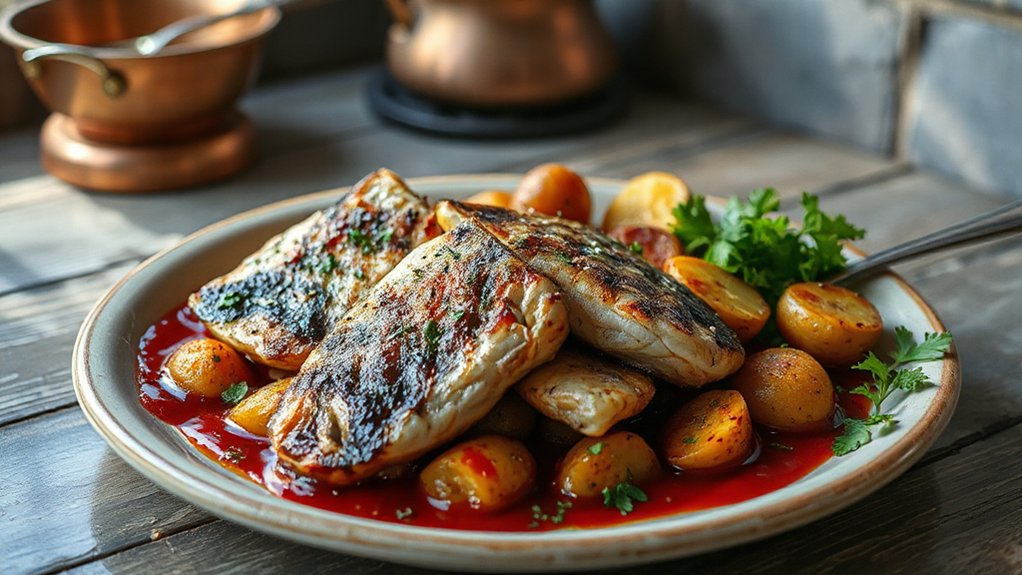
You’ll taste how Bordelaise flavor fusion tightens the Basque winemaking-and-seafood vocabulary into sharper focus.
Basque seafood techniques meet wine-driven sauce pairings with a precision that invites comparison and curiosity.
This framing sets the stage for how Bordelaise influences, contrasts, and elevates the region’s fish dishes.
Bordelaise Flavor Fusion
Bordelaise-influenced Basque fish dishes fuse a Bordeaux-tinged sauce with the region’s bright, briny seafood, yielding a contrast that isn’t merely garnish but a conversation between terroirs. You taste how Bordelaise fusion sharpens sweetness with winey depth, while Basque brightness preserves coastal clarity. The result is flavor innovation that respects both traditions without diluting either.
- Compare the mouthfeel: silkiness from the sauce meets crisp fish skin, a dialogue of textures.
- Assess the balance: wine’s tannins echo the sea’s mineral bite, never overpowering.
- Consider the finish: lingering umami harmonizes with a citrus lift, inviting another bite.
You’ll notice how this fusion sharpens choices, guiding you toward refined, savory discernment rather than reactionary recipes.
Basque Seafood Techniques
The technique favors quick, precise cooks that lock in moisture while letting Bordelaise hints—savory and wine-bright—shine without overpowering. You’ll notice how searing forms a lacquered crust, then gentle reduction deepens the sauce’s Bordelaise echoes.
Basque fermentation subtly elevates briny depth, adding complexity beyond mere freshness. Local spice blends thread warmth, citrus, and herbaceous lift, guiding the palate toward coastal forests and docks at once.
Compare, contrast, and choose: the clean bite of fish versus the layered warmth of sauce. The result respects provenance, technique, and restraint.
Wine-Driven Sauce Pairings
Wine drapes Basque fish in a measured gloss, pairing sharp Bordelaise echoes with the watershed brightness of the catch. You’ll sense precision in the sauce recipes, where Bordeaux’s iron backbone meets Basque nuance without muting the fish.
The result hinges on balance: a lean oiliness toned by deep wine tannins, a quick reduction that concentrates character without heaviness, and a finish that echoes the coast’s mineral kiss.
Compare layers as they unfold, and you’ll taste how wine pairing sharpens both seafood sweetness and steaklike depth.
- Pairing logic over bravado
- Reduction timing for clingy gloss
- Finish tuning to coastal brightness
The Basque Dairy Pantry: Idiazabal and Other Cheeses
If you’re building a Basque spread, your starting lineup hinges on Idiazabal and its peers, cheeses that capture the region’s smoke-kissed pasture and firm, sheep’s-milk character. You’ll notice how Idiazabal’s rind and nutty core carry a restrained tang, telling you to pair it with Crillos and picon-style snacks rather than overpowering wines.
Compared to softer, milder cousins, these cheeses resist inundation, offering backbone for the plate. Cheese aging is your guide here: longer rests deepen smoke and mineral notes, shorter ones keep freshness and bite.
Dairy traditions run deep, shaping texture, aroma, and terroir into a consistent Basque signature. In practice, pick varieties that balance salt, smoke, and sheep-milk density for a cohesive, savory spread.
From Sea to Mountain: Regional Basque Dishes
From the coast to the uplands, Basque cooking maps a spectrum of flavors that reflects geography as much as technique. You’ll taste how sea brightness anchors dishes, while inland turf adds mineral depth and herb lift. The contrast is precise, almost contrapuntal, yet harmonized through shared technique and seasonal timing.
Basque cheese and mountain herbs anchor identity, providing savory punctuation between seafood and land dishes. Here are three must-not-miss shifts you’ll notice:
1) Coastal freshness meets rustic fire in simple preparations that sharpen the palate.
2) Mountain herbs introduce resinous brightness that clarifies seafood sweetness.
3) Cheese bridges the gulf, lending salt, texture, and a lingering finish.
In this cross-pinged landscape, you compare, you savor, you decide what defines Basque regionality.
Bacalao Pil-Pil: The Oil-and-Garlic Embrace
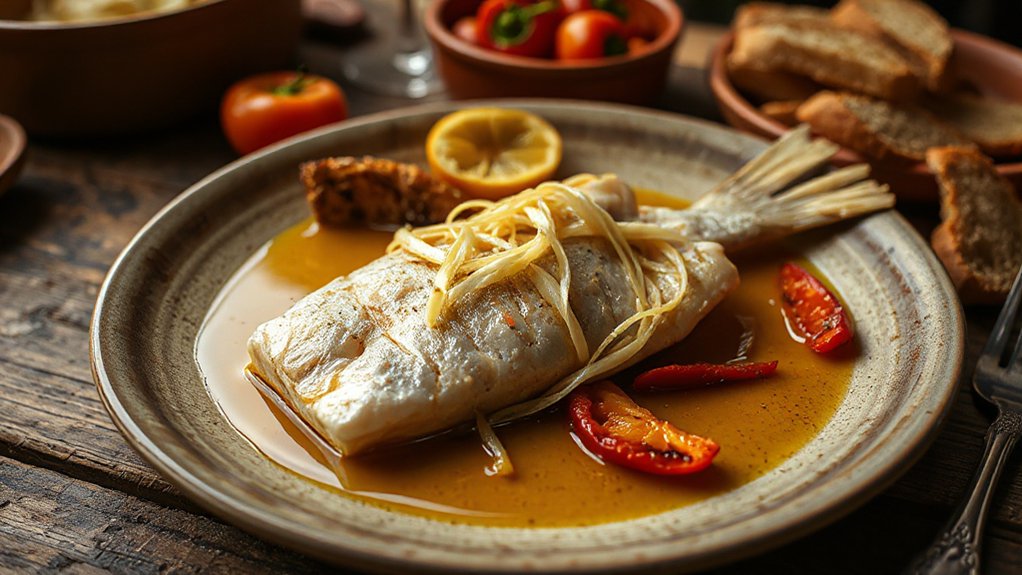
You’ll note how the emulsion’s quiet pressure turns garlic oil into a binding, shimmering veil.
When you compare textures, the balance between fat and bite reveals the technique behind Pil-Pil’s gloss, guided by Emulsion Mastery Techniques.
This is where garlic oil harmony isn’t mere flavor—it’s method, texture, and precision in one savory moment.
Emulsion Mastery Techniques
Bacalao pil-pil is a study in emulsion mastery, where patience and technique fuse garlic-scented oil with the delicate Iberian fish until they move as one. You observe how olive oil yields a satin sheen, coaxed by deliberate emulsification techniques that feel almost scientific in their restraint.
The goal is cohesion, not separation, a smooth line between surface and depth that carries the fish’s subtly briny backbone.
- Observe temperature as a quiet driver of unity.
- Maintain steady motion to avert curdling or breakage.
- Taste early, adjust salt and citrus to sharpen the finish.
In this frame, you compare textures, choosing the more elegant blend over a brute, coarse glaze.
Garlic Oil Harmony
Garlic oil is the quiet backbone of Bacalao Pil-Pil, a gilded conduit that carries salt and fish without shouting. You sense how the oil, warmed gently, becomes the stage where garlic reveals its patient, savory truth.
In this harmony, garlic infusion matters as much as the fish’s saline spine, shaping a velvet curtain of flavor that never dominates. You evaluate the balance with a discerning eye, noting how the emulsion’s sheen mirrors its control.
Oil textures matter here: a glossy, whisper-thin film suggests restraint; a slightly curdled edge hints at bold timing. The result is a whisper-soft sizzle, a cohesion that lets each element breathe.
You savor precision over bravado, a measured chorus rather than a blaze.
Basque Sweets and Cider Pairings
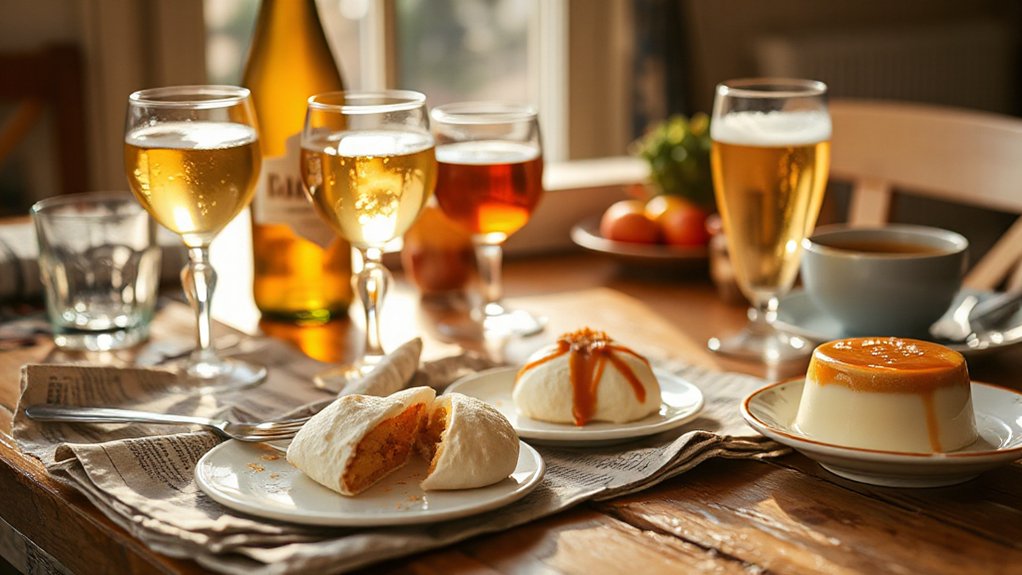
- Basque cider complements rich creams without muting them, inviting a bright finish.
- Traditional sweets layer fruitiness and nutty notes to echo cider’s character.
- Pairings reward contrast: crisp, dry cider vs. lush, sugar-laced textures, then resolve toward harmony.
You’ll notice similar logic across dishes: cider’s effervescence cleanses fat, then leaves a cleansing apple glow, guiding your palate toward next bite.
Basque cider, traditional sweets, phrased in terroir, sharpen discernment, not distraction.
Markets, Taverns, and the Ritual of Basque Eating
Markets pulse with a daily theater of Basque eating, where thrumming stalls invite you to sample small, deliberate bites before anything settles into memory. You move with intent, gauging chorizo’s spice against bacalao’s salt, each bite a measured verdict.
Taverns hum with ritual, where standing counters replace dining chairs and time loosens its grip; you learn to follow the cadence, not the craving.
In Basque festivals, the crowd becomes a contrastive chorus: bold flavors sharpened by cider, sweetness tempered by smoke. Traditional attire punctuates conversations, color marking preference as decisively as knife and fork.
The ritual teaches restraint: savor first encounters, compare sensations, then decide what lingers. Eating here, you discover a language where circuitry of taste outshines polish.
How to Build a Basque-Inspired Meal at Home
From the energy of Basque markets, you’ll assemble a meal that balances restraint and impact: small, deliberate components chosen for contrast, not quantity. You’ll blend rustic texture with bright acidity, like a well-timed chorus in Traditional dance, Folk music—structured, yet lively.
- Sear and thread a chorizo-charred protein with a confit potato and green pepper dot—defined, not overwhelming.
- Finish with a citrusy tomato sherry glaze, bright enough to lift the plate without shouting.
- Pair a humble, flaky fish with almonds, herbs, and a drizzle of olive oil for balance and nuance.
Notice how portions favor precision over abundance, mirroring Basque sensibilities: disciplined, expressive, unforgettable.
Seasonal and Regional Basque Dares: A Quick Map
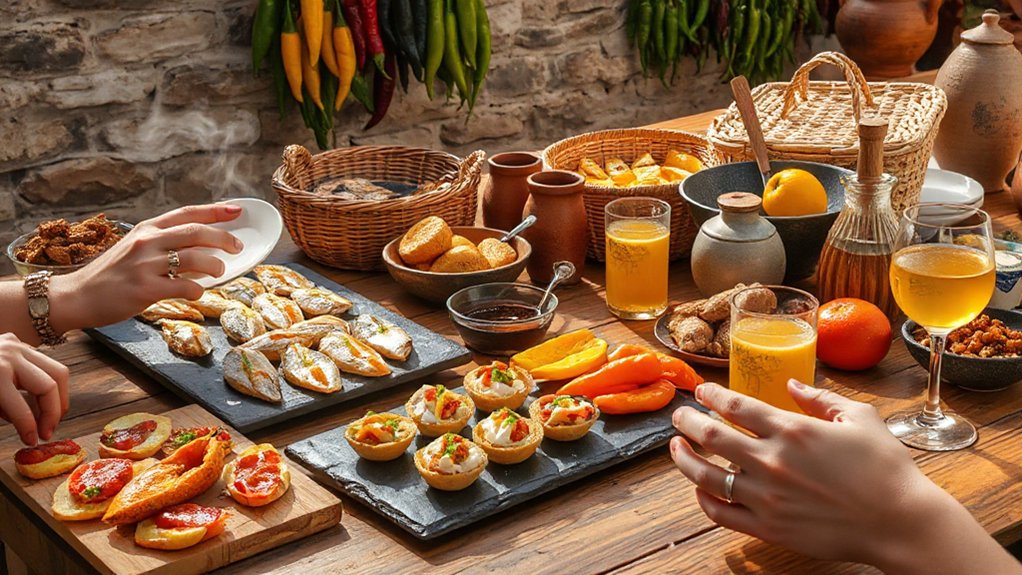
Seasonal and regional Basque dares map out the bold, the delicate, and the surprising across seasons and terrain, guiding you to lean into what’s freshest and closest to hand. You compare markets, harbors, and hillsides, tracing how Cultural influences shape every bite from spring greens to autumn game.
The map favors provenance over pomp, signaling where Culinary history meets today’s palate in precise, usable terms. In summer, you chase vibrant peppers and fish; in autumn, mushrooms and cured meats claim the spotlight; in winter, root vegetables ground dishes with warmth.
Each dare weighs texture, aroma, and seasonality, sharpening your choices with exactitude. It’s not novelty for its own sake—it’s a measured, flavorful language of place.
Frequently Asked Questions
Which Basque Dishes Are Must-Try for First-Time Visitors?
You should prioritize pintxos, hake fish dishes, and Basque steak, because they showcase traditional cooking and bold flavors. Compare textures and techniques, and you’ll sense how traditional cooking informs every bite with precise culinary techniques you’ll appreciate.
How Do Basque Flavors Balance Smoke and Acidity?
Taste how smoke and acidity balance like salt and lime; you’ll notice Basque fusion echoing culinary traditions, where bright acidity cuts fat and smoky depth guides you toward savory discernment with precise, comparative flavor framing.
Where Can I Find Authentic Basque Cider Houses?
You’ll find authentic Basque cider houses by following Basque gastronomy routes and locals’ tips, where culinary traditions shine. You compare experiences like wine bars and gastropubs, savoring crisp tartness and smoky notes, discerning value through hospitality and provenance.
What Regional Basque Dishes Surprise Visitors the Most?
You’ll be surprised by Basque street food like pintxos, and you’ll savorTraditional cooking methods, comparing bold flavors to fireworks. You taste unique dishes such as grilled fish and peppers, noting how Basque street food outsmarts expectations with precision.
Which Basque Dishes Pair Best With Wine or Cider?
You should pair Basque wine with rich Basque cheese to balance acidity, and cider with Pintxos variety that lean savory. You’ll notice Basque cheese accents better with Irouléguy, while cider echoes smoky, earthy Pintxos variety contrasts.
Conclusion
You’ll leave tasting, not merely eating. Basque cuisine is a fire-breathing compass: precise, elemental, and relentlessly theatrical. You’ll compare a sizzling txuleta to a symphony—stone, smoke, salt, and time hum in parallel. Pintxos become portable poems; cider, a tart oracle. The markets pulse with clever contrasts, the taverns sing with ritual. If you crave clarity, you’ll savor the blunt, dazzling truth: greatness here is carved in heat and harvested in communal bite. A culinary map you carry forward.